Best Colorado GMUs for Pronghorn on the Plains
For many hunters, the image of Colorado hunting immediately conjures up visions of towering peaks and deep timber chasing elk. But for those who appreciate a different kind of challenge, the vast, windswept eastern plains offer an exhilarating pursuit of pronghorn. It can be incredibly daunting, however, to pinpoint the specific Game Management Units (GMUs) where you stand the best chance of finding these elusive speedsters, especially with so much private land to navigate. This guide aims to cut through that confusion, helping you identify some of the best Colorado GMUs for pronghorn hunting on the plains and equip you with the knowledge for a successful hunt.
Understanding Colorado's Plains Pronghorn Habitat
Before we dive into specific units, it’s crucial to understand what makes prime pronghorn country. These unique animals are perfectly adapted to the wide-open spaces, and knowing their preferences will guide your scouting and hunting efforts.
Characteristics of Ideal Pronghorn Terrain
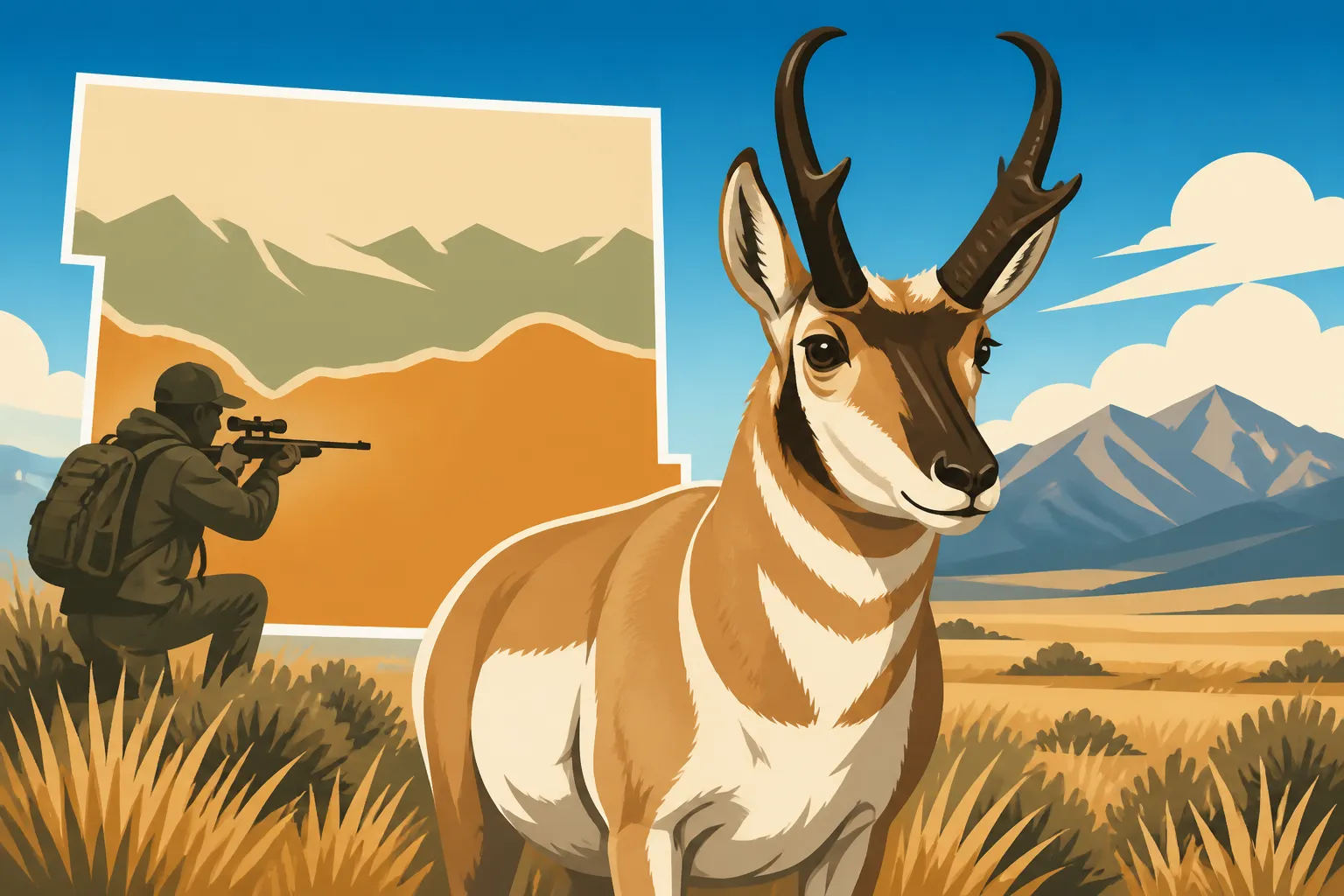
Pronghorn, often mistakenly called "antelope," thrive in environments where they can utilize their incredible eyesight and speed to evade predators. This means you’ll primarily find them in shortgrass prairies, expansive sagebrush flats, and open agricultural fields that offer plenty of visibility. Think vast, rolling terrain with minimal tree cover, allowing them to spot movement from incredible distances. They’re built for these flat-to-gently-rolling landscapes, not the dense forests or rugged mountains that elk and mule deer prefer.
These semi-arid conditions also mean water sources are critical. While pronghorn are highly efficient at extracting moisture from their forage, they still need to drink, especially during warmer hunting seasons. Look for stock tanks, reservoirs, and ephemeral streams or dry washes that might hold pockets of water after rain. These spots can be absolute magnets for herds, providing predictable locations to focus your scouting efforts. The types of forage also play a huge role; they aren't big browsers like deer, preferring forbs, grasses, and sagebrush, so areas rich in these plants will naturally hold more animals.
Public vs. Private Land Dynamics on the Plains
One of the biggest hurdles for any hunter planning a plains pronghorn hunt in Colorado is the sheer dominance of private land. Much of Colorado's eastern plains is owned by ranchers and farmers, meaning public access can be fragmented and challenging to navigate. It's a common frustration to glass a magnificent buck only to realize it's on posted private property, just out of reach. This reality makes careful planning and understanding land ownership absolutely essential.
Thankfully, Colorado offers a few avenues for public access, even on the plains. Bureau of Land Management (BLM) and State Trust Land parcels are scattered throughout, though often smaller and less contiguous than in other parts of the state. The Colorado Parks and Wildlife (CPW) Walk-In Access (WIA) program is a true gem, opening up private lands to public hunting for specific seasons and species. These WIA properties can be game-changers for pronghorn hunters. This is where tools like onX Hunt become indispensable. With its detailed parcel data, you can clearly identify public land boundaries, WIA properties, and state trust land, ensuring you're always hunting legally and efficiently. Without a robust mapping system, you’d be guessing, and that’s a recipe for disappointment, or worse, trespassing. Understanding "Colorado Public Land Hunting Guide" is absolutely critical here.
Top GMUs for Plains Pronghorn Hunting
While pronghorn can be found in many plains units, some consistently offer better opportunities due to population numbers, habitat quality, or public access. Remember that draw odds can fluctuate, and securing a tag often requires a bit of strategy and potentially some preference points.
Northern Plains Powerhouses
The northern reaches of Colorado's eastern plains offer some fantastic pronghorn hunting. GMUs like 95, 96, 100, 101, and 102 are often high on a pronghorn hunter's list. These units encompass vast stretches of open prairie and agricultural land, particularly rich in shortgrass and sagebrush. Unit 95, for instance, often boasts good numbers of antelope, though public access can be a mixed bag, requiring diligent scouting and map work. Unit 100 is another prime example, with significant private land but also decent WIA opportunities and scattered BLM parcels, especially as you head further east toward the Pawnee National Grassland area.
What makes these areas powerful is often the sheer space and relatively consistent pronghorn populations. While trophy bucks are never a guarantee without significant points, these units provide solid opportunities for a buck tag, and often offer over-the-counter (OTC) or easy-to-draw tags for does later in the season. Access within these units might involve navigating a patchwork of land ownership, often interspersed with agricultural fields. This means a good pair of binoculars and a vehicle capable of handling dirt roads are a must. Successfully hunting these "powerhouse" units often comes down to who put in the most effort scouting, both digitally and on the ground.
Central and Southern Plains Options
Moving south, units like 103, 104, 105, 106, 110, 111, and 112 also provide excellent pronghorn hunting, often with slightly different characteristics. The central plains, encompassing units like 104 and 105, tend to feature more mixed agricultural areas alongside native prairie. These units can sometimes have better public land percentages in certain areas, particularly around large State Wildlife Areas (SWAs) or significant BLM tracts. Unit 111, located further south, for example, is known for decent pronghorn numbers and can be a good option for those seeking a doe tag with fewer preference points.
The hunting experience in these central and southern units can sometimes be less about wide-open vistas and more about glassing across larger agricultural fields or navigating smaller, more broken pieces of public land. This often requires a different approach to stalking, perhaps utilizing irrigation ditches, shelterbelts, or subtle changes in topography for cover. Draw odds in these units can be slightly more favorable for general buck tags compared to the most sought-after northern units, making them a great option for hunters with fewer preference points or those looking for an earlier opportunity. Always check the current year's draw statistics through resources like GoHunt to get the most up-to-date picture for your chosen unit.
Analyzing Draw Odds and Tag Availability
Colorado's draw system for pronghorn, like other big game, relies on preference points for limited tags. For those dreaming of a trophy buck in a prime unit, accumulating points is often the name of the game. For example, some of the top buck units on the plains can require 5-10+ preference points for a non-resident. However, many units offer buck tags that can be drawn with fewer points, or even zero points, especially for later season hunts or less renowned units. For doe tags, it's often much easier, with many units offering leftover or OTC tags that don't require any points. This means hunters have various pathways to get into the field.
Understanding how Colorado's "Colorado Draw System and Preference Points" works is paramount. Websites like GoHunt provide invaluable data, breaking down draw odds by unit, weapon, and residency, showing how many points were needed to draw a tag in previous years. This information is gold for crafting an application strategy, whether you're playing the long game for a trophy or just looking to put some delicious "Colorado Pronghorn Meat Explained" in the freezer. Remember, application deadlines are typically in April, so planning well in advance is crucial.
Here's a generalized look at a few plains GMUs for pronghorn, keeping in mind that actual draw odds and populations vary yearly:
| GMU | General Location | Public Land Access | Typical Buck Draw Difficulty | Doe Tag Availability | Notes |
|---|---|---|---|---|---|
| 95 | Northeast Plains | Moderate/Fragmented | Moderate to Difficult | Often Leftover/OTC | Good populations, need to scout for access. |
| 100 | Northeast Plains | Moderate/Fragmented | Moderate to Difficult | Often Leftover/OTC | Adjacent to Pawnee Grasslands, some BLM/WIA. |
| 104 | Central East Plains | Moderate | Moderate | Often Leftover/OTC | Mixed agriculture and prairie, good numbers. |
| 111 | Southeast Plains | Moderate/Fragmented | Easier to Moderate | Often Leftover/OTC | Good option for points-conscious hunters. |
| 112 | Southeast Plains | Moderate/Fragmented | Easier to Moderate | Often Leftover/OTC | Smaller unit, good if you find accessible land. |
Essential Scouting and Strategy for Plains Pronghorn
Pronghorn hunting on the plains isn't about covering vast amounts of vertical ground; it's about covering horizontal distance, both with your vehicle and your boots, and especially with your optics.
E-Scouting and Boots-on-the-Ground Reconnaissance
E-scouting is the foundation of any successful plains pronghorn hunt. Before you even leave home, you should be intimately familiar with your chosen GMU. This means spending hours poring over satellite imagery on onX Hunt or other mapping software. Your goals are multifold: identify every scrap of public land (BLM, State Trust, WIA), mark potential water sources, and look for subtle terrain features. On the plains, a dry creek bed, a small rise, or even a line of sparse trees can be a crucial piece of cover for a stalk. Look for obvious travel corridors between feeding areas and water.
Once you’ve got your digital maps loaded, it’s time for boots-on-the-ground reconnaissance, ideally before the season opens. Drive the roads, but also be prepared to walk. Glass from every vantage point you can find, even if it's just a small hill. Look for fresh tracks, droppings, and areas where pronghorn have been bedding down. Pay attention to how the animals use the landscape during different times of day. Are they feeding near a specific ranch field in the morning? Bedding in a particular sage flat during midday? Understanding "Pronghorn Behavior and Biology" will help you interpret what you see. The more you know about their patterns, the higher your chances of success when opening day arrives.
Effective Hunting Methods on the Plains
The most iconic and effective hunting method for plains pronghorn is the spot-and-stalk. These animals have incredible eyesight, often compared to an 8x binocular, and they inhabit open country, making getting close a significant challenge. The key is to glass from a distance, identify a target animal, and then meticulously plan your approach, utilizing every fold in the terrain, every patch of sage, every fence line for cover. This often involves crawling on your hands and knees or even belly-crawling for hundreds of yards. It's physically demanding and requires immense patience. For a deep dive, check out "How to Spot-and-Stalk Colorado Pronghorn".
Another potent tactic, especially during the rut (which often coincides with archery season), is decoying. Pronghorn bucks are highly territorial and curious, making them susceptible to a well-placed decoy of another buck or a doe. When a buck sees a rival moving into his territory or a potential mate, he might charge in to investigate or challenge. This can dramatically shorten the distance for a shot. Learning "How to Hunt Colorado Pronghorn Decoying" can add a whole new dimension to your hunt. Additionally, particularly in early, warmer seasons, focusing on "How to Hunt Colorado Pronghorn Water Holes" can be extremely productive. Finding a tank or pond with fresh tracks and setting up downwind can be an effective ambush strategy.
Dealing with Wind, Sun, and Hunter Pressure
Hunting pronghorn on the plains means you’re exposed to the elements, and those elements can be your best friend or your worst enemy. Wind is constantly a factor. Pronghorn have a decent sense of smell, so always try to keep the wind in your favor during a stalk. Strong winds can also help mask your sound and movement, but make shooting at longer ranges more difficult. The sun's position is equally important. Early morning and late evening, when the sun is low, can create glare that makes spotting tough, but it can also be used to your advantage during a stalk if you can keep the sun in the animal’s eyes. Midday sun, while bright, often means clear visibility.
Hunter pressure, particularly on accessible public lands, is a very real concern. With limited public ground, it’s not uncommon to see multiple trucks parked at a single WIA or BLM access point. This means the animals will be more wary and can be pushed around. To mitigate this, consider hiking further than most people are willing to go, or looking for less obvious access points. Hunting during weekdays rather than weekends can also reduce encounters. Understanding how to find elk in situations of "How to Hunt Elk on Public Land Pressure" shares many similarities with plains pronghorn. Persistence and flexibility are key when dealing with crowded areas.
Preparing for Your Plains Pronghorn Hunt
A plains pronghorn hunt, while physically different from a mountain hunt, requires specialized gear and preparation to maximize your chances of success and comfort.
Gear Essentials for Open Country
When it comes to plains pronghorn, optics are king. You’ll spend the vast majority of your time glassing, so investing in high-quality binoculars (10×42 or 12×50) is paramount. A good spotting scope (60-80x) mounted on a sturdy tripod is almost non-negotiable for identifying animals at extreme distances and judging bucks. This allows you to differentiate a shooter from a long way off, saving you countless wasted stalks. If you're wondering about specifics, dive into "Best Optics for Colorado Big Game". Beyond optics, a flat-shooting rifle accurate at longer ranges (think .25-06, .270, 6.5 Creedmoor) is ideal, as shots beyond 200-300 yards are common. Practice shooting from the prone position, as this is often your steadiest option in open country.
Hydration and sun protection are also critical. The plains can be brutally hot and exposed, even in early fall. Carry plenty of water, wear a wide-brimmed hat, sunglasses, and use sunscreen. Lightweight, breathable clothing in layers is essential for adapting to temperature swings. Don't forget a comfortable, quiet backpack for carrying your optics, water, and extra layers. And while the terrain looks flat, you'll still be walking miles, often on uneven ground, so sturdy, broken-in boots are a must. Your onX Hunt app, fully downloaded with offline maps, will be your constant companion for navigation.
Physical and Mental Conditioning for Pronghorn Hunting
Don't let the flat landscape fool you; a plains pronghorn hunt can still be physically demanding. While you might not be climbing mountains, you'll be doing a lot of walking, often quickly, to get into position for a stalk. More importantly, you'll spend significant time in awkward positions – crawling, belly-crawling, and lying prone for extended periods during stalks. Developing core strength and flexibility will pay dividends here. Beyond the physical, the mental game is huge. Days can be long, with hours of glassing without spotting a suitable animal. Patience, perseverance, and the ability to stay positive despite setbacks are crucial.
Practice shooting your rifle from various field positions, especially prone, kneeling, and from a tripod. Simulate real-world scenarios, shooting at small targets at varying distances. Understanding "Colorado Long-Range Shooting Considerations" is beneficial, as the open plains often demand ethical longer-range shots. The wind on the plains can play havoc with bullet trajectory, so practicing in windy conditions and knowing your ballistics is vital. A successful pronghorn hunter isn't just a good shot; they're a master of stealth, patience, and adapting to the terrain.
Understanding Regulations and Obtaining Licenses
The first step to any Colorado hunt is understanding the regulations. Before applying or even scouting, thoroughly review the current year's Colorado Parks and Wildlife (CPW) Big Game Regulations. These guides outline season dates, specific unit regulations, weapon restrictions, and bag limits. Pronghorn season dates can vary by unit and weapon choice, so pay close attention. For general information, our "Colorado Pronghorn Season Dates and Tags" guide can be a great starting point, but always verify with the official CPW regulations.
Applying for a Colorado hunting license, particularly for big game like pronghorn, requires careful attention to deadlines. The primary draw application period is typically in March or April. You'll need to purchase a qualifying license and a Habitat Stamp, which is mandatory for all hunters in Colorado. If you're a non-resident, be sure to familiarize yourself with the specific requirements and costs outlined in our "Colorado Non-Resident Hunting License Guide". The process can seem complicated initially, but resources like "How to Apply for a Colorado Hunting License" can walk you through it step-by-step. Don't leave this critical step until the last minute!
Disclaimer
Hunting in Colorado involves inherent risks and is subject to strict regulations. The information provided in this guide is for general informational purposes only and should not be considered legal advice or a substitute for reviewing the official Colorado Parks and Wildlife (CPW) hunting regulations. Always consult the most current CPW Big Game Regulations and maps before planning or undertaking any hunting activity. Seasons, draw odds, and regulations can change annually. It is the hunter's responsibility to know and follow all applicable laws and regulations.