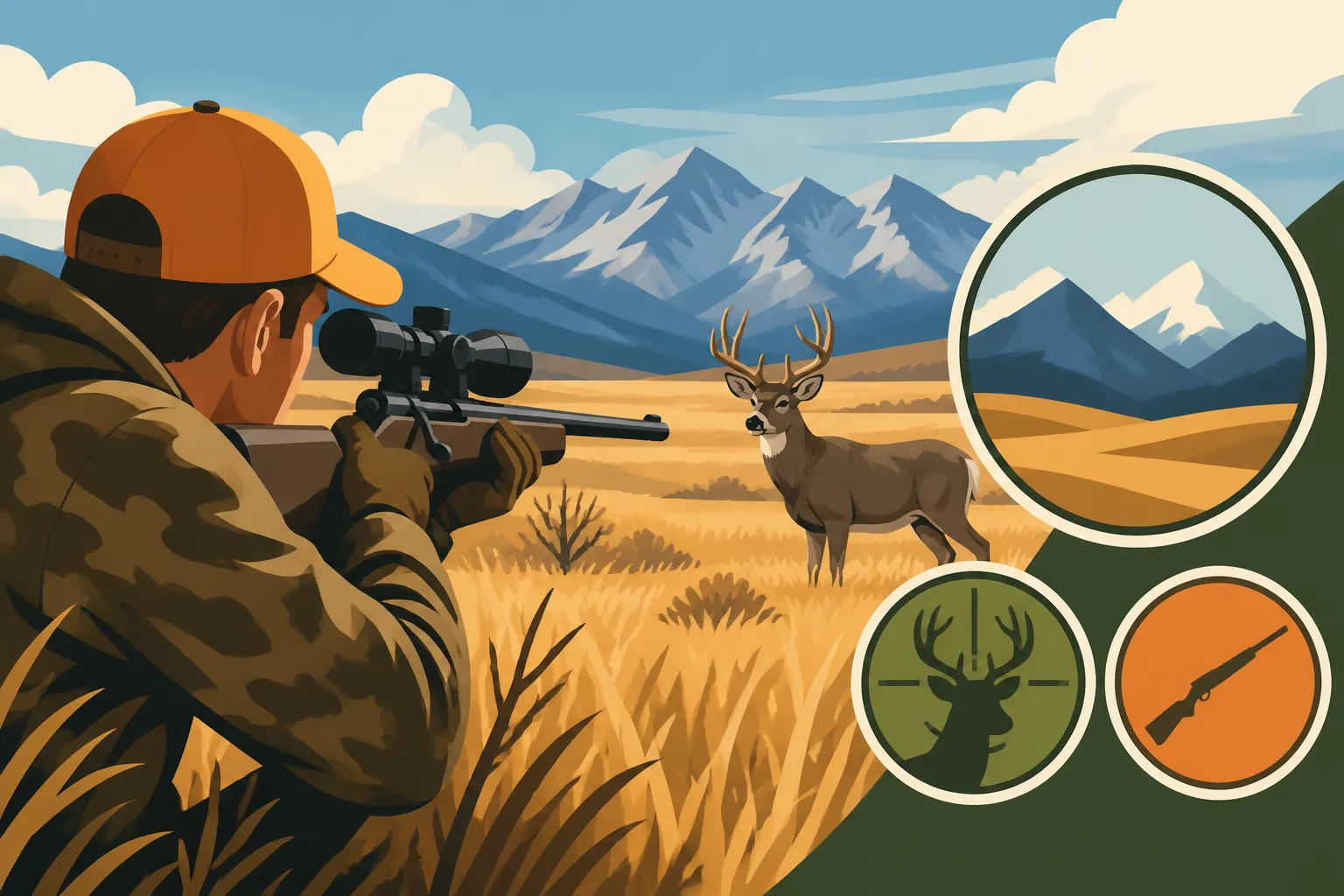
Colorado Plains Rifle Season Explained
The Colorado Plains Rifle Season can feel like a completely different world compared to the rugged mountain hunts most people associate with the state. Many hunters, especially those new to Colorado, get tangled up trying to understand the unique rules, tag allocations, and land access challenges that define hunting on the Eastern Plains. This guide is here to untangle that complexity, offering a realistic look at what it takes to pursue big game in Colorado's less-treed, but equally challenging, landscapes during the rifle seasons.
Understanding Colorado's Plains Rifle Season Structure
When you hear "Colorado hunting," your mind probably conjures images of majestic elk bugling in dense timber or mule deer navigating steep alpine basins. But head east from the bustling Front Range, and the landscape opens up dramatically into vast prairies and rolling hills, crisscrossed by river bottoms and agricultural fields. This is Colorado's Eastern Plains, and it offers a distinct hunting experience with its own set of rules, seasons, and challenges.
Why the Plains are Different
The geography of the Plains dictates everything from the species you'll encounter to the tactics you'll employ. Unlike the mountainous western slope, which is dominated by national forests and wilderness areas, the Eastern Plains are predominantly private land, often used for ranching and agriculture. This means public access can be spotty and highly competitive, making landowner relations or careful scouting of limited public parcels absolutely critical. The open terrain also shifts hunting strategies; forget still-hunting through thick aspens – here, it's all about long-range glassing, calculated stalks, and accurate shooting in often windy conditions. The seasons themselves are also structured differently, often with much longer durations or more specific species tags compared to the highly coveted, shorter mountain rifle seasons. This unique environment demands a completely different approach to preparation and execution.
Key Dates and Species
Colorado Parks and Wildlife (CPW) designates specific hunting units (GMUs) for the plains, generally east of I-25. Within these units, you'll find dedicated rifle seasons for species like whitetail deer, mule deer, and pronghorn. Unlike elk, which have four main rifle seasons, plains species often have a more expanded or specialized season structure. For instance, plains deer seasons might run for several weeks in October and November, sometimes overlapping or running concurrently with late archery or muzzleloader seasons in certain areas. Pronghorn seasons are typically shorter and occur earlier in the fall.
It’s crucial to understand that these seasons are specific to the plains units, and tags are usually draw-only, with some over-the-counter (OTC) opportunities for specific antlerless tags or leftover licenses if you're quick enough. Always double-check the current year's CPW Big Game Brochure for precise dates and unit specifics, as they can shift slightly year to year. Knowing the exact dates for species like pronghorn and deer will directly influence your application strategy and preparation.
Essential Licenses and Tags for Plains Hunting
Securing the right license and tag for a Colorado Plains Rifle Season hunt is arguably the most critical step, and it can feel like navigating a maze. Unlike the well-known over-the-counter (OTC) opportunities for elk in some mountain units, most plains big game tags are allocated through Colorado's primary draw system. This means advanced planning, understanding preference points, and being diligent with application deadlines are paramount.
Drawing Tags vs. Over-the-Counter (OTC) Opportunities
For most plains big game, especially antlered deer and pronghorn, you'll need to participate in the draw. This involves submitting your application to CPW months in advance, typically by early April, hoping your luck and preference points are enough to secure a tag in your chosen unit. Drawing an antlered mule deer or pronghorn tag on the plains can sometimes require several preference points, depending on the unit and its popularity. Whitetail tags, particularly antlerless tags, can sometimes be easier to draw or even found as leftover licenses after the main draw.
While true OTC rifle tags for antlered plains big game are rare, there are often leftover licenses available after the primary and secondary draws that can be purchased over-the-counter. These are usually for less desirable units, cow elk, antlerless deer, or sometimes specialty hunts. Keeping an eye on the CPW website around late July or early August is key for leftover licenses. Tools like GoHunt's research platform can be invaluable here, providing detailed draw odds and helping you identify units with a higher probability of drawing or potential leftover tag availability. Don't forget, you'll also need a valid Colorado hunting license and a Habitat Stamp regardless of how you acquire your big game tag.
Preference Points and How They Work for Plains Species
Colorado's preference point system is designed to reward hunters who have been applying for tags over several years without success. For plains deer and pronghorn, these points accumulate one per year when you apply for a first-choice limited license and are unsuccessful. They essentially give you a higher priority in subsequent draws. For example, if a specific GMU requires 2 preference points to draw an antlered pronghorn tag, you'd need to have applied and been unsuccessful for two years to have accumulated those points, making you eligible in the third year.
Understanding how many points are typically needed for your desired plains unit and species is crucial. Websites like GoHunt compile historical draw data, giving you a realistic idea of the point requirements for specific hunt codes. You can also opt to apply for only a preference point if you don't plan to hunt that year but want to build points for a future hunt. This strategy is common for hunters aiming for highly sought-after plains units that consistently require several points. Managing your preference points wisely, whether you're building them or trying to burn them, is a cornerstone of successful plains hunting in Colorado. You can learn more about the broader system in our guide on Colorado Preference Points Explained.
| Species (Plains) | Typical Tag Type | Draw Requirement | Common Points Needed (Estimate) | Season Length (Rifle) |
|---|---|---|---|---|
| Pronghorn | Buck (Antlered) | Draw Only | 2-5+ | Short (late Sept/early Oct) |
| Pronghorn | Doe (Antlerless) | Draw Only/Leftover | 0-2 (easier) | Short (late Sept/early Oct) |
| Mule Deer | Buck (Antlered) | Draw Only | 3-7+ | Medium (Oct-Nov) |
| Mule Deer | Doe (Antlerless) | Draw Only/Leftover | 0-2 (easier) | Medium (Oct-Nov) |
| Whitetail Deer | Buck (Antlered) | Draw Only | 1-3 | Medium (Oct-Nov) |
| Whitetail Deer | Doe (Antlerless) | Draw Only/Leftover | 0-1 (often OTC Leftover) | Medium (Oct-Nov) |
Note: Point requirements are estimates and vary wildly by GMU and year. Always consult the current CPW Big Game Brochure and draw odds resources like GoHunt for up-to-date information.
What You Can Hunt: Species and Regulations
The Colorado Plains, while not home to elk, offer fantastic hunting opportunities for other big game species, each presenting its own unique challenge and requiring distinct strategies. From the lightning-fast pronghorn to the elusive deer that inhabit the river bottoms and agricultural fields, understanding the behavior and regulations for each species is paramount to a successful hunt.
Pronghorn: The Plains Speedsters
Pronghorn are truly icons of the open plains, often spotted from miles away. Known for their incredible eyesight and blistering speed, they offer a thrilling hunt. Plains rifle seasons for pronghorn are typically short, usually occurring in late September or early October. Success often hinges on extensive glassing from elevated positions, identifying a buck, and then executing a long, patient stalk using terrain features for cover. Because of their keen vision, minimizing your silhouette and moving slowly are critical. Getting within rifle range can be a supreme challenge, making quality optics and knowing your ballistic data vital. Our Colorado Pronghorn Hunting Guide delves deeper into specific strategies.
Tags for pronghorn bucks are highly coveted and almost exclusively draw-only. Antlerless tags can be easier to draw, offering a great meat hunt opportunity. Regulations often specify legal shooting light, weapon type, and unit boundaries. Be meticulous in checking your tag for either-sex or antlerless restrictions, and always ensure you're hunting within the correct GMU. The vast open spaces can be deceptive, and accidentally crossing unit boundaries or hunting on private land without permission are easy mistakes to make if you're not constantly checking your maps.
Whitetail and Mule Deer: Eastern Plains Deer Hunting
While mule deer are synonymous with Colorado's mountains, healthy populations thrive on the Eastern Plains, particularly in river drainages, creek bottoms, and areas bordering agricultural fields. Whitetail deer also call these areas home, often preferring the dense riparian corridors along major rivers like the South Platte or Republican. Plains deer rifle seasons typically open in October and can run into November, offering a decent window for hunters. Tags are predominantly draw-only, though antlerless tags or specific plains units might have easier draw odds. For a comprehensive overview, check out our Colorado Mule Deer Hunting Guide and our guide on Colorado Whitetail Deer Hunting.
Hunting deer on the plains often involves covering a lot of ground with good optics, focusing on areas with thick cover adjacent to food sources. For whitetails, this means keying in on river bottoms and dense shelterbelts. For mule deer, it might be the slightly rolling, broken country or deep coulees. Stalking can be difficult in the open, so many hunters rely on finding pinch points, travel corridors between feeding and bedding areas, or setting up ambush points near water sources or field edges, especially in the mornings and evenings. Rifle calibers suitable for longer shots are generally favored, as shot distances can easily exceed 200 yards.
Other Opportunities: Small Game and Predators
Beyond big game, the Colorado Plains offer a wealth of opportunities for small game and predator hunting. Many plains big game hunters will carry a shotgun or small caliber rifle in addition to their deer or pronghorn rifle, as combination hunts are entirely feasible. Species like cottontail rabbits, jackrabbits, and various upland birds (pheasant, quail, grouse) can be found in abundance, particularly in areas with good cover and water. These hunts often require separate licenses, but they can add an exciting dimension to your big game trip.
Predators such as coyotes are also plentiful and can be hunted year-round with a valid small game license. For hunters looking to extend their time in the field or simply enjoy additional hunting challenges, calling coyotes can be a thrilling experience in the vast plains landscape. Always check current CPW regulations for specific seasons, bag limits, and licensing requirements for all species, as these can change annually and vary by GMU.
Navigating Public and Private Land Access
The biggest hurdle for many hunters eyeing the Colorado Plains Rifle Season isn't finding game, but finding legal access to huntable land. Unlike the western slope, where vast tracts of National Forest and BLM land offer relatively open access, the Eastern Plains are dominated by private holdings. This reality requires a different kind of scouting and planning, shifting the focus from simply finding game sign to first securing a place to hunt.
Unlocking Public Land: SWAs and BLM
While limited, public land does exist on the Colorado Plains, primarily in the form of State Wildlife Areas (SWAs) and scattered Bureau of Land Management (BLM) parcels. SWAs are managed by CPW and are specifically acquired and managed for wildlife habitat and public recreation, including hunting. These can be goldmines, but they also tend to receive significant hunter pressure, especially during popular seasons. You might find some excellent deer and pronghorn populations on these properties, but be prepared to share the space.
BLM land on the plains is often interspersed with private holdings, sometimes in checkerboard patterns, which can create access challenges. Using mapping tools like onX Hunt or even GoHunt's mapping features is absolutely essential here. These tools allow you to clearly identify property boundaries, delineate public vs. private land, and locate legal access points. Some BLM parcels might be "landlocked" by private property, requiring explicit permission from landowners to cross, or only accessible via public roads that run through them. Always research and confirm access points before your hunt to avoid trespassing. Our guide on Colorado Public Land Hunting Guide offers broader strategies for these areas.
The Reality of Private Land Access
The vast majority of the Eastern Plains is private property, making landowner permission a critical component of many plains hunts. This can be intimidating for hunters accustomed to public land, but it's a skill worth developing. Approaching landowners politely, respectfully, and well in advance of the season is key. Offering to help with chores, offering a small access fee, or simply introducing yourself can go a long way. Many landowners are open to granting permission, especially for antlerless tags to help manage deer populations, but they are often inundated with requests.
Some hunters opt for guided hunts on private ranches, which often come with guaranteed access and sometimes even a guaranteed tag through a landowner voucher program. While this is a more expensive option, it can significantly increase your chances of success and remove the headache of finding land. Others utilize Colorado's Walk-In Access (WIA) program, where CPW leases hunting rights from private landowners, opening up thousands of acres to public hunting. The WIA Atlas, available through CPW, is an invaluable resource for finding these designated areas, but be aware that WIA properties often have specific rules and open/close dates that must be strictly followed. You can read more about it in our Colorado Walk-In Access Program guide. Regardless of the method, obtaining explicit, written permission for private land hunting is non-negotiable.
Tactics and Gear for a Successful Plains Hunt
Hunting the Colorado Plains requires a distinct set of tactics and gear compared to mountain hunting. The wide-open spaces, often extreme weather, and emphasis on long-range shooting mean your approach needs to be tailored to this unique environment. Forget tree stands and short-range stalking; on the plains, patience, good optics, and precision are your best friends.
Spot and Stalk in Open Country
The primary method of hunting big game on the plains is spot and stalk. With excellent visibility, often spanning miles, you'll spend a significant amount of time glassing from elevated positions, using high-quality binoculars or a spotting scope. Identify game, assess wind direction, and then plan your approach using every available fold in the terrain, dry creek bed, or small rise to stay out of sight. This requires extreme patience and slow, deliberate movement. A quality tripod for your binoculars is almost as important as the optics themselves, allowing for stable, fatigue-free glassing sessions.
For pronghorn, the challenge is getting close enough without being spotted by their incredible eyesight. For deer, especially whitetails, the stalk often involves navigating dense cover along river bottoms or field edges, where getting too close can spook them into adjacent private property. Wind is a constant factor on the plains, and it can swirl unpredictably, carrying your scent directly to your quarry. Always try to approach with the wind in your favor, or at least a crosswind. Our article on Spot-and-Stalk Hunting in Colorado offers valuable insights that apply well to the plains.
Long-Range Shooting Considerations
Given the open nature of the plains, shot distances can frequently be long. It's not uncommon to take shots at 200, 300, or even 400 yards, especially on pronghorn that are incredibly difficult to approach closer. This means proficiency with your rifle at these distances is not just an advantage, it's a necessity. Spend ample time at the range, practicing from various field positions – prone with a bipod, kneeling, and even standing with shooting sticks. Know your rifle's ballistic drops intimately, and use a rangefinder religiously.
Wind compensation is another critical skill for plains hunting. A 10-20 mph crosswind can push a bullet several feet off target at extended ranges, so understanding how wind affects your specific caliber and bullet is paramount. Investing in a good ballistic calculator or app can help, but nothing replaces actual range time in windy conditions. Over-gunning isn't necessarily the answer, but choosing a flat-shooting cartridge (like a .270 Win, 6.5 Creedmoor, or .300 Win Mag) paired with good quality hunting ammunition designed for accuracy and reliable expansion at various ranges will give you the best chance of ethical success. For more detailed advice, check out our guide on Colorado Long-Range Shooting Considerations.
Essential Gear for Plains Conditions
Your gear list for a plains hunt will differ significantly from a backcountry mountain hunt. While you still need quality clothing for layering, the emphasis shifts to protection from wind, sun, and often dusty conditions.
- Optics: High-quality binoculars (10×42 or 12×50) and a spotting scope (15-45x or 20-60x) are non-negotiable for identifying game at long distances. A sturdy tripod is equally important.
- Rangefinder: A reliable laser rangefinder is essential for precise shot placement.
- Rifle & Ammunition: A rifle chambered in a flat-shooting caliber, zeroed accurately, and loaded with premium hunting ammunition. Bring extra rounds.
- Shooting Support: A bipod (for prone shooting) and/or shooting sticks are vital for stability in the open.
- Clothing: Layered clothing with a strong emphasis on windproof outer shells. Good quality base layers and a warm mid-layer are necessary for cold mornings and evenings. A wide-brimmed hat and sunglasses protect from the sun.
- Backpack: A daypack capable of carrying water, snacks, extra layers, game bags, and basic first-aid.
- Navigation: GPS device or smartphone with a reliable mapping app (like onX Hunt or GoHunt), compass, and paper maps as backup.
- Water: Carry more water than you think you'll need; the plains can be dehydrating.
- Game Bags: Essential for protecting meat, especially if you have a long pack out to your vehicle.
- Emergency Kit: Basic first aid, signaling mirror, whistle, fire starter.
Always prepare for rapidly changing weather conditions; a warm, sunny morning can quickly turn into a cold, windy, or even snowy afternoon.
Common Challenges and Overcoming Them
Hunting the Colorado Plains, while rewarding, comes with its own unique set of challenges. From dealing with other hunters in limited public areas to battling unpredictable weather, being prepared for these obstacles can make or break your hunt.
Dealing with Hunter Pressure
Public land on the Eastern Plains, though limited, can see significant hunter pressure, especially during opening weekends or for more accessible units. This pressure can push game onto adjacent private lands, make animals more nocturnal, or simply make it difficult to find unpressured animals. To mitigate this, consider hunting during weekdays if possible, or focusing on areas that require a bit more effort to access (e.g., walk-in only sections of SWAs). Early season or late-season hunts might also see less pressure.
Another strategy is to identify overlooked pockets of habitat. While everyone might be focusing on the big river bottoms, a small, isolated coulee or patch of dense brush could hold a hidden buck. Scouting both virtually with tools like GoHunt and physically beforehand helps you pinpoint these areas. Being polite and respectful to other hunters is also crucial; a friendly wave goes a long way, and you might even gain valuable information. If you're consistently encountering other hunters, it might be time to move to a different area. Our guide on How to Hunt Elk on Public Land Pressure offers general strategies that can be adapted to any pressured public land hunt.
Weather Extremes and Field Preparedness
The weather on the Colorado Plains can be incredibly volatile. Expect wide temperature swings, from warm, sunny days to bitter cold, windy conditions, sometimes all within a single hunt. Strong winds are almost a constant, making glassing difficult, chilling you to the bone, and impacting shot accuracy. Snowfall, even heavy snow, is not uncommon in the fall and early winter.
Being prepared for these extremes is vital for safety and comfort. Layer your clothing to adapt to changing temperatures, ensuring your outer layers are windproof and waterproof. Carry extra layers in your pack. Protect exposed skin from sun and windburn. Hydration is also key, even in cold weather. If a significant weather front rolls in, like a blizzard, have a plan for shelter and be willing to cut your hunt short if conditions become unsafe. Always inform someone of your hunting plans, including your route and expected return time, especially if hunting solo in remote areas. A well-stocked emergency kit in your vehicle, including blankets, extra food, water, and jumper cables, is also a wise precaution.
Disclaimer
Please remember that hunting regulations, season dates, and tag availability in Colorado are subject to change. Always consult the most current Colorado Parks and Wildlife (CPW) regulations and brochures for precise and up-to-date information before planning and executing your hunt. This guide is for informational purposes only and should not replace official CPW documentation.