How to Hunt Bulls After the Rut Ends
That exhilarating bugling from the rut, once the soundtrack of your elk hunting dreams, is now just a distant echo. Many hunters find themselves scratching their heads when the mountains go quiet, wondering where all those vocal bulls disappeared to after the peak of the breeding season. Hunting elk after the rut in Colorado presents a completely different challenge, demanding a significant shift in strategy and a deep understanding of their post-breeding behavior. This guide will walk you through how to locate, approach, and ethically pursue these often reclusive, silent bulls when the cow calls and bugles fade.
Understanding Post-Rut Elk Behavior in Colorado
The transition from the frenzied rut to the quiet post-rut period is one of the most drastic shifts in an elk's annual cycle. Gone are the days of aggressive displays and constant calling. As hunters, recognizing and adapting to these changes is paramount to success.
The Shift from Hyper-Activity to Recovery
Imagine running a marathon every day for several weeks straight, constantly fighting and chasing. That's essentially what a bull elk experiences during the rut. They burn an incredible amount of energy, often losing significant body weight and exhausting themselves both physically and mentally. Their primary focus during the rut is breeding, and feeding takes a backseat. Once the cows are bred and the estrus cycle passes, that intense drive diminishes, replaced by an overwhelming need for recovery.
This recovery phase means bulls become much more cautious and less tolerant of human presence. They're not keen on challenging other bulls, nor are they as responsive to calls. Their bodies are telling them to conserve energy, rebuild fat reserves lost during the rut, and seek refuge from any additional stress. This profound exhaustion means they will actively avoid anything that requires unnecessary exertion or confrontation.
New Priorities: Food, Water, and Seclusion
With the rut behind them, a bull's hierarchy of needs flips entirely. Their number one priority becomes finding high-calorie forage to replenish their depleted fat stores. They need to eat, and they need to eat a lot. This drive for sustenance will dictate their movements more than anything else. Secondly, reliable and accessible water sources are crucial, especially as temperatures often drop and natural springs might freeze or become less abundant at higher elevations.
Finally, and perhaps most importantly, is seclusion. Post-rut bulls are often wary. They’ve been harassed by rival bulls, potentially by predators, and certainly by hunters throughout the early seasons. They crave security and will seek out the thickest, nastiest cover they can find. Think dark timber, steep canyons, north-facing slopes with dense pockets of trees, and remote drainages where human activity is minimal. They are trying to disappear.
Breaking Up Bachelor Groups and Solitary Bulls
During the rut, you often see bulls associated with herds of cows, either as the dominant herd bull or satellite bulls trying to get in on the action. After the rut, this dynamic typically changes. Dominant bulls often separate themselves from the cows and calves, opting for solitude or occasionally forming small "bachelor groups" with other bulls of similar size and age. These bachelor groups are not the same as the pre-rut bachelor groups; they are often smaller, quieter, and focused purely on survival and recovery.
Solitary bulls, especially older, wiser ones, will simply melt into the thick timber and stay there. They've learned that safety lies in isolation and dense cover. They won't be bugling to advertise their presence, and they won't be traveling long distances unless absolutely necessary to find food or water. This makes them incredibly challenging to locate, requiring hunters to shift from an auditory-driven search to a visual, sign-driven, and patience-based approach. Understanding these changes is your first step in learning how to hunt elk after the rut ends.
Locating Post-Rut Bulls in Colorado
Finding a quiet bull in the vastness of the Colorado mountains after the rut can feel like searching for a needle in a haystack. However, by understanding their post-rut priorities and focusing your efforts on specific types of terrain and resources, you can significantly improve your odds.
Targeting Food Sources: North-Facing Slopes and Thermal Belts
After the rut, elk are in recovery mode, meaning they need to pack on calories. Look for areas with abundant, high-energy forage. In many parts of Colorado, this often means focusing on north-facing slopes and thermal belts. North-facing slopes generally hold moisture longer, allowing vegetation to remain greener and more palatable into the late fall and early winter. These areas can provide crucial browse and grasses that other, drier slopes might lack. When you're glassing, pay close attention to the edges of timber on these slopes, especially where they meet open parks or meadows that still offer good feed.
Thermal belts are another critical consideration. These are specific elevation bands on a mountainside where cold air drains into the valleys below, resulting in warmer temperatures higher up. Bulls, especially those trying to conserve energy and rebuild their body fat, will often seek out these warmer pockets for bedding during colder nights. These areas typically have a mix of dense timber for security and open areas for feeding. Learning How to Hunt North-Facing Slopes for Elk effectively can give you a significant advantage in finding these post-rut giants. Look for areas with a mosaic of thick conifers providing cover, interspersed with aspen groves or grassy benches that offer nutritious forage.
Utilizing Water Sources and Security Cover
Even in late fall, water is a non-negotiable for elk. While they might get some moisture from snow or dew, direct access to water sources remains vital. Secluded wallows, small springs, and seeps in remote drainages become magnets for bulls. These spots, often overlooked by hunters focused on the rut, can be prime locations. Unlike the rut, where bulls might visit water more opportunistically, post-rut bulls will often integrate their feeding and bedding areas around reliable water.
Security cover is paramount. Bulls want to feel safe and undisturbed. This means targeting the densest timber, particularly dark timber, and the steepest, most broken terrain you can find. Think about areas that are difficult for humans to access, such as deep canyons, thick stands of lodgepole pine, spruce, or fir. These areas provide visual security and protection from the elements. These are the places where elk feel least pressured. Hunters who are willing to push into these areas often find undisturbed animals. For a deep dive into specific strategies, check out our guide on How to Hunt Elk Water Holes and How to Find Elk in Deep Timber.
E-Scouting and Boots-on-the-Ground Reconnaissance
Before you even tie your boots, extensive e-scouting is your best friend. Tools like GoHunt offer invaluable mapping layers that can help you identify north-facing slopes, thermal belts, water sources, and dense timber pockets from the comfort of your home. You can mark potential bedding areas, feeding zones, and travel corridors, looking for the specific combination of cover, food, and water that post-rut bulls prefer. Pay attention to topographic maps for saddles, benches, and ridges that connect these key features. The ability to overlay public land boundaries and historical burn areas can also reveal overlooked opportunities.
Once you have a few promising spots identified through e-scouting, it's time for boots-on-the-ground reconnaissance. This doesn't necessarily mean a full-blown scouting trip weeks before the hunt, but perhaps an early morning hike into a potential area to look for fresh sign. Post-rut sign includes tracks, droppings (often more abundant as they are feeding heavily), rubs (though less fresh than during the rut), and sometimes shed antlers from previous seasons, indicating historical use. Learning How to E-Scout Before a Colorado Hunt effectively can save you countless hours of unproductive walking. Remember, even with the best e-scouting, nothing beats confirming your suspicions with actual field observations.
Effective Hunting Tactics for Quiet Bulls
Hunting after the rut demands a different approach. The aggressive calling and high-octane pursuits of September give way to a slower, more deliberate, and often more physically demanding style of hunting.
Silent Still-Hunting and Tracking
When elk aren't bugling, your ears become less useful than your eyes and nose. Still-hunting becomes a primary tactic. This means moving incredibly slowly, taking only a few steps, then stopping to observe and listen for several minutes. Every rustle, every flicker of movement, every scent on the wind could be an elk. Your focus should be on stealth, breaking up your silhouette, and moving with the wind consistently in your favor. Pay close attention to subtle terrain features that might funnel elk or obscure your movement.
Tracking also comes into its own during the post-rut. Fresh tracks in mud, snow, or soft dirt can lead you directly to a feeding or bedding area. Learn to differentiate fresh tracks from old ones, and practice identifying the gait and size of different animals. A single, large bull track heading into thick timber is a strong indicator. Combine silent movement with keen observation of tracks and other fresh sign like disturbed leaves or recently nipped browse. Our guide on How to Still-Hunt Colorado Timber offers more specialized tips for these dense environments. Always consider How to Use the Wind Hunting Colorado Elk; it's critical for success in any hunting method, but especially when still-hunting.
Glassing and Patient Observation
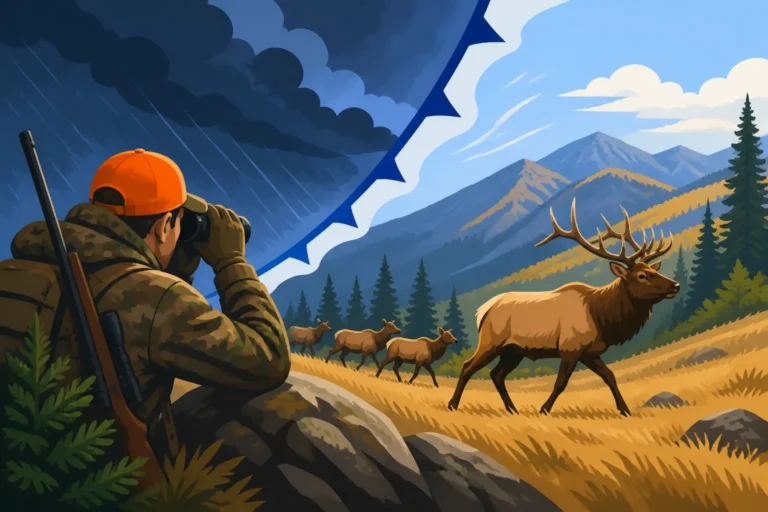
Patience is a virtue, and in post-rut hunting, it's a necessity. Bulls are often bedded in dense cover during the day, making them nearly impossible to see unless they move. This is where strategic glassing comes in. Find a high vantage point overlooking an area with good feed, water, and security cover, then settle in for hours. Use high-quality binoculars (10×42 or 12×50 are common choices) and a spotting scope if you have one, scanning every inch of timber, every shadow, and every opening. Don't just scan; pick apart the landscape. Look for horizontal lines, dark patches that look "out of place," or the subtle twitch of an ear.
Early morning and late evening are prime times to glass as bulls move between bedding and feeding areas. If you're hunting in a unit with big, open basins, dedicate significant time to glassing. This technique can feel tedious, but it is incredibly effective for locating bedded or subtly moving animals. Sometimes, all it takes is a glimpse of an antler tip or the flick of a tail. Knowing How to Glass Big Colorado Basins is a skill that will serve you well in this situation, and investing in Best Optics for Colorado Big Game will pay dividends. GoHunt's mapping features can also help you identify optimal glassing points before you even hit the field.
The Role of Calling Subtle vs. Aggressive
Forget the screaming bugles and aggressive chuckles of the rut. Post-rut calling is a different beast entirely, requiring extreme subtlety and a deep understanding of elk vocalizations. Aggressive calling will almost certainly send a wary bull running. Instead, focus on soft cow mews, contented chirps, or perhaps a light, questioning "glunk." The goal isn't to challenge or attract a bull looking for a fight; it's to sound like another peaceful elk, potentially drawing a curious bull a few extra yards or getting him to stand up in his bed.
The key with post-rut calling is less about making a lot of noise and more about using it strategically to confirm presence or to coax a bull into a shooting lane once you're already in close proximity. Often, no calling at all is the best calling strategy. If you do use calls, be prepared for a long wait and be absolutely still. It’s a slow game, and patience is critical. If you suspect an elk is nearby and silent, learning How to Call in a Silent Bull can be a game-changer, but remember, less is often more. Set up an ambush downwind of a likely travel corridor or feeding area, and if you must call, do so sparingly and softly.
Gear Considerations and Mental Fortitude
Hunting post-rut bulls in Colorado means dealing with colder temperatures, potentially more challenging snow conditions, and the need for absolute stealth and sustained effort. Your gear and your mindset become even more critical than during the warmer, more active rut.
Essential Gear for Cold Weather and Stealth
First and foremost, your layering system is paramount. Temperatures can swing wildly in the Colorado mountains during late seasons. You'll need base layers that wick moisture, mid-layers for insulation (fleece or puffy jackets), and a durable, quiet, waterproof, and windproof outer shell. Merino wool or synthetic blends are superior to cotton for managing moisture and staying warm. Quiet clothing is non-negotiable when still-hunting or stalking silent elk in close quarters. Every rustle and crunch will carry far in the crisp, cold air.
Footwear is another critical component. You'll need sturdy, insulated, and waterproof boots with excellent traction, especially if you encounter snow or ice. Gaiters are a wise addition to keep snow and debris out of your boots. For packing out an animal, a reliable, comfortable backpack with sufficient capacity is essential, such as those from brands like Mystery Ranch or Kifaru. Don't forget quality optics—a good pair of binoculars is non-negotiable for glassing dense timber and distant slopes, and a rangefinder is vital for accurate shot placement in mountain terrain. Extra batteries for headlamps and GPS devices are also a must, as cold weather drains them faster. For specific recommendations, check out our guides on the Best Backpack for a Colorado Elk Hunt and How to Handle Cold-Weather Gear for Colorado.
The Mindset: Persistence and Adaptability
Post-rut hunting is often a grind. The exhilarating bugles and herd activity of September are gone, replaced by a quiet, often solitary pursuit that tests your mental resolve. You need to embrace persistence. You might walk for miles without seeing fresh sign, or spend hours glassing only to see squirrels. The success rate for late-season rifle hunts can be lower than during the rut, not because there are fewer elk, but because they are so much harder to find and approach.
Adaptability is equally important. Weather can change in an instant, from clear skies to a blizzard. Snowfall can either hinder you (making travel difficult) or help you (revealing fresh tracks). You need to be prepared to alter your plans, shift your focus from one area to another, and constantly reassess the conditions. This isn't a hunt for the faint of heart; it's for those who relish the challenge of outsmarting an incredibly wary animal in its element. Embrace the solitude, enjoy the quiet beauty of the mountains, and remember that every step is part of the experience. For those considering a solo venture, our Colorado DIY Elk Hunting Guide offers more insights into the self-reliance required.
Comparing Pre-Rut vs. Post-Rut Elk Hunting Strategies
| Feature/Strategy | Pre-Rut (Sept-Early Oct) | Post-Rut (Late Oct-Nov) |
|---|---|---|
| Elk Behavior | Highly vocal, aggressive, focused on breeding. Bulls with cows. | Quiet, reclusive, focused on recovery, food, and security. Bulls often solitary or in small bachelor groups. |
| Primary Location | Around cow herds, wallows, active rutting areas. | Dense timber, north-facing slopes, thermal belts, secluded water/feed. |
| Calling Strategy | Aggressive bugling, cow calls, challenges. | Subtle cow mews, soft chirps; often no calling is best. |
| Movement | Active, moving between cow herds, sometimes covering significant ground. | Minimal movement, travel between bed/feed/water is short and concealed. |
| Hunting Tactic | Calling, ambushing bugling bulls, following herds. | Silent still-hunting, glassing for hours, tracking, ambushing travel routes. |
| Physical Demand | High due to chasing vocal bulls. | High due to covering vast, often difficult terrain silently. |
| Hunter Pressure | High in many accessible areas. | Can be lower, but elk are more sensitive to any pressure. |
| Mindset | Opportunistic, reactive to elk sounds. | Patient, persistent, proactive in searching for sign and terrain. |
Disclaimer
Hunting is an inherently dangerous activity. This guide is for informational purposes only and does not substitute for proper training, safety precautions, or adherence to all local, state, and federal hunting regulations. Always consult Colorado Parks and Wildlife (CPW) for the most current rules, season dates, and unit-specific restrictions. Be prepared for rapidly changing weather conditions and consult with local experts or guides if you are unfamiliar with the terrain. Practice ethical hunting and responsible outdoor recreation.