Hunting the Grand Mesa National Forest
Stepping into a vast public land unit for the first time can feel overwhelming, especially in a diverse landscape like Colorado. Many hunters struggle to pinpoint exactly where to start, fearing wasted time or unknowingly pressuring game into inaccessible areas. This guide cuts through that uncertainty, offering a comprehensive look at hunting the Grand Mesa National Forest, from its unique terrain to successful tactics, helping you plan a productive and enjoyable hunt.
Understanding the Grand Mesa National Forest Terrain and Habitat
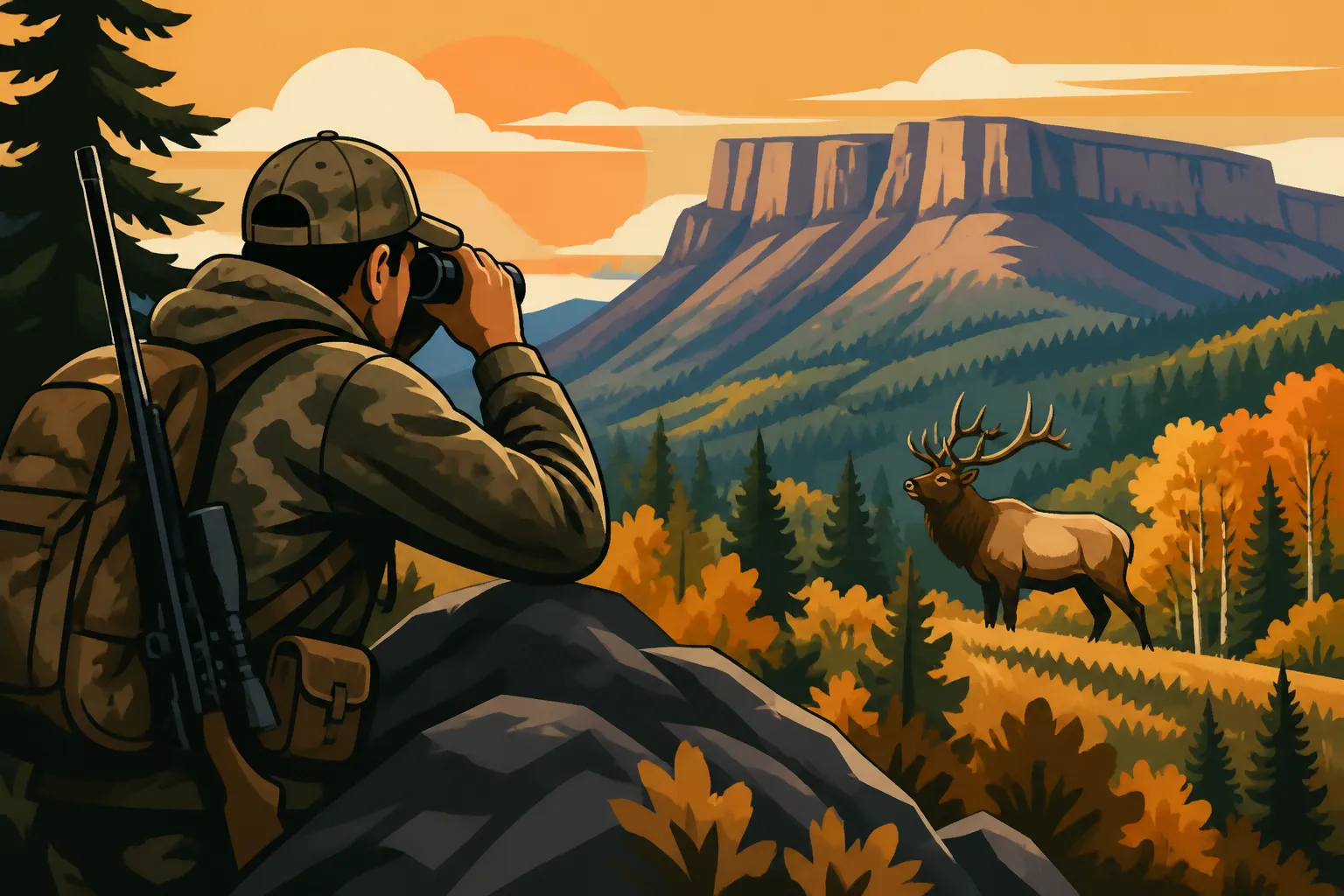
The Grand Mesa National Forest is unlike many other mountainous regions in Colorado. Instead of a classic peak-and-valley structure, you're dealing with the world's largest flat-top mountain. This unique geography creates a hunting environment that can be both incredibly productive and deceptively challenging. Hunters often find themselves on a vast plateau, then suddenly confronted with steep, rugged drainages and canyons that drop away abruptly. Knowing this distinctive layout is your first step to success.
Topography and Elevation Challenges
When considering the sheer scale of the Grand Mesa, one of the biggest challenges hunters face is simply figuring out where the elk and deer are hiding. Unlike some flatter terrains, the Mesa presents a unique "tabletop" geography. You'll find yourself navigating a vast, relatively flat expanse on top, but the edges plunge dramatically into steep canyons and drainages. This dramatic topography means elk can be anywhere from the dense spruce-fir forests at 10,000 feet, seeking shade and security, to the aspen groves closer to 8,500 feet, browsing on tender shoots. The elevation across the Mesa ranges roughly from 8,000 feet on its lower flanks to over 11,000 feet at its highest points. This altitude difference isn't just a number; it dictates the type of vegetation, the snowpack, and, most importantly, the physical exertion required for even a short walk. Hunters coming from sea level will certainly feel the thin air, and even those accustomed to altitude need to be prepared for the relentless ups and downs of the broken country that defines the Mesa's edges.
The plateau itself offers easier walking in many areas, with large open parks and meadows interspersed with timber. However, don't let the flat top fool you into thinking it's easy hunting. Game animals often use the numerous "fingers" of timber extending into the parks for cover, and those abrupt drainages offer perfect escape routes and bedding areas that can be incredibly difficult to access or effectively hunt. Expect to encounter everything from gentle slopes to incredibly steep, shale-covered hillsides that demand careful foot placement and significant physical stamina. Understanding this blend of flat and steep is crucial for planning your daily hunts and managing your energy.
Key Vegetation Zones and Wildlife Food Sources
The Grand Mesa's diverse elevation and ample moisture translate into a rich tapestry of vegetation, providing excellent food and cover for big game. At higher elevations, you'll predominantly find vast stands of spruce and fir, creating dark, dense timber that elk especially love for security and bedding. These areas are often cooler and hold snow longer, offering refuge during warmer early seasons. Below the spruce-fir, expansive aspen groves dominate. These beautiful, golden stands are a critical food source, offering nutritious browse for both elk and mule deer, particularly during the late summer and fall. Aspen stands often have a rich understory of forbs and grasses that deer and elk graze on.
As you move to slightly lower elevations or into specific drainage bottoms, you'll encounter pockets of pine, various shrubs, and willow thickets. These willow bottoms are often associated with water sources and can be absolute magnets for elk, especially during the rut when bulls are seeking cows and wallowing. The numerous open parks and meadows, often filled with nutritious grasses, serve as primary feeding grounds during dawn and dusk. Understanding this vertical stratification of vegetation is key to patterning game. Elk might bed high in the spruce-fir during the day, then drop down to the aspens or open parks to feed in the evenings. Mule deer, while also using aspens, might favor the more open, broken country with sagebrush and bitterbrush on the Mesa's fringes, especially during the later seasons.
Water Sources and Their Importance for Game
One of the defining characteristics of the Grand Mesa National Forest is its abundance of water. The Mesa is dotted with over 300 lakes and reservoirs, fed by snowmelt and natural springs. This prevalence of water, along with numerous creeks, seeps, and wallows, makes the Grand Mesa a highly attractive habitat for big game, particularly elk and mule deer. These water sources are absolutely crucial for game animals, especially during dry periods or the intense activity of the rut. You'll often find game trails leading directly to these water points, making them prime locations for ambush, particularly during mid-day when animals are seeking a drink.
Beyond just drinking, elk frequently use wallows, which are muddy depressions they roll in to cool off, rub off shedding velvet, and spread their scent during the rut. Identifying active wallows can be a potent scouting technique. Pay close attention to the areas around smaller, less obvious seeps and springs in heavy cover; these often see less human pressure than the larger, more visible lakes. A hunter ignoring water sources on the Grand Mesa is missing a major piece of the puzzle. Even during cold rifle seasons, animals still need to drink, and these concentrated areas can be incredibly productive for locating game.
Game Species and Seasons on Grand Mesa
The Grand Mesa is renowned for its diverse hunting opportunities, making it a fantastic destination for various big game species. While elk certainly steal the spotlight for many, the Mesa also offers solid chances for mule deer and black bear, alongside smaller game. Understanding the typical behavior of these animals and their seasonal patterns is crucial for planning a successful hunt. The unique blend of timber, open parks, and steep drainages provides ideal habitat for multiple species.
Elk Hunting Opportunities
The Grand Mesa National Forest holds a strong and healthy elk population, consistently drawing hunters from across the country. This means you'll find plenty of elk, but it also means there can be significant hunting pressure, especially during the more popular rifle seasons. The Mesa offers various opportunities, from archery to muzzleloader and general rifle seasons, with over-the-counter (OTC) options available for certain archery and rifle hunts in specific units. These OTC tags make the Grand Mesa accessible without needing to accumulate preference points through the draw, which is a huge draw for many hunters. When considering Colorado Elk Hunting Methods Explained, still-hunting the dense spruce and fir timber is a classic and effective tactic, especially during mid-day when elk are bedded.
During the archery season, typically late August into September, the rut can be spectacular. Bulls are vocal, and calling tactics can be very effective. This is when you might hear the electrifying bugles echoing across the canyons, a truly unforgettable experience. For those venturing into the Mesa during archery season, mastering various calls and understanding elk communication is paramount. Later, in the muzzleloader season (mid-September), and throughout the rifle seasons in October and November, elk will often retreat to the deepest, darkest timber, or use the steepest canyons and thick aspen stands for cover as pressure increases. Learning How to Hunt Elk in the Dark Timber becomes a vital skill, often requiring slow, deliberate movement and keen observation.
Mule Deer Strategies
While elk may be the primary draw, the Grand Mesa also offers some excellent mule deer hunting, particularly for those willing to work a bit harder and explore different habitat types. Mule deer often prefer the more open, broken country, especially along the Mesa's fringes, lower elevations, and areas interspersed with sagebrush, oak brush, and scattered pines. You'll find them using the transition zones between dense timber and open parks, or tucked into pockets of cover along canyon rims. Colorado Mule Deer Hunting Guide emphasizes the effectiveness of spot-and-stalk tactics for mule deer, and this holds true on the Mesa.
The expansive open parks and slopes on the Mesa are ideal for glassing at dawn and dusk, especially with quality optics. Find a good vantage point, settle in, and meticulously pick apart the terrain, looking for antlers or the tell-tale flicker of an ear. Mule deer can be surprisingly elusive, especially older bucks that know how to use the terrain to their advantage. As with elk, hunting pressure can push deer into thicker cover, so don't be afraid to leave the roads and explore deeper. The later rifle seasons, particularly the 3rd and 4th seasons, can coincide with the early stages of the mule deer rut at lower elevations, potentially offering opportunities to catch bucks on the move.
Other Game Animals
Beyond elk and mule deer, the Grand Mesa National Forest provides opportunities for other exciting species. Black bears are prevalent across the Mesa, often found in thick timber, around berry patches, and in drainages. While many bear harvests are incidental for hunters pursuing elk or deer, Colorado does offer specific seasons for bear, including spring and fall hunts. If you're specifically targeting bear, understanding their seasonal food sources and bedding areas is key. The berries and acorns in certain areas of the Mesa can be bear magnets in the late summer and fall. For a deeper dive into pursuing these animals, check out our Colorado Black Bear Hunting Guide.
For upland bird enthusiasts, the Grand Mesa is a fantastic destination for grouse. Dusky (Blue) Grouse, and sometimes Spruce Grouse, can be found in abundance within the spruce-fir and aspen forests. They are often walked up along old logging roads, trails, or while still-hunting for big game. Carrying a small gauge shotgun or even a .22 pistol while big game hunting can provide a fun bonus opportunity for a delicious addition to your camp dinner. These birds provide a great way to break up the intense focus of big game hunting and offer a more relaxed experience.
| Game Species | Primary Habitat | Typical Season | Notes |
|---|---|---|---|
| Elk | Dense spruce-fir timber, aspen groves, high basins, willow bottoms | Archery: Late August – September Muzzleloader: Mid-September Rifle: October – November (multiple seasons) |
Strong populations but often pressured. Seek refuge in dark timber and steep drainages. OTC tags available for certain archery and 2nd/3rd rifle seasons. Vocal during the rut (archery). |
| Mule Deer | Edge habitat, open parks, lower elevation brush, broken country | Archery: Late August – September Rifle: October – November (multiple seasons) |
Good numbers, often found along fringes and transition zones between timber and open areas. Spot-and-stalk tactics are highly effective. Draw-only for most rifle seasons. |
| Black Bear | Thick timber, berry patches, drainages | Archery: Early September Rifle: September – November |
Often harvested incidentally by elk/deer hunters. Specific draw-only tags available. Look for food sources like berries and acorns in late summer/fall. |
| Dusky Grouse | Aspen stands, conifer forests, willow thickets | September – November | Excellent upland bird hunting opportunity, often walked up while hunting big game. Provides a delicious camp meal. |
Access and Navigation Strategies for Grand Mesa
Navigating the Grand Mesa National Forest effectively is paramount to a successful hunt. Its vastness and the mix of accessible roads, wilderness areas, and interspersed private land mean that careful planning and good tools are essential. Feeling lost or unsure of boundaries can quickly derail a hunt and lead to frustration, or worse, trespassing. However, with the right approach, the Mesa's expansiveness offers incredible opportunities for solitude and unpressured game.
Navigating Roads and Trails
The Grand Mesa boasts an extensive network of roads, ranging from well-maintained paved highways (like CO-65, the Grand Mesa Scenic Byway) to graded gravel roads and rough, unmaintained dirt tracks. This means you can often drive relatively deep into the National Forest, which is a huge advantage for accessing areas, but it also concentrates hunters along these routes. Many of the more remote-feeling areas begin where the graded roads turn into two-track dirt roads, or where vehicle access terminates and foot or ATV/UTV trails take over. Seasonal closures due to snow are a significant factor, especially for late-season hunts; higher elevation roads can become impassable well before the official end of hunting seasons. Always check the local ranger district for current road conditions and closures.
Beyond roads, there's a myriad of foot trails and designated ATV/UTV routes. Understanding which trails are open to motorized use and which are foot-traffic-only is critical. Foot trails can lead you into designated wilderness areas where motorized access is strictly prohibited, offering a truly backcountry experience. For those without horses or the desire for a multi-day pack-in trip, these foot-access-only areas, even if they aren't official wilderness, often hold less pressured animals simply because fewer people are willing to walk the extra mile. Learning to read the subtle signs of these varying access points is part of what makes hunting the Mesa so rewarding.
Utilizing Mapping Tools and E-Scouting
In today's hunting world, proper mapping and e-scouting are non-negotiable, and they become even more crucial when hunting a large, diverse area like the Grand Mesa. Tools like onX Hunt are invaluable for their detailed satellite imagery, topographic maps, and, most importantly, their color-coded public and private land boundaries. You can see precisely where you are in relation to National Forest, BLM, or private property, which is vital on the Mesa where private parcels can be interspersed within the public land. This helps you plan your approach, understand access points, and avoid unintentional trespassing. With onX Hunt, you can mark potential glassing points, water sources, bedding areas, and travel corridors from your couch, long before you ever set foot on the Mesa.
Beyond real-time navigation, pre-hunt e-scouting is a game-changer. Using high-resolution satellite imagery, you can identify terrain features that hold game: north-facing slopes with dense timber for bedding, aspen groves near water, or specific drainages that might offer cover from prevailing winds. Coupling this with resources like GoHunt, which provides detailed unit data, draw odds, and harvest statistics, allows you to make informed decisions about where to focus your efforts. How to E-Scout Before a Colorado Hunt is a skill worth developing, enabling you to arrive in Colorado with a solid plan, rather than spending precious hunting days just trying to figure out the landscape. Consulting the Colorado Hunting Atlas Explained on the Colorado Parks and Wildlife (CPW) website also offers crucial information on game management units (GMUs) and specific hunting regulations.
Public vs. Private Land Considerations
The vast majority of the Grand Mesa National Forest is public land, managed by the U.S. Forest Service. This offers incredible hunting access for everyone, but it's not entirely monolithic. As mentioned, there are private land parcels and even some Bureau of Land Management (BLM) land interspersed throughout the larger Forest Service holdings. Respecting these boundaries is not just a matter of ethics, it's the law. Always be aware of your location, especially when approaching property lines that may not be clearly marked on the ground. This is where an app like onX Hunt truly shines, providing real-time location tracking against detailed land ownership maps.
Beyond marked private property, hunters should also be mindful of potential "landlocked" public land, although this is less common on the Grand Mesa due to the extensive road and trail system. Understanding access easements and public rights-of-way can save you headaches. While most hunting on Grand Mesa will be a traditional public land experience, being aware of private land owners in the general area can sometimes lead to opportunities for asking permission to cross or even hunt, though this is rare in prime public hunting zones. Always err on the side of caution and double-check your map if there's any doubt about where you stand.
Practical Tips for a Successful Grand Mesa Hunt
Hunting the Grand Mesa National Forest is an adventure that offers immense rewards, but it demands thorough preparation and smart tactics. The unique blend of high elevation, diverse terrain, and potential for varying weather conditions means that coming prepared isn't just a suggestion, it's a necessity. From the gear on your back to your mental fortitude, every element plays a role in maximizing your chances of success and ensuring a safe, enjoyable experience.
Essential Gear and Physical Preparation
Success on the Grand Mesa often comes down to what you're carrying and how well you can carry it. Layered clothing is non-negotiable. Temperatures can swing wildly from freezing mornings to warm afternoons, and a sudden snowstorm or rain shower can appear out of nowhere. Pack moisture-wicking base layers, insulating mid-layers, and a waterproof/windproof outer shell. Your feet are your most important asset, so invest in quality, broken-in hunting boots that offer ankle support and good traction for steep, uneven terrain. Consider our guide on the Best Boots for Colorado Elk Hunting for detailed recommendations.
A reliable backpack is also critical, whether it's for day hunts or packing in for an overnight spike camp. It needs to comfortably carry your essentials: water, food, first-aid, navigation tools, emergency shelter, and game bags. For longer trips, consulting a Best Backpack for a Colorado Elk Hunt resource is wise. Beyond gear, physical conditioning is paramount. The elevation and ruggedness of the Mesa will challenge even fit individuals. Start a training regimen well in advance, focusing on cardio, leg strength, and carrying weight. Learning How to Physically Prepare for Colorado Elk and understanding How to Acclimate to Colorado Elevation will significantly increase your stamina and reduce the risk of altitude sickness, allowing you to hunt harder and longer.
Hunting Tactics for the Mesa's Unique Environment
Hunting the Grand Mesa requires adapting your tactics to its specific landscape. Given the dense timber and often limited visibility, still-hunting through the spruce-fir and aspen groves is incredibly effective. Move slowly, deliberately, stopping often to scan and listen. Let the woods "settle" around you before taking another step. For more open areas and the Mesa's fringes, glassing from a high vantage point at first light and last light can reveal game moving between bedding and feeding areas. Take your time and meticulously pick apart every patch of timber and shadow.
Understanding wind and thermals is also crucial. In the mountains, air currents rise as the day warms and fall as it cools. Game animals use this to their advantage, bedding in locations where their scent will be carried away from potential threats. Learning How to Use the Wind Hunting Colorado Elk and How to Use Thermals in Colorado Elk Country will help you plan your approaches and prevent your scent from spooking animals before you even see them. During the rut, calling can be very productive for elk, but always be aware of other hunters. In higher pressure areas, subtle cow calls or soft bugles might be more effective than aggressive, loud calling, which can alert other hunters as much as it attracts elk.
Dealing with Hunting Pressure and Weather
The Grand Mesa National Forest is popular, and during peak seasons, especially the rifle seasons, you will encounter other hunters. Don't let this discourage you, but rather use it to your advantage. Elk and deer quickly learn to avoid roads and human activity. This means that to find less pressured animals, you often need to put in the extra effort to get away from easy access points. Look for areas that require a longer hike, a steeper climb, or a bushwhack through thick timber. These overlooked pockets are often where the animals seek refuge. Understanding How to Hunt Elk on Public Land Pressure is a valuable skill that will pay dividends on the Mesa.
Weather on the Grand Mesa is notoriously unpredictable. A beautiful, sunny morning can turn into a whiteout snowstorm or a driving rain in a matter of hours. Always carry emergency gear, even on day hunts. Being prepared for sudden drops in temperature, heavy precipitation, and strong winds is essential for safety and comfort. Have a backup plan if your primary hunting area becomes inaccessible due to snow or if weather conditions make hunting unsafe. After a successful harvest, particularly a large animal like an elk, the work isn't over. Knowing How to Pack Out an Elk in Colorado efficiently and safely is vital, especially if you're deep in the backcountry and facing adverse weather. Be realistic about your capabilities and don't push yourself or your hunting partners beyond safe limits in challenging conditions.
Disclaimer
Please remember that hunting regulations, season dates, and unit boundaries can change. It is always the hunter's responsibility to consult the most current Colorado Parks and Wildlife (CPW) regulations, proclamations, and maps before planning and executing any hunt in the Grand Mesa National Forest or any other area in Colorado. This guide is for informational purposes only and should not replace official CPW resources.