How to Hunt Elk at High Elevation
The crisp, thin air, the towering peaks, the sheer silence broken only by the wind or a distant bugle – high-elevation elk hunting in Colorado can be an incredibly rewarding experience. But let's be honest, it's also incredibly demanding, both physically and mentally. The altitude can sneak up on you, the weather can turn on a dime, and finding these elusive mountain monarchs requires a different kind of strategy than hunting lower country. This comprehensive guide will equip you with the knowledge, strategies, and practical advice you need to not just survive but thrive in the thin air, increasing your chances of success on a high-country elk hunt.
Understanding High-Elevation Elk Behavior
Hunting elk above 9,000 or even 10,000 feet isn't just about climbing higher; it's about understanding how these magnificent animals adapt to and utilize the unique alpine environment. Their patterns, food sources, and even their reactions to hunting pressure can differ significantly from elk found in lower, more timbered areas. Grasping these nuances is the first step toward putting yourself in the right place at the right time.
Seasonal Movements and Habitat Preferences
Elk are creatures of habit, but those habits shift dramatically with the seasons, especially in high-elevation ecosystems. In the early archery seasons, as the snow melts and lush green growth emerges in the high country, elk will migrate upwards to take advantage of this rich forage. Think expansive alpine basins, the edges of krummholz timber, and north-facing slopes that retain moisture longer. They're seeking refuge from summer heat and insects, enjoying the abundance of wildflowers and nutrient-dense grasses. As fall approaches and temperatures drop, they'll often hold in these high basins until the first significant snows push them down into thicker timber or lower benches. However, during periods of mild weather, especially in later rifle seasons, elk can stubbornly remain at very high elevations, making access a real challenge. Understanding these general migration patterns is key, but always remember that a specific herd in a specific unit might have its own localized quirks.
For example, in areas like the Flat Tops Wilderness, elk will spend their summers spread out across vast open parks above timberline, often dropping into the finger draws and spruce pockets during the heat of the day. A well-placed vantage point can allow you to glass for miles. But come October, those same elk might be hunkered down in the dark timber, only venturing out into the open at dawn and dusk. This transition period is when many hunters find themselves scratching their heads, wondering where the elk went. It's not that they vanished; they simply shifted their comfort zones and security cover.
Feeding Patterns and Water Sources
At high elevations, elk are primarily grazers and browsers, and their diets change with the availability of vegetation. In the summer and early fall, they're feasting on high-protein grasses, forbs, and leaves in the open meadows and alpine tundra. This abundance allows them to put on crucial fat reserves for the winter. You'll often find them grazing during the cooler parts of the day, moving into timbered pockets or north-facing slopes to bed down and chew their cud during midday. As the season progresses and the prime forage starts to fade or freeze, they'll shift to browse on woody plants, lichen, and even bark if necessary. Locating these food sources, especially the greenest patches that hold moisture, becomes critical to finding elk.
Water isn't always as obvious in the high country as it might be in lower river bottoms. While snowmelt streams, seeps, and wallows are prevalent, they can also dry up by mid-season. Elk, especially cows and calves, will gravitate towards these reliable water sources, and you'll often find distinct game trails leading to them. Remember that even though there might be snow on the ground, elk still need to drink, and melting snow isn't always enough to satisfy their needs for extended periods. Sometimes, the only "water" available might be moist pockets of vegetation or shaded snow patches. Being observant of these subtle indicators can help you pinpoint bedding and feeding areas. Thinking like an elk, considering their most basic needs for food, water, and security, will help you dissect even the most expansive high-country basin.
Rutting Behavior at Altitude
The rut is a magical time to be in the mountains, and high-elevation elk can be particularly vocal and visible during this period. The crisp air carries bugles for miles, making locating bulls easier, even if closing the distance is anything but. The timing of the rut at altitude can sometimes be slightly different than in lower elevations, often peaking a bit later due to colder temperatures and a later onset of fall. Bulls will establish their harems in open parks, along timber edges, or in vast alpine bowls, where they can see and be seen, challenging rival bulls. The dynamic interplay of calling, chasing, and sparring can be breathtaking to witness.
However, hunting the rut at high elevation also means facing specific challenges. The open terrain means elk can spot you from a long way off, making stealth and smart approaches paramount. Bulls might be more spread out, covering vast distances in their pursuit of cows, and their attention can be divided between breeding and security. Understanding how to navigate this balance, and when to be aggressive with calling versus when to employ a more silent, methodical approach, is crucial. If you're going to try to call in a bull during this time, you'll want to study up on How to Call Elk in Colorado and specifically How to Bugle for Colorado Elk to increase your odds. Knowing when to back off and observe, rather than charge in, is a skill honed through experience in these demanding environments.
Physical and Mental Preparation for High Altitude
The thin air of Colorado's high country is no joke. It can turn even the fittest flatlander into a gasping mess within minutes. Elk hunting in these elevations demands an exceptional level of physical and mental fortitude. Neglecting either aspect is a surefire way to cut your hunt short or, worse, put yourself in a dangerous situation.
Altitude Acclimatization Strategies
The biggest hurdle for many hunters coming to Colorado, especially non-residents, is the altitude. Even if you're in great shape, the reduced oxygen can leave you feeling sluggish, light-headed, and prone to headaches. The best strategy for acclimatization is to arrive in Colorado a few days before your hunt starts, spending time at progressively higher elevations. For instance, if you plan to hunt at 10,000 feet, try spending a day or two in a town like Leadville (around 10,150 feet) or even Fairplay (9,953 feet) before heading into your hunting unit. This allows your body to start producing more red blood cells and adapt to the lower oxygen levels.
During these acclimatization days, stay hydrated, avoid alcohol and excessive caffeine, and eat light, carb-rich meals. Don't push yourself too hard; gentle walks and light activity are fine, but save the strenuous hikes for the actual hunt. If you start to experience severe headaches, nausea, or extreme fatigue, descend to a lower elevation immediately. Ignoring the symptoms of Acute Mountain Sickness (AMS) can lead to more serious conditions like High-Altitude Cerebral Edema (HACE) or High-Altitude Pulmonary Edema (HAPE), which are medical emergencies. Being familiar with strategies like those outlined in Altitude Training for Colorado Hunting can really make a difference. Many hunters find relief and prevention from mild AMS by using over-the-counter remedies like Ibuprofen or prescription medications like Diamox, but always consult your doctor before taking any new medication.
Building Mountain Hunting Fitness
Beyond acclimatization, you need to be in peak physical condition. High-elevation elk hunting often means covering miles of steep, uneven terrain with a heavy pack, sometimes off-trail. Your fitness program should mimic these demands. Focus on cardiovascular endurance through activities like running, hiking with a weighted pack, and stair climbing. Incorporate strength training, particularly for your legs, core, and back, as these muscle groups will bear the brunt of the work when climbing mountains and packing out meat. Don't forget functional movements that prepare you for scrambling over downed timber or navigating boulder fields.
A good training regimen isn't just about going to the gym; it's about getting out into hills, if possible, and mimicking the movements you'll make during the hunt. Hike local trails with your actual hunting pack loaded with 30-50 pounds. This not only builds strength but also gets your body accustomed to the feel of the pack and helps identify any hot spots or discomforts with your gear. Remember, it's not a sprint; it's a marathon. You need sustained energy and resilience for multiple days in the mountains. This dedicated preparation is a key component of How to Physically Prepare for Colorado Elk.
Mental Toughness and Resilience
Physical preparation is only half the battle; the mental game is just as crucial, if not more so, in the high country. High-elevation hunting is often characterized by false summits, frustrating moments when elk seem to vanish, and the relentless grind of steep climbs. You might face extreme weather, uncomfortable nights, or the sheer exhaustion that comes from days of non-stop effort. Without mental toughness, it's easy to get discouraged, give up, or make poor decisions.
Cultivate a positive mindset, practice patience, and develop problem-solving skills. Visualize challenging scenarios and how you'll overcome them. Understand that setbacks are part of the journey and that success often comes to those who persevere when others would quit. Having a strong "why" – whether it's the challenge, the meat, or the experience – will help pull you through the toughest moments. Self-talk, mindfulness, and the ability to find joy in the struggle are invaluable tools for the high-elevation hunter. When things get tough, and they will, your mental resilience will be the fuel that keeps you pushing forward.
Essential Gear for High-Elevation Elk Hunting
The gear you choose for a high-elevation elk hunt isn't just about comfort; it's about survival and efficiency. The mountains are unforgiving, and the right equipment can make the difference between a successful, safe hunt and a miserable, potentially dangerous one. Every item needs to be carefully considered for its weight, durability, and multi-purpose functionality.
Layering Systems and Outerwear
When you're hunting at high elevations, weather can literally change in minutes. One moment it's sunny and mild, the next a blizzard rolls in, or a thunderstorm unleashes torrential rain and hail. A versatile layering system is paramount. Start with a moisture-wicking base layer (merino wool or synthetic) to pull sweat away from your skin. Add an insulating mid-layer like a fleece or lightweight puffy jacket. Your outer layer should be a waterproof and windproof shell that can shed precipitation and block gusts without being overly bulky. Having an additional heavy insulated layer for glassing or sitting still in cold conditions is also a good idea.
| Layer Type | Material Recommendations | Key Function | Considerations |
|---|---|---|---|
| Base Layer | Merino Wool, Synthetic | Wicks moisture, regulates temperature | Snug fit, odor resistance (merino), quick-drying |
| Mid Layer | Fleece, Lightweight Synthetic | Provides insulation, warmth | Breathable, allows layering over base, usually zip-up for ventilation |
| Insulation | Down, Synthetic Puffy | Critical warmth for stationary periods | Packable, high warmth-to-weight ratio, synthetic for wet conditions |
| Outer Shell | Gore-Tex, Pertex Shield, eVent | Waterproof, windproof, breathable | Durable, seam-sealed, quiet fabric, good hood design for visibility |
| Headwear | Beanie, Ball Cap, Neck Gaiter | Sun protection, warmth retention | Versatile, easily adjustable for temperature changes |
| Gloves | Liner, Mid-weight, Waterproof | Dexterity and warmth | System of thin liners for shooting, thicker for warmth, waterproof for wet conditions |
Avoid cotton at all costs; it absorbs moisture and takes forever to dry, leading to hypothermia. Think about how each layer works together and how quickly you can add or shed layers as your activity level and the weather change. This concept of a robust Colorado Backcountry Hunting Gear List should be central to your packing strategy.
Navigation and Communication Tools
Getting lost in the high country is not just an inconvenience; it can be life-threatening. A reliable GPS device, whether a dedicated unit or a smartphone app, is non-negotiable. Apps like GoHunt's mapping platform or onX Hunt are incredibly valuable. They allow you to download offline maps, mark waypoints, track your movement, and verify public land boundaries, which is absolutely critical in Colorado. Always carry a physical map of your hunting unit and a compass as a backup, and know how to use them. Electronics can fail due to cold temperatures, battery drain, or damage.
Communication in remote areas is equally vital. Cell service is often nonexistent in the high mountains. A satellite messenger device (like a Garmin inReach or Zoleo) allows you to send and receive text messages, share your location, and, most importantly, send an SOS signal in an emergency. Don't rely solely on your hunting partners; each member of the party should have at least one method of reliable navigation and emergency communication. Charging banks for your electronic devices are also essential to keep them powered for the duration of your trip.
Backpack and Load Hauling Considerations
Your backpack is arguably the most important piece of gear for a high-elevation elk hunt. It needs to be comfortable, durable, and capable of carrying everything you need for several days in the backcountry – and then capable of carrying out hundreds of pounds of elk meat. Look for a pack with a strong internal or external frame system, a robust hip belt, and adjustable torso length for a custom fit. Capacity-wise, for multi-day backcountry hunts, you'll want something in the 60-80 liter range.
Beyond its empty capacity, evaluate a pack's load-hauling capabilities. Can it comfortably distribute 80-100 pounds of meat? Many modern hunting packs, such as those from Stone Glacier, Kifaru, or Mystery Ranch, feature a "load shelf" design that separates the main bag from the frame, allowing you to sandwich quarters directly against the frame for better weight distribution. Practice hiking with a weighted pack at home to get used to the feel and identify any pressure points. An uncomfortable pack can quickly sap your strength and morale, turning a successful hunt into an arduous ordeal. Getting the right pack is a key decision when considering How to Pack Into the Colorado Backcountry.
Effective Hunting Strategies in Alpine Terrain
Hunting elk at high elevation demands specific tactics to overcome the challenges of the terrain, weather, and the elk's natural caution. You can't just walk through the woods hoping to stumble upon them; a calculated, patient, and adaptable approach is essential.
Spot-and-Stalk Techniques
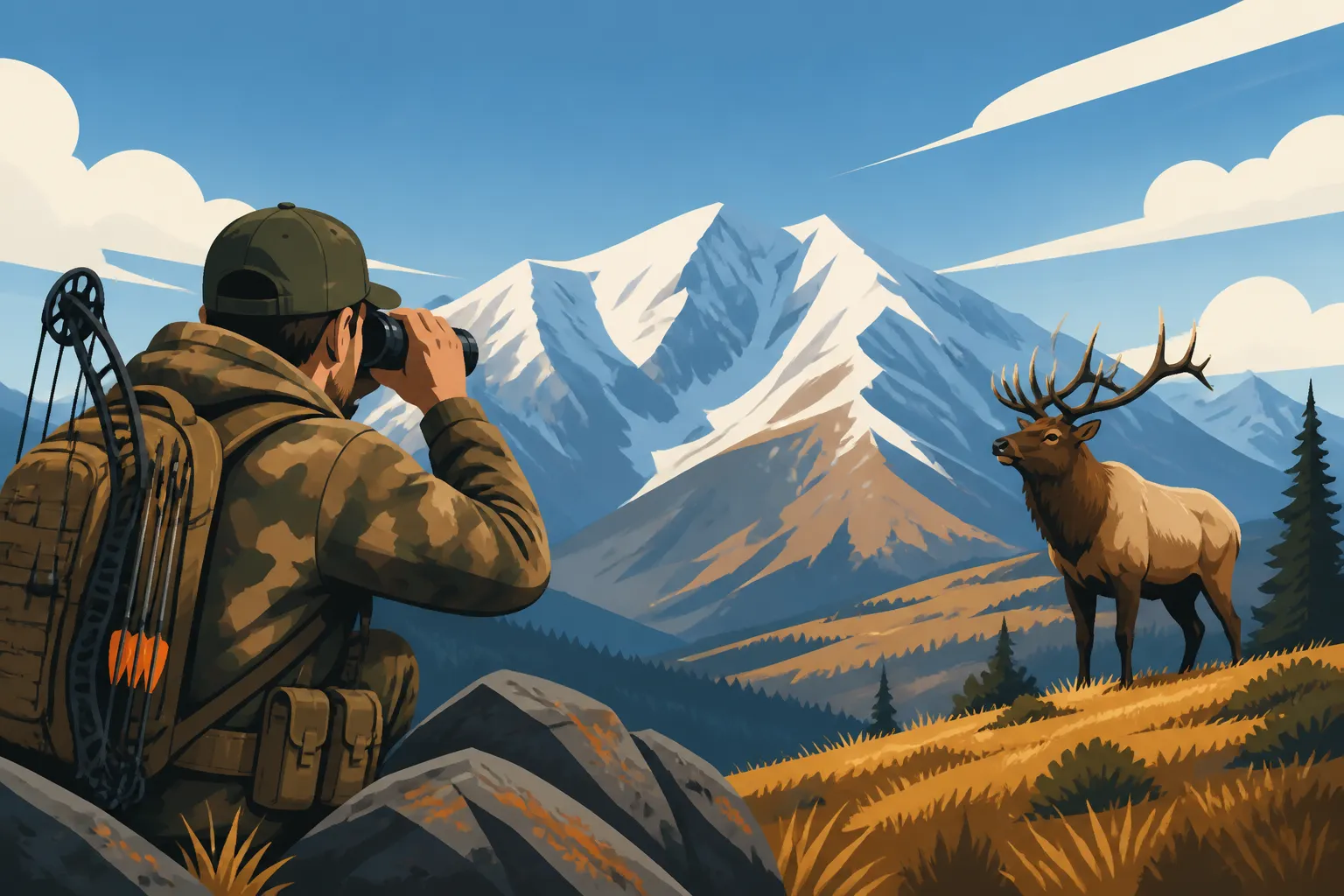
High-elevation terrain, with its expansive alpine bowls, open meadows, and scattered timber, lends itself perfectly to spot-and-stalk hunting. The ability to gain elevation, find a vantage point, and patiently glass miles of country is arguably the most effective way to locate elk in these environments. Investing in high-quality optics – binoculars, a spotting scope, and a sturdy tripod – is non-negotiable. Spend hours behind the glass, meticulously picking apart every shadow, every patch of timber, every rockslide. Elk can look like rocks, trees, or even small patches of dirt from a distance. Look for subtle movements, a horizontal line against a vertical landscape, or a specific color that doesn't quite match the surroundings.
Once you spot elk, the real challenge begins. A successful stalk requires incredible patience, careful planning, and often, a lot of physical effort. Plan your approach based on wind direction, terrain features that offer cover, and the elk's current activity. Avoid skylineing yourself. Use every fold in the earth, every sparse patch of trees, and every boulder to remain unseen. This may involve long detours, crawling on your hands and knees, or waiting for hours for the elk to move into a more favorable position. Remember, it's always better to take an extra hour and be stealthy than to rush in and blow the entire setup. Mastery of Colorado Elk Hunting: Spot-and-Stalk Tactics is paramount in this country.
Using Thermals and Wind to Your Advantage
In mountain hunting, the wind is your most important ally or your worst enemy. At high elevations, predictable thermal air currents play a huge role. Generally, in the mornings, cold air drains downhill, creating a "down-draft" or sinking thermal. In the afternoons, as the sun warms the earth, warm air rises, creating an "up-draft" or rising thermal. Elk rely heavily on their sense of smell, so staying downwind or crosswind of your quarry is absolutely critical. Failure to do so will result in an empty encounter, as elk will simply vanish at the first hint of human scent. This is where a deep understanding of How to Use Thermals in Colorado Elk Country becomes a game changer.
Plan your movements around these thermals. In the morning, you might want to hunt from higher elevations down into bedding areas, taking advantage of the descending air. In the afternoon, you might approach from below, knowing your scent is rising with the thermals. However, thermals are not always perfectly predictable; they can swirl in ravines, shift with cloud cover, or be influenced by topography. Always carry a wind checker and use it constantly. Pay attention to how the wind affects trees and vegetation. Sometimes, the only way to get into a certain area is to wait for a specific time of day when the thermals are working in your favor. Patience truly is a virtue when waiting for the wind to align.
Calling Elk in High-Elevation Bowls
While spot-and-stalk is dominant, calling still has its place, especially during the rut. The vastness of high-elevation bowls and timber fringes means that bugles can travel for miles, making it an excellent tool for locating bulls. If you're in an area where you suspect elk are present but can't see them, a well-placed locator bugle can often elicit a response. This allows you to pinpoint their general location and then begin your stalk.
When a bull responds, the strategy shifts. Sometimes a soft cow call is all it takes to pique a bull's curiosity, especially if he's with cows and doesn't want to leave them. Other times, a more aggressive bugle challenge is needed to draw him away from his harem. Setting up effectively means having a caller and a shooter, with the shooter positioned ahead of and slightly downwind from the caller. This way, if the bull circles to get the wind, he encounters the shooter first. Be mindful that in open terrain, bulls can pinpoint your location quickly, so movement and using natural cover are essential. For those looking to learn more, exploring How to Bugle-Locate a Colorado Bull and How to Cow Call Colorado Elk can provide advanced techniques. Remember, the goal isn't just to make noise; it's to communicate and convince an elk to come into range, which can be an art form in itself.
Navigating the Unique Challenges of High Elevation
High-elevation hunting is not for the faint of heart. Beyond the physical demands and elk behavior, the environment itself presents a myriad of challenges that can derail a hunt if not properly anticipated and managed. From the volatile weather to the sheer difficulty of movement, these factors demand respect and careful planning.
Weather Extremes and Rapid Changes
The old saying in Colorado is, "If you don't like the weather, wait five minutes." At high elevations, this rings especially true. Sunny, calm mornings can quickly give way to violent thunderstorms, hail, driving rain, or even snow, even in early fall. Temperatures can plummet rapidly, and wind chills can be brutal. Being caught unprepared can lead to hypothermia, frostbite, or simply a miserable, unproductive hunt.
Always monitor weather forecasts diligently, but understand that mountain weather is notoriously unpredictable. Pack for all four seasons, even if the forecast looks clear. This means having your waterproof outer layers, extra insulation, warm gloves, and a hat always accessible. If a storm rolls in, seek immediate shelter. Rock overhangs, dense timber, or a well-pitched tent can offer crucial protection. Do not underestimate the power of a mountain storm, especially when lightning is involved. Planning for these changes is part of Colorado Backcountry Hunting Guide.
Steep Terrain and Difficult Access
Colorado's high country is defined by its rugged, steep, and often unforgiving terrain. We're talking about ascents and descents that can gain or lose thousands of feet in a relatively short distance. This kind of movement is incredibly taxing on the body, especially when carrying a heavy pack. Beyond the physical strain, navigating this terrain safely requires constant vigilance. Loose scree slopes, treacherous boulder fields, steep timbered hillsides, and slippery creek crossings are all common obstacles.
Choose your routes carefully, prioritizing safety over speed. Always maintain three points of contact when scrambling. Use trekking poles for stability, especially on descents and when crossing uneven ground. Pay attention to your footing and avoid moving too quickly, particularly when tired. If you're hunting in particularly remote or challenging areas, having a good pair of sturdy, broken-in Best Boots for Colorado Elk Hunting is a non-negotiable. Consider how you'll manage a downed animal in such terrain; sometimes the hardest part of the hunt is getting an elk off a steep, brushy hillside. Scouting your routes, even virtually with GoHunt mapping software, can give you a critical advantage in understanding the challenges ahead.
Managing Public Land Pressure
Colorado is incredibly popular for elk hunting, and public land, especially in accessible units, can experience significant pressure. While high-elevation hunting naturally weeds out some of the crowds due to its difficulty, you'll still encounter other hunters, particularly on weekends or during popular rifle seasons. This pressure can push elk into thicker, nastier country, or make them more nocturnal, adding another layer of challenge.
To mitigate pressure, consider hunting mid-week if possible, or target areas that require significant hiking or horse packing to access. Look for those dark timber pockets, steep canyons, or remote basins that other hunters might overlook or deem too difficult. Utilizing e-scouting tools like GoHunt to identify roadless areas or wilderness boundaries can help you find those honey holes where elk feel safer. Being willing to hike further and climb higher than the average hunter is often the ticket to finding unpressured elk. Learning How to Hunt Elk on Public Land Pressure is vital for success in Colorado. Sometimes, the best strategy is to embrace the pressure, understanding that other hunters might inadvertently push elk towards you, or simply force them to move more during daylight hours.
Post-Harvest Considerations at Altitude
Successfully harvesting an elk at high elevation is a monumental achievement, but the work is far from over. In fact, for many, the real challenge begins once the animal is on the ground. The logistics of field dressing, preserving meat, and packing out a large animal from remote, steep terrain require careful planning and execution.
Field Dressing and Quartering in Remote Locations
Once your elk is down, the clock starts ticking. The sooner you can get it field dressed and cooled, the better the quality of your meat. In remote, steep locations, a full traditional field dress might not be the most practical approach. Instead, many high-country hunters opt for the "gutless method" or "bone-out" method, which involves skinning and quartering the animal without removing the entrails. This significantly reduces the weight you need to handle and allows for more efficient cooling of the meat.
Start by skinning one side of the animal, removing the front and hind quarters, backstraps, and tenderloins. Then roll the animal over and repeat on the other side. Pack each quarter into individual game bags immediately. Quality game bags, like those from Argali or Caribou Gear, are breathable, protect the meat from flies and dirt, and are essential for keeping your hard-earned protein clean. If you can, get the meat off the ground and hang it in the shade to allow air circulation. This is especially crucial in warmer early-season hunts. Knowing How to Quarter an Elk in the Field efficiently and cleanly is a skill that comes with practice and can save you a lot of time and effort when you're exhausted and miles from the trailhead.
Meat Care and Preservation
Proper meat care is paramount to prevent spoilage, especially in variable high-country temperatures. Once quartered and bagged, the goal is to cool the meat down as quickly as possible. Hanging quarters allows air to circulate, which helps form a protective "rind" on the outside of the meat, deterring bacteria. If temperatures are mild, you might need to find a shaded, breezy spot, or even place quarters in a cold creek bed (fully bagged to prevent waterlogging) to aid cooling.
Avoid stacking meat directly on top of itself, as this traps heat and can lead to souring. If you're several days out, consider packing out a portion of the meat in an initial trip and returning for the rest, especially if temperatures are borderline. Keep the meat as clean as possible, trimming away any bloodshot or dirty areas. Packing out an elk isn't just about strength; it's about making smart decisions to ensure that delicious, hard-earned protein makes it home in prime condition. Consult resources like How to Keep Elk Meat Cool in Warm Weather if you're hunting early seasons.
The Art of Packing Out an Elk
This is often the most physically grueling part of the entire hunt. Packing out an elk from high elevation can take multiple trips, cover many miles, and involve thousands of feet of elevation gain and loss. A mature bull can yield 200-300 pounds of boned-out meat, plus the head and cape. You and your hunting partners will need to divide the load strategically. Each person should carry a maximum comfortable weight, typically 60-80 pounds, to prevent injury and maintain a reasonable pace.
Focus on slow, steady steps. Utilize trekking poles for balance and to take some strain off your knees on descents. Take frequent breaks, hydrate constantly, and refuel with high-energy snacks. If you're alone, you'll be making several round trips, which tests both physical and mental limits. Having a clear plan for your pack-out route, identifying potential water sources, and knowing your limits are critical. This is where your pre-hunt fitness training truly pays off. There's a reason why articles like How to Pack Out an Elk in Colorado are so popular—it's a brutal but essential part of the journey. Embrace the suck, focus on the reward, and remember that every step brings you closer to venison in the freezer.
E-Scouting and On-the-Ground Reconnaissance
In the vastness of Colorado's high country, you can't just show up and expect to find elk. Successful high-elevation hunting starts long before you ever set foot on the mountain, with thorough e-scouting, and continues with smart on-the-ground reconnaissance. Combining these two approaches maximizes your chances of pinpointing elk activity.
Utilizing Mapping Software for Unit Selection
Before you even commit to a specific hunting unit (GMU), advanced mapping software is your best friend. Platforms like GoHunt, onX Hunt, and BaseMap allow you to analyze topography, vegetation, access points, and land ownership from the comfort of your home. Start by identifying areas within your chosen GMU that have high-elevation habitat (above 9,000-10,000 feet) and large tracts of public land. Look for features like alpine basins, saddles, timbered benches, and north-facing slopes that offer security and forage.
Pay close attention to roadless areas or wilderness boundaries, as these often correlate with lower hunter pressure. Identify potential glassing points, water sources, and bedding areas. Use the contour lines to estimate the steepness of terrain and plan potential travel routes and escape routes. By marking these features as waypoints, you can build a comprehensive digital map that will guide your on-the-ground efforts. A deep dive into How to E-Scout Before a Colorado Hunt can save you countless hours of unproductive hiking.
Pre-Season Scouting and Glassing
While e-scouting is invaluable, there's no substitute for putting boots on the ground before the season starts. If you can make a trip to your chosen unit in the summer or early fall, do it. This allows you to verify what you saw on your maps, identify active game trails, locate fresh sign, and become familiar with the actual terrain. Hike to those vantage points you marked on your map and spend hours glassing. Learning How to Glass Big Colorado Basins is a skill that only improves with practice.
Look for elk in their summer patterns – often in open feeding areas during morning and evening, retreating to timber during midday. Even if they're not in their exact hunting season locations, you'll gain crucial insights into their general presence, the types of forage they prefer, and how they use the landscape. Pay attention to water sources and wallows; are they active? How much pressure are other animals putting on these resources? Pre-season scouting also gives you a chance to test your gear, acclimate to the elevation, and get into mountain shape, all without the pressure of an active hunt.
Interpreting Sign and Fresh Tracks
Once you're on the mountain during your hunt, becoming a keen observer of elk sign is crucial. Fresh tracks, droppings, rubs, and wallows all tell a story about where elk are, what they're doing, and when they were there. In high-elevation terrain, fresh sign around water sources, along saddles, or at the edges of timber pockets is a strong indicator of recent activity. Look for tracks in muddy areas, where they'll be preserved, or in patches of softer soil.
Distinguish between old and new sign. Fresh droppings are moist and shiny, while older droppings are dry and weathered. Fresh rubs on trees will show moist wood underneath, while older rubs will be dried and discolored. Pay attention to the direction of travel indicated by tracks, and whether they're lone tracks or those of a herd. If you find a series of fresh signs leading into a dense timber block or over a ridge, odds are the elk are still in the vicinity. This constant interpretation of the land's subtle clues is a cornerstone of effective high-elevation hunting. The more details you pick up, the better you can pattern the elk and make informed decisions on your next move.
Safety Protocols and Emergency Preparedness
Hunting in Colorado's high country is an inherently risky endeavor. The remote locations, extreme weather, challenging terrain, and the presence of large wildlife all contribute to potential hazards. Having robust safety protocols and a comprehensive emergency preparedness plan isn't just a good idea; it's a non-negotiable requirement for anyone venturing into these mountains.
First Aid and Emergency Kits
A well-stocked first aid kit is essential and should be tailored to the specific risks of backcountry hunting. Beyond the basics for cuts, scrapes, and blisters, consider including items for sprains, fractures (like a SAM splint), severe bleeding (trauma dressing, tourniquet), pain relief, anti-inflammatories, and any personal medications. Don't forget an emergency blanket, fire starter, headlamp with extra batteries, and a small amount of emergency food.
Everyone in your hunting party should carry their own personal first aid supplies, and a more comprehensive group kit should be accessible. Know how to use everything in your kit. Take a wilderness first aid course; it could literally save a life. Consider the potential for animal attacks, though rare, and carry bear spray if hunting in prime bear country, which often overlaps with elk habitat. Always tell someone reliable back home your detailed hunt plan, including your intended route, hunting area, and expected return date, and stick to it. This information is crucial if you become overdue and a search and rescue operation is initiated.
Communicating in Remote Areas
As discussed earlier, cell service is unreliable in the high country. Your satellite messenger device (Garmin inReach, Zoleo, or similar) is your primary lifeline. Ensure it's fully charged, paired with your phone, and that you know how to operate it, especially how to send an SOS signal. Test it before your trip to confirm it's working properly. In an emergency, these devices can summon help when all other communication fails.
Beyond satellite communicators, consider a two-way radio system for communication within your hunting party. While they have limited range in mountainous terrain, they can be invaluable for coordinating movements, sharing information about elk sightings, or checking in with each other across a ridge or through dense timber. Ensure everyone understands how to use them and has a designated channel. Always conserve battery life on all your electronic devices, keeping them in an insulated pocket close to your body to prevent cold-induced battery drain.
Dealing with Wildlife Encounters and Injuries
While elk are your target, you'll inevitably share the high country with a host of other wildlife, some of which can be dangerous. Black bears are common in Colorado; always make noise while hiking to avoid surprising one, especially in dense brush. If you encounter a bear, make yourself look large, talk in a calm, firm voice, and back away slowly. If a bear charges, and you have bear spray, deploy it. Mountain lions are also present, though rarely seen. If you encounter a lion, never run. Make eye contact, make yourself appear as large as possible, and fight back if attacked.
Beyond dangerous animals, injuries are a significant concern. A twisted ankle, a deep cut, or even severe dehydration can quickly become life-threatening in remote, steep terrain. This is why being physically fit, careful with your footing, and carrying a robust first aid kit are so important. If an injury occurs, assess the situation calmly, render first aid, and determine if you can self-evacuate or if an emergency rescue is needed. Being prepared for these worst-case scenarios is a crucial aspect of responsible high-elevation hunting. Having a plan for when things go wrong provides immense peace of mind.
Disclaimer
Please note that hunting regulations and conditions can change. Always consult the official Colorado Parks and Wildlife (CPW) regulations and local land management agency rules before planning any hunt. This guide is for informational purposes only and does not constitute legal or professional advice.