How Many Deer Are in Colorado
It can feel like a guessing game when you're trying to wrap your head around wildlife populations in a vast state like Colorado. You're probably wondering not just if there are enough deer to make a hunt worthwhile, but also where they are and why their numbers fluctuate so much. This guide will dive deep into the current deer populations across Colorado, breaking down the numbers for both mule deer and whitetails, and helping you understand the factors that impact these herds.
Understanding Deer Populations in Colorado: An Overview
When we talk about "deer" in Colorado, we're almost always referring to two distinct species: the iconic mule deer and the more elusive whitetail deer. Both contribute significantly to the state's total deer population, but they inhabit different niches and face unique challenges. Understanding their individual populations and trends is crucial for any hunter or wildlife enthusiast.
Colorado's Mule Deer Dominance
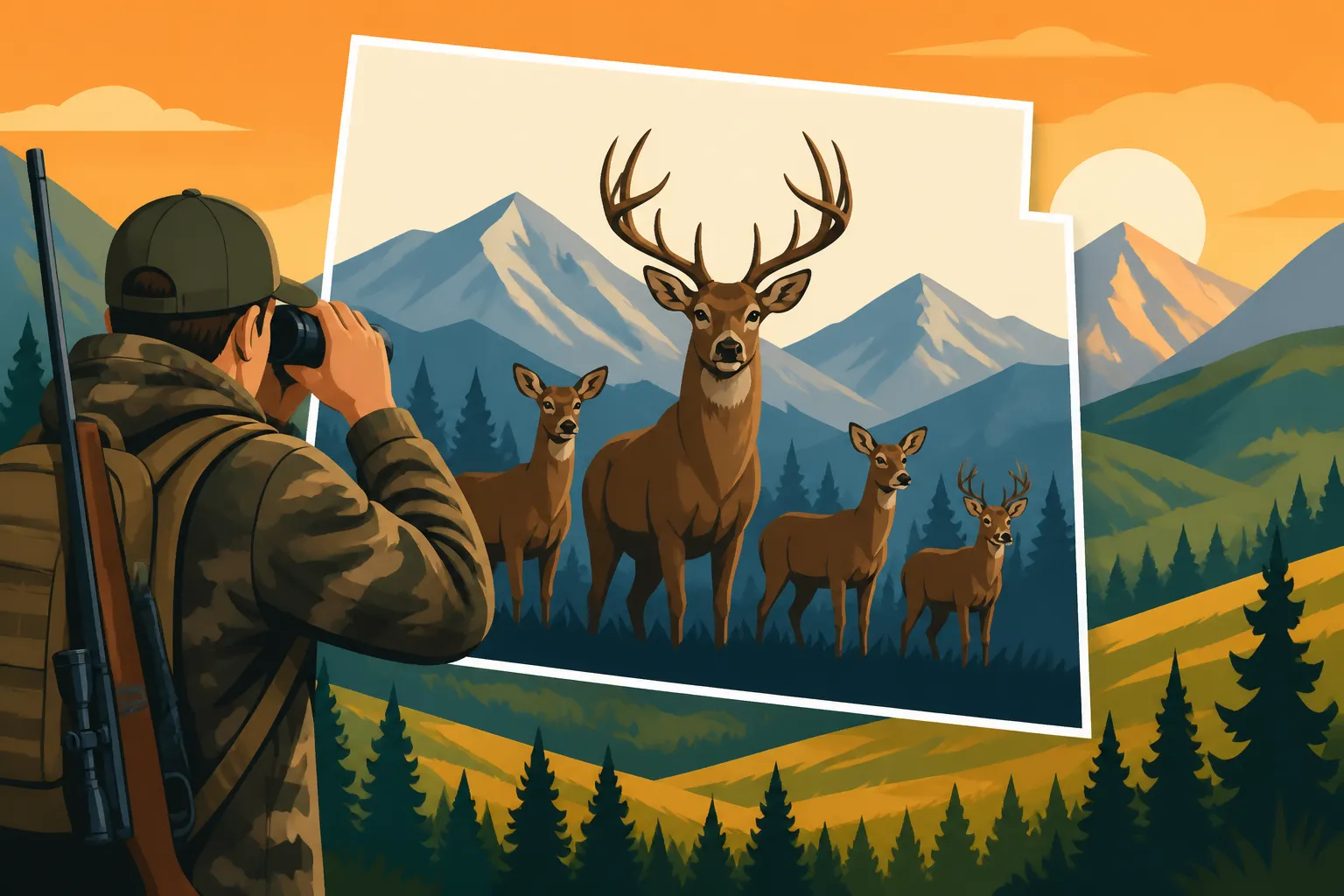
Mule deer are the quintessential Western deer, renowned for their large ears resembling a mule's and their characteristic bounding gait. They are, by far, the most numerous deer species in Colorado. Historically, their populations have seen their ups and downs, influenced by everything from severe winter weather to habitat changes. Colorado Parks and Wildlife (CPW) actively monitors these populations, and current estimates generally place the mule deer herd somewhere between 400,000 and 450,000 animals statewide. This makes Colorado a premier destination for mule deer hunting, with healthy herds distributed across diverse landscapes.
You'll find mule deer across the vast majority of Colorado's Western Slope, in the high country, and even extending into the pinyon-juniper breaks and foothills of the Front Range. Their adaptability allows them to thrive from alpine tundra down to semi-arid desert regions, making them a fixture in most of the state's varied terrains. When planning a hunt, understanding the nuances of their behavior and preferred habitats, like those detailed in a comprehensive guide on Colorado Mule Deer Hunting Guide, can dramatically increase your chances of success.
The Whitetail Deer Presence
While mule deer command the lion's share of attention in Colorado, whitetail deer have a strong, albeit more localized, presence. Unlike their high-country cousins, whitetails in Colorado primarily inhabit the riparian corridors and agricultural lands of the Eastern Plains and the lower elevations along major river systems further west. They are masters of cover and often stick to thick brush, creek bottoms, and dense timber, making them a challenging quarry.
The whitetail population in Colorado is considerably smaller than the mule deer herd, typically estimated to be around 40,000 to 50,000 animals. These numbers have generally remained stable or shown slight increases in their preferred habitats, especially where food and cover are abundant and contiguous. Hunters interested in pursuing this species might find valuable insights in specific resources like the Colorado Whitetail Deer Hunting guide, which outlines tactics best suited for these wily animals.
Understanding Population Fluctuations
Deer populations, both mule deer and whitetail, are never static. They are constantly in flux, driven by a complex interplay of environmental factors, disease, predation, and human management. A mild winter might lead to high fawn survival, boosting numbers, while a severe winter with deep snow and prolonged cold can result in significant mortality, especially among fawns and older deer. Drought conditions can also impact forage quality and availability, indirectly affecting herd health and reproductive success.
Beyond environmental factors, diseases like Chronic Wasting Disease (CWD) present a serious long-term challenge, particularly for mule deer. Predation from mountain lions and coyotes also plays a role, especially on younger deer. CPW’s management strategies, including setting tag quotas and season structures, are designed to balance harvest with population health and habitat capacity, aiming for sustainable deer populations across the state. Understanding these dynamics is key to truly appreciating the health of Colorado's deer herds.
Factors Influencing Deer Numbers
It's not enough to just know the numbers; understanding why those numbers are what they are is critical for responsible hunting and conservation. Several significant factors contribute to the rise and fall of Colorado's deer populations, creating a constantly shifting landscape for these magnificent animals.
Habitat and Environmental Impacts
The health and availability of habitat are arguably the most crucial determinants of deer populations. Deer need quality forage, water, and cover to survive and reproduce. In Colorado, this translates to expansive landscapes with diverse vegetation. Mule deer thrive in shrublands, aspen forests, and open timber, often migrating between high summer ranges and lower wintering grounds to find food and escape deep snow. Whitetails, on the other hand, are more tied to river bottoms, agricultural fields, and dense pockets of cover.
However, these habitats are under constant pressure. Urban sprawl and human development lead to habitat fragmentation, reducing available land and disrupting migration corridors. Wildfires, while a natural process, can also have both short-term destructive and long-term beneficial impacts on habitat, depending on their intensity and location. Climate change, bringing warmer temperatures and altered precipitation patterns, can affect forage growth and water sources, especially during critical times like fawning season or severe winters. These environmental shifts require hunters to continually adapt their strategies, as discussed in How Weather Moves Colorado Elk, a principle that applies equally to deer.
Predation and Disease Challenges
Predators and diseases are natural regulators of deer populations, but their impact can be particularly pronounced during times of stress. Mountain lions are the primary natural predators of adult deer in Colorado, especially mule deer. Their populations often mirror those of their primary prey. Coyotes primarily target fawns, and bears can also take fawns, particularly during spring when other food sources are scarce. While these predator-prey dynamics are healthy and natural, an imbalance, perhaps due to overpopulation of predators or a stressed deer herd, can hinder recovery.
Chronic Wasting Disease (CWD) remains a significant concern for deer in Colorado. This fatal neurological disease affects cervids (deer, elk, moose) and has been detected in many deer herds across the state. CPW actively monitors CWD prevalence, and hunters play a vital role in surveillance by submitting samples for testing. While CWD doesn't instantly decimate a herd, its long-term impacts on population health and sustainability are a major focus for wildlife managers. Understanding diseases like CWD is part of being an informed hunter and something explored further in Colorado CWD and Deer Herds.
Human Impact and Management Strategies
Human activities profoundly influence deer populations. Beyond habitat fragmentation, hunting itself is a primary management tool. Colorado Parks and Wildlife utilizes a science-based approach to manage deer herds, setting specific harvest objectives for each of the state's Game Management Units (GMUs). These objectives consider population size, buck-to-doe ratios, and habitat capacity. The goal is to maintain healthy, sustainable herds that provide recreational opportunities while minimizing impacts on other wildlife and ecosystems.
Management strategies include:
- Draw System: The majority of deer tags in Colorado are allocated through a limited draw system, ensuring that harvest pressure is distributed appropriately and that specific units aren't over-hunted. Learning about Colorado Draw System and Preference Points is crucial for anyone hoping to hunt deer here.
- Over-the-Counter (OTC) Tags: While less common for deer than for elk, certain limited OTC opportunities might exist for specific seasons or antlerless tags, often aimed at reducing localized impacts or meeting specific management goals.
- Regulation Adjustments: CPW regularly reviews and adjusts season dates, bag limits, and antler point restrictions based on current population data and scientific research.
These efforts, combined with responsible hunting practices, aim to ensure that Colorado's deer populations remain robust for future generations.
Where to Find Deer in Colorado (and Why Population Matters)
Knowing how many deer are in Colorado is one thing, but knowing where they are and how those populations correlate to hunting opportunities is what truly matters to a hunter. Colorado's diverse landscapes mean that deer are not evenly distributed; certain regions and habitats are true strongholds.
Geographic Distribution of Mule Deer
Mule deer are incredibly widespread throughout Colorado's mountainous and western regions. You'll find the highest concentrations of mule deer on the Western Slope, particularly in areas with a mix of aspen groves, sagebrush, and pinyon-juniper forests. Iconic areas like the White River National Forest, the Flat Tops Wilderness, the Gunnison Basin, and the Uncompahgre Plateau are well-known for their robust mule deer numbers. GMUs in these regions are often sought after, though drawing a tag can require significant preference points for quality units.
Even the foothills and mesas leading up to the Front Range, from Fort Collins down to Colorado Springs, hold significant mule deer populations, although these areas often have higher human densities and more limited public access. Understanding the terrain, preferred elevations, and migration patterns of mule deer in a specific unit is paramount. Tools like those offered by GoHunt, which provide detailed mapping and draw odds data, are invaluable for scouting these units virtually. A guide like Best GMUs for Mule Deer in Colorado can help narrow down your focus if you're targeting specific areas.
Whitetail Strongholds
Whitetail deer in Colorado are primarily concentrated in the riparian corridors and agricultural mosaic of the Eastern Plains. The river bottoms of the South Platte, Arkansas, and Republican Rivers, as well as their tributaries, provide the dense cover and abundant food sources (both natural and agricultural) that whitetails prefer. Counties like Yuma, Washington, Logan, and Phillips are classic whitetail country.
You'll also find whitetails in limited pockets along major river systems on the Western Slope, often mingling with mule deer in the lower, more fertile valleys. Hunting whitetails in these areas often involves private land access, though some public access exists, particularly along State Wildlife Areas (SWAs) or through the Walk-In Access Program. Scouting these areas for sign, bottlenecks, and travel corridors is essential.
Connecting Population Data to Hunting Success
For a hunter, deer population numbers are more than just statistics; they are a direct indicator of opportunity and potential success. Higher deer densities generally mean more chances to encounter animals, though it can also mean more hunter pressure. Understanding the population trends in a specific GMU can help you make informed decisions when applying for a tag or planning an over-the-counter hunt.
For instance, if a GMU has a declining mule deer population, CPW might reduce the number of tags issued to help the herd recover, making it harder to draw. Conversely, if a population is healthy and at or above objective, more tags might be available, or even antlerless tags to manage doe numbers. This is where detailed research and e-scouting come into play. Using platforms like GoHunt can help you analyze draw odds, unit data, and historical harvest success rates, giving you a significant edge. Knowing how to interpret this data, alongside practical skills like those found in How to E-Scout Before a Colorado Hunt, transforms raw numbers into actionable hunting strategies.
Here's a generalized overview of Colorado deer population estimates by species, reflecting the latest trends:
| Species | Estimated Population Range (Statewide) | Primary Habitat | Geographic Concentration | Typical Hunting Seasons (Example) |
|---|---|---|---|---|
| Mule Deer | 400,000 – 450,000 | Mountainous, high country, pinyon-juniper, sagebrush | Western Slope, Foothills | Archery, Muzzleloader, Rifle |
| Whitetail Deer | 40,000 – 50,000 | Riparian corridors, agricultural land, dense cover | Eastern Plains, major river valleys | Archery, Rifle |
It's important to remember these are statewide estimates and actual densities vary dramatically from one GMU to another. Always consult the latest Colorado Parks and Wildlife regulations and resources for the most up-to-date and unit-specific information.
Disclaimer
Please be aware that hunting regulations, season dates, and wildlife population estimates are subject to change. Always consult the most current Colorado Parks and Wildlife (CPW) official regulations and publications before planning any hunting trip. This guide is for informational purposes only and does not replace official state resources.