Best Colorado Units for Black Bear
Figuring out where to even start looking for black bear in Colorado can feel like trying to find a needle in a haystack, especially with vast wilderness areas and dense timber. It's easy to get overwhelmed by the sheer number of Game Management Units (GMUs) and wonder which ones actually hold a good population of bears and offer a solid hunting opportunity. This guide is here to cut through the confusion, helping you pinpoint the best Colorado units for black bear hunting by breaking down habitat, population trends, and effective scouting strategies.
Understanding Colorado Black Bear Behavior and Habitat
Before you even think about picking a unit, you've got to get inside the head of a black bear, or at least understand their basic needs and habits. These incredible animals are creatures of opportunity, driven largely by food availability, safety, and water. Knowing these fundamentals will drastically improve your chances, no matter which GMU you decide to focus on.
Seasonal Movements and Food Sources
Black bear behavior shifts dramatically with the seasons, primarily dictated by their stomach. When they emerge from hibernation in spring, their diet is often lean, consisting of tender new grasses, roots, and any carrion they might stumble upon. They're trying to regain weight after months of fasting, so prime spring units will offer early green-ups and south-facing slopes that melt out quickly. Colorado's spring bear season is quite limited and primarily focused on specific areas, so checking current regulations is key.
As summer progresses, bears transition to a more varied diet. They'll frequent areas rich in berries – everything from serviceberries to huckleberries and chokecherries. You'll find them hitting these patches hard, often at higher elevations as the season progresses. By fall, the focus intensifies on hard mast crops like acorns and pine nuts, alongside late-season berries. This is when bears are in hyperphagia, putting on as much weight as possible for the coming winter. Units with diverse ecosystems, offering a buffet of these natural foods, tend to hold the highest bear densities and offer the best chances. Learning to recognize these food sources and where they grow is an absolute game-changer for bear hunting. For a deeper dive into their yearly cycle, explore our comprehensive Colorado Black Bear Hunting Guide.
Key Habitat Features
Black bears are masters of cover, preferring dense timber, thick brush, and rugged terrain that offers both seclusion and escape routes. They're not often found in wide-open country unless they're quickly traversing it between food sources or bedding areas. Look for a mosaic of habitats:
- Dense Conifer Stands: Think spruce, fir, and dark timber. These areas provide shade, thermal cover, and often hold good bedding spots.
- Riparian Areas: Creek bottoms, river drainages, and areas near natural springs are magnets for bears, especially in drier periods. Not only do they offer water, but often a richer array of vegetation and berries.
- Aspen Groves: While not always as dense for cover, aspen stands can provide important food sources like inner bark and, crucially, are often interspersed with denser conifer forests.
- Brushy Slopes and Canyons: Areas with thick oak brush, chokecherry, or other berry-producing shrubs on steep, north-facing slopes are prime feeding grounds and offer excellent hiding spots.
- Elevational Variances: Bears will move up and down in elevation throughout the year to follow food sources and seek cooler temperatures or deeper snow cover. Don't be afraid to hunt different elevations within a single GMU.
Units that boast a good mix of these features, particularly those with vast, unpressured acreage, will naturally support healthier bear populations. Think about the unit's overall ecosystem and if it provides everything a bear needs to thrive year-round.
Bear Activity Times
While bears can be active at any time, they are often crepuscular, meaning most active during dawn and dusk. This is when they're typically moving between bedding areas and feeding grounds. However, during the fall hyperphagia period, they can be seen feeding throughout the day, especially in areas with abundant food and minimal human pressure.
On warmer days, bears might seek cooler, denser cover during the midday heat, emerging again as temperatures drop. Cooler, overcast days, or periods after a rain shower, can see them active for longer stretches. Understanding these patterns helps you plan your hunt. Early mornings and late evenings are your best bet for catching them on the move or actively feeding, but don't rule out glassing a good food source throughout the day if conditions are favorable.
Factors to Consider When Choosing a Black Bear Unit
Selecting the best black bear unit for your hunt isn't just about finding where the most bears live. It's a blend of population dynamics, accessibility, hunting pressure, and the specific season you plan to hunt. Each of these elements plays a critical role in your overall success and experience.
Population Density and Success Rates
Colorado Parks and Wildlife (CPW) actively manages black bear populations, and one of the most crucial factors in unit selection is understanding where these populations are robust. Generally, the western and southwestern slopes of Colorado hold the highest densities of black bears. You'll often find that the highest harvest numbers come from units in these regions.
It's not just about total population, though; success rates for hunters in particular units can be a huge indicator. While CPW provides general harvest data, diving deeper into unit-specific details often requires a bit more research. Resources like GoHunt can be invaluable here, offering detailed draw odds, hunter success rates, and population estimates that go beyond the basic CPW reports. Looking at this data can tell you if a unit, despite having bears, is incredibly difficult to hunt, or if it offers a more reasonable chance at success. For instance, a unit might have a good bear population, but if it's mostly private land with limited public access, your odds on public ground might be significantly lower. Similarly, a unit with a high number of hunters could mean more competition, even if bear numbers are high. When assessing a unit, ask yourself: Is the reported success rate something I can realistically achieve with my hunting style and experience?
Access and Terrain Challenges
Colorado's black bear habitat is often synonymous with rugged, steep, and remote country. This is a double-edged sword: excellent bear habitat, but challenging for hunters.
- Roaded vs. Wilderness: Some units have extensive road systems, offering easier access but potentially higher hunter pressure. Others are dominated by vast wilderness areas, requiring significant physical exertion, packing in, and advanced backcountry skills. These remote areas, while harder to reach, often hold older, less pressured bears. Consider your physical fitness and comfort level with backcountry travel. Our Colorado Backcountry Hunting Guide can help you prepare for these more remote adventures.
- Elevation and Steepness: Bear country often means steep climbs and descents. A unit with a lot of vertical relief can be daunting but also creates natural funnels and thermal hubs that bears utilize. Assess the topography of a potential unit using maps and satellite imagery. Can you realistically navigate this terrain daily for a week?
- Public Land Access: Utilize tools like the Colorado Hunting Atlas or mapping applications like onX Hunt to understand land ownership. Ensure the public land in your chosen unit offers ample, accessible habitat. Landlocked public parcels, or areas surrounded by private property, can make hunting extremely difficult.
A unit that matches your physical capabilities and preferred hunting style is always the "best" unit for you, even if it doesn't boast the absolute highest harvest numbers statewide.
Seasonality and Hunting Method
Colorado offers both archery, muzzleloader, and rifle seasons for black bear, often overlapping with deer and elk seasons. The timing of your hunt significantly impacts bear behavior and food sources.
- Spring Bear: The spring season (typically April-May, but check regulations for specific dates and units) focuses on bears emerging from dens, often seeking early green-ups on south-facing slopes. These hunts are challenging due to unpredictable weather and sparse food, but can be incredibly rewarding. The units open for spring bear are often limited.
- Fall Archery: Hunting during the fall archery season (late August through late September) often coincides with the peak of the berry and mast crop. Bears are actively feeding and can be patterned if you find a reliable food source. This can be a physically demanding hunt, often combined with Colorado Archery Elk Hunting Guide or deer hunting.
- Fall Muzzleloader/Rifle: The general rifle seasons for bear (often overlapping with elk and deer seasons in October and November) can be highly effective, especially when bears are gorging themselves for winter. Early rifle seasons typically offer warmer weather, while later seasons might bring snow, pushing bears to lower elevations or into dens. Understanding Colorado Muzzleloader Hunting Guide or rifle tactics for the mountains is crucial here.
Each season presents unique opportunities and challenges. Researching Colorado Black Bear Season and Tags will help you choose the best time to align with your preferred hunting method and increase your odds. For example, some units might be fantastic in early fall but less productive once heavy snow pushes bears to inaccessible areas or into hibernation.
Top Colorado Units for Black Bear Hunting
While "best" is subjective and often depends on your hunting style and physical abilities, some Game Management Units in Colorado consistently rank high for black bear populations and harvest opportunities. These units generally offer vast public land, excellent habitat diversity, and strong bear numbers. Remember to always consult the latest Colorado Parks and Wildlife (CPW) hunting regulations for specific unit boundaries, season dates, and tag availability, as these can change year to year.
Western Slope Hotspots
The Western Slope is arguably the heart of Colorado's black bear country, known for its expansive national forests, wilderness areas, and abundant food sources. Many units here offer excellent opportunities, especially for spot-and-stalk or still-hunting in diverse terrain.
- GMU 12 & 23 (White River National Forest): These units, part of the famed White River National Forest, are prime bear territory. They feature a mix of dense timber, aspen stands, and diverse berry-producing shrubs. Access can range from roaded areas to deep wilderness. The sheer size and habitat diversity mean bears have plenty of room to roam and feed without constant pressure. Hunters often find success here by focusing on oak brush thickets and dark timbered canyons, especially during the fall when bears are feeding heavily. These units are often popular for elk, so understanding How to Hunt Elk in the Dark Timber might also provide valuable insights for bear hunting concurrently.
- GMU 41, 42, 421 (Grand Mesa, Uncompahgre, and Gunnison National Forests): This complex of units, encompassing parts of the Grand Mesa and surrounding areas, offers excellent bear habitat. The Grand Mesa, in particular, is known for its vast aspen forests and berry patches, making it a magnet for bears in late summer and early fall. The terrain here can be steep and rugged, but the rewards are often worth the effort. Scouting for concentrations of chokecherry, serviceberry, or acorn flats can be very productive. Look for isolated pockets of timber mixed with open parks and benches where bears might be feeding.
- GMU 61, 62, 70 (Uncompahgre Plateau & San Miguel Mountains): These units feature vast tracts of national forest and BLM land with excellent bear densities. The Uncompahgre Plateau, in particular, is a known stronghold. This region is characterized by steep canyons, thick oak brush, and pinyon-juniper forests at lower elevations, transitioning to conifer and aspen at higher altitudes. Bears here rely heavily on acorn crops, especially from gamble oak, so knowing the mast crop conditions is vital. The sheer remoteness in parts of these units allows bears to grow large and less wary.
When targeting these Western Slope units, remember that they are popular for all big game. Hunting early in the season or focusing on more remote areas can help you avoid some of the pressure. Utilizing tools like GoHunt's filter options can help you sort units by success rates and public land percentages to hone in on your ideal area.
Southwestern Colorado Units
Southwestern Colorado, with its rugged San Juan and La Plata Mountains, is another top-tier destination for black bear. These units are often characterized by high elevations, vast wilderness, and a diverse range of plant life that sustains a healthy bear population.
- GMU 74, 75, 751 (San Juan National Forest): Nestled in the heart of the San Juan Mountains, these units are stunningly beautiful and hold significant bear numbers. The habitat is diverse, from deep river canyons to high alpine basins, offering a variety of food sources throughout the season. Bears move between elevations, feeding on early season berries in lower canyons and later season mast in higher, more remote areas. Access here can be challenging, with many roadless areas and designated wilderness, making it perfect for those looking for a true backcountry experience. Success often comes from diligent glassing of open slopes and clearings adjacent to dense timber.
- GMU 77, 78 (Rio Grande National Forest & Weminuche Wilderness): These units, encompassing parts of the Rio Grande National Forest and extending into the Weminuche Wilderness, offer vast stretches of unpressured bear habitat. The terrain is rugged, with significant elevation changes and dense forests. Bears here thrive on the abundant berries, nuts, and diverse vegetation. These units are excellent choices for hunters willing to pack in deep or utilize horses for access. Focusing on areas with good water sources and dense cover, particularly around rocky outcroppings or thickets, can be productive.
Hunting in Southwestern Colorado often means contending with significant elevation. Proper physical conditioning and acclimatization are crucial for a successful hunt in these mountains. It's not uncommon to be hunting bears at 9,000 to 11,000 feet, which adds an extra layer of challenge.
Central and North-Central Units
While not always boasting the same sheer numbers as the Western or Southwestern Slope, several units in central and north-central Colorado offer fantastic bear hunting, often with unique opportunities or different types of terrain.
- GMU 3, 4, 5, 11 (Northwest Colorado): These units, situated in the northwestern part of the state, are often overlooked for bear but can be highly productive. They feature a mix of sagebrush, pinyon-juniper, and mountainous terrain, with bears frequently utilizing the dense draws and creek bottoms. While potentially drier than other regions, these units offer strong populations and less pressure than some of the more famous elk-heavy areas. The emphasis here might be more on glassing distant slopes and patiently covering ground in timbered pockets.
- GMU 43, 52, 53, 54 (Gunnison Basin & West Elk Mountains): This cluster of units in the central mountains, including the West Elk Wilderness, is known for its excellent general big game hunting, and bears are no exception. The habitat is diverse, with vast aspen and conifer forests, dark timber, and abundant berry patches. Access varies greatly, from relatively easy to extremely remote, especially within the wilderness areas. Hunters should focus on finding areas with a consistent food source and minimal human disturbance. This region is known for its trophy potential in other species, and bears here can also grow quite large.
Choosing a unit in these regions often involves balancing bear populations with hunter density and preferred habitat types. A quick look at historical draw data or recent harvest reports through platforms like GoHunt can help clarify which units are performing well for bear hunters in a given year.
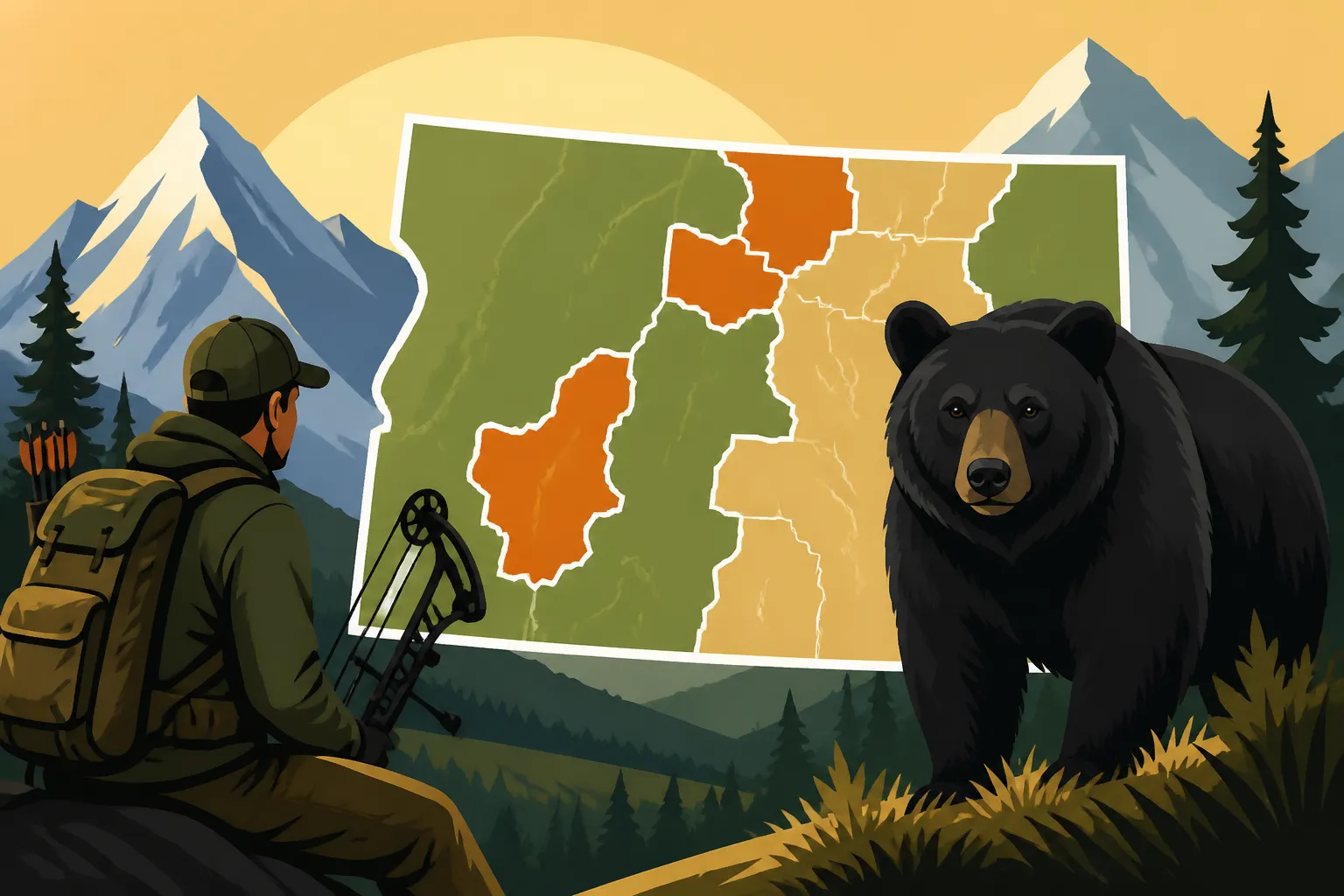
Here’s a comparative look at some of these prime black bear units:
| GMU Complex | Primary Region | Key Habitat Features | Typical Hunting Style | General Bear Population | Access/Terrain Challenge |
|---|---|---|---|---|---|
| 12, 23 | White River NF | Dense conifer, aspens, varied berries, oak brush | Spot-and-stalk, still-hunt | High | Moderate to Rugged |
| 41, 42, 421 | Grand Mesa/Uncompahgre | Aspens, berry patches, steep canyons, dark timber | Spot-and-stalk, glassing | High | Rugged |
| 61, 62, 70 | Uncompahgre Plateau | Oak brush, pinyon-juniper, conifer, steep canyons | Spot-and-stalk, ambush | High | Rugged, Remote |
| 74, 75, 751 | San Juan Mtns | Alpine basins, deep canyons, conifer, diverse berries | Backcountry, glassing | High | Very Rugged, Remote |
| 77, 78 | Rio Grande NF | Vast wilderness, high elevation, dense timber | Backcountry, horseback | High | Extremely Rugged, Remote |
| 3, 4, 5, 11 | Northwest CO | Sagebrush, pinyon-juniper, timbered draws | Spot-and-stalk, long-range glassing | Moderate to High | Varied, some remote |
| 43, 52, 53, 54 | Gunnison Basin | Aspens, dark timber, vast berry patches | Spot-and-stalk, still-hunt | High | Moderate to Rugged |
Strategies for Scouting and Hunting Bear in Chosen Units
Once you've narrowed down your list of potential units, the real work begins. Successful black bear hunting in Colorado isn't just about showing up; it's about meticulous preparation, smart scouting, and executing effective hunting techniques.
E-Scouting and Boots-on-the-Ground
Modern technology has revolutionized the way we scout. Before you ever set foot in the woods, spend significant time e-scouting your chosen unit.
- Satellite Imagery: Use tools like Google Earth or the mapping layers available on GoHunt to identify key terrain features. Look for areas with a mix of dense timber and open clearings, south-facing slopes (especially for spring hunts), dense oak brush thickets, and obvious travel corridors along ridges or drainages. Pay close attention to recent burns, as these areas often have an explosion of new growth that can attract bears. Identifying potential water sources, like springs or small ponds, can also be a game-changer, especially during drier years. For more in-depth preparation, check out our guide on How to E-Scout Before a Colorado Hunt.
- Topographical Maps: These help you understand elevation changes, steepness, and how water flows. Bears often use benches, saddles, and ridge lines as travel routes, especially when moving between feeding and bedding areas.
- Historical Data: Consult CPW harvest statistics and specific unit data (often available through hunter forums or platforms like GoHunt) to see where bears have been harvested in previous years. This can give you a starting point for your boots-on-the-ground efforts.
Once you have a few promising spots identified through e-scouting, it's time for some boots-on-the-ground reconnaissance, if possible.
- Locating Food Sources: Confirm the presence and abundance of key food sources like berries or acorn crops. This can vary year to year, so recent intel is critical.
- Finding Sign: Look for fresh bear scat, tracks, rubbed trees, or overturned rocks/logs where bears have been foraging. Even old signs can tell you where bears historically frequent.
- Trail Cameras: If legal and accessible, placing trail cameras on game trails or near promising food sources can give you invaluable insight into bear activity patterns.
Hunting Techniques for Different Seasons
Your hunting technique will largely depend on the season and the unit's terrain.
- Spot-and-Stalk: This is arguably the most popular and effective method for Colorado black bear. It involves finding a vantage point, often at a higher elevation, and systematically glassing slopes, clearings, and food sources, especially in the early mornings and late evenings. Once a bear is spotted, a careful stalk is planned, using the wind and terrain to your advantage. This method is particularly effective in units with varied topography that allows for good glassing opportunities. Our specific guide on How to Spot-and-Stalk Colorado Bears delves much deeper into this technique.
- Still-Hunting: This method involves moving slowly and quietly through likely bear habitat, stopping frequently to listen and observe. It's effective in dense timber or brushy areas where long-range glassing isn't possible. The key is to be extremely patient and pay close attention to the wind, as a bear's nose is its primary defense. Focus on areas with abundant food or dense bedding cover.
- Ambush/Stand Hunting: While less common for black bears in Colorado compared to other states (baiting is illegal in Colorado), setting up an ambush point near a consistent food source, water hole, or travel corridor can be effective. This requires careful observation to pattern a bear's movements. This works best in areas where specific food sources are concentrated and reliable, such as a localized oak flat.
Regardless of the method, always play the wind, move slowly, and be prepared to wait. Bears are notoriously wary, and patience is your biggest asset.
Safety and Ethics
Hunting black bear, especially in Colorado's rugged terrain, comes with responsibilities and inherent risks.
- Bear Spray: Always carry bear spray and know how to use it. While black bear attacks are rare, encounters can happen, especially with sows and cubs. It's a critical piece of safety gear.
- Food Storage: If you're backpacking or camping in bear country, proper food storage is non-negotiable. Use bear-resistant canisters, hang your food, or store it in your vehicle. A fed bear is a dead bear, and it's our responsibility to prevent habituating bears to human food.
- Shot Placement: Bears are incredibly tough animals. Knowing proper shot placement for bears, aiming for the vitals (lungs/heart), is paramount for a quick and ethical harvest. Broadside shots are usually ideal. Practice your shooting at various distances and angles before your hunt.
- Field Dressing and Packing: Bears can be heavy, and their fat renders quickly in warm weather. Knowing how to efficiently field dress and quarter a bear to cool the meat rapidly is crucial to prevent spoilage. Plan your pack-out strategy beforehand.
Hunting black bears in Colorado is a challenging but deeply rewarding experience. By understanding their behavior, choosing the right units, and employing sound hunting strategies with safety and ethics at the forefront, you increase your chances of a successful and memorable hunt.
Disclaimer
Please remember that hunting regulations, season dates, and unit boundaries can change. Always consult the most current Colorado Parks and Wildlife (CPW) regulations and proclamations before planning any hunt. This guide is for informational purposes only and does not replace official state wildlife agency information.