Colorado Elk vs Wyoming Elk Hunting
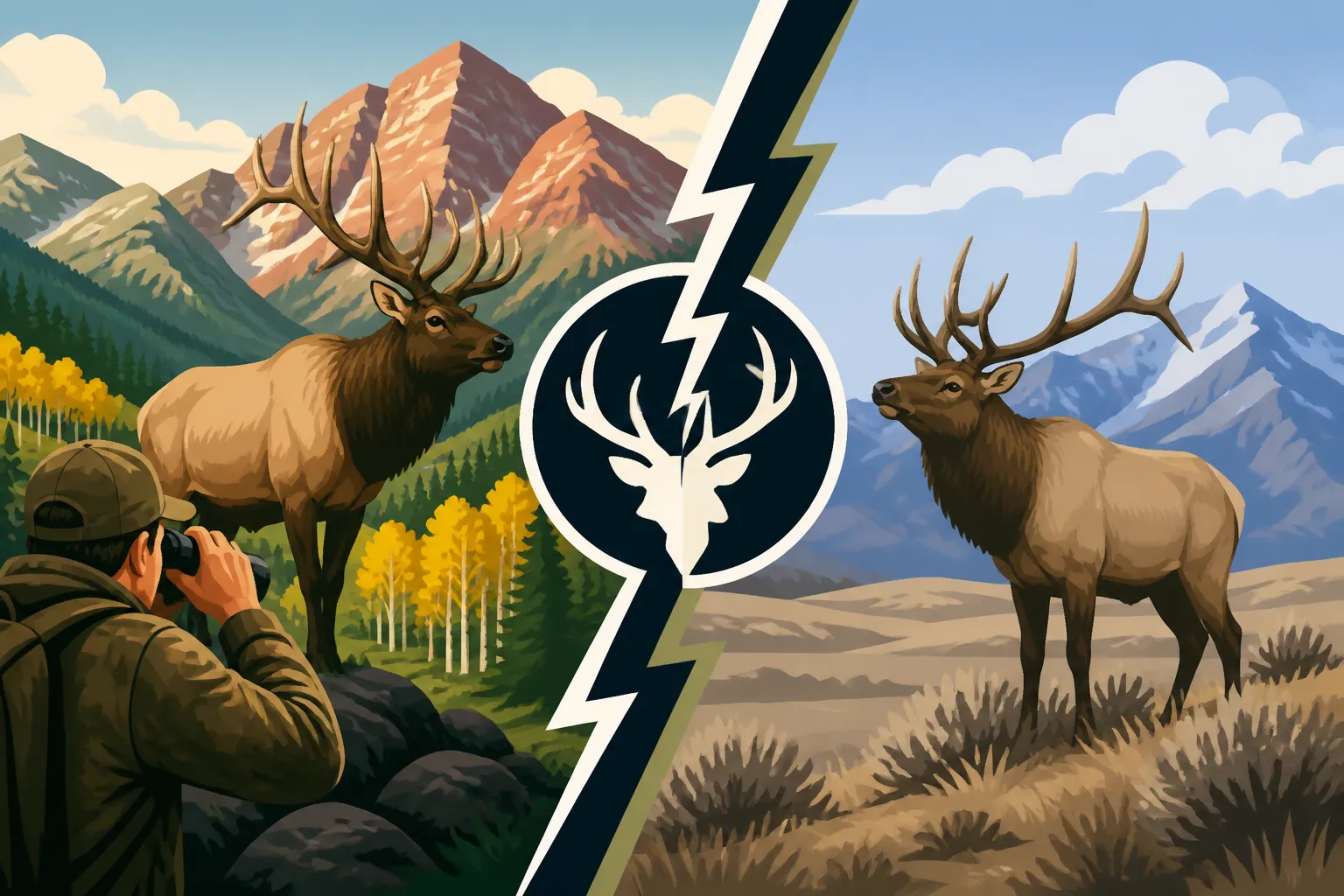
You've got the elk hunting bug, and now the real head-scratcher begins: where do you go? Colorado and Wyoming both beckon with their majestic elk herds and rugged landscapes, offering incredible, but distinct, experiences, especially for non-resident hunters. This guide will meticulously break down the nuances of elk hunting in Colorado versus Wyoming, helping you decide which state aligns best with your hunting style, budget, and long-term goals.
The Tale of Two Tag Systems: Draws, OTC, and Preference Points
When you're planning a western elk hunt, understanding the license and tag systems is often the most significant hurdle. Colorado and Wyoming operate on fundamentally different philosophies, which directly impacts your hunt planning and long-term strategy.
Colorado's Diverse Tag Landscape
Colorado has long been a go-to for non-residents, primarily due to its historically accessible Over-The-Counter (OTC) elk tags. While the landscape for OTC rifle tags has shifted dramatically in recent years, with many units no longer offering them, Colorado still presents opportunities for those willing to do their homework. The state utilizes a preference point system for its limited-entry draw tags. Each year you apply and don't draw, you gain a point, theoretically increasing your odds in subsequent years. However, this also means Colorado Preference Points Explained are subject to "point creep," where the number of points needed to draw a coveted unit slowly increases as more people apply.
For many, Colorado's allure comes from the general season archery and some second and third rifle season opportunities, often available as Colorado OTC Elk Tags Explained. These can be a fantastic option for a first-time elk hunter or someone who simply wants to get out and hunt every year without the uncertainty of a draw. However, OTC units usually translate to higher hunter pressure and often more challenging hunting, as the elk have learned to adapt to consistent human presence. You'll need to be prepared for competition and think about how to Hunt Elk on Public Land Pressure. The ability to buy a non-resident elk license and tag outright, even for OTC, is a huge draw, allowing you to bypass the multi-year wait sometimes associated with drawing a tag. Always check the latest Colorado Big Game Draw Deadlines and be sure you meet the Colorado Hunter Education Requirement.
Wyoming's Draw-Heavy Approach
Wyoming, in contrast, leans heavily into a draw system for nearly all of its elk tags. There are very few, if any, general OTC elk opportunities for non-residents. Instead, Wyoming uses a lottery system, and like Colorado, it also has a preference point system, but it's often seen as more straightforward. You can purchase a preference point each year without applying for a tag, or you can apply for a tag and if unsuccessful, you automatically receive a point. For non-residents, Wyoming's draw is split into two pools: a "random" draw where a percentage of tags are allocated regardless of points, and a "preference point" draw where the majority of tags go to applicants with the most points. This means even without many points, you technically still have a chance, albeit a slim one, in the random draw.
The critical distinction here is consistency. While Wyoming tags can be harder to draw, especially for coveted units, securing one often means a potentially less-pressured hunt experience. The average non-resident will need to accumulate several preference points over years to reliably draw a general season elk tag, let alone a limited-quota tag for a trophy unit. The upfront investment in buying points annually is a commitment, but many hunters find the quality of the hunt once a tag is in hand to be well worth the wait. Platforms like GoHunt become invaluable for crunching the numbers, understanding your draw odds, and developing a long-term strategy for building points or targeting specific units.
Here's a quick comparison of the two states' tag systems:
| Feature | Colorado Elk Hunting | Wyoming Elk Hunting |
|---|---|---|
| Primary Access | Mix of Draw (Preference Points) & OTC (Archery/Limited Rifle) | Primarily Draw (Preference Points & Random Pool) |
| Non-Resident OTC | Yes, for Archery and some Rifle Seasons (decreasing) | Rarely, almost exclusively Draw tags |
| Preference Point System | Pure Preference Points (higher points = better odds) | Hybrid: Preference Points & Random Draw allocation |
| Draw Difficulty | Varies. OTC for quick access; high points for premium draw units. | Generally harder to draw; takes multiple years for most tags. |
| Commitment | Can hunt annually (OTC) or build points for specific units. | Often requires multi-year point accumulation to draw. |
| Hunter Density | High in OTC units, lower in limited-draw units. | Generally lower due to limited tag allocation. |
| Non-Resident License Cost | Typically lower initial cost for OTC, higher for draw. | Higher non-resident license and point acquisition fees. |
Understanding the Terrain, Habitat, and Hunt Styles
The physical landscape of Colorado and Wyoming, while both part of the Rocky Mountains, offers distinct nuances that shape the kind of hunt you'll experience. Your hunting methods and physical preparation will be heavily influenced by which state you choose.
Colorado's High Country and Vast Wilderness
Colorado is synonymous with towering peaks, expansive national forests, and vast wilderness areas. Much of its elk habitat lies at elevations ranging from 7,000 to over 11,000 feet, often pushing hunters into truly demanding physical environments. This isn't a walk in the park; it's a marathon with a heavy pack at altitude. For a Colorado Backcountry Hunting Guide, you'll need to be in top physical shape, accustomed to steep climbs, and prepared for rapidly changing weather conditions. The sheer scale of public land in Colorado—from the White River National Forest to the San Juan Mountains—provides endless opportunities for solitude if you're willing to put in the miles.
Hunting here often involves rigorous hiking, glassing enormous basins, and then executing strategic stalks in the timber or across open parks. It's a game of covering ground, finding fresh sign, and being ready to cut a track or respond to a distant bugle. How to Hunt Elk at High Elevation isn't just a suggestion; it's a necessity, involving acclimation and an understanding of how elk use different aspects of the terrain at these lofty altitudes. Given the significant number of hunters, especially in OTC areas, elk tend to gravitate towards thicker timber and more remote, rugged terrain, making a Colorado DIY Elk Hunting Guide a true test of grit and planning.
Wyoming's Diverse Ecosystems
Wyoming, while also incredibly mountainous, often presents a slightly different flavor of western hunting. Its elk country can range from dense timber and steep canyons, similar to Colorado, to more open sagebrush flats interspersed with aspen groves and conifer patches. This diversity means hunt styles can vary greatly depending on the unit. You might find yourself glassing vast expanses of sagebrush and low-lying hills in the morning, looking for herds moving between feeding and bedding areas, and then transitioning to stalking timbered slopes later in the day.
Wyoming's wilderness areas, particularly those tied to the Greater Yellowstone Ecosystem, offer some truly wild and remote hunting experiences with less overall human pressure than many Colorado units. However, access can be more challenging, often requiring horseback travel or extensive backpacking into roadless areas. While the elevations can still be significant, some prime elk habitat might be found at slightly lower altitudes compared to Colorado's highest peaks, which can be a relief for some hunters. The state's reputation for quality elk and fewer hunters per square mile, particularly in limited-quota units, means elk might not be as pressured and therefore might behave more naturally, allowing for different Colorado Elk Hunting Methods Explained, adapted for the local terrain.
Elk Populations and Hunter Pressure Dynamics
The sheer numbers of elk in each state, coupled with the differing tag systems, create vastly different experiences regarding hunter encounters and elk behavior.
Colorado's Large but Heavily Hunted Herds
Colorado boasts the largest elk population in North America, with numbers consistently exceeding 280,000 animals. This incredible abundance is a major draw for hunters, and it means there's a higher likelihood of encountering elk. However, this large population is distributed across many units, and some areas hold significantly more elk than others. To get a comprehensive overview, resources like GoHunt provide detailed breakdowns of herd numbers, success rates, and hunter density for specific units. Knowing How Many Elk Are in Colorado is one thing, but understanding their distribution and how they react to pressure is another.
The flip side of this large population is the corresponding hunter pressure. With many OTC opportunities (especially for archery and even some rifle seasons), certain popular units can feel quite crowded, particularly during the first few days of a season. You'll often encounter other hunters, hear distant shots, and witness the effects of pressure on elk movement. Elk in heavily hunted areas become incredibly wary, often going nocturnal or retreating deep into thick timber or rugged, inaccessible terrain. This means success in Colorado often hinges on your ability to outwork other hunters, push into harder-to-reach areas, or adapt your tactics to hunt pressured animals, whether that's through calling, still-hunting, or knowing how to use Colorado Elk Hunting: Spot-and-Stalk Tactics in dense cover.
Wyoming's Quality over Quantity
Wyoming's elk population is smaller than Colorado's, but the state is often revered for the quality of its hunts. With a more restrictive draw system, the number of tags issued for many units is lower, translating to fewer hunters in the field. This can lead to a more secluded, wilderness-like experience and, often, less pressured elk. Elk in these units might be more predictable in their movements, respond to calls more readily, and generally exhibit more natural behavior patterns.
While drawing a general season tag in Wyoming might still place you in a unit with some hunter presence, it's generally not to the same degree as many of Colorado's OTC areas. Limited-quota units, which are typically much harder to draw, offer truly exceptional opportunities for low-pressure hunting and the potential for larger, more mature bulls. The focus in Wyoming shifts from simply finding an elk to having the time and space to patiently pursue a quality animal. This can make for a more relaxed, immersive hunting experience, even if it means waiting longer to secure a tag.
Cost, Logistics, and Overall Experience
Beyond the tags and terrain, the practicalities of a multi-day hunting trip, including costs and logistics, play a huge role in decision-making.
Financial Outlays and Logistical Realities for Colorado
Colorado hunting can sometimes appear more budget-friendly on the surface, especially if you plan an OTC hunt. A non-resident elk license and tag, while not cheap, allow you to hunt without the multi-year investment in preference points before you even step foot in the woods. However, the costs quickly add up. You'll need to factor in:
- Non-Resident License & Tag Fees: These are substantial and are subject to change. For instance, a non-resident bull elk license in Colorado is typically over $700.
- Travel: Fuel, flights, vehicle rental, especially if you're coming from out of state.
- Gear: Good boots (essential for Best Boots for Colorado Elk Hunting), a reliable backpack (Best Backpack for a Colorado Elk Hunt), optics, camping equipment, and specialized hunting clothing. If you're going deep into the backcountry, this can be a significant investment for your Colorado Backcountry Hunting Gear List.
- Food and Lodging: Whether you're camping, staying in a hotel, or opting for a drop camp, these expenses vary widely.
- Meat Processing: After the hunt, processing and transportation of your hard-earned elk meat.
A DIY elk hunt in Colorado, even with an OTC tag, still requires considerable planning and financial commitment. You're effectively your own guide, relying on your scouting, physical prowess, and knowledge of the terrain. While you can find Colorado Guided Elk Hunt Cost options, many choose Colorado for the DIY accessibility. However, the convenience of potentially hunting every year with an OTC tag might outweigh the higher cost per trip for some. GoHunt's detailed unit statistics and mapping features can significantly cut down on the time and uncertainty involved in DIY trip planning.
Investing in a Wyoming Experience
Wyoming often represents a higher initial financial commitment for non-residents, largely due to its draw system. You'll need to factor in:
- Non-Resident License & Tag Fees: These are generally higher than Colorado's. A non-resident elk license in Wyoming can be well over $1,000. Additionally, you'll need to pay for preference points each year you apply and don't draw.
- Preference Point Accumulation: This is a unique cost. You might spend several hundred dollars over multiple years just to build enough points to draw a desirable tag. This is an investment in future hunting opportunities.
- Travel and Logistics: Similar to Colorado, but perhaps with a greater emphasis on backcountry access, which can mean specialized gear or even pack-in services if you're targeting truly remote areas.
- Guided Hunts: Many hunters who commit to Wyoming for its quality hunts also opt for a guided experience, which, while expensive, can significantly increase success rates and provide access to private or hard-to-reach public lands.
The overall experience in Wyoming, especially if you draw a coveted limited-quota tag, is often described as one of higher quality and lower pressure. It might mean waiting five to ten years to draw that dream tag, but when you do, the expectation is a more solitary and potentially more rewarding hunt for a mature animal. It's a strategic long-term play rather than an annual "just get out there" hunt. The higher cost and longer waiting period are often viewed as an investment in a premium hunting experience, where the focus is less on merely finding an elk and more on the pursuit and quality of the encounter.
Ultimately, the choice between Colorado and Wyoming for elk hunting boils down to your personal priorities. Do you value the opportunity to hunt every year, even if it means more competition, or are you willing to invest time and money over several years for a potentially less-pressured, higher-quality experience? Both states offer truly incredible hunting, but understanding their distinct characteristics is key to a successful and satisfying elk adventure.
Disclaimer
Please note that hunting regulations, season dates, and license fees are subject to change annually. Always consult the official Colorado Parks and Wildlife (CPW) and Wyoming Game and Fish Department (WGFD) websites for the most current and accurate information before planning any hunt. This guide is for informational purposes only and does not replace official state hunting regulations.