Colorado Antler Point Restrictions Explained
If you've ever spent hours poring over the Colorado Parks and Wildlife (CPW) big game brochure, you know the feeling of confusion that can quickly set in. One of the biggest head-scratchers for many hunters, especially those new to the state or just getting into elk and deer hunting, is the labyrinthine world of Antler Point Restrictions (APRs). It's not just about getting a tag; it's about knowing what you can actually shoot once you're out there. This guide aims to unravel the complexities of Colorado's APR system, helping you understand what they are, why they exist, and how to confidently navigate them so you don't accidentally run afoul of the regulations.
What Exactly Are Antler Point Restrictions in Colorado?
Antler Point Restrictions, or APRs, are a set of regulations designed to dictate the minimum antler size or configuration an animal must possess to be legally harvested during a specific hunting season in certain game management units (GMUs). Essentially, they’re rules that say, "You can only shoot a buck or bull that has X number of points on one antler (or both, depending on the rule)." It’s a mechanism Colorado Parks and Wildlife uses to manage herd health, buck-to-doe ratios, and bull-to-cow ratios, with the ultimate goal of fostering more mature animals in the population.
The Core Idea Behind APRs
At its heart, the core idea of APRs is pretty straightforward: let younger, less-antlered animals grow older, theoretically increasing their chances to breed and contribute to the gene pool. By protecting these younger bucks and bulls, the hope is that they will survive to become more mature animals with larger antlers in future seasons. This approach aims to shift the age structure of the herd, resulting in older, more robust animals. For hunters, this could mean better hunting experiences down the line with more mature animals to pursue. However, it also adds a layer of complexity to an already challenging hunt, as you now need to make a split-second judgment on an animal's antlers before you can pull the trigger or release an arrow.
How Points Are Counted and the Confusion It Causes
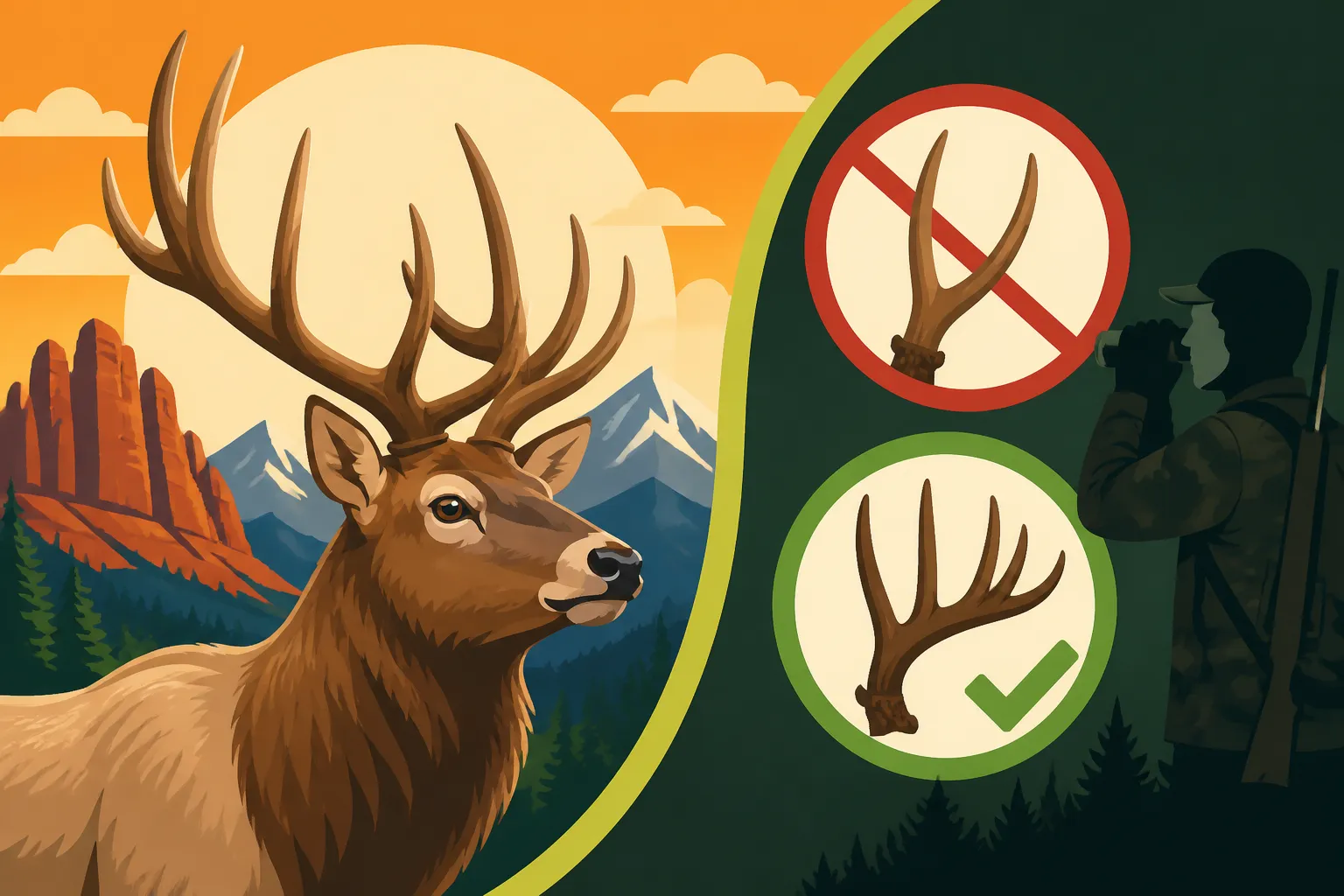
This is where things can get a little tricky and often lead to frustrating misinterpretations in the field. For both elk and deer in Colorado, a "point" is generally defined as a projection on an antler that is at least one inch long and longer than it is wide. That sounds simple enough, right? But imagine you’re standing in a snowy basin, the wind is howling, and a bull elk appears for a few seconds at 300 yards. Is that brow tine an inch long? Is that kick-out longer than it is wide? These aren't always easy calls to make under pressure.
Colorado’s regulations typically refer to points on one side of the antler. For example, a "four-point or better" bull elk means one antler must have at least four points, regardless of how many points are on the other side. This is a crucial distinction. Many hunters mistakenly think it means four points on each side or a total of eight points. This misunderstanding can lead to missed opportunities or, worse, illegal harvests. Always remember to focus on a single antler when assessing if an animal meets the minimum point requirement. The difficulty in quickly and accurately field-judging antlers in real hunting conditions is a valid source of anxiety for many hunters, and it’s something you absolutely need to practice before your hunt.
Why Does Colorado Have Antler Point Restrictions?
The existence of APRs isn't just about making hunting more challenging; they are a deliberate wildlife management tool employed by CPW. Their implementation is a response to various ecological and recreational objectives, aiming to strike a balance between hunting opportunity and herd health. Understanding the "why" behind these rules can help hunters appreciate their purpose, even if they occasionally complicate the hunting process.
Managing Bull and Buck Age Structures
One of the primary reasons for APRs is to manage the age structure of big game herds. In many areas, uncontrolled hunting pressure can lead to a disproportionate harvest of younger, legal antlered animals. This phenomenon, often termed "young buck syndrome" or "young bull syndrome," results in a population where most male animals are young, leading to less successful breeding for mature cows or does, and fewer large, mature animals for hunters to pursue.
By requiring animals to have a minimum number of antler points, APRs effectively protect a segment of the younger male population. These animals get a chance to survive another year or two, allowing them to mature physically and genetically. A more balanced age structure means a higher number of prime breeding animals in the herd, which can lead to healthier offspring and potentially larger antler growth over time. For instance, in an area with a 4-point restriction on elk, a spike or a raghorn bull with only two or three points on a side will be allowed to walk, increasing its chances of reaching an older age class. This strategy is critical for the long-term vitality of Colorado's incredible elk and deer populations.
Spreading Out Hunter Pressure (or trying to)
Another intended benefit of APRs, particularly in high-pressure public land units, is to help distribute hunting pressure. When hunters are forced to be more selective, it naturally reduces the number of legal animals available, theoretically making hunters spread out more to find compliant animals. This can prevent a few popular spots from being completely hammered on opening weekend.
However, it's also true that this doesn't always work out perfectly. In some cases, APRs might concentrate hunters into smaller areas where mature animals are known to reside, or it might just mean more hunters passing on animals they could have taken if there were no restrictions. It's a tricky balance, and CPW is constantly evaluating the impact of these regulations. While the goal is noble—to ensure a quality experience for all and to manage the resource sustainably—the reality on the ground for a hunter trying to avoid crowds in a popular area like the White River National Forest can still feel quite intense, regardless of the APRs in place.
Quality vs. Opportunity Debates
APRs often ignite a passionate debate among hunters: "quality" versus "opportunity." On one side, proponents argue that APRs improve the "quality" of the hunt by allowing more animals to reach maturity, leading to larger antlers and a more challenging, rewarding pursuit. For many, harvesting a truly mature bull or buck is the ultimate goal, and they see APRs as a direct path to achieving that. This perspective often aligns with the desire for trophy hunting or simply for experiencing truly wild, old animals.
On the other side, many hunters prioritize "opportunity"—the chance to put meat in the freezer and experience the outdoors, regardless of antler size. They argue that APRs reduce opportunities, especially for new hunters, youth hunters, or those who simply want to fill their tag without the added stress of detailed antler counting under pressure. For someone on a limited budget or with limited time, passing up a perfectly good two-point buck or a three-point bull because of an APR can be disheartening. CPW continually navigates this tension, trying to find regulations that serve both conservation goals and hunter satisfaction across a diverse group of stakeholders.
Understanding Different APRs for Elk and Deer
Colorado's antler point restrictions aren't a one-size-fits-all rule. They vary significantly depending on the species and, crucially, the specific Game Management Unit (GMU) you are hunting in. What's legal for an elk in one unit might be illegal for a mule deer in another, or even illegal for an elk in a different unit. This complexity makes it absolutely vital to study the regulations for your specific hunt code and GMU well in advance.
Elk APRs: The 4-Point Rule and Exceptions
For bull elk in many parts of Colorado, the most common antler point restriction is the "four-point or better on one side" rule. This means that to be a legal animal, a bull must have at least four points, each measuring at least one inch long and longer than it is wide, on at least one of its antlers. If one antler has four points, and the other only has two, it's a legal bull. If both antlers only have three points, it is not a legal bull under this rule, and you must let it walk.
However, there are critical exceptions to this rule that every elk hunter must be aware of:
- Spike-Only Units: Some GMUs, especially those where CPW is trying to manage herd numbers by increasing cow-to-bull ratios or promoting better genetics, might have "spike-only" regulations. In these units, hunters are restricted to harvesting only bulls with antlers that are spikes (meaning no branches or points off the main beam, or at most a single point less than an inch long). You might wonder why spike-only areas exist when most APRs aim to protect young animals. The idea is often to allow a large number of young, genetically diverse bulls to survive, while still offering hunters an opportunity to harvest a young bull.
- Any Legal Bull Units: Conversely, some units have "any legal bull" regulations. These are often in areas with abundant elk populations or specific management goals where a 4-point restriction isn't deemed necessary. In these units, any bull with at least one antler protruding beyond its ear is considered legal, often referred to as "antlered elk." This provides maximum opportunity for hunters.
It’s easy to get these mixed up, especially if you hunt different units or seasons year to year. Always double-check your hunt code in the official CPW brochure. You can also gain valuable insights by exploring resources like GoHunt, which often compile this information in an accessible format, helping you understand Colorado Elk Season Dates Guide.
Mule Deer APRs: The 3-Point Rule and Specific Units
Mule deer APRs in Colorado are generally a bit less widespread than elk APRs but are equally important to understand. Where they exist, the common restriction is "three-point or better on one side." Similar to elk, this means one antler must have at least three points that meet the length and width criteria. If one side has three points and the other has one, it's legal. If both sides only have two points, it's not.
Mule deer APRs are often implemented in specific GMUs where mule deer populations are a concern, or where CPW is actively trying to grow larger, more mature bucks. These units tend to be areas where hunting pressure is significant or where buck-to-doe ratios are lower than desired. Unlike elk, there aren't typically "spike-only" or "any legal buck" units for mule deer when APRs are in play; it's usually either a 3-point restriction or no antler restriction at all (meaning any buck with an antler at least 5 inches long is legal).
Always consult the specific regulations for your Colorado Mule Deer Hunting Guide unit, as these rules are highly localized. What applies in the high country of the San Juan Mountains might be completely different from a unit on the western slope.
"Either-Sex" and Antlerless Tags in Relation to APRs
It's also crucial to understand how APRs relate to "either-sex" and "antlerless" tags.
- Antlerless Tags: These tags, often called "cow elk" or "doe deer" tags, explicitly permit the harvest of female animals or juvenile males that do not have antlers (e.g., button bucks). APRs do not apply to antlerless tags, as the whole point is to harvest animals without antlers. These tags are a vital tool for CPW to manage overall herd populations and reduce impacts on agriculture or sensitive habitats. If you have an antlerless tag, your concern about point count disappears!
- Either-Sex Tags: These tags are a bit more complex. An "either-sex" tag typically allows the harvest of either an antlered male (a bull or buck that meets all legal requirements, including any applicable APRs) or an antlerless animal. So, if you have an either-sex elk tag in a 4-point restricted unit, you can either shoot a bull with at least four points on one side or a cow elk. If no APR is in place for bulls in that unit, then you can shoot any legal bull (as defined by antler length) or a cow. The key takeaway here is that if you choose to pursue an antlered animal with an either-sex tag, you must still adhere to any APRs that apply to antlered animals in that GMU. Understanding Colorado Either-Sex Elk Tags is vital for maximizing your hunting flexibility.
Here's a quick comparison table:
| Species | Common APR (if applicable) | How to Count | Exceptions/Variations | Tags Affected by APRs | Tags NOT Affected by APRs |
|---|---|---|---|---|---|
| Elk | 4 points on one side | 1" long, longer than wide | Spike-only units, Any legal bull units | Bull tags, Either-sex tags | Cow tags, Antlerless tags |
| Mule Deer | 3 points on one side | 1" long, longer than wide | No general APR in many units, highly unit-specific | Buck tags, Either-sex tags | Doe tags, Antlerless tags |
Navigating APRs in Specific Colorado Hunting Units (GMUs)
The sheer variety of terrain, habitat, and game populations across Colorado means that hunting regulations, including APRs, can be incredibly localized. What applies in the Flat Tops Wilderness might be completely different from the regulations in the Gunnison Basin. This unit-specific variability is probably the most challenging aspect of understanding and adhering to APRs for most hunters.
Identifying APR Units vs. General Season Units
When you look at the Colorado big game brochure or use an online mapping tool, you'll see Colorado divided into numerous Game Management Units (GMUs). Each GMU, or sometimes a cluster of GMUs, will have specific hunt codes tied to seasons (archery, muzzleloader, rifle 1-4) and species (elk, mule deer). It's within these hunt codes that the APRs are defined.
A "general season unit" often implies no APR, meaning any legal antlered animal (usually defined as having an antler at least 5 inches long or above the ear) is fair game. However, many units, especially those with high demand or specific management goals for herd quality, will explicitly state an APR. For example, a hunt code for a specific GMU might read "Elk, Bull, 1st Rifle, Unit 43, 4-point or better." This clearly indicates that in Unit 43 during the first rifle season, you must harvest a bull elk with at least four points on one side. Conversely, another unit might state "Elk, Bull, 2nd Rifle, Unit 23, Any Legal Bull." Understanding Colorado Hunting Units (GMUs) Explained is foundational to planning any hunt.
It's critical not to assume the rules for one GMU apply to its neighbor. Always, always check your specific hunt code and unit regulations. This is where pre-season scouting, both physically and virtually, becomes incredibly important.
Tools and Resources for Checking Unit-Specific Regulations
Thankfully, modern technology and resources make navigating these regulations much easier than it used to be. You're not just limited to a physical brochure anymore, although that remains the official word.
- Colorado Parks and Wildlife (CPW) Website: The official source for all regulations. Their online big game brochure is searchable and updated annually. This is your first and most reliable stop. While it can be dense, it's essential to consult.
- CPW Hunting Atlas: This interactive mapping tool overlays GMU boundaries, land ownership (public vs. private), and general regulation notes onto a topographical map. It's fantastic for visualizing where different units are located and getting a sense of the terrain.
- Third-Party Hunting Apps and Platforms: This is where tools like GoHunt really shine. Platforms like GoHunt consolidate CPW data, making it more digestible and searchable. They often provide unit-specific draw odds, population data, success rates, and crucially, detailed regulation breakdowns, including APRs for each hunt code. You can filter by species, season, and even specific point restrictions, making the planning process significantly less daunting. For hunters looking to e-scout and compare various units, GoHunt offers an invaluable service by centralizing this complex information. It truly helps in understanding How to E-Scout Before a Colorado Hunt and matching regulations to your hunting style.
- Local Expertise: Don't underestimate talking to local CPW biologists, game wardens, or experienced hunters in the area you plan to hunt. They can often clarify nuances that might not be immediately obvious from reading the regulations alone.
Real-World Scenarios and Common Mistakes
Let's imagine a scenario: You drew a coveted tag for Unit 76, a popular elk area. The regulations state "4-point or better on one side" for rifle season bulls. You've been scouting, know the terrain, and you're set up on opening morning.
- Mistake 1: Miscounting in a Hurry: A beautiful bull steps out at first light. You count quickly, "One, two, three, four… wait, is that third point really an inch long?" In the excitement, you might rush and take a shot, only to realize later, upon closer inspection, that one of those points was too short, making it an illegal 3-point bull. This is incredibly common. Take a deep breath. Use your optics. If there's any doubt, let it walk.
- Mistake 2: Assuming General Rules: Your buddy hunted Unit 23 last year, an "any legal bull" unit, and successfully harvested a spike. You might mistakenly assume Unit 76 has the same rule. Without checking your specific hunt code and GMU, you could illegally harvest a spike in a 4-point unit. This is why a thorough review of Colorado Hunting Seasons Explained is crucial every year.
- Mistake 3: Field Judging in Poor Light/Conditions: It's late evening, light is fading, and a bull appears in the dark timber. Snow is falling, obscuring the antlers. You can barely make out three points on one side. Is there a fourth hidden? Is it worth the risk? Hunting in challenging conditions significantly increases the chance of misjudgment. Patience and caution are your best friends in APR units.
These scenarios highlight the importance of not only knowing the rules but also having the discipline to adhere to them under pressure.
The Pros and Cons of Colorado's APR System
Like any comprehensive wildlife management strategy, Colorado's Antler Point Restrictions come with a mixed bag of benefits and drawbacks. These regulations aren't universally loved or hated; rather, they elicit strong opinions from different segments of the hunting community, each with valid points.
Perceived Benefits for Wildlife and Hunters
On the positive side, APRs are credited with several tangible benefits:
- Improved Herd Health and Genetics: By allowing younger, often genetically robust, male animals to survive beyond their first or second year, APRs can contribute to a healthier breeding population. Older bulls and bucks are generally more successful breeders, and a more diverse age structure can lead to stronger, more resilient herds. Over time, this can mean more impressive antler growth across the population, which is a boon for "trophy" hunters.
- Enhanced Hunting Quality: For many, the thrill of chasing truly mature, intelligent animals is the essence of big game hunting. APRs often lead to an increase in the number of older age-class bucks and bulls, providing more opportunities for hunters to encounter and pursue these magnificent animals. This isn't just about antlers; older animals are often more challenging to hunt due to their experience and wariness, making the successful harvest all the more rewarding.
- Reduced Pressure on Younger Animals: In areas susceptible to heavy hunting pressure, APRs act as a buffer for younger animals, ensuring they're not removed from the population before they've had a chance to breed or reach their full potential. This protection can be particularly important for species like mule deer, where populations have faced challenges in various regions.
- Better Buck/Bull to Doe/Cow Ratios: A primary goal of APRs is to ensure a healthy ratio of male to female animals. By protecting younger males, the ratio of breeding-age males often improves, which can lead to higher conception rates among females and a stronger overall fawn/calf crop.
Common Criticisms and Unintended Consequences
Despite the intended benefits, APRs also draw significant criticism and can lead to unintended outcomes:
- Reduced Opportunity for Some Hunters: This is perhaps the most common complaint. For hunters who prioritize filling their freezer or simply experiencing a successful hunt, regardless of antler size, APRs can feel restrictive. Passing up a perfectly healthy 2-point mule deer or a spike elk, even when it's the only animal they've seen for days, can be frustrating and lead to lower overall success rates for individuals. This particularly impacts new or less experienced hunters.
- Increased Difficulty and Stress in Field Judging: Making a quick, accurate judgment of antler points in the heat of the moment, often in challenging conditions (low light, dense timber, animal on the move), is incredibly difficult. This adds a layer of stress and can lead to situations where hunters pass on legal animals out of fear of miscounting, or worse, illegally harvest an animal by mistake. Ethical hunters are sometimes forced to make incredibly tough calls in fractions of a second.
- "Point Creep" and Draw Odds: In units where APRs lead to an increase in mature animals, demand for those tags can skyrocket, leading to higher preference point requirements and tougher draw odds. This phenomenon, often called "point creep," means it takes longer and longer to draw a desirable tag, further reducing opportunity for many. Understanding How Many Preference Points for Colorado Elk becomes even more critical in APR units.
- Increased Hunter Congestion: While intended to spread out pressure, sometimes APRs can have the opposite effect. If a unit is known for producing big animals due to APRs, it can attract more hunters seeking those "trophies," concentrating pressure rather than dispersing it. Hunters might also become concentrated in small pockets where they know legal animals are likely to be found.
- Potential for Wasted Game: A rare but tragic consequence can be an illegal harvest where a hunter misjudges an animal, shoots it, and then realizes it doesn't meet the APR. Faced with the choice of reporting it (and potentially facing fines/license revocation) or letting it spoil, some might choose the latter, leading to wasted game. This highlights the severe responsibility that comes with hunting in APR units.
Practical Tips for Hunting in APR Units
Hunting in Colorado's APR units requires a heightened sense of awareness, discipline, and a thorough understanding of the regulations. It's not enough to just know where you're hunting; you need to know what you're hunting for and how to identify it legally.
Scouting and Field Judging with APRs in Mind
Pre-season scouting is always important, but it's absolutely paramount in APR units. Your goal isn't just to find game; it's to find legal game and understand their patterns.
- Utilize Quality Optics: Invest in good binoculars (10×42 or 12×50 are great) and a spotting scope if you're glassing vast basins. These are your most important tools for counting points accurately from a distance.
- Practice Field Judging: Before your hunt, spend time looking at photos and videos of elk and deer, specifically practicing counting points on different antler configurations. Get comfortable with the "one inch long, longer than wide" rule. If you see a questionable point, mentally decide to count it as one, then decide if it would still be legal without it.
- Focus on the Main Beam: Often, the most reliable points are the brow tines, bez tines, and trez tines coming off the main beam. Look for kickers and abnormal points, but always confirm the primary points first.
- Observe Behavior: Older, more mature bulls and bucks often exhibit different behavior than younger animals. They might be more cautious, move differently, or hang out in specific types of cover. Use behavioral cues to help narrow down which animals to focus your detailed antler count on.
- Use GoHunt Maps: As mentioned before, tools like GoHunt are excellent for E-scouting. You can often see historical harvest data or even notes on specific units that indicate the prevalence of mature animals, which can help guide your scouting efforts. Knowing your Colorado GMU Boundaries is a crucial part of this digital scouting.
Ethical Shooting Decisions and Avoiding "Ground Shrinkage"
Making an ethical shot means not only aiming for a quick, clean kill but also ensuring the animal is legal. "Ground shrinkage" is a common, often humorous, term hunters use when an animal's antlers appear much smaller once it's on the ground than they did through the scope or binoculars. This "shrinkage" can turn a perceived legal animal into an illegal one.
- When in Doubt, Don't Shoot: This is the golden rule for APR units. If you can't definitively count the required number of legal points on one side, do not take the shot. It's far better to walk away from a legal animal than to harvest an illegal one.
- Confirm, Confirm, Confirm: Once you've identified a potential target, take the extra seconds to confirm its legality. Use your spotting scope, tripod, or steady rest to ensure a clear view of the antlers. Look for obstructions like branches or shadows that might be hiding points or making them seem longer.
- Know Your Personal Limitations: Understand your own abilities to field judge under stress. If you struggle with it, consider hunting in "any legal bull/buck" units, or focus on antlerless hunts until you gain more experience.
- Be Prepared for the Consequences: Know that if you harvest an illegal animal, there will be consequences. These can range from significant fines to loss of hunting privileges. CPW takes these regulations seriously, and ignorance is not an excuse.
What to Do if You Harvest a Non-Legal Animal
Despite the best intentions and efforts, accidents can happen. If, after harvesting an animal, you realize it does not meet the legal APR requirements for your unit and tag, it's a gut-wrenching situation. However, your ethical and legal responsibility is clear:
- Do Not Tag the Animal: If it's illegal, do not attach your tag. Tagging an illegal animal is another offense.
- Contact CPW Immediately: As soon as you realize your mistake, contact the nearest Colorado Parks and Wildlife office or a local game warden. Explain the situation honestly and openly. They would much rather deal with an honest mistake than discover a hidden illegal kill later. The contact number for CPW dispatch is readily available online and in the regulations brochure.
- Cooperate Fully: Be prepared to provide the location of the animal and cooperate fully with any investigation. While there will likely be repercussions (fines, potential loss of points or license), being upfront is always the best course of action. This decision is tough but choosing to report and rectify the mistake is an integral part of responsible hunting and wildlife management.
Always consult your Colorado Big Game Species Guide for specific species identification, but the overarching principle of legality hinges on these point restrictions in many units.
Disclaimer
Please remember that hunting regulations, including Antler Point Restrictions, are subject to change. Always consult the most current official Colorado Parks and Wildlife (CPW) big game hunting brochure and regulations before planning and executing any hunt. This guide is for informational purposes only and should not be considered a substitute for the official CPW regulations.