Colorado Archery Elk Hunting Guide
You have practised all summer, but September in the Colorado high country is a different animal: thin air, steep timber, warm afternoons and bulls that go silent the moment you hike in. Many first-time archery elk hunters come home without ever drawing their bow. This guide covers licences, units, timing, calling, gear and meat care so your first Colorado bow hunt has a real chance.
Why Archery Season Is Special in Colorado
Colorado has the largest elk herd in the country, and the archery season falls during the rut, when bulls bugle, gather cows and respond to calls. That makes September the most exciting time to be in the elk woods. It also brings warm weather, thunderstorms, flies and plenty of other hunters, so expect a challenge.
Timing Within the Season
Archery season runs for several weeks, generally from late August through most of September, with exact dates set each year by Colorado Parks and Wildlife. Early in the season, bulls are often still in bachelor groups and may be quiet. Hunting water holes and wallows can be productive in warm, dry weather during this period. By mid-September, bugling and rut activity build. Late in the season, herd bulls are vocal and protective of cows. Check Colorado Archery Season Dates and Rules for the current calendar.
Sharing the Woods
A muzzleloader season often overlaps part of archery season, so you may share the mountains with other hunters. Orange is not required for archers in every situation, but it is wise to wear some when moving through areas with muzzleloader hunters. Read the brochure carefully for any blaze orange rules that apply to you.
Licences and Choosing Where to Hunt
Before you think about calls or broadheads, sort out your licence. Colorado offers both draw licences and, for some hunters and units, over-the-counter archery licences. Availability, especially for nonresidents, has changed in recent seasons, so read the current big game brochure carefully. The basics are laid out in Colorado Elk OTC vs Draw Tags Explained.
Requirements and Paperwork
Hunters born on or after January 1, 1949 must complete hunter education. Draw applicants need a qualifying licence before applying, and many hunters also need a habitat stamp. The details are in Colorado Hunter Education Requirement and Colorado Qualifying License Requirement.
Picking a Unit
Colorado is divided into Game Management Units, and your choice of unit shapes your hunt. Look for units with good elk numbers, public land access, and terrain that suits your fitness and experience. Tools like GoHunt help you compare draw odds, harvest data and unit profiles, while GPS mapping apps and paper maps help you scout terrain. For ideas, see Best Colorado GMUs for Archery Elk.
| Factor | What to Look For | Why It Matters |
|---|---|---|
| Elk density | Strong herd numbers, stable harvest data | More encounters and calling chances |
| Public land | National forest, BLM, wilderness | Legal access without landowner permission |
| Terrain | Dark timber, basins, water sources | Elk security and daily movement |
| Hunter pressure | Lower road density, harder access | Bulls stay more vocal and less wary |
| Elevation | Matches your fitness and acclimation | Safety and stamina over a long hunt |
Gear and Archery Setup
Colorado sets minimum standards for archery equipment. Bows must have a draw weight of at least 35 pounds, and broadheads must have a cutting width of at least 7/8 inch. Check the brochure for any rules on electronics or attachments.
Bow and Arrow Setup
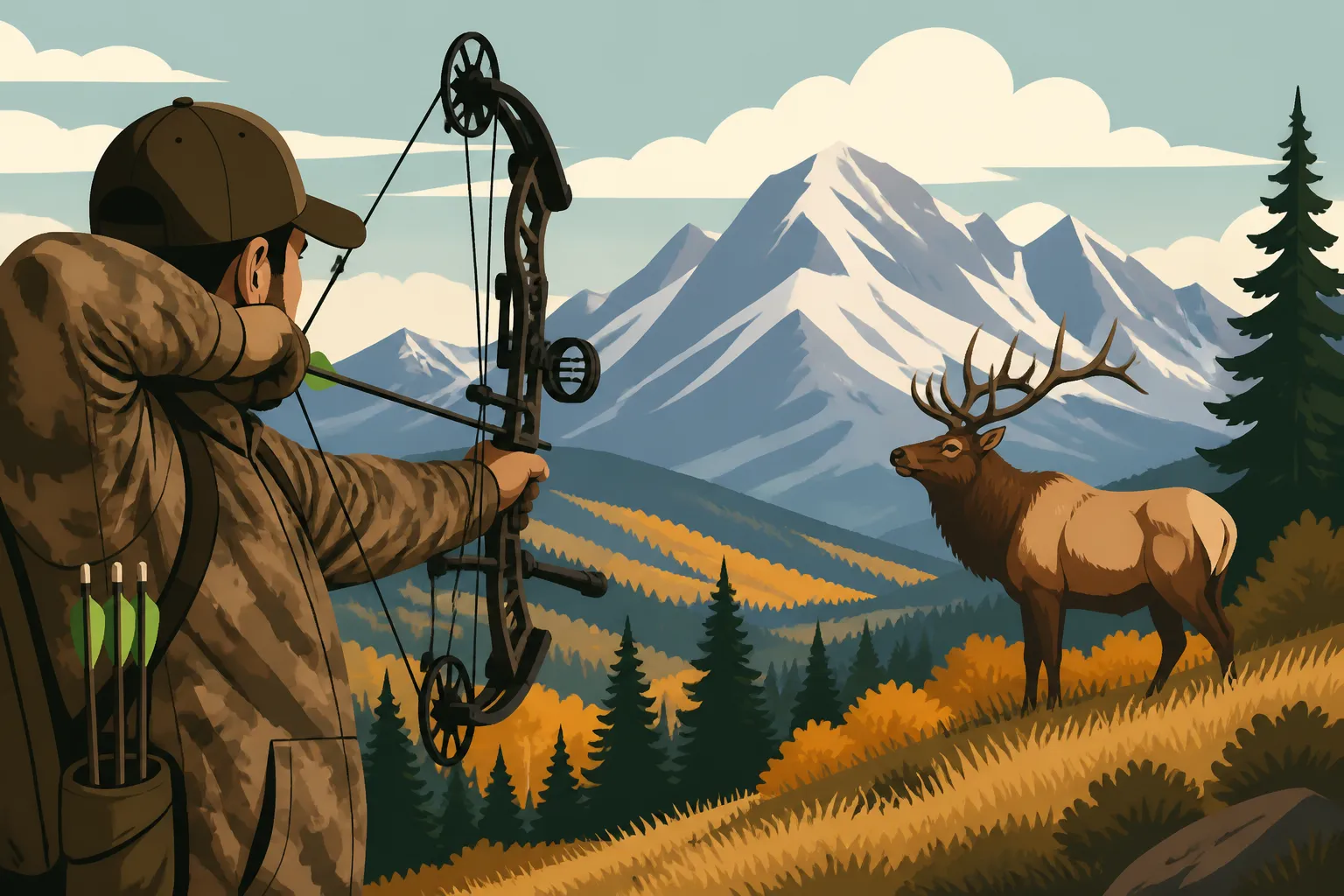
Many elk hunters use bows set between 60 and 70 pounds with heavy arrows and fixed or mechanical broadheads that fly true. Practise at the distances you expect, often 20 to 50 yards, from steep angles and while kneeling or sitting. More setup ideas are in Best Archery Setups for Colorado Elk.
Clothing and Pack
Dress in layers that handle cold mornings, hot afternoons and afternoon thunderstorms. A quality pack with room for meat, a water filter, a headlamp, first aid and an emergency shelter is essential. Good boots that are broken in before the hunt make a big difference on steep terrain.
Tactics for Finding and Calling Elk
Scouting and Glassing
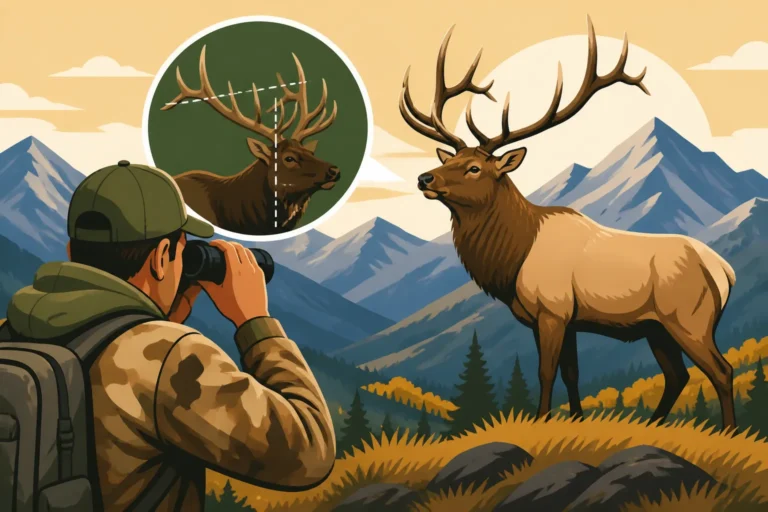
Elk move between bedding areas in dark timber, feeding areas in meadows and parks, and water. Glass at first and last light, look for fresh sign, and listen for bugles. Many successful archery hunters hike into areas away from trailheads to find less pressured elk. Before the season, GoHunt articles and unit data can help you narrow likely zones to scout.
Calling and Setups
Use cow calls to locate and draw in elk, and bugles to locate bulls or challenge a herd bull. Set up with the wind in your favour and a caller behind the shooter whenever possible. The basics are covered in How to Call Elk in Colorado.
Getting the Shot
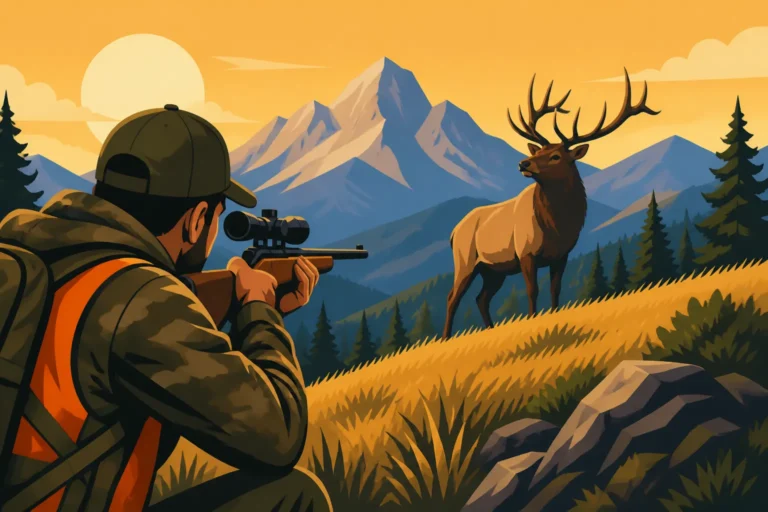
Wait for a broadside or quartering away shot within your effective range. Avoid shooting at moving or alert elk. After the shot, mark the spot, wait before following, and track carefully. Rushing a recovery is a common way to lose elk.
A realistic scenario: you call a satellite bull into 30 yards in a timbered bench, he stops quartering away, and you make the shot. He crashes off downhill. Instead of chasing, note the time, mark where he stood and where you last heard him, and sit quietly for at least 30 to 60 minutes, longer if the hit looked marginal. Then follow the blood trail slowly, marking sign with flagging tape so you can backtrack if it fades.
Physical Preparation and Meat Care
Getting in Shape
Colorado elk hunting means steep climbs at high elevation. Train with weighted hikes, stairs and cardio for months before the season. Arrive a few days early to acclimate if you can. A training plan is laid out in How to Physically Prepare for Colorado Elk.
Caring for Meat
September afternoons can be warm, so get meat cooled quickly. Quarter the elk, hang meat in shade, and pack it out as soon as possible. Game bags, a good knife and a plan for getting meat to a cooler or processor are essential. For more, see How to Keep Elk Meat Cool in Warm Weather.
Planning Resources
Successful archery elk hunting is part planning, part persistence. Use the CPW brochure, unit data from GoHunt, and good maps. Talk to other hunters and biologists, and be ready to adapt. If one drainage is crowded or quiet, move. Elk shift with pressure, weather and feed, and the hunters who cover ground and stay flexible usually find bugling bulls when others give up.
A simple pre-season checklist keeps the planning manageable:
- Confirm your licence type, unit and season dates in the current brochure.
- Scout maps for water, dark timber and access routes away from trailheads.
- Tune your bow and practise from realistic shooting positions.
- Build fitness with weighted hikes for several months.
- Plan meat care, including game bags, a cooler and a processor contact. Even if you do not fill your tag, a September in the Colorado high country is an experience to remember.
Disclaimer
This article is for general informational purposes only and does not constitute professional advice. Laws, prices and regulations vary by location and change over time. Consult a qualified professional for guidance on your specific situation.