How to Hunt Colorado Moose in the Rut
Hunting Colorado moose in the rut is a dream for many, but it often feels like an insurmountable challenge, both in drawing a coveted tag and knowing exactly how to approach these magnificent animals during their breeding season. It's not like elk hunting where bugles echo from every canyon. Moose are a different beast entirely, requiring a nuanced approach, careful planning, and a deep understanding of their unique rutting behaviors. This guide is designed to demystify the process, offering practical strategies to increase your chances of success once you've secured that once-in-a-lifetime Colorado moose tag.
Understanding the Colorado Moose Rut Cycle
The rut is a magical and intense time for moose, a period when their usual solitary nature gives way to a drive for procreation. Unlike the widespread elk populations, Colorado moose are a more recent reintroduction and are found in specific, localized pockets across the state, primarily in the northern mountains and some south-central ranges. This makes drawing a tag incredibly difficult, often requiring many years of preference points. But once you have that tag in hand, understanding their rutting cycle is paramount to your hunting strategy.
Timing and Environmental Factors
The moose rut in Colorado typically kicks into gear from late September through October, with peak activity often occurring in the first two weeks of October. However, this isn't a hard-and-fast rule. Just like with elk, weather plays a huge role. Early snow, cold snaps, or prolonged warm spells can all influence when the bulls become most active and responsive. A crisp, cool morning after a light overnight snow can absolutely ignite their breeding fervor, while unseasonably warm temperatures might suppress daylight movement.
Bulls will start to "stage" in areas known for cow moose as the rut approaches. They'll rub velvet from their antlers, spar with smaller bulls, and become increasingly vocal. The cows also undergo behavioral changes, becoming more receptive as their estrus cycle begins. It’s a dynamic period, and being in the field just as these environmental cues align with their biological clock can make all the difference. Keep a close eye on weather forecasts and historical data for the unit you've drawn. For detailed information on season structures, you can always consult a comprehensive guide like this one on Colorado Hunting Seasons Explained.
Moose Rutting Behavior Explained
Moose behavior during the rut is distinctly different from other cervids. They aren't as vocal as elk, but they do make specific sounds you'll want to learn. Bulls will often make a low, guttural grunt, sometimes described as a "moan," to announce their presence and challenge rivals. Cows, when in estrus or looking for a bull, emit a long, drawn-out bawl or "whine." These calls are critical to understand and replicate, as they form the backbone of calling tactics.
Beyond vocalizations, visual cues are important. Bulls will create "wallows" – muddy depressions where they urinate and roll, covering themselves in their scent to attract cows and deter other bulls. You might also find heavily thrashed saplings or small trees where bulls have rubbed their antlers, signaling their presence and aggression. During the peak rut, bulls become incredibly focused on cows, often following them relentlessly. This single-mindedness can be exploited by patient hunters who understand how to intercept or call in a bull that is already committed to a cow. Observing how they interact with each other, how they move through their preferred habitat of willows, timber, and water, provides invaluable clues.
Key Strategies for Rut Moose Hunting
Successfully hunting moose in Colorado during the rut hinges on combining several tactics, from meticulous scouting to strategic calling. It's a game of patience, stealth, and understanding their unique patterns.
E-Scouting and Pre-Season Reconnaissance
Before you ever set foot on the mountain, e-scouting is your absolute best friend for moose. Moose are far less widely distributed than elk, so identifying their core habitats within your unit is crucial. Utilize tools like GoHunt, which can offer detailed map overlays for public land, wilderness areas, and, crucially, known moose habitats like willow bottoms, beaver ponds, and riparian zones. Look for north-facing slopes with dense timber for bedding and areas with consistent water sources. GoHunt also provides valuable draw odds and application data, helping you understand your chances of drawing a Colorado Moose Season Dates and Tags in the first place.
When e-scouting, pay close attention to historical burn areas or clear-cuts that are now regenerating with young willows, aspens, and fir — prime moose browse. Identifying these food sources adjacent to thick thermal cover is a golden ticket. Once you've identified promising areas, if possible, conduct a pre-season scouting trip. Look for tracks, scat, browse lines on willows, and old rub marks. This boots-on-the-ground confirmation is irreplaceable and helps you identify specific access points and potential ambush locations. Think about where a bull might move from bedding to feeding during the rut, and how you might intersect him. For a deeper dive into pre-hunt preparation, consider resources like How to E-Scout Before a Colorado Hunt.
Calling Tactics for Rutting Moose
Calling is often the most effective way to engage with rutting moose. While they aren't as boisterous as a bull elk, a well-executed call can be irresistible to a bull looking for a cow or a challenge.
The primary calls are the cow call (bawl/whine) and the bull grunt.
- Cow Call: This is your bread and butter. A long, drawn-out, nasal "mooooo-aaaaaah" sound, mimicking a cow looking for a bull. During the peak rut, a bull on his own or one struggling to hold a cow might respond by coming to investigate. Vary the intensity and duration. Sometimes a soft, pleading call is all it takes; other times, a more aggressive, desperate bawl can spark a response.
- Bull Grunt: A low, guttural "ERRRR-uh" or "AAUUUGHH" that signifies a bull's presence. Use this sparingly, mostly to challenge a bull you've located or if you want to sound like a rival. Be prepared, as a bull grunt can elicit a more aggressive, direct charge.
Calling Sequence Example:
- Start with a soft, pleading cow call. Wait 15-20 minutes.
- If no response, try a slightly louder cow call. Wait again.
- If you hear a distant grunt or thrashing, respond with a cow call and maybe a soft bull grunt to sound like a bull with a cow.
- If a bull starts moving towards you, try to mimic his pace and intensity. If he grunts aggressively, you might need to respond with an equally aggressive grunt or a dominant cow call to keep him coming.
Remember, moose are patient. They often approach slowly, deliberately. You might not hear them until they are very close. Set up with good visibility and clear shooting lanes. Always be mindful of the wind, as their sense of smell is incredible.
Spot-and-Stalk in Moose Country
While calling is powerful, spot-and-stalk tactics are also highly effective, especially in open willow basins or sparse timber. This method demands keen observation and absolute stealth.
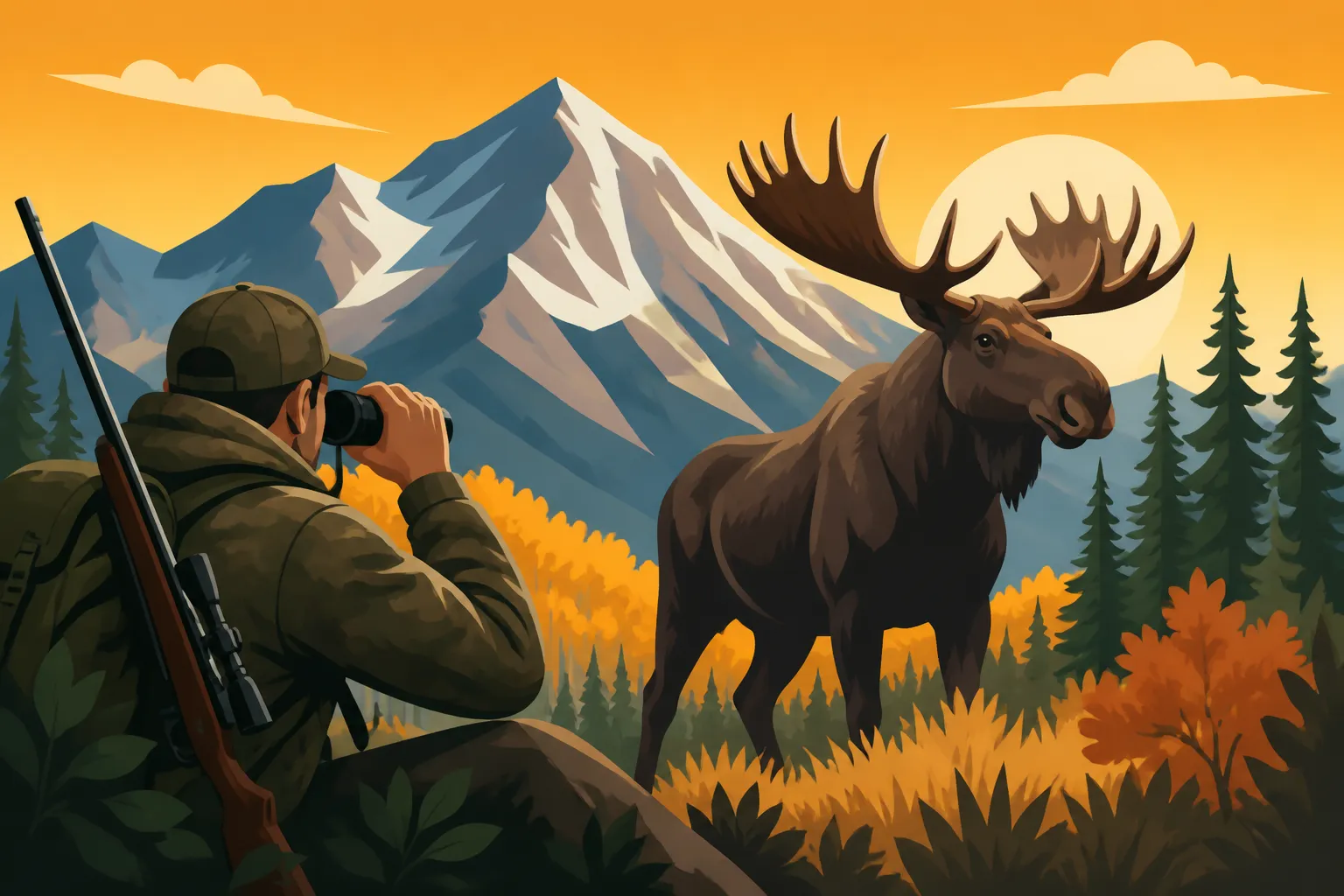
- Glassing: Utilize high-quality optics, especially during the early morning and late evening when moose are most active. A good pair of 10×42 or 12×50 binoculars, paired with a spotting scope, will be your best friends. Focus on scanning willow thickets, edges of timber, and beaver ponds. Moose, despite their size, can disappear into sparse cover. Look for the dark silhouette, the white paddle of an antler, or the flick of an ear. For tips on choosing the right glass, check out Best Optics for Colorado Big Game.
- Approaching: Once you spot a moose, assess the wind and terrain. Moose often bed down during the midday, offering an opportunity for a careful stalk. Use natural cover, move slowly, and be conscious of every step to avoid breaking twigs or rustling leaves. Their hearing, while not as exceptional as their smell, is still very good. If you're hunting in thick timber, moving quietly can be a major challenge. Consider taking a few steps, then pausing for several minutes, scanning your surroundings. This mimics animal movement and can prevent you from bumping a bedded moose.
- Interception: Sometimes, instead of a direct stalk, an interception strategy works best. If you can predict a bull's travel route between feeding and bedding areas, or between two cow groups, you can set up an ambush. This often involves observing their movement patterns over several days, which requires significant patience and dedication.
Gear and Physical Preparation for Colorado Moose Hunting
Moose hunting in Colorado, especially during the rut, often means navigating rugged, wet, and often high-altitude terrain. Proper gear and physical conditioning aren't just recommendations; they are necessities for safety and success.
Essential Gear List
Your gear needs to be robust, reliable, and appropriate for the varying conditions of a Colorado fall.
- Optics: As mentioned, good binoculars and a spotting scope are critical for glassing vast areas and identifying moose in dense cover. Rangefinders are also essential for accurate shots.
- Weapon: Whether rifle, bow, or muzzleloader, ensure your chosen weapon is sighted in and capable of ethically taking a large animal like a moose.
- Clothing: Layering is key. Early mornings can be frigid, while midday can warm up considerably. Pack moisture-wicking base layers, insulating mid-layers (fleece or puffy jacket), and a waterproof/windproof outer shell. Consider quiet fabrics for stalking. Brands like Sitka Gear or Kuiu offer excellent options for active hunting.
- Footwear: Waterproof, comfortable, and supportive boots are non-negotiable. You'll be crossing streams, slogging through mud, and navigating rocky terrain. Ensure they are well broken in.
- Backpack: A durable pack large enough for day hunting essentials (water, food, extra layers, first-aid, emergency gear) is a must. If you plan to pack out meat, a dedicated frame pack will be needed. For ideas, check out Colorado Backcountry Hunting Gear List.
- Navigation: GPS device (like a Garmin inReach or dedicated hunting GPS) with pre-loaded maps, along with paper maps and a compass, is crucial. Your phone with a reliable hunting app (like OnX Hunt) is great, but don't rely solely on it for battery reasons. Remember, How to Use onX for Colorado Hunting can greatly enhance your navigation and scouting.
- Calling Devices: Moose calls (cow call, bull grunt) and potentially a rattling antler setup if you plan to mimic sparring bulls.
- Game Processing: A sharp knife, game bags, and paracord are essential for field dressing and quartering your moose. You'll want sturdy game bags large enough to protect a substantial amount of meat.
Physical Conditioning and Altitude Acclimation
Hunting moose in Colorado is physically demanding. Moose habitat often lies at higher elevations (8,000-11,000 feet), where the air is thin, and the terrain is steep and unforgiving. Packing out a moose, which can weigh over 1,000 pounds, is a monumental task.
- Cardiovascular Fitness: Start conditioning months in advance. Hiking with a weighted pack, stair climbing, and sustained cardio will build the endurance you need. Simulate hunting conditions as much as possible. This article on How to Physically Prepare for Colorado Elk offers great tips that are largely applicable to moose.
- Strength Training: Focus on core, leg, and back strength to handle steep climbs and heavy loads.
- Altitude Acclimation: If you're coming from sea level, plan to arrive in Colorado a few days before your hunt starts to allow your body to adjust to the elevation. Stay hydrated, avoid alcohol, and take it easy on your first day. Altitude sickness can derail your hunt and be dangerous. Understanding How to Acclimate to Colorado Elevation is vital for out-of-state hunters.
Navigating Regulations and Unit Selection
Colorado moose tags are extremely limited and typically require drawing a license through the primary draw system. This means accruing preference points over many years.
Understanding the Colorado Draw System
Colorado's draw system for moose is competitive. Most moose tags are unit-specific and highly sought after, meaning non-residents often need upwards of 20 preference points to draw a bull tag in a desirable unit. Even resident hunters typically need a significant number of points.
- Preference Points: Colorado uses a preference point system where you earn a point for each year you apply for a limited license and are unsuccessful. These points essentially give you a higher priority in subsequent draws. For a comprehensive overview, see Colorado Draw System and Preference Points.
- Hunt Codes: Each specific hunt (species, sex, method, season, unit) has a unique hunt code. You'll need to carefully select your desired hunt code when applying.
- Application Process: The application period typically runs from early March to early April. Make sure you apply on time, and consider applying for a preference point even if you don't intend to hunt that year, to start building points. More details can be found in Colorado Draw Application Step by Step.
Identifying Prime Moose Units and Habitat
Colorado Parks and Wildlife (CPW) offers excellent resources for understanding moose populations. While specific units can change in desirability, some general areas are known for moose. North Park, the Flat Tops, and parts of the Routt, Arapaho, and Gunnison National Forests consistently hold moose populations.
- North Park: This area around Walden is often considered a moose hotspot, with a healthy, well-established population. The willow-filled basins and riparian areas are ideal habitat.
- Flat Tops Wilderness: While primarily known for elk, the Flat Tops also hold moose, especially in the higher elevation willow bogs and meadows. Hunting here means being prepared for a Colorado Backcountry Hunting Guide experience.
- Specific GMUs: Units like GMU 18, 17, 171, 6, 7, 16, 161, and others in the northern and north-central mountains are often listed as prime moose habitat. However, draw odds for these units are usually extremely low.
- Habitat Diversity: Look for units that offer a mix of dense spruce-fir forests for cover, interspersed with willow-lined streams, beaver ponds, and aspen groves. Moose are highly adapted to cold, wet environments, and their diet consists largely of willow, aspen, and aquatic vegetation.
Understanding the specific terrain and vegetation types within a GMU is far more important than just a unit number. Use detailed topographic maps and satellite imagery (like those available through GoHunt) to pinpoint these micro-habitats within your chosen unit.
| Rut Phase | General Timing (Colorado) | Bull Behavior | Cow Behavior | Recommended Hunting Tactic |
|---|---|---|---|---|
| Pre-Rut | Late September | Rubbing velvet, sparring, establishing dominance. | Less vocal, feeding heavily. | E-scouting, general scouting, glassing feeding areas. |
| Peak Rut | Early-Mid October | Highly vocal (grunts), actively seeking cows, less cautious. | Vocal (bawls), receptive to bulls, often with a bull. | Calling (cow bawl, bull grunt), spot-and-stalk, ambush near wallows. |
| Post-Rut | Late October-Early November | Less vocal, recovering, still with cows but less intense. | Less vocal, feeding. | Spot-and-stalk, ambushing near feeding/bedding, occasional calling. |
Remember, these are general guidelines, and local conditions and specific moose populations can vary. Always adapt your strategy based on what you observe in the field.
Disclaimer
Please be aware that hunting regulations, season dates, and drawing odds can change annually. It is your responsibility to consult the most current Colorado Parks and Wildlife (CPW) regulations and brochures before planning and undertaking any hunting activity in Colorado. This guide provides general information and should not be considered a substitute for official CPW resources.