How to Spot-and-Stalk Colorado Pronghorn
Chasing pronghorn across Colorado’s vast, open plains can feel like a game of chess where your opponent sees every move you make, often before you even make it. Their incredible eyesight and wide-open habitat make the traditional "spot-and-stalk" method seem almost impossible for many hunters, leading to endless frustration and busted stalks. This guide will meticulously break down the art of spot-and-stalk pronghorn hunting in Colorado, offering proven strategies and insights to help you close the distance on these wary speedsters.
Understanding the Pronghorn's World: Senses and Habitat
Before you even think about putting boot to sagebrush, you've got to get inside the head of a pronghorn. These aren't your timber-dwelling elk or a mule deer hunkered in a coulee. Pronghorn are built for survival in wide-open spaces, and understanding their unique adaptations is the first step to successful spot-and-stalk hunting.
Pronghorn Senses and How They Dictate Strategy
The sheer challenge of hunting pronghorn via spot-and-stalk often boils down to their phenomenal senses, particularly their eyesight. It's truly a marvel of evolution.
Imagine trying to sneak up on an animal that essentially has 8x magnification built into its eyes, combined with a nearly 300-degree field of vision. They can spot movement and detect danger at incredible distances, often picking you out before you’ve even put your binoculars to your eyes. This isn't an exaggeration; hunters frequently report pronghorn detecting them from over a mile away, especially if they’re moving or silhouetted. This incredible vision is why any successful stalk must begin with glassing from extreme distances and planning an approach that keeps you utterly concealed. Trying to walk directly at them, even from half a mile out, is usually a recipe for a busted hunt. It’s infuriating when they bust you from what feels like an impossible range, but it’s a testament to their survival instincts.
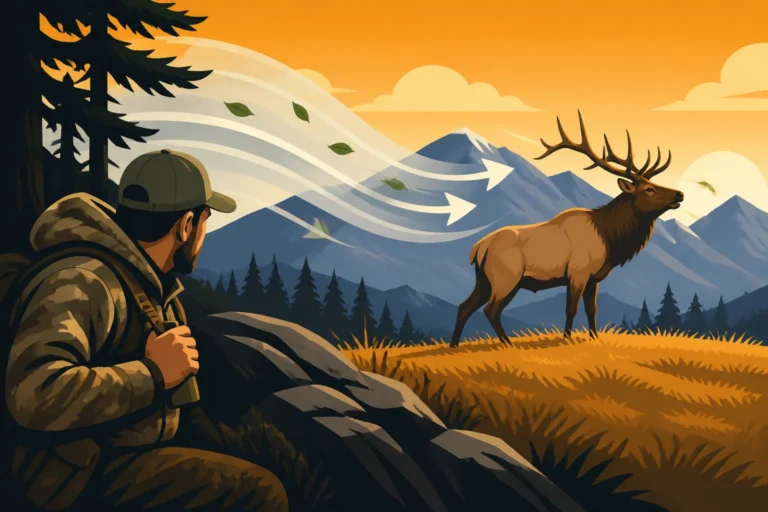
Beyond their eyes, pronghorn possess a keen sense of smell and hearing, though these are secondary to their vision in open country. The wind, however, plays a crucial role for them, as it carries scent and can aid or hinder your approach. Always factor in the wind direction, ensuring it’s blowing your scent away from the animals, not towards them. A slight change in wind can turn a promising stalk into a rapid sprint from the herd. Finally, their legendary speed, capable of reaching 60 miles per hour, means that once they're alerted, they're gone—often out of sight over the next rise in a matter of seconds. There's usually no "second chance" on a busted stalk with pronghorn.
Preferred Habitats and Terrain Features
Colorado's eastern plains, and specific pockets throughout the state, are prime pronghorn country. These areas are characterized by vast, undulating grasslands, sagebrush flats, and agricultural fields. It's often referred to as "short grass prairie," which offers little in the way of vertical cover.
However, even in seemingly flat expanses, there are always subtle terrain features that pronghorn utilize and that you, as a hunter, must learn to exploit. Look for gentle swells in the landscape, dry creek beds, erosion cuts, and shallow coulees. These natural depressions and rises provide precious inches of cover that can be the difference between being spotted and successfully closing the distance. Pronghorn often bed down in these slight depressions, using the subtle elevation changes to break up their outline against the horizon. They also frequent areas around water sources like stock tanks, small ponds, and even irrigation ditches, especially during dry periods. Learning to read a topographical map or using advanced e-scouting tools like those offered by GoHunt, can help you identify these critical terrain features before you even set foot in the field. Understanding Colorado Pronghorn Behavior and Biology is vital for this initial phase of your hunt.
Essential Gear for Spot-and-Stalk Pronghorn Hunting
Your gear choices for spot-and-stalk pronghorn are heavily influenced by their incredible senses and the open environment. This isn't a "run-and-gun" kind of hunt; it's a patient, methodical chess match, and your equipment needs to support that.
Optics: The Most Critical Tool
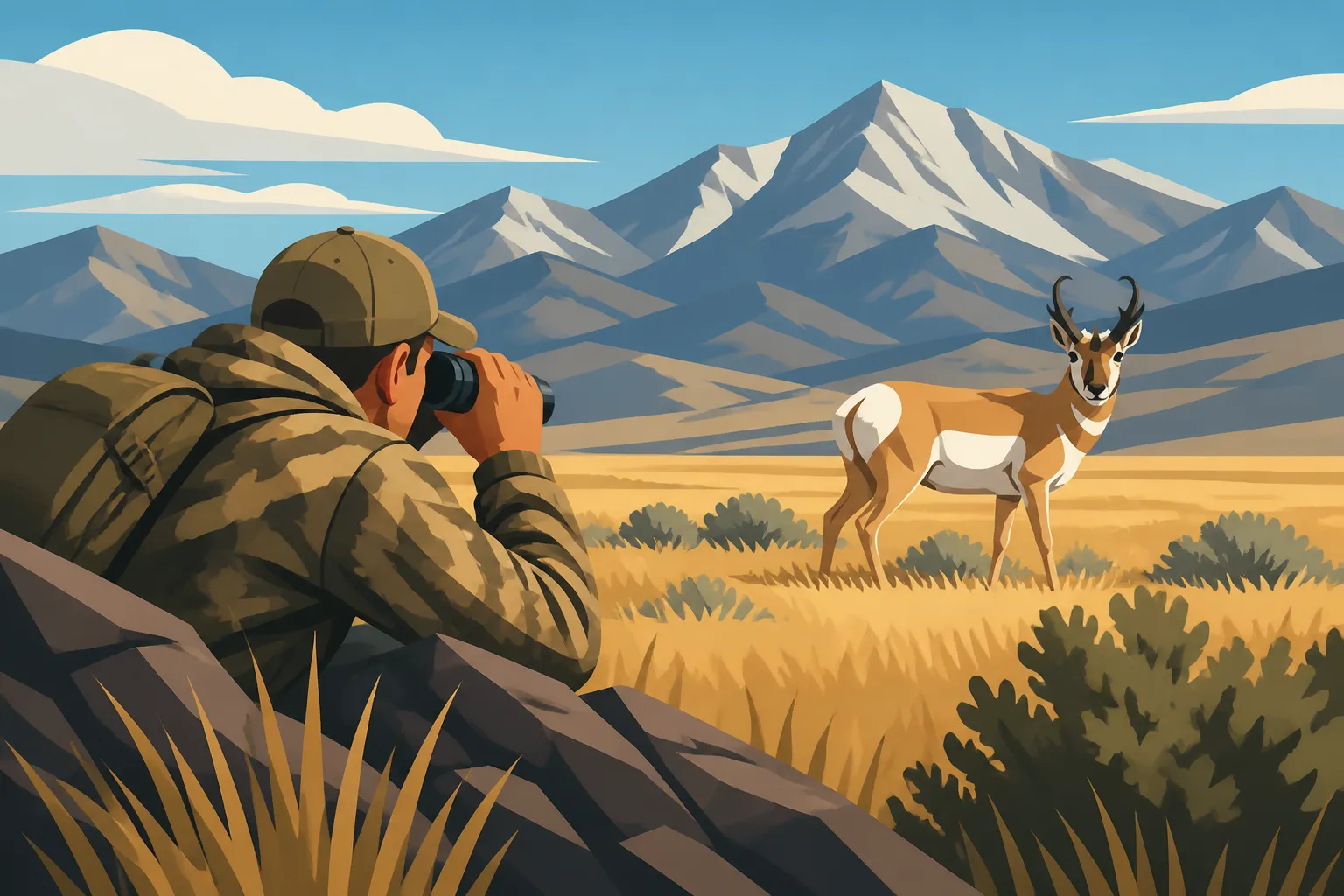
When hunting pronghorn, your optics are arguably more important than your rifle or bow. You'll spend 90% of your time glassing, and if you can't find them or effectively analyze their movements from afar, your hunt is over before it begins.
First and foremost, invest in quality binoculars. A 10×42 or 12×50 power is ideal for handheld glassing, offering a good balance of magnification, field of view, and light gathering capability. Brands like Zeiss, Swarovski, or Vortex offer exceptional clarity and durability, which truly makes a difference when you're staring into the shimmering heat waves of the plains. For more detailed scrutiny, especially when you've spotted animals several miles away, a spotting scope is indispensable. A 20-60x power scope, paired with a sturdy tripod, allows you to pick apart small details, identify bucks from does, and most critically, analyze the terrain around the animals for potential stalk routes. The tripod isn't optional; it stabilizes the image, reducing eye strain and allowing for prolonged, methodical glassing. Without quality glass, you'll simply be driving around hoping to bump into them, which almost never works out for a stalk. For more on choosing the right glass, check out our guide on Best Optics for Colorado Big Game.
Equally important is a reliable rangefinder. In the open, vast expanses of the plains, distances are incredibly deceptive. What looks like 300 yards might be 500, and vice versa. Knowing the precise distance to your target, and to various landmarks along your stalk route, is critical for making an ethical shot and for gauging your approach. Practice with your rangefinder beforehand so it becomes second nature to quickly get a reading.
Clothing and Camouflage Considerations
Your clothing needs to serve multiple purposes: blend in, protect you from the elements, and allow for quiet, flexible movement. For pronghorn, camouflage patterns that mimic high desert or prairie environments, with muted earth tones, browns, and tans, are generally most effective. Avoid overly dark or contrasting patterns.
Layering is crucial, especially when hunting the Colorado plains, where temperatures can swing wildly from frigid mornings to hot afternoons. Start with a moisture-wicking base layer, add insulating layers, and top it with a windproof and water-resistant outer shell. You'll be doing a lot of belly crawling and kneeling, so kneepads are an absolute lifesaver – don't skip them unless you enjoy bruised and scraped knees. Gloves are also important, not just for warmth, but to break up the outline of your hands during a final crawl. A wide-brimmed hat or a baseball cap in a camo pattern helps shade your eyes for glassing and minimizes glare that could give you away.
Shooting Aids and Pack Essentials
Given the open country and the distances often involved, a stable shooting platform is non-negotiable. A bipod attached to your rifle or a sturdy set of shooting sticks are incredibly helpful, allowing you to quickly get steady from a kneeling or prone position. These aids increase your ethical shot range and confidence significantly.
Your backpack, while not needing to be a massive backcountry hauler, should be comfortable and carry essential items. Water is paramount; the plains can be dehydrating. Pack enough for the day, plus some extra. Snacks, a basic first-aid kit, a headlamp, and game bags for meat are also critical. Remember, you might be a fair distance from your vehicle when you get an animal down, so having game bags to protect the meat from dirt and flies is essential for preserving your hard-earned harvest. Finally, a small wind checker (a puffer bottle with powder) is invaluable for constantly monitoring wind direction during your stalk.
The Spot-and-Stalk Process: Strategy and Execution
This is where the rubber meets the road. Spot-and-stalk pronghorn hunting is a masterclass in patience, observation, and calculated movement. It’s rarely about speed; it’s always about stealth.
Effective Glassing Techniques
The foundation of any successful pronghorn stalk begins with expert glassing. You can't stalk what you can't see, and you can't stalk effectively if you don't know exactly where the animals are and what they're doing.
Start by finding an elevated position, even if it's just a slight rise in the terrain. This gives you a better vantage point over the vast plains. Once you’re set up, typically with your spotting scope on a tripod, begin a systematic grid search of the landscape. Don't just haphazardly scan; methodically pick apart the terrain section by section, starting close and working your way out, or vice versa. Focus on subtle movements, flashes of white, or anything that looks out of place. Pronghorn blend in remarkably well, especially when bedded. Take your time, sometimes spending hours in one spot. Patience here will save you miles of fruitless walking. Tools like the Colorado Hunting Atlas Explained or digital mapping apps from companies like onX Hunt can help you identify high points and potential hiding spots before you even leave camp. They can also show you public land boundaries and access points, which is crucial for ethical and legal hunting.
Once you’ve spotted a group of pronghorn, observe them. How many are there? Are there any bucks? What are they doing – feeding, bedding, moving? Which direction are they heading? Are they near any potential cover? Understanding these behaviors and their current location is critical for planning your approach. Pay close attention to any sentinel animals, those particularly alert individuals that seem to constantly scan the horizon. These are the eyes of the herd, and avoiding them is your primary objective. For more in-depth glassing tactics, you might find our guide on How to Glass Big Colorado Basins helpful, with adaptations for the open plains.
Utilizing Terrain and Wind for the Stalk
With a target identified and thoroughly observed, it’s time to plot your stalk. This is where your ability to read the terrain and the wind truly shines. Your goal is to keep as much cover between you and the pronghorn as possible for as long as possible.
Start by looking at the aerial and topographic maps (like those you'd use with GoHunt’s tools) to identify any dry washes, creases, or small rises that run in a favorable direction. These seemingly insignificant changes in elevation are your lifeline. You might need to make a wide, circuitous route, adding significant distance to your stalk, but it's essential for staying out of sight. Remember the "low crawl" and "belly crawl" are your friends. If there's literally no cover, sometimes the only option is to wait for the pronghorn to move into a more favorable position, or for a cloud to pass overhead, offering a brief moment of diffused light for a quick dash. This waiting game can be frustrating, but it's often the only way.
The wind is your second critical factor. It must be in your face or a direct crosswind. Never, ever stalk with the wind at your back, even a slight breeze can carry your scent for hundreds of yards in open country. Constantly monitor the wind using your wind checker. The plains are notorious for unpredictable wind shifts, especially as thermals change throughout the day. If the wind shifts unfavorably mid-stalk, you have two choices: either back out entirely and try again from a different direction, or hunker down and wait for the wind to change back, which can take hours or even be futile. It’s a tough decision, but a busted stalk due to scent is almost guaranteed. Our guide on How to Use the Wind Hunting Colorado Elk provides excellent principles that translate well to pronghorn hunting on the plains.
The Final Approach and Shot Setup
You’ve crawled, you’ve ducked, you’ve utilized every inch of terrain, and now you’re within range. This is the moment of truth, and it requires even greater care and deliberation.
Your movements must become agonizingly slow and deliberate. Avoid any sudden motions. Think like a tortoise, not a hare. Every inch matters. If you're with a partner, communicate silently with hand signals. As you get closer, typically within a few hundred yards, you’ll likely be on your hands and knees or belly crawling. Use your bipod or shooting sticks to get into a stable shooting position before the pronghorn sees you. You want to be set up, steady, and ready to take the shot as soon as you have a clear, ethical opportunity. Rushing this final setup will almost certainly lead to a miss or, worse, a wounded animal.
Before you expose yourself for the shot, confirm your range with your rangefinder. Even a slight elevation change can alter your bullet's trajectory, and a few yards can make a huge difference, especially with the smaller vital zone of a pronghorn compared to an elk. Our article on How to Judge Shooting Distance in the Mountains offers great general advice on range estimation, which is just as critical on the plains. Be prepared for a quick shot once you commit, as pronghorn can bolt at the slightest hint of danger.
Common Challenges and How to Overcome Them
Spot-and-stalk pronghorn hunting is undoubtedly one of the most challenging hunts in Colorado, precisely because of the animals themselves and the environment they call home. But with persistence and the right mindset, these challenges can be overcome.
Dealing with Extreme Alertness and Open Country
The most glaring challenge is, without a doubt, the pronghorn’s unparalleled vision in an incredibly open landscape. It’s easy to get discouraged when you’ve put in hours of meticulous stalking, only to have the entire herd bound away when you’re still 600 yards out.
The key here is patience, realistic expectations, and sometimes, a willingness to adapt your strategy. Not every group of pronghorn is stalkable. Some are in positions where there’s simply no cover, or the wind is constantly swirling. In these cases, the best move might be to simply back out, move on, and try to find another group in a more favorable location. Don't force a bad stalk; it usually ends poorly. Another tactic, if the spot-and-stalk proves impossible, is to consider using a decoy. While this guide focuses on traditional spot-and-stalk, a well-placed decoy can sometimes be the only way to get a buck to close the last 100-200 yards if you're completely out of cover. We have a detailed guide on Colorado Pronghorn Decoying if you find yourself in this predicament. Remember, it's not about being "less of a hunter" for trying different tactics; it's about being successful and ethical.
| Stalking Phase | Objective | Common Frustration | Overcoming Strategy |
|---|---|---|---|
| Glassing | Locate animals, assess situation | Not seeing anything, eye strain | Use quality tripod-mounted optics, grid search systematically, extreme patience |
| Approach Planning | Identify cover, wind direction, route | No obvious cover, complex wind | E-scout thoroughly (GoHunt), plan wide detours, accept long stalks |
| The Stalk | Move stealthily, stay concealed | Getting spotted from afar, wind shifts | Move slowly, utilize every fold in terrain, constant wind checks, use kneepads |
| Final Approach | Close distance, get stable shooting position | Pronghorn suddenly stand up, rapid detection | Agonizingly slow movement, confirm range, get stable before exposing yourself |
Managing Wind Shifts and Changing Conditions
Colorado’s plains weather is notoriously fickle. A beautiful, calm morning can quickly turn into a gusty, swirling mess, or even a sudden rain or hail storm. Wind shifts are particularly problematic for pronghorn hunters.
Always have a wind checker readily accessible and use it constantly throughout your stalk. Even a slight change in the grass movement can indicate a shift in direction that could compromise your entire effort. If the wind shifts adversely, pause immediately. Do not move forward. Evaluate if the shift is temporary or if it's a sustained change. Sometimes, waiting it out, perhaps for 15-20 minutes, is all it takes. Other times, the shift might force you to abandon the stalk and either backtrack to find a new approach or move on to a different group of animals. It’s disheartening, but pushing a bad wind often leads to a quick bust. Dressing in layers is also key for dealing with rapid temperature changes, ensuring you stay comfortable and focused, regardless of what the weather throws at you.
Physical Demands and Mental Toughness
While not always a high-elevation hunt, spot-and-stalk pronghorn hunting demands a unique kind of physical and mental endurance. You might be covering vast distances on foot, much of it bent over or crawling, under the intense sun, with little shade.
The physical exertion of long crawls, especially across uneven terrain, can be draining. Your knees, elbows, and back will feel it. This is where fitness preparation comes into play, even for a plains hunt. While it’s not the same as high-country elk hunting, general endurance and core strength are beneficial. Consider reviewing resources like How to Physically Prepare for Colorado Elk for a baseline fitness plan, as many principles apply. More importantly, the mental game is huge. Getting busted repeatedly, especially after painstaking efforts, can be incredibly demoralizing. It requires immense patience, resilience, and a stubborn refusal to give up. You have to be prepared to fail multiple times before you succeed. Embrace the challenge, learn from each busted stalk, and remember that the satisfaction of finally connecting on a truly earned pronghorn is one of hunting's greatest rewards. For beginners, understanding these challenges upfront can help set realistic expectations; check out our guide on Colorado Pronghorn Hunting for Beginners to get started right.
Disclaimer
Hunting is an inherently dangerous activity. The information provided in this guide is for informational purposes only and should not be taken as a substitute for professional instruction, adherence to all local, state, and federal regulations, and sound judgment. Always prioritize safety, respect wildlife and their habitats, and ensure you have the necessary skills and training before embarking on any hunting expedition. Laws and regulations are subject to change; always consult the most current Colorado Parks and Wildlife regulations before planning your hunt.