How to Hunt Colorado Archery Mule Deer
Archery mule deer hunting in Colorado can feel like chasing a ghost, a truly humbling experience that often leaves even seasoned hunters scratching their heads. You’ve likely spent countless hours glassing distant ridges, only to have a magnificent buck vanish into thin air, or found yourself within spitting distance of a bedded deer with no clear shot. It’s a game of inches, patience, and often, sheer will, especially when you trade a rifle for a bow. This comprehensive guide is dedicated to dissecting the nuanced art of pursuing Colorado mule deer with archery equipment, arming you with the strategies, insights, and mental fortitude needed to convert those fleeting encounters into a successful hunt.
Understanding Colorado Mule Deer in Archery Season
Hunting Colorado mule deer with a bow requires a deep understanding of their behavior and habitat preferences, which can shift dramatically throughout the archery season. Unlike their elk counterparts, mule deer often have more localized patterns, but these can still be influenced by weather, forage, and hunter pressure.
Mule Deer Behavior During Early Archery (Late August – Early September)
As early archery seasons kick off in late August and roll into early September, mule deer are still largely operating on their summer patterns. This means you'll often find bucks, especially the mature ones, holding tight in high-elevation country. They're typically in bachelor groups, sometimes quite large, feeding on lush alpine forbs and grasses that haven't yet been touched by frost. These bucks are often still in velvet, making them a little less wary than they’ll become later in the season. Their primary focus is on packing on calories, and their movements tend to be predictable: feeding in open basins at dawn and dusk, then bedding down in timbered pockets or on north-facing slopes during the day.
This is a fantastic time for scouting, as bucks are relatively visible and less skittish. However, don't mistake their visibility for ease of access. They still have incredible eyesight and can be bedded in extremely steep, broken terrain that offers them multiple escape routes. Your challenge here is to identify those patterns and patiently plan your approach. Think high-country basins with consistent water sources and ample forage. The key is finding these summering grounds before the deer transition to lower elevations or break up their bachelor groups.
The Pre-Rut and Early October Archery Tactics
As September progresses and October approaches, things start to change. The days get shorter, temperatures drop, and bachelor groups of bucks begin to dissolve. Bucks will shed their velvet, which is a significant physiological and behavioral shift. They start becoming more solitary or forming smaller, more loosely associated groups. This is the "pre-rut," a period where hormones are beginning to surge, and bucks become more territorial. You might start seeing rubs on small trees and scrapes on the ground, indicating their presence and attempts to mark territory.
During this time, mule deer become incredibly sensitive to any perceived threat. Their focus shifts from solely feeding to also establishing dominance and searching for does. This means their bedding areas might become even more secure, often in dense timber or rugged canyons, and their movements more clandestine. Hunting during the pre-rut often involves a blend of persistent glassing to locate newly established territories and careful still-hunting through transition zones where bucks might be moving between bedding and feeding. The open alpine basins of early season might be less productive, giving way to timbered fringes, aspen stands, and steep, brushy hillsides.
Habitat and Elevation Preferences
Colorado's diverse landscape means mule deer habitat can vary wildly, from the high, rocky peaks of the San Juan Mountains to the pinyon-juniper breaks of the Western Slope, and even the scrub oak patches of the Front Range foothills. Understanding these preferences is paramount for successful archery hunting. In early archery season, many trophy bucks are found above treeline or just below it, in the expansive alpine basins and dark timber fringes of elevations often exceeding 10,000 feet. Here, they capitalize on the cooler temperatures and abundant forage. As hunter pressure increases or colder weather sets in, they'll often drop into thicker cover at slightly lower elevations, finding refuge in dense spruce-fir forests or expansive aspen stands.
Later in the archery season, especially towards October, some bucks will begin their migration to traditional wintering grounds, which are usually at much lower elevations. However, many will stick to mid-elevation transition zones, utilizing thick scrub oak, serviceberry, or cedar breaks for cover and browse. North-facing slopes often hold deer longer into the day as they provide cooler bedding during warmer periods and retain snow longer, making certain forage more accessible in colder conditions. Conversely, south-facing slopes might be preferred in colder weather for their sun exposure. Mapping tools, like those offered by GoHunt, are invaluable for identifying these distinct habitat types and elevation bands before you even set foot in the field, allowing you to tailor your strategy to the specific unit you're hunting.
Essential Archery Tactics for Colorado Mule Deer
Archery mule deer hunting is often cited as one of the most challenging pursuits, demanding a unique blend of patience, skill, and stealth. Success hinges on mastering specific tactics tailored to the mule deer's keen senses and mountainous environment.
Spot-and-Stalk Excellence
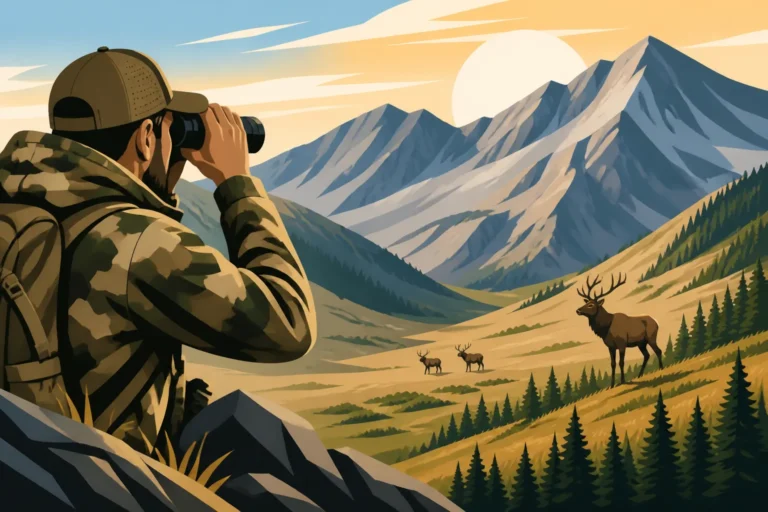
There's no tactic more synonymous with Western mule deer hunting than the spot-and-stalk, and for good reason—it's incredibly effective when executed flawlessly, though it's also incredibly difficult. The process begins with extensive glassing from a high vantage point, systematically scanning every pocket, draw, and timber edge. You’re looking for any hint of a deer: a patch of brown, the flicker of an ear, the shine of an antler. Once you spot a buck, the real work begins. The next step is a meticulous observation period. How is the buck behaving? Is he feeding, bedding, moving? What are his escape routes? What are the wind conditions, and how will thermals shift throughout the day? This intelligence is crucial.
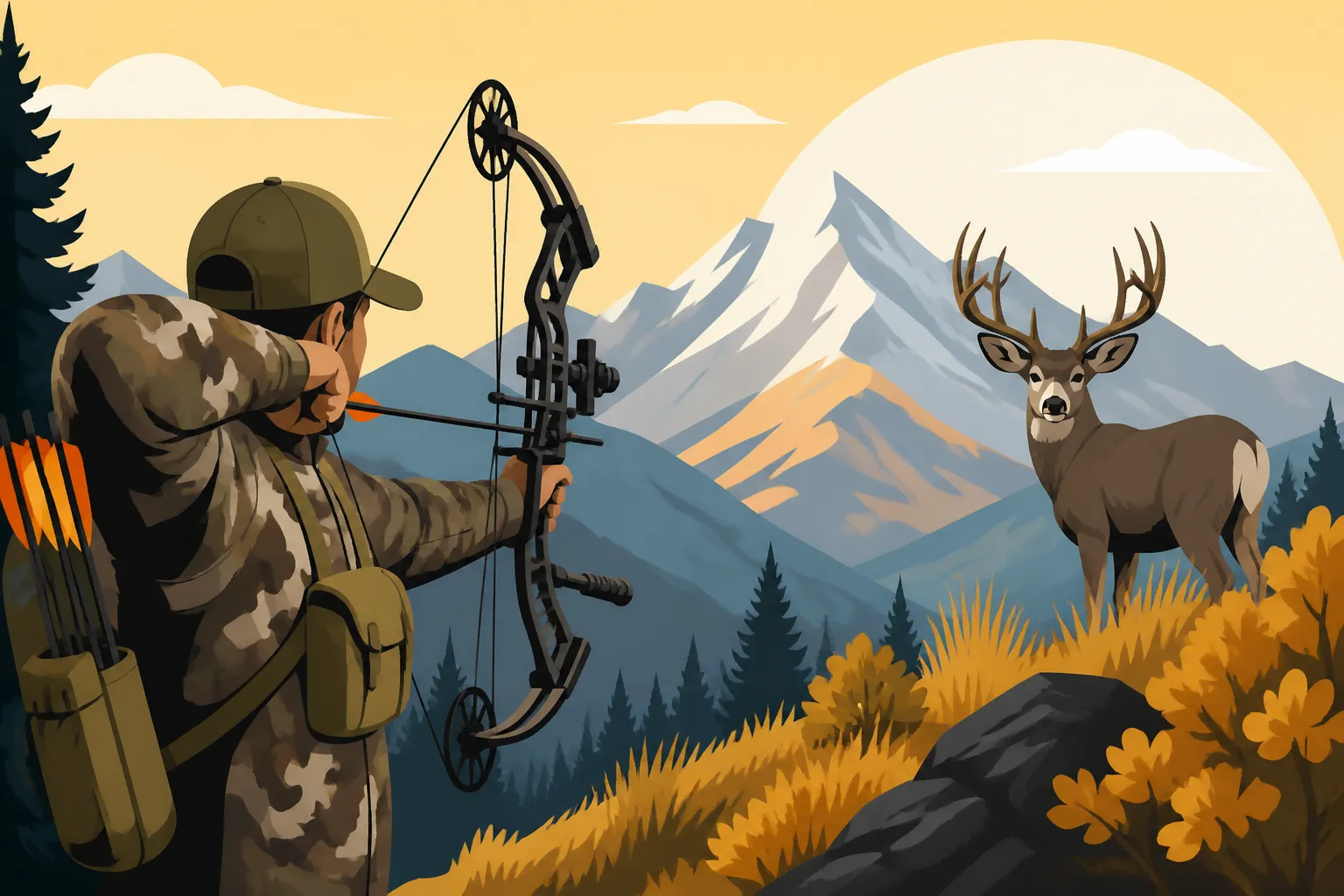
Planning the stalk involves identifying a route that keeps you concealed, out of sight, and most importantly, downwind or crosswind. Colorado’s varied terrain, from wide-open sagebrush flats to steep, timbered slopes, will dictate your approach. Often, this means taking a circuitous route, sometimes miles long, to get into a favorable position. Once you're within range, which for an archer can be anywhere from 30 to 60 yards depending on your comfort and practice, every movement must be slow, deliberate, and silent. This is where the mental game truly kicks in. The margin for error is razor-thin, and one misplaced step or gust of wind can send your opportunity disappearing over the horizon. Mastering this tactic is a journey, and you can find more insights into specific techniques by looking into How to Spot-and-Stalk Colorado Mule Deer.
Ambush Hunting: Waterholes, Wallows, and Travel Corridors
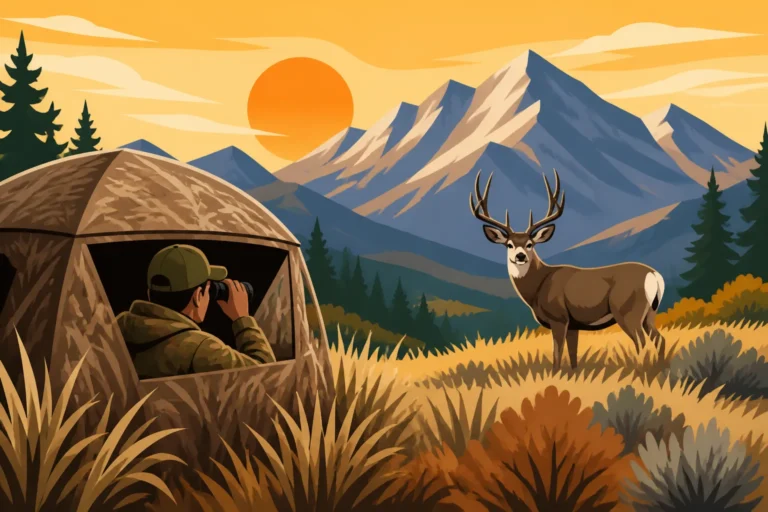
While spot-and-stalk is king, it's not always feasible, especially when deer are bedded in impenetrable timber or when high winds make long-range glassing difficult. This is where ambush hunting comes into play, focusing on areas where mule deer are predictably concentrated or moving. Waterholes, particularly in dry areas or during warmer periods, can be absolute magnets for mule deer. Identifying active water sources and setting up a ground blind or finding natural cover downwind can lead to close encounters. Similarly, certain muddy spots, though not true wallows like elk use, might attract deer looking for minerals or a place to cool off.
More broadly, setting up an ambush along active travel corridors between known bedding and feeding areas can be highly effective. Mule deer often use the path of least resistance, following saddles, benches, and drainage bottoms. Look for well-worn trails, fresh tracks, and droppings. Using trail cameras beforehand can provide invaluable information on deer movement patterns and timing. When choosing an ambush location, scent control is paramount; deer will bust you if they catch a whiff. You also need to plan your entry and exit routes to avoid disturbing the area. While not directly about mule deer, many of the principles for setting up on key travel areas are similar to those explored in How to Ambush Elk on Public Land.
Calling Strategies for Mule Deer
Unlike elk, mule deer are generally not considered a "calling" animal. They're not nearly as vocal, and aggressive calling can often spook them. However, that's not to say calling is completely useless; it simply requires a very different, more subtle approach. Bucks, particularly during the pre-rut, can sometimes be drawn in by soft grunts or snorts-wheezes, mimicking another buck asserting dominance or curiosity. These calls are best used sparingly and in conjunction with visual concealment, perhaps when a buck is just out of bow range or hesitating.
Fawn bleats or distress calls can sometimes pique a buck's curiosity, causing him to stop for a moment or even come closer to investigate. This can be particularly effective if you're trying to stop a moving deer for a shot. The key here is restraint. If a buck hears a call he doesn't recognize or that sounds unnatural, he'll likely bolt. Practicing these subtle calls and understanding when to deploy them is crucial. A good rule of thumb is to use calls as a last resort to get a buck to respond or stop, rather than attempting to "call him in" like you would an elk. It's more about manipulating their natural curiosity or aggression in very specific, fleeting moments.
Gear and Preparation for a Colorado Archery Mule Deer Hunt
The rugged terrain and unpredictable weather of Colorado demand meticulous preparation and the right equipment for a successful and safe archery mule deer hunt. Skimping on gear or physical conditioning can quickly turn an exciting adventure into a miserable struggle.
Bow Setup and Optics Considerations
Your bow is your primary tool, so it needs to be perfectly tuned and matched to your capabilities. For mountain hunting, a reliable, robust setup is key. Ensure your draw weight is comfortable for multiple shots, and practice shooting at steep uphill and downhill angles, as these are common in Colorado. Broadhead selection is critical: fixed-blade broadheads are often favored for their reliability and penetration on tough mule deer, but well-tuned mechanicals can also perform. Practice with your chosen broadheads to ensure perfect flight. A high-quality rangefinder is non-negotiable; judging distances accurately in mountainous terrain is incredibly difficult and often deceptive.
Beyond your bow, optics are arguably your most important scouting and hunting tool. A good pair of 10×42 or 12×50 binoculars are essential for long hours of glassing. Combine these with a solid tripod and a high-magnification spotting scope (20-60x or higher), and you’ll be able to pick apart distant hillsides and identify deer that would be invisible to the naked eye. Investing in quality optics from brands like Vortex, Leica, or Swarovski will pay dividends, allowing you to effectively glass for hours without eye strain. To dive deeper into selecting the right glass, check out Best Optics for Colorado Big Game. Having clear, crisp optics gives you a significant advantage in locating those elusive bucks.
Mountain Hunting Physicality and Mental Toughness
Colorado mule deer country is relentless. You'll encounter steep inclines, treacherous descents, high altitudes, and potentially miles of off-trail hiking. This isn't a hunt where you can "get in shape during the hunt." You need to be in peak physical condition before you arrive. This means a regimen focusing on cardiovascular endurance (hiking with a loaded pack), leg strength (squats, lunges, step-ups), and core stability. Altitude training, even if it's just hiking at progressively higher elevations if you live near mountains, can make a huge difference in how your body handles the thin air. Consider what it takes to physically prepare for an elk hunt; a mule deer hunt can be just as demanding, as detailed in articles like How to Physically Prepare for Colorado Elk.
Beyond the physical, mental toughness is paramount. Archery hunting is a game of patience, persistence, and often, repeated failure. You will make bad stalks, miss opportunities, and spend days seeing nothing. The ability to stay positive, remain focused, and learn from every setback is crucial. This mental resilience, much like the physical, needs to be cultivated. Visualize successful stalks, rehearse your shot process, and mentally prepare for the inevitable challenges. The mountains don't care about your feelings, but your mindset can determine whether you break or persevere. To prepare your body for the thin air, a resource like How to Prepare for High-Altitude Hunting can offer valuable strategies.
Essential Pack Items and Clothing
Layering is the golden rule of mountain hunting clothing in Colorado. Temperatures can swing from freezing cold mornings to scorching afternoons, and quick-moving thunderstorms are always a possibility. Start with a moisture-wicking base layer, add insulating mid-layers (fleece or puffy jacket), and top it off with a waterproof and windproof outer shell. Merino wool is a favorite among hunters for its warmth-to-weight ratio and odor-resistant properties. Good quality hunting pants that can withstand brush and rock are also a must.
Your feet are your foundation, so invest in high-quality, broken-in mountain hunting boots with excellent ankle support and waterproof membranes. Carry at least two pairs of good wool socks. A sturdy, comfortable backpack (around 40-60 liters for day hunts, larger for backcountry trips) capable of carrying heavy loads is essential, as you might be packing out meat. Beyond clothing, your pack should include navigation tools (GPS, map, compass, or a reliable app like onX Hunt), a first-aid kit, water filter, headlamp, fire starter, knife, game bags, and plenty of high-energy snacks. Don't forget scent-control measures, even for mule deer; minimizing your odor can make a difference in close-range bow hunting situations.
E-Scouting and On-the-Ground Reconnaissance
In today's hunting world, effective pre-season and in-season scouting combines cutting-edge digital tools with traditional boots-on-the-ground reconnaissance. This dual approach gives you a significant advantage in locating and patterning elusive Colorado mule deer.
Leveraging Digital Tools for Pre-Season Planning
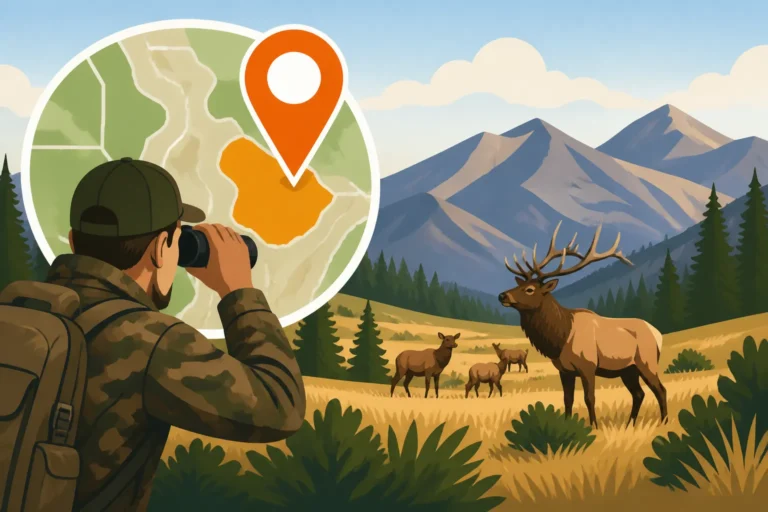
Before you ever leave home, modern digital mapping platforms have revolutionized how we plan a hunt. Tools like GoHunt's INSIDER application, onX Hunt, and other satellite imagery and topographic map services are invaluable. Start by identifying potential GMUs (Game Management Units) based on draw odds, success rates, and overall mule deer populations. Once you've narrowed down your area, dive into the maps. Look for north-facing slopes, which tend to hold moisture longer and provide cooler bedding areas for deer, especially in early season. Identify saddles, benches, and ridge lines that act as natural travel corridors between feeding and bedding areas. Mark potential water sources, even small seeps or springs, as these can be magnets for deer.
Pay close attention to changes in vegetation, timberline boundaries, and areas of high relief that could offer escape cover. Also, identify potential access points and plan your routes to avoid sky-lining yourself or crossing open areas unnecessarily. These digital tools allow you to virtually scout vast amounts of terrain, saving you countless hours and physical effort. They help you build a solid hypothesis about where deer should be, which you can then test in the field. For a deeper dive into this kind of preparation, check out How to E-Scout Before a Colorado Hunt.
In-Season Scouting and Adjusting Your Strategy
While e-scouting provides a fantastic starting point, nothing beats real-time, on-the-ground observation. Conditions change, deer move, and pressure impacts their behavior. The first day or two of your hunt should often be dedicated to observation and confirmation. Find a high vantage point and glass, glass, glass. Watch where deer are feeding, where they're bedding, and how they move throughout the day. Are they using the same travel corridors you identified on your maps? Are they active earlier or later due to weather?
Look for fresh sign: tracks in dusty trails, fresh droppings, antler rubs on trees, and scrapes on the ground. These telltale signs confirm deer presence and recent activity. If your initial plan isn't working, be prepared to adapt. Maybe the deer have moved lower due to cold weather, or higher due to increased pressure. Don't be afraid to change units or shift your focus to entirely different types of terrain if what you're seeing doesn't match your expectations. The ability to be fluid and reactive to the deer’s actual behavior, rather than sticking rigidly to a preconceived plan, is a hallmark of successful hunters. This adaptability is critical for understanding and predicting deer patterns, much like understanding How to Pattern Colorado Elk Movement.
Understanding Hunting Pressure and Deer Refuge
Colorado's public lands receive significant hunting pressure, and mule deer are incredibly adept at finding refuge. During archery season, while generally less pressured than rifle seasons, deer still react to human presence. Bucks, especially mature ones, will quickly learn to avoid areas with heavy foot traffic. Your e-scouting should help you identify roadless areas, wilderness boundaries, and steep, rugged canyons that are less accessible to the average hunter. These are often the places where older, wiser bucks will seek sanctuary.
Don't be afraid to go deeper, higher, or steeper than others. Mule deer will often use thick stands of dark timber, dense pinyon-juniper thickets, or incredibly steep, broken terrain to escape pressure. These areas are tough to hunt, demanding patience and physical prowess, but they can hold overlooked pockets of deer. Remember that deer also utilize thermal currents. In the mornings, deer will often bed on sun-exposed slopes to warm up, then move to cooler, north-facing slopes as the day heats up. Understanding these daily movements and how they relate to terrain and pressure is key to finding deer that have been pushed off more accessible grounds.
Ethical Considerations and Post-Harvest
Bringing down a magnificent Colorado mule deer with a bow is the culmination of immense effort and skill. However, the hunt doesn't end with the shot; ethical considerations and proper post-harvest care are equally important components of responsible hunting.
Making the Shot and Tracking Your Deer
Before you even draw your bow, understanding your effective shooting range is paramount. This isn't just about what you can hit on a static target; it's about what you can consistently hit under pressure, at steep angles, with adrenaline coursing through your veins. Practice extensively at varying distances, and especially practice shooting uphill and downhill to understand how it affects your aim point. Once a shot opportunity arises, take a moment to confirm the distance with your rangefinder, identify a clear shooting lane, and focus on shot placement. A broadside or slightly quartering-away shot into the vitals is ideal for a clean, ethical kill. Do not rush the shot, and if the situation isn't perfect, let the deer walk. There will always be another opportunity.
After the shot, patience is your best friend. Resist the urge to immediately pursue the deer, especially if you're unsure of the hit. Give the animal time to bed down and expire. For a solid body hit, waiting 30-60 minutes is often advisable; for a questionable hit, waiting several hours or even until morning light is often necessary to maximize your chances of recovery. Meticulous tracking is crucial. Look for blood, broken branches, disturbed leaves, and tracks. Mark the last spot you saw the deer and the last spot of blood. In rugged Colorado terrain, a lost blood trail can be devastating, so take your time, go slowly, and grid search if necessary. Enlisting a hunting partner to help with tracking can also significantly increase your odds of a successful recovery.
Field Care and Meat Preservation
Once you've recovered your mule deer, proper field care is essential to ensure the quality of the meat. The first step is to field dress the animal as quickly as possible to begin the cooling process. Remove the entrails, heart, and lungs. If you're deep in the backcountry, packing out a whole deer is often impractical, so quartering the animal in the field is usually the most efficient method. This involves removing the four quarters, backstraps, tenderloins, and neck meat. For a detailed guide on this process, many of the principles for elk apply, so looking at resources like How to Quarter an Elk in the Field can be very helpful.
Once quartered, get the meat into clean game bags immediately. This protects the meat from flies and debris while allowing it to breathe and cool. Hang the bagged meat in a shady, cool, and well-ventilated spot, preferably off the ground. In warm weather, cooling the meat as rapidly as possible is critical. If temperatures are warm, consider packing out the quarters faster or using dry ice in coolers at base camp. Avoid stacking meat or leaving it in direct sunlight. Your goal is to get the internal temperature of the meat down as quickly as possible to prevent spoilage. This diligent effort ensures that the animal you harvested provides healthy, delicious sustenance for your family. The effort of carrying out the meat can be significant, so preparing for How to Pack Out an Elk in Colorado will offer valuable lessons.
Respecting the Animal and the Land
Beyond the practical steps of hunting and harvesting, a deep respect for the animal and the land is at the core of ethical hunting. This means acknowledging the life taken and honoring the deer's contribution by utilizing as much of the animal as possible. It also means adhering to all Colorado Parks and Wildlife regulations, which are in place to manage healthy populations and ensure sustainable hunting opportunities for future generations.
Finally, "Leave No Trace" principles are not just suggestions; they are ethical imperatives for every hunter. Pack out everything you pack in, and more. This includes spent cartridges, trash, and even leftover food scraps. Minimize your impact on the landscape by staying on established trails where possible and dispersing your campsite. Treat public lands with the utmost care, ensuring that others, whether hunters or hikers, can enjoy the wilderness as you found it. By being a responsible steward of the land and a respectful participant in the cycle of nature, you uphold the proud tradition of hunting in Colorado and contribute to its continued health.
Colorado Archery Mule Deer Tactics Summary Table
To help you quickly reference key strategies for your Colorado archery mule deer hunt, here's a summary of tactics based on the early and later parts of the archery season.
| Feature | Early Archery Season (Late Aug – Early Sept) | Late Archery Season (Late Sept – Early Oct) |
|---|---|---|
| Deer Behavior | Bachelor groups, feeding heavily, often in velvet, less wary | Bachelor groups dissolve, bucks shed velvet, more solitary, becoming territorial, more wary, pre-rut |
| Typical Habitat | High alpine basins, timberline fringes, lush feed areas above 10,000 ft | Mid-elevation timber (aspen, spruce-fir), pinyon-juniper breaks, steeper canyons, dense cover |
| Primary Tactic | Spot-and-stalk (glassing open basins), focus on feeding patterns | Spot-and-stalk (more careful, through timber), ambush (travel routes, water) |
| Calling Potential | Very limited, mainly for stopping a moving deer | Limited, subtle grunts/fawn bleats for curiosity, used sparingly |
| Key Gear Focus | High-quality optics (bino, spotter, tripod), comfortable pack, layers | Scent control, quiet clothing, reliable boots, navigation tools |
| Scouting Focus | Locating summer bachelor groups, consistent food & water sources | Identifying new bedding areas, rub lines, scrapes, migration routes |
| Hunter Pressure | Generally lower, but increases on weekends and easily accessible spots | Can increase, pushing deer to thicker cover and less accessible areas |
Disclaimer
The information provided in this guide is for general informational purposes only. Hunting regulations, season dates, and unit specific rules can change frequently. Always consult the most current Colorado Parks and Wildlife (CPW) regulations and official resources before planning or embarking on any hunting trip. Hunter safety and ethical hunting practices are paramount.