Colorado Mule Deer Hunting: Ground Blind Tactics
Hunting wary Colorado mule deer can feel like an impossible puzzle sometimes. Their incredible eyesight, keen sense of smell, and a natural ability to melt into even sparse cover make them a formidable quarry, especially in the more open landscapes or on heavily pressured public lands where a traditional spot-and-stalk approach is challenging. This guide is here to unravel the often-overlooked strategy of using ground blinds for mule deer, demonstrating how this patient tactic can lead to success even when other methods fall short.
Why Ground Blinds for Mule Deer? Challenging Conventional Wisdom
When most people picture hunting mule deer in the vast expanses of Colorado, they envision hunters with binoculars endlessly glassing hillsides, then meticulously executing a spot-and-stalk. It’s the iconic image, and for good reason—it’s often effective. However, this ingrained perception can sometimes blind us to other valuable tactics, like the strategic deployment of a ground blind.
Dispelling the Myth: Western Hunting is Spot-and-Stalk Only
Let's be honest, the allure of the high-country spot-and-stalk is strong. The idea of covering miles on foot, reading the terrain, and outsmarting a cunning mule deer buck on his terms is incredibly appealing. And yes, for many, it’s the primary method, especially for those pursuing trophy animals in specific units or elevations. But mule deer aren't exclusively found in wide-open, glassing-friendly basins. Colorado's diverse landscapes host mule deer in thick timber, rolling sagebrush, agricultural fringes, and even river bottoms. Trying to spot-and-stalk in dense Ponderosa pine forests or along the subtle contours of the Eastern Plains can be an exercise in futility and frustration. You'll spend all day trying to keep the wind right, avoid being seen, and still manage to get a shot off through the brush. Sometimes, the terrain dictates a different approach, or you just don't have the physical ability for an aggressive multi-mile stalk. This is where the ground blind truly shines, offering an alternative that many overlook.
The Undeniable Advantages of Ground Blind Hunting
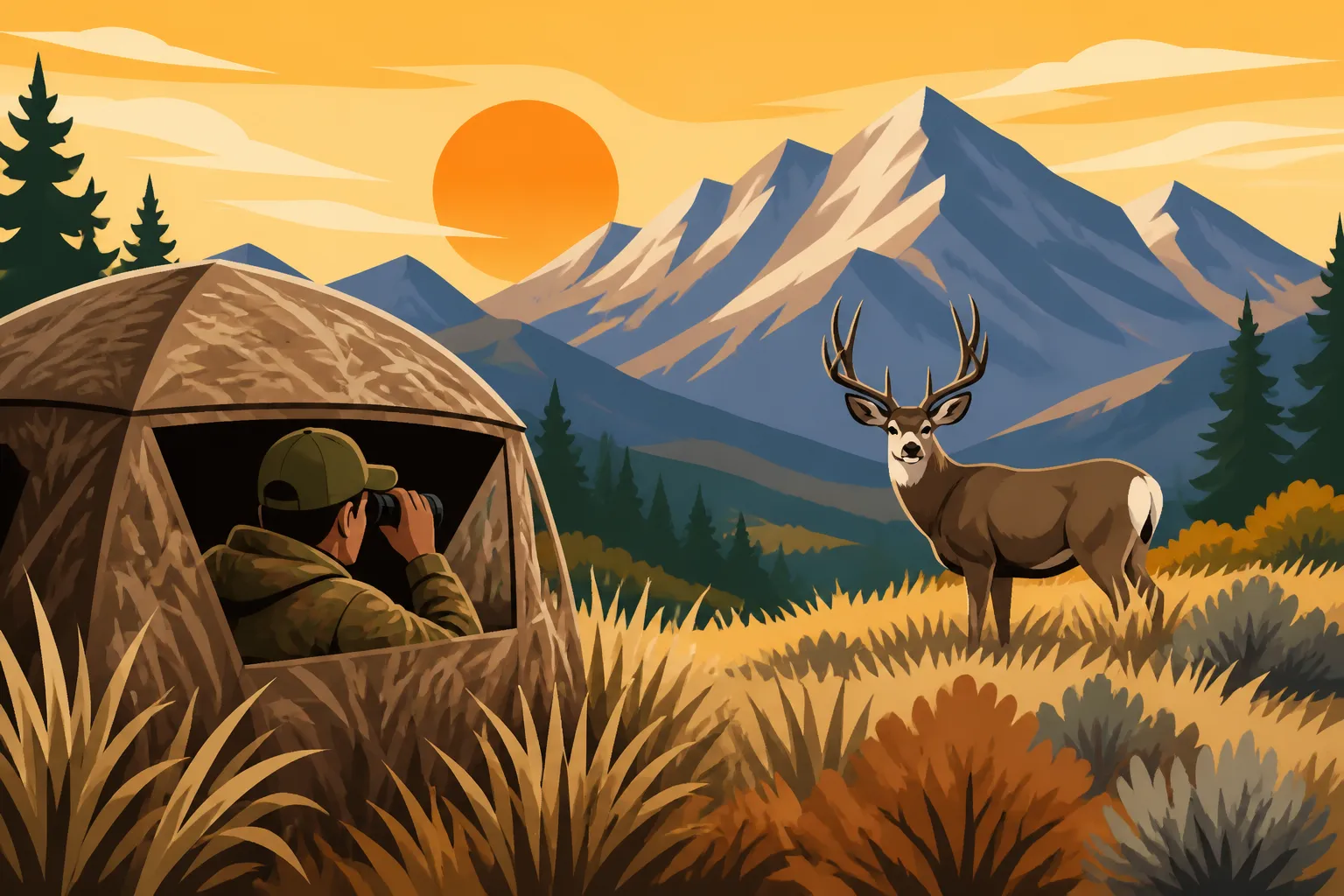
While it might seem counterintuitive to "sit and wait" for a creature known for its nomadic tendencies and superb senses, ground blinds offer several distinct advantages when targeting mule deer. First and foremost is the incredible level of concealment they provide. A well-placed blind effectively hides your movement, breaks up your human silhouette, and can significantly mitigate scent dispersal. This is a game-changer when dealing with a mule deer's legendary eyesight and nose. Imagine being able to adjust your position, grab a snack, or simply stretch without fear of instantly blowing out every animal within a mile.
Secondly, ground blinds foster patience and comfort. Long hours spent perfectly still on a cold, exposed hillside can quickly wear down even the most dedicated hunter. Inside a blind, you're shielded from the elements—be it the biting Colorado wind, unexpected rain, or even direct sun. This comfort allows you to stay focused and alert for extended periods, increasing your chances of being present when a buck finally makes an appearance. Furthermore, ground blinds can significantly improve accessibility for hunters with physical limitations or those who simply prefer a less physically demanding hunt. It allows individuals to participate more fully and enjoyably in the pursuit of mule deer.
Finally, blinds enable hyper-focused hunting of specific, high-value micro-locations. Instead of broadly searching, you're committing to a known travel corridor, a productive feeding area, or a crucial water source. This precision can be incredibly effective when you've done your homework and identified a spot where deer will eventually pass through.
Strategic Placement: Where to Set Up Your Blind for Mule Deer
The success of ground blind hunting for mule deer hinges almost entirely on one factor: location, location, location. Unlike elk, which are often found in large, active herds, mule deer bucks, especially mature ones, can be a lot more solitary and subtle in their movements. You need to identify key areas they frequent and set up your blind to intercept them.
Key Locations: Water, Food, and Travel Corridors
Think about the basic needs of a mule deer: water, food, and safety. Your ground blind should be positioned along one of these critical resource lines. Water sources are absolute magnets, particularly during early archery seasons or dry fall rifle hunts. Colorado can be an arid state, and while deer can get some moisture from forage, reliable water is essential. Look for small, secluded springs, cattle troughs, ponds, or even depressions that hold rainwater. Deer will often visit these during the low light of dawn and dusk. E-scouting platforms like GoHunt can be incredibly useful here, allowing you to meticulously scan topo maps and satellite imagery for subtle changes in terrain that indicate potential water sources or damp areas. Sometimes, what looks like a small puddle on a map can be a deer's lifeline in a dry unit.
Food sources are another prime location. This could be anything from a private alfalfa field bordering public land to specific natural browse like serviceberry, bitterbrush, or mountain mahogany. Pay attention to fresh droppings and browsing sign. Mule deer, like most herbivores, are creatures of habit when it comes to feeding. Positioning your blind along the edge of an agricultural field or overlooking a heavily browsed natural basin where they routinely feed can be highly effective.
Lastly, travel corridors are essentially the deer's highways between bedding areas, food, and water. These are often natural funnels, saddles in ridges, pinch points between dense timber and open areas, or even well-worn game trails along a river bottom. Deer prefer the path of least resistance and will often use the same routes repeatedly. Scouting these subtle pathways, identifying where they pass through thicker cover or natural choke points, is crucial for intercepting a buck moving from his bed to a feeding ground, or vice-versa. Understanding how deer utilize these corridors, especially how they use cover to travel discreetly, is key to success. You can learn more about how to pattern Colorado elk movement, which shares similar principles, to better understand deer.
Concealment is King: Blending into the Landscape
Once you've identified a promising location, the next step is ensuring your blind completely vanishes into its surroundings. Mule deer have phenomenal eyesight, and an unnatural black box sticking out in the middle of a sagebrush flat will send them running.
Brush it in like your hunt depends on it – because it does! Don't just pop up your blind and call it good. Cut local vegetation—branches, sagebrush, tall grasses—and weave it into the blind's loops or lean it against the exterior. The goal is to break up the hard lines and silhouette of the blind, making it appear as a natural part of the landscape. The more effort you put into this, the more confidence you'll have in its effectiveness.
Consider your backdrop. Setting up your blind against a stand of trees, a large rock outcropping, or a shadowed hillside will help it disappear even further. Avoid silhouetting your blind against the sky, especially on ridges or open areas. The contrast will make it a beacon. Always think about the wind direction in relation to your chosen spot. Mule deer will often circle downwind of a suspicious object before committing, using their superior nose to investigate. You need to anticipate this and choose a spot where the prevailing wind carries your scent away from their likely approach path. This principle is vital in all types of hunting, including when you're learning how to call elk in Colorado, as scent control is always paramount.
Finally, remember that mule deer's eyesight is attuned to movement and unusual shapes. A properly brushed-in blind minimizes these flags. They might see a lump, but if it doesn't move and doesn't smell like danger, they're more likely to accept it as part of their world.
Executing the Hunt: From Set-Up to Shot Opportunity
Setting up the blind is just the beginning. The real work begins with scouting, understanding deer behavior, and then maintaining discipline once inside your hide.
Pre-Season Scouting and Blind Acclimation
Effective ground blind hunting for mule deer starts long before the season opener. Pre-season scouting is non-negotiable. Spend time in your chosen GMU (Game Management Unit), identifying active game trails, water sources, natural funnels, and potential bedding areas. Look for fresh tracks, droppings, and rubs. This detailed reconnaissance will help you pinpoint the exact spots where a blind would be most effective.
If possible, and if regulations allow, consider setting up your blind several weeks or even a month before the season begins. This allows the deer herd to acclimate to its presence, viewing it as another innocuous part of the landscape rather than a sudden, alarming intrusion. This is especially important for wary mature bucks who are far more likely to avoid anything new or out of place. This strategy is also useful if you are trying to figure out how to hunt elk at high elevation, as any unusual disturbance can impact animal behavior.
Trail cameras are invaluable tools for patterning deer movement around a potential blind site. They can tell you not just if deer are using an area, but when (time of day), how often, and which direction they're coming from and going to. This data is critical for fine-tuning your blind placement and understanding optimal hunting times. Utilize mapping tools from GoHunt or other e-scouting resources to mark every sign, every trail, every potential blind location, and review aerial imagery to understand the broader landscape patterns. These digital maps become your living, breathing blueprint for success.
Inside the Blind: Patience, Scent Control, and Shot Angles
Once you're settled in your blind, the mental game begins. Patience is arguably the most important virtue. You might sit for hours, even days, without seeing a single deer. Resist the urge to fidget, check your phone constantly, or peek out the windows excessively. Minimize all movement. Mule deer often appear silently, as if from thin air, and even a slight twitch can send them bolting.
Scent control remains absolutely critical. Even though the blind offers some containment, it's not a hermetic seal. Wear clean hunting clothes, use scent-eliminating sprays, and consider an ozone generator if you're serious about long sits. Your goal is to be as scent-free as possible from the moment you leave your vehicle to the moment you climb into your blind. Wind direction, as mentioned, is paramount. If the wind shifts unfavorably, you might need to make the tough decision to leave and return another day. Many hunters underestimate the importance of scent control, but mule deer (and elk) have incredibly sensitive noses that can detect human odor from hundreds of yards away.
Finally, be mindful of shot angles and lanes. Before the season, practice shooting from a seated position, exactly how you'd be positioned in your blind. Know your blind's window configurations and ensure you have clear shooting lanes to all likely approach routes. Consider any obstacles (vegetation, blind poles) that might impede your draw or rifle swing. If you're bowhunting, ensure you have enough clearance for your limbs. Being ready to make a clean, ethical shot is the culmination of all your planning and patience. When a mule deer finally steps out, you'll need to be calm, composed, and ready. It’s no different than being ready to shoot uphill and downhill at elk – practice makes perfect.
Gear Considerations for Ground Blind Success
Choosing the right gear can make or break your ground blind experience. Your blind itself is the first piece of the puzzle. Most hunters opt for pop-up or hub-style blinds for their portability and quick setup. Look for models with durable, weather-resistant fabrics and quiet zippers. Brands like Primos, Barronett Blinds, and Ameristep offer a range of options suitable for various budgets and needs. For Colorado's sometimes extreme weather, a robust blind that can withstand wind, rain, and snow is a wise investment.
A comfortable chair is not a luxury; it's a necessity. You'll be spending hours, perhaps an entire day, sitting still. A low-profile, quiet, comfortable chair designed for hunting will make the experience far more bearable and allow you to remain motionless for longer.
When it comes to optics, don't skimp. While you're in a blind, you're not necessarily glassing vast expanses. However, good binoculars are essential for scrutinizing the immediate area, identifying movement, and judging a buck's antlers. A compact spotting scope can also be useful for detailed looks at deer at the edge of your effective range without spooking them with movement outside the blind. Learn how to use optics for Colorado mule deer to maximize their effectiveness.
Finally, consider the nuances depending on whether you're bowhunting or rifle hunting. Bowhunters need blinds with larger windows or shoot-through mesh that won't interfere with their shot. Rifle hunters might prefer smaller openings that offer maximum concealment but still allow for a steady rest. Each weapon type has slight considerations that can influence your blind choice and setup.
Challenges and Troubleshooting
Ground blind hunting isn't without its own set of unique challenges. Mule deer are incredibly smart, and they don't always cooperate. Being prepared for these hurdles can save your hunt.
Dealing with Wary Mule Deer
One of the most common frustrations is when a mule deer approaches your location, but then stops short or circles downwind, often out of shooting range. This is their natural defense mechanism kicking in. They've sensed something is off, or they're trying to get a better read on the situation with their nose. If this happens consistently, it's a sign that your blind might not be adequately concealed, or your scent control isn't foolproof. Go back to your blind and assess it from a deer's perspective. Add more natural brushing. Double down on your scent elimination regimen. You might even consider moving the blind slightly to a spot with a better backdrop or a more favorable wind pattern relative to the deer's likely approach. Sometimes, it's just a matter of waiting them out. A nervous buck might eventually commit if he truly needs water or food, or if he's pushed by other deer. The patience you've cultivated will pay off. This requires an understanding of how to find elk when they go quiet, as these animals share similar wary behaviors.
Weather and Unforeseen Circumstances
Colorado weather is famously unpredictable. A beautiful, calm morning can quickly turn into a raging snowstorm or a high-wind event. Ground blinds offer protection, but they need to be secured properly to prevent them from becoming airborne in strong gusts. Use sturdy stakes and tie-downs. Unexpected weather can also drastically alter mule deer patterns. A sudden cold front or heavy snow might push deer to lower elevations or into thicker cover, away from your prepared blind site. Conversely, a warm spell might make water sources even more critical. Stay adaptable. Have alternative scouting plans ready, and don't be afraid to pull your blind and move to a new area if the deer patterns have completely shifted. Understanding how to hunt a cold-front elk push, for example, can provide insights into how deer also react to significant weather changes.
Table: Pros and Cons of Ground Blind Hunting for Colorado Mule Deer
| Feature | Pros for Mule Deer Ground Blind Hunting | Cons for Mule Deer Ground Blind Hunting |
|---|---|---|
| Concealment | Excellent visual and scent concealment, allows for movement inside. | Requires extensive brushing-in; unnatural profile can alarm deer if not properly hidden. |
| Comfort & Patience | Shields from elements (wind, rain, sun), allows longer sits, good for all physical abilities. | Can be boring; requires extreme stillness and mental discipline for extended periods. |
| Targeted Hunting | Highly effective for specific, high-traffic micro-locations (water, food, pinch points). | Lacks mobility; limits your ability to adapt quickly to changing deer patterns or spot distant deer. |
| Setup Time | Pop-up blinds are quick to deploy; ideal for allowing deer to acclimate pre-season. | Requires significant pre-season scouting and often early setup for best results. |
| Scouting Importance | Magnifies the value of e-scouting and on-the-ground sign reading, as placement is everything. | Poor placement means a wasted hunt; requires thorough understanding of deer habits in that specific area. |
| Wind & Scent | Can help contain human scent somewhat; allows focused scent control efforts. | Still critical to manage wind direction; mule deer will circle downwind to test. |
Ground blind hunting for Colorado mule deer is not a magical shortcut, but it is a highly effective, rewarding tactic when employed with diligent scouting, strategic placement, and unwavering patience. It's a method that allows you to truly immerse yourself in a small piece of deer habitat, observing the nuances of their behavior up close. So next time you're planning your Colorado deer hunt, consider adding a ground blind to your arsenal—you might be surprised by the opportunities it creates.
Disclaimer
Hunting is a challenging and inherently dangerous activity. Always prioritize safety, understand and follow all Colorado Parks and Wildlife regulations, and obtain proper licenses and tags. This guide offers general advice and is not a substitute for professional instruction, local knowledge, or personal experience. Respect wildlife and the land, and always practice ethical hunting principles.