Eastern Plains Hunting Access
Many hunters dream of vast mountain landscapes when they picture hunting in Colorado, often overlooking the immense and diverse opportunities that lie within the state’s Eastern Plains. This sprawling region, while seemingly flat, presents its own unique challenges and incredible rewards, especially when it comes to navigating access. If you've ever felt overwhelmed by the patchwork of private and public lands or wondered how to even begin planning a successful plains hunt, this guide is for you. We'll demystify Eastern Plains hunting access, helping you unlock prime locations and make the most of your adventure.
Understanding the Eastern Plains Landscape and Game
Colorado's Eastern Plains are a world away from its iconic peaks, but no less rich in hunting potential. This vast expanse offers a completely different, yet equally thrilling, experience. Forget dense timber and steep ascents; here, success often hinges on keen observation, understanding open-country animal behavior, and, crucially, knowing where you can legally tread.
Geographical Overview and Habitat
Stretching eastward from the Front Range foothills, the Eastern Plains are characterized by rolling prairies, vast agricultural fields, and numerous river drainages. The landscape varies from shortgrass prairie in the north, home to the Pawnee National Grassland, to more broken terrain and canyons in the southeast, such as parts of the Comanche National Grassland. These areas, while open, offer a surprising amount of cover in the form of draws, creek bottoms, shelterbelts (rows of trees planted for wind protection), and crop fields. Water sources, whether natural rivers like the South Platte, Arkansas, and Republican, or man-made ponds and reservoirs, are critical focal points for wildlife.
The habitat diversity, from dryland wheat to irrigated corn, and from native prairie to riparian corridors, directly influences game movement and distribution. This mosaic creates excellent conditions for certain species, but it also means hunters need to be diligent in their scouting to identify where animals are likely to feed, bed, and travel. Understanding these subtle shifts in terrain and vegetation is paramount to finding success away from the mountains.
Primary Game Species and Seasons
When people think of plains hunting in Colorado, they almost universally think of pronghorn and deer. These are indeed the stars of the show here. The Eastern Plains boast a robust population of pronghorn, often seen grazing in herds across the open prairies. Mule deer are also prevalent, particularly in the broken country and riparian zones, and surprisingly, whitetail deer thrive in the agricultural bottoms along the major river systems. Beyond these big game animals, the plains offer fantastic opportunities for small game like pheasants, quail, rabbits, and coyotes, as well as waterfowl in areas with adequate water.
Hunting seasons vary by species and by specific game management unit (GMU). Pronghorn seasons typically kick off in late summer with archery, followed by muzzleloader and several rifle seasons extending into the fall. Deer seasons, including both mule deer and whitetail, generally run from early archery in September through various rifle seasons in the fall. If you're considering a rifle hunt, it's worth diving into the specifics of the "Colorado Plains Rifle Season Explained" to understand the nuances. Given the plains habitat, many tags for deer and pronghorn are draw-only, emphasizing the need for advanced planning.
Navigating Public Land Access on the Eastern Plains
Finding public land on the Eastern Plains can feel like solving a complex puzzle, but with the right tools and understanding of the land classifications, it's entirely manageable. Unlike the vast contiguous national forests of the high country, public land here often comes in smaller, interspersed parcels.
State Wildlife Areas (SWAs) and State Trust Lands (STLs)
Colorado Parks and Wildlife (CPW) manages numerous State Wildlife Areas (SWAs) across the Eastern Plains. These areas are specifically acquired or leased to provide public hunting, fishing, and wildlife viewing opportunities. SWAs are typically well-marked and offer diverse habitats, from wetlands critical for waterfowl to grasslands and riparian zones supporting deer, pronghorn, and upland birds. Each SWA has specific regulations, including open/closed dates, allowed hunting methods, and sometimes even specific permission requirements, so always check the CPW website for the specific SWA you plan to hunt.
Equally important are State Trust Lands (STLs). These lands are managed by the State Land Board to generate revenue for public schools and other state institutions. While primarily for revenue, many STLs are open to public hunting through agreements with CPW. Access to STLs can sometimes be tricky as they might be surrounded by private land, requiring careful planning to find legal entry points. Always look for signage indicating public hunting access. For a deeper dive, read our guide on "Colorado State Trust Land Hunting". These lands are often checkerboarded with private ground, which is where digital mapping tools become absolutely essential.
Bureau of Land Management (BLM) and National Grasslands
While less extensive than in Western Colorado, the Bureau of Land Management (BLM) also manages parcels on the Eastern Plains, though these are often smaller and more scattered. Larger and more significant public hunting opportunities come in the form of the National Grasslands: the Pawnee National Grassland in northeastern Colorado and the Comanche National Grassland in the southeast. These federal lands offer extensive tracts of contiguous public hunting ground, perfect for pursuing pronghorn, mule deer, and various small game. They are managed by the U.S. Forest Service and have specific regulations that hunters must adhere to, often in conjunction with state regulations.
Hunting the national grasslands often means dealing with cattle grazing, which is a common multiple-use practice on these lands. It’s important to be respectful of livestock and property. Hunters should also be aware that within the national grasslands, there can be private inholdings, making boundary identification crucial. This is where advanced mapping applications come into their own, acting as an indispensable guide in the field.
Key Tools for Identifying Public Land
Navigating the complex tapestry of public and private land ownership on the Eastern Plains without the right tools is an exercise in frustration. Gone are the days of relying solely on paper maps, which, while still useful, can’t keep up with real-time GPS locations. Modern technology has truly revolutionized how hunters approach access.
The gold standard for land navigation is a mapping app like onX Hunt. This platform visually displays property boundaries, land ownership (public vs. private), and even specific parcels like State Trust Lands and State Wildlife Areas. With onX Hunt, you can see exactly where you are in relation to these boundaries, reducing the risk of trespassing and maximizing your time effectively. You can save offline maps, mark waypoints for gates or access points, and scout from your couch. Another fantastic resource for data-driven planning is GoHunt. While GoHunt focuses more on drawing odds and strategy for big game, its mapping overlays and unit profiles can complement the detailed boundary information provided by onX Hunt, especially when you're trying to decide which GMUs offer the best blend of public access and animal density. These tools make it possible to identify potential walk-in access points or public corridors that might be difficult to spot otherwise. To get a leg up before you even leave your driveway, consider our guide on "How to E-Scout Before a Colorado Hunt".
| Access Type | Description | Primary Species | Pros | Cons |
|---|---|---|---|---|
| State Wildlife Areas (SWA) | Managed by CPW for wildlife and public recreation. | Deer, Pronghorn, Waterfowl, Upland Birds | Designated for hunting, often with good habitat, clearly marked. | Can be high-pressure, specific regulations may apply, may require a reservation/permit. |
| State Trust Lands (STL) | State-owned lands, some open to hunting via CPW agreements. | Deer, Pronghorn, Upland Birds | Often less pressure than SWAs, can be good for scouting. | Access points can be limited, checkerboarded with private, requires careful boundary navigation. |
| Bureau of Land Management (BLM) | Federal lands, generally open to public use. | Deer, Pronghorn, Small Game | Generally open access, large tracts in some areas. | Can be scattered and remote, access may be through private land, often less habitat than SWAs. |
| National Grasslands | Large federal tracts (Pawnee, Comanche) managed by Forest Service. | Pronghorn, Mule Deer, Small Game | Extensive, contiguous public land, good for spot-and-stalk. | Can be very open (limited cover), popular, often shared with livestock grazing. |
| Walk-In Access (WIA) | Private lands leased by CPW for public hunting (day use only). | Deer, Pronghorn, Upland Birds | Offers access to prime private land, no landowner permission needed. | Day use only, limited number of acres, specific rules per property, high demand. |
Unlocking Private Land Hunting Opportunities
While public land offers fantastic opportunities, a significant portion of the Eastern Plains is privately owned. Accessing these private lands can dramatically increase your chances of success, especially for trophy animals or to escape hunting pressure. It requires a different approach, but the rewards can be substantial.
The Colorado Walk-In Access (WIA) Program
The Colorado Walk-In Access (WIA) Program is a true gem for hunters seeking to access private ground without needing to secure individual landowner permission. Through this program, Colorado Parks and Wildlife leases hunting and fishing access from private landowners, opening up thousands of acres of prime habitat to public foot traffic. These areas are typically marked with distinctive yellow signs and are for day-use only. They are a fantastic resource for hunting deer, pronghorn, and upland birds. The beauty of WIA properties is that they often encompass excellent habitat that might otherwise be completely inaccessible.
Hunting WIA properties requires diligence. You must always respect the specific rules for each property, which are often posted at access points. These can include restrictions on weapon types, times of access, or even specific hunting zones. Using a mapping application like onX Hunt is absolutely crucial for identifying WIA boundaries and ensuring you stay within the designated access areas. The program is continually updated, so checking the CPW website for the latest WIA atlas is a must before your hunt. For a detailed rundown, check out our guide on the "Colorado Walk-In Access Program".
Securing Permission Directly from Landowners
Beyond the WIA program, directly contacting landowners is a time-honored tradition and one of the most effective ways to gain access to private land on the Eastern Plains. This approach can be incredibly rewarding, offering a chance to build relationships and discover less-pressured hunting grounds. However, it requires respect, courtesy, and often, persistence. The best time to ask for permission is well in advance of the season, and it's always best to do so in person, dressed neatly, and with a polite, concise request. Be prepared for a "no," and always thank them for their time, regardless of the answer.
When approaching a landowner, have a clear understanding of what you're asking for: what species, what dates, and how many hunters. Offer to help with chores, respect their property as if it were your own, and always follow through on any promises made. A small gesture of appreciation, like a gift card or a part of your harvest (if successful and offered respectfully), can go a long way in building goodwill for future seasons. Remember, you're not just asking for access for yourself, but potentially paving the way for other ethical hunters. Our article "How to Get Landowner Permission in Colorado" offers more tips for this critical step.
Exploring Hunting Leases and Outfitters
For those who prioritize guaranteed access, higher success rates, or simply a more curated experience, hunting leases and guided hunts are popular options on the Eastern Plains. Many private landowners lease their hunting rights directly to individuals or groups, offering exclusive access to their property for a fee. These leases can range from seasonal agreements to multi-year contracts and often provide access to prime habitat for deer and pronghorn, sometimes with agricultural benefits that draw in and hold animals. A lease provides predictability and often reduces competition, allowing you to manage the property more strategically.
Alternatively, numerous reputable outfitters operate on the Eastern Plains, offering fully guided or semi-guided hunts for species like pronghorn, mule deer, and whitetail. These outfitters typically have access to large tracts of private land through long-standing relationships with landowners. A guided hunt means that logistics, scouting, and often field dressing and packing are handled for you, allowing you to focus solely on the hunt. While more expensive than a DIY hunt, the expertise and guaranteed access can be invaluable, especially for non-residents or first-time plains hunters. For more details on this route, check out "Colorado Hunting Lease Options".
Strategic Planning for Eastern Plains Hunts
Hunting the Eastern Plains demands a different mindset and strategy than hunting the mountains. The wide-open spaces, prevailing winds, and animal behavior specific to this environment require careful pre-season planning and adaptable in-field tactics.
E-Scouting and Pre-Season Preparation
E-scouting is your best friend when planning an Eastern Plains hunt. Before you ever set foot in the field, use tools like onX Hunt, Google Earth, and the CPW Hunting Atlas to virtually explore potential hunting areas. Look for features that will attract and hold animals: creek bottoms, shelterbelts, isolated draws, water sources, and varied agricultural fields (e.g., wheat, corn, alfalfa). Identify all public land boundaries, WIA properties, and potential access points. Pay close attention to terrain changes, even subtle ones, as these can offer vital cover for approaching game.
Beyond identifying potential hotspots, e-scouting helps you understand travel corridors between bedding and feeding areas. Animals in open country are masters of using every bit of cover to their advantage. Pre-season preparation isn't just about finding locations; it's about understanding the animals' patterns before the season starts. Driving scouting routes, glassing from afar, and even knocking on doors to gain permission are all critical steps that need to happen weeks, if not months, before opening day. The more you know about the specific area, the better equipped you'll be to adapt to real-time conditions.
Essential Gear and Tactics for Plains Hunting
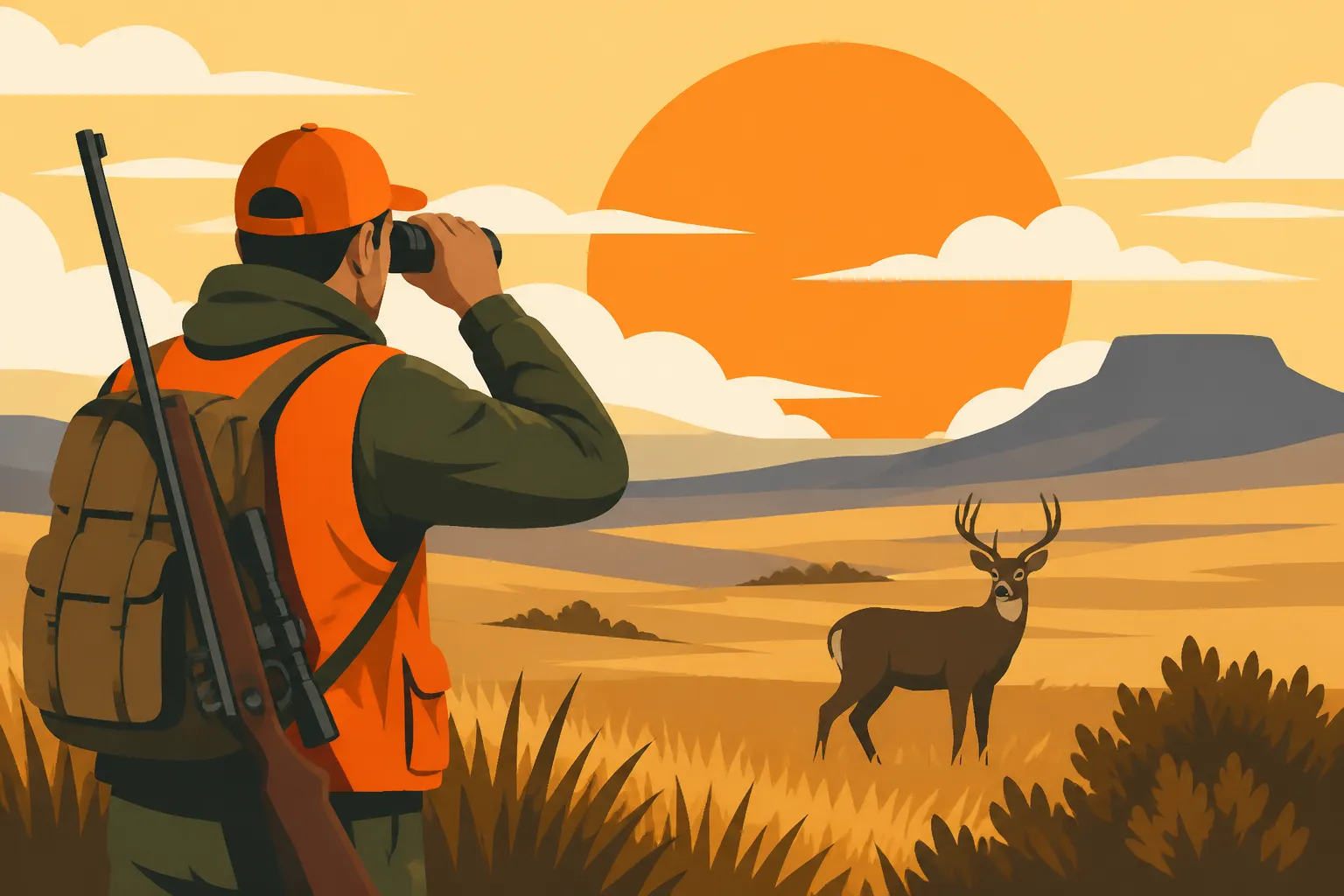
The gear you bring for a plains hunt will differ significantly from a mountain hunt. Optics are paramount. A good pair of 10x or 12x binoculars, often mounted on a tripod, is non-negotiable for spotting game at extreme distances. A spotting scope is also highly recommended for evaluating animals and determining if they're worth a stalk. Rangefinders are also essential for accurate shot placement in open terrain where judging distance can be deceiving. Clothing should prioritize camouflage that blends with grasslands and agriculture, and layers are crucial as plains weather can change dramatically from cool mornings to hot afternoons.
Tactically, spot-and-stalk is the name of the game for pronghorn and often for deer as well. This involves extensive glassing from high vantage points (even a slight rise in the prairie can offer a crucial advantage), spotting animals, and then carefully planning an approach that uses available terrain and vegetation for cover. Wind direction is critical for these animals with their incredible senses. For deer, especially whitetail along river bottoms, stand hunting (using ground blinds or treestands if adequate trees are present) near travel corridors or food sources can be effective. Regardless of the species, patience and a willingness to put in miles on foot are key. For specific strategies, explore our "Colorado Pronghorn Hunting Guide" or "Colorado Whitetail Deer Hunting".
Managing Pressure and Hunter Density
One of the biggest challenges on easily accessible public lands on the Eastern Plains is hunter pressure. Especially during popular rifle seasons, well-known SWAs and sections of national grasslands can see a significant number of hunters. This pressure can push animals into private land or make them incredibly wary, often moving mostly at night. To mitigate this, consider hunting during less popular times, like mid-week, or focusing on smaller, harder-to-access parcels that other hunters might overlook.
Deep e-scouting using GoHunt's data on GMU success rates and pressure, combined with onX Hunt's detailed mapping, can reveal overlooked corners. Areas that require a bit more legwork or have tricky access points often hold less pressured animals. Being mobile and adaptable is also crucial; if your chosen spot is overrun, have a backup plan. Sometimes, the best strategy is to observe where other hunters are concentrating and then move to a perimeter area or try to intercept animals being pushed by others. Understanding "How to Hunt Elk on Public Land Pressure" while focused on elk, offers transferable insights into managing pressure for any species.
Permits, Regulations, and Drawing Success
Successfully hunting the Eastern Plains involves not just finding the animals and accessing their habitat, but also meticulously navigating Colorado’s licensing and tag system. For most big game species here, it’s a draw system, making advanced planning absolutely essential.
Understanding Eastern Plains Hunt Codes and Tags
Colorado’s big game hunting is managed through a complex system of hunt codes. Each code specifies the species, sex, weapon type, season date, and GMU (Game Management Unit) where the tag is valid. For Eastern Plains species like pronghorn and deer, most tags are draw-only, meaning you apply in the spring and hope to be successful in the lottery. Over-the-counter (OTC) tags are rare for big game on the plains, especially for deer and pronghorn, though sometimes leftover tags might become available for certain units or cow elk in specific plains GMUs.
When reviewing hunt codes for Eastern Plains units, pay close attention to the antler point restrictions (APR) for deer, if any, and the specific unit boundaries. A tag might be valid for a specific portion of a GMU, or even across multiple GMUs. Always consult the current Colorado Big Game Brochure published by CPW for the most up-to-date information on hunt codes, seasons, and regulations. Misinterpreting a hunt code can lead to hunting in the wrong unit or for the wrong species, so double-check every detail. This is where resources like the "Colorado Hunting Atlas Explained" and GoHunt can help clarify options.
Navigating the Colorado Draw System for Plains Species
The Colorado big game draw system is central to obtaining tags for Eastern Plains hunting. While elk tags often get the most attention, drawing a quality pronghorn or plains deer tag can also require several preference points, especially for buck pronghorn or good mule deer units. Preference points are accumulated for unsuccessful applications and increase your odds in subsequent draws. Knowing the draw odds for specific GMUs and hunt codes is critical for planning.
For pronghorn, units on the Eastern Plains can require anywhere from 0 to 8+ preference points for a buck tag, depending on the unit's quality and popularity. Similarly, quality mule deer units can demand a significant number of points. Whitetail deer tags on the plains are often easier to draw than mule deer tags, especially doe tags. If you're new to the system or want to understand how to maximize your chances, reading "Colorado Draw System and Preference Points" is a must. It's often strategic to apply for a relatively easy-to-draw tag in your first few years to get a feel for plains hunting while building points for a premium tag in a few years down the line.
Disclaimer
Please note that hunting regulations, season dates, and access programs are subject to change. Always consult the most current Colorado Parks and Wildlife (CPW) regulations and official resources before planning any hunting trip. This guide is for informational purposes only and should not replace official state publications or professional advice.