How to Hunt Pronghorn in Colorado
Hunting pronghorn in Colorado can feel like trying to catch a ghost on the prairie. These incredible animals, often called "speed goats," are equipped with some of the most impressive eyesight in the animal kingdom, and they inhabit vast, open landscapes that leave little room for error. If you've ever felt the frustration of being spotted from what seemed like miles away, you're not alone. This guide is here to demystify the process and equip you with the knowledge and tactics to successfully pursue Colorado's elusive pronghorn.
Understanding Colorado Pronghorn Biology and Behavior
Before you can truly hunt pronghorn effectively, you've got to understand what makes them tick. They are truly unique, a remnant of the ice age, and their adaptations to open plains living are nothing short of incredible. Their survival hinges on their ability to detect threats from immense distances and then escape at blistering speeds.
Their Unrivaled Senses and Speed
When we talk about pronghorn, the first thing that comes to mind for many hunters is their phenomenal eyesight. It's often compared to an 8x binocular, meaning they can spot a hunter or a predator from miles away, much clearer and from a much further distance than a human can with the naked eye. Imagine trying to sneak up on an animal that essentially has a built-in long-range optic constantly scanning the horizon. This isn't just a myth; it's a critical factor in how you approach your hunt. They also possess an exceptional sense of smell, though less touted than their vision, it still plays a role, especially when the wind shifts.
Their speed, topping out at around 60 miles per hour, is another defense mechanism. If they do spot you, they don't dilly-dally. They'll typically bound off at high speed, often circling to get a better view of the threat before disappearing over a ridge. This combination of sight and speed makes a frontal assault or a casual walk-and-stalk nearly impossible in their wide-open habitat. You need to respect these attributes and plan your approach accordingly, always thinking about angles, cover, and wind.
Preferred Habitat and Movement Patterns
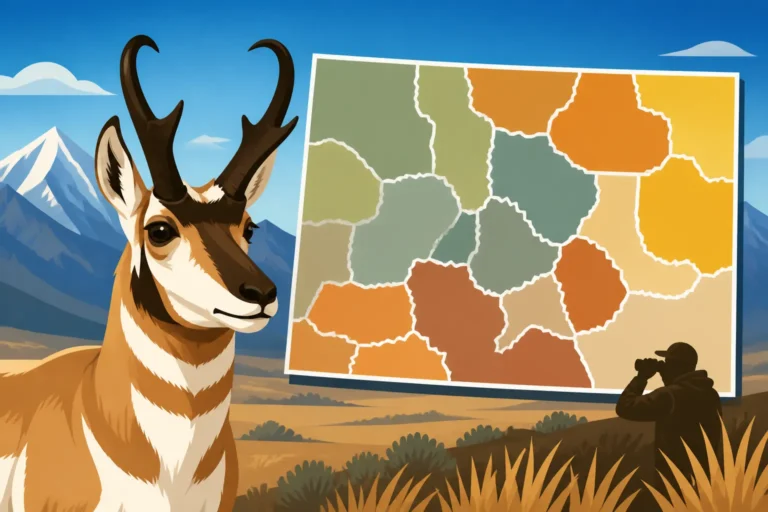
Colorado's pronghorn population largely thrives on the vast, rolling plains and sagebrush steppe ecosystems, primarily on the eastern side of the state. Think of areas around Sterling, Limon, Craig, and even some of the more open areas north of Denver. These aren't your typical timber-dwelling elk; they live where the wind blows free and cover is minimal. They prefer areas with a mix of short grasslands for grazing and taller sagebrush or agricultural fields for bedding and protection.
Their daily patterns often revolve around feeding in the early morning and late evening, and bedding down during the warmer parts of the day. However, "bedding down" for a pronghorn often just means lying in an open area, relying on their keen eyesight to warn them of danger. They don't have thick timber to hide in, so they use the subtle contours of the land, small washes, and the occasional clump of taller vegetation to break up their silhouette. Understanding Colorado Pronghorn Behavior and Biology is crucial here; knowing why they choose a certain patch of ground to rest helps you predict their movements and plan your stalk. They are creatures of habit, often using the same travel corridors between feeding and bedding areas, or consistently visiting specific water sources.
Strategic Hunting Methods for Colorado Pronghorn
Hunting pronghorn demands a different skillset than pursuing mountain game. Forget crashing through the timber; this is a game of patience, precision, and leveraging the subtle contours of the land.
The Art of the Spot-and-Stalk
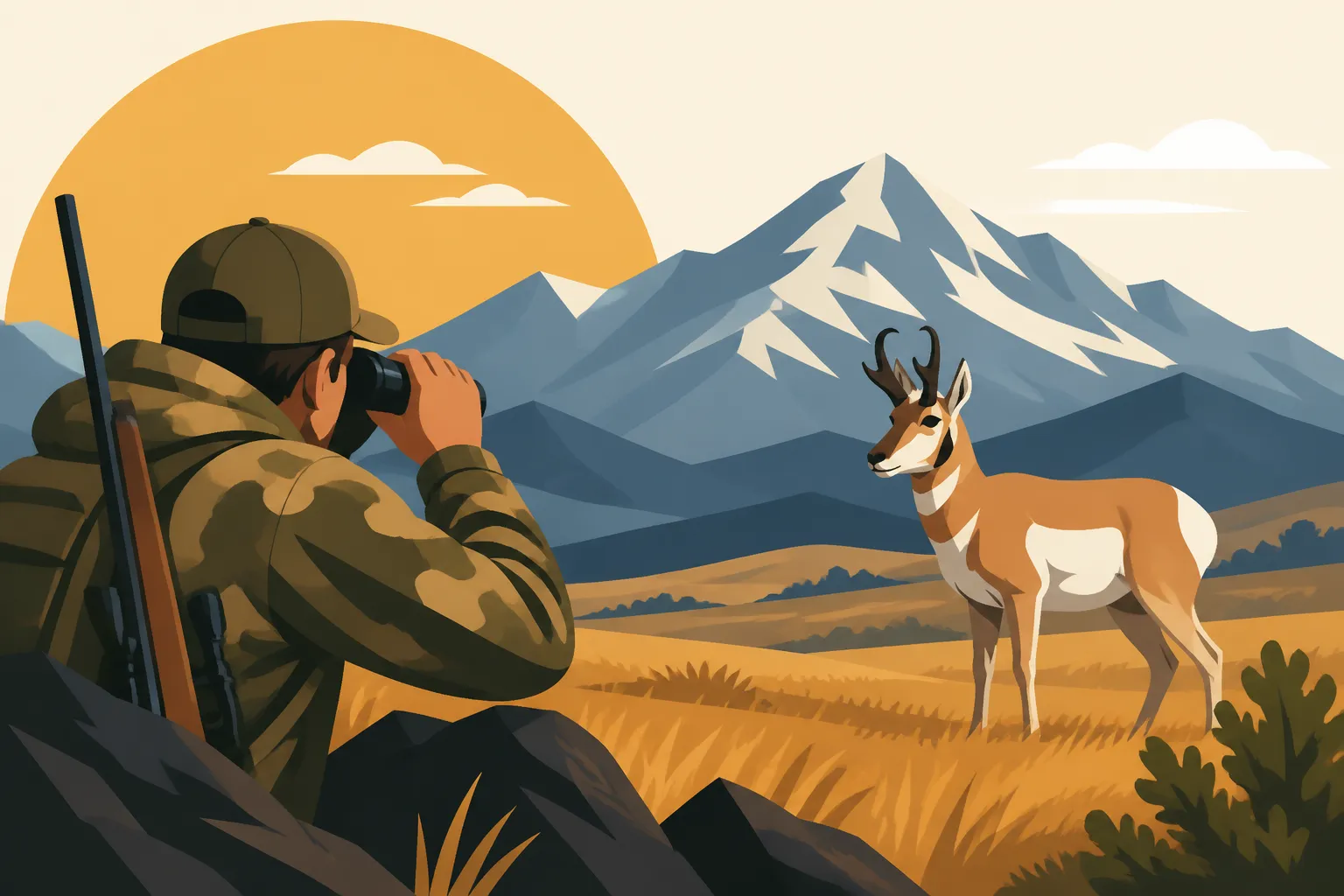
The quintessential pronghorn hunting method is the spot-and-stalk. This is where your high-quality optics truly shine. You'll spend hours, sometimes days, glassing vast stretches of country, meticulously scanning for that tell-tale white patch or dark horn against the brown and green landscape. Once you spot a buck you'd like to pursue, the real challenge begins.
Your primary goal is to use any available terrain feature – a small ridge, a dry creek bed, a patch of taller sagebrush – to conceal your approach. This often means long, circuitous routes that might add miles to your walk but shave yards off your eventual shot. Wind direction is paramount; always try to keep the wind in your face or quartering to you to prevent them from smelling you. Often, the final stages of a stalk will involve crawling on your hands and knees, or even belly-crawling, for hundreds of yards, making sure your profile remains as low as possible. It's a grueling physical and mental test, but the reward of closing the distance on such a wary animal is immense. For more dedicated advice, check out our guide on How to Spot-and-Stalk Colorado Pronghorn.
Decoying Pronghorn into Range
Decoying can be an incredibly exciting and effective tactic, especially during the rut (typically late September to early October). Pronghorn bucks are territorial and fiercely protective of their does. A well-placed decoy can tap into this aggressive instinct, drawing a curious or challenging buck right into shooting range.
The most common decoy is a silhouette of another buck or a doe, often handheld or mounted to a shooting stick. The key is to get the pronghorn's attention from a distance, then set up the decoy. As the buck approaches, you need to be ready to shoot, either concealed behind the decoy or quickly transitioning to a shooting position. This method works best with a hunting partner, where one person holds the decoy to distract the buck, and the other positions for the shot. Safety is paramount; ensure you have a clear understanding of the area and no other hunters are present before deploying a decoy. You don't want to accidentally attract another hunter! Understanding the peak of the rut will maximize your chances with this tactic, as bucks are more prone to challenge perceived rivals. This method is explored in more detail in Colorado Pronghorn Decoying.
Ambushes at Water Holes
In arid environments, water is life, and pronghorn are no exception. During hot, dry periods, water holes can become a magnet for thirsty animals, presenting a unique ambush opportunity. This method requires thorough scouting to identify active water sources and understand the pronghorn's visitation patterns.
Setting up a ground blind or finding natural cover near a water source, such as a stock pond or a creek, can allow you to wait patiently for pronghorn to come to you. This is a game of extreme patience, often involving long hours spent in a blind. Timing is critical; pronghorn often visit water during the mid-day heat or late afternoon. Be mindful of wind direction so your scent doesn't carry to the approaching animals. While less active than a spot-and-stalk, a successful waterhole ambush offers a unique perspective on these animals and can be incredibly effective when conditions are right. For comprehensive details, see How to Hunt Colorado Pronghorn Water Holes.
Here's a quick comparison of these popular pronghorn hunting methods:
| Method | Ideal Conditions | Skill Level Required | Pros | Cons |
|---|---|---|---|---|
| Spot-and-Stalk | Open terrain, some undulating features, light wind | High | Most traditional, highly rewarding, active | Physically demanding, requires patience, easily busted |
| Decoying | Rutting season, clear line of sight, light wind | Medium-High | Exciting, can bring bucks very close | Requires a partner, safety concerns, less effective post-rut |
| Water Hole Ambush | Hot, dry weather, isolated water sources | Medium | Less physical, can be relaxing, good for less mobile hunters | Requires extensive scouting, long waits, dependent on conditions |
Essential Gear and Preparation for Pronghorn Hunting
Success in the pronghorn country often boils down to proper preparation and having the right tools for the job. You'll be spending a lot of time looking, walking, and potentially crawling, so your gear needs to be up to the task.
Optics: Your Most Critical Tool
Hands down, the most crucial piece of gear for pronghorn hunting is quality optics. Given their incredible eyesight and the vastness of their habitat, you simply cannot hunt effectively without them. You'll need:
- High-powered Binoculars (10×42 or 12×50): These are your primary scouting tools for covering vast distances. Invest in the best you can afford. Brands like Vortex, Leupold, and Maven offer excellent clarity and durability. You'll be spending hours behind them.
- Spotting Scope (20-60x or 15-45x): Essential for confirming horn size, sex, and assessing the terrain around the animal from a distance without disturbing it. A lightweight, packable scope is a huge asset.
- Rangefinder: Absolute necessity for accurate shot placement. The open country can play tricks on your depth perception, and a precise distance is vital for long-range shots.
- Tripod: Don't underestimate the value of a solid tripod for both your binoculars and spotting scope. It reduces fatigue and provides a stable platform for hours of glassing, allowing you to pick apart distant terrain and spot bedded animals that would otherwise go unnoticed. For a deeper dive, read our guide on Best Optics for Colorado Big Game.
Weapon Choice and Ammunition
When it comes to your weapon, flat-shooting and accuracy are key. Shots can often be longer in the open country than in timber, so you need to be confident in your setup.
- Rifle Hunting: Calibers like .270, .25-06, 6.5 Creedmoor, and .30-06 are popular choices. The emphasis should be on a bullet that performs well at extended ranges, retains energy, and expands reliably on thin-skinned game. Practice shooting from various field positions – prone, kneeling, and from a bipod – as you won't always have a bench rest. Long-range shooting practice is highly recommended.
- Archery Hunting: Bowhunting pronghorn is an even greater challenge, often relying heavily on decoying or ground blinds near water. You'll need to be proficient at shooting at varying angles and distances, and your setup should be tuned for maximum speed and kinetic energy. Check out specific tips in Colorado Pronghorn Hunting: Archery Tactics.
Regardless of your chosen weapon, familiarize yourself with its trajectory and limitations. Know your maximum ethical range and stick to it.
Clothing, Footwear, and Essential Field Items
Your clothing needs to be appropriate for the often-hot, sunny, and sometimes windy conditions of the plains. Lightweight, breathable layers are key, and a good wide-brimmed hat is a must for sun protection. While "camo pattern" is less critical than breaking up your silhouette in open country, earth tones and patterns that blend with sagebrush and dry grass are ideal.
- Footwear: Comfortable, broken-in hiking boots are important for the miles you'll put on. Consider lightweight, breathable options.
- Backpack: A daypack to carry water (lots of it!), snacks, optics, a first-aid kit, and extra layers.
- Crawl Pads: Many hunters carry small knee pads or a piece of closed-cell foam for those long belly crawls during a spot-and-stalk. Your knees will thank you!
- Water: Seriously, bring more water than you think you need. The plains can be brutally hot and dry. Electrolytes are also a good idea.
Scouting and E-Scouting
Preparation doesn't just involve gear; it involves knowledge. E-scouting, using tools like GoHunt, is invaluable for pronghorn. You can identify potential public land access points, terrain features (like draws or subtle ridges that offer cover), water sources, and common travel routes from the comfort of your home. Using satellite imagery, you can pinpoint specific areas that might hold animals or offer advantageous stalking routes. GoHunt's detailed unit data and draw odds information can also guide your initial unit selection when applying for tags.
Once you've done your digital homework, nothing beats on-the-ground scouting. Drive the roads, glass from high points, and look for signs like tracks, droppings, and well-used trails. Understand property boundaries; private land checkerboards are common on the plains, and knowing exactly where you can and cannot hunt is crucial. Our guide on How to E-Scout Before a Colorado Hunt can help you refine these skills.
Navigating Colorado's Pronghorn Regulations and Public Land
Hunting pronghorn in Colorado requires more than just field skills; it demands a solid understanding of the state's draw system, unit boundaries, and public land access. The regulations can seem daunting, but breaking them down makes it manageable.
Understanding the Draw System and Seasons
Unlike over-the-counter (OTC) elk tags in some seasons, Colorado pronghorn tags are primarily available through the draw system. This means you'll need to apply for a tag in the spring, typically by early April. The number of preference points required to draw a tag can vary wildly depending on the specific Game Management Unit (GMU) and the type of tag (buck or doe). Some units might require several points for a buck tag, while others might be easier to draw with fewer or even zero points, especially for doe tags.
Seasons vary by weapon type, with archery season typically starting in late August or early September, followed by muzzleloader, and then several rifle seasons throughout September and October. It's crucial to consult the current Colorado Parks and Wildlife (CPW) big game brochure for exact dates and hunt codes for your chosen GMU. Pay close attention to the distinction between "buck" and "either-sex" tags, as well as "doe" or "antlerless" tags. For a deep dive into the application process, refer to Colorado Pronghorn Draw Explained. Building preference points is a long-term strategy that can eventually grant access to highly sought-after units.
Selecting a Game Management Unit (GMU)
Choosing the right GMU for your pronghorn hunt is a critical decision. You'll want to balance draw odds with public land access and historical success rates. GoHunt offers excellent resources to research specific units, including historical draw data, public land percentages, and success rates. Look for units that have a good balance of public land (Bureau of Land Management (BLM) and State Trust Lands often provide great opportunities) and manageable draw odds for the number of preference points you have.
Remember, pronghorn love open country, so focus on GMUs located on the Eastern Plains or the more arid, open western slope regions. The Colorado Hunting Atlas is an invaluable tool for identifying public land parcels within a chosen GMU. When researching, don't just look for total public land, but huntable public land – areas that aren't landlocked by private property or too small to offer a meaningful hunt. Our general guide on Colorado Hunting Units (GMUs) Explained can help clarify this complex system.
Navigating Public Land Challenges
Hunting pronghorn on public land, while rewarding, often comes with its own set of challenges, primarily hunter pressure. If you're hunting an accessible public parcel, chances are other hunters will be there too.
- Find Overlooked Areas: Look for areas that require a longer walk, are further from main roads, or have less obvious access points. Most hunters will stick to the edges or easily accessible spots. That extra mile might mean the difference between a crowded hunt and a solitary experience.
- Respect Private Land: The checkerboard nature of public and private land in Colorado means you must be hyper-aware of your location. Use mapping apps like onX Hunt or GoHunt to clearly delineate property boundaries. Trespassing, even accidentally, can lead to severe penalties and harm the reputation of all hunters. Always carry physical maps as a backup.
- Know Your Regulations: Understand specific rules for public land, such as vehicle restrictions, camping regulations, and ethical shot distances near roads or residences. Our comprehensive Colorado Public Land Hunting Guide offers extensive advice on these topics. Being a responsible hunter means respecting the land, the animals, and other users.
Hunting pronghorn in Colorado is a test of patience, skill, and preparation, but it's an incredibly rewarding experience. With their sharp senses and blistering speed, they'll challenge you in ways other big game species won't. But with the right strategy, gear, and knowledge, you can absolutely punch your tag on one of these magnificent prairie speedsters.
Disclaimer
Hunting is an inherently dangerous activity. Always prioritize safety, adhere to all Colorado Parks and Wildlife regulations, and obtain proper licenses and tags. The information provided in this guide is for informational purposes only and should not replace official regulations or professional guidance.