Colorado Pronghorn Trophy Potential by Unit
Trying to pin down exactly where in Colorado you have the best shot at a true trophy pronghorn can feel like searching for a needle in a vast, open haystack. It's frustrating to invest time, energy, and those precious preference points only to end up in a unit known more for quantity than horn quality. This guide is here to cut through the confusion and highlight the Colorado GMUs (Game Management Units) that consistently produce bucks with exceptional trophy potential, helping you plan a hunt that aims for the record books.
Understanding Colorado Pronghorn Trophy Potential
When we talk about "trophy potential" for pronghorn in Colorado, we're not just throwing around a fancy term. We're getting down to the nitty-gritty of horn size, mass, and overall impressive aesthetics that make a buck truly stand out. It's about understanding what makes one unit more likely to yield such an animal than another, and what hunters value in a truly exceptional antelope.
What Defines a Trophy Pronghorn?
For many, the benchmark for a trophy animal often comes back to the established scoring systems. For pronghorn, the Boone & Crockett Club (B&C) and Pope & Young Club (P&Y) are the gold standards, each with specific minimums. A B&C entry-level pronghorn needs a minimum score of 82 typically, while P&Y (archery) requires 67. These aren't just arbitrary numbers; they reflect a combination of horn measurements that contribute to the overall impressiveness of a buck.
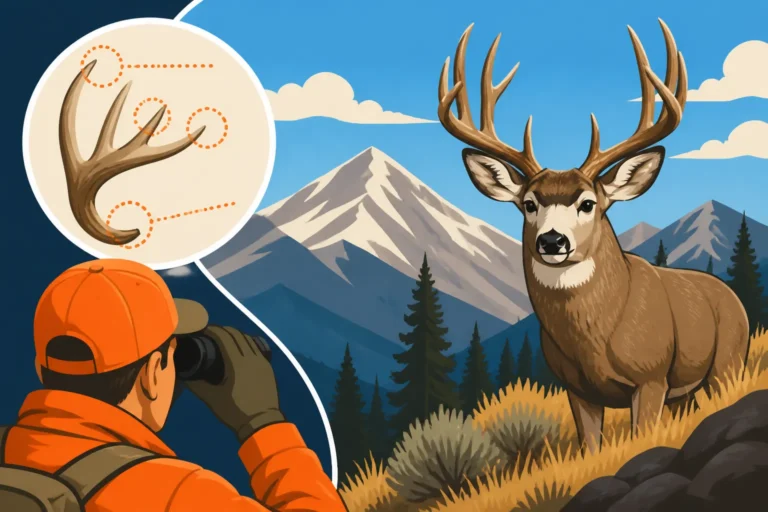
When you're out there glassing, you're looking for several key characteristics. First, length: are the horns tall, sweeping back gracefully? Second, mass: do they carry their circumference well up the horn, without thinning out too quickly? This is often measured at several points along the horn. Third, the prongs themselves: are they long and well-defined, jutting out prominently? And finally, the cutters: this refers to the small, inner antler growth at the base of the horn. A truly magnificent pronghorn will have good length and mass, distinctive prongs, and often, impressive cutters. It’s these combined features that elevate a buck from "nice" to "trophy." Seeing a buck that has great length and great mass is truly something special.
Factors Influencing Trophy Quality in Colorado
Colorado's diverse landscapes offer varied conditions that directly impact the size and quality of pronghorn horns. It's not just luck; it's a complex interplay of environmental and biological factors.
- Habitat and Nutrition: Pronghorn are creatures of the open plains and sagebrush country, and the health of their habitat is paramount. Units with abundant, high-quality forage, particularly those with a mix of native grasses, forbs, and even some agricultural influences (like alfalfa or winter wheat fields), tend to produce bigger bucks. Good nutrition year-round translates directly to better horn growth. Drought years, for example, can noticeably reduce horn development, while years with ample moisture often lead to banner horn crops. The availability of consistent water sources, especially during dry periods, is also a critical component for healthy herds.
- Age Structure of the Herd: This is perhaps the most significant factor. Simply put, older bucks grow larger horns. A unit managed for older age classes, where bucks have a higher chance of surviving several hunting seasons, will inherently have better trophy potential. This is often a result of hunter pressure and tag allocations. If a unit has very high hunter success and pressure, young bucks might be harvested before they reach their prime horn-growing years. Conversely, units with controlled tag numbers or less accessible terrain might allow more bucks to mature.
- Genetic Potential: While not as easily quantifiable as diet or age, genetics play a role. Some regions simply have herds with a predisposition for growing larger, more impressive horns. This is often localized, meaning one unit might consistently produce bucks with great mass, while a neighboring unit might be known for exceptional length, even if all other factors are equal. This subtle difference is what makes scouting and research so important.
- Weather Patterns: As briefly touched upon, weather is a huge variable. A mild winter followed by a wet spring and summer means excellent forage and less stress on the animals, which often results in superior horn growth. Conversely, harsh winters or prolonged droughts can set horn growth back significantly. This makes year-to-year consistency tricky, but over a decade, trends can emerge.
- Hunter Pressure and Public Land Access: Units that are harder to access, have more private land, or simply have fewer tags allocated often equate to less hunter pressure. Less pressure means bucks can grow older and reach their genetic potential without being harvested prematurely. When evaluating a unit, consider how much of it is public land and how accessible that public land is. You might find higher trophy potential in units that require more effort or careful navigation of private/public land boundaries. The ability to find refuge areas is crucial for older, larger bucks.
Top Colorado GMUs for Trophy Pronghorn
Colorado is vast, and its pronghorn herds are scattered across numerous GMUs, primarily on the eastern plains but also in some western slope basins. Identifying those units with the highest trophy potential requires digging into historical data, draw odds, and understanding the specific characteristics of each area.
Eastern Plains Powerhouses
When you think "trophy pronghorn" in Colorado, your mind should immediately drift to the Eastern Plains. This expansive landscape of grasslands, sagebrush, and interspersed agriculture provides the ideal habitat for antelope to thrive and grow exceptional headgear. Several GMUs consistently stand out for producing bucks that crack the B&C minimums.
Units like GMU 105, 106, 107, 108, 110, 111, and 112 are frequently mentioned in discussions about top-tier Colorado pronghorn. These units, primarily located in areas around Limon, Hugo, Burlington, and Wray, are characterized by vast, open public land mixed with significant private agricultural holdings. The rich forage from these agricultural fields, combined with the extensive native grasslands, provides prime nutrition.
For instance, GMU 105, situated near Limon, is often lauded for its strong trophy potential, but it's a tough draw, demanding a significant number of preference points. Similarly, GMUs 110 and 111 near Wray are known for bucks with impressive mass and length, often benefitting from the irrigated crops in the region. The challenge here often isn't finding pronghorn, but gaining access to the prime private land where the biggest bucks often reside, and navigating the sometimes-complex public land parcels. Hunters often utilize resources like GoHunt to scout these checkerboard public lands and understand draw odds for these highly sought-after units. Knowing how to interpret detailed maps and property boundaries is crucial for success here. This area also sees a lot of mule deer, so understanding Colorado Pronghorn Hunting Guide vs. mule deer habitat is key.
Lesser-Known Gems and Draw Odds
While the Eastern Plains powerhouses are well-known, there are other units across Colorado that, while perhaps not yielding B&C bucks with the same frequency, can still produce fantastic animals and often come with more favorable draw odds. These are the "sleeper" units, where a hunter willing to do their homework might find success with fewer preference points.
Units such as GMU 138, 139, 140, 141 (south of Pueblo and Colorado Springs) or even some western slope units like GMU 40 or 42 can surprise hunters. These units might have a slightly different habitat mix, perhaps more broken terrain, and potentially less consistent trophy genetics compared to the eastern plains. However, they can still hold older bucks that have evaded hunters due to the terrain or lower hunting pressure.
The trade-off here is usually between draw odds and guaranteed trophy quality. A unit requiring 10+ preference points on the Eastern Plains will, statistically, have a higher likelihood of yielding a B&C buck. A unit requiring 0-3 points might still hold a couple of exceptional animals, but your odds of encountering one are lower. This is where tools like GoHunt become invaluable. Their draw odds tables and unit analyzers can help you determine the probability of drawing a tag in units known for trophy potential versus units where tags are easier to come by, allowing you to make an informed decision based on your point accumulation and trophy aspirations. Consider what you are looking for; some hunters prioritize a challenging hunt, while others want guaranteed access, even if it means a smaller animal. Remember that even in units with lower trophy potential, an older, mature buck is still a fantastic prize. If you're looking to simply get a tag and experience Colorado Pronghorn Hunting, then easier-to-draw units might be a better fit.
Colorado Pronghorn Unit Comparison (Estimated Data)
This table provides a snapshot of some units with varying levels of trophy potential and draw difficulty. Remember, data for average horn length is often anecdotal for specific public land areas and can fluctuate year to year.
| GMU | Primary Location | Estimated Avg. Horn Length (Inches) | Estimated Points Needed (Non-Resident) | Public Land % (Approx.) | Trophy Potential Notes |
|---|---|---|---|---|---|
| 105 | Limon/Hugo | 15-18+ | 8-12+ | 20-30% | High potential, good genetics, often requires private access or extensive public land scouting. Bucks with good mass and length. |
| 110/111 | Wray/Yuma | 14-17+ | 6-10+ | 15-25% | Excellent potential, often benefit from agriculture. High competition for tags. |
| 112 | Burlington | 14-16 | 5-8 | 20-35% | Strong potential, good habitat mix. Requires careful e-scouting for public parcels. |
| 138 | Pueblo | 12-15 | 2-4 | 30-40% | Moderate potential, more accessible tags. Can produce solid bucks, especially on ranching for wildlife areas. |
| 40 | Grand Junction | 11-14 | 0-2 | 50-70% | Lower plains/desert units. Decent numbers, but trophy bucks are less common. Good for an experience hunt, can find 13-14 inch bucks. |
| 1 | Craig/Maybell | 12-15 | 0-2 | 60-80% | Western slope unit. Decent numbers, but trophy potential can be hit or miss. Good public land access. |
Note: Preference points needed are highly variable and can change annually. Consult official CPW draw statistics and services like GoHunt for the most up-to-date information.
Strategies for Hunting Trophy Pronghorn in Colorado
Drawing a tag in a unit known for trophy potential is only half the battle. The real work begins with rigorous preparation and smart hunting tactics. Pronghorn are incredibly wary, with eyesight comparable to an 8x binocular, making them a formidable challenge.
E-Scouting and Pre-Season Reconnaissance
Before you even set foot in Colorado, your boots-on-the-ground scouting should begin at home with intensive e-scouting. This is where you leverage technology to gain a significant advantage. Tools like onX Hunt or GoHunt maps are indispensable. You'll want to identify all the public land parcels within your chosen GMU, paying close attention to any "landlocked" public land that might see less pressure.
Start by looking for obvious features:
- Water Sources: Pronghorn need water, and in arid environments, these can be magnets. Look for stock ponds, creeks, or even subtle depressions that might hold rainwater.
- Feeding Areas: Identify areas with lush grasses, sagebrush flats, or agricultural fields. Pronghorn will travel significant distances between bedding and feeding.
- Escape Routes: Pronghorn prefer open country but will use subtle changes in topography for cover when pressured. Look for draws, rolling hills, or even dense sagebrush patches that could serve as escape routes or bedding areas during the heat of the day.
- Glassing Knobs: Locate high points or subtle rises that offer expansive views. You'll spend a lot of time glassing, so knowing where to set up for maximum visibility is crucial.
Using Google Earth's historical imagery can also be beneficial to see how vegetation or water sources have changed over time. If possible, a pre-season trip to drive the public roads and put eyes on the terrain will solidify your e-scouting efforts. This reconnaissance is crucial for understanding How to E-Scout Before a Colorado Hunt effectively and will significantly increase your odds of finding a quality buck.
Hunting Methods for Trophy Bucks
Pronghorn hunting is primarily a spot-and-stalk affair, but there are nuances when targeting trophy-class animals.
- Spot-and-Stalk: This is the quintessential pronghorn hunting method. It involves covering vast amounts of ground with your optics – a good pair of binoculars (10x or 12x) and a spotting scope (20-60x) on a sturdy tripod are essential. Once you've spotted a potential trophy buck, the real game begins. Pronghorn have incredible eyesight and are acutely aware of their surroundings. A successful stalk often involves using every bit of available cover, no matter how small. Crawling on your belly through low sagebrush for hundreds of yards is not uncommon. The wind is also critical; always try to keep it in your favor, as their sense of smell, while not as keen as an elk's, is still formidable. Patience is paramount. Often, the first stalk won't work, and you'll have to back out and try again from a different angle.
- Decoying: This is a unique and highly effective method for pronghorn, especially during the rut. A life-sized pronghorn decoy (often a silhouette of a rival buck or a doe) can draw in curious or aggressive bucks. It requires a partner, with one hunter setting up with the decoy and the other moving to a shooting position. The key is to be completely hidden, as pronghorn will often approach rapidly. This method is incredibly exciting and can bring bucks into archery or even close-range rifle territory. This is especially useful during the peak of the rut, when bucks are more susceptible to challenging rivals, which is an important aspect of Colorado Pronghorn Behavior and Biology.
- Patience and Long-Range Glassing: Unlike hunting elk in the timber, pronghorn hunting demands a lot of glassing. You'll spend hours behind your optics, systematically picking apart the landscape. Don't just scan; grid the landscape methodically. Pronghorn blend in remarkably well, and often the flicker of an ear or a patch of white rump is all you'll see. The ability to judge distances accurately is also critical, as shots can often be long, exceeding 300 yards in open country. Practice shooting at various distances before your hunt, especially if you anticipate longer shots.
- Understanding Movement Patterns: Pronghorn have predictable routines. They'll often feed in the mornings and evenings and bed down during the midday heat. Identifying these patterns for a specific buck can make your stalk much more effective. They often bed on small rises or benches where they can see for miles, making midday stalks especially challenging. Knowing Best Time to Hunt Pronghorn in Colorado also ties into these patterns.
Navigating the Colorado Draw and Tag Acquisition
Securing a Colorado pronghorn tag, especially for a trophy unit, is a strategic endeavor. Unlike OTC elk tags in some seasons, most prime pronghorn units require you to go through the draw system, and this means understanding preference points.
Preference Points and Unit Selection
Colorado uses a preference point system for pronghorn, meaning the more points you have, the better your chances of drawing a tag in a highly sought-after unit. Each time you apply for a limited draw pronghorn tag and are unsuccessful, you gain a preference point (if you select that option).
Units with high trophy potential, particularly on the Eastern Plains, can demand a significant number of points, especially for non-residents. For example, some units might require 5, 8, or even 10+ points for a rifle buck tag. Archery tags in these same units might require slightly fewer points, but they are still competitive. This means planning your hunt years in advance if you're aiming for a top-tier unit. You'll want to study the Colorado Draw System and Preference Points diligently.
This is where sophisticated tools come into play. GoHunt offers an excellent "Insider" platform that provides detailed draw odds for every unit, showing how many points were required to draw a tag in previous years for both residents and non-residents. They even have a "point analyzer" to help you strategize when to apply and when to simply build points. Understanding these odds is crucial for deciding whether to burn your hard-earned points on a tough unit or hold onto them for another year. It also helps you manage expectations about How Many Preference Points for Colorado Pronghorn might be necessary for your dream hunt.
Over-the-Counter and Leftover Tag Considerations
Over-the-counter (OTC) pronghorn tags are exceedingly rare in Colorado and typically do not exist for buck pronghorn in units with any significant trophy potential. If they do appear, they are usually for cow tags in very specific, often undesirable, units.
However, leftover tags are a different story and represent another avenue, albeit a less predictable one. After the primary and secondary draws are completed, any unallocated tags go into a "leftover" sale. These tags are sold on a first-come, first-served basis, often online. While most prime buck tags are gone in the draws, sometimes a few buck tags, or more commonly cow tags, will be available in units that might be harder to access, have lower populations, or require more effort. These tags are usually for units with very low draw odds or less perceived trophy potential.
If you don't draw your primary choice, keeping an eye on the Colorado Leftover Tags Explained process is wise. Being ready on the day the tags go on sale, with a fast internet connection and a clear idea of what units you're willing to hunt, can sometimes yield a pleasant surprise. It’s certainly not the primary strategy for a trophy buck, but it can provide an opportunity to hunt pronghorn in Colorado if you strike out in the main draw. This might mean adjusting your trophy expectations for that season, but it's still a chance to chase antelope in the beautiful Colorado landscape.
Disclaimer
Please be aware that hunting regulations, season dates, and draw odds in Colorado are subject to change annually by Colorado Parks and Wildlife (CPW). Always consult the official CPW website and hunting brochures for the most current and accurate information before planning any hunt. This guide provides general information and recommendations based on current trends and data, but it is not a substitute for official CPW resources.