Colorado Mule Deer vs Whitetail Differences
It's incredibly easy to confuse mule deer and whitetail deer, especially if you're new to hunting in Colorado or typically hunt one species predominantly. Many seasoned hunters have been there, squinting through binoculars trying to discern that tell-tale characteristic in a distant buck. This guide is designed to cut through that confusion, offering clear, practical distinctions between these two magnificent deer species found in our great state, helping you identify them correctly and refine your hunting approach.
Unpacking the Physical Distinctions Between Colorado's Deer
One of the first steps to becoming a more successful hunter in Colorado is understanding your quarry, and that starts with visually distinguishing between a mule deer and a whitetail. While they share a deer family resemblance, a closer look reveals some undeniable differences that are crucial for proper identification in the field.
Antler Configuration and Ear Size
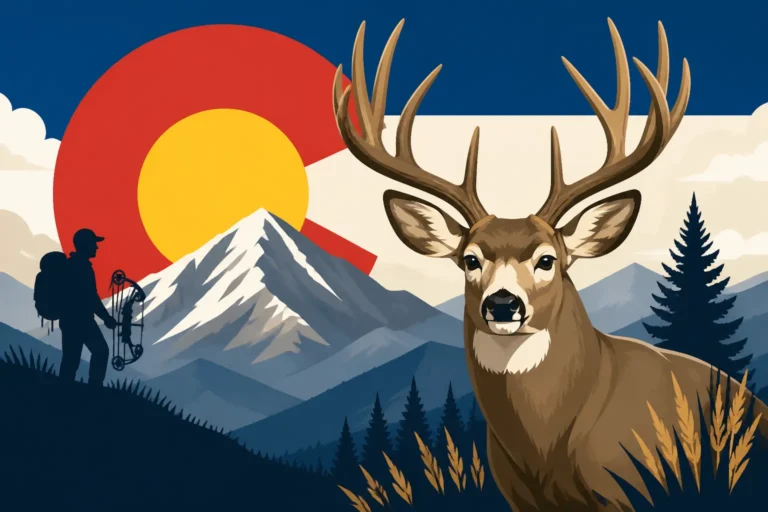
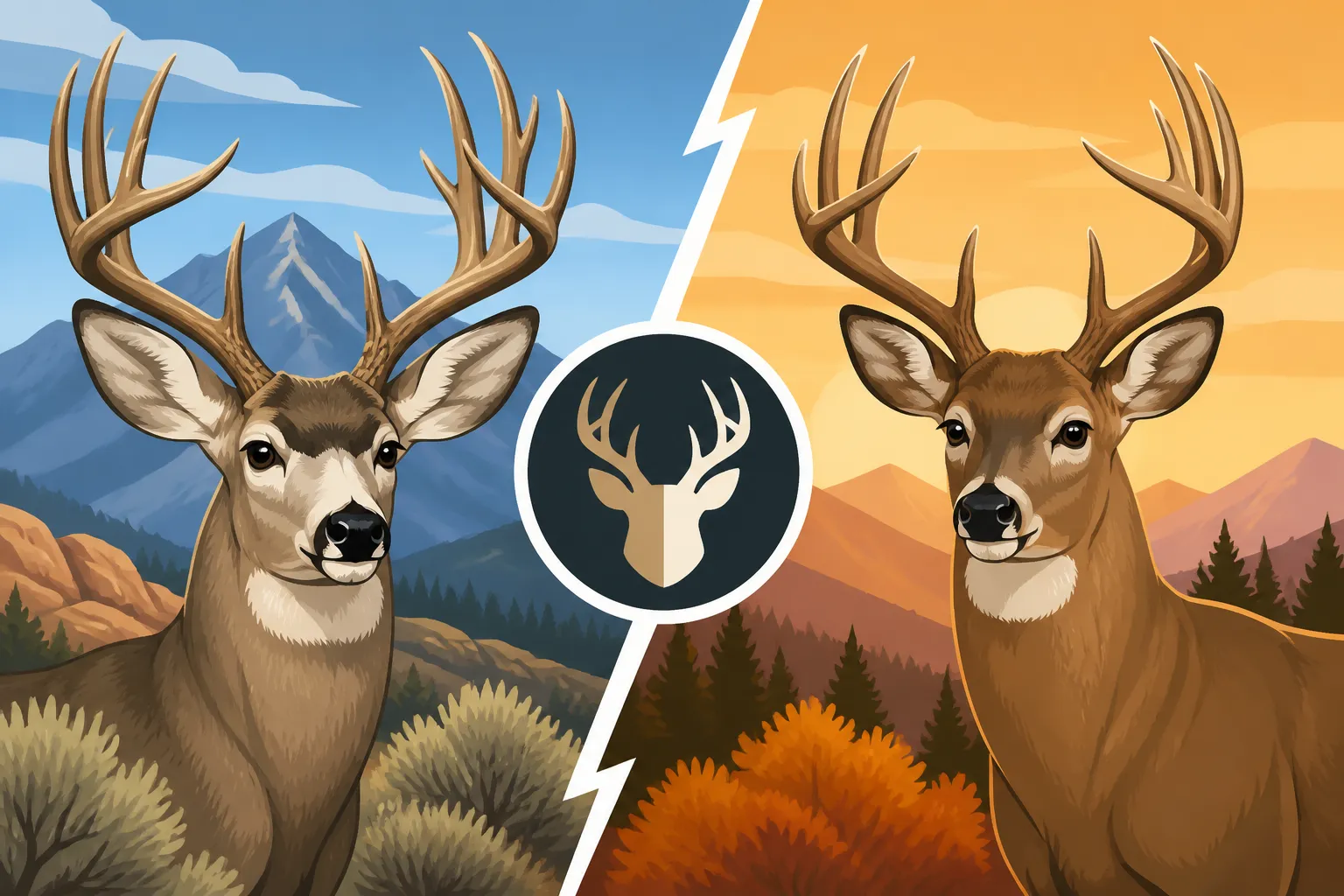
The antlers are often the go-to identifier, and for good reason. Mule deer bucks, generally speaking, have antlers that "fork" or "dichotomously branch." Imagine a main beam that grows upwards and then splits into two tines, and each of those then splits again. This creates a more open, basket-like appearance. You'll rarely see a single long tines coming directly off the main beam like a typical whitetail. When you're glassing a distant buck and see those classic "forks," you're almost certainly looking at a muley.
Whitetail bucks, on the other hand, have antlers characterized by a main beam that sweeps forward and outward, from which individual tines (points) sprout, usually without further branching. These tines are often referred to as "points off the main beam." Think of a classic eastern whitetail rack, and you've got the idea. Of course, deer can have non-typical racks, but these are the general rules of thumb.
Beyond the headgear, the ears are a dead giveaway, even on does. Mule deer earned their name for a reason: their ears are noticeably larger, often described as resembling those of a mule. They're long, broad, and constantly swiveling, giving them exceptional hearing. Whitetail ears are smaller, more proportional to their head size, and much less prominent. If you spot a deer and those ears seem oversized, you've likely found a mule deer.
Tail, Coloration, and Body Shape
The tail is perhaps the most defining characteristic, especially when a deer is alerted and fleeing. A mule deer's tail is relatively narrow and rope-like, usually white with a distinctive black tip. When a muley is spooked, it will often hold its tail down or slightly out, giving a little wiggle or twitch, but it doesn't "flag" in the dramatic way a whitetail does. It's subtle, but once you've seen it, it's unmistakable.
A whitetail, true to its name, has a broad, flat tail that is typically brown on top but brilliant white underneath. When a whitetail senses danger or flees, it will lift and wave this tail like a white flag, making it incredibly visible. This "flagging" is a primary alarm signal and a surefire way to identify a whitetail, even in dense cover.
Regarding coloration, mule deer tend to have a more uniform grey-brown coat throughout much of the year, with a lighter belly and rump patch. Their face often has a distinct patch of white around the nose and mouth, contrasting with their darker forehead. Whitetails usually have a reddish-brown coat in summer, transitioning to a more grayish-brown in winter. They typically have a pronounced white throat patch, white eye rings, and a white band across their nose. While both can vary in color based on diet and region, these general patterns usually hold true.
Finally, consider body shape. Mule deer often appear stockier, with a deeper chest and heavier build in the shoulders and neck, especially mature bucks. They tend to stand taller at the shoulder. Whitetails, particularly in the river bottoms of Colorado, can often appear more slender and athletic, with a slightly more streamlined profile. However, this distinction can be less reliable than antlers, ears, or tails, as body condition varies greatly.
Habitat Preferences and Geographic Range
Understanding where mule deer and whitetail deer prefer to live in Colorado is just as important as knowing how to tell them apart visually. Their chosen habitats dictate their behavior, movement patterns, and ultimately, your hunting strategy. Trying to find a whitetail in prime mule deer country or vice-versa will lead to a lot of frustration.
Mule Deer's Mountain and Foothill Domain
Mule deer are the quintessential deer of the American West, perfectly adapted to the rugged, often open landscapes of Colorado. You'll find them predominantly in the mountainous regions, from the high alpine basins down through the expansive sagebrush flats, pinyon-juniper breaks, and Ponderosa pine forests of the foothills. They thrive in areas with varied topography – steep slopes, rocky outcroppings, and wide-open country interspersed with pockets of timber for cover and bedding.
Think of areas like the Flat Tops Wilderness, the San Juan Mountains, or the vast national forests covering much of western Colorado. They are at home at higher elevations, often spending their summers in the subalpine and alpine zones, then migrating down to lower, snow-free areas for winter. Their movements can be extensive, following food sources and snow lines. When you're planning a trip to go mule deer hunting, you'll want to focus your e-scouting efforts on units with this type of terrain. Tools like GoHunt are incredibly useful for dissecting these varied landscapes and pinpointing potential mule deer hotspots based on elevation, aspect, and vegetation types. For more detailed information, check out our guide on Colorado Mule Deer Habitat Explained.
These deer are built for traversing broken ground, with larger hooves and a unique bounding gait (the "stot") that allows them to cover ground quickly and efficiently across rocky terrain or open slopes. This preference for open spaces means they often rely on their eyesight and hearing, making them challenging to approach without being spotted.
Whitetail's River Bottom and Agricultural Niche
Colorado's whitetail deer population, while smaller than its mule deer counterpart, is primarily concentrated in the eastern plains and along riparian corridors throughout the state, particularly on the Front Range and eastern slope. These deer are creatures of dense cover and fertile ground. They absolutely love river bottoms, creek drainages, and areas adjacent to agricultural fields where they can find abundant food and escape into thickets, cottonwood groves, and dense brush.
Picture the South Platte River corridor, the Arkansas River valley, or the various small creeks and drainages crisscrossing the eastern Colorado plains. These are whitetail havens. Unlike mule deer, whitetails prefer to stay hidden, using the dense vegetation as both cover and a travel network. They don't typically venture far from heavy cover, even when feeding in open fields, always having an escape route in mind.
You're much less likely to encounter a whitetail in the high mountains of Colorado, though pockets do exist in lower elevation river systems within the mountains themselves. Their presence is a testament to their adaptability, but their primary strongholds are tied to water and agricultural resources. If you're looking for where Colorado whitetail deer live, focus on these types of areas. Even when you're using a resource like the Colorado Hunting Atlas Explained, you'll notice how the whitetail populations largely hug the river systems and lower elevations away from the true mountain ranges.
This distinct habitat preference means that if you're hunting in thick timber along a creek in eastern Colorado, you're almost certainly targeting a whitetail. Conversely, if you're on a high, rocky ridge in the western part of the state, it’s a mule deer you're after. Knowing this geographical distribution can save you a lot of time and help you tailor your scouting and hunting efforts effectively.
Behavioral Traits and Hunting Implications
Beyond their looks and preferred addresses, mule deer and whitetail exhibit vastly different behaviors. These differences aren't just fascinating; they are absolutely critical for successful hunting, influencing everything from how they move to how they react under pressure.
The Mule Deer's "Stot" and Open Country Habits
Mule deer are known for their distinctive "stot" or pronk — a bounding gait where all four hooves leave and land on the ground simultaneously. It's a remarkably efficient way for them to cover ground quickly in broken, rocky, or uneven terrain, and it's a dead giveaway that you're watching a muley. When alarmed, they'll often stot away for a short distance, then pause to look back, trying to pinpoint the source of the danger. This momentary hesitation can sometimes offer a shot opportunity if you're quick and patient.
Because they inhabit more open country, mule deer rely heavily on their eyesight and hearing. They are often more visible than whitetails, but also more prone to spotting you from a distance. This makes Spot-and-Stalk Hunting in Colorado a prime tactic for mule deer. You'll spend hours glassing vast basins and distant hillsides, trying to locate deer that are often miles away. Once spotted, the challenge shifts to planning an approach that utilizes terrain and wind to get within shooting range, often requiring long walks and careful navigation. A hunter might use tools like GoHunt to analyze topography and wind direction to plan their stalk meticulously.
Mule deer are also known to "bed down" in relatively exposed areas, often on benches or ridges that offer a commanding view of their surroundings. Their winter migration patterns, moving from high country to lower elevations as snow accumulates, can concentrate them into specific areas, offering unique hunting opportunities, but also making them sensitive to hunting pressure.
Whitetail's Sneaky, Cover-Oriented Movement
Whitetail deer, in stark contrast, are masters of stealth and concealment. Their primary defense mechanism is to hide in thick cover, slip away unseen, or use their incredible burst of speed to disappear into dense vegetation. When a whitetail is spooked, it will often "flag" its tail and execute a series of powerful, zig-zagging bounds, designed to put obstacles between itself and the threat. They rarely pause to look back in the open like a mule deer; instead, they burst into the densest cover available and often won't stop until they feel completely safe.
Because they prefer dense habitat, whitetails tend to be more nocturnal or crepuscular (active at dawn and dusk). They often move along well-defined trails or "deer runs" through thickets, using the cover to their advantage. This makes hunting them a game of patience and precision, often involving tree stands or ground blinds overlooking these travel corridors, food sources, or bedding areas.
Understanding their travel patterns and their reliance on wind and scent is paramount. They use their keen sense of smell to detect danger, and their superb hearing helps them pick up subtle sounds in thick timber. Scent control is far more critical for whitetail hunters than for mule deer hunters who are often dealing with longer distances and more open air. For those hunting whitetails in Colorado, knowing how to ambush them on public land or set up on those specific travel corridors is key.
Rut Dynamics and Vocalizations
Both species experience a rut, but their behaviors differ. The mule deer rut typically occurs from mid-November into December, often extending beyond general rifle seasons in some units. During this time, bucks become less cautious, actively seeking out does, and are more susceptible to hunters. While mule deer aren't known for extensive vocalizations, bucks might grunt or snort-wheeze, and does might bleat.
The whitetail rut generally peaks in early to mid-November, though it can vary. Whitetail bucks become notoriously aggressive, chasing does and challenging rival bucks. They are more vocal, using grunts, snort-wheezes, and even rattling antlers to attract and challenge. This makes calling a much more effective tactic for whitetails than for mule deer. If you're interested in calling strategies, you might want to look at a guide like How to Cow Call Colorado Elk for a different species, but the principles of using vocalizations for deer are distinct. The Colorado Mule Deer Rut Explained dives deeper into their specific behaviors.
Adapting Your Hunting Strategy for Each Species
Given their distinct physical traits, habitat preferences, and behavioral patterns, it's clear that successful hunting in Colorado for either mule deer or whitetail requires a tailored approach. What works for one often won't for the other.
Spot-and-Stalk for Mule Deer
For mule deer, the name of the game is usually glassing and spot-and-stalk. This means spending a significant amount of time behind quality optics, scanning vast expanses of mountain, foothills, or open sagebrush country. You'll be looking for any sign of a deer – a flicker of an ear, a patch of hide, or the distinct shape of antlers against the skyline.
Once you've located a buck, the real work begins: planning and executing a methodical stalk. This involves using the terrain to your advantage, keeping the wind in your face or crosswind, and moving slowly and quietly. Given the open nature of their habitat, shots can often be long, so proficiency with your rifle at extended ranges is crucial. Think of practicing shooting uphill and downhill at elk, as the principles apply to mule deer in similar terrain. The physical demands can be high, requiring excellent stamina and mountain navigation skills. You might want to refer to Colorado Backcountry Hunting Guide for tips on hunting in their preferred terrain.
Successful mule deer hunters often spend days, sometimes weeks, covering ground and meticulously glassing. They're not waiting for the deer to come to them; they're actively seeking them out in their expansive domain. Using tools like GoHunt's mapping features to mark potential bedding areas, travel corridors, and vantage points can be a game-changer for planning these extensive spot-and-stalk hunts.
Stand Hunting and Ambush for Whitetail
Hunting whitetails in Colorado, especially on the eastern plains or in dense river bottom areas, is often a game of patience, stealth, and intimate knowledge of deer movement. Instead of covering miles, you're often focusing on a smaller, more specific area where you know whitetails frequent.
Tree stands or ground blinds are commonly used to intercept deer moving between bedding and feeding areas. Understanding prevailing winds, thermals, and deer trails is paramount. Scent control becomes a much bigger factor when hunting whitetails, as they rely heavily on their sense of smell to detect danger in close quarters. Hunters often scout out pinch points, funnels, and natural barriers that concentrate deer movement, then position themselves to ambush a buck.
Calling can also be an effective strategy during the rut. Using grunts, bleats, or rattling antlers can draw curious or aggressive bucks into range, especially in the thick cover where visual spotting is limited. Because shots are often at closer ranges in dense cover, quick target acquisition and accurate shooting are more important than long-range precision. Learning How to Hunt Whitetail Deer in Colorado effectively involves becoming a master of concealment and patience.
Using E-Scouting Tools Effectively
Regardless of whether you're chasing mule deer or whitetail, modern e-scouting tools like GoHunt are invaluable for pre-hunt preparation. For mule deer, you can analyze satellite imagery for open basins, identify potential escape routes on steep slopes, and mark glassing knobs from miles away. You can overlay public/private land boundaries to ensure you're on legal hunting ground, and study historical weather patterns that might influence migration.
For whitetails, e-scouting focuses on identifying riparian corridors, creek drainages, agricultural fields, and the dense cover that whitetails favor. You can pinpoint potential bedding areas, likely travel routes between cover and food, and identify natural funnels where deer movement is concentrated. GoHunt's advanced filtering and mapping capabilities allow you to break down a GMU into its constituent habitat types, giving you a massive head start before you even set foot in the field. This detailed preparation can drastically improve your chances, especially when dealing with the elusive nature of whitetails. For a more general overview, learning How to E-Scout Before a Colorado Hunt can benefit any big game hunter.
Knowing the differences between these two species isn't just about identification; it's about understanding their world, anticipating their moves, and adapting your strategy to increase your chances of a successful and ethical hunt.
| Feature | Mule Deer | Whitetail Deer |
|---|---|---|
| Antler Growth | Forks (dichotomous branching) | Points off a main beam |
| Ear Size | Large, prominent (like a mule) | Smaller, proportional |
| Tail | Rope-like, white with black tip, held down or slightly out when fleeing | Broad, white underneath, "flags" when fleeing |
| Coloration | Grey-brown body, white face patch around nose/mouth | Reddish-brown (summer), grayish-brown (winter), white throat patch, eye rings |
| Body Build | Stockier, often taller at shoulder, heavier neck/shoulders | More slender, streamlined, athletic |
| Gait | "Stot" or pronk (all four feet land simultaneously) | Graceful run, powerful bounds, zig-zagging |
| Preferred Habitat | Mountains, foothills, sagebrush, open timber, varied topography | River bottoms, dense cover, agricultural fringes, lower elevations |
| Primary Defense | Sight, hearing, stot, then pause to assess | Stealth, concealment, flagging, immediate disappearance into cover |
| Hunting Strategy | Spot-and-stalk, glassing, long-range shooting | Stand hunting, ambush, scent control, close-range shots, calling |
| Rut Peak | Mid-November to December | Early to mid-November |
| Vocalizations | Less vocal, occasional grunts/snorts | More vocal (grunts, snorts, rattles) |
| Range in CO | Widespread in western/central mountains and foothills | Eastern Plains, riparian corridors, Front Range |
Disclaimer
Hunting is an inherently risky activity. The information provided in this guide is for informational purposes only and should not be considered a substitute for official regulations, professional guidance, or personal due diligence. Always consult the latest Colorado Parks and Wildlife regulations, respect private property, and prioritize safety and ethical hunting practices. Conditions in the field can change rapidly, and your judgment and preparation are critical.