Colorado Waterfowl Species and Flyways
Navigating the world of waterfowl hunting in Colorado can feel a bit like trying to read a complicated map. With so many different species of ducks and geese flying through, and the vastness of the state's diverse habitats, it’s easy to get overwhelmed trying to figure out where to start. This guide aims to demystify Colorado's rich waterfowl hunting opportunities, breaking down the species you'll encounter and the major migratory highways they use.
Understanding Colorado's Position in the Flyway System
Colorado might be known for its majestic mountains, but for waterfowl hunters, it's a critical crossroads on one of North America's most important migratory routes. Knowing how these flyways work is like understanding the traffic patterns of the bird world – it helps you predict where and when to find the best action.
The Central Flyway: A Waterfowler's Highway
At its heart, Colorado sits squarely within the Central Flyway, a massive migratory corridor that stretches from the Arctic tundras of Canada all the way down to the Gulf Coast of Texas and Mexico. Think of it as the main interstate for millions of ducks, geese, and other migratory birds. This makes Colorado a crucial stopover point, especially for birds funneling south from breeding grounds in the Dakotas, Montana, and Canadian prairies.
During the fall migration, as temperatures drop to the north, huge numbers of waterfowl begin their journey, using landmarks like the Rocky Mountains as navigational guides. They'll often follow major river systems and pause at large bodies of water to rest and feed, fueling up for the next leg of their journey. For hunters, this means that areas along the South Platte River, the Arkansas River, and the numerous reservoirs and playa lakes scattered across the Eastern Plains of Colorado become hotspots. These locations offer essential staging areas with abundant food sources and roosting grounds. The sheer volume of birds that can pass through, or even winter over, in certain areas along this flyway is truly incredible, offering some fantastic opportunities if you've done your scouting.
Lesser-Known Influences: Pacific Flyway Overlap
While the Central Flyway dominates, it's worth noting that western Colorado isn't entirely isolated from the Pacific Flyway. Although it's less pronounced, some waterfowl migrating south along the western side of the continental divide can occasionally spill over or utilize habitats that connect these two major routes. The Yampa River basin, and some of the higher mountain parks and basins on the Western Slope, might see a mix of birds that have originated further west.
This overlap can sometimes lead to unique hunting scenarios, particularly for species that are more common in the Pacific Flyway, offering a broader diversity of birds than you might expect. For instance, certain segments of the Green River or the Colorado River might hold different concentrations or species of ducks than their eastern counterparts. It’s always smart to check local reports and keep an eye out for unusual visitors, especially if you're hunting in GMUs like those near the Western Slope, which might be influenced by these patterns. Understanding the subtleties of these influences is part of becoming a truly knowledgeable waterfowl hunter in the state.
Key Waterfowl Species You'll Encounter in Colorado
Colorado's diverse landscapes, from high-altitude reservoirs to eastern prairie wetlands, mean a wide variety of waterfowl grace its skies. Knowing your ducks and geese, and what their preferences are, is key to successful hunting.
Ducks: From Dabblers to Divers
Ducks are broadly categorized into dabblers and divers, and Colorado hosts a healthy population of both, offering diverse hunting experiences.
Dabbling Ducks: The "Puddle Ducks"
These are the ducks you often see tipping tail-up in shallow water, feeding on vegetation and insects near the surface. They typically take flight by springing directly up from the water.
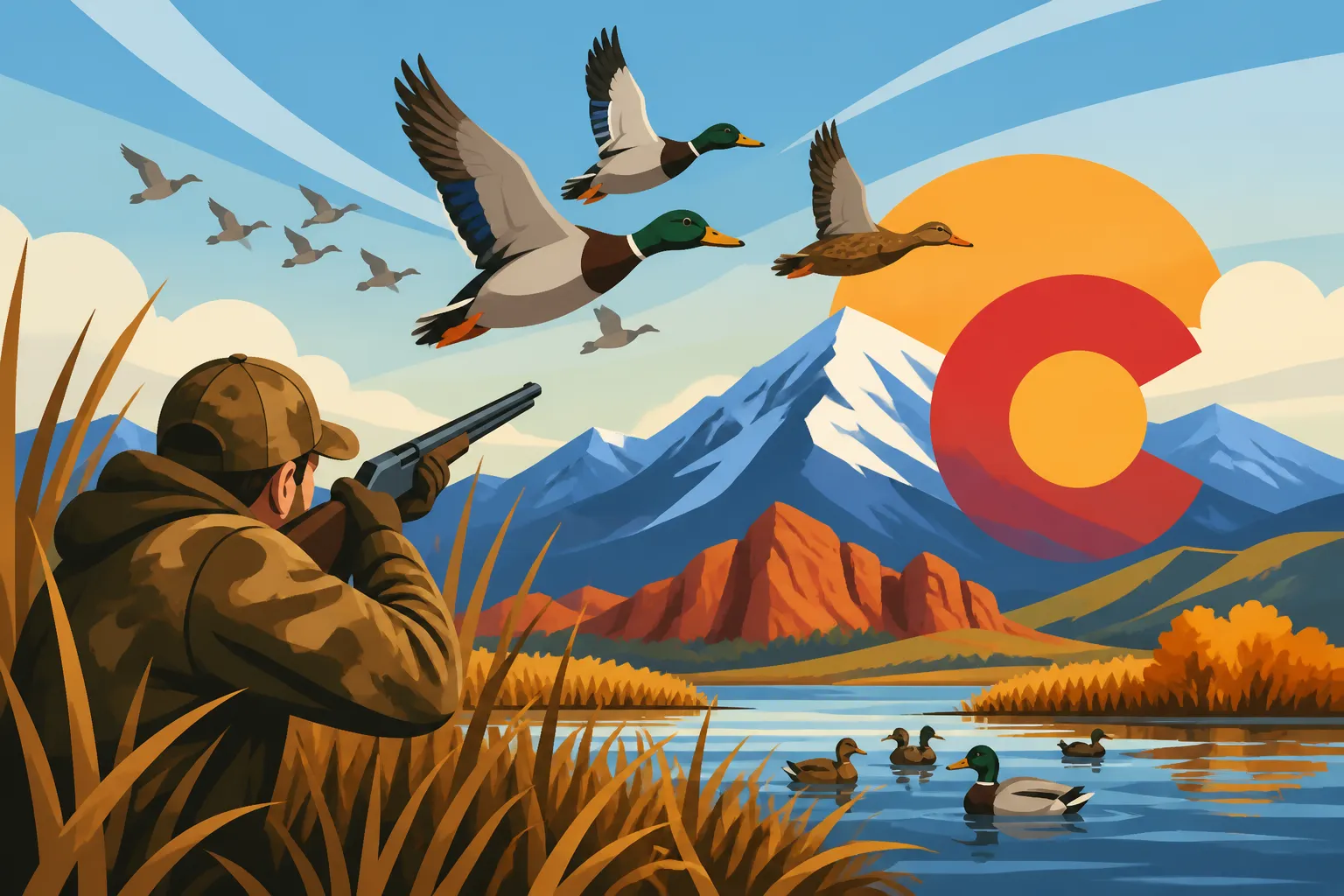
- Mallards: Often called the "King of the Plains," mallards are arguably the most iconic and sought-after duck in Colorado. They're abundant, adaptable, and can be found almost everywhere there's water – from small creeks to large reservoirs and agricultural fields. You'll find them holding strong in the eastern plains, particularly along the South Platte and Arkansas River corridors, where they feast on waste grain. These birds are resilient and will often stay through late season if open water and food are available.
- Green-winged Teal: These small, fast-flying ducks are a favorite among hunters. They're early migrators and can be found in good numbers during the early splits of the season. They prefer shallow marshes and flooded fields.
- Blue-winged Teal: Similar to green-wings but with a distinctive blue patch on their wings, these ducks are even earlier migrators. They offer fantastic hunting opportunities during the early September teal season, especially in the eastern part of the state.
- Gadwall: Often overlooked, the gadwall is a handsome grey duck that's becoming increasingly common in Colorado. They prefer shallow marshes with dense vegetation and can often be found mixed in with mallards.
- Pintail: The elegant pintail, with its long neck and distinct tail feather on the drake, is another prized dabbler. They prefer open water and flooded agricultural fields, often associating with mallards. Their numbers fluctuate, but Colorado sees a good migration.
- American Wigeon: Known for their distinct "whee-whoo" call and the white patch on the drake's head, wigeons are primarily vegetarian. They often feed by stealing food from diving ducks and can be found in a variety of wetland habitats.
Diving Ducks: The Deep-Water Foragers
Diving ducks, as their name suggests, forage by diving deep underwater for food. They require a running start across the water to become airborne.
- Canvasbacks: Often called the "King of Ducks" by many, canvasbacks are large, powerful flyers known for their delicious meat. They prefer large, open bodies of water with abundant submerged aquatic vegetation. Their migrations can be quite localized, so finding them often requires scouting specific large lakes or reservoirs.
- Redheads: These striking ducks, with the drake's reddish head and blue bill, are often found in the same habitats as canvasbacks. They're also known for specializing in eating aquatic plants.
- Scaup (Lesser and Greater): Known as "bluebills," scaup are typically found on larger lakes and reservoirs, especially during late season. They often form large rafts on open water. Distinguishing between Lesser and Greater Scaup in the field can be tricky but is less critical for most bag limits.
- Ring-necked Ducks: These smaller diving ducks are often found in marshier habitats than other divers, sometimes even in proximity to dabblers. They're identified by the subtle ring on their neck and a prominent white ring on their bill.
Geese: Giants of the Sky
Hunting geese in Colorado offers a different kind of thrill, often requiring heavier decoys and more robust calling.
- Canada Geese: Colorado is home to both resident and migratory populations of Canada geese. Resident birds are those that breed and spend their entire lives within the state, often found in parks, golf courses, and agricultural areas year-round. Migratory Canada geese, however, arrive in huge numbers from the north during the fall and winter, utilizing the same river corridors and grain fields as mallards on the Eastern Plains. Different subspecies exist, like the "shortgrass prairie" geese, which are specific populations. Goose hunting can be phenomenal, especially in areas like the Julesburg region or around Pueblo, where large flocks winter over.
- Lesser Snow Geese and Ross's Geese: These beautiful white geese are primarily found during migration on the Eastern Plains, particularly around large reservoirs like John Martin Reservoir. They often travel in enormous flocks, creating an unforgettable spectacle. Hunting these can be incredibly challenging but rewarding. They typically concentrate in specific areas, so good intel and scouting are crucial.
- Greater White-fronted Geese (Specklebellies): While not as numerous as Canada or Snow Geese, "specks" are highly prized for their unique call and excellent table fare. They are primarily a migratory bird in Colorado, passing through in smaller, more dispersed flocks. Hunters lucky enough to encounter them often target them in specific grain fields.
- Cackling Geese: These are essentially miniature Canada geese, often found mixed in with larger Canada goose flocks, or in their own smaller groups. They're a delight to identify and hunt, particularly in the later seasons.
Other Waterfowl Species of Note
Beyond the main duck and goose species, Colorado offers a few other interesting waterfowl that sometimes find their way into a hunter's bag.
- Mergansers (Common, Red-breasted, Hooded): These "fish ducks" are characterized by their long, serrated bills, adapted for catching fish. While not typically targeted for table fare due to their fishy flavor, they are legal to hunt and can provide unexpected action, especially on larger rivers and reservoirs. The Hooded Merganser, with its striking crest, is particularly beautiful.
- Coots and Gallinules: Often overlooked, American Coots are abundant in many Colorado wetlands. While not true ducks, they are waterfowl and can be hunted. They offer good opportunities for new hunters or those looking to extend their time in the field, often found in large numbers on shallow ponds and marshes. Common Gallinules are rarer but also legal to harvest.
Navigating Hunting Opportunities and Resources
Getting out to hunt waterfowl in Colorado requires a good understanding of regulations, knowing where to go, and using the right tools to plan your adventure. It's not just about pointing and shooting; it's about preparation and strategy.
Season Dates and Regulations Overview
Colorado's waterfowl seasons are complex, often split into early, main, and late segments, with varying bag limits and species-specific regulations. These dates and regulations are determined annually by Colorado Parks and Wildlife (CPW) and often align with federal guidelines based on flyway population surveys. For instance, there’s typically an early teal season in September, followed by regular duck and goose seasons that might have different start and end dates, and even different daily bag and possession limits for various species. You might find "splits" where a season closes for a period and then reopens.
It's absolutely critical to consult the most current Colorado Parks and Wildlife Waterfowl & Migratory Bird brochure every year before you step into the field. Regulations change, and what was legal last year might not be this year. This brochure will detail everything from federal and state duck stamp requirements, to hunt area boundaries, shooting hours, and identification tips. For non-residents, understanding the Colorado Non-Resident Hunting License Guide and its associated costs is paramount. Tools like GoHunt can provide useful insights into hunt planning, but always cross-reference directly with official CPW publications to ensure you're compliant. Missing an obscure regulation could lead to fines or worse, so diligence is key.
Prime Waterfowl Hunting Locations in Colorado
Colorado boasts a wealth of public and private land opportunities for waterfowl hunters. Success often hinges on finding areas with consistent water, food sources, and protection from excessive pressure.
- Eastern Plains: This region is truly the heart of Colorado waterfowl hunting. The South Platte River and Arkansas River corridors are magnets for migrating ducks and geese, offering riparian habitats, oxbow lakes, and abundant waste grain in surrounding agricultural fields. Reservoirs like Julesburg State Wildlife Area, John Martin Reservoir, and Two Buttes State Wildlife Area are legendary for their ability to hold vast numbers of geese and ducks, especially during colder weather. These areas often have designated hunting zones or require reservations, so planning ahead is crucial. The smaller playa lakes, which dot the plains, can also be dynamite spots after a good rain, though their availability is highly dependent on precipitation. You'll want to review the Colorado State Wildlife Areas Hunting guide for specific rules and access details.
- Front Range: While more populated, areas like Barr Lake State Park and St. Vrain State Park offer some opportunities, though often with specific restrictions or draw systems to manage pressure. These can be good for local resident geese and early season ducks.
- Western Slope: While less renowned than the plains, the Western Slope has its gems. High mountain lakes and rivers, particularly in areas like the Yampa River valley or around Steamboat Springs, can hold good numbers of mallards and sometimes divers, especially early in the season before ice-up. Public lands here, particularly BLM or National Forest, can offer walk-in opportunities for those willing to scout. For a more comprehensive understanding of land classifications, check out the Colorado Public Land Hunting Guide.
- River Systems: Beyond the major plains rivers, smaller river systems throughout the state can offer excellent pass-shooting or jump-shooting opportunities for ducks. Identifying these smaller, less pressured stretches requires thorough e-scouting using tools like the Colorado Hunting Atlas Explained.
Essential Gear and Scouting Tips
Waterfowl hunting is gear-intensive, and being prepared is vital for both success and comfort in often harsh conditions.
- Decoys: A diverse spread is crucial. For ducks, a mix of mallard and pintail decoys is a good starting point, with some gadwall or wigeon mixed in for variety. For geese, large Canada goose decoys, often full-bodies or shells, are essential. Consider adding a few snow goose decoys if you're targeting those. Motion decoys, like spinning wing models or jerk cords, can significantly improve your spread's allure.
- Blinds: Camouflage is key. Layout blinds are popular for field hunting geese and ducks on large open waters. Portable panel blinds or natural vegetation can be effective for marsh or river hunting.
- Calls: Learn to use a variety of calls. A good duck call (mallard hen, for starters) and a goose call (short reed for Canadas) are fundamental. Practice is vital – bad calling scares birds more than no calling.
- Clothing: Layering is paramount. Waterproof, windproof outer layers are non-negotiable. Waders are essential for retrieving birds and setting decoys in water. Cold weather insulation is a must, as waterfowl hunting often means sitting still in frigid temperatures.
- E-Scouting and Physical Scouting: Before you even pack your bags, spend time on apps like GoHunt, onX Hunt, or the CPW Hunt Atlas. Look for water sources, adjacent agricultural fields (corn, wheat, milo), and potential roosting/feeding patterns. Pay attention to changes in water levels, which can significantly alter bird behavior. Once on the ground, scout thoroughly. Drive country roads, observe birds flying to and from fields, and identify flight lines. Understanding How to E-Scout Before a Colorado Hunt can save you countless hours.
- Water Levels and Weather: Water levels on reservoirs and playa lakes are constantly changing. A spot that was hot last year might be dry this year. Keep an eye on weather forecasts; cold fronts and snow can push new birds into the state, creating prime hunting conditions. Similarly, severe cold can freeze smaller waters, concentrating birds on larger, still-open reservoirs.
When considering your overall hunting strategy, whether for waterfowl or big game, understanding the local dynamics is crucial. For example, knowing How Colorado GMUs Work can help you identify specific units with the best waterfowl habitat. Even a general understanding of Colorado Hunting Seasons Explained can help you layer your hunting trips.
Common Colorado Waterfowl Species & Their Habitats
| Species Group | Common Species | Primary Colorado Habitat | Key Behaviors for Hunters | Optimal Season |
|---|---|---|---|---|
| Dabbling Ducks | Mallard | Rivers, reservoirs, flooded fields, marshes | Feed in shallow water, quick vertical take-off, vocal | Throughout season, esp. late |
| Green-winged Teal | Shallow marshes, small ponds, flooded fields | Fast, erratic flight; early migrators | Early to mid-season | |
| Pintail | Open water, flooded agricultural fields | Graceful flight; wary; often with mallards | Mid-season | |
| Diving Ducks | Canvasback | Large open reservoirs, deep lakes | Dive for food, strong direct flight; wary | Mid to late-season |
| Redhead | Large open reservoirs, deep lakes | Similar to canvasbacks; often in groups | Mid to late-season | |
| Scaup (Bluebill) | Large open reservoirs, deeper lakes | Raft in large groups on open water | Late season | |
| Geese | Canada Goose | Rivers, reservoirs, agricultural fields, urban ponds | Graze in fields, predictable flight paths; loud | Throughout season |
| Snow Goose | Eastern Plains: large reservoirs, grain fields | Travel in massive flocks, feed voraciously | Mid to late-season | |
| Greater White-fronted Goose | Agricultural fields, shallow marshes | Wary, distinctive call; often in smaller groups | Mid-season |
Disclaimer
Hunting is an inherently dangerous activity. Always prioritize safety, understand and follow all Colorado Parks and Wildlife regulations, and respect private property. The information provided here is for general guidance and educational purposes only and should not replace official sources or professional advice. Seasons, regulations, and access can change rapidly.