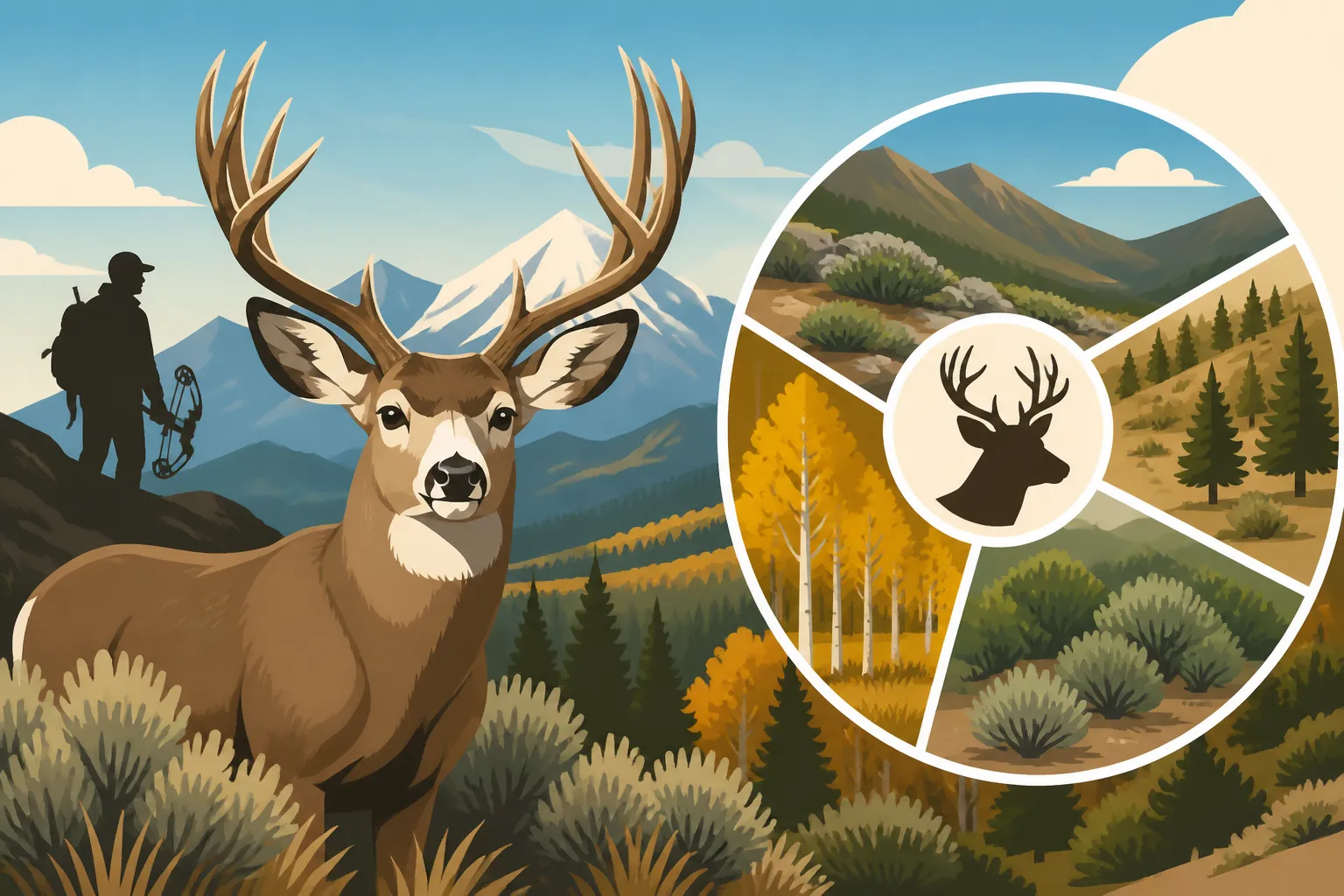
Colorado Mule Deer Habitat Explained
Trying to understand where Colorado mule deer live can feel like solving a constantly shifting puzzle. One minute you're thinking high-country basins, the next you're wondering about sagebrush flats, and it can be incredibly frustrating when you're trying to pinpoint where to focus your hunting efforts. This guide is here to unravel the mysteries of Colorado mule deer habitat, helping you understand their preferences and seasonal movements so you can become a more effective hunter.
Understanding Colorado's Diverse Mule Deer Landscapes
Colorado is a state of incredible topographical extremes, and mule deer have adapted to thrive across many of them. From the highest peaks to the sprawling plains, these animals utilize a variety of environments throughout the year. Knowing these different zones is the first step to truly understanding where the deer you're after are likely to be.
The High Country: Alpine and Subalpine Zones
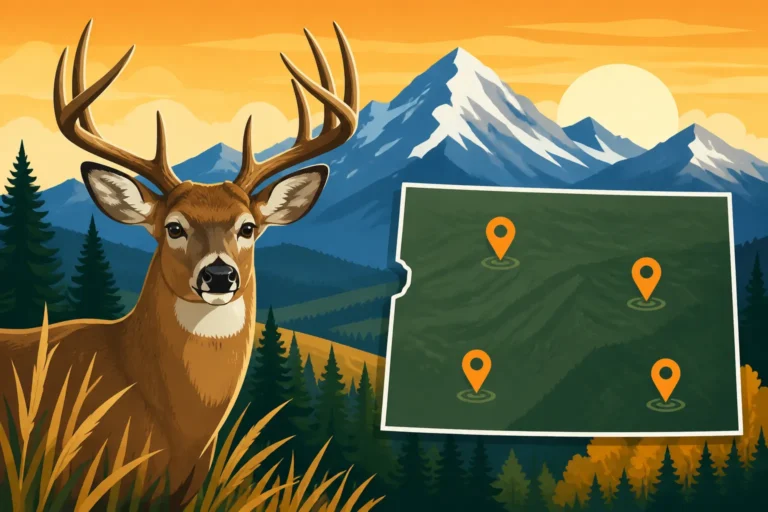
When many people picture Colorado mule deer, they often imagine them silhouetted against rugged, towering peaks in the high country. And for good reason! During the warmer months, the alpine and subalpine zones, typically above 9,000 feet, become prime real estate for bucks looking to pack on pounds. These areas are characterized by vast open basins, scattered timberline forests of Engelmann spruce and subalpine fir, and lush meadows bursting with forbs and grasses. Think of places like the San Juan Mountains or the Flat Tops Wilderness, where summer brings an explosion of growth after the long winter.
The high country offers a smorgasbord of nutrient-rich forage that is crucial for antler growth and building fat reserves. Bucks will spend their summers up here, often in bachelor groups, enjoying the relative peace and abundance. Cover is provided by the dense pockets of timber, steep rocky slopes, and deep canyons that offer security and relief from the midday sun. However, as soon as the first serious snows begin to fall, usually in late September or early October, these high-elevation havens become less hospitable, prompting a significant shift in their behavior and location. Understanding these patterns is key to success, especially if you're venturing into a Colorado Backcountry Hunting Guide scenario.
Mid-Elevation Habitats: Forests and Foothills
As you descend from the alpine, you encounter Colorado's vast mid-elevation habitats, which are arguably where most mule deer spend a significant portion of their lives, especially outside of peak summer. This includes expansive tracts of ponderosa pine, Douglas fir, and vibrant aspen forests, along with the rugged foothills characterized by pinyon-juniper woodlands and dense shrublands. These areas are crucial transition zones, often serving as migration corridors between summer and winter ranges.
Here, deer find a more balanced ecosystem offering consistent food sources, thermal cover, and escape routes. The mosaic of different vegetation types creates excellent browse, with plants like serviceberry, bitterbrush, and various mountain mahoganies forming a critical part of their diet. During the hunting seasons, particularly the early rifle and archery seasons, many mule deer will still be found in these mid-elevation forests before the deep snow pushes them lower. However, these zones can also see higher human pressure due to easier access, making stealth and smart hunting tactics paramount. You'll often find deer "holding up" in thick north-facing timber during the day, emerging to feed in the evenings.
Eastern Plains and River Bottoms: The Lesser-Known Habitats
While most people associate Colorado mule deer with the mountains, a significant population also thrives on the Eastern Plains and along the major river systems. This habitat is vastly different, characterized by rolling grasslands, agricultural fields, and the dense cover provided by cottonwood galleries and thick brush along river bottoms and creek drainages. Here, mule deer share their range with whitetail deer, and their habitat use can often overlap.
On the plains, mule deer find sustenance in agricultural crops, native grasses, and the woody browse found in riparian zones. These river bottoms provide vital thermal and escape cover in an otherwise open landscape, especially during harsh winters. Hunting mule deer on the plains often requires different tactics than mountain hunting, focusing more on glassing vast distances and understanding how deer use the limited cover available. For those interested in How to Hunt Pronghorn on the Eastern Plains, many of these principles of open-country glassing will also apply to mule deer here.
Essential Habitat Components for Mule Deer Survival
Just like us, mule deer need certain things to survive and thrive: food, water, and security. Understanding these core needs and how different habitats provide them will unlock a deeper insight into their daily and seasonal movements.
Food Sources: What Mule Deer Eat
Mule deer are primarily browsers, meaning their diet largely consists of the leaves, twigs, and buds of woody plants and forbs (broad-leafed herbaceous plants), rather than grasses. This is a critical distinction from elk, which are primarily grazers. In the high country, during summer, they feast on a wide array of succulent forbs, clover, and young aspen sprouts. As they move to mid-elevations, shrubs like mountain mahogany, bitterbrush, and serviceberry become staples. In pinyon-juniper country, they'll browse on juniper and sagebrush, especially in winter when other options are scarce.
Water is also an absolute necessity, and while mule deer can get a lot of moisture from the plants they eat, they still need access to free water sources, especially in drier environments. Look for springs, seeps, creeks, and even residual snow pockets in the high country. When scouting, identifying these food and water sources, particularly those close to cover, can be a game-changer. Tools like GoHunt can be invaluable here, offering detailed map layers that help pinpoint water sources and vegetation types, making your e-scouting efforts incredibly efficient.
Cover and Security: Where Mule Deer Hide
Mule deer rely heavily on cover for security, thermal regulation, and escape from predators and hunters. This isn't just one type of cover; it's a strategic combination of dense vegetation, broken terrain, and often, elevation.
- Thermal Cover: During cold winter months or hot summer days, mule deer seek out thermal cover. This usually means dense stands of conifers like Douglas fir or spruce, which offer protection from wind and snow, or shade from the sun. North-facing slopes often hold the best thermal cover due to less direct sunlight.
- Escape Cover: When spooked, mule deer will quickly retreat to areas that make it difficult for predators (or hunters) to follow. This includes steep, rocky cliffs, thick brush, dense timber, or deep canyons. Their incredible agility in rugged terrain gives them a significant advantage here.
- Bedding Areas: Mule deer will often bed down in areas that offer a combination of security and vantage points. This could be a small bench on a steep hillside, a dense thicket overlooking a feeding area, or the sunny side of a ridge in winter. They'll typically bed with the wind at their back, allowing them to smell danger approaching from behind while seeing what's in front of them. Understanding these subtle preferences is a huge part of How to Still-Hunt Colorado Timber.
Seasonal Movements and Habitat Shifts
Mule deer are incredibly adaptable, but their movements are largely dictated by the changing seasons and the availability of food and suitable cover. This migration is a cornerstone of mule deer biology in Colorado, and ignoring it is a surefire way to struggle.
Spring and Summer: High-Elevation Abundance
As the snow melts and green-up occurs, mule deer begin their upward migration from their winter ranges to higher elevations. This spring migration is driven by the emergence of new, nutrient-rich forage in the subalpine and alpine zones. Does will seek out secluded areas to fawn, often returning to the same general locations year after year, favoring dense pockets of cover for security. Bucks, on the other hand, will gradually move higher and higher, following the green growth, to spend their summers in expansive high-country basins.
During summer, these high-elevation areas offer an abundance of high-protein forage essential for antler growth and building fat reserves for the upcoming rut and winter. They'll often be found in bachelor groups, taking advantage of the cooler temperatures and fewer insects. This is why glassing expansive basins is such a critical tactic if you're hunting during the early archery season, as you'll likely find deer grazing on open slopes or tucked into scattered timber. If you're planning a trip during this period, our Colorado Mule Deer Hunting Guide has more detailed tactics.
Fall and Winter: Migration to Lower Elevations
The autumn chill, shortening days, and eventually, the first significant snowfalls signal the beginning of the downward migration. This fall migration is crucial for mule deer survival, as the high country quickly becomes inhospitable with deep snow limiting access to food and increasing energy expenditure. Deer will move to their traditional winter ranges, which are typically at lower elevations, often in pinyon-juniper woodlands, sagebrush flats, or river bottoms.
These winter ranges, while less lush, offer more accessible forage and critical thermal cover. This is a period of heightened vulnerability for deer, as they are concentrated and often stressed by harsh conditions. Understanding these migration corridors and wintering grounds is paramount, particularly for late-season hunters. Heavy snow will push deer down faster and concentrate them, making their movements more predictable along established routes. Using mapping resources, especially those with public and private land boundaries, from services like GoHunt, can help identify these critical wintering grounds and migration paths well in advance. Our guide on Colorado Mule Deer Summer vs Winter Range delves deeper into these shifts.
How to "Read" Mule Deer Habitat for Successful Hunting
Successfully hunting Colorado mule deer isn't just about knowing where they could be; it's about understanding how to predict where they are and will be based on the habitat and conditions. It’s an art form developed through experience and meticulous scouting.
E-Scouting and Boots on the Ground
Modern technology has revolutionized the initial stages of habitat analysis. E-scouting, using tools like satellite imagery, topographic maps, and even historical weather data, allows hunters to dissect potential hunting areas from the comfort of their home. You can identify potential bedding areas on north-facing slopes, locate water sources, trace likely migration corridors between summer and winter ranges, and even spot benches and saddles that serve as natural travel routes. Platforms like GoHunt provide an array of layers for public land boundaries, historical fire data (which can indicate new growth and forage), and topographical features that are critical for identifying promising mule deer habitat.
However, e-scouting is only half the battle. Nothing beats boots on the ground. Physically scouting an area allows you to verify what you saw on the map, find fresh sign, identify pinch points, and understand the flow of the land in a way that two dimensions simply can't convey. This is where you connect the dots between the broad habitat types and the specific micro-habitats deer are using. For a comprehensive overview, consider checking out our article on How to E-Scout Before a Colorado Hunt.
Identifying Key Sign and Micro-Habitats
Once you're in the field, it's all about becoming a detective. Mule deer leave distinct clues about their presence and activity. Fresh tracks in the dirt, droppings (pellets), rubs on trees (where bucks rub their antlers), and scrapes (areas where bucks paw the ground and deposit scent) are all indicators of deer activity. Beyond these obvious signs, pay attention to the subtle details.
Micro-habitats are small, often overlooked features within a larger habitat type that can hold deer. This could be a small bench on a steep slope offering a protected bedding spot, a dense pocket of timber in an otherwise open area, or a natural funnel formed by terrain features. Deer often use these specific spots to feed, bed, or travel. Look for areas where different habitat types converge – like where a dark timber patch meets an open aspen grove, or where a ridge drops off into a brushy canyon. These transition zones are often high-activity areas. Remember, mule deer are masters of using topography to their advantage, often choosing bedding spots that offer a commanding view downhill while still providing ample cover.
Mule Deer Habitat Characteristics by Season
| Season | Typical Elevation | Key Forage | Preferred Cover | Movement Patterns | E-Scouting Focus |
|---|---|---|---|---|---|
| Spring | Mid to High | New green-up, succulent forbs, grasses | Dense pockets of conifers, brushy draws (fawning) | Upward migration from winter range, does seeking fawning areas | North-facing slopes, water sources, dense pockets of timber |
| Summer | High (Alpine/Subalpine) | Lush forbs, woody browse, aspen sprouts | Scattered timber, steep rocky slopes, deep canyons | Bucks in bachelor groups, does with fawns in secluded areas | Open basins, timberline, high mountain meadows, water sources |
| Early Fall | High to Mid | Berry-producing shrubs, fall forbs | Dark timber, heavy brush, saddles, benches | Bucks still high, gradual downward movement begins | Transition zones, benches, saddles, potential migration corridors |
| Late Fall | Mid to Low | Bitterbrush, mountain mahogany, pinyon-juniper | Dense pinyon-juniper, river bottom thickets, thermal cover | Downward migration, pre-rut and rut activity on winter range | Migration corridors, winter range, south-facing slopes, security cover |
| Winter | Low | Sagebrush, pinyon-juniper, dried browse | River bottoms, dense pinyon-juniper, south-facing slopes | Concentrated on winter range, minimal movement | Winter range, south-facing slopes, thermal cover, deep canyons |
By diligently studying these habitat components and understanding the seasonal shifts, you'll be well on your way to becoming a more proficient mule deer hunter in Colorado. Every ridge, every drainage, and every patch of timber tells a story if you know how to read it.
Disclaimer
Hunting is an inherently dangerous activity. Always prioritize safety, understand and follow all Colorado Parks and Wildlife regulations, and respect private property. The information provided here is for educational purposes only and should not replace proper training, local knowledge, or professional guidance. Stay safe out there!