How to Hunt Bighorn Sheep in Colorado
Hunting bighorn sheep in Colorado is more than just a hunt; it's often a lifelong quest, demanding unparalleled dedication, physical prowess, and an incredible stroke of luck in the draw. Many hunters face the daunting reality of needing decades to accumulate enough points, and even then, the rugged, high-alpine terrain presents a formidable challenge that tests even the most seasoned outdoorsmen. This guide will walk you through the intricate process of pursuing one of Colorado's most majestic and elusive big game animals, from understanding their biology to mastering the art of the high-country stalk.
Understanding Colorado Bighorn Sheep
Before you even dream of drawing a tag, it's crucial to understand the magnificent animals you're pursuing. Colorado is home to the Rocky Mountain bighorn sheep, a symbol of the state's rugged wilderness. These incredible animals thrive in environments that would send most other creatures scurrying for cover, embodying resilience and grace in the face of extreme conditions.
Bighorn Biology and Habitat
Rocky Mountain bighorn sheep are perfectly adapted to their steep, rocky, high-alpine environments. Their hooves are designed like suction cups, providing incredible traction and agility on seemingly impossible terrain. They have keen eyesight, making spotting them from a distance a challenge, and their hearing is equally acute. Rams, the males, are renowned for their massive, curling horns, which can weigh up to 30 pounds and are used in spectacular head-butting contests during the rut. Ewes, the females, have smaller, more slender horns that are less dramatically curved.
You'll find bighorns primarily above treeline, often in remote wilderness areas, but also on steep canyon walls and cliffs at lower elevations in certain parts of the state. They typically reside between 8,000 and 14,000 feet, often retreating to the highest peaks and roughest terrain when pressured. Their diet consists mainly of grasses, forbs, and shrubs, which they find in alpine meadows and on steep, rocky slopes. Understanding their preferred forage and bedding areas, often sheltered by cliffs or rock formations, is key to locating them.
The Extreme Physical Demands
Let's be brutally honest: bighorn sheep hunting is not for the faint of heart or the out of shape. It demands peak physical condition, more so than almost any other big game hunt in Colorado. You'll be navigating treacherous scree fields, scaling near-vertical rock faces, and enduring dramatic elevation changes, often above 12,000 feet, where the air is thin and every step is a labor. The sheer act of packing into their habitat, let alone packing out a ram, requires immense strength, endurance, and mental fortitude.
Many hunters dedicate months, if not years, to a rigorous fitness regimen specifically tailored for high-altitude mountain hunting. This isn't just about being able to hike a few miles; it's about being able to perform under extreme stress, with heavy packs, in unpredictable weather, for days on end. If you're serious about bighorn hunting, start your physical preparation long before you even consider applying for a tag. Thinking about Altitude Training for Colorado Hunting is a crucial first step, as is preparing for the demands of a Colorado Backcountry Hunting Guide experience.
Navigating the Colorado Bighorn Sheep Draw System
Drawing a bighorn sheep tag in Colorado is notoriously difficult, often requiring a decade or more of consistent application. The system is designed to provide residents with better odds, but even for them, it's a long shot. Understanding this complex draw system is the absolute first step toward even dreaming of a sheep hunt.
The Weighted Preference Point System
Unlike elk or deer, Colorado uses a unique "weighted preference point" system for bighorn sheep, moose, and mountain goat. This system is designed to give hunters who have consistently applied for a long time slightly better odds, but it's still largely a lottery. Here's how it generally works: for every year you apply and don't draw, you accrue a preference point. When you apply, your current preference points are squared, and that number is entered into a random draw. Additionally, you get one entry for your current application year. So, if you have 10 points, you get 10×10=100 entries, plus one for the current year, totaling 101 entries. While this does favor those with more points, it's not a guaranteed "points equals tag" system like some other states. Even with maximum points, you're still competing against others with similar point totals and many other applicants with fewer points.
This system means patience is paramount. Most successful applicants have been building points for 15, 20, or even 25+ years. It's a true test of dedication and a long-term commitment. Familiarize yourself with the broader Colorado Draw System and Preference Points to understand the nuances.
Researching Hunt Codes and Units
Choosing which hunt code and GMU (Game Management Unit) to apply for is a critical decision, and it requires extensive research. Colorado Parks and Wildlife (CPW) publishes annual draw statistics that show the minimum and maximum points drawn for each unit, as well as the overall odds. This data is invaluable. Look for units that historically have slightly better odds, but understand that these units might have lower sheep populations or more challenging access.
Many hunters use platforms like GoHunt, which aggregates draw data and offers sophisticated analysis tools to help you strategize. They break down draw odds by resident and non-resident, average points needed, and success rates. Some units, like those in the Sangre de Cristo Range, Collegiate Peaks, or Gore Range, are renowned for their bighorn populations, but competition for tags in these areas is fierce. Pay close attention to the number of tags offered; often, it's just one or two tags per unit. Researching Colorado Hunting Units GMUs Explained will give you a good foundation for this process.
Application Strategies and Deadlines
The application period for bighorn sheep, moose, and mountain goat in Colorado typically runs from early March to early April. Missing this deadline means missing a year of point accumulation, setting you back even further. Your strategy should involve consistently applying every year, even if you're not planning a hunt for a decade or more.
If you're a non-resident, understand that a smaller percentage of tags are allocated to you, making the draw even tougher. Some hunters choose to apply for specific ewe tags if they are available, as these can have slightly better odds and can still offer a fantastic sheep hunting experience. However, the ultimate prize for many is a ram tag. Be prepared to invest in a qualifying license each year, even if you're just applying for a point, to ensure your eligibility.
Preparing for Your Colorado Bighorn Hunt
So, you beat the odds, or perhaps you're planning years in advance for the day you do. Now the real work begins: preparing yourself and your gear for the most demanding hunt of your life. This preparation needs to be meticulous and comprehensive.
Intense Physical Conditioning
As mentioned, physical preparation for a bighorn sheep hunt is non-negotiable. You'll need to develop extreme cardiovascular endurance, leg strength, and core stability. Incorporate uphill hiking with a weighted pack, stair climbing, trail running, and strength training into your routine. Focus on functional movements that mimic the demands of mountain hunting. Think about hiking 5-10 miles a day with 40-60 pounds on your back, then being able to climb another 2,000 vertical feet to glass a basin, all while dealing with thin air at high altitudes.
Mental toughness is equally important. The discomfort, exhaustion, and frustration of a sheep hunt can be immense. Training yourself to push through physical pain and mental fatigue in practice will pay dividends when you're 13,000 feet up, soaking wet, and still haven't located a ram. Consider engaging with resources that help you physically prepare for a hunt in the mountains.
Essential High-Country Gear
Your gear choices for a bighorn hunt are critical, as failures can be catastrophic in the remote, harsh environments bighorns inhabit. Durability, lightweight design, and performance are paramount.
- Optics: This is perhaps the most important category. You'll need a high-quality spotting scope (e.g., 60-80mm objective, 20-60x or 25-75x magnification) with a sturdy, lightweight tripod. Binoculars (10×42 or 15×56) are also essential for initial scanning. Remember, you're often glassing vast areas, so good glass will save your legs. Learn How to Glass Big Colorado Basins effectively.
- Layered Clothing: Weather in the high country can change from sunny and warm to blizzarding in minutes. A robust layering system, including a waterproof/breathable shell, insulated mid-layers, and moisture-wicking base layers, is a must. Brands like Sitka or KUIU are popular for their technical performance.
- Footwear: High-quality, broken-in mountain boots with excellent ankle support and stiff soles are non-negotiable for navigating steep, rocky terrain. Paired with gaiters, they'll protect your feet and lower legs.
- Backpack: A comfortable, load-bearing backpack capable of carrying all your gear for multiple days, plus potentially hundreds of pounds of meat and cape, is crucial. Look for packs in the 60-80 liter range. Check out a comprehensive Colorado Backcountry Hunting Gear List.
- Navigation: GPS device (Garmin inReach or similar), reliable mapping apps like OnX Hunt, and a physical map and compass are essential. Even with e-scouting, having redundant navigation is critical.
- Shelter: A lightweight, durable backpacking tent or bivy sack suitable for high winds and snow.
- Weapon: Choose a rifle caliber that is accurate and capable of ethical kills at extended ranges, as shot opportunities can be rare and often long. Familiarize yourself with Colorado Long-Range Shooting Considerations.
Scouting and E-Scouting Strategies
Scouting for bighorn sheep is a year-round commitment. Start with extensive e-scouting using satellite imagery, topographic maps, and tools like GoHunt's mapping features. Identify potential sheep habitat, escape routes, bedding areas, and water sources. Look for the steepest, roughest terrain with south-facing slopes in early season or north-facing in late season that might hold feed. This initial digital reconnaissance is key for How to E-Scout Before a Colorado Hunt.
Once you've identified potential areas, on-the-ground scouting, even years before you draw a tag, is invaluable. Spend time in potential units during the summer, hiking the ridges, glassing basins, and getting a feel for the terrain and sheep movements. This helps you understand how the animals use the landscape and gives you a significant advantage when your tag finally arrives. Pay attention to game trails, rubs, and droppings – any sign that sheep are in the area.
Tactics for Hunting Colorado Bighorns
Once you have a tag in hand and your body is ready, the actual hunt begins. This is where patience, acute observation skills, and strategic movement will determine your success.
Master the Art of Glassing and Locating
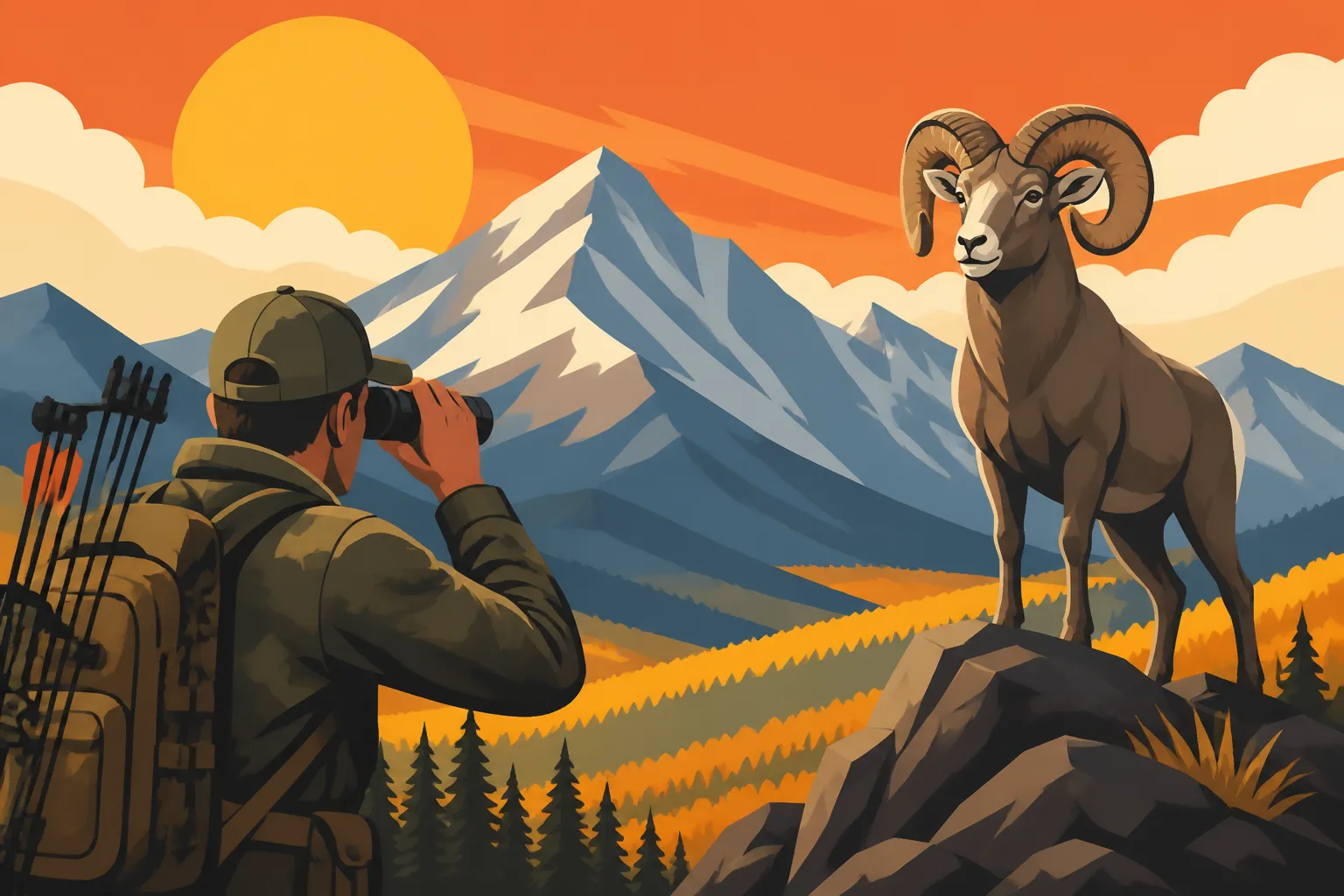
Bighorn sheep hunting is primarily a glassing game. You will spend most of your time behind optics, meticulously searching every nook and cranny of the vast, rugged landscape. Find a high vantage point that allows you to survey large basins and ridgelines. Set up your spotting scope and systematically grid the area, starting from the closest terrain and working your way out. Look for anything out of place: a patch of white rump, the curve of a horn, a slight movement against a static background. Patience is key; sheep can appear out of nowhere or remain hidden in plain sight for hours.
Sunlight and shadows play a huge role. Glassing in the early morning and late evening, when sheep are often more active and the light creates shadows that highlight their forms, is usually most productive. Be prepared to glass the same areas repeatedly; sheep can move surprisingly quickly, or you might have simply missed them on the first pass. Once you spot a ram, evaluate its size and location, paying close attention to escape routes and potential stalking avenues.
Stalking in Treacherous Terrain
Once a ram is located and deemed a shooter, the true challenge of the stalk begins. This is where your physical conditioning and mental fortitude are tested. Bighorn sheep terrain is unforgiving. Every step must be deliberate and silent. Use the terrain to your advantage: ridges, draws, and rock formations provide crucial cover. Always pay attention to the wind, as sheep have an incredible sense of smell. Thermals in the mountains will rise in the morning and fall in the evening, so plan your approach accordingly.
A bighorn stalk can take hours, even an entire day, covering significant distance and elevation. You might need to drop hundreds or thousands of feet into a canyon only to climb back up to get into position. There will be false starts, times when the sheep move, forcing you to pull back and restart. The goal is to get within an ethical shooting range, which for many mountain hunters might mean 300-500 yards, depending on your rifle, skill, and comfort level. This is the essence of Spot-and-Stalk Hunting in Colorado, elevated to its most extreme form.
Ethical Shot Placement and Recovery
Given the extreme environments bighorn sheep inhabit, making an ethical shot is paramount. You want a clean, quick kill to prevent the animal from escaping into even more inaccessible terrain. Practice shooting at various inclines and declines, as you'll rarely find a flat shot in sheep country. Know your rifle and ammunition intimately, and be confident in your ability to place a shot precisely under pressure.
Recovering a bighorn can be as challenging as the hunt itself. If the ram drops in a precarious spot, extreme caution is necessary. Many stories exist of hunters facing harrowing climbs and dangerous descents to retrieve their trophy. Have a plan for quartering and packing out the animal, and be prepared for multiple trips in brutal conditions. This is where a strong hunting partner or even an experienced guide can be invaluable.
| Aspect of Bighorn Sheep Hunting | Description | Difficulty Level | Key Considerations |
|---|---|---|---|
| Drawing a Tag | Weighted preference point lottery system; takes many years to build points. | Extremely High | Consistent annual application, research unit odds (GoHunt), understand resident vs. non-resident caps. |
| Physical Demands | Requires peak cardiovascular fitness, strength, and endurance for high-altitude, steep terrain. | Extreme | Pre-season training, altitude acclimation, mental toughness. |
| E-Scouting | Digital reconnaissance to identify potential habitat, access routes, and sheep behavior using maps and imagery. | Moderate-High | Use tools like OnX and GoHunt, analyze terrain, water sources, bedding areas. |
| On-Ground Scouting | Visiting the unit physically, hiking, and observing sheep movements, even years before drawing a tag. | High | Understand how sheep use the terrain, identify sign, learn access points. |
| Gear Selection | Lightweight, durable, high-performance optics, clothing, boots, and backpack are essential. | High | Invest in quality optics, reliable layering system, sturdy mountain boots, robust pack. |
| Glassing | Spending hours behind a spotting scope systematically searching vast alpine basins for sheep. | High | Patience, high-quality optics, stable tripod, knowledge of sheep habits and terrain. |
| Stalking | Navigating treacherous, steep terrain silently and strategically to get within ethical shooting range. | Extreme | Wind awareness, thermals, utilizing cover, extreme physical and mental control. |
| Recovery | Retrieving the animal from often dangerous and inaccessible locations, then quartering and packing out. | Extreme | Safety first, sharp knives, game bags, strong pack, potentially multiple trips or a partner. |
Disclaimer
Hunting in Colorado involves inherent risks, including but not limited to severe weather, dangerous terrain, wildlife encounters, and physical exertion at high altitudes. Always prioritize safety, adhere to all Colorado Parks and Wildlife regulations, and be prepared for emergencies. The information provided here is for educational purposes and should not replace professional guidance or personal judgment. Be aware of changing regulations and consult official CPW sources for the most current rules and season dates.