How to Hunt Mountain Goat in Colorado
There’s no denying it: drawing a mountain goat tag in Colorado is like winning the lottery, and successfully hunting one is a challenge that pushes even the most seasoned hunters to their absolute limits. The thin air, unforgiving terrain, and the sheer elusiveness of these iconic animals can be incredibly daunting. This guide is here to walk you through everything you need to know, from understanding the draw system to mastering the alpine environment, so you can be fully prepared when that once-in-a-lifetime opportunity arrives.
The Elusive Colorado Mountain Goat: Biology and Behavior
Colorado's mountain goats aren't just animals; they're symbols of the rugged, untamed high country. Understanding their unique biology and behavior is absolutely crucial if you ever hope to outsmart one in their own backyard. These animals thrive in some of the most inhospitable environments on earth, and their adaptations are truly remarkable.
Understanding Their Habitat and Range
Imagine a world above the trees, where jagged peaks scrape the sky, and sheer cliffs plummet into deep valleys. That's the mountain goat's preferred real estate. In Colorado, you'll find these incredible creatures almost exclusively in the alpine and sub-alpine zones, typically ranging from 10,000 feet up to the dizzying heights of 14,000+ feet. They love the steep, rocky terrain, the kind that makes your knees ache just looking at it. Think of the Collegiate Peaks, the Gore Range, the San Juan Mountains, or parts of the Sawatch Range – these are classic goat country.
Their diet consists primarily of alpine grasses, forbs, lichens, and mosses, which is why they spend their lives scrambling across vertical rock faces and isolated plateaus where these sparse food sources can be found. They're incredibly efficient foragers, able to extract sustenance from what seems like nothing. This deep connection to their specific diet means they won't wander far from these high-elevation food sources unless pushed by severe weather or human pressure. They are also adept at finding thermal pockets and sheltered ledges, especially in harsh conditions. Knowing these micro-habitats within their broader range can be a game-changer when you're glassing vast basins, helping you narrow down where to focus your efforts.
Key Behaviors for Hunters to Observe
Mountain goats are generally not known for being skittish or overly wary of humans in areas with minimal pressure, but that doesn't mean they're easy to hunt. Their primary defense is the terrain itself. When threatened, they simply climb to seemingly impossible heights, often disappearing over a ridgeline or onto a cliff face where no predator, human or otherwise, dares to follow.
You'll typically find nannies (females) and their kids in small nursery groups, sometimes with a younger billy (male). Older, mature billies, especially during the non-breeding season, tend to be more solitary or hang out in small bachelor groups, often in even more remote and gnarly terrain. They'll spend their days feeding in meadows or along rocky slopes, then bed down on ledges or in protected nooks where they can watch their backtrail. Their white coats, while beautiful, can be surprisingly effective camouflage against snowfields or light-colored rock. Watching their feeding patterns, how they use the wind, and their bedding locations is crucial. They are masters of using broken terrain for cover, often appearing and disappearing as if by magic. Pay close attention to how they traverse a slope – they always seem to take the path of least resistance for a goat, which is often the path of most resistance for a human. Understanding these subtle movements and how they relate to the landscape can tell you a lot about their routines.
Navigating the Colorado Mountain Goat Draw System
Getting a mountain goat tag in Colorado is arguably one of the toughest draws in Western hunting. It’s not just difficult; it’s a commitment measured in decades for many hunters. This isn't your average elk or deer draw; it operates on a different level of rarity and competition.
Understanding the Draw and Preference Points
Unlike elk or deer, Colorado's mountain goat draw uses a strict preference point system, but it's compounded by the extremely limited number of tags issued each year. We're talking about a mere handful of tags for an entire state, and only a fraction of those might be available to non-residents, depending on the unit. This scarcity means that accumulating preference points is the name of the game, and even then, drawing a tag is far from guaranteed. Many hunters spend 15, 20, or even 25+ years building points before they even have a chance at drawing. The "point creep" is very real, meaning the number of points needed to draw typically increases each year as more people apply and accumulate points.
It’s absolutely critical to do your homework and use robust data analysis tools. Websites like GoHunt become invaluable here, allowing you to sift through draw odds, unit data, and historical trends for specific hunt codes. You can see how many points successful applicants had in previous years, which units had higher or lower success rates, and if there are any emerging patterns. This kind of research helps you make an informed decision on where to apply your hard-earned points, maximizing your slim chances. For a broader understanding of the system, it's worth reviewing how the Colorado Draw System and Preference Points works in general.
Applying for a Mountain Goat Tag
The application process itself follows the standard Colorado Parks and Wildlife (CPW) big game draw schedule, with the primary draw deadline usually falling in early April. You'll need to purchase a qualifying license (like a small game or fishing license) and a habitat stamp to be eligible to apply.
When you apply, you'll typically have the option for "Billy" or "Nanny" tags in specific GMUs (Game Management Units). Here's a quick breakdown:
| Tag Type | Description | Draw Odds | Hunter Focus |
|---|---|---|---|
| Billy | Male mountain goat, often sought for larger horns and trophy potential. | Significantly lower; often requires maximum preference points. | Trophy hunting, longer-term point building. |
| Nanny | Female mountain goat, typically smaller horns, but still provides excellent meat. | Higher than billy tags, but still very competitive; may require fewer points. | Meat hunting, potentially quicker draw for a mountain goat experience. |
Choosing between a billy or nanny tag is a strategic decision. If your goal is simply to experience a mountain goat hunt in Colorado, and you're not solely focused on a trophy, applying for a nanny tag might offer slightly better odds of drawing in a shorter timeframe. However, "shorter timeframe" is relative, still often meaning many years. Be sure to double-check the specific hunt codes for each unit and tag type, as regulations and point requirements can vary. Always verify the most current regulations on the CPW website.
Essential Strategies for a Successful Mountain Goat Hunt
Once you've beaten the odds and drawn that coveted mountain goat tag, the real work begins. Hunting these animals is a unique blend of extreme physical exertion, meticulous planning, and highly refined hunting skills. It's not just about getting to the mountains; it's about how you navigate, observe, and engage in their vertical world.
Scouting and E-Scouting the High Country
Scouting for mountain goats needs to be an obsession, ideally starting months, if not a year, before your hunt. Given the sheer scale and difficulty of the terrain, e-scouting is your first and most critical tool. Utilizing satellite imagery and topographic maps on platforms like OnX Hunt or BaseMap is paramount. You'll want to identify:
- Access Points: Where can you safely and legally enter the terrain? Are there established trails, or will it be cross-country travel?
- High-Probability Areas: Look for the steepest, most rugged faces, cirques, and basins above timberline. Goats will use small benches, broken rock, and snowfields.
- Escape Routes: Anticipate where goats will go when pressured. They always have a plan B (and C, D, E…).
- Water Sources: Even in the high country, water can be a limiting factor, especially later in the season. Identify springs, snowfields, and small tarns.
- Glassing Knobs: Find high vantage points that offer expansive views of potential goat habitat without exposing yourself.
For an even deeper dive into this, check out our guide on How to E-Scout Before a Colorado Hunt. While e-scouting is powerful, if you can physically scout in the summer months before your hunt, it provides invaluable on-the-ground intelligence. You can confirm access, identify game trails, check for fresh sign, and get a feel for the scale and difficulty of the terrain. Look for tracks in muddy spots near water, fresh droppings, and hair rubs on rocks. Even old sign tells you that goats have been in the area.
Gear Up for Extreme Alpine Environments
Your gear needs to be top-tier, reliable, and appropriate for extreme high-altitude conditions. There's no room for cutting corners when your safety and success are on the line.
- Optics: This is arguably your most important piece of gear. A high-quality spotting scope (20-60x or 20-70x) on a sturdy tripod is non-negotiable for picking apart distant slopes. Complement it with excellent binoculars (10×42 or 12×50). You'll spend 90% of your hunt glassing. When considering what to carry, our guide on Best Optics for Colorado Big Game offers great insights.
- Clothing: Layering is key. Think moisture-wicking synthetics or merino wool base layers, insulating mid-layers (puffy jacket, fleece), and a bomb-proof waterproof/breathable outer shell. Temperatures can swing wildly, from freezing nights to scorching midday sun, with sudden snow squalls or thunderstorms. Be prepared for everything.
- Footwear: Stiff, waterproof mountaineering boots with excellent ankle support are essential for navigating scree, boulders, and steep inclines. Make sure they're well broken in.
- Backpack: You'll need a robust internal-frame pack (60-80+ liters) capable of carrying heavy loads comfortably, especially for the pack out. Prioritize fit, comfort, and durability. For ideas on what to look for, consult our Best Backpack for a Colorado Elk Hunt guide, as many principles apply.
- Navigation: GPS device (Garmin inReach, Fenix watch, etc.) with pre-loaded maps and a physical map and compass as backup are critical. Do not rely solely on your phone.
- Safety: First-aid kit, emergency shelter, headlamp, fire starter, multi-tool, and a satellite communication device are non-negotiable.
Here's a quick reference for essential gear categories:
| Gear Category | Key Items | Why It's Crucial |
|---|---|---|
| Optics | Spotting scope, tripod, binoculars | Identifying goats, assessing terrain, planning approach from a distance. |
| Clothing | Base layers, mid-layers, shell, puffy, gloves, hat | Protection from extreme temperature swings, wind, rain, and snow. |
| Footwear | Stiff mountaineering boots, gaiters | Traction, ankle support, and warmth in rugged, high-altitude terrain. |
| Backpack | 60-80L+ internal frame | Carrying all gear, water, food, and the heavy load of a harvested goat. |
| Navigation | GPS device, physical map, compass | Critical for staying found in vast, featureless terrain and sudden whiteouts. |
| Shelter/Sleep | Lightweight tent/bivy, sleeping bag | Essential for overnight hunts in exposed, cold environments. |
| Hydration | Water filter, purification tablets, water bottles/reservoir | Staying hydrated is key to preventing altitude sickness and maintaining performance. |
| Emergency | First-aid kit, sat messenger, headlamp, fire starter | Self-reliance for unexpected injuries, weather events, or getting lost. |
Hunting Methods and Shot Placement
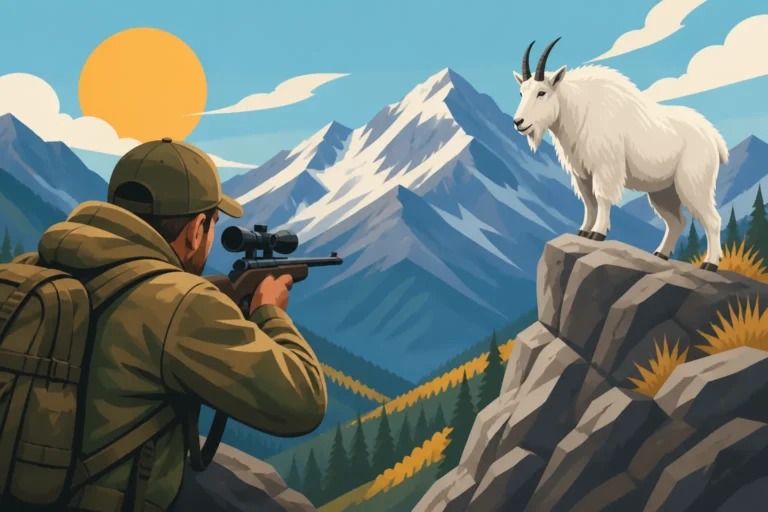
Mountain goat hunting is almost exclusively a spot-and-stalk affair. Patience, slow movement, and utilizing the terrain for cover are paramount. You might spot a goat miles away, spend hours planning an approach, and then take another several hours to execute it, only to find the goat has moved, or the wind has shifted. It’s an exercise in mental toughness and calculated risk. Our Spot-and-Stalk Hunting in Colorado guide provides foundational techniques that translate well to goat hunting, though the stakes and terrain are amplified.
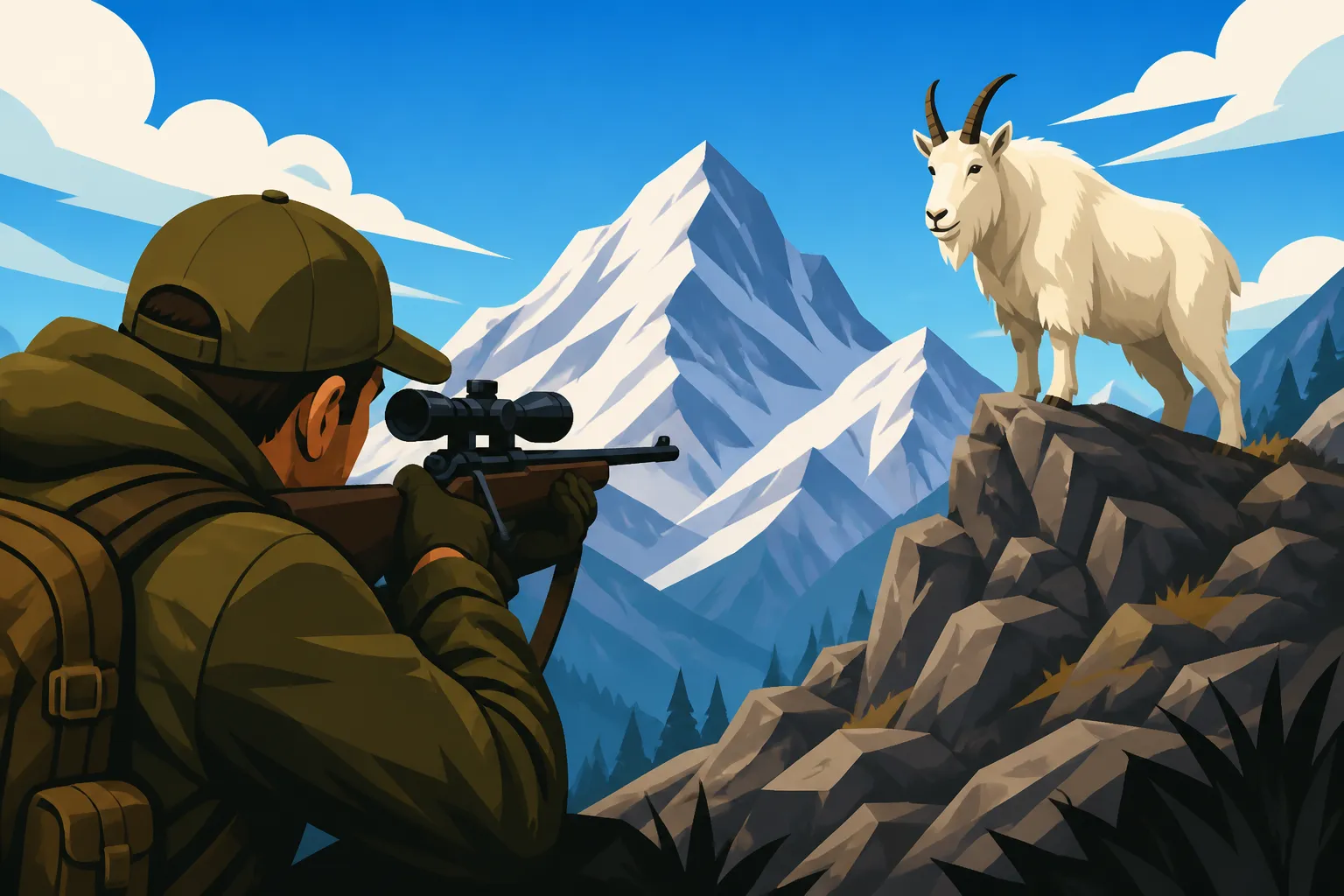
When you get within shooting range, typically 200-400 yards, shot placement is critical. Goats have an incredibly thick hide and dense bone structure, especially around the shoulders. Their kill zone is relatively small and can be obscured by their long hair. Aim for the classic "middle-of-the-shoulder" shot, but be prepared for a follow-up if necessary. Given the steep, uneven terrain, you'll almost certainly be shooting uphill or downhill, which changes your point of impact. Reviewing principles from How to Shoot Uphill and Downhill at Elk can be very helpful here, as gravity and bullet trajectory need to be accounted for. Always ensure you have a stable shooting platform, whether it's a backpack, bipod, or natural rock rest. An ethical shot and a quick, clean kill are always the priority, especially in terrain where a wounded animal could easily descend into an unrecoverable location.
Physical Demands and Safety in Mountain Goat Terrain
Hunting mountain goats is not for the faint of heart, or for the out-of-shape. The physical demands are immense, and the inherent dangers of the alpine environment are ever-present. Preparing your body and mind for these challenges is as important as having the right gear.
Preparing for Extreme Altitude and Terrain
Imagine hiking straight up a stair master for hours, then traversing a football field made of loose gravel, all while carrying a heavy pack and gasping for breath at 12,000 feet. That's a taste of mountain goat hunting. The terrain is relentlessly steep, often loose with scree and talus, and riddled with rock falls and hidden obstacles. Every step requires careful consideration, and a single misstep can have severe consequences.
Rigorous physical training is not just recommended; it's mandatory. Focus on:
- Cardiovascular Endurance: Running, hiking with a weighted pack, cycling, and Stairmaster sessions for months leading up to the hunt. Simulating mountain conditions by hiking steep trails in your local area with a heavy pack is invaluable. Our guide on How to Physically Prepare for Colorado Elk offers an excellent starting point, with training plans directly applicable to mountain goat pursuits.
- Strength Training: Focus on core strength, legs, and back to handle heavy loads and maintain stability on uneven ground.
- Altitude Acclimation: If you live at a low elevation, arrive in Colorado several days early to acclimate. Stay hydrated, avoid alcohol, and take it easy for the first 24-48 hours. Recognizing the symptoms of acute mountain sickness (AMS) – headache, nausea, fatigue – is crucial. Our article on Altitude Training for Colorado Hunting and How to Acclimate to Colorado Elevation provides vital information to help you manage the effects of thin air. You'll be operating at the upper limits of human endurance, so any advantage you can give your body is worthwhile.
Mountain Safety and Contingency Planning
The mountains are beautiful but unforgiving. Safety must be your number one priority.
- Communication: Always carry a satellite communication device (like a Garmin inReach or Zoleo) to send texts or trigger an SOS, as cell service will be nonexistent.
- Buddy System: Never hunt alone in extreme terrain. The risks are too high. If an injury occurs, having a partner could be the difference between life and death.
- Trip Plan: Leave a detailed itinerary with someone reliable, including your planned route, expected return time, and contingency plans.
- Weather Awareness: Alpine weather can change in minutes. A sunny morning can turn into a whiteout blizzard or violent thunderstorm without warning. Check forecasts diligently and be prepared to hunker down or bail out.
- Route Finding: Always be aware of your surroundings and look back frequently to see how the terrain looks from the opposite direction. What seems like an easy ascent can become a dangerous descent in low light or fog. Avoid getting "cliffed out" – a situation where you can neither advance nor retreat safely.
- First Aid: Carry a comprehensive first-aid kit and know how to use it for common injuries like cuts, sprains, and hypothermia.
Field Care and Packing Out Your Trophy
Congratulations, you've done it! You've located, stalked, and harvested a magnificent Colorado mountain goat. But the work is far from over. In fact, for many, the physical exertion of the pack out surpasses the hunt itself. Doing it right, especially in extreme terrain, is crucial for preserving your meat and trophy.
Quartering and Protecting Your Harvest
When you down a goat in the high country, the first thing to consider is the steep, exposed nature of the environment. You might be on a narrow ledge, a scree slope, or a snowfield. Safety must come first – secure the animal and yourself. Mountain goat hide is incredibly thick and tough, often requiring a very sharp knife and some extra effort to cape or quarter. If you're planning a full body mount or a rug, careful caping is essential. Pay close attention to hair direction and make clean cuts. The hair itself is a valuable resource if you're into traditional crafts or simply want to appreciate its quality.
For meat hunters, getting the animal quartered quickly is important for cooling. Unlike elk, the body cavity of a goat is relatively small, but rapid cooling is still vital, especially if temperatures are mild. Separate the quarters, backstraps, tenderloins, and remove all remaining edible meat. Our guide on How to Quarter an Half an Elk in the Field offers excellent universal techniques that apply directly to breaking down any large game animal, including a goat. Keep the meat clean, using game bags to protect it from dirt, flies, and debris. If you're planning to take the skull for a European mount, remove the head, being careful to protect the horns from damage.
The Grueling Pack Out
This is where the rubber meets the road. Packing out a mountain goat, especially a large billy, from 12,000+ feet over rugged terrain is one of the most physically demanding tasks a hunter can undertake. A mature billy can weigh upwards of 150-200 pounds live weight, and while you won't be carrying all of that, the meat, hide, and skull will still represent a substantial, awkward load.
The key is to break the animal down into manageable loads. Two hunters are ideal, but if you're solo, you might need to make multiple trips. Focus on balance and stability in your pack. Distribute the weight evenly and secure everything tightly.
Consider these challenges:
- Gravity: While gravity is your friend on the descent, steep downhills with a heavy pack are incredibly hard on your knees, ankles, and quads. Use trekking poles for stability.
- Loose Terrain: Scree fields and talus slopes that were a challenge to climb become even more hazardous when descending with a heavy load. Take your time, test every step.
- Fatigue: Extreme physical exertion at altitude will drain you quickly. Take frequent breaks, hydrate constantly, and fuel your body.
- Route Selection: If possible, try to find a slightly less steep, more stable route for the pack out, even if it adds a little distance. The goal is to get the animal out safely, not necessarily quickly.
Our detailed guide on How to Pack Out an Elk in Colorado provides valuable insights and strategies for handling heavy loads in the backcountry, which are directly applicable to the unique challenges of a mountain goat pack out. This is where all your physical training and gear choices really pay off. There's an immense sense of accomplishment that comes with bringing a mountain goat out of their alpine kingdom, knowing you've earned every single step.
Disclaimer
Please note that hunting regulations, season dates, and draw odds can change annually. Always consult the official Colorado Parks and Wildlife (CPW) website or their most current hunting brochures for the most up-to-date and accurate information before planning any hunt. This guide is for informational purposes only and does not replace official state regulations.