How to Hunt Mule Deer in Colorado
Hunting mule deer in Colorado is a dream for many, but the reality is that these magnificent animals are notorious for their elusive nature and ability to melt into the vast, rugged landscapes. You’ve probably spent hours staring at maps, or maybe even boots on the ground, only to feel overwhelmed by the sheer scale of the terrain and the challenge of consistently finding these ghosts of the mountains. This comprehensive guide is designed to cut through that frustration, offering practical, in-depth strategies to help you understand, locate, and successfully hunt mule deer across Colorado’s diverse habitats.
Understanding Colorado Mule Deer Behavior and Habitat
To consistently find and harvest mule deer in Colorado, you first need to become a student of their natural habits. These animals are creatures of routine, yet incredibly adaptable, making them a fascinating challenge for any hunter.
Seasonal Movements and Rut Behavior
Mule deer in Colorado, especially those in the high country, are classic migrants. Their year revolves around two primary drivers: forage availability and breeding. In late spring and summer, you'll find them scattered across their high-elevation summer ranges, often above 9,000 feet, in lush alpine basins and dark timber. This is where they’ll pack on the pounds and grow those impressive antlers, away from the intense heat and pressure of lower elevations. They're often in bachelor groups during this time, easy to spot if you can get eyes on them, but less accessible for hunting.
As autumn approaches and the first snows dust the peaks, mule deer begin their slow, deliberate migration to lower-elevation wintering grounds. This movement can be triggered by changes in temperature, snow depth, and forage quality. These migration corridors, often funnels between distinct habitat types, become crucial spots to intercept deer. Then comes the rut – the magic window usually in late October through November, peaking around mid-November. Bucks, once solitary, become preoccupied with does, throwing caution to the wind. This is when they’re most vulnerable and observable during daylight hours. Understanding this cycle, how weather influences it, and when specific herds move, can be a game-changer for your hunt planning. You'll often see them pushing does through sagebrush flats on the fringes of timber, or chasing them across open hillsides, completely focused on breeding rather than survival.
Preferred Habitat and Food Sources
Colorado mule deer thrive in a mosaic of broken terrain, using topography for cover and feed. While you might picture them exclusively in aspen groves or dense timber, their preferred habitat is much more nuanced. They love areas with a mix of sagebrush, bitterbrush, serviceberry, and mountain mahogany – these shrubs are critical browse, especially as winter approaches. They’ll also frequent aspen stands, particularly those with good undergrowth, and the edges of dark timber, using the dense conifers for bedding cover and thermal protection.
Elevation plays a huge role. In the spring and summer, you might find them grazing on tender forbs and grasses in high mountain meadows. As it cools, they’ll drop to lower, south-facing slopes, where the sun melts snow first and green-up occurs earlier, providing precious early-season forage. Water sources are also critical, especially in drier regions or during drought years. Look for springs, seeps, and even ephemeral puddles in depressions. Bucks often prefer rougher, steeper terrain for bedding, areas that offer commanding views and multiple escape routes, making them incredibly difficult to approach. When you're glassing, don't just look for deer; look for the types of vegetation they prefer, especially if you're trying to figure out where the deer might be holding during midday.
Key Behavioral Traits and Senses
Mule deer are incredibly finely tuned to their environment, relying on an exceptional suite of senses to survive. Their most famous asset is their eyesight, particularly their ability to detect movement. They have a wide field of vision, and even the slightest flicker can send them bounding away. This means still-hunting requires excruciatingly slow movement, and spot-and-stalk demands careful attention to your silhouette and breaking up your outline.
Their hearing is also acute, those large ears swiveling independently to pinpoint sounds. Crunching leaves, a misplaced step, or a foreign noise can instantly put them on high alert. This is why paying attention to the wind direction and moving quietly through the woods is non-negotiable. Perhaps equally important, and often underestimated by novice hunters, is their sense of smell. Mule deer can detect human scent from a remarkable distance. The wind is always your greatest ally or worst enemy. Always, always hunt into the wind or with a crosswind. Never let the wind carry your scent ahead of you into potential deer bedding areas or feeding zones. Understanding how the wind and thermals work in mountain terrain, especially in the mornings and evenings as temperatures change, is absolutely critical for success.
Essential Scouting and Planning for Mule Deer
Hunting Colorado mule deer isn't just about showing up with a rifle and hoping for the best. The most successful hunters put in significant work before they ever step foot in the woods, leveraging modern tools and old-school woodsman skills.
E-Scouting Techniques and Tools
In today's hunting world, e-scouting is the foundation of any successful trip, especially for mule deer in Colorado's vast country. It allows you to cover ground digitally that would take days or weeks on foot. Start with high-quality satellite imagery and topographical maps. Tools like GoHunt's Insider platform, or even free resources like the OnX Hunt App, are invaluable. Look for specific terrain features that mule deer favor: south-facing slopes for winter sun, north-facing slopes for bedding and cooler summer temps, saddles, benches, natural funnels, and areas of dense timber adjacent to open feeding grounds.
Identify potential bedding areas on steep, rough terrain that offers good visibility. Mark water sources – especially in units known for being dry. Don't forget to look for historical wildfire burn areas or clear-cuts, which can create new browse and feeding opportunities years after the event. The goal is to narrow down huge tracts of public land into manageable "huntable" sections where deer are most likely to be. Think like a deer: where would you feel safe, have food and water nearby, and have an escape route? For a deeper dive into these techniques, check out our guide on How to E-Scout Before a Colorado Hunt.
On-the-Ground Scouting and Sign Reading
While e-scouting gets you in the ballpark, nothing beats boots on the ground. Once you've identified promising areas from your computer, it's time to verify. Visit your chosen areas months before the season, if possible. Look for fresh deer sign: tracks, droppings, rubs (where bucks rub their antlers on trees), and scrapes (where they paw the ground and deposit scent). Pay attention to the age of the sign. Fresh sign means deer are actively using the area.
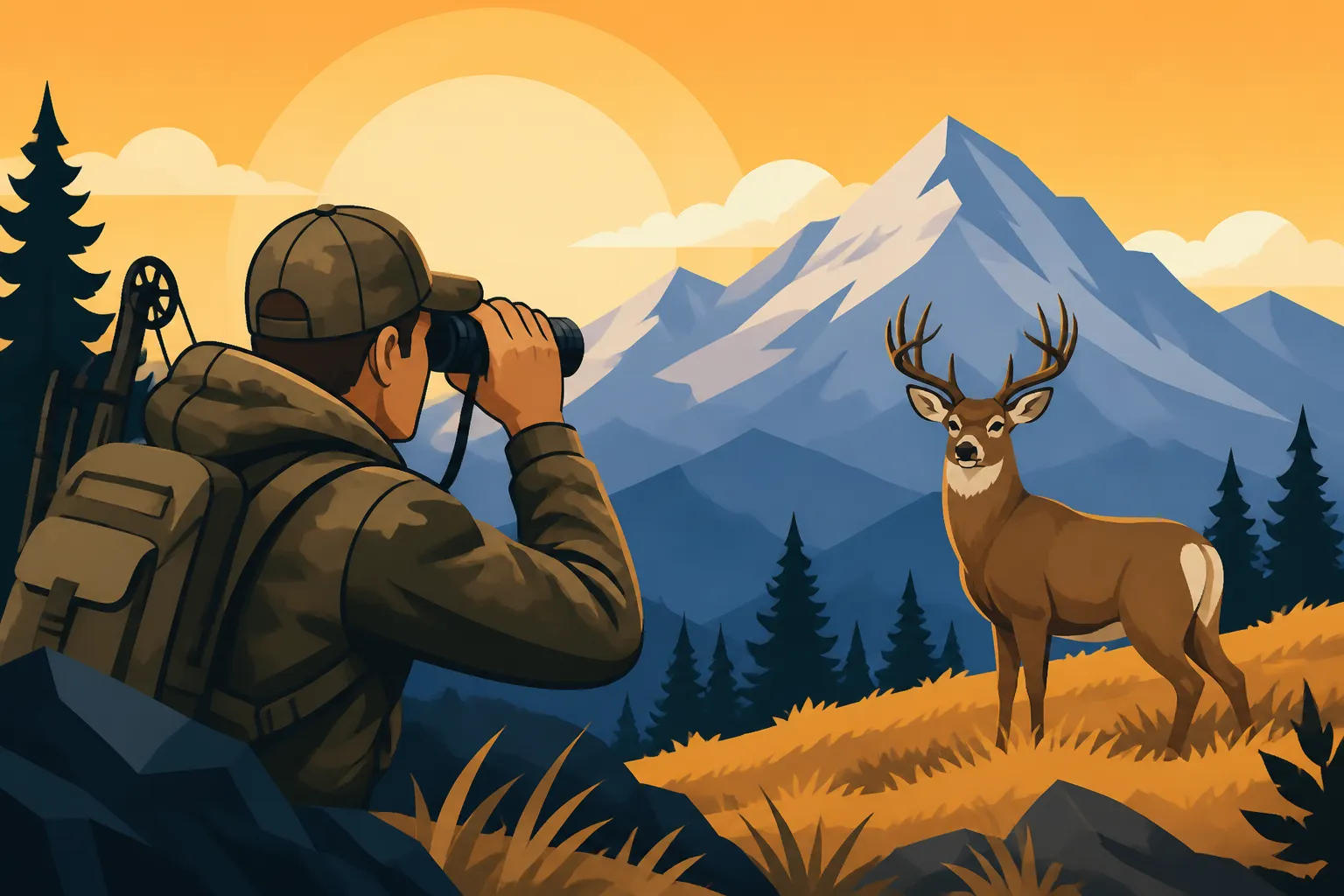
Glassing is paramount for mule deer. Find a high vantage point overlooking a large basin or a series of slopes. Spend hours, literally hours, behind your binoculars or spotting scope, systematically gridding the landscape. Look for antlers, ears, the distinct white rump patch, or even just a flicker of movement. Mule deer often blend in perfectly with their surroundings. Glass during the early morning and late evening when deer are most active, feeding in more open areas. During midday, focus on the edges of timber, thickets, and north-facing slopes where they might be bedded in the shade. It takes patience and a keen eye to pick them out. If you want to refine your glassing skills, read our article on How to Glass for Colorado Mule Deer.
Choosing the Right Hunting Unit (GMU)
Selecting the right Game Management Unit (GMU) is one of the most critical decisions for a Colorado mule deer hunt, especially for non-residents or those new to the state. Colorado Parks and Wildlife (CPW) provides a wealth of data, including harvest statistics, draw odds, and population estimates for each unit. Don't just pick a unit because you've heard it's "good"; understand why it's good and if it aligns with your hunting style and expectations. Are you seeking a trophy buck, or are you focused on meat? Do you want to hunt over-the-counter (OTC) or are you willing to build preference points for a limited draw unit?
Consider the amount of public land in a GMU. Some units are heavily checkerboarded with private land, making public access difficult. Other units boast vast expanses of National Forest or BLM land, perfect for DIY hunters. Use mapping software to analyze public land percentages and access points. Also, consider hunter pressure. Some easily accessible units, especially during rifle seasons, can become crowded. If you're willing to hike deep into roadless areas, you might find less competition. For a more comprehensive overview of this crucial step, consult our guide on How to Choose a Colorado Hunting Unit.
| Factor | OTC Units (General) | Limited Draw Units (Specific) |
|---|---|---|
| Availability | Purchased directly, no draw necessary (for certain seasons/weapons) | Requires application through the annual draw, often needs preference points |
| Hunter Pressure | Generally higher, especially in easily accessible areas | Can be lower, depending on the unit and point requirement |
| Trophy Potential | Varies widely, generally lower for top-end bucks | Often higher due to less pressure and older age classes |
| Success Rates | Typically lower overall, can be good if you put in the work | Generally higher, but still depends on hunter skill and effort |
| Flexibility | More flexible for last-minute trips or those without points | Requires long-term planning, commitment to building points |
| Physical Demand | Can be lower if hunting near roads, but high if seeking solitude | Often higher as better units tend to be more remote/rugged |
Proven Hunting Methods for Colorado Mule Deer
Once you've done your homework and understand where the deer should be, it's time to discuss how to actually hunt them effectively. Colorado's terrain and the mule deer's nature lend themselves to a few specific strategies.
Spot-and-Stalk Tactics
The spot-and-stalk method is king for Colorado mule deer, especially in the more open, broken terrain that these animals frequent. This isn't just a strategy; it's an art form that demands patience, keen observation, and meticulous planning. It begins with glassing – finding a high vantage point where you can survey vast expanses of country. This could be a ridgetop, a knob, or a prominent peak overlooking a basin. Spend a significant amount of time, often hours, behind your optics, systematically dissecting every shadow, rock, and patch of timber. You're looking for that tell-tale antler tine, a flick of an ear, or the subtle outline of a bedded deer.
Once you spot a buck, the real work begins. First, assess the situation: wind direction, terrain features, distance, and escape routes for the deer. Your goal is to get within shooting range undetected. This means planning your approach using terrain features like ridges, draws, and dense cover to conceal your movement. Always keep the wind in your favor. A common mistake is to rush the stalk; take your time, move slowly, and re-evaluate your approach frequently. Remember that mule deer have excellent eyesight, so minimize movement, especially against the skyline. When you emerge for the shot, be ready, because they might be gone in a flash. For a deeper dive into this classic technique, check out our guide on Colorado Mule Deer Hunting: Spot-and-Stalk Tactics.
Still-Hunting in Timber and Rough Terrain
While spot-and-stalk is great for open country, Colorado also offers vast amounts of timber, thick brush, and incredibly rough, broken terrain where mule deer love to hide. In these areas, still-hunting becomes a highly effective, albeit challenging, method. Still-hunting is essentially moving through the woods at an agonizingly slow pace, taking a few steps, then pausing for several minutes to observe, listen, and scan your surroundings with your binoculars.
The key to successful still-hunting is to be unbelievably quiet. Every step must be deliberate, checking for crunching leaves or snapping twigs before you commit. Utilize natural sounds like wind or running water to mask your movement. Focus your attention on terrain features where deer might be bedded or feeding – the sunny side of a ridge on a cold morning, the shady side on a warm afternoon, dense cover, or the edges of clearings. Always be aware of the wind, as deer will often bed with the wind at their back, watching their downwind side. This method is physically demanding and requires immense discipline, but it can be incredibly rewarding when you slowly ease around a tree and find a buck bedded just yards away. Our article on How to Still-Hunt Colorado Timber offers more specific advice for this method.
Ambush Hunting Near Water or Funnels
Sometimes, the best strategy isn't to chase the deer, but to let them come to you. Ambush hunting involves setting up in a strategic location where you anticipate deer movement and patiently waiting for an opportunity. This method is particularly effective near crucial resources like water sources, especially during dry periods, or in natural funnels that deer use for travel between bedding and feeding areas.
Identify these choke points during your e-scouting and on-the-ground reconnaissance. Look for well-used game trails leading to a spring, a saddle between two ridges, or a narrow strip of timber connecting larger blocks of cover. Wind direction is, again, paramount. You must set up downwind of where you expect the deer to approach, ensuring your scent isn't carried to them. While not as common for mountain mule deer as for whitetails, a well-placed ground blind can work wonders if used correctly, providing concealment and breaking up your outline. The key is patience – be prepared to sit for hours, from before dawn until well after sunrise, and from mid-afternoon until dark. This is often where hunters are successful during rifle seasons when other methods are difficult due to hunter pressure. Consider reading up on Colorado Mule Deer Hunting: Ground Blind Tactics or even Colorado Mule Deer Hunting: Tree Stand Tactics for more detailed approaches.
Gear and Physical Preparation for Mule Deer Hunting
Colorado's mule deer country is unforgiving. Success often hinges not just on hunting skill, but on your preparation and the quality of your gear. Don't underestimate the demands of the mountains.
Essential Gear for Mountain Mule Deer
When you’re heading into Colorado’s high country for mule deer, your gear isn't just equipment; it's your lifeline. Optics are at the top of the list. A good pair of 10x or 12x binoculars is essential for extended glassing, complemented by a quality spotting scope (20-60x or 15-45x) and a sturdy tripod. Don't skimp here; clear glass makes all the difference when trying to pick out a grey-brown hide in a sea of grey rock. For more on this, check out our article on Best Optics for Colorado Big Game.
Layered clothing is another non-negotiable. Colorado weather can change from warm sunshine to freezing rain or snow in a matter of hours, even in early seasons. Think wicking base layers, insulating mid-layers (fleece or puffy jacket), and a waterproof/windproof outer shell. Sturdy, broken-in hiking boots with excellent ankle support are critical for navigating steep, uneven terrain. A reliable backpack, ideally 45-70 liters, is needed to carry your daily essentials, extra layers, water, food, and if you’re successful, the initial load of meat. Don't forget navigation tools (GPS device or reliable app like OnX Hunt), a headlamp, fire starter, first-aid kit, and enough water and high-energy snacks for the day. Having the right tools, including a lightweight but effective game bag system and a sharp knife, for breaking down an animal quickly and efficiently is also paramount. You can find excellent gear advice in our Best Backpack for a Colorado Elk Hunt article, much of which applies directly to mule deer.
Physical Conditioning and Altitude Acclimation
Hunting mule deer in Colorado is a physically demanding endeavor. You'll be climbing steep grades, traversing uneven ground, and potentially packing out hundreds of pounds of meat at elevations that might take your breath away. Starting a dedicated fitness regimen months before your hunt is crucial. Focus on cardiovascular endurance – hiking with a loaded pack, trail running, or stair climbing are excellent ways to mimic the demands of mountain hunting. Incorporate strength training, especially for your legs and core, to handle heavy packs and difficult terrain.
Beyond general fitness, altitude acclimation is a major factor. If you're coming from sea level, Colorado's elevations (often 8,000-11,000+ feet) can severely impact your performance. Symptoms like headache, nausea, and extreme fatigue can ruin a hunt. Arrive a few days early if possible, and spend time at a moderate elevation (e.g., 6,000-8,000 feet) before heading higher. Stay hydrated, eat well, and avoid alcohol. Take it easy the first day or two, and listen to your body. Don't push yourself too hard too fast. Proper physical and mental preparation can be the difference between a challenging but rewarding hunt and a miserable, unsuccessful trip. Our article on How to Physically Prepare for Colorado Elk offers fantastic advice that translates perfectly to mule deer hunting.
Disclaimer
Hunting is an inherently dangerous activity. Always prioritize safety, understand and follow all Colorado Parks and Wildlife regulations, and be prepared for rapidly changing weather conditions and challenging terrain. This guide provides general information and should not replace proper research, landowner permission where required, or professional guidance.