Colorado Merriam’s Turkey Explained
Colorado offers a truly unique turkey hunting experience, often far removed from the flatland agricultural fields many hunters picture. If you've ever tried chasing these mountain monarchs, you know the frustration of birds gobbling enthusiastically from an impossible ridge or the sheer exhaustion of climbing elevation just to get a glimpse of a longbeard. It's a different game out here, and understanding the specific nuances of the Merriam's turkey, the dominant subspecies in our beautiful state, is key to turning those tough climbs into successful hunts. This guide will walk you through everything you need to know about pursuing Merriam's in Colorado, from their behavior to the best tactics and gear for mountain success.
Understanding the Colorado Merriam's Turkey Subspecies
When we talk about wild turkeys in Colorado, we're almost exclusively talking about Merriam's turkeys. These magnificent birds are perfectly adapted to the varied mountainous terrain and timbered landscapes of the West, offering a challenging yet incredibly rewarding pursuit for any hunter. While a small population of Rio Grande turkeys exists in the eastern plains and some Eastern/Merriam's hybrids might occasionally pop up, the true mountain experience is all about the Merriam's.
Distinctive Features and Adaptations
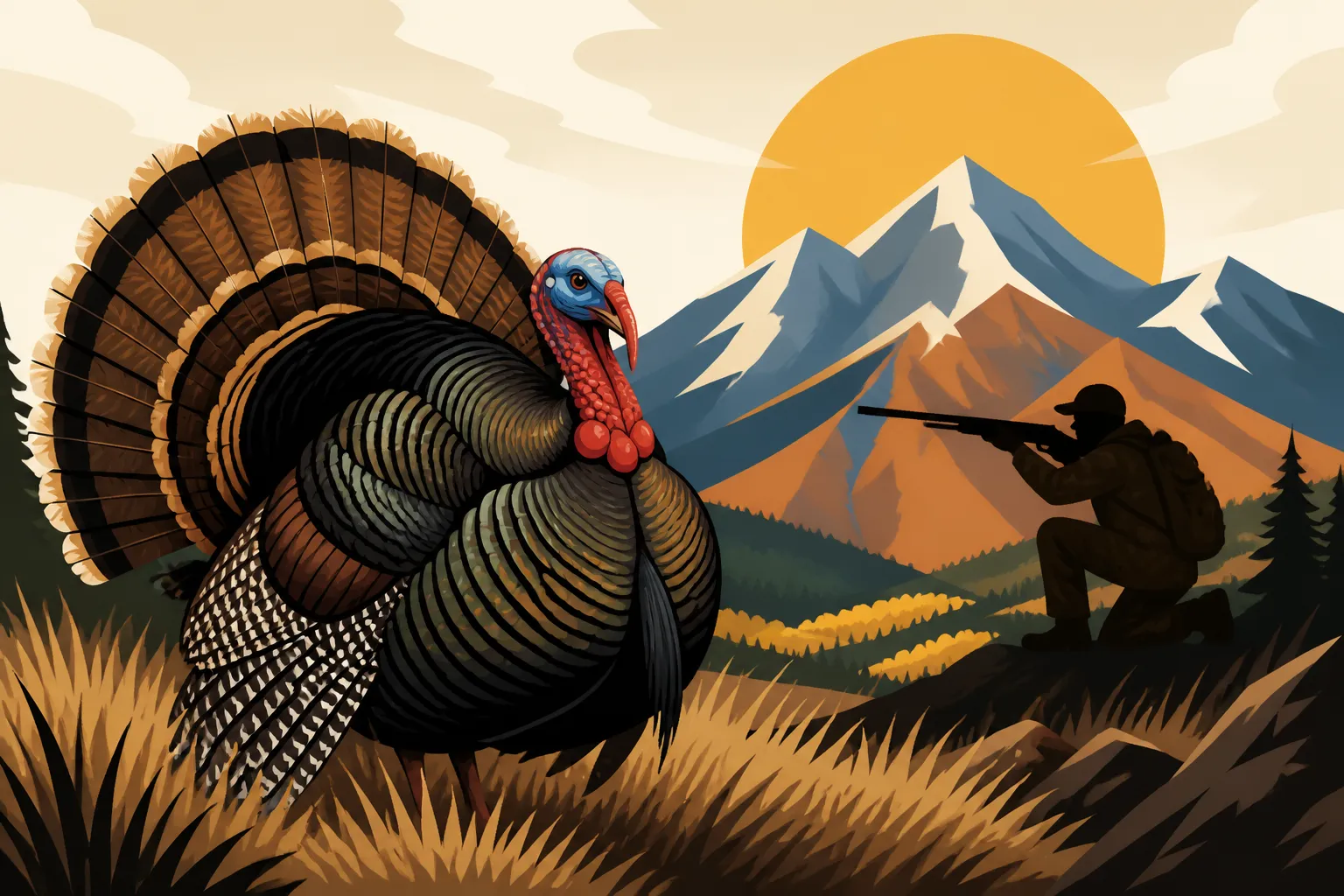
Merriam's turkeys, Meleagris gallopavo merriami, are truly a sight to behold. Unlike their darker Eastern counterparts, Merriam's typically have a lighter, more iridescent blue-green and bronze sheen to their body feathers. But their most defining characteristic, and one that helps differentiate them readily from other subspecies, is the buff or white coloration on the tips of their tail feathers and lower back feathers. This bright banding contrasts sharply with the dark bronze and black feathers, especially when a tom is fanned out. Their primary wing feathers often have distinct white bars, giving them a much lighter overall appearance when seen in flight compared to Eastern or Rio Grande birds.
These birds have evolved to thrive in the rugged, often high-elevation environments of the Rocky Mountains and the pine-forested regions. Their strong legs and powerful wings allow them to navigate steep slopes and cover vast distances, making them physically tough quarry. They are predominantly found in ponderosa pine, Pinyon-Juniper, and oakbrush habitats, using the open understory of these forests for foraging and the sturdy pines for roosting at night. Their diet reflects their environment, consisting heavily of ponderosa pine seeds, acorns, various berries, grasses, and insects. This adaptability to a wide range of natural forage means they aren't tied to agricultural fields in the same way some other subspecies might be, which contributes to their distribution across public lands.
Behavioral Traits and Seasonal Patterns
Colorado Merriam's turkeys exhibit many behaviors common to all wild turkeys, but their mountain environment often dictates subtle differences in their patterns. In the spring, toms become vocal and display frequently to attract hens. Their gobbling can carry for incredible distances in the thinner mountain air, often echoing off canyon walls. However, unlike some areas where birds might group tightly, mountain turkeys can sometimes be more spread out, making it a challenge to pinpoint a gobbler and get close enough for a setup. After mating, hens will disperse to nest, typically in secluded areas with good cover.
During the summer months, turkeys tend to be more dispersed, focusing on foraging and rearing poults. As fall approaches, they often form larger flocks, with hens and poults grouping together, and toms sometimes forming bachelor groups. They will often concentrate on areas with abundant mast crops like acorns or ponderosa pine seeds. Snowfall can dramatically impact their movements in the late fall and winter, pushing them down to lower elevations where food is more accessible and snow depth is less prohibitive. Understanding these seasonal shifts is crucial for successful hunting, especially for those considering a fall season hunt where different tactics are often employed compared to the spring rut.
Where to Find Merriam's Turkeys in Colorado
Finding Merriam's turkeys in Colorado is less about vast agricultural fields and more about navigating mountainous terrain and expansive timber. Colorado boasts a healthy and widespread turkey population, primarily Merriam's, and knowing their preferred habitats and regional strongholds can significantly increase your chances of success.
Preferred Habitats and Elevation Zones
Merriam's turkeys are creatures of the timbered mountains and foothills. Their ideal habitat in Colorado is characterized by open stands of ponderosa pine, interspersed with oakbrush thickets, Pinyon-Juniper woodlands, and often near riparian corridors that provide water and denser cover. You'll find them generally at elevations ranging from about 5,000 feet up to 9,000 feet, sometimes even higher in the early season if food sources are available and snow lines permit.
- Ponderosa Pine Forests: These are prime Merriam's habitat. The open understory allows birds to see predators and forage easily, while the tall, sturdy pines provide perfect roosting trees. Look for areas with a mix of age classes in the pines, as younger stands can offer denser cover for nesting hens, and older trees provide better roosts.
- Pinyon-Juniper Woodlands: Often found at lower to mid-elevations, these areas provide excellent cover and food in the form of pinyon nuts. Turkeys will readily use these areas, especially where they transition into ponderosa or oakbrush.
- Oakbrush Thickets: These dense shrubs offer crucial cover for roosting, loafing, and escape from predators. They also provide acorns, a highly favored food source, particularly in the fall. Turkeys will often travel between open ponderosa stands and dense oakbrush.
- Riparian Areas: Creeks, rivers, and drainages, especially those lined with cottonwoods or other deciduous trees, are magnets for turkeys. These areas provide water, denser cover, and often a higher diversity of food sources.
When scouting, pay close attention to the transitions between these habitat types. Turkeys frequently move along these edges, using the cover for security and the open areas for feeding.
Key Regions and General Management Units (GMUs)
Colorado has a fantastic distribution of Merriam's turkeys across its western and central mountains, as well as the foothills of the Front Range. While exact "best" units can change year to year based on weather and bird numbers, some regions consistently produce good hunting opportunities. Utilizing resources like the Colorado Parks and Wildlife (CPW) hunt planner and tools from GoHunt can help you dial in specific GMUs.
- Southwest Colorado: This region, encompassing areas around Durango, Cortez, and Montrose, is a traditional stronghold for Merriam's turkeys. Units like those in the San Juan National Forest and Uncompahgre National Forest offer vast amounts of public land habitat. The mix of ponderosa, oakbrush, and Pinyon-Juniper is ideal. Areas around Bayfield and Pagosa Springs are also known for strong turkey populations.
- Central Colorado: The Arkansas River Valley and surrounding areas, including Buena Vista, Salida, and Cañon City, hold good numbers of turkeys. Look to the Pike National Forest and San Isabel National Forest for public land access. This area can offer some stunning scenic hunts among the Collegiate Peaks.
- Northwest Colorado: While often overlooked for turkeys, areas in the White River National Forest and Routt National Forest near Meeker and Craig can offer excellent Merriam's hunting, especially if you're willing to venture into less pressured spots. The Yampa River basin also has scattered populations.
- Front Range Foothills: For hunters closer to Denver or Colorado Springs, the foothills offer accessible opportunities. Units in the South Platte Canyon and parts of the Pike National Forest can hold birds, though public land can be more fragmented and pressure higher. Areas like Canyon City and Trinidad often have good bird numbers on public lands, especially state wildlife areas and national forest access points.
Remember that turkeys, like all wild game, are dynamic. What was hot last year might be quiet this year due to local weather, predation, or hunting pressure. Always do your pre-season scouting, and be prepared to be mobile. A good start would be to check the CPW website for areas with over-the-counter (OTC) tags or higher draw odds for limited tags, then cross-reference those with public land maps. Many areas offer Colorado National Forest Hunting Guide access, which can be fantastic for finding unpressured birds.
Colorado Merriam's Turkey Season Dates and Regulations
Understanding the regulations and season structures for Colorado Merriam's turkeys is just as important as knowing where to find them. Colorado Parks and Wildlife (CPW) manages turkey hunting meticulously, with distinct seasons and tag requirements that vary depending on the time of year and specific GMU.
Spring Turkey Seasons and Tagging Requirements
The spring season is by far the most popular time to hunt Merriam's turkeys in Colorado, primarily because it coincides with the breeding season when toms are most vocal and active. This makes calling and decoying tactics highly effective.
- Season Dates: The spring season typically runs from mid-April through late May, though specific start and end dates can vary slightly each year. It's crucial to check the current year's CPW Big Game brochure for the exact dates.
- Licensing and Tags: To hunt turkeys in Colorado, you'll need a valid Colorado hunting license, which also requires purchasing a Habitat Stamp. Colorado Habitat Stamp Explained These general requirements apply across the board. For spring turkey, tags are available both over-the-counter (OTC) and through a limited draw.
- OTC Tags: Many GMUs offer unlimited OTC tags for bearded turkeys. This is fantastic news for hunters who might not have preference points or who decide to hunt last minute. Always confirm which units are OTC each year, as CPW can make adjustments.
- Limited Draw Tags: Some specific GMUs, often those with higher turkey densities or management goals, require a draw for tags. These limited tags are typically for "bearded turkey" (meaning males and some hens can have beards) and may offer better hunt quality due to reduced pressure. The draw application period usually runs from early January to early February.
- Bag Limit: In the spring, the bag limit is generally one bearded turkey per person per license. You might be able to purchase multiple licenses if allowed by CPW regulations, allowing for up to two bearded turkeys in some cases, but this is unit-dependent and requires careful review of the regulations.
- Hunter Education: If you were born on or after January 1, 1949, you must complete an approved hunter education course to hunt in Colorado. Colorado Hunter Education Requirement There are some exceptions for mentored hunting, particularly for youth.
When planning your spring hunt, checking the CPW website or the annual big game brochure is non-negotiable. Pay close attention to unit-specific regulations, as some areas may have different bag limits, legal methods of take, or season dates.
Fall Turkey Seasons and Regulations
While less popular than spring, the fall turkey season in Colorado offers a distinct challenge and a different style of hunting. Instead of focusing on calling in lovesick toms, fall hunting often involves locating flocks and then breaking them up to call birds back together.
- Season Dates: Fall turkey seasons typically run from September into October, with some late-season opportunities extending through December in certain GMUs. Again, consult the annual CPW brochure for precise dates.
- Tagging: Fall tags are almost exclusively obtained through a limited draw. These tags can be for "either-sex" turkeys (meaning you can harvest a tom or a hen) or sometimes specifically for "gobbler" (male) tags. The draw for fall tags usually takes place in July.
- Bag Limit: The fall bag limit is generally one either-sex turkey, though this can vary by unit and license.
- Hunting Methods: While calling is still a component, fall hunting often relies more heavily on scouting, locating large flocks, and then using the "bust and scatter" technique. This involves purposefully flushing a flock to scatter the birds, then setting up and calling them back together, often using "kee-kee run" calls to imitate lost poults.
Fall hunting can be incredibly rewarding, often coinciding with cooler weather and fewer hunters in the field. However, drawing a tag can be more challenging, and finding birds can require extensive scouting. It's an excellent opportunity for those looking to expand their turkey hunting skills beyond the spring rut. Regardless of the season, always double-check the current Colorado Hunting Seasons Explained to ensure you're in compliance.
| Season | Typical Dates | Tag Type | Bag Limit (General) | Primary Strategy |
|---|---|---|---|---|
| Spring | Mid-April to late May | OTC & Limited Draw | 1 Bearded Turkey (per license) | Calling, Decoying, Roosting |
| Fall | September to October, some late | Limited Draw | 1 Either-Sex Turkey (per license) | Locating Flocks, Bust & Scatter, Re-calling |
Effective Hunting Tactics for Colorado Merriam's
Hunting Merriam's turkeys in Colorado requires a blend of traditional turkey hunting skills and adaptations for the mountain environment. These birds can be vocal and cooperative, but the terrain and vastness of their habitat often present unique challenges. Success hinges on a thoughtful approach to scouting, calling, and movement.
Pre-Season Scouting and E-Scouting
Effective scouting is the bedrock of any successful Colorado turkey hunt. Given the expansive nature of public lands, knowing where to focus your efforts can save you countless hours and miles.
- E-Scouting: Before you even set foot in the woods, leverage digital tools. Platforms like GoHunt and OnX Hunt are invaluable for identifying promising areas. Look for:
- Public Land Boundaries: Differentiate public from private land.
- Habitat Analysis: Identify large contiguous blocks of ponderosa pine, oakbrush, and Pinyon-Juniper. Look for areas where these habitat types converge, especially near water sources or drainages.
- Topography: Identify potential roosting ridges (often higher elevation, south-facing slopes), saddles, benches, and creek bottoms where birds might travel or feed. Steep canyons can act as funnels.
- Access Points: Note roads, trails, and potential parking areas. Be mindful of wilderness areas or roadless regions where foot or horse travel is the only option. Using GoHunt's mapping layers to analyze habitat, historical harvest data, and public land access is a powerful way to narrow down units and specific hunting areas long before you leave home. How to E-Scout Before a Colorado Hunt
- Field Scouting: If possible, spend a day or two in your chosen area before the season opens.
- Listen for Gobbles: Drive or walk forest roads at dawn and dusk, listening intently for distant gobblers. This helps confirm turkey presence and potential roosting areas.
- Look for Sign: Fresh tracks, droppings, and scratch marks in the dirt or pine needles indicate recent turkey activity. Look under large pines for abundant droppings, signaling a roost site.
- Roost Identification: Try to locate evening roost sites. Knowing where birds are sleeping is a massive advantage for a pre-dawn setup.
Calling Strategies for Mountain Turkeys
Calling is central to spring turkey hunting, and Merriam's respond well to a variety of calls, but the mountain terrain adds a layer of complexity.
- Locator Calls: Start your morning with a loud locator call (owl hooter, crow call, coyote howl) to shock a gobbler into revealing his position. How to Cow Call Colorado Elk or even How to Bugle for Colorado Elk can be adapted as locator calls if you are skilled. Be patient; sometimes it takes a few attempts. If you get a response, pinpoint his location as accurately as possible.
- Hen Calls: Once you've located a gobbler, switch to realistic hen vocalizations. Start soft with clucks and purrs, then try a series of yelps. Merriam's often respond well to a more aggressive calling sequence. Don't be afraid to mix it up.
- Reading the Bird: This is critical. Is he gobbling hard and coming your way? Is he "hung up" on a distant ridge, gobbling but not moving? Is he answering but moving away? Adapt your calling volume and frequency. If he's hot, less can be more. If he's hesitant, try varying your cadence or adding some purrs.
- The Terrain Factor: Turkeys, like humans, prefer to travel the path of least resistance. If a gobbler is on a ridge above you, he might not want to descend into a deep drainage just to come to your call. Try to get on the same level or slightly above him if possible. Use the terrain to your advantage, not as a barrier. Sound can be tricky in the mountains; a bird might sound close but be a long way off, or vice-versa.
Decoying and Setup Strategies
Decoys can be highly effective for Merriam's, especially in the more open ponderosa stands where visibility is good.
- Decoy Choice: A single hen decoy or a jake/hen combination often works best. Full strut tom decoys can sometimes be too aggressive, especially if there's already a dominant tom in the area.
- Placement: Set your decoy up so that a gobbler approaching it will present a broadside or slightly quartering-away shot. Place it in an open area within clear shooting range (20-30 yards) from your concealed position. Ensure your decoy is visible from where you expect the bird to approach.
- Concealment: In the relatively open ponderosa forests, natural concealment can be sparse. Use a portable ground blind or find a thick patch of oakbrush, a fallen log, or the base of a large tree to break up your outline. Always ensure you have a solid backdrop to prevent being silhouetted.
- Sun Angle: Position yourself so that the rising sun is either at your back or to the side of where you expect the bird to come from. This helps illuminate the turkey while keeping you in shadow. Also, consider the sun's angle on your decoy – a sun-drenched decoy can really pop.
Spot-and-Stalk and Ambush Tactics
While calling is paramount, the vastness and topography of Colorado's turkey country often necessitate other tactics, particularly spot-and-stalk or ambush methods.
- Spot and Stalk: This is a viable strategy, especially in areas with good visibility or if you locate birds silently feeding. Use binoculars or a spotting scope from a distance to identify birds. Then, plan your approach, using terrain features (ridges, drainages, timber lines) to remain concealed. This requires extreme patience and quiet movement. It's similar to Spot-and-Stalk Hunting in Colorado for elk, just on a smaller scale.
- Ambush Points: Identify saddles, creek crossings, or prominent ridges that turkeys frequently use as travel corridors between feeding and roosting areas. Set up quietly before dawn or late in the afternoon in these high-traffic zones and wait. This can be particularly effective if you've done your scouting and understand their daily patterns.
- Breaking Up Flocks (Fall Season): In the fall, if you locate a large flock, rushing in and scattering them can be an effective strategy. Once they're broken, wait for 30 minutes to an hour, then start calling softly with lost hen or kee-kee run calls to bring them back together. Individual birds, especially jakes or lost hens, are often eager to re-flock.
Patience is a virtue in Colorado turkey hunting. Birds can be quiet, move slowly, or appear from unexpected directions. Be prepared to adapt your strategy based on the bird's response and the unforgiving terrain.
Gear Essentials for Colorado Merriam's Turkey Hunting
Having the right gear is crucial for a successful and comfortable Merriam's turkey hunt in Colorado. The mountains demand reliable equipment that can handle varied terrain, changing weather, and the specific challenges of chasing these birds. Don't skimp on essentials; it could make or break your hunt.
Shotguns, Ammunition, and Chokes
Your choice of firearm and ammunition is paramount for clean, ethical harvests.
- Shotgun Gauge: While any common shotgun gauge can take a turkey, 12-gauge and 20-gauge are the most popular and versatile. A 12-gauge offers the widest range of specialized turkey loads, providing maximum pellet count and energy. A 20-gauge, being lighter, is a great option for hunters who prioritize mobility in the mountains, especially with modern tungsten super shot (TSS) loads.
- Ammunition: This is where modern advancements truly shine. Forget standard birdshot; dedicated turkey loads are essential.
- Lead Shot: #4, #5, or #6 lead shot loads are effective, especially if you have a good tight-patterning choke. Federal Premium, Winchester, and Remington all offer excellent lead turkey loads.
- Heavier-Than-Lead (HTL) Shot: Materials like bismuth offer better density than lead, hitting harder and retaining energy better.
- Tungsten Super Shot (TSS): This is the king of turkey loads. TSS is incredibly dense, allowing for smaller shot sizes (like #7, #9, or a mix) that carry immense energy and create incredibly dense patterns. While more expensive, TSS dramatically extends effective range and improves terminal performance. Brands like Federal (Heavyweight TSS) and Apex Ammunition are popular choices for TSS.
- Chokes: A good quality, extra-full or turkey-specific choke tube is non-negotiable. This constricts the shot pattern tightly, ensuring maximum pellet density on a turkey's head and neck at your intended range. Test various choke and ammo combinations at the range to see what patterns best with your specific shotgun before heading into the field. Pattern your shotgun at 20, 30, and 40 yards to understand its effective range. Best Rifle Calibers for Colorado Elk or Best Muzzleloader Setup for Colorado might offer insights into sighting in, but turkey shotguns have their own unique considerations.
Calls, Decoys, and Optics
These tools are your primary means of engaging with and locating Merriam's turkeys.
- Turkey Calls: A diverse set of calls will serve you well.
- Mouth Calls (Diaphragm Calls): Excellent for hands-free calling, allowing you to keep your gun mounted and ready. They take practice but offer a wide range of vocalizations.
- Pot Calls (Slate or Glass): Versatile and relatively easy to learn, producing realistic yelps, clucks, and purrs. They require two hands, so use them when you're set up.
- Box Calls: Loud and great for locator calls or cutting through wind, also relatively easy to use.
- Locator Calls: Owl hoots, crow calls, and coyote howls are essential for getting shock gobblers to reveal their position without using turkey vocalizations.
- Decoys: A lightweight, packable decoy or two can be very effective in open timber.
- Hen Decoy: A single hen is a classic and reliable choice.
- Jake Decoy: Adding a jake decoy can sometimes provoke a dominant tom into coming in aggressively.
- Full Strut Decoy: While exciting, a full strut tom can sometimes deter other toms if they perceive a challenge they're not ready for.
- Optics: While not as critical as for big game, a good pair of binoculars (8x or 10x) can be extremely useful for spotting birds at a distance, particularly when spot-and-stalk hunting or confirming details on a distant gobbler. You might not need Best Optics for Colorado Big Game, but decent binos are a plus.
Mountain-Specific Apparel and Accessories
Colorado's mountains demand durable, comfortable, and adaptable clothing and accessories.
- Footwear: Rugged, comfortable hiking boots with good ankle support are an absolute must. You'll be covering steep, uneven terrain, and your feet will thank you for investing in quality. Look for waterproof boots that breathe well. Best Boots for Colorado Elk Hunting will have relevant advice.
- Layered Clothing: Mountain weather can change rapidly. Start with moisture-wicking base layers, add insulating mid-layers, and top with a waterproof/windproof outer shell. Your camouflage pattern should blend with timbered environments (e.g., Realtree Edge, Mossy Oak Bottomland, or Kuiu Verde). Avoid dark, dense patterns that stand out in open pine.
- Backpack: A comfortable daypack (1800-2500 cubic inches) is essential for carrying calls, decoys, water, snacks, extra layers, a first-aid kit, and enough space for a harvested turkey. A pack with external straps for a decoy is a bonus. Best Backpack for a Colorado Elk Hunt might be overkill, but the principles of comfortable carry apply.
- Navigation: A GPS device (like a Garmin InReach or a smartphone with OnX Hunt or Gaia GPS) is critical. Know how to use it. Carrying a physical map and compass as a backup is always a good idea, especially when traversing unfamiliar terrain.
- Water and Snacks: Dehydration can quickly set in at elevation. Carry plenty of water (2-3 liters) and high-energy snacks.
- Gloves and Facemask/Headnet: Essential for concealment. Turkeys have incredible eyesight, and bare skin will stand out.
- Sitting Pad: A small, lightweight foam or inflatable sitting pad makes waiting for a bird much more comfortable, especially on cold or damp ground.
Investing in quality gear ensures you're prepared for whatever the Colorado mountains throw at you, allowing you to focus on the hunt itself.
Common Challenges and Tips for Success
Hunting Merriam's turkeys in Colorado is a rewarding endeavor, but it's not without its unique set of challenges. From dealing with other hunters to navigating the demanding terrain, understanding and preparing for these obstacles can greatly increase your chances of success.
Dealing with Public Land Pressure
Colorado is a popular hunting destination, and public land turkey hunting, especially in easily accessible OTC units, can sometimes mean sharing the woods with other hunters.
- Venture Deeper: The easiest way to escape pressure is to walk further. Most hunters stick close to roads and trails. By committing to a longer hike, even a mile or two, you can often find unpressured birds. This is where Colorado Backcountry Hunting Guide principles come into play.
- Hunt Mid-Week: If your schedule allows, hunting on weekdays will almost always encounter fewer hunters than weekends, especially in the popular early parts of the spring season.
- Adaptive Calling: When other hunters are in the area, be mindful of your calling. Over-calling can alert other hunters to your presence, and they might inadvertently (or intentionally) move in on your bird. Sometimes, less is more, or adapting to softer calls or strategic silences can be effective.
- Situational Awareness: Always be aware of your surroundings. If you hear another hunter's calls or footsteps, acknowledge their presence verbally and clearly to avoid any dangerous situations. Wearing hunter orange while walking to and from your setup (and then removing it when stationary) is a good safety practice, though not always legally required for turkey.
- Focus on the Birds: Don't let other hunters distract you. Focus on the turkey's response, not the other calls you might hear. Sometimes, a hesitant gobbler might just need a quiet moment to decide to commit.
Navigating Mountain Terrain and Weather
The very environment that makes Colorado turkey hunting so beautiful also makes it physically demanding and unpredictable.
- Physical Conditioning: Chasing turkeys in the mountains means climbing steep slopes, traversing uneven ground, and covering significant distances. Start a fitness plan months before your hunt. Incorporate hiking with a loaded pack and incline training. How to Physically Prepare for Colorado Elk offers valuable advice that translates directly to mountain turkey hunting.
- Altitude Acclimation: If you're coming from sea level, Colorado's elevation can be a shock. Plan to arrive a day or two early to acclimate, stay hydrated, and avoid overexertion on your first day. Be aware of the signs of altitude sickness. How to Acclimate to Colorado Elevation can offer more specific guidance.
- Variable Weather: Mountain weather is notoriously fickle. A sunny, warm morning can turn into a cold, wet, or even snowy afternoon in a matter of hours. Always pack layers. A good waterproof rain jacket and pants are essential, even if the forecast looks clear. Be prepared for temperature swings.
- Wind: Wind can be a turkey hunter's nemesis. It can make it impossible to hear gobblers, and it carries your scent. On windy days, focus on protected leeward slopes, deep drainages, or thick timber where the wind's effect is lessened. Move slowly and deliberately, pausing to listen in gusts.
- Stealthy Movement: Moving quietly in the mountains is challenging. Fallen branches, loose rocks, and dense oakbrush can create a symphony of noise. Take your time, pick your steps carefully, and move during periods of natural noise (wind gusts, distant planes) if possible.
The Elusive Nature of Mountain Merriam's
While Merriam's can sometimes be more responsive to calls than other subspecies, they are still wild birds with keen senses and a knack for disappearing.
- Patience and Persistence: Turkeys don't always gobble on command or come running to your call. Sometimes you'll have to sit for long periods, or try multiple setups. Don't give up after one silent morning. Keep moving, keep scouting, and keep trying.
- Reading the Roost: Turkeys are creatures of habit. If you can locate a roost tree, setting up before dawn within hearing distance (but not too close to bump them) can give you a significant advantage. Listen for their fly-down calls and get ready to engage.
- Understanding "Hung Up" Birds: A common frustration is a gobbler that hangs up just out of range, gobbling but refusing to commit. This often happens because they expect the hen to come to them. Try backing off silently, or mimicking a hen walking away to pique his curiosity. Sometimes, putting a jake decoy out can infuriate him enough to close the distance.
- Learning from Experience: Every hunt is a learning experience. Pay attention to what worked and what didn't. Note the terrain, the weather, the bird's response, and your approach. Over time, you'll develop an intuition for these magnificent mountain birds.
Chasing Merriam's turkeys in the Colorado mountains is a true adventure. Embrace the challenges, learn from every step, and you'll find the reward of a hard-earned bird in this stunning landscape to be unparalleled.
Disclaimer
Hunting is an inherently dangerous activity. This guide provides general information and recommendations. Always consult the most current Colorado Parks and Wildlife regulations and hunt brochures, adhere to all local, state, and federal laws, and prioritize safety above all else. Proper training, physical preparation, and responsible hunting practices are essential. The author and publisher are not responsible for any accidents, injuries, or legal issues that may arise from using this information.