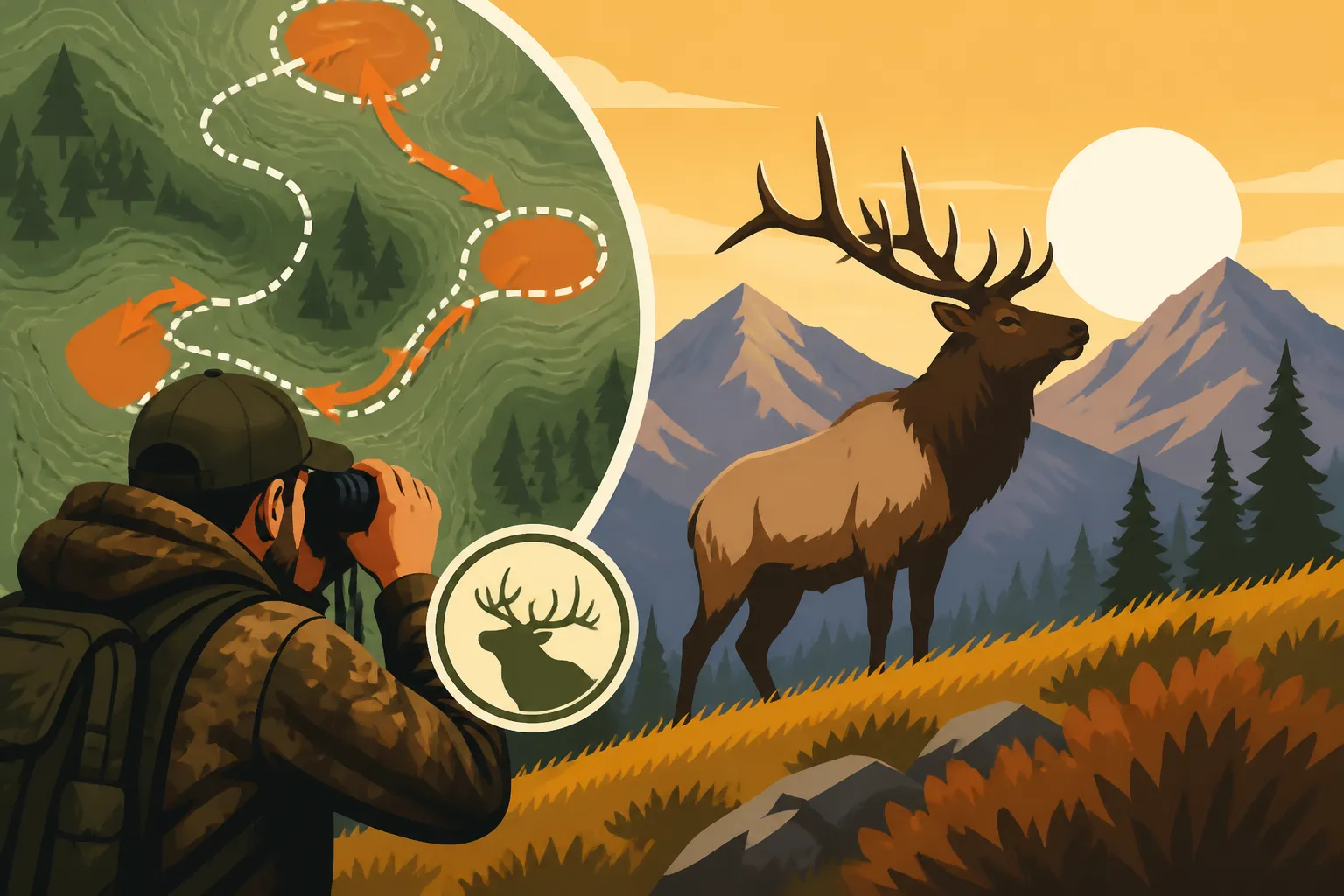
How to Pattern Colorado Elk Movement
One of the most frustrating challenges any elk hunter faces is trying to predict where these magnificent animals will be from one day to the next. Elk are masters of their environment, constantly adapting, and their movement can seem like a mysterious dance. This comprehensive guide will pull back the curtain on the art of patterning Colorado elk movement, helping you decipher their habits and increase your odds of a successful hunt.
Understanding Elk Behavior: The Foundation of Patterning
Before you can even begin to pattern elk, you first have to understand why they move the way they do. It's not random; every shift in location, every bedding choice, every feeding decision is driven by a core set of needs and instincts. Without this foundational knowledge, you're essentially trying to solve a puzzle with half the pieces missing.
Elk Biology and Seasonal Changes
Elk are creatures of habit, but those habits change significantly with the seasons. Their biology dictates much of their routine. In the spring, after a long winter, cows are focused on calving and finding nutritious forage to recover and support their new offspring. Bulls are often found in bachelor groups, growing their antlers and seeking out areas with abundant food and minimal disturbance.
As summer progresses, both bulls and cows will frequent higher elevations, where cooler temperatures and lush alpine meadows provide ideal conditions. You'll often find them in predictable feeding and bedding areas during these months. However, when the rut kicks in during late September and early October, everything changes. Bulls become incredibly vocal and aggressive, chasing cows, and their movement becomes much less about food and more about breeding. This period offers unique opportunities for calling tactics, but it also means their usual patterns can be thrown out the window. Post-rut, elk are exhausted and will often retreat to recover, focusing heavily on feeding before winter sets in.
Impact of Weather and Terrain
Colorado's diverse terrain and notoriously fickle weather patterns play an enormous role in elk movement. A sunny, warm day will see elk behaving very differently than a blizzard. For instance, during hot weather, elk will seek out north-facing slopes, dense timber, and high elevations where they can find cooler temperatures and shade. They'll also be more drawn to water sources, hitting wallows and springs more frequently.
Conversely, when a cold front pushes through, or the snow starts to fly, elk might drop to lower elevations to escape deep snow, find thermal cover, or access food sources that are no longer buried. Strong winds can also impact their movement, pushing them into sheltered drainages or thick timber to escape the blast. Understanding how these factors influence their comfort and access to food and safety is critical. You might have a perfect pattern for fair weather, only to have it completely disrupted by an unexpected snowstorm, forcing you to adapt your approach on the fly.
Pressure from Other Hunters
Let's be realistic: Colorado public land is popular, and elk know it. Hunter pressure is arguably one of the biggest drivers of elk movement, especially during rifle seasons. Those perfectly mapped-out meadows or benches you scouted pre-season? They might be elk hotbeds one day, and deserted the next if too many hunters push through. Elk are intelligent and will quickly learn to avoid areas with heavy human activity.
They'll often retreat into dense, dark timber, seek out steep, rugged terrain, or move into designated wilderness areas where human presence is minimal. This means that your patterning needs to account for not just natural factors, but also the dynamic element of other hunters. Knowing how to hunt elk on public land pressure means recognizing escape routes, looking for subtle travel corridors they use when pressured, and being willing to go deeper or higher than others. Sometimes, the pattern you discover isn't where they want to be, but where they feel safe despite the disturbance.
Tools and Techniques for Effective E-Scouting
In today's hunting world, "e-scouting" is more than just a buzzword; it's an indispensable component of successful patterning. You can save countless hours of boot leather by thoroughly researching an area from the comfort of your home. This digital groundwork provides a solid starting point for your on-the-ground efforts and helps you hone in on high-potential areas.
Utilizing Digital Mapping Applications
Modern mapping applications are absolute game-changers for any Colorado hunter. Programs like onX Hunt, BaseMap, and GoHunt provide a wealth of information at your fingertips, making them essential for How to E-Scout Before a Colorado Hunt. These apps allow you to view detailed satellite imagery, topographic maps, public/private land boundaries, and even historical burn data.
When patterning elk, I rely heavily on these tools to identify key features: north-facing slopes with dense timber for bedding, south-facing slopes for winter feeding, water sources like springs and wallows, and natural travel corridors like saddles and benches. You can drop waypoints on potential feeding areas, bedding thickets, and escape routes. By doing this, you start to visualize how elk might move between these vital areas, creating a predictive map before you ever set foot in the field. GoHunt, for example, offers detailed unit data and draw odds, which can even influence which areas you choose to focus your patterning efforts on from the start.
Analyzing Historical Data and Satellite Imagery
Beyond just current maps, digging into historical satellite imagery can reveal subtle changes in the landscape that impact elk movement. Did a wildfire sweep through a few years ago? New growth might be a prime food source. Has logging occurred, opening up new clearings or creating thick new bedding cover? These historical shifts can create new patterns that aren't immediately obvious on a single image.
Furthermore, looking at different seasons of satellite imagery can give you a better idea of vegetation density and snow lines. A timbered ridge might look impenetrable in summer imagery, but a winter view could reveal hidden clearings or travel routes. Websites like Google Earth often have historical imagery features that allow you to scroll through past years, providing valuable context. This deep dive helps you understand the long-term trends and landscape evolution that influence elk habits.
Interpreting Topographic Maps and Aerial Photos
Topographic maps are your blueprint for understanding the three-dimensional world elk inhabit. They show elevation changes, contour lines, and the steepness of terrain, which directly influence where elk travel and bed. Elk are incredibly efficient movers, often choosing the path of least resistance or the most strategic high ground.
Aerial photos, often integrated into mapping apps, complement topographic maps by adding visual context. You can see the actual timber density, the type of vegetation, and the presence of hidden water sources that might not be marked on a topo map. When you combine these, you can identify saddles (natural travel funnels between ridges), benches (flat areas on hillsides where elk often bed and feed), and hidden pockets of cover. Learning How to Find Elk in Deep Timber often starts with identifying these features on a map. By tracing potential routes between bedding and feeding areas, while considering water and cover, you start to build a robust hypothesis of elk movement patterns.
On-the-Ground Scouting: Confirming and Adapting
E-scouting is fantastic for getting a head start, but nothing beats getting your boots on the ground. The mountain doesn't always look the same on a screen as it does in person. On-the-ground scouting is where you confirm your theories, discover new insights, and adapt your patterning strategy to the real-world conditions.
Reading Sign: Tracks, Rubs, Beds, and Scat
When you're out in the field, every piece of elk sign tells a story about their recent activity. Tracks can tell you how many elk passed through, their general size, and how recently they were there. Fresh tracks in soft dirt are a goldmine. Look for travel corridors where multiple tracks converge. Rubs – where bulls have rubbed their antlers on trees – indicate bull activity and often mark territorial boundaries or travel routes during the rut.
Beds, particularly fresh ones, give you clues about where elk feel safe to rest. Are they in thick timber on a north-facing slope? Near a thermal updraft? Often, multiple beds in a tight area suggest a herd. Scat (droppings) provides insight into their diet and how recent their presence was. Fresh, soft scat means they were very recently in the area. By noting the location and freshness of these signs, you can start to piece together a puzzle of their daily routine: where they're feeding, where they're bedding, and how they're moving between the two. This is critical for predicting where they'll be next.
Glassing and Observation Techniques
Effective glassing is an art form, especially in the vast landscapes of Colorado. Instead of just walking aimlessly, find a high vantage point where you can see a lot of country. Use high-quality binoculars or a spotting scope – the Best Optics for Colorado Big Game can make all the difference. Systematically grid the terrain, focusing on likely feeding areas at dawn and dusk, and bedding areas during the day.
Look for subtle movements, a flick of an ear, a patch of hide through the trees. Patience is key. Elk often appear out of nowhere, or they might be bedded down and virtually invisible until they stand up. Pay attention to how they move, where they enter and exit timber, and their general direction of travel. This direct observation is invaluable for understanding their patterns. You might spot an elk using a specific trail at a certain time each morning, giving you concrete data for an ambush. For deeper insights, learn How to Glass Big Colorado Basins.
Using Trail Cameras for Real-Time Intel
Trail cameras have become an invaluable scouting tool, offering a "set it and forget it" way to gather intel on elk movement patterns, especially in areas you can't be in constantly. Placement is crucial. Focus on natural funnels, game trails, water sources, wallows, and pinch points between feeding and bedding areas. Don't just slap a camera on any tree; think like an elk.
When reviewing your trail cam footage, look for patterns: What time are elk moving through? Are they coming from a specific direction? What kind of elk (bulls, cows, calves) are you seeing? Consistent timestamps and movement directions can help confirm or deny your e-scouting hypotheses. While they require careful and ethical use, especially on public lands, a well-placed trail camera can provide real-time data that drastically improves your patterning efforts.
Putting It All Together: Developing a Movement Pattern
The ultimate goal of all this scouting, both digital and on-the-ground, is to synthesize the information into a reliable, actionable pattern. This isn't about memorizing a static map; it's about understanding the fluid dynamics of elk movement so you can intercept them effectively.
Connecting the Dots: Daily and Seasonal Movement Corridors
Think of elk movement in terms of daily loops and seasonal migrations. Daily patterns involve predictable movements between feeding areas, water sources, and bedding cover. For example, in the morning, elk might move from a secluded bedding area in dense timber down to a grassy slope or meadow to feed. As the sun gets higher, they'll often retreat back to the shade and security of the timber to bed down. In the evening, the pattern reverses. Your job is to identify these travel corridors – the benches, saddles, and drainages they consistently use for these transitions.
Seasonally, these patterns can shift dramatically. In early archery season, elk might be high in the alpine, but come late-season elk hunting tactics, they'll likely be lower, following the snow line and seeking more accessible forage. Understanding these larger seasonal shifts is crucial for selecting the right general area, while daily patterns help you fine-tune your approach within that area. Being able to predict these movements is the core of Colorado Elk Hunting Methods Explained.
Adapting to Unpredictable Changes
No matter how good your pattern is, elk are wild animals, and they will surprise you. A sudden change in weather, an influx of other hunters, or even a local predator activity can completely throw off a seemingly perfect pattern. This is where adaptability comes in. Don't be so locked into your initial plan that you fail to notice new signs or changed conditions.
If your carefully patterned herd suddenly disappears, reassess. Did it snow overnight? Check lower elevations or south-facing slopes. Did a lot of trucks appear at the trailhead? They might have been pushed deeper into wilderness areas or steep, overlooked terrain. Being flexible means constantly asking "why" and being willing to adjust your strategy, whether that means exploring new areas identified during e-scouting or switching from a spot-and-stalk approach to still-hunting through timber.
The Importance of Wind and Thermals
Finally, no discussion of elk movement and patterning would be complete without emphasizing the critical role of wind and thermals. Elk rely heavily on their sense of smell for survival. They almost always travel and bed in a way that gives them a scent advantage, using the wind to detect predators. This means if your wind is wrong, your hunt is likely over before it starts.
In mountain environments, thermals are essentially localized winds that shift throughout the day. In the mornings, cold air drains downhill, creating a downward thermal. As the sun warms the slopes, the air rises, creating an upward thermal. Elk often use these predictable thermal shifts to their advantage. For instance, they might feed on an open slope in the morning with a downward thermal, knowing any scent from below will be carried away. Then, as the thermal shifts upward in the afternoon, they'll bed high, using the rising air to detect anything below them. Understanding How to Use the Wind Hunting Colorado Elk and How to Use Thermals in Colorado Elk Country isn't just about your approach; it's about understanding their movement and how they leverage the air currents for their safety.
Successfully patterning Colorado elk movement is a continuous process of learning, observing, and adapting. It's about combining the power of modern tools like GoHunt with timeless woodsmanship and a deep respect for the animals you pursue.
Disclaimer
Hunting is an inherently dangerous activity. This guide provides information for educational purposes only and does not endorse or encourage unsafe practices. Always prioritize safety, legality, and ethical conduct. Consult Colorado Parks and Wildlife regulations for current laws and requirements. Ensure you have the proper licenses, tags, and training before heading into the field.