How to Spot-and-Stalk Colorado Bears
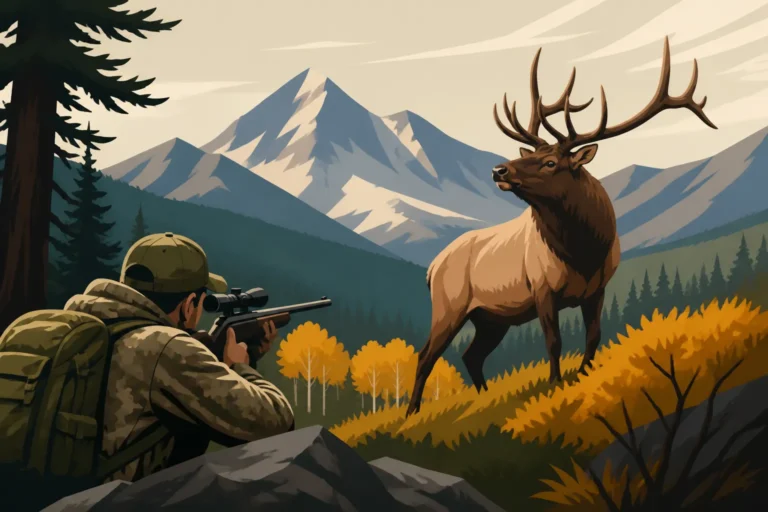
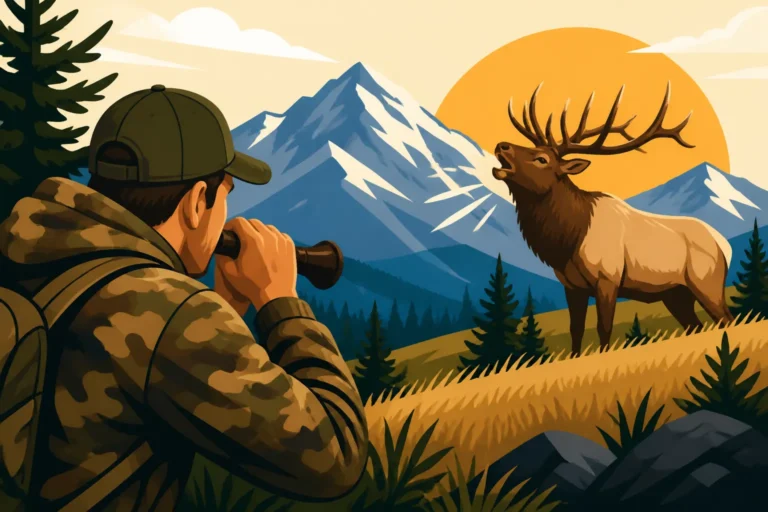
Spot-and-stalk bear hunting in Colorado is a pursuit that tests the patience and skill of even the most seasoned hunter. It’s incredibly frustrating to spend days glassing vast basins or still-hunting thick timber, only to glimpse a phantom flash of black fur disappearing into the shadows, or worse, see nothing at all. The truth is, bears are incredibly elusive, and successfully closing the distance on foot requires a deep understanding of their habits, meticulous scouting, and flawless execution. This comprehensive guide will arm you with the precise strategies, techniques, and preparation necessary to conquer the challenges of spot-and-stalk black bear hunting in the rugged Colorado wilderness.
Understanding Colorado Black Bears for Spot-and-Stalk Success
Before you can effectively spot-and-stalk a black bear, you need to think like one. Understanding their seasonal behaviors, preferred habitats, and what drives their movements is the foundation upon which any successful hunt is built. Colorado's diverse terrain offers a variety of environments for bears, from dense scrub oak country to high alpine basins, and knowing where they're likely to be, and why, is paramount.
Bear Behavior and Seasonal Movements
Colorado black bears are opportunists, and their lives revolve around food. Their behavior shifts dramatically throughout the seasons, directly impacting your spot-and-stalk strategy. In the spring, after emerging from hibernation, bears are primarily focused on finding easily digestible food sources that provide quick energy and help them recover from winter. This often means they’ll be found at lower to mid-elevations, gravitating towards south-facing slopes that melt out first, where they can munch on tender new shoots of grass, forbs, and carrion. You might find them turning over rocks for insects or scavenging winter kill. This early season can be a fantastic time for spot-and-stalk if you key into these specific food sources and south-facing aspects.
As summer progresses and into the fall, their diet expands dramatically. Bears will move to higher elevations to capitalize on burgeoning berry crops like serviceberry, chokecherry, elderberry, and buffalo berry. They’ll also hit oak and aspen stands for acorns and hazelnuts, and if there's a good pine nut crop, they'll certainly be there. This is when they enter hyperphagia, a period of intense feeding to pack on fat for the upcoming winter hibernation. Their movements become more predictable around these food sources, making them prime targets for a careful spot-and-stalk. Understanding these shifts is key; a bear found on a south-facing slope in May won't likely be there in October unless an abundant fall food source has moved in.
Pay close attention to historical data and local conditions. A wet spring might mean lush vegetation lower down for longer, while a dry summer could push bears higher earlier in search of water and berries. These nuances, often trackable through resources like GoHunt, can give you a significant advantage in predicting bear movements and narrowing down your search areas.
Key Habitats and Food Sources
Identifying prime bear habitat is more than just looking for thick timber; it’s about recognizing the entire ecosystem that supports them. Bears thrive in areas with a mosaic of dense cover for bedding, water sources, and diverse food options. In Colorado, this often means areas with heavy oak brush, aspen groves, mixed conifer forests, and riparian corridors. South-facing slopes are gold in the spring for early green-up, while north-facing slopes and dense pockets of timber offer cool bedding areas during warmer months and excellent cover.
Food sources are the ultimate magnet. For spring hunters, look for those green-up areas, often near drainages or old clear-cuts where new vegetation flourishes. In the fall, focus intensely on fruit and nut-producing plants. Berry patches, especially chokecherry and serviceberry thickets, can be absolute bear buffets. Oak brush fields, particularly in years with good acorn production, will draw bears like magnets. Aspen stands with abundant fallen leaves might indicate a good mushroom crop, another bear favorite. Consider scouting these areas for specific food types before your hunt; satellite imagery on platforms like GoHunt can help identify promising habitat types, though boots on the ground verification is always best.
Don't overlook the importance of water. While bears can get moisture from their food, easily accessible water sources, especially during dry periods, will concentrate them. Look for springs, seeps, small ponds, and reliable streams within or adjacent to productive feeding areas. Bears will often move between bedding cover, food, and water throughout the day, establishing travel corridors that can be exploited by a patient spot-and-stalk hunter. Knowing these patterns will significantly increase your chances of finding an animal and intercepting it without detection.
Recognizing Bear Sign and Patterns
Finding bear sign isn't just about seeing paw prints; it's about interpreting a story. Fresh scat, ranging from firm and pellet-like if they're eating berries, to loose and grassy in the spring, tells you what they're eating and how recently they were there. Rub trees, often scarred with claw marks and fur, indicate active territories or travel routes. Torn-up logs, overturned rocks, and dug-up areas are clear evidence of bears foraging for insects or tubers. Beds, depressions in soft ground or under dense cover, reveal where bears are resting during the day.
Pay close attention to consistency. A single pile of scat might be an anomaly, but multiple fresh piles, disturbed ground, and rub trees in a concentrated area scream "bear activity." Look for patterns: where are they feeding, where are they bedding, and what routes are they using to travel between the two? Bears often follow game trails, old logging roads, or the contours of drainages. The more consistent and fresh the sign, the higher the likelihood of encountering a bear. Tools like GoHunt can help you pinpoint areas with historical bear activity or habitat features that frequently concentrate game, allowing you to start your scouting in high-percentage zones.
Using your optics to systematically grid areas, even without seeing a bear, can sometimes reveal sign from a distance. Look for disturbances in vegetation, splashes of color from berries in scat, or subtle movements that might be a bear feeding. The better you become at reading the landscape and understanding the subtle clues bears leave behind, the more successful your spot-and-stalk attempts will be. For more general insights into bear behavior, check out our guide on Colorado Black Bear Behavior.
Essential Spot-and-Stalk Techniques and Tactics
Once you understand the bear and its environment, it's time to refine your actual hunting techniques. Spot-and-stalk hunting for bears in Colorado is a game of patience, precision, and absolute stealth. The mountains are vast, and bears have an uncanny ability to vanish into thin air, so every move you make must be deliberate and well-thought-out.
Mastering Your Optics and Glassing Strategy
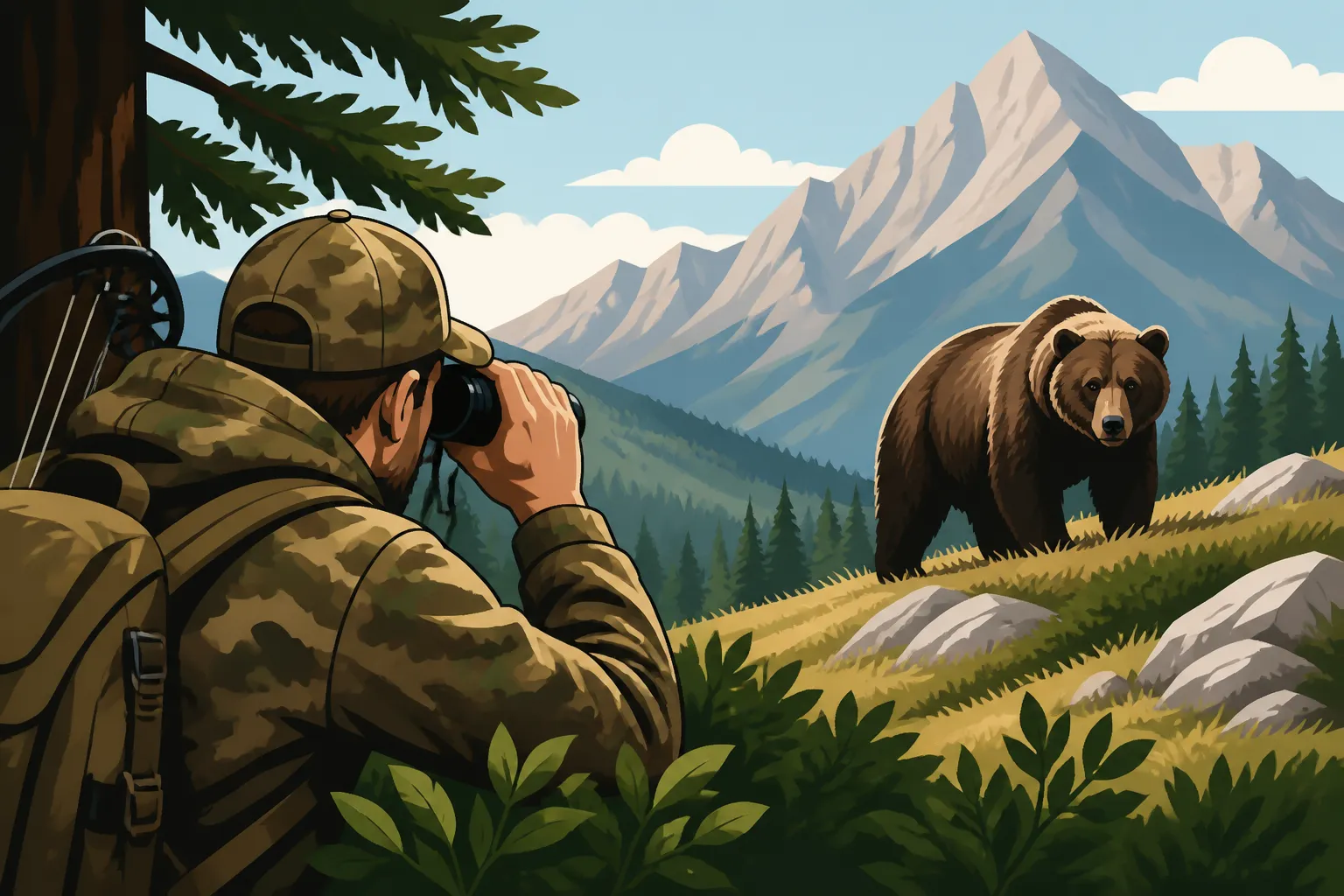
Effective glassing is the absolute cornerstone of spot-and-stalk bear hunting, especially in Colorado's expansive terrain. You're not just looking for a bear; you're looking for movement, a subtle shift in color, or a peculiar shape that doesn't belong. This isn't a quick scan; it's a slow, methodical grid search using quality binoculars and, ideally, a spotting scope. Start by finding a high vantage point that overlooks a large amount of promising bear habitat – south-facing slopes in spring, berry patches or oak brush in fall.
Set up your binoculars or spotting scope on a sturdy tripod. This stabilizes the image and allows you to pick apart the terrain without fatiguing your eyes. Begin your search at the closest terrain and slowly work outwards, covering small sections at a time. Don't rush. Spend 15-30 minutes, or even an hour, meticulously picking apart every shadow, every cluster of brush, every rockslide. A bear often looks like a stump or a dark rock until it moves. Look for ears, a muzzle, or the sheen of black fur in the sunlight. Remember, bears are often active during cooler parts of the day – early morning and late evening – but can be out at any time if conditions are favorable (e.g., overcast days, deep shade). Our guide on How to Glass Big Colorado Basins offers excellent techniques that are highly applicable to bear hunting.
When you do spot something, resist the urge to immediately jump up and start planning your stalk. First, confirm it's a bear and not just a shadow or another animal. Observe its behavior: Is it feeding? Moving? Bedded down? This information is crucial for planning your approach. If it's a legal bear, note its exact location relative to identifiable landmarks, and ideally, pinpoint a potential stalking route. For more on selecting the right tools, consider exploring Best Optics for Colorado Big Game.
The Art of the Approach: Wind, Terrain, and Stealth
Once a bear is spotted, the real chess match begins. Your stalk must be absolutely meticulous, taking into account the wind, terrain, and the bear's current activity. The wind is your number one priority; bears have an incredible sense of smell, and if they catch your scent, the game is over. Always approach from downwind, or at least crosswind, constantly checking the thermals. In the mountains, thermals typically rise in the morning as the sun heats the ground and fall in the evening as it cools. Understanding these shifts is vital for success in Colorado elk country, and bears are no different. For a deeper dive into wind strategy, see How to Use the Wind Hunting Colorado Elk.
Use the terrain to your advantage. Ridges, deep draws, patches of timber, and rock formations can all provide cover for your approach. Move slowly, deliberately, and quietly. Every step should be intentional. Avoid snapping twigs or dislodging rocks. If the bear is feeding or moving, try to time your movements with its natural distractions. If it lifts its head, freeze. If it moves into a dip or behind some cover, advance. This might mean crawling on hands and knees through thick brush, taking hours to cover a few hundred yards. This slow, patient approach is exactly what's detailed in our Colorado DIY Elk Hunting Guide, and it applies perfectly to bears.
Consider the potential for unexpected encounters. As you move, be vigilant for other bears, deer, or elk that could spook and alert your target. Sometimes, the best stalk isn't a straight line; it's a wide arc that puts you in the perfect downwind position, even if it adds significant distance. Always have an escape plan or a fallback position if the stalk goes south. Remember, it's better to back out and try again later or another day than to blow your only chance at a quality animal.
Shot Opportunities and Ethical Considerations
Successfully closing the distance on a bear is only half the battle; the other half is making an ethical shot. Bears, with their dense fur, thick fat layers, and heavy bone structure, require precise shot placement. The most common target is the "boiler room" – the lung and heart area, just behind the shoulder. However, because bears can present themselves differently than deer or elk (often hunched or feeding), understanding their anatomy is critical. Their vitals are situated a bit further forward and lower than you might expect on a deer.
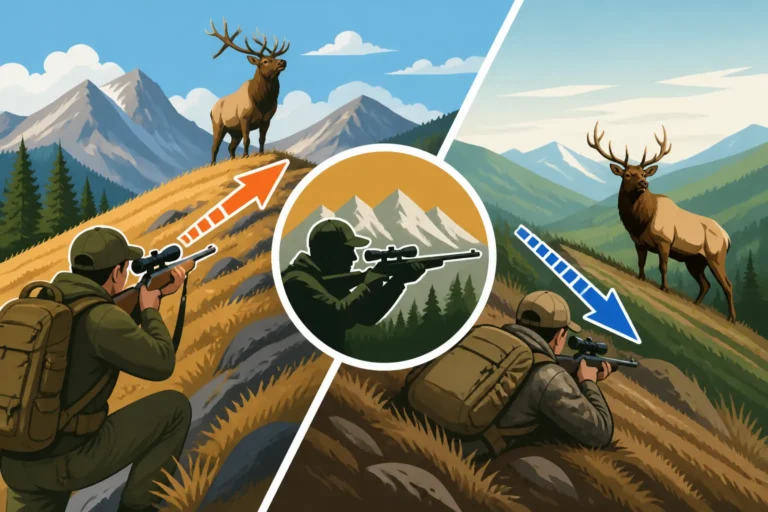
Wait for a broadside or slightly quartering-away shot. Never take a quartering-to shot on a bear unless absolutely necessary and you are confident in your shot placement to penetrate dense bone and hit vitals. Avoid head-on shots unless it's an emergency. Patience here is key; you might have to wait for the bear to move, stand up, or turn to offer a clear, unobstructed shot. Practice shooting from various field positions, including kneeling and prone, as you likely won't have a perfectly clear standing shot. Understand your weapon's capabilities and your personal limitations.
After the shot, observe the bear carefully. Note its reaction and the direction it flees. Bears can absorb a lot of lead or arrow energy, and they often don't show immediate signs of a lethal hit. Give the animal time before tracking, typically 30 minutes to an hour for a confirmed hit, and longer (several hours) if you suspect a less-than-ideal shot. Tracking a wounded bear, especially in dense timber, can be dangerous, so be prepared and always go with a partner. If you’re hunting in high country, packing out the meat quickly is essential, so understanding How to Quarter an Elk in the Field will translate well to bear, as will the need for quick retrieval if it’s warm out, as detailed in How to Keep Elk Meat Cool in Warm Weather.
Gear, Preparation, and Safety for Bear Hunting
Spot-and-stalk bear hunting, particularly in Colorado's rugged mountains, demands that you are well-equipped, physically prepared, and acutely aware of safety protocols. Skimping on any of these aspects can turn a challenging hunt into a dangerous one.
Optics, Clothing, and Essential Gear
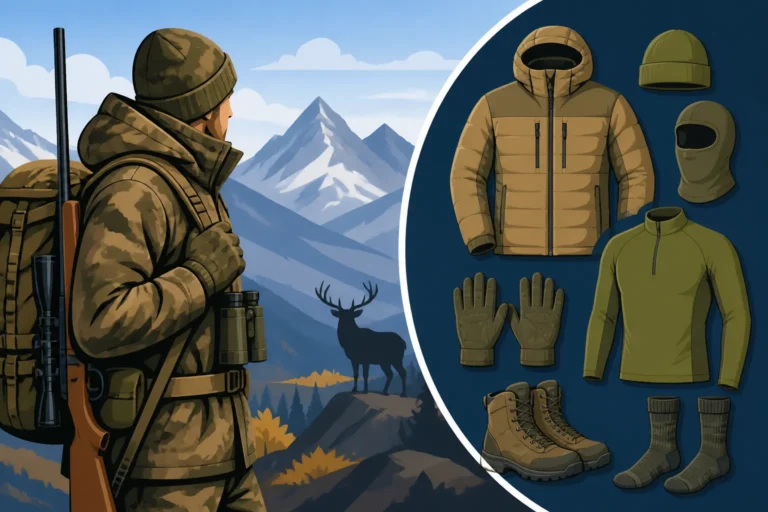
Your gear choices are critical. For optics, as mentioned, high-quality binoculars (10×42 or 12×50) and a spotting scope (15-45x or 20-60x) are non-negotiable for effectively picking apart distant hillsides. Brands like Vortex, Leupold, and Swarovski are popular choices among serious Western hunters. A rangefinder is also essential for accurate shot placement in varied terrain. For clothing, layers are paramount. Colorado weather can change dramatically, even within a single day. You'll need moisture-wicking base layers, insulating mid-layers (fleece or down), and a waterproof/windproof outer shell. Earth tones or camouflage that blends with the local environment (e.g., Kuiu or Sitka) are ideal.
Footwear should be sturdy, broken-in, and provide excellent ankle support for navigating steep, uneven terrain. Consider whether you need fully waterproof boots depending on the season and expected conditions. A comfortable, well-fitting backpack (30-50 liter capacity is often sufficient for day hunts, but larger if you plan to pack out meat immediately) is crucial for carrying water, food, extra layers, first-aid, navigation tools, and game bags. GPS devices or smartphone apps like onX Hunt, combined with a physical map and compass, are indispensable for navigation, especially if you're venturing into remote areas. For a more comprehensive list, our Colorado Backcountry Hunting Gear List provides a great foundation that can be adapted for bear hunting.
| Gear Category | Essential Items | Notes |
|---|---|---|
| Optics | Binoculars (10x-12x), Spotting Scope, Tripod, Rangefinder | Crucial for glassing, identifying bears, and ethical shot placement. |
| Clothing | Layering system (base, mid, outer), Waterproof rain gear, Sturdy boots | Adapt to rapid weather changes, stay dry, move silently. |
| Navigation | GPS device/app (onX), Physical map, Compass, Headlamp | Prevents getting lost, especially when tracking after dark. |
| Hunting Tools | Rifle/Bow, Ammunition/Arrows, Knife, Game bags, Sharpening stone | Prepare for field dressing and meat care. |
| Safety & First Aid | First-aid kit, Bear spray, Satellite communicator, Fire starter, Water filter | Essential for emergencies, communication, and self-defense. |
| Comfort/Sustenance | Water (2-3L), High-energy snacks, Lightweight sit pad | Stay hydrated and fueled for long stalks and glassing sessions. |
Physical and Mental Conditioning
Spot-and-stalk bear hunting in Colorado is physically demanding. You'll be climbing steep ascents, navigating rugged terrain, and potentially packing out hundreds of pounds of meat over miles. Proper physical conditioning is not just about comfort; it's about safety and increasing your odds of success. Start a fitness regimen months before your hunt, focusing on cardiovascular endurance (hiking with a weighted pack, running, stair climbing) and strength training (legs, core, back). Simulating hunting conditions during training, such as hiking steep trails in your hunting boots with a weighted pack, will build the specific muscle groups you’ll need.
Mental toughness is equally important. Spot-and-stalk hunts are often long, frustrating, and require immense patience. You might glass for hours without seeing anything, or blow a stalk after hours of careful movement. The ability to remain positive, focused, and persistent through these challenges is what separates successful hunters from those who give up. Visualize successful stalks, practice breathing techniques to calm nerves, and maintain a realistic outlook. This isn't a quick sprint; it's a marathon of effort and mental fortitude. For specific training advice, our article on How to Physically Prepare for Colorado Elk offers a fantastic blueprint that applies directly to bear hunting.
Bear Safety and Encounter Protocols
While black bears are generally not aggressive, they are powerful wild animals, and caution is always warranted. Always carry bear spray and know how to use it. Make noise when moving through dense cover to avoid surprising a bear, especially if you're in an area with limited visibility. If you encounter a bear, remain calm. Most bears will run away. If a bear approaches, make yourself look large, make noise, and slowly back away. Never run. If it charges, stand your ground and be prepared to use your bear spray. In the extremely rare event of a physical attack, fight back aggressively.
When field dressing a bear, be mindful of your surroundings. The smell of blood and gut piles can attract other bears or predators. Work quickly and efficiently, then move the meat away from the gut pile. If you are packing out meat in the backcountry, ensure your camp is bear-resistant, properly storing food and scent items. Remember, a fed bear is a dead bear, so do your part to prevent habituation. Understanding Colorado Black Bear Behavior will provide a good foundation for anticipating their reactions and ensuring your safety.
Best Seasons and Units for Spot-and-Stalk Bear Hunting
Choosing the right time and place to hunt bears in Colorado is a critical decision that directly impacts your chances of a successful spot-and-stalk hunt. Colorado offers both spring and fall bear seasons, each with its unique advantages and challenges.
Spring vs. Fall Bear Seasons
Colorado's spring bear season, typically in April and May, offers a fantastic opportunity for spot-and-stalk hunting. Bears are just emerging from hibernation, often gaunt and hungry. They tend to concentrate on green-up areas – south-facing slopes, lower elevation clearings, and riparian zones where tender grasses and forbs are emerging. The vegetation is sparse, making bears easier to spot from a distance. However, the weather can be unpredictable, ranging from warm sunshine to late-season snowstorms, which can be a real challenge for glassing and stalking. Additionally, spring bears often have lighter coats and less fat, meaning smaller overall meat yield compared to their fall counterparts. For more specific details on this season, consult our Colorado Spring Bear Season and Tags guide.
The fall bear season, running concurrently with archery, muzzleloader, and rifle elk seasons, is arguably the most popular time to hunt bears in Colorado. Bears are in hyperphagia, gorging themselves on berries, acorns, and other mast crops to put on weight for winter. This means they are often found in areas with abundant food sources, particularly oak brush and berry patches, which can be dense and challenging for visibility. However, their movements around these food sources can be more predictable. Fall bears typically have prime, thick coats and a significant layer of fat, making them highly desirable for both hide and meat. The main challenge is the increased hunter pressure from concurrent elk and deer seasons. Understanding these seasonal differences is key to planning your hunt effectively. You can find more comprehensive information on this period in our Colorado Fall Bear Season and Tags article.
Identifying Productive Units and Areas
Colorado has a healthy black bear population spread across much of the western slope and parts of the Front Range. When selecting a unit for spot-and-stalk bear hunting, look for areas with a high density of suitable habitat: mixed conifer forests, aspen groves, oak brush fields, and plenty of elevation changes. Wilderness areas and national forests often provide excellent opportunities for remote, unpressured hunts. Areas known for good elk or deer populations often hold bears as well, as they share similar habitat requirements and food sources.
Utilize resources like the Colorado Parks and Wildlife (CPW) annual harvest reports and unit-specific success rates, combined with e-scouting tools. Platforms like GoHunt allow you to layer public land boundaries, habitat types, and even historic fire scar data (new growth in burned areas can attract bears). Look for units with a good mix of slopes, drainages, and varied vegetation. Consider roadless areas or those that require significant hiking, as these often have lower hunter pressure and more relaxed bears. Remember, finding the right unit is about matching your preferred hunting style and season to the specific characteristics of the terrain and the bear population within that GMU. A good starting point for understanding how units work can be found in Colorado GMUs Explained.
Finally, be aware of any specific regulations or antler point restrictions (APRs) for the units you are considering, as these can sometimes apply to other species hunted concurrently. Always check the current year's CPW Big Game Brochure for the most up-to-date information on season dates, tag availability, and unit-specific rules.
Disclaimer
Hunting is an inherently dangerous activity. This guide provides information for educational purposes only and is not a substitute for professional training, comprehensive research, or adherence to all applicable laws and regulations. Always prioritize safety, respect wildlife, and obtain the necessary licenses and permits before engaging in any hunting activity. Consult official Colorado Parks and Wildlife resources for the most current and accurate regulations.