How to Hunt Colorado Pronghorn Decoying
Let's face it, trying to hunt pronghorn in Colorado can feel like you're playing a frustrating game of hide-and-seek on a football field-sized expanse with no hiding spots. Their incredible eyesight and blistering speed make traditional stalking nearly impossible for most hunters. But don't despair! This comprehensive guide is dedicated to teaching you the incredibly effective, and frankly, thrilling art of decoying pronghorn in the vast plains and high deserts of Colorado, turning those impossible stalks into close-range encounters.
Understanding the Pronghorn and the Decoy Opportunity
Pronghorn, often mistakenly called "antelope," are truly unique to North America. They possess unparalleled vision, reportedly equivalent to an 8x binocular, and can run upwards of 60 miles per hour. This combination makes them incredibly difficult to approach. However, their intense curiosity and the territorial nature of the bucks during the rut offer a fantastic opportunity for hunters willing to use a decoy.
Why Decoying Works on Pronghorn
You've probably tried sneaking up on a pronghorn buck across miles of flat prairie only to watch him bolt at 800 yards, leaving you wondering if they have radar. That's where decoying shines. It leverages their natural instincts against them. During the rut, which typically kicks into high gear from late August through mid-September, dominant bucks are constantly on the lookout for rivals and new does. A well-placed decoy acts as a magnet, drawing them in for a closer look or a challenge.
It’s an optical illusion that plays on their territorial aggression. When a buck spots what appears to be another pronghorn, especially a rival buck or a lone doe, his natural instinct is to investigate or defend his harem. They often come in fast, trying to determine if it's a real threat or a potential mate. This curiosity overrides their usual extreme caution, giving you the precious few seconds you need to get a shot off. Decoying turns the tables, making them come to you rather than you trying to creep up on them.
When Decoying is Most Effective
Timing is paramount when it comes to successful decoying. While pronghorn are curious year-round, there are specific windows when decoying becomes a truly deadly tactic.
The peak rut, which generally runs from the last week of August through mid-September in Colorado, is by far the most opportune time. This is when bucks are at their most aggressive and territorial, constantly herding does and fending off other bucks. A buck decoy during this period is like waving a red flag in front of a bull. Bucks will often come charging in, ready to fight for dominance.
Even in the pre-rut, when bucks are establishing their territories and beginning to check does, decoying can be highly effective. They might not come in with the same furious charge as during the peak rut, but their curiosity will still bring them into range. As the rut wanes, post-rut decoying can still work, but the aggression levels drop, and it becomes less reliable.
Weather also plays a role. Calmer days with less wind are generally better. High winds can make a decoy appear unnatural, causing it to flap wildly and spook animals. It also makes it harder for you to hear approaching animals and for the pronghorn to hold a steady course. Early mornings and late afternoons, when pronghorn are most active and visible, offer prime decoying windows.
Choosing Your Pronghorn Decoy and Setup Strategy
Just like choosing the right call for an elk, selecting the correct pronghorn decoy and understanding how to deploy it is critical to success. There are several options on the market, each with its own advantages.
Types of Decoys and What to Look For
The market offers a range of pronghorn decoys, from full-bodied, realistic models to lightweight, collapsible silhouettes. Each has its place.
- Buck vs. Doe Decoys: For pure aggression, especially during the rut, a buck decoy is often your best bet. A dominant buck will see it as a challenger. Doe decoys, on the other hand, play more on a buck's curiosity or desire to gather more does into his herd. Some hunters even use a combination, such as a smaller buck decoy paired with a doe to create a scene that a dominant buck would feel compelled to break up. Brands like Montana Decoy offer excellent collapsible, lightweight options that fold up small for easy transport across the vast plains. Look for decoys that are printed with realistic colors and textures.
- Full Body vs. Silhouette: Full-body decoys offer the most realism, especially in three dimensions, which can be crucial for wary animals. However, they are often bulky and difficult to carry on a long stalk. Silhouette decoys, like those from Montana Decoy, are incredibly lightweight and packable, making them ideal for mobile hunters. While they are two-dimensional, when positioned correctly, they can be highly effective at drawing in pronghorn. The key is to keep them moving slightly if needed to give the illusion of life.
- Material and Portability: Since you’ll likely be carrying your decoy over considerable distances, portability is paramount. Look for durable, weather-resistant materials that can withstand the elements and repeated deployment. Collapsible designs that fit easily into a backpack are highly recommended. Remember, the easier it is to carry and deploy quickly, the more likely you are to use it when the opportunity arises.
Strategic Decoy Placement and Wind Assessment
This is where the magic really happens. Improper placement can ruin an otherwise perfect setup. Remember, wind is king when hunting any animal with a keen sense of smell, and pronghorn are no exception.
Always, and I mean always, set up your decoy so that the prevailing wind carries your scent away from where you expect the pronghorn to approach. They will often try to circle downwind to get a whiff, so anticipating their approach and ensuring your scent isn't carried to them is vital. Use a wind checker constantly during your stalk and setup. You might crawl for half an hour only to realize the wind has shifted, forcing a new approach. Patience here pays dividends.
The ideal distance between your decoy and your shooting position can vary. For bowhunters, 20-40 yards is often perfect, allowing for a close-range shot. Rifle hunters might place the decoy further out, say 50-70 yards, depending on their comfort level and rifle setup. The goal is to draw the pronghorn within your effective range without them detecting you.
Use the terrain to your advantage. Even subtle rises, dips, or sparse sagebrush can provide crucial concealment for you. Avoid placing your decoy on an absolute skyline where it looks unnaturally stark. Instead, try to set it up just below a ridge line or within some sparse cover to give it a more natural appearance. If you're going to be stationary for a longer period, pairing your decoy with a low-profile ground blind can offer excellent concealment. Many hunters will even carry a small, light stool or pad to sit on comfortably while waiting.
Consider using multiple decoys if the situation calls for it. A buck decoy alongside a doe decoy can be particularly enticing to a dominant buck looking to expand his harem or challenge a rival. Just be mindful of how much gear you’re hauling across the plains.
The Art of the Stalk and Decoy Approach
Successfully decoying a pronghorn isn't just about sticking a fake animal in the ground; it's a careful dance of stealth, timing, and understanding animal behavior. It involves a "stalk" to get into position, even if that stalk is more of a crawl.
The Low Crawl and Cover Utilization
Let's be honest, trying to stalk a pronghorn on the open plains feels like trying to hide an elephant in a bathtub. Their expansive vision means any movement, especially against the open horizon, will be instantly spotted. This is where the infamous "pronghorn crawl" comes into play. You’ll be on your hands and knees, or even flat on your belly, using every tiny ripple in the terrain for cover.
Before you even start moving, use your binoculars and a good spotting scope to glass the target buck and his herd. Understand their movement patterns, where they're feeding, and where they might bed down. This information, often accessible through mapping apps like GoHunt, allows you to plan your approach. Once you commit to a stalk, slow and steady wins the race. Your movements should be glacially slow, especially when you're in the open. A quick darting motion can be catastrophic.
Even a foot of elevation change can be your best friend. A small crease in the landscape, a shallow dip, or a sparse clump of sagebrush can provide enough concealment to allow you to advance unseen. Use these features to break up your silhouette. Constantly check the wind with a small bottle of powder or a milkweed puff. If the wind shifts, you might need to adjust your entire plan or even abandon the stalk and try again later. Mastering the How to E-Scout Before a Colorado Hunt will help you identify these subtle terrain features from home.
Decoy Deployment and Engagement Tactics
Once you’ve crawled within range and picked your spot, the real fun begins. You need to deploy your decoy quickly and smoothly. Practice this at home so you can do it silently and efficiently in the field. Some decoys pop open with springs, others require a bit more assembly. Knowing your gear is crucial.
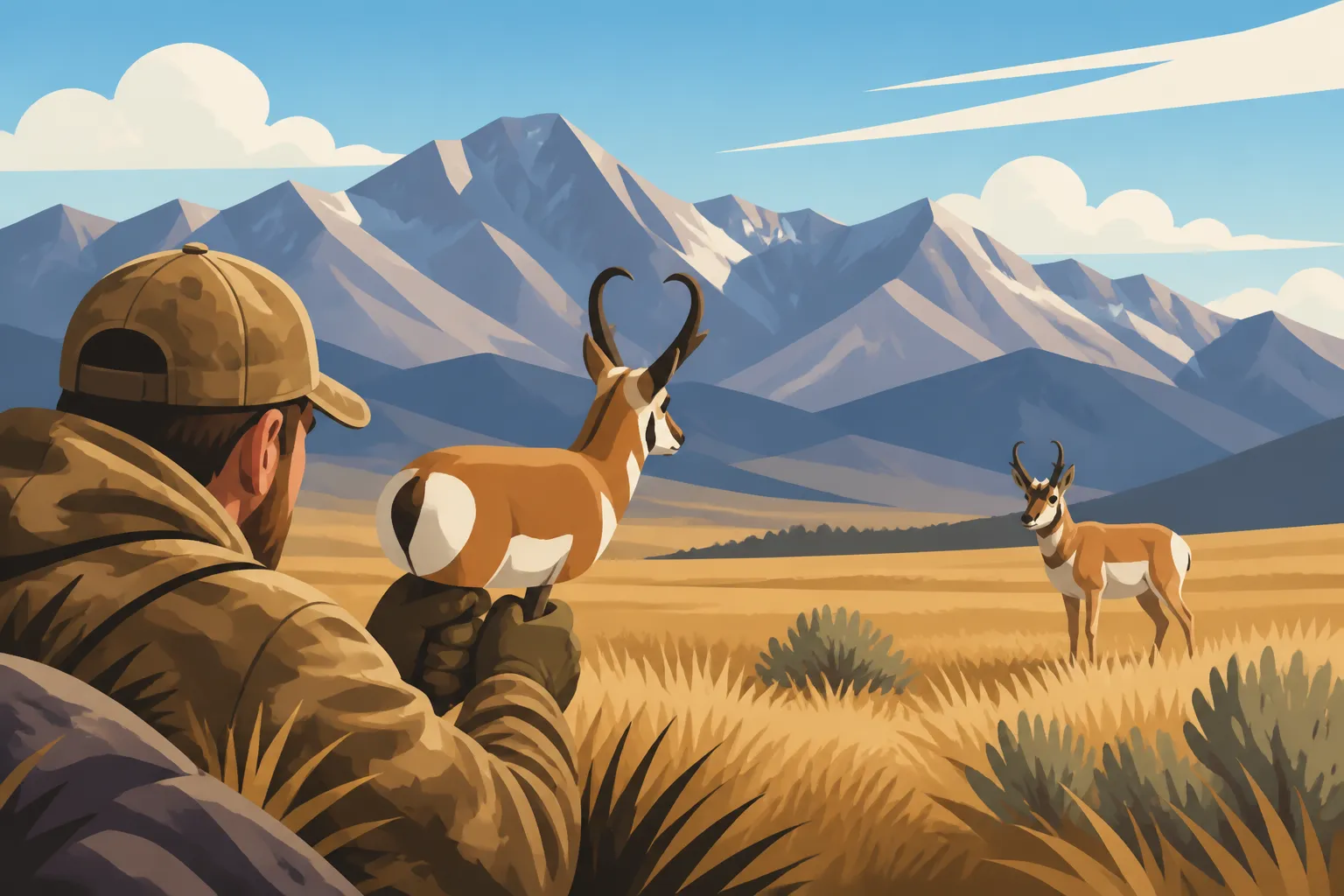
Position the decoy to face the direction you expect the pronghorn to approach, or slightly quartering away. This presents a more natural profile. Once deployed, you need to become invisible. Many hunters will often lie flat behind their decoy, becoming part of the landscape.
Now, you wait. Often, a buck will spot the decoy from a distance. If he hesitates, a subtle movement of the decoy or even standing up with the decoy can sometimes seal the deal. The "lope" or "walk" is an aggressive tactic where you quickly stand up with the decoy, mimicking a new buck or doe entering the territory, then immediately drop back down. This often triggers an immediate charge from a territorial buck.
Some hunters also find that adding very subtle vocalizations, like a soft grunt or bleat, can add to the realism, but be careful not to overdo it. Focus on getting ready for the shot. Ensure you have clear shooting lanes before the pronghorn arrives. When multiple bucks come in, focus on the one you're targeting and be prepared for a quick shot opportunity. Understanding How to Hunt Colorado Pronghorn with a Bow will highlight the importance of these close, clear shots.
Common Mistakes and Advanced Decoying Tips
Decoying pronghorn is a highly effective method, but it comes with its own set of challenges and potential pitfalls. Learning from common mistakes and incorporating advanced tactics can significantly boost your success rate.
Pitfalls to Avoid When Decoying
The plains can be a cruel teacher, and a few mistakes can turn a promising decoy setup into a frustrating failure.
- Impatience: This is perhaps the biggest killer of decoy hunts. Rushing your stalk, deploying the decoy too quickly, or making sudden movements will instantly alert these sharp-eyed creatures. Take your time. Be methodical. If it takes you an hour to crawl 200 yards, so be it.
- Ignoring the Wind: A shifting wind that carries your scent to the pronghorn is the quickest way to end your hunt. Always be hyper-aware of wind direction and thermals. Pronghorn will almost always try to get downwind of a perceived intruder to identify them by scent. If they smell you, the game is over.
- Improper Concealment: You are part of the setup, and you must be as well-hidden as possible. Wear camouflage that blends with the open country, and use any natural cover available. Don't silhouette yourself against the sky. Many hunters use small ground blinds or even just a piece of camo netting draped over them.
- Over-Decoying: Sometimes, less is more. Using a massive, aggressive buck decoy when the local bucks are smaller and less dominant might intimidate them rather than drawing them in. Assess the local herd dynamics and choose your decoy strategy accordingly.
- Not Practicing the Setup at Home: Imagine fumbling with your decoy parts while a trophy buck stares at you from 100 yards. Practice deploying your decoy quickly and silently in your backyard before you hit the field. This familiarity will save precious seconds and reduce stress when it counts.
- Forgetting to range: In the excitement of a pronghorn charging in, it's easy to forget your rangefinder. Always confirm distances to known landmarks before the animal arrives, or have your rangefinder ready for a quick check. Judging distance on flat ground can be surprisingly tricky.
Advanced Strategies and Gear Considerations
Beyond the basics, there are several ways to refine your decoying game and some crucial gear items that will help seal the deal.
Many successful Colorado pronghorn hunters combine decoying with other strategies. For instance, after locating a herd, you might use GoHunt's mapping tools to identify nearby How to Hunt Colorado Pronghorn Water Holes where you could set up a blind if decoying fails. The plains units often allow vehicle use, and in some areas, hunters will use a truck as a mobile blind, deploying a decoy from the back of the vehicle or using the vehicle itself as cover for a quick ground setup. Always check local regulations regarding hunting from or near vehicles.
One classic advanced tactic is the "flagging" method. If a pronghorn is too far to decoy directly but shows interest, a simple white cloth or T-shirt tied to a stick can be waved to pique their curiosity and draw them closer. As they approach, quickly replace the flag with your decoy and get ready.
Mental preparation is often overlooked but crucial. The adrenaline rush when a pronghorn charges in can be intense. Practice breathing techniques to stay calm, focus on your shot, and follow through. You've worked hard to get that animal into range; don't let nerves ruin the moment.
Essential gear beyond your weapon and decoy includes quality optics. A good pair of 10x binoculars and a high-power spotting scope are invaluable for locating and assessing pronghorn from a distance. A reliable rangefinder is non-negotiable for accurate shot placement. Lightweight clothing that blends with the prairie, along with knee pads, will make those long crawls much more comfortable. Don't forget plenty of water, as the plains can be surprisingly hot and dry, even in early fall. When planning your hunt, reviewing the Colorado Pronghorn Draw Explained or Colorado Pronghorn Season Dates and Tags can help you secure the necessary permits for your chosen unit. This also ties into knowing Best Method to Hunt Colorado Pronghorn which often involves a mix of glassing, stalking, and decoying.
Remember, decoying is a dynamic process. You might need to adjust your strategy on the fly based on the animal's reaction. Every buck is different, and every situation presents a new puzzle to solve. But when it all comes together, watching a pronghorn charge into your decoy is one of the most exciting experiences in Western hunting. If you're wondering Where Colorado Pronghorn Live, many mapping tools will help you hone in on areas with good populations. For those hunting the eastern part of the state, be sure to read up on Colorado Pronghorn on the Eastern Plains. Understanding Colorado Pronghorn Behavior and Biology will also dramatically improve your decoying success.
| Decoy Type | Pros | Cons | Best Use Case |
|---|---|---|---|
| Buck Decoy | Triggers aggressive, territorial response | Can intimidate smaller bucks | Peak rut, challenging dominant bucks |
| Doe Decoy | Appeals to curiosity, less intimidating | Less aggressive response, may take longer | Pre-rut, situations with cautious bucks |
| Silhouette | Very lightweight, easy to pack & deploy | 2D, less realistic from certain angles | Mobile hunting, long stalks, bowhunting |
| Full Body | Most realistic, 3D appearance | Bulky, heavier, harder to pack | Stationary setups, rifle hunting from a blind |
| Combo (Buck/Doe) | Highly enticing, creates a scene | More gear to carry, complex setup | Challenging dominant bucks, larger herds |
Disclaimer
Hunting is a challenging and potentially dangerous activity. Always prioritize safety, understand and follow all Colorado Parks and Wildlife (CPW) regulations, and respect wildlife and private land. This guide is for informational purposes only and does not guarantee hunting success. Always hunt ethically and responsibly.