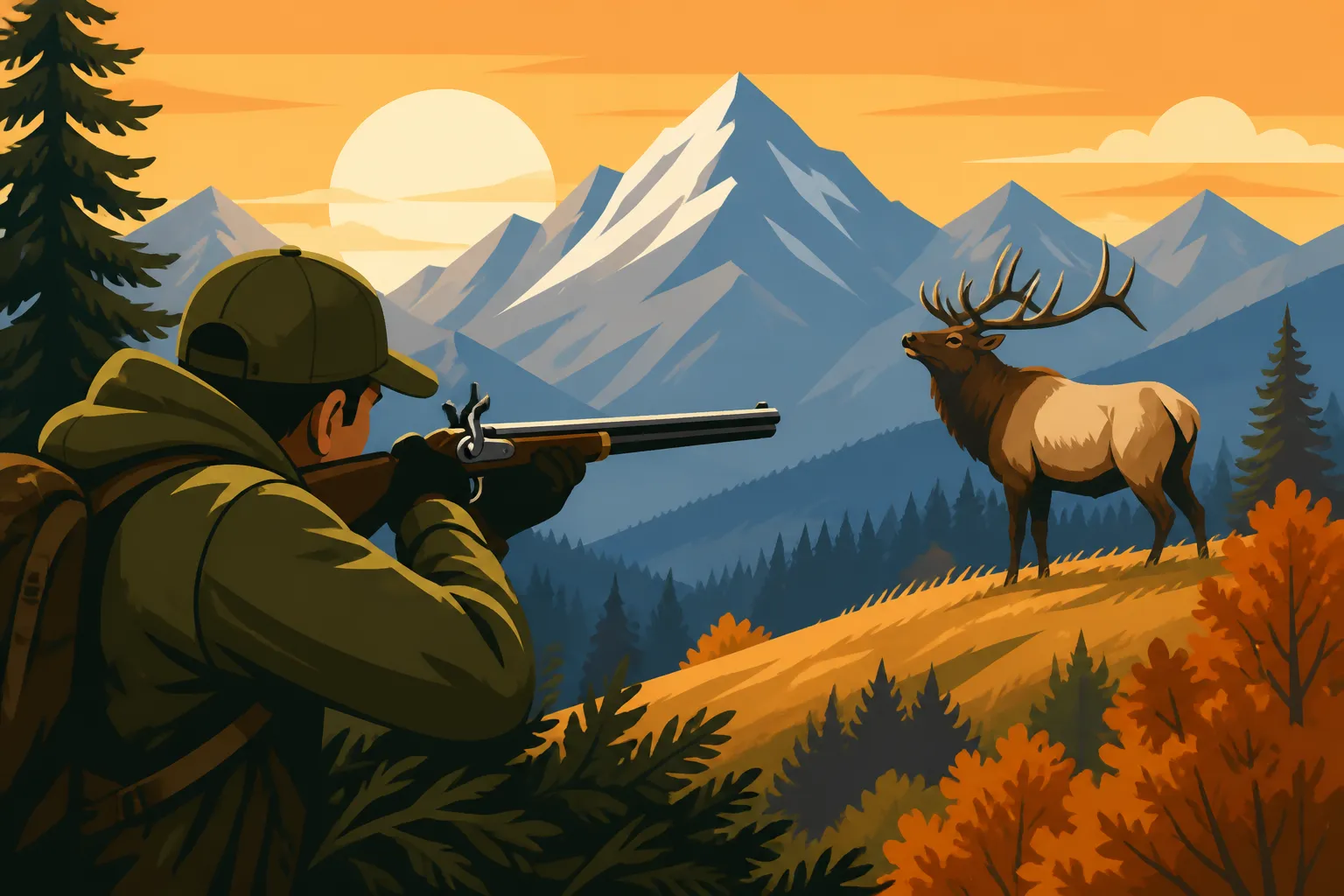
Colorado Elk Hunting: Muzzleloader Tactics
Hunting elk in Colorado with a muzzleloader presents a unique set of challenges and triumphs. Unlike rifle season, where longer shots are common, or archery, which demands extreme stealth, muzzleloader hunting forces you into a specific, often frustrating, sweet spot: close-range precision under strict equipment rules. It's not just about pulling a trigger; it's about mastering your gear, understanding elk behavior in a rapidly changing season, and embracing the limitations that make success so incredibly rewarding. This guide is here to walk you through the nitty-gritty of Colorado muzzleloader elk tactics, helping you navigate the regulations, perfect your setup, and develop the strategies needed to punch your tag.
Colorado's Muzzleloader Season: Rules and Realities
The Colorado muzzleloader season is a beast of its own, setting it apart from virtually any other big game hunting opportunity in the state. Many hunters often overlook the nuanced regulations, only to find themselves scrambling last minute or, worse, running afoul of the law. This isn't just about knowing when you can hunt; it's about understanding how you can legally participate.
Navigating the Specific Regulations
First and foremost, Colorado Parks and Wildlife (CPW) has some very specific rules for what constitutes a legal muzzleloader and ammunition during the dedicated muzzleloader season. This isn't your daddy's smokepole rules from back East, where pretty much anything goes. Here, during the muzzleloader-only season, you generally cannot use a scope, meaning you're relying on open sights, peep sights, or fiber optics. This drastically changes your effective range and demands a different kind of accuracy.
Even more critical are the projectile rules. Colorado specifies that legal muzzleloading rifles must be a minimum of .50 caliber. Furthermore, projectiles must be a single, non-jacketed lead or lead alloy bullet that is at least .50 caliber in diameter, or a lead or lead alloy bullet of at least .40 caliber when loaded in a sabot. The key distinction here is that during the muzzleloader season, no plastic sabots or plastic gas checks are allowed to remain on the projectile after firing. This immediately eliminates many popular factory loads and requires hunters to either use full-bore lead conicals (like traditional Maxi-Balls or PowerBelt Pure Lead), or use specific sabots that completely discard upon firing, leaving only the lead projectile. The ignition system also matters; most seasons allow percussion caps or 209 primers, but it's always wise to double-check the current year's regulations on the CPW website for any subtle changes. Understanding these restrictions is paramount before you even buy a gun or a box of bullets. It's one of the first things I cover when discussing a comprehensive Colorado Muzzleloader Hunting Guide.
Season Timing and Its Impact on Elk Behavior
Colorado's muzzleloader season typically falls in mid-September. This timing is a double-edged sword. On one hand, it often overlaps with the tail end of the elk rut, meaning there's still a chance to hear bugles and locate bulls that are actively seeking cows. You might get lucky and catch a bull that's still fired up, making him more responsive to calling. However, the peak rut activity has usually passed, and the elk are starting to feel the pressure from archery hunters who have been in the woods for weeks.
By mid-September, elk herds are beginning to transition. They might still be in their higher summer ranges, but cooler nights and increased human activity push them towards thicker timber, north-facing slopes, and more secure bedding areas. This means your scouting needs to be dialed in on these transition zones. You might find lone bulls that have been pushed out of their herds or small groups of cows and calves beginning their migration movements. The short duration of the muzzleloader season, usually about nine days, means you have to be efficient and opportunistic. You can't afford to spend days "figuring out" the elk; you need to arrive with a solid game plan based on thorough pre-season scouting.
The Permit and Preference Point Reality
Let's be real, drawing a Colorado muzzleloader elk tag often requires some commitment. Unlike the general over-the-counter (OTC) rifle seasons, muzzleloader tags are typically part of the draw system. This means you'll need to apply for a tag in the spring, and depending on the unit you're targeting, you might need a significant number of preference points to secure a tag. For some of the more desirable units with higher bull-to-cow ratios or better public land access, you could be looking at several years of building points.
This reality shapes how you approach your hunt. If you're new to Colorado or don't have many points, you might be looking at units that are less desirable or have lower success rates. However, with careful research and the use of tools like GoHunt, you can analyze draw odds and hunt data to find units that fit your point profile and offer a reasonable chance at a tag. This is where understanding the Colorado Draw System and Preference Points becomes critical, as it dictates your access to specific hunting opportunities. Don't be discouraged if you don't draw your dream unit right away; building points is part of the game for many successful Colorado elk hunters.
Essential Muzzleloader Gear and Setup for Elk
Hunting with a muzzleloader isn't just about showing up with a firearm; it's about having the right firearm and knowing it inside and out. The specialized nature of the equipment, coupled with Colorado's specific regulations and the demanding mountain environment, means your gear choices can make or break your hunt.
Selecting the Right Muzzleloader for the Mountains
When it comes to the actual muzzleloader, you have a few choices, but reliability and accuracy should be your top priorities. Modern inline muzzleloaders, like those from CVA, Traditions, or Thompson/Center, are popular for their ease of loading, cleaning, and generally better accuracy compared to traditional sidelocks. Many modern inlines are designed to handle 209 primers, which offer a hot, reliable ignition, crucial for consistent performance in varying weather conditions.
However, remember the scope restriction. Many high-end inline muzzleloaders come drilled and tapped for scopes, but if you're hunting during the muzzleloader-only season, you'll need to remove it and equip open sights. Practice extensively with these sights. Your effective range will be significantly reduced, likely to 100-150 yards for most hunters, depending on their proficiency. Choose a rifle that feels comfortable to carry in the mountains, as you'll be doing a lot of walking, and something that can withstand the inevitable bumps and scrapes of backcountry travel. The best muzzleloader setup for Colorado will be one that you're intimately familiar with and can shoot accurately under pressure.
Projectile and Powder: The Heart of Your Muzzleloader
This is arguably the most critical component for Colorado muzzleloader hunting, thanks to those strict projectile regulations. Forget about your favorite saboted projectiles with plastic components if you're hunting during the dedicated muzzleloader season. You'll need to source full-bore conicals or specific non-plastic sabot alternatives.
- Conical Bullets: These are essentially large lead slugs that engrave directly into the rifling. Brands like PowerBelt (specifically their Pure Lead series), Thor Bullets, and traditional Maxi-Balls are popular choices. They load relatively easily and provide excellent terminal performance on elk due to their heavy weight and ability to retain mass. Practice loading these in the field; they can be a tighter fit than sabots.
- Powder Selection: You have the choice between traditional black powder (like Goex or Swiss) or black powder substitutes (Pyrodex, Triple Seven, Hogdon 777). Substitutes are generally easier to clean and less corrosive, which is a big plus for multi-day hunts in varying weather. However, consistency is key with any powder. Always measure your powder charge precisely, and test different loads to find what shoots best out of your specific rifle. I typically recommend carrying pre-measured charges in speedloaders or vials to ensure consistency and quick reloading in the field. Make sure your powder and primers are kept completely dry; a wet charge is a guaranteed miss.
Sights and Precision Shooting
Since scopes are generally prohibited during Colorado's muzzleloader season, your iron sights become your best friends.
- Open Sights: The most basic, often found on traditional-style muzzleloaders. They consist of a front post and a rear notch.
- Peep Sights/Ghost Rings: These offer a faster sight picture and often better precision than traditional open sights. Brands like Williams Gun Sight Company and Lyman offer excellent options. A peep sight typically has a small aperture that you look through, focusing on your front sight and the target. Your eye naturally centers the front sight in the aperture.
- Fiber Optic Sights: Many modern muzzleloaders come equipped with fiber optic front and rear sights, which gather ambient light to create bright, easy-to-see aiming points, especially in low light conditions common during early morning or late evening hunts.
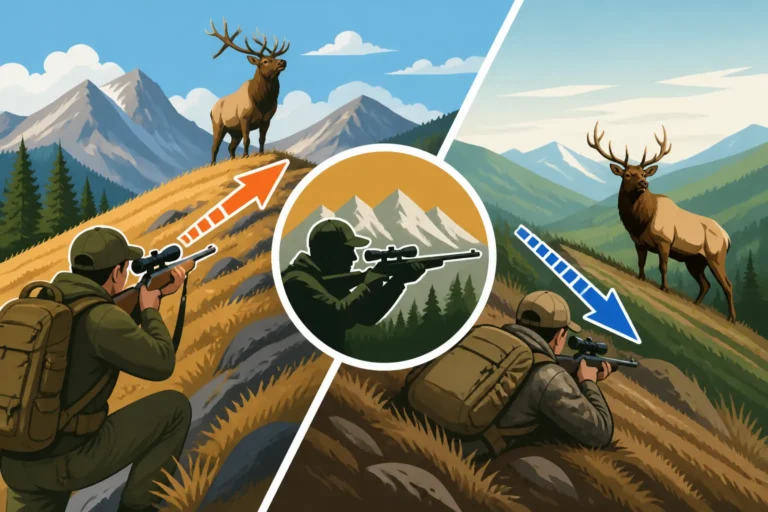
Regardless of your chosen sight, rigorous practice is non-negotiable. You need to know your rifle's point of impact at various distances (25, 50, 75, 100 yards) and practice shooting from real-world hunting positions: kneeling, sitting, leaning against a tree, and off your backpack. Understanding how to accurately shoot uphill and downhill at elk is also paramount, as the mountains rarely offer flat shooting lanes.
Essential Field Accessories for Muzzleloader Hunters
Beyond the rifle itself, a few critical accessories will make your hunt much smoother:
- Loading Tools: A sturdy ramrod extension, a bullet starter, and a nipple wrench are invaluable.
- Primers/Caps: Carry plenty, and keep them in a waterproof container. A small hard case or even a dedicated primer dispenser works well.
- Cleaning Supplies: A small bore snake, cleaning patches, and a speed cleaner/solvent are crucial for maintaining accuracy, especially after a few shots in the field, or if you need to clear a misfire.
- Speed Loaders: These are pre-measured powder charges and projectiles loaded into a tube, allowing for quick and efficient reloading when time is of the essence. CVA and Thompson/Center make good options.
- Weather Protection: A waterproof muzzle cover or even a piece of electrical tape over the muzzle will protect your powder from moisture.
Investing in high-quality gear and dedicating time to practice with your specific setup will dramatically increase your confidence and success when that bull finally steps out.
Muzzleloader Hunting Tactics for Colorado Elk
Muzzleloader hunting for elk in Colorado isn't a long-range game; it's a close-quarters affair that demands patience, stealth, and a deep understanding of elk behavior. Your limited range means you've got to play their game on their terms, getting in tight before you can even think about pulling the trigger.
Strategic Scouting: Pre-Season and E-Scouting
Success with a muzzleloader often begins long before the season opens. Thorough pre-season scouting is non-negotiable. Look for fresh sign: tracks, rubs, wallows, and droppings. Identify key features like bedding areas, feeding grounds, and the travel corridors that connect them. Pay attention to water sources; these are magnets for elk, especially during dry spells in early fall.
Modern technology, especially e-scouting, can be a game-changer. Using satellite imagery and topographic maps from platforms like GoHunt, you can identify potential hotspots from your couch. Look for north-facing slopes with dark timber, saddles, and benches at various elevations. These areas often serve as bedding and refuge zones for elk, particularly those pressured by early season hunters. Cross-reference these potential spots with public land boundaries and access points. When I'm working on a How to E-Scout Before a Colorado Hunt strategy, I always emphasize looking at historical satellite imagery to identify areas that hold consistent feed and cover.
Leveraging Lingering Rut Activity and Adapting to Post-Rut Behavior
Since the muzzleloader season often touches the tail end of the rut, don't be afraid to use calling tactics. While the roaring, aggressive bugling of the peak rut might be waning, a well-placed cow call or a soft bugle can still pique a bull's interest, especially a satellite bull looking for a last chance with a receptive cow. Be subtle, listen intently, and try to pinpoint where the elk are moving and communicating.
However, be prepared for elk behavior to shift quickly. If the rut has completely fizzled out, bulls will likely become more reclusive and less vocal. They'll start to regroup with smaller bachelor herds or integrate back into cow/calf groups, focusing on feeding and gaining weight before winter. At this point, your tactics will need to shift from aggressive calling to more subtle methods like still-hunting, ambushing, and spot-and-stalk. Understanding How to Hunt Elk During the Peak Rut vs. How to Hunt Bulls After the Rut Ends will be crucial for adapting your strategy.
The Art of Close-Quarters Hunting: Still-Hunting, Ambush, and Calling
With a muzzleloader, getting within 100-150 yards (or even closer for a high-percentage shot) is paramount. This means you need to become a ghost in the timber.
- Still-Hunting: This is slow, deliberate movement through prime elk habitat. Take a few steps, stop, listen, and scan. Use your binoculars constantly, even in thick timber, to pick apart shadows and identify shapes that don't belong. Focus on breaking up your silhouette and blending into the natural environment. Pay close attention to How to Move Quietly Through Colorado Timber, avoiding dry leaves, snapping twigs, and noisy gear.
- Ambush Hunting: Identify natural travel corridors, water holes, wallows, or saddles that elk are likely to use. Set up downwind and wait patiently. Early mornings and late evenings are prime times for elk movement. A good ambush spot might require an early start or a late exit, so be prepared for hiking in the dark.
- Calling: Even after the rut, subtle cow calls can still bring in curious cows or even a bull looking for companionship. If you locate a herd, try to set up where you can use the terrain to your advantage, drawing them into your shooting lane. Never give up on calling entirely, but know when to transition to a quieter, more patient approach. Always consider How to Use the Wind Hunting Colorado Elk; it's your most important ally or worst enemy.
Ethical Shot Placement and Practice
Given the single-shot nature of muzzleloaders and their limited range, ethical shot placement is absolutely critical. Aim for the vital organs (heart/lungs) and ensure you have a clear, unobstructed shot. Practice shooting from various positions – kneeling, sitting, off shooting sticks, or leaning against a tree – to simulate real hunting scenarios. Know your personal maximum effective range with your muzzleloader and stick to it, no matter how tempting a longer shot might be. Practice regularly, not just on a bench rest, but in positions you'd actually use in the field.
Tracking and Recovery in Muzzleloader Season
After the shot, pay close attention to where the elk was standing and its reaction. Because of the slower projectile speed and the nature of the wound, elk often don't react as dramatically as they might to a high-velocity rifle round. Don't rush in immediately. Give the animal time, especially if it's not a clear heart shot. Reload your muzzleloader immediately, if possible, in case a follow-up shot is needed. Then, begin careful tracking, looking for blood, broken branches, and tracks. In dense timber, even a short track can be challenging, so take your time and follow every sign.
Field Craft and Success Factors for Muzzleloader Elk Hunters
Beyond the specific gear and tactics, there are foundational elements of field craft and mental fortitude that are particularly important for muzzleloader elk hunters in the demanding Colorado backcountry. These often separate the successful hunters from those who come home empty-handed.
Physical Conditioning: The Mountain Athlete
Elk hunting, regardless of weapon, is physically demanding. But with a muzzleloader, the imperative to get in close means you're often covering more ground, climbing steeper slopes, and enduring longer treks to get into position. This is not a hunt for the unprepared. You need to be able to hike for miles at high altitude, often with a heavy pack, and still have the stamina and steady hand to make a precise shot when the opportunity arises.
Start your physical preparation months in advance. Focus on cardiovascular endurance (hiking, trail running, cycling), strength training (especially legs and core), and carrying weight in your hunting pack to simulate real-world conditions. High-altitude acclimation, even if you live at sea level, is a serious consideration. Understanding How to Physically Prepare for Colorado Elk is as important as knowing your muzzleloader. The better shape you're in, the more ground you can cover quietly, and the steadier you'll be when that fleeting moment of truth arrives.
Mental Toughness and Unwavering Patience
Muzzleloader hunting tests your mental grit like few other methods. The limited range, the single-shot capability (effectively), and the specific regulations mean you'll likely pass on many shots that a rifle hunter would take. This requires incredible discipline and patience. You might stalk for hours, only to have a bull appear just out of range, or a branch obscure your target. It's easy to get frustrated.
Embrace the challenge. Understand that the reward of harvesting an elk with a muzzleloader is amplified precisely because of these difficulties. Practice mental resilience; visualize successful scenarios, and learn to manage the adrenaline dump when an animal appears. Remind yourself that every single shot truly counts, and a missed opportunity is better than a poorly placed shot.
Weather Resilience and Meat Care
Colorado's mid-September weather can be notoriously unpredictable. You might start with warm, sunny days and end the week with freezing rain or an early snowstorm. Rain and snow can be a muzzleloader hunter's nemesis, potentially fouling powder and primers. Invest in reliable waterproof gear for yourself and your firearm. A simple piece of electrical tape over the muzzle can prevent moisture from reaching your powder. Keep your primers or caps in a sealed, dry container.
Once you harvest an elk, meat care becomes your immediate priority. The mountains can be warm, even in September, and elk meat spoils quickly if not handled properly. Know how to field dress and quarter an elk efficiently. Consider packing game bags specifically designed for breathability. Get the meat off the bone and into a cool, shaded area as quickly as possible. If you're backpacking, having a plan for How to Pack Out an Elk in Colorado is essential, and knowing How to Keep Elk Meat Cool in Warm Weather is critical to salvaging your hard-earned prize.
Remember, muzzleloader hunting for elk in Colorado is a journey, not just a destination. It's about connecting with the wild on a more fundamental level, honing your skills, and respecting the animal and the mountains. Take your time, stay persistent, and savor every moment of the challenge.
Muzzleloader Projectile Comparison
Here's a quick look at common muzzleloader projectile types, especially relevant for Colorado's specific regulations during the muzzleloader season:
| Projectile Type | Description | Colorado Muzzleloader Season Legality (General) | Pros | Cons |
|---|---|---|---|---|
| Full-Bore Conical | Heavy, solid lead or lead alloy bullet that fits directly into the bore, engraving with the rifling. | Legal (e.g., PowerBelt Pure Lead, Thor Bullets, traditional Maxi-Balls) | Excellent terminal performance, high weight retention, legal without sabots. | Can be harder to load, less aerodynamic than sabots, may require higher twist rates for stability. |
| Saboted Projectile | Smaller diameter bullet (e.g., .45 cal) encased in a plastic sabot to fit a larger bore (e.g., .50 cal). | Legal, but… Sabot must be entirely non-plastic OR shed plastic upon firing (rare for hunting). | Often more aerodynamic, can achieve higher velocities and flatter trajectories. | Most common plastic sabots are illegal for Colorado's dedicated muzzleloader season. Requires careful selection. |
| PowerBelt AeroTip | Copper-plated lead projectile with a plastic tip; some variations include a plastic gas check. | Varies. Check specific model for plastic gas check. Plastic tip is usually fine. | Good ballistic coefficient, easier loading, widely available. | Plastic gas check versions are illegal. Hunter must ensure no plastic remains on projectile after firing. |
Always consult the current year's Colorado Parks and Wildlife hunting regulations brochure for the most up-to-date and specific rules regarding muzzleloader projectiles and equipment.
Disclaimer
The information provided in this guide is for general informational purposes only and does not constitute legal advice. Hunting regulations, season dates, and specific requirements can change annually. It is the hunter's sole responsibility to review and comply with all current Colorado Parks and Wildlife (CPW) regulations, laws, and proclamations before engaging in any hunting activities. Always prioritize safety, ethical hunting practices, and responsible land use.