How to Hunt Colorado Plains for Pronghorn
Hunting pronghorn on the vast, open plains of Colorado can feel like trying to catch smoke. Their incredible speed, keen eyesight, and the sheer flatness of their habitat make them one of the most challenging, yet rewarding, big game animals to pursue. If you've ever felt utterly exposed trying to get within range or watched a herd bolt at what felt like a mile away, you're not alone. This guide is dedicated to helping you unravel the mysteries of hunting these incredible animals in Colorado's unique plains environment, offering practical strategies and insights to boost your success.
Understanding the Colorado Pronghorn and Their Habitat
Before you can even think about drawing a bow or shouldering a rifle, you've got to understand the animal itself and the ground it calls home. Pronghorn are truly unique, often mistakenly called "antelope," but they're in a league of their own. Their adaptations for open country are nothing short of incredible, and understanding these traits is the first step in formulating a successful hunting strategy on Colorado's eastern plains.
Pronghorn Biology and Behavior on the Plains
Pronghorn are speed demons, plain and simple. They are the fastest land mammal in North America, capable of sustaining speeds of 35-40 mph for miles, and hitting bursts up to 60 mph. This speed isn't just for show; it's their primary defense mechanism against predators in an environment with little cover. Their eyes are equally impressive, often compared to 8x binoculars, giving them a 300-degree field of vision. They can detect movement and danger at incredible distances, often spotting you long before you ever see them.
Beyond their physical prowess, their behavior is also dictated by the open plains. Pronghorn are creatures of routine, often following similar routes to water, bedding areas, and feeding grounds. They're typically found in herds, ranging from small bachelor groups to large mixed-sex aggregations, especially outside the rut. During the rut, which usually peaks in late September, bucks become territorial, actively defending harems of does. This can present unique opportunities but also adds a layer of complexity to their movement patterns. Understanding these behaviors – their preferred feeding times (often early morning and late afternoon), their tendency to bed down during the midday heat, and their reliance on water sources – is paramount. Knowing when and where they're likely to be active can help you anticipate their movements and plan your approach, rather than simply reacting to whatever you stumble upon.
Key Habitat Features of Colorado's Eastern Plains
Colorado's eastern plains are a mosaic of short-grass prairie, agricultural fields, and scattered riparian areas. Unlike the mountains where elk hide in timber, pronghorn thrive in these wide-open spaces, often mingling with cattle or utilizing the vastness of Bureau of Land Management (BLM) lands. The terrain is generally flat to gently rolling, with subtle draws, small hills, and occasional dry creek beds offering the only real cover. These seemingly insignificant topographical features become critical to a hunter trying to get close.
You'll often find pronghorn congregating near water sources like stock ponds, windmills, or even irrigation ditches, especially during dry periods. They also favor areas where there's a mix of sagebrush, short grasses, and forbs, which provide both forage and a bit of relief from the wind. Pay close attention to fences; while pronghorn can jump, they prefer to crawl under fences. This often creates predictable crossing points, which can be strategic ambush locations if you've done your scouting. Identifying these subtle breaks in the landscape – a slight rise, a hidden wash, a sparse stand of trees near a creek – is what separates a successful pronghorn hunter from one who constantly gets busted. These features, though small, are the only things that will allow you to break up your silhouette and get within striking distance.
Essential Gear and Scouting for Plains Pronghorn
Hunting pronghorn on the plains is less about brute force and more about finesse, patience, and meticulous preparation. Your gear choices and pre-hunt scouting will make or break your chances of success. It's a completely different game than hunting in the high country, and your equipment needs to reflect that.
Optics: Your Most Critical Tool
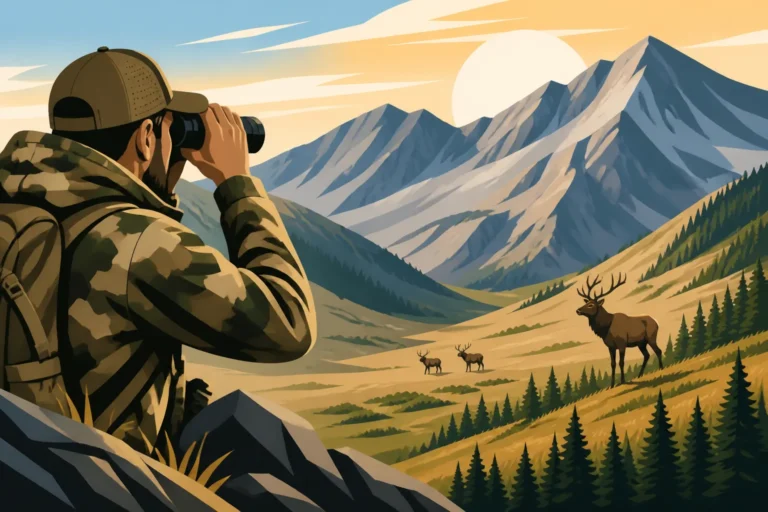
When you're hunting animals that can spot you from a mile away in flat country, your eyes need to be just as good, if not better. This is where high-quality optics become your single most important piece of gear. You'll spend an immense amount of time behind glass, dissecting vast landscapes for the subtle flicker of a white rump or the distinct silhouette of a pronghorn. A good pair of 10×42 or 12×50 binoculars are essential for general glassing, allowing you to cover ground quickly from a vantage point. Look for brands known for clarity and light transmission, as you'll be glassing in challenging conditions at dawn and dusk.
However, binoculars alone aren't enough. A high-magnification spotting scope, ideally 20-60x or even 27-60x, is absolutely crucial. This is how you'll confirm details, judge the animal, and most importantly, discern if that distant white patch is a pronghorn or just a rock. Coupled with a sturdy tripod, a spotting scope allows you to sit comfortably and systematically pick apart the landscape without fatiguing your arms. You'll be able to spot pronghorn at distances that would be impossible with binoculars alone, giving you a massive advantage in planning your approach. Remember, the further out you can spot them, the more time you have to analyze their movements and the terrain, greatly increasing your chances of a successful stalk. For a deeper dive into choosing the right glass for vast western landscapes, check out our guide on "Best Optics for Colorado Big Game".
Weapon Choices for Open Country
The flat, open nature of pronghorn country means long shots are often the norm. This isn't timber hunting where 50-yard shots are common. You should be prepared for shots ranging from 200 to 400 yards, and sometimes even further depending on your comfort level and ethical boundaries. For this reason, a rifle chambered in a flat-shooting caliber is generally preferred. Popular choices include the .25-06 Remington, 6.5 Creedmoor, .270 Winchester, .308 Winchester, and .30-06 Springfield. Whatever caliber you choose, ensure you practice extensively at extended ranges and understand your rifle's ballistic performance precisely. Knowing your dope (data on previous engagements) out to 500 yards will give you the confidence needed when that trophy buck finally stands broadside.
While rifle hunting is most common, archery hunting for pronghorn is an incredibly challenging and rewarding endeavor. It requires even greater stealth and a mastery of tactics like decoying or waterhole ambush, as getting within bow range (typically 60 yards or less) in open country is exceptionally difficult. If you're considering archery, practice shooting at various distances, especially from kneeling or prone positions, as you'll rarely be standing upright for a shot. For more archery-specific strategies, you might find our article on "Archery Elk Tactics for the Rut" helpful, as many of the principles of stealth and wind awareness apply. Muzzleloader hunting also presents unique challenges, demanding similar close-range tactics as archery but with the added complexity of a single shot and slower reloading.
E-Scouting and Boots-on-the-Ground Reconnaissance
Modern technology has revolutionized how we prepare for hunts. E-scouting, using tools like Google Earth, Gaia GPS, or specialized hunting apps like GoHunt, is indispensable for plains pronghorn. These platforms allow you to study contour lines, identify subtle draws, locate water sources, and pinpoint potential travel corridors and bedding areas long before you ever set foot in the field. You can mark potential vantage points, analyze fence lines for crawl-unders, and even estimate stalk routes. This pre-visualization saves countless hours of aimless wandering and helps you prioritize areas for physical scouting.
However, e-scouting is only half the battle. Nothing beats boots-on-the-ground reconnaissance. If possible, visit your chosen unit a few weeks or days before the season. Drive the roads, glass from key vantage points, and note where pronghorn are congregating. Look for fresh tracks, droppings, and well-used trails. Pay attention to how they react to vehicles and people. This real-world intel will either confirm your e-scouting hunches or reveal entirely new opportunities. While scouting, respect private land boundaries religiously. A quick trip to the Colorado Parks and Wildlife (CPW) website can clarify unit boundaries and provide insights into Colorado Pronghorn Draw Odds Explained and other crucial information for planning. Remember, the more you know about the specific area, the less time you'll spend guessing during your actual hunt.
Proven Hunting Methods for Colorado Plains Pronghorn
Successfully hunting pronghorn on the Colorado plains boils down to executing one of a few key strategies. Given their incredible senses and the lack of cover, you need a plan, and the patience to stick with it.
Spot-and-Stalk: The Art of the Approach
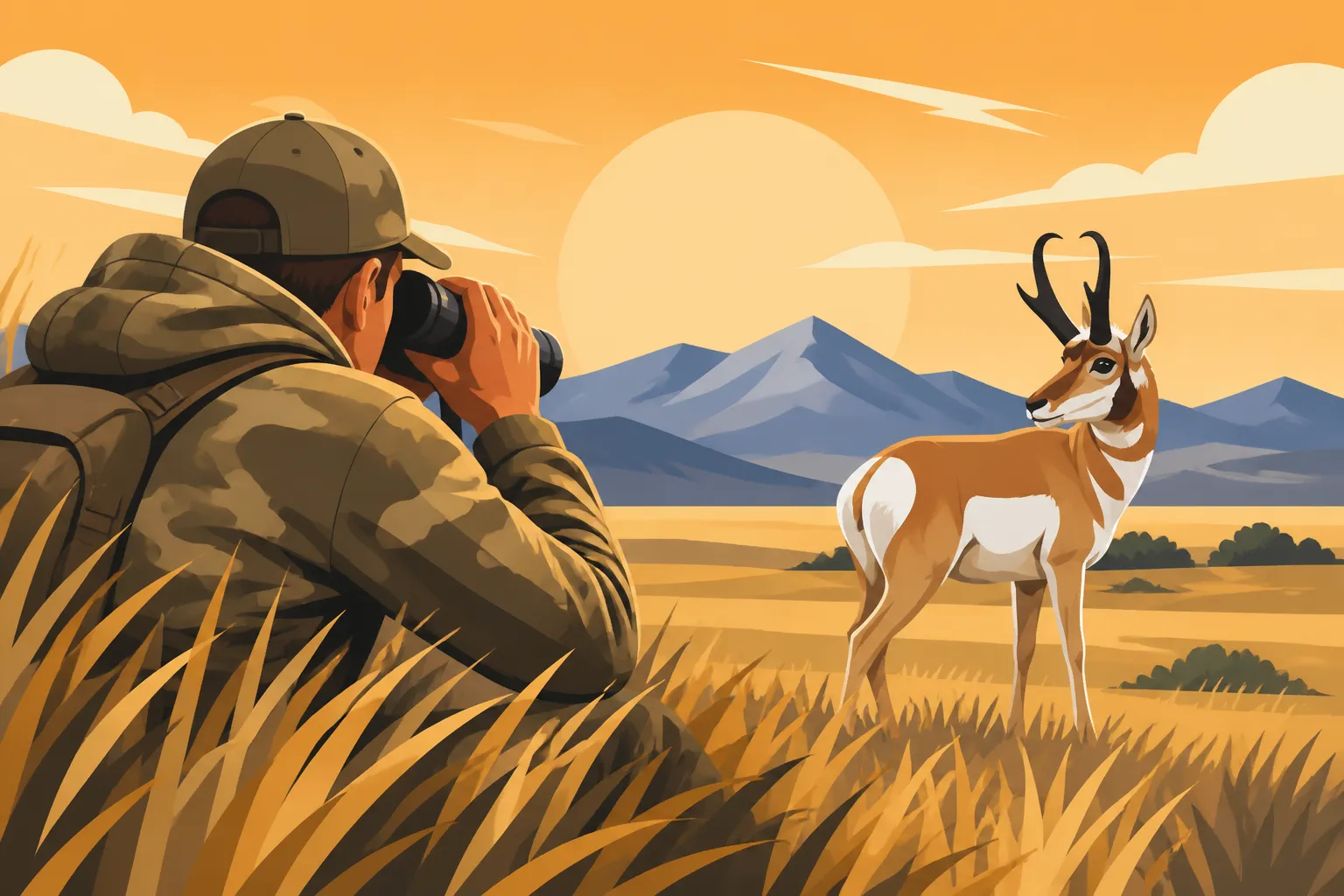
The spot-and-stalk method is perhaps the most iconic and challenging way to hunt plains pronghorn. It demands patience, exceptional optics, and a deep understanding of terrain and wind. The process begins by finding a high vantage point – even a slight rise can offer a commanding view – and systematically glassing the landscape with your binoculars and spotting scope. You're looking for that distinct white patch, a flash of horn, or a shimmering heatwave distorting a distant herd. Once you've located a target, the real work begins.
First, assess the wind. Pronghorn have an excellent sense of smell, so staying downwind is critical. Next, map out your stalk using the available terrain. This is where your e-scouting pays off. Look for every small depression, every fold in the land, every dry creek bed, or even taller sagebrush that can provide cover. You'll often find yourself crawling on your belly for hundreds of yards, utilizing every inch of available concealment. Speed is not your friend here. Slow, deliberate movement, often pausing to re-glass the herd and ensure they haven't moved or spotted you, is key. If you get busted, it's often because you moved too fast, stood up in the wrong place, or let the wind shift. Sometimes, despite your best efforts, they'll still bolt. Don't despair; simply re-evaluate, relocate, and start the process again. It can take multiple stalks to close the distance on a wary buck, but the satisfaction of a successful spot-and-stalk is unmatched. For advanced strategies in similar open environments, you could delve into "Spot-and-Stalk Pronghorn Tactics".
Decoying: Bringing Them to You
Decoying is an exciting and often highly effective tactic for pronghorn, especially during the rut when bucks are territorial and aggressive. The premise is simple: you use a life-sized decoy, typically a buck silhouette, to challenge a dominant buck or pique the curiosity of a lone animal. This method works best on a buck that has a harem or is actively cruising for does, as they are more likely to respond to what they perceive as an intruder.
To execute a decoy hunt, one hunter typically sets up with the decoy, presenting it in a challenging posture (like a rival buck walking into his territory). Another hunter, often positioned 50-100 yards behind or to the side, waits for the approaching buck to come into range. You need to be incredibly careful with concealment; wear all drab or camouflage clothing, as pronghorn will easily spot any anomaly. As the buck approaches, he'll often stop and stare, trying to determine if the decoy is a real threat. This is your window. The success of decoying relies heavily on the buck's temperament, the time of year, and your ability to remain perfectly still and hidden. It’s a high-risk, high-reward strategy that can lead to some of the most thrilling close encounters in western hunting.
Waterhole Ambush: A Strategic Play
In dry conditions, especially during the early archery season or the hot rifle seasons, pronghorn become highly reliant on water sources. This makes waterholes excellent locations for an ambush. Unlike spot-and-stalk, which requires constant movement, waterhole hunting is about patience and remaining perfectly still for extended periods. You'll need to identify a water source that pronghorn are actively using – look for tracks, droppings, and fresh trails leading to and from the water.
Once you've found an active waterhole, set up a ground blind or utilize natural cover that offers concealment. This needs to be done well in advance, giving the pronghorn time to get used to its presence, or under the cover of darkness. The key is to be completely hidden from their keen eyesight. Position your blind downwind, if possible, but also consider thermals; early morning and late afternoon will often have different wind patterns. Pronghorn typically visit water in the late morning or late afternoon, but in hot weather, they might come in multiple times a day. This method is particularly popular with bowhunters looking to get within close range. It requires immense patience, but when a big buck finally commits to the water, the anticipation is palpable. To maximize your chances, consider reading up on "How to Hunt Elk Water Holes" as many principles of concealment and patience apply.
Navigating Challenges and Maximizing Success
Hunting pronghorn on the Colorado plains isn't without its unique set of challenges. From vast private land holdings to the unforgiving elements, success often hinges on how well you adapt and prepare for these hurdles.
Dealing with Private Land and Access
One of the biggest frustrations for hunters on the Colorado plains is the checkerboard pattern of public and private land. A vast majority of the eastern plains is privately owned, making access a significant concern. It's not uncommon to spot a trophy buck on private land with no discernible public access nearby. This can be incredibly disheartening, but it's a reality you must prepare for.
The first step is to thoroughly research land ownership using tools like GoHunt's mapping features or the Colorado Hunting Atlas. These maps clearly delineate public (BLM, State Trust Land, State Wildlife Areas) from private ground. Respecting private property is non-negotiable. Trespassing can lead to severe fines, loss of hunting privileges, and gives all hunters a bad name. Instead, focus your efforts on areas with verifiable public access. If you identify a promising private parcel, your best bet is to seek permission from the landowner well in advance of your hunt. This means knocking on doors, sending letters, or making phone calls. Be polite, offer to help with chores, and always leave the land cleaner than you found it. Sometimes, securing permission on a desirable ranch is the only way to hunt a specific area. Some hunters opt for a Colorado Landowner Voucher Hunt as a way to gain access to private land without dealing with the often-difficult draw system. Remember, a polite request is often better than no request at all.
The Impact of Weather and Wind
The weather on the Colorado plains can be notoriously unpredictable, and it plays a massive role in pronghorn behavior and hunting success. A calm, sunny day can quickly turn into a raging dust storm or a frigid gale. High winds are particularly challenging when hunting pronghorn. Not only do they make shooting accurately at long ranges incredibly difficult, but they also make it harder to hear approaching animals or mask your own movements. Pronghorn tend to bed down or seek shelter during severe winds, making them harder to locate.
However, wind isn't always a bad thing. A steady, strong wind can actually work to your advantage by masking your noise and scent during a stalk. It can also cause pronghorn to be less alert, as their primary senses are somewhat dulled by the constant noise. Your strategy needs to adapt to the conditions. On calm days, extreme stealth and long-range glassing are paramount. On windy days, focus on stalking into the wind, using terrain features to break up your profile, and being prepared for closer, quicker shots. Always pack layers of clothing suitable for both hot and cold conditions, and be prepared for sudden shifts. A good wind checker is essential for every stalk, helping you confirm the wind direction before making your move. For more on how wind and thermals affect hunting, check out "How to Use the Wind Hunting Colorado Elk", as the principles transfer well to pronghorn.
Field Care and Recovery in the Open
Successfully taking a pronghorn is only half the battle; proper field care and recovery in the open plains present their own challenges. Unlike mountainous terrain where animals might roll down a steep slope, a downed pronghorn on the plains is typically visible. However, the sheer distance you may be from a road or vehicle means you need a plan for packing out the meat. Pronghorn are relatively small, usually yielding 30-50 pounds of boneless meat, but in warm conditions, heat can quickly spoil the meat.
Upon making a successful shot, approach cautiously to ensure the animal is expired. Then, get to work immediately. The plains can be hot, even in the fall, so speed is crucial. Get the animal gutted as quickly as possible to allow the carcass to cool. Skinning the animal in the field is also highly recommended to facilitate cooling and reduce weight for packing. Quartering the animal into four main pieces (two hindquarters, two front shoulders) and removing the backstraps and tenderloins will make it manageable to carry. If you're far from your vehicle, a good quality frame pack is indispensable. Carry game bags to protect the meat from dirt, flies, and debris. Keeping the meat cool is paramount; if temperatures are high, consider bringing coolers with ice. If you've been successful in your hunt and need guidance on meat processing, our article on "How to Quarter an Elk in the Field" provides excellent foundational knowledge that can be scaled down for pronghorn. Never leave meat to spoil; it's a disservice to the animal and to the hunting community.
Season Considerations and Tag Strategy
Understanding Colorado's specific hunting seasons and the draw system is paramount to even getting a chance at a plains pronghorn. These animals are highly sought after, and tags are limited, making strategic planning essential.
Colorado Pronghorn Season Dates and Types
Colorado offers various seasons for pronghorn, each with its own advantages and challenges. The main seasons typically include:
- Archery Season: Usually in August and early September. This is often the earliest season and can be very hot. It requires close-range tactics like decoying or waterhole ambush. Success rates can be lower due to the challenge of getting within bow range in open country.
- Muzzleloader Season: Typically a short window in late September, overlapping with the peak of the rut. This can be an exciting time to hunt aggressive bucks, but the limited range of a muzzleloader still demands careful stalking.
- Rifle Seasons (Early & Late): These are usually in October, with specific dates varying by Game Management Unit (GMU). Early rifle season can be a prime time, as bucks are often still active from the rut. Later rifle seasons can be colder and sometimes involve more wary animals. Rifle seasons generally have the highest success rates due to the longer effective range of modern firearms.
- Youth-Only Seasons: Colorado often has specific youth seasons designed to get younger hunters involved. These tags can offer unique opportunities.
It's crucial to check the current Colorado Parks and Wildlife (CPW) big game brochure for exact dates, as they can shift slightly year to year. Each season presents a different set of opportunities and challenges, so choose the one that best aligns with your preferred hunting style and availability. You can find detailed information on "Colorado Pronghorn Season Dates and Tags" on the CPW website.
Drawing Tags for Plains Pronghorn
Unlike elk, which have numerous over-the-counter (OTC) opportunities, pronghorn tags in Colorado are almost exclusively acquired through the draw system. This means you'll need to apply for a tag, often needing preference points to draw in desirable units. The draw process can be intimidating, especially for non-residents.
Colorado uses a preference point system for most limited-entry draws, including pronghorn. Each year you apply for a tag and are unsuccessful, you can purchase a preference point (or automatically get one if you select that option). These points accumulate, increasing your chances of drawing a tag in future years. Highly sought-after units with trophy potential may require many preference points, while other units might be drawn with fewer or even zero points, especially for doe tags. Researching the draw odds for specific GMUs is essential. Tools like GoHunt's insider data or the CPW website's draw statistics can help you understand how many points were required to draw certain tags in previous years.
For non-residents, drawing a pronghorn tag can be particularly challenging due to the limited allocation of tags. You'll likely need to accumulate several preference points for a solid buck tag. However, there are often doe or "either-sex" tags available in units requiring fewer points, which can be an excellent way to experience a plains pronghorn hunt and stock your freezer. Always pay attention to the application deadlines, which are typically in early April. Missing the deadline means missing your chance for the year! Understanding the nuanced draw system is key, and our guide on "Colorado Draw System and Preference Points" can help you navigate this complex process effectively.
| Hunting Method | Ideal Conditions | Key Advantages | Key Disadvantages | Best Suited For |
|---|---|---|---|---|
| Spot-and-Stalk | Any weather, but calm or steady wind preferred | Thrilling, high success rate (with practice), versatile | Requires extreme patience, physical exertion, keen eyes, prone to getting busted | Rifle hunters, patient archers |
| Decoying | Rut season, active bucks | Can bring animals into close range, exciting | Highly dependent on animal's mood, can spook non-responsive bucks | Archery hunters, muzzleloader hunters |
| Waterhole Ambush | Hot, dry weather; consistent water source | Allows for close-range shots, less physical | Requires extreme patience, limited to water sources, animals might not show | Archery hunters, muzzleloader hunters |
Disclaimer
Hunting is an inherently dangerous activity. This guide provides general information and recommendations for hunting in Colorado. Always prioritize safety, understand and follow all Colorado Parks and Wildlife (CPW) regulations, and respect private property. The information provided herein is not a substitute for professional guidance, landowner permission, or thorough personal preparation. Conditions and regulations can change, so always consult the latest CPW regulations before your hunt.