Colorado Horseback Hunting Outfitters
Tackling the vast, rugged wilderness of Colorado for an elk, deer, or any big game hunt can feel incredibly daunting, especially when you consider the sheer amount of ground you need to cover and the elevation changes that will test even the fittest hunter. Many seasoned hunters dream of getting deep into the backcountry, far from road hunters and pressure, but the reality of packing in all your gear, setting up camp, and then packing out a thousand pounds of meat can quickly turn that dream into an exhausting nightmare. This guide is here to shed light on how Colorado horseback hunting outfitters can be the ultimate game-changer, providing unparalleled access, efficiency, and a truly authentic Western hunting experience.
Why Choose Horseback Hunting in Colorado
Colorado's mountains aren't just beautiful; they're brutal. The elevation, the steep canyons, the thick timber, and the sheer scale of public land often mean that the best hunting spots are miles from the nearest trailhead. For many, this challenge is precisely why they consider a guided horseback hunt. It's not just about convenience; it's about making those remote, trophy-producing areas accessible and manageable.
Navigating Challenging Terrain with Ease
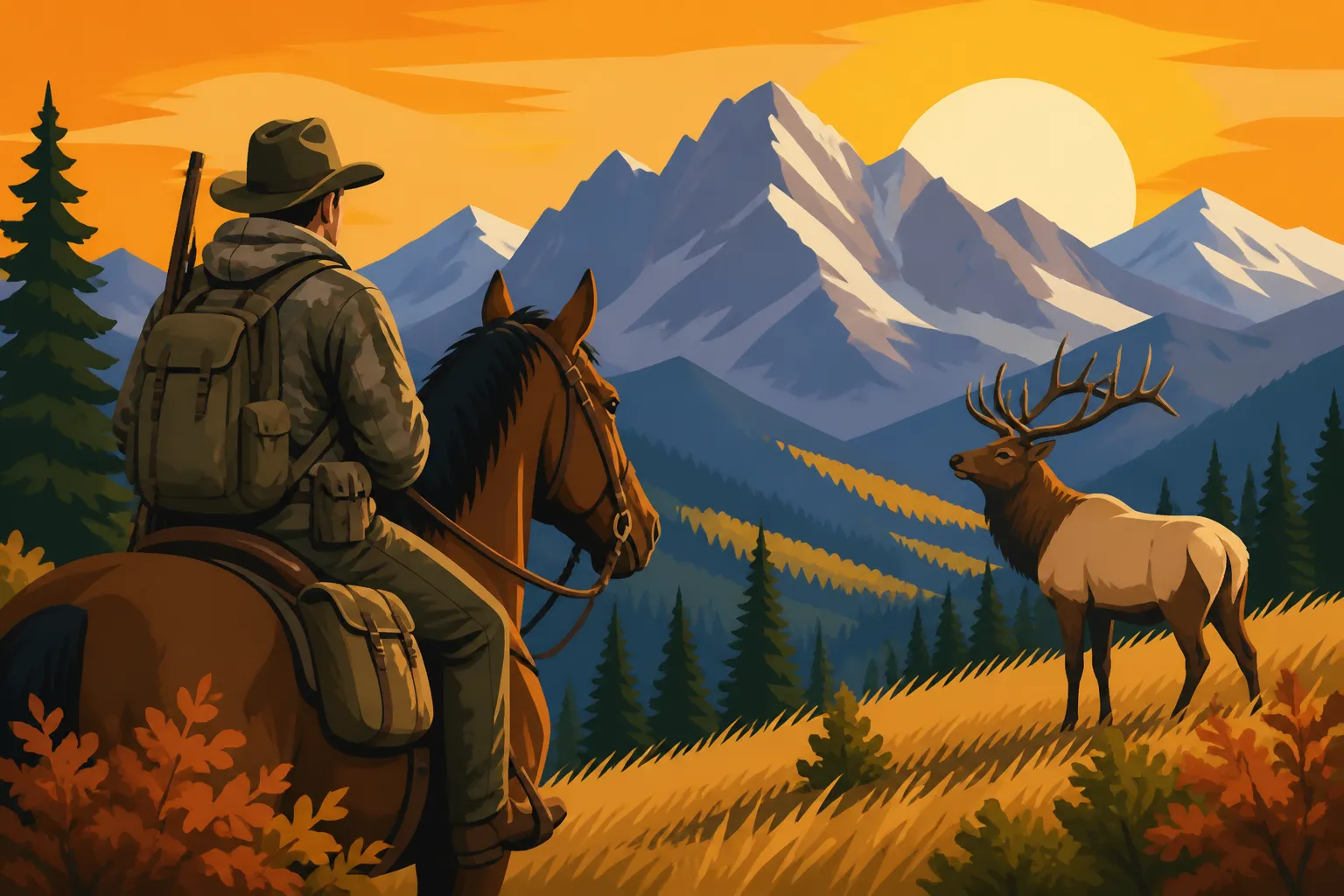
Imagine trying to scramble up a 45-degree slope at 10,000 feet with a heavy pack on your back, then repeating that for several days. It's an experience that can quickly drain your energy, sap your morale, and frankly, make you question your life choices. This is where a trusty string of horses or mules becomes your best friend. They are incredibly adept at navigating the treacherous trails, boulder fields, and steep inclines that would be agonizing on foot. These animals are purpose-bred and trained for mountain work, possessing an innate sense of balance and an ability to pick the safest path, allowing you to conserve your energy for the actual hunt. They turn what would be a grueling, slow crawl into a more efficient journey, letting you reach those hidden basins and secluded ridges where big game often seek refuge from human pressure.
Covering More Ground Efficiently
The sheer size of Colorado's Game Management Units (GMUs) is staggering. We're talking hundreds of thousands of acres in some instances, much of it roadless wilderness. Trying to effectively scout and hunt such vast expanses on foot alone can feel like looking for a needle in a haystack. Horseback hunting drastically expands your effective range each day. Instead of slogging through a few miles, you can comfortably cover 10-15 miles or more, exploring new drainages, glassing distant slopes, and checking out multiple bedding and feeding areas in a single day. This increased mobility allows you to react to changing animal patterns or hunter pressure much faster, giving you a significant advantage in finding game. It essentially compresses the vastness of the backcountry, putting more potential hunting ground within reach without requiring superhuman endurance.
Reduced Physical Strain and Increased Enjoyment
Let's be honest, hunting in Colorado can be incredibly physically demanding. The high altitude alone is a challenge, let alone carrying a pack, maneuvering through dense cover, and then the monumental task of packing out an animal. While a horseback hunt is still a challenging experience that requires good physical condition, it significantly reduces the constant physical strain of covering miles on foot each day. You'll arrive at your hunting grounds feeling fresher, more focused, and ready to hunt, rather than already being halfway exhausted from the hike in. This can make a huge difference, especially for hunters who might not be in peak physical condition, or those who simply want to enjoy the hunt more without the constant worry of burning out. The ability to bring in more comfortable camp amenities and food also adds to the overall enjoyment, making your deep backcountry experience feel a bit more like a well-earned adventure and less like a grueling survival test.
What to Look for in a Colorado Horseback Outfitter
Choosing the right outfitter is arguably the most critical decision you'll make for a successful Colorado horseback hunt. It's not just about finding someone with horses; it's about finding a professional operation that prioritizes safety, animal welfare, and your hunting experience. A bad outfitter can turn a dream hunt into a disaster, so thorough vetting is key.
Outfitter Reputation and Experience
When you're literally putting your life, and certainly your hunting success, in someone else's hands in remote mountain terrain, experience matters more than almost anything. Look for outfitters with a long-standing history in Colorado, specifically in the GMUs they operate. How many years have they been running horseback hunts? Do they have repeat clients? A good starting point is to check online reviews on platforms like BookYourHunt or dedicated hunting forums, but don't stop there. Ask for a list of recent references, and actually call them. Ask specific questions: Were the guides knowledgeable? Were the horses well-behaved and fit for the terrain? Did they feel safe? Did the outfitter communicate effectively before, during, and after the hunt? A truly reputable outfitter will be transparent and proud of their client's experiences. You can learn a lot from a quick phone call.
Quality of Horses and Mules
The animals are the backbone of a horseback hunt. You need horses and mules that are mountain-savvy, sure-footed, and well-conditioned for the demanding terrain and elevations of Colorado. An outfitter who cuts corners on animal care or uses inexperienced stock is a massive red flag. Ask about the size of their string, how they train their animals, and what their feed and care routine looks like. Well-cared-for animals are typically calm, responsive, and less prone to issues on the trail. You want a mount that inspires confidence, not anxiety. A good outfitter will match you with a horse suitable for your riding experience and physical stature. Don't hesitate to ask if you can meet the horses if you visit the outfitter prior to the hunt, or at least see recent photos and videos.
Permitted Hunting Areas and Access
Colorado outfitters must be licensed and permitted to operate on public lands, whether it's National Forest or BLM land. They are typically permitted for specific GMUs and, sometimes, even specific drainages within those units. It's crucial to confirm that the outfitter has valid permits for the areas you intend to hunt. This isn't just a legal formality; it indicates their deep familiarity with that particular terrain, the local game patterns, and the logistics of setting up camps and operating safely there. Ask about their access points, whether they use private land access to get to public land, or if they only operate within designated wilderness areas. Knowing this will give you a better understanding of the type of hunt you'll be getting and the potential for encountering other hunters. For deeper research into units and access, tools like GoHunt can be invaluable in visualizing the terrain and public/private land boundaries before you even talk to an outfitter.
Types of Horseback Hunts and What They Offer
Not all horseback hunts are created equal. Colorado outfitters offer a spectrum of services, ranging from fully immersive, luxurious experiences to more rustic, DIY-friendly options where the horses simply get you in and out. Understanding these distinctions is crucial for aligning your expectations with the service you choose.
Fully Guided Horseback Hunts
This is the quintessential Western hunting experience, often considered the gold standard for many. With a fully guided horseback hunt, everything is taken care of from the moment you arrive at the trailhead. You'll typically ride in with your guide and an experienced packer, often into a comfortable wall tent camp already set up deep in the backcountry. These camps often feature wood stoves, cots, and hot meals. Your guide will handle all the logistics: scouting, calling, tracking, field dressing, and even packing out your game. You're responsible for your personal gear, your weapon, and your ability to follow directions and shoot straight. This option is ideal for hunters who want to maximize their chances of success, minimize logistical headaches, and truly immerse themselves in the hunt without worrying about camp chores or navigating unknown terrain. It's also fantastic for first-time Western hunters or those new to backcountry hunting, as it provides a safety net of experienced professionals. Many outfits, such as those found on BookYourHunt, specialize in these types of comprehensive packages.
Semi-Guided and Drop Camps
For those who want a taste of the backcountry but prefer more independence, semi-guided or drop camp options are fantastic alternatives. A drop camp involves the outfitter packing you and your gear (including food and camping equipment) into a pre-arranged, remote campsite. They'll drop you off, often with a string of animals, and return at a pre-determined date to pack you out. You are then responsible for all your hunting, cooking, and camping duties. This requires more planning and self-sufficiency, but it significantly cuts down on the physical toll of packing heavy gear miles into the mountains.
Semi-guided hunts typically involve the outfitter packing you into a camp and perhaps offering some guidance on areas to hunt, but you'll be doing the actual hunting on your own or with your group. They might check in periodically or leave you with a communication device. These options are perfect for experienced hunters who want the benefit of horse access to remote areas but prefer to hunt independently and save some money compared to a fully guided trip. Think of it as a significant leg-up for a Colorado DIY Elk Hunting Guide experience, making those deep spots more attainable.
Pack-In Spot and Stalk Hunts
This less common but incredibly effective style of horseback hunting focuses on using horses for strategic mobility rather than as a continuous riding platform. Instead of hunting directly from horseback, the horses get you into an area, perhaps a high alpine basin or a remote ridge line, where you set up a spike camp. From there, you'll dismount and proceed with a traditional spot-and-stalk method on foot, leaving the horses tied or grazed nearby. The horses are primarily used to get you quickly and quietly between glassing points, move camp if needed, or, most importantly, pack out any game you harvest.
This method combines the best of both worlds: the covering power of horses to reach untouched areas and the nuanced approach of foot hunting. It's particularly effective for hunting Colorado Mule Deer Hunting Guide in wide-open country or for targeting elk in timbered basins where you need to be on the ground to move silently. It requires excellent physical conditioning for the walking portion of the hunt, but it's an excellent way to access areas that are too far to reach on foot alone and too rugged to hunt exclusively from horseback. Learning how to Glass and Grid a Colorado Basin can significantly enhance this type of hunt.
Planning Your Horseback Hunt
Once you've decided on the type of horseback hunt you want, the real planning begins. There are quite a few moving parts to coordinate, from securing your spot with a reputable outfitter to making sure your body is ready for the rigors of a mountain hunt.
When and How to Book
Colorado's best horseback outfitters book up fast, often a year or more in advance, especially for prime elk rut seasons or rifle dates. If you have specific dates or a particular GMU in mind, you need to be proactive. Start your research well in advance. Many hunters use resources like BookYourHunt to browse available dates and compare outfitters, or they network through hunting forums and personal recommendations. Once you've identified a few potential outfitters, contact them directly. Have a list of questions ready (experience, permits, animal care, success rates, references, what's included in the price, payment schedule, cancellation policy). Don't be afraid to ask for a written contract detailing all the terms. A professional outfitter will provide one. Remember, Colorado's draw system means you'll need to secure your tag, so ensure your hunt dates align with the season you're planning to apply for.
Physical and Riding Preparation
While horses do much of the heavy lifting, a horseback hunt is far from a leisurely stroll. You'll be spending long hours in the saddle, often traversing challenging terrain, and you'll still need to be in good enough shape to hike, climb, and potentially pack out meat once an animal is down. This means focusing on How to Physically Prepare for Colorado Elk and Altitude Training for Colorado Hunting well before your trip. Cardiovascular fitness is paramount, as is core strength for riding. If you're not an experienced rider, take some riding lessons or spend time on horseback before your hunt. Get comfortable with the feel of a saddle, controlling a horse, and mounting/dismounting. Your outfitter will match you with a suitable horse, but your comfort and confidence in the saddle will greatly enhance your experience and safety. You don't want to be so saddle-sore that you can't focus on the hunt.
Essential Gear for Horseback Hunts
Packing for a horseback hunt requires a slightly different approach than a traditional backpack hunt. While weight is less of an issue, bulk and durability become critical. You'll still need appropriate layering systems for variable mountain weather, quality optics, and a reliable rifle or bow. However, think about gear that can withstand being packed in panniers or saddlebags without getting damaged. Soft-sided duffels are often preferred over rigid suitcases.
Here's a quick list of some key items to consider:
| Category | Essential Gear for Horseback Hunts | Notes |
|---|---|---|
| Clothing | Layering system (base, mid, outer), rain gear, warm hat, gloves, waterproof boots | Focus on wool or synthetics. Ensure boots are comfortable for riding and hiking. |
| Riding Gear | Comfortable pants (jeans or riding specific), chaps (optional), riding gloves | Avoid overly baggy pants that can bunch up in the saddle. |
| Hunting Gear | Rifle/Bow with case, ammunition, binoculars, spotting scope, rangefinder, knife, headlamp | A durable, padded rifle scabbard is essential for protecting your firearm on the horse. |
| Camp Gear | Sleeping bag (appropriate temp rating), sleeping pad, small pillow, toiletries, personal first-aid | Check with outfitter what camp gear they provide; adjust your packing accordingly. |
| Navigation | GPS device (Garmin InReach/Garmin Montana/etc.), maps, compass, satellite communicator | Crucial for safety and for scouting when on foot. GoHunt often integrates mapping features helpful for this. |
| Miscellaneous | Water bottles/hydration bladder, snacks, camera, small dry bags for electronics, charging bank | Keep essential items in easily accessible saddlebags. |
Always confirm with your outfitter what they recommend you bring, as they know the specific conditions of their hunting area best. Remember, even though horses carry the load, you still need to be mindful of what you're bringing. Consider reading Colorado Backcountry Hunting Gear List for additional ideas.
Costs and Considerations for Horseback Outfitters
It's no secret that hiring a quality Colorado horseback hunting outfitter is an investment. These aren't cheap trips, but when you factor in the logistical complexity, the specialized equipment, and the years of experience the outfitter brings, the value often becomes clear. Understanding the cost breakdown and potential additional expenses is crucial for budgeting realistically.
Breaking Down Outfitter Fees
The base fee for a guided horseback hunt in Colorado can vary wildly, generally ranging from around $4,000 to upwards of $10,000+ per hunter for a 5-7 day trip, depending on the species, the outfitter's reputation, the remoteness of the hunt, and the level of service. For example, a fully guided trophy elk hunt during the rut will naturally command a higher price than a semi-guided cow elk hunt.
These fees typically include the guide's services, horses and tack, camp accommodations (wall tents, cots, cooking gear), meals, and the packing in and out of your gear and any harvested game. It's vital to get a detailed breakdown of what is included and excluded in the quoted price. Some outfitters might include airport pickup, while others expect you to make your own way to the trailhead. Always confirm the exact dates of the hunt, the number of hunting days, and the guide-to-hunter ratio. A 1:1 guide-to-hunter ratio typically costs more but offers a more personalized experience. For a comprehensive overview, look into resources like Colorado Guided Elk Hunt Cost.
Understanding Additional Expenses
Beyond the outfitter's base fee, there are several other costs you'll need to budget for. These often include:
- Hunting Licenses and Tags: Non-resident Colorado big game licenses and tags are significant expenses. You'll need to account for a hunting license, habitat stamp, and the specific tag for the species you're pursuing (elk, deer, etc.). These costs are set by Colorado Parks and Wildlife (CPW) and are separate from outfitter fees. For example, a non-resident elk tag can easily be over $700, plus the license and habitat stamp. Check Colorado Hunting License Costs for current figures.
- Travel Costs: This includes airfare or fuel for driving to Colorado, rental car, and potentially pre- and post-hunt lodging in towns near your trailhead.
- Gear: If you don't already own high-quality hunting gear, you'll need to purchase appropriate clothing, boots, optics, and your weapon system. This can easily add hundreds or even thousands of dollars to your overall budget.
- Meat Processing and Shipping: After you harvest an animal, you'll need to pay for meat processing, which can range from $200-$500 for an elk. If you're a non-resident flying home, you'll also need to consider the cost of shipping frozen meat or checking it as oversized luggage.
- Taxidermy: If you're hoping for a mount, factor in those costs, often paid directly to a taxidermist.
- Gratuities/Tips: This is a significant, but often overlooked, expense.
The Role of Tipping Your Guide and Staff
Tipping is customary and expected in the outfitting industry, much like in the service industry. It's a way to show appreciation for the hard work, expertise, and long hours put in by your guide, packer, and camp cook. The general guideline for tipping a hunting guide is 10-20% of the total hunt cost. For example, on a $5,000 hunt, a tip of $500 to $1,000 would be appropriate for good service. If you have a separate packer or cook, they should also be tipped, typically a smaller amount, perhaps $100-$200 each depending on the length of the hunt and their service. Always bring cash for tips, as it's the easiest way for guides and staff to receive their appreciation. Don't base your tip solely on whether you harvested an animal; rather, evaluate the effort, knowledge, professionalism, and overall experience provided by the team. A good guide works incredibly hard, regardless of whether a bullet flies true.
Disclaimer
The information provided in this article is for general guidance only and does not constitute professional advice. Hunting regulations, license requirements, and season dates in Colorado are subject to change. Always consult the official Colorado Parks and Wildlife (CPW) website and regulations brochures for the most current and accurate information before planning any hunt. Engaging in hunting activities carries inherent risks, and it is the responsibility of each individual to ensure their safety and compliance with all applicable laws and regulations.