Hunting the San Juans for Elk
The vast, majestic, and often intimidating San Juan Mountains present a unique challenge for any elk hunter, especially if you're not accustomed to their sheer scale and rugged beauty. Many hunters dream of chasing elk in this iconic Colorado range but feel overwhelmed by where to start or how to navigate such formidable terrain. This guide is designed to demystify hunting the San Juans for elk, offering practical advice and strategies to help you plan and execute a successful hunt in this incredible part of Colorado.
Understanding the San Juan Mountains for Elk Hunting
The San Juans aren't just another mountain range; they're an experience in themselves. They demand respect, preparation, and a solid understanding of their unique characteristics if you hope to find success chasing elk here.
The Rugged Terrain and High Altitudes
When people talk about the "San Juans," they're often envisioning jagged peaks, deep valleys, and expansive wilderness. This isn't an exaggeration. The terrain is relentlessly steep, often with loose scree and rocky slopes giving way to dense timber and eventually sprawling alpine tundras. Elevations commonly range from 8,000 feet in the valleys up to 14,000-foot peaks, meaning you'll almost certainly be hunting at high elevation. The thin air isn't just a minor inconvenience; it's a constant factor that will test your physical and mental limits. You'll find yourself gasping for air on ascents that would feel moderate at lower elevations, and even level traverses can be exhausting.
Imagine trying to navigate a drainage at 11,000 feet, your lungs burning, with every step on the uneven ground demanding careful placement. This isn't just a hike; it's an intense physical exertion that can quickly deplete your energy stores, especially when carrying a heavy pack. The sheer verticality means that even if elk are only a mile away as the crow flies, it could be a multi-hour trek involving thousands of feet of elevation gain and loss. This kind of terrain dictates how elk move, where they bed, and where you'll need to focus your hunting efforts.
Furthermore, the San Juans are characterized by vast basins, high mountain saddles, and seemingly endless stretches of dark timber. Elk use these features to their advantage, often seeking refuge in the steepest, thickest cover during hunting pressure. Understanding these landscape elements is paramount to predicting elk movement and setting up successful ambushes.
Elk Behavior in the San Juans
Elk in the San Juans are a product of their environment—tough, resilient, and highly adapted to surviving in a challenging landscape. Their behavior is significantly influenced by the extreme terrain, the abundance of public land, and the varying levels of hunter pressure throughout the different seasons. Unlike elk in some flatter, more accessible areas, San Juan elk often move considerable distances vertically rather than just horizontally, utilizing elevation changes to escape pressure, find forage, and access bedding areas.
During the early archery and muzzleloader seasons, elk might be scattered across higher elevation basins and timbered slopes, enjoying abundant summer forage. As rifle seasons commence, especially the later ones, hunter pressure will push elk into the steepest, nastiest dark timber patches or into designated wilderness areas where human access is more limited. Learning to how to find elk when they go quiet and retreat into these dense sanctuaries is a skill that takes time and observation. They'll use north-facing slopes for cool bedding during warm days and south-facing slopes for warmth during colder periods, always seeking security cover nearby.
Migration patterns in the San Juans can also be complex, often triggered by early snows or severe cold, pushing elk from high summer range to lower wintering grounds. Understanding these seasonal shifts is crucial. For instance, knowing how to hunt elk in the snow can be a game-changer when an early blizzard hits, as it often concentrates elk and forces them into more predictable travel corridors. These magnificent animals thrive on predictability in an unpredictable world, and if you can tap into their innate patterns, your chances of success improve dramatically.
Key Game Management Units (GMUs) in the Region
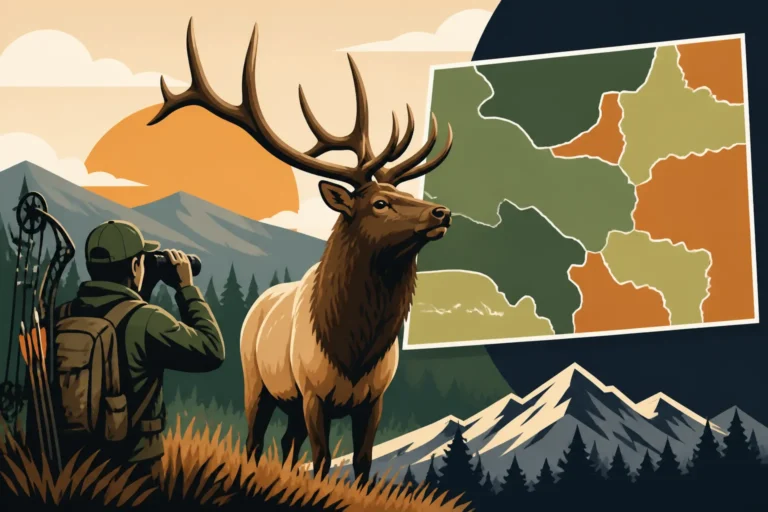
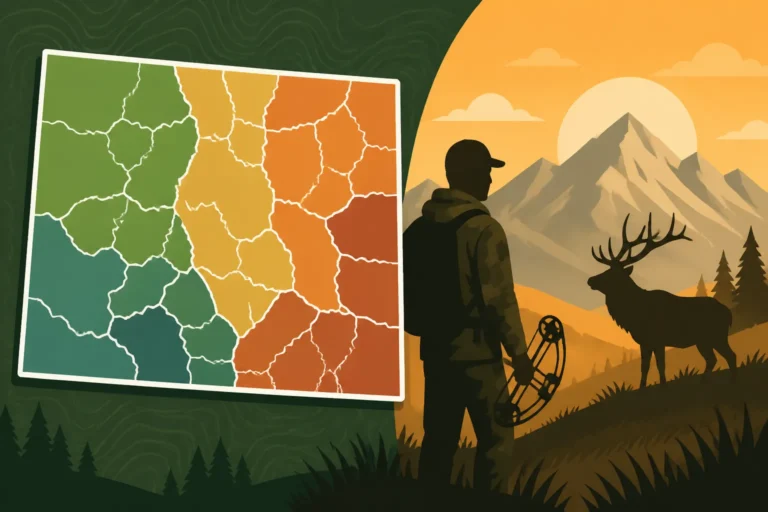
The San Juan Mountains encompass numerous Game Management Units (GMUs), each with its own specific draw odds, access points, and elk populations. While it’s impossible to cover every single GMU in depth here, understanding the general characteristics of some prominent ones can guide your research. Units like GMU 76, GMU 77, and GMU 78 are often associated with the heart of the San Juans.
GMU 76, for instance, is renowned for its remote, high-country wilderness experience, often requiring significant preference points to draw a bull tag, reflecting its trophy potential and vast roadless areas. Access is primarily through hiking, packing in with horses, or using designated trailheads. Other units, like GMU 77 and GMU 78, offer a mix of draw and over-the-counter (OTC) opportunities depending on the season and weapon choice, especially for archery and some late-season rifle hunts. These units feature varied terrain, from dense timber to open sagebrush parks at lower elevations, and sprawling alpine peaks.
Each GMU has unique challenges and opportunities. For example, some units might have significant wilderness areas (which we'll discuss later) where motorized access is strictly prohibited, while others might have more extensive road systems, leading to higher hunter densities in easily accessible areas. Using resources like the Colorado Hunting Atlas, combined with scouting tools like onX Hunt, is indispensable for diving into the specifics of a particular GMU. This detailed research is part of the planning that goes into successfully hunting the San Juans for elk.
Planning Your San Juan Elk Hunt
A successful hunt in the San Juans isn't just about showing up with a rifle or bow; it's about meticulous planning, physical conditioning, and having the right gear to tackle whatever the mountains throw at you.
E-Scouting and Map Research
In a landscape as vast and complex as the San Juans, effective e-scouting is non-negotiable. Before you even set foot in Colorado, you should have spent countless hours poring over maps and satellite imagery. Tools like onX Hunt and GoHunt are invaluable for this process. They allow you to identify public land boundaries (National Forest, BLM, Wilderness Areas), private land parcels, designated wilderness areas, and potential access points. You can mark waypoints for water sources, bedding areas, likely travel corridors between feed and bed, and escape routes.
Imagine sitting at home, zooming in on a remote basin deep within the San Juan National Forest. With onX Hunt, you can overlay topo maps with satellite imagery, identifying south-facing slopes that might hold early morning sun, dark timber patches where elk will bed, and potential saddles or benches they'll use for travel. You can even identify game trails and historic burn areas that might be holding new growth, attracting elk. This allows you to develop several contingency plans and access routes before you ever leave your living room, saving precious time and energy when you're on the ground. This kind of detailed reconnaissance is crucial for how to E-scout before a Colorado hunt.
Don't just look for where elk are but where they will be when pressure hits. Focus on identifying those overlooked, hard-to-reach pockets of public land that might serve as natural sanctuaries for pressured animals. Identifying natural barriers, such as steep cliffs or dense stands of downed timber, can help predict where elk might funnel or where other hunters might avoid, giving you an advantage.
Physical and Mental Preparation
Hunting the San Juans is not for the faint of heart, or the out of shape. The physical demands are immense, and inadequate preparation can quickly turn a dream hunt into a miserable ordeal. You'll be covering steep, uneven terrain at elevations that can leave even seasoned athletes gasping for air. Developing a solid fitness plan months in advance is critical. This should include a combination of cardiovascular training (hiking with a weighted pack, stair climbing, running) and strength training, focusing on your legs and core. Activities like trail running and cycling are excellent for building the necessary endurance.
Beyond physical fitness, mental toughness is equally important. The San Juans can be brutal; you'll face long days, challenging weather, false starts, and perhaps days without seeing a single elk. The ability to push through discomfort, stay positive, and maintain focus when you're exhausted and cold is paramount. Practicing altitude training for Colorado hunting can also make a significant difference, allowing your body to acclimate and perform better in the thin air. Consider arriving a few days early to allow your body to adjust to the elevation.
Think about a real-life scenario: you've climbed 2,000 feet by mid-morning, your legs are screaming, and you've just spotted a bull two ridges over. Without the proper physical and mental conditioning, the thought of pursuing that animal might seem impossible, leading to missed opportunities. A strong mind and body work in tandem to keep you in the game, pushing you to that extra mile or making that critical ascent. For a deeper dive, check out our guide on how to physically prepare for Colorado elk.
Gear Considerations for Mountain Hunting
Your gear choices in the San Juans can literally make or break your hunt. Lightweight, durable, and versatile equipment is not a luxury; it’s a necessity. Every ounce you carry will feel like a pound at 10,000 feet, so thoughtful packing is key.
Here's a breakdown of crucial gear:
| Category | Essential Items | Key Considerations |
|---|---|---|
| Footwear | Sturdy, waterproof, broken-in hunting boots | Ankle support for uneven terrain, good traction, comfort for miles of hiking. |
| Clothing | Layering system (base, mid, outer, puffy), rain gear, wool socks | Versatility for rapid temperature/weather changes, moisture-wicking, quiet fabrics. |
| Backpack | Internal frame hunting pack (60-80L) with meat shelf | Comfortable, good load lifters, durable, capable of carrying heavy loads of meat. |
| Optics | Binoculars (10×42 or 12×50), Spotting Scope (15-45×60), Rangefinder | Clear glass for long-range glassing, critical for judging distance and spotting game. |
| Shelter/Sleep | Lightweight tent or bivy, sleeping bag (0-15°F), sleeping pad | Compact, suitable for cold nights, reliable in wind/rain. |
| Navigation | GPS device (Garmin InReach), onX Hunt app, compass, paper maps | Redundancy is key; satellite communication for emergencies in remote areas. |
| Safety/Survival | First-aid kit, water filter, fire starter, headlamp, knife, emergency blanket | Be self-sufficient; help is often many hours away in the backcountry. |
| Weapon | Rifle, bow, or muzzleloader | Practice shooting at angles (uphill/downhill), know your limits for ethical shots. |
Your boots are arguably the most important piece of gear. You'll be covering countless miles over rocky, muddy, and snowy terrain, often side-hilling steep slopes. Invest in high-quality, waterproof boots that provide excellent ankle support and have been thoroughly broken in. A blister on day one can derail your entire hunt. Check out our detailed guide on the best boots for Colorado elk hunting for more specific recommendations.
Layering your clothing is another critical strategy due to the rapid weather changes common in the San Juans. You might start your day in freezing temperatures, shed layers during a strenuous climb, and then need a heavy puffy jacket and rain gear when a midday storm rolls in. Merino wool or synthetic base layers are excellent for wicking moisture, keeping you dry and warm. Your backpack needs to be comfortable for heavy loads, and capable of securely hauling out elk quarters. Look for packs with dedicated meat shelves and robust suspension systems. Consider brands like Mystery Ranch or Kifaru, known for their backcountry hunting designs. For more ideas, explore our Colorado backcountry hunting gear list.
On-the-Ground Hunting Strategies in the San Juans
Once you're actually in the San Juans, executing effective hunting strategies is all about understanding elk behavior in this specific environment, and adapting your tactics to the conditions you encounter.
Navigating and Hunting the Steep Country
Hunting in the San Juans often means embracing the vertical. Elk use the steepness to their advantage, and so must you. When moving through dense timber or up a drainage, constant vigilance and awareness of your surroundings are paramount. Learning how to move quietly through Colorado timber is essential, as the dense undergrowth and downed trees can make silent movement challenging. Take slow, deliberate steps, always checking for obstacles that might create noise.
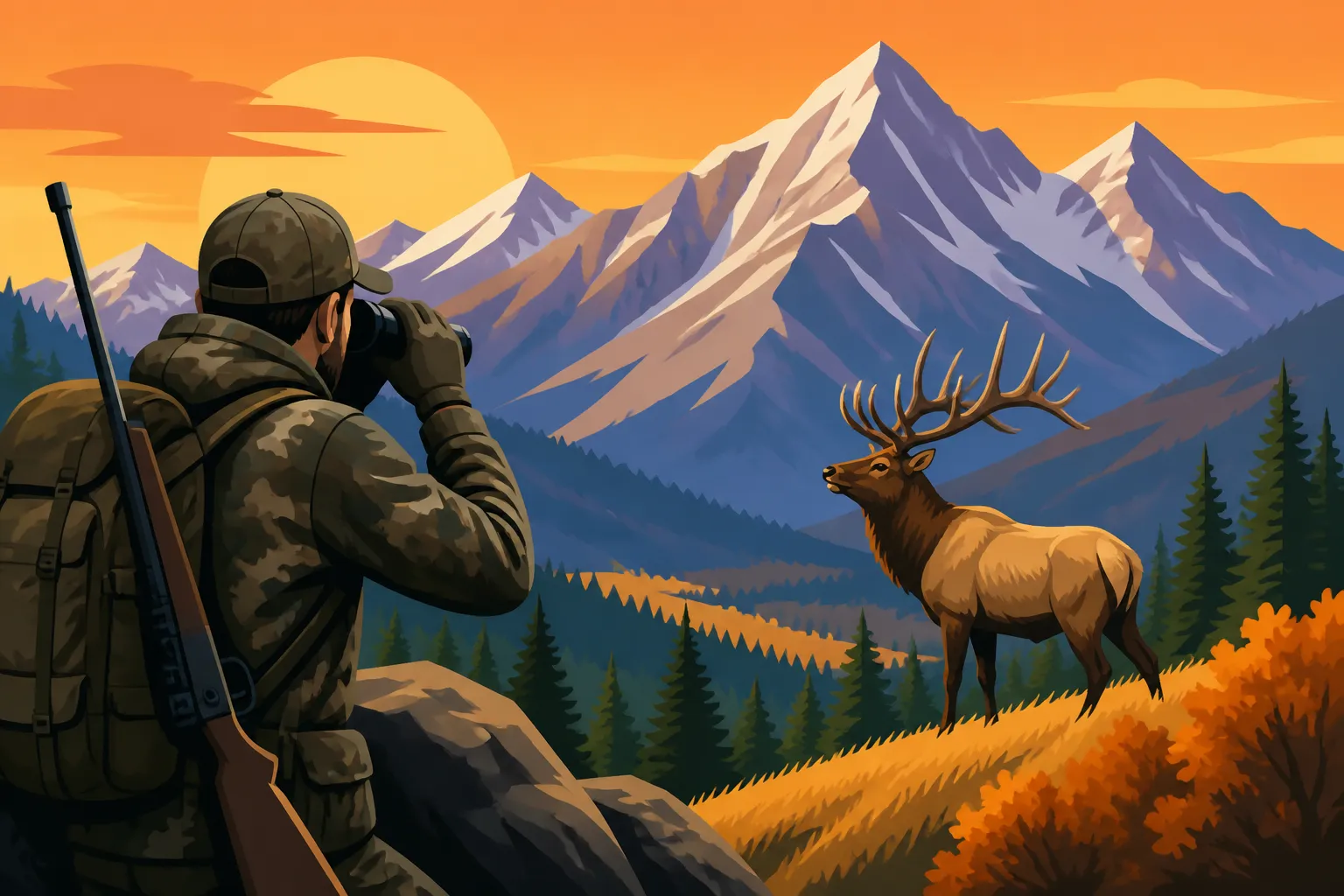
Glassing is another critical skill in the San Juans. Instead of just walking, find high vantage points and spend significant time behind your binoculars or spotting scope. Learn how to glass big Colorado basins effectively, systematically picking apart distant timberlines, avalanche chutes, and rocky outcrops. Elk often appear as tiny specks, so patience and a keen eye are necessary. Look for horizontal lines (an elk's back) in a world of vertical trees, or slight color variations.
When it comes to scent and sound, the San Juans are heavily influenced by thermals. These are air currents that rise during the day as the ground heats up and fall during the night as the air cools. Understanding how to use thermals in Colorado elk country is a non-negotiable aspect of mountain hunting. In the morning, plan your approach to stay below your target area, as thermals will be rising, carrying your scent uphill. In the evening, reverse this, moving above the elk as thermals fall. Always pay attention to the prevailing wind, but know that in rugged terrain, thermals can override it. Our guide on how to use the wind hunting Colorado elk offers more in-depth advice on this crucial topic.
Calling and Decoying Tactics
Elk calling in the San Juans can be both incredibly effective and notoriously difficult. The vast, broken terrain means your calls might not carry as far, and elk might be more spread out. However, during the rut, a well-placed bugle or cow call can draw in a curious bull. The key is knowing when and how to deploy your calls. During the peak rut, aggressive bugling can challenge a dominant bull, while soft cow calls can entice a satellite bull or a herd bull looking to gather cows. Our comprehensive guide on how to call elk in Colorado provides excellent foundational knowledge.
Consider the scenario: you're set up on a ridge overlooking a timbered draw, it's cool morning, and you let out a series of subtle cow mews. If an elk responds, resist the urge to immediately bugle back aggressively. Instead, try to locate the animal and assess its direction of travel and disposition. Sometimes, a silent approach, using the terrain to your advantage, is more effective than continuous calling. A common mistake is over-calling, which can make elk wary, especially after they've been pressured.
Decoying can be a powerful tactic, especially for archery hunters. A life-sized cow elk decoy, or even just a set of antlers, can draw a bull into bow range. However, this is best done when you've already located a bull that is actively bugling or responding, and when you have a dedicated caller and a shooter working together. The San Juans often have open areas where a decoy could be visible from a distance, but the thick timber and steep draws can also limit its effectiveness. Always be mindful of other hunters if you're using a decoy, especially in OTC units.
Field Care and Pack Out Logistics
Harvesting an elk in the San Juans is only half the battle; getting it out is often the more challenging and exhausting part. Elk can weigh anywhere from 300 to 700 pounds, and you might be miles from the nearest trail or road, often in steep, unforgiving terrain. Having a detailed plan for field care and packing out is non-negotiable.
The first step is efficient quartering. Learning how to quarter an elk in the field quickly and cleanly is crucial, not just for packability but also for meat preservation. Get the hide off and the meat cooling as fast as possible. In warm weather, especially during early seasons, this is critical to prevent spoilage. You might need to hang the quarters in game bags in the shade, allowing air to circulate. Always carry sturdy game bags designed for elk, as smaller bags won't cut it.
Packing out an elk, even with a partner, is a monumental task. A single hindquarter can weigh 70-100 pounds. If you're hunting solo, you'll need to make multiple trips, which can take an entire day or more. This is where your physical preparation and a high-quality pack truly shine. Our guide on how to pack out an elk in Colorado offers vital tips for this arduous but rewarding process. Consider bringing a lightweight saw for bone, and plenty of paracord for hanging meat. Having a satellite communication device like a Garmin inReach is also highly recommended in case of an emergency during the pack out.
Overcoming Unique San Juan Challenges
The beauty and majesty of the San Juans come with their own set of unique challenges that every hunter must be prepared to face head-on.
Dealing with Hunter Pressure
One of the most persistent frustrations for hunters in Colorado, and particularly in more accessible units of the San Juans, is hunter pressure. Especially during the early rifle seasons and in OTC units, you might find trails busy and popular areas quite crowded. This pressure pushes elk into more remote, difficult-to-access terrain, often deeper into wilderness areas or into dense, north-facing timber. Our guide on how to hunt elk on public land pressure offers many strategies for navigating this common issue.
To find success, you'll need to embrace the grind and be willing to go where others aren't. This often means pushing further into the backcountry, beyond the day-trip range of most hunters, or focusing on areas with less obvious access points. Studying maps with tools like onX Hunt can help you identify these pockets of public land, often characterized by steep climbs, lack of established trails, or long hikes from the nearest road. Remember, the further you get from a trailhead, the fewer people you're likely to encounter.
Another strategy is to adapt your hunting schedule. Hunting mid-week instead of weekends can reduce pressure. Also, paying attention to the weather can give you an edge; many hunters will retreat when a storm rolls in, which can be precisely when elk become more active and less wary.
Weather Variability and Adaptability
The weather in the San Juan Mountains is famously unpredictable and can change dramatically within hours. You might wake up to clear, crisp skies, only for a blizzard to roll in by midday, dropping feet of snow and sending temperatures plummeting. Conversely, warm, dry conditions can lead to high fire danger and make elk less active during daylight hours.
Being prepared for anything is not just good advice; it's a safety imperative. Your layering system, as discussed in the gear section, is critical. Always carry quality rain gear, even if the forecast looks clear. Snow at any time from September through November is common, especially at higher elevations. A sudden drop in temperature combined with rain or snow can quickly lead to hypothermia if you're not properly dressed and prepared. This is why having gear like a good puffy jacket and extra warm gloves or a hat in your pack is essential, even if you don't think you'll need them.
Beyond personal comfort, weather impacts elk behavior. Heavy snow can push elk to lower elevations, while a cold front can make them feed more actively. Learning to "read" the weather and understand how it influences elk movement can give you a significant advantage. Don't be afraid to hunker down if a bad storm hits, and then be ready to hunt hard once it passes, as elk activity often spikes immediately afterward.
Wilderness Area Considerations
A significant portion of the San Juans falls within designated Wilderness Areas, such as the Weminuche Wilderness or the South San Juan Wilderness. These areas offer unparalleled solitude and a true backcountry experience, but they also come with strict regulations that every hunter must understand and respect.
The primary rule in a Wilderness Area is "no motorized or mechanized vehicles." This means no ATVs, no dirt bikes, and even no bicycles. Access is strictly by foot or horseback. This limitation is precisely why these areas can hold less pressured elk, but it also means you must be prepared for extended treks, often involving multiple days, and be self-sufficient. Planning for a Colorado backcountry hunting guide scenario is essential when venturing into these remote expanses.
Leave No Trace principles are paramount in Wilderness Areas. This includes packing out all your trash, properly disposing of human waste, minimizing campfire impacts (or using a stove), and respecting wildlife. Familiarize yourself with the specific regulations for the wilderness area you plan to hunt, as some might have additional restrictions on group size, stock use, or camp locations. For a more detailed understanding, consult our Colorado wilderness area hunting guide. The solitude and challenge of a wilderness hunt in the San Juans can be an incredibly rewarding experience, but it demands thorough preparation and a deep respect for the environment.
Disclaimer
Hunting is an inherently dangerous activity. The information provided in this guide is for informational purposes only and should not be taken as professional advice. Always prioritize safety, adhere to all local, state, and federal hunting regulations, and consider seeking professional guidance or training before embarking on a hunt in the Colorado wilderness.