Best Colorado Units for Public Land Elk
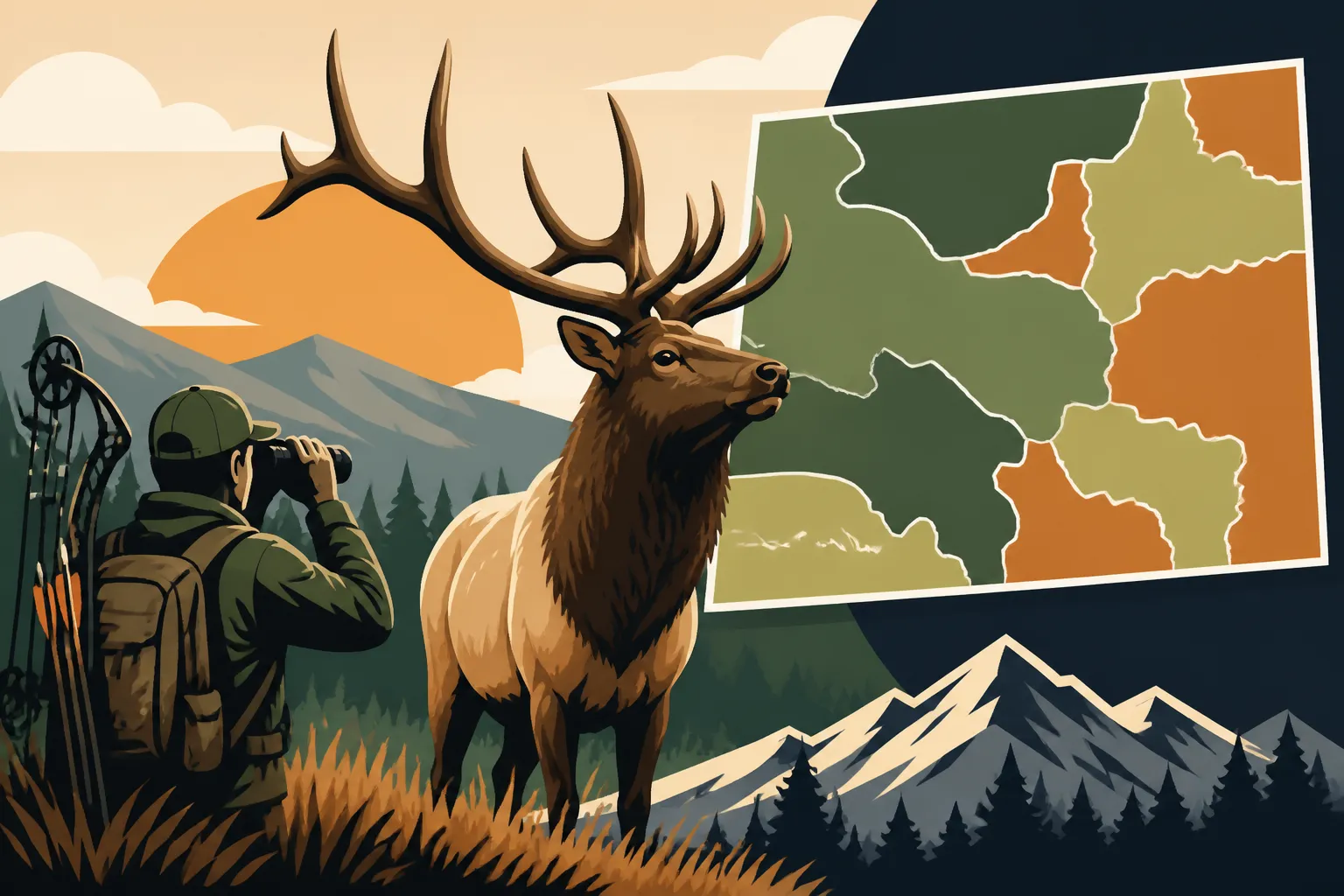
Trying to pin down the "best" public land units for elk hunting in Colorado can feel like searching for a needle in a haystack, especially when you're looking at a map that’s 80% green. It's overwhelming, often frustrating, and the sheer volume of information (or misinformation) out there can make a seasoned hunter feel like a rookie. This guide is here to cut through the noise, offering a realistic look at what makes certain units shine for public land elk and how you can approach your next Colorado adventure with a clearer strategy.
Understanding Colorado's Public Land Elk Hunting Landscape
Colorado boasts an incredible amount of public land, a dream come true for many hunters. But with that dream comes the reality of immense pressure, diverse terrain, and elk behavior that can change by the hour. It’s not just about finding a unit with elk; it’s about finding a unit where you can effectively hunt them on public ground, often alongside many other passionate hunters.
The Sheer Scale and Challenge of Public Land
Imagine stepping into an area the size of a small state, knowing there are elk somewhere within its boundaries, but also knowing that countless other hunters have the same idea. That's the reality of public land hunting in Colorado. The scale is immense, with millions of acres of National Forests and Bureau of Land Management (BLM) land stretching across the western slope and high country. This vastness offers endless opportunities for exploration and solitude if you're willing to work for it, but it also presents a significant challenge.
The terrain varies wildly, from the dark timber and dense aspens of the lower elevations to the expansive alpine basins above timberline. Each environment demands different scouting techniques, gear choices, and physical conditioning. The "best" units aren't necessarily those with the highest elk density closest to the road, but rather those that offer a combination of robust elk populations, quality habitat, and enough difficult-to-access public land to allow persistent hunters to escape the crowds and find undisturbed animals. It’s a game of effort versus reward, where the more you're willing to put in, the better your chances of encountering elk that haven't been pressured.
Decoding GMUs and Their Importance
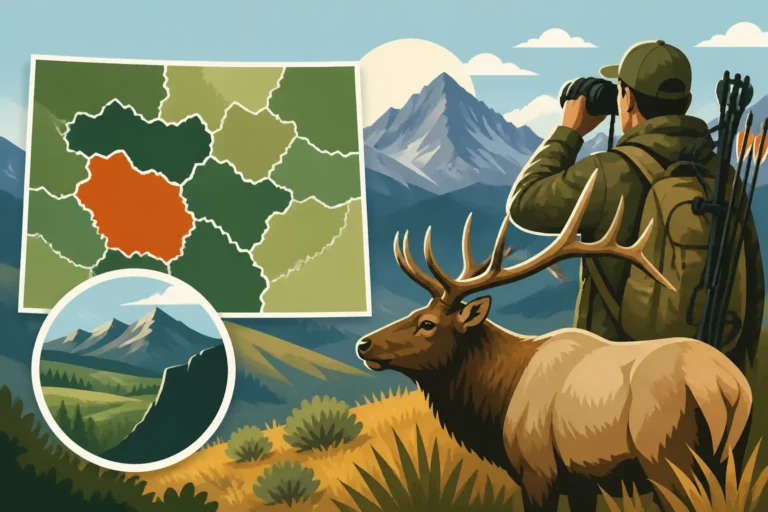
Colorado Parks and Wildlife (CPW) divides the state into specific hunting units, known as Game Management Units, or GMUs. These are the geographical boundaries that dictate where you can hunt with a particular license. Understanding them is paramount, as a GMU isn't just a number on a map; it represents a unique combination of terrain, habitat, public land access, elk population statistics, and hunter pressure.
Each GMU has specific regulations regarding species, season dates, and weapon types. For example, some GMUs might be Over-the-Counter (OTC) for archery elk, while others require years of preference points to draw a rifle tag. When planning your hunt, diving deep into the characteristics of individual GMUs is crucial. You'll want to look at the percentage of public land, road density, topography, and the history of elk harvests and hunter success rates within that unit. A good starting point for learning these distinctions is our guide on How Colorado GMUs Work. They are the foundation of your hunt plan, so treating them as more than just arbitrary lines on a map is key to success.
Key Factors in Identifying Top Public Land Elk Units
Finding those elusive "best" units for public land elk isn't just about reading a list; it's about understanding the underlying characteristics that make a unit productive. It requires a bit of detective work and a realistic appraisal of what you're capable of.
Elk Population and Habitat Quality
At the heart of any good elk unit is a healthy, thriving elk population. Colorado is home to the largest elk herd in North America, which is fantastic news, but these animals aren't evenly distributed. Some GMUs simply hold more elk due to superior habitat. Elk are creatures of cover, feed, and water. A unit with a diverse mix of dark timber for bedding, open parks and aspen stands for feeding, and reliable water sources will naturally attract and hold more elk.
You’ll often find these prime conditions in the vast, interconnected National Forests and wilderness areas. Consider the sprawling White River National Forest or the legendary Flat Tops Wilderness Area. These areas offer everything an elk needs: high-elevation summer range, transitional zones for the rut, and lower-elevation wintering grounds. When evaluating a unit, research its herd management plan (found on the CPW website) to understand population objectives and trends. A growing or stable population with good calf recruitment is a strong indicator of a healthy unit with potential. But remember, good habitat doesn't mean easy hunting; it just means the elk are there. Your job is to find them.
Public Land Accessibility and Roadless Areas
The amount and type of public land within a GMU are arguably the most critical factors for a DIY public land hunter. A unit might have a huge elk population, but if it's primarily on private land, it's not much use to someone relying on public access. Look for units with a high percentage of public land—ideally 60% or more—that also contain significant roadless areas or wilderness.
Roadless areas, whether designated Wilderness Areas or simply large tracts of national forest without vehicular access, are often where you find less pressured elk. Hunters, by and large, are creatures of convenience, and most won't venture more than a mile or two from a road or established trail. This creates natural sanctuaries for elk. While these areas demand more physical effort to access, they dramatically increase your odds of finding undisturbed animals. For a deep dive into hunting these challenging but rewarding areas, check out our guide on Colorado Wilderness Area Hunting and Best Roadless Colorado Hunting Areas. These places aren't for the faint of heart, requiring solid backcountry skills and physical endurance, but the rewards can be incredible.
Hunter Pressure and Success Rates
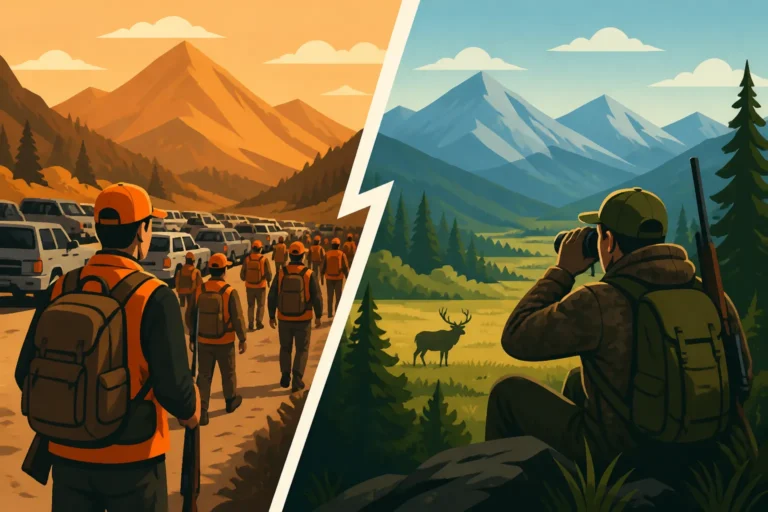
This is where the rubber meets the road for public land hunting. Colorado has a ton of hunters, especially non-residents. Some units, particularly those with easy access or known for high elk numbers, can become a "circus" during rifle seasons. Hunter pressure isn't just annoying; it changes elk behavior. Pressured elk become nocturnal, move into the thickest cover, or migrate to private land.
Understanding hunter pressure involves looking beyond just raw hunter numbers. It's about how those hunters are distributed. A unit with a lot of public land but concentrated road access might still feel crowded, whereas a unit with vast wilderness tracts could disperse hunters more effectively. CPW publishes draw odds and success rates for each unit and season. While these can be informative, remember that "success rate" includes private land hunts and guided trips. A 15% success rate on an OTC public land unit might be considered good, given the challenges.
When looking at success rates, consider how many hunters applied or bought OTC tags for that unit. High hunter numbers often correlate with higher pressure. Tools like onX Hunt can help you visualize road densities and public land boundaries, allowing you to identify those less accessible pockets. Similarly, GoHunt's Insider tool provides detailed unit analyses, including draw odds and historical harvest data, which can give you a better understanding of how a unit truly performs for public land hunters. The goal isn't necessarily to avoid all pressure—that's impossible on public land—but to strategize to get away from the majority of it.
Top-Tier Colorado Public Land Elk Units
Now, let’s talk about some specific regions and GMUs that consistently show up on lists for good public land elk hunting. Remember, "best" is subjective and often means "most challenging with high reward potential." These aren't secrets, but they offer the ingredients for a successful hunt if you put in the work.
The Flat Tops Wilderness and Surrounding Units
When people talk about elk in Colorado, the Flat Tops often come up, and for good reason. This massive wilderness area, primarily within GMU 12, GMU 23, and GMU 24, is home to one of the largest migratory elk herds in the world. The terrain is unique: vast, flat-topped mesas (hence the name) abruptly dropping into steep, timbered canyons and drainages. It's a land of high plateaus, dense spruce-fir forests, and open meadows.
Hunting here is a true backcountry experience. Access often means packing in miles on foot or horseback. The sheer size of the wilderness (over 230,000 acres) allows elk to spread out and find refuge from hunting pressure. During the rut, the sounds of bugling bulls echo across the basins. Rifle seasons can be crowded near trailheads, but a willingness to go deeper can put you into unpressured elk country. The Flat Tops offer excellent opportunities for archery, muzzleloader, and rifle hunters, though many of the tags here are OTC for archery and 2nd/3rd rifle seasons, making them accessible but also prone to higher hunter numbers. However, the vastness of the area still allows for solitude. To truly understand this iconic region, dive into our Flat Tops Wilderness Hunting Guide.
San Juan Mountains and Southwest Colorado
Heading south, the rugged, breathtaking San Juan Mountains offer another incredible public land elk hunting experience. GMUs like 76, 77, and 78 are renowned for their high-elevation elk habitat and often produce trophy-class bulls, though drawing a tag in these units can require significant preference points. These units are characterized by extreme topography: jagged peaks, deep canyons, and vast expanses of timber and alpine tundra.
Hunting the San Juans is a physically demanding endeavor. Elevations routinely exceed 10,000 feet, and getting into the best elk country often means navigating steep ascents and descents daily. However, the reward is often a less pressured hunting experience compared to more accessible areas. Elk in these units have learned to use the terrain to their advantage, often bedding in steep, north-facing timber and moving to high-country basins to feed. These units are perfect for hunters who embrace solitude and physical challenge. For more on navigating this stunning region, check out our San Juan Mountains Hunting Guide.
Northwest Colorado Elk Factories
The vast expanses of northwest Colorado, often centered around areas like Craig and Steamboat Springs, are known for their high elk populations and diverse hunting opportunities. GMUs like 3, 4, 5, 13, 14, 21, 131, 211, and 301 frequently hold significant numbers of elk. This region offers a mix of private agricultural land, rolling sagebrush hills, vast BLM expanses, and pockets of national forest timber.
Many of these units offer OTC opportunities for archery and some rifle seasons, making them popular. The challenge here often isn't finding elk, but finding unpressured elk. Elk here are adept at using pockets of public land that border private property, or slipping into the thickest, nastiest draws and timber patches as soon as pressure mounts. Success often comes down to aggressive e-scouting, understanding private-public land boundaries, and a willingness to hike into overlooked areas. Don't underestimate the physical demands, even if the elevations aren't as extreme as the San Juans; the rolling terrain can be deceivingly tough.
Central Colorado Mountain Ranges
The central mountains of Colorado, encompassing areas like the Gunnison Basin, also offer fantastic public land elk hunting, though many of these units are becoming increasingly difficult to draw. GMUs such as 43, 47, 471, 52, 53, 54, 55, and 551 are known for their stunning scenery and robust elk herds. This region features a blend of dark timber, aspen groves, high-alpine basins, and lower-elevation sage and oak brush.
While rifle tags in many of these units can require several preference points, they often offer excellent OTC archery opportunities, drawing bowhunters from across the country. The units around the Gunnison area are particularly noteworthy for their expansive public lands and diverse habitats. Elk here can be found anywhere from the dense timber on steep slopes to the open sagebrush parks at lower elevations, making for varied hunting experiences. Understanding the local thermals and elk migration patterns is crucial in these units. For those looking to explore this region, our Gunnison Basin Hunting Guide provides more in-depth information.
Strategies for Success in Public Land Elk Units
Identifying the "best" units is only half the battle. To actually tag an elk on Colorado public land, you need a robust strategy, unwavering commitment, and a willingness to work harder and smarter than the next hunter.
E-Scouting and Physical Preparation
Success in Colorado's public land elk units begins long before you set foot in the mountains. E-scouting is absolutely critical. Tools like onX Hunt and GoHunt are indispensable for analyzing GMUs from your couch. Use satellite imagery, topographic maps, and public/private land overlays to identify potential elk habitat: north-facing slopes with dark timber for bedding, open parks or aspen stands for feeding, water sources, saddles, and travel corridors. Look for areas away from roads and trails that have difficult access – these are your goldmines. Pinpoint specific drainages, benches, and thickets that look like they could hold elk. This meticulous virtual scouting will save you precious time and energy once you're on the ground.
Alongside detailed e-scouting, physical preparation cannot be overstated. Hunting Colorado elk is a marathon, not a sprint. You'll be hiking at high altitudes, often through steep, uneven terrain, carrying heavy packs. Altitude sickness is a real concern, and a lack of fitness will severely limit your ability to get into productive areas and stay there. Start an intense cardio and strength training regimen months before your hunt. Focus on inclines, stairs, and carrying weight. Being physically prepared means you can push deeper, recover faster, and hunt harder, increasing your odds significantly. For guidance, check out our article on How to Physically Prepare for Colorado Elk and How to E-Scout Before a Colorado Hunt.
Getting Away from the Roads
This is the golden rule of public land elk hunting: if you want to find unpressured elk, you have to get away from where other hunters are. Most hunters won't venture more than a mile or two from a vehicle. That means the real elk hunting often begins two, three, or even five miles deep into the backcountry. Identify those remote basins, dense timber blocks, and high ridges that are a long walk from the nearest trailhead or forest service road.
This might mean utilizing less-used trailheads, hiking over a mountain pass to access a different drainage, or even considering a multi-day backpack hunt or a drop camp. A drop camp, where an outfitter packs you and your gear into a remote location, then picks you up later, can be a fantastic way to access deep wilderness areas without the full logistical burden of a DIY pack-in. Our guide on How to Pack Into the Colorado Backcountry offers essential tips for extending your reach. The farther you go, the fewer human encounters you'll have, and the more likely you are to find elk acting naturally, rather than running for cover.
Mastering Diverse Hunting Methods
Elk are incredibly adaptable, and so must you be. Relying on a single hunting method, no matter how successful it's been elsewhere, can severely limit your chances in Colorado's varied terrain and conditions. You'll need a diverse toolkit of tactics.
During the early archery seasons and the peak rut, calling can be highly effective. Learning How to Call Elk in Colorado – bugles, cow calls, and mews – is essential for locating and drawing in bulls. However, as the rut winds down or in heavily pressured areas, elk often go silent, and aggressive calling can spook them. This is when methods like spot-and-stalk become invaluable. Glassing expansive basins or open timber edges from a distance, then carefully planning an approach, can lead to success. In dense timber, still-hunting (moving slowly and silently, pausing frequently) is often the most productive strategy, allowing you to intercept elk moving through bedding or feeding areas. Knowing when and where to employ each of these techniques, as well as ambushing elk at waterholes or travel corridors, is key. Our comprehensive guide on Colorado Elk Hunting Methods Explained offers a deeper dive into these varied approaches.
Navigating the Colorado Draw and Over-the-Counter Options
Colorado's licensing system can be a puzzle, especially for non-residents. Understanding how to acquire a tag for these public land units is as crucial as knowing where to hunt.
Preference Points and Draw Odds
Many of the most sought-after public land elk units, particularly for rifle seasons, operate on a draw system that requires preference points. A preference point essentially gives you seniority in the draw; the more points you have, the better your odds of drawing a coveted tag. For non-residents, drawing a tag in a high-demand unit can take many years of accumulating points.
It's vital to research the draw odds for specific GMUs and seasons on the CPW website or through services like GoHunt. This will help you understand how many points it might take to draw a bull tag in a unit like GMU 76 or GMU 43. If your dream unit requires 10+ points, you'll need a long-term strategy of applying for points annually. Our guide on the Colorado Draw System and Preference Points explains the mechanics, and articles like How Many Points for a Colorado Elk Tag provide specific examples. For some, building points for a premium tag is part of the adventure, offering years of anticipation for a truly special hunt.
Over-the-Counter OTC Opportunities
For those who don't want to wait years for a draw tag, Colorado still offers numerous Over-the-Counter (OTC) elk tags, particularly for archery season and some 2nd and 3rd rifle seasons. These tags can be purchased without applying in the draw, as long as you meet the eligibility requirements. OTC units are predominantly on public land, which is great for accessibility. However, the trade-off is often higher hunter pressure.
While OTC units can be crowded, they still provide fantastic hunting opportunities, especially if you're willing to embrace the strategies mentioned earlier – getting deep into roadless areas, hunting smart, and being adaptable. Some of the units discussed earlier, like those in the Flat Tops or parts of northwest Colorado, offer OTC options. It's a great way for new Colorado hunters or those with limited time to experience the state's elk hunting without the long wait of the draw. However, always double-check the latest CPW regulations, as OTC options can change year to year. Our detailed guide on Colorado OTC Elk Tags Explained is an excellent resource for navigating these opportunities.
| GMU Region | Primary GMUs | Public Land % (Approx.) | Difficulty | Tag Type (Common) | Notes |
|---|---|---|---|---|---|
| Flat Tops | 12, 23, 24 | 80-90% | High | OTC (Archery, 2nd/3rd Rifle) | Massive wilderness, high elk numbers, requires deep penetration. |
| San Juan Mtns. | 76, 77, 78 | 70-85% | Very High | Draw (High Points) | Rugged, high elevation, often trophy potential, physically demanding. |
| Northwest Colorado | 3, 4, 13, 14, 21, 211 | 50-70% | Moderate-High | OTC/Draw | High elk numbers, mixed terrain, can be crowded near roads, learn boundaries. |
| Central Mtns. | 43, 52, 53, 54, 55 | 60-80% | High | OTC (Archery), Draw | Beautiful country, good numbers, can be tough draws for rifle. |
Disclaimer
Hunting is an inherently dangerous activity. This guide provides general information and recommendations for hunting in Colorado. Always consult the most current Colorado Parks and Wildlife (CPW) regulations, laws, and official maps before planning and embarking on any hunting trip. Hunter safety courses are highly recommended, and all hunters should prioritize ethical hunting practices, wildlife conservation, and personal safety. The conditions and opportunities mentioned in this article can change.