Hunting the San Juan National Forest
Trying to plan a hunt in Colorado can feel incredibly daunting, especially when you set your sights on a massive, rugged expanse like the San Juan National Forest. Navigating its vast wilderness, understanding the diverse terrain, and knowing where to even begin looking for big game can feel like an insurmountable challenge. This guide is designed to cut through the confusion, offering a realistic, in-depth look at what it truly takes to hunt successfully in the breathtaking, yet unforgiving, San Juan National Forest.
Understanding the San Juan National Forest's Unique Terrain and Challenges
The San Juan National Forest, sprawling across southwestern Colorado, isn't just another patch of public land; it's an imposing, incredibly diverse landscape that demands respect and thorough preparation from every hunter. We're talking about millions of acres that range from high desert mesas and deep river canyons to towering peaks well over 14,000 feet, alpine tundra, and dense timber. This isn't your grandfather's woodlot hunt; this is a true mountain experience.
Geography and Ecosystems Across the San Juans
When you look at a map of the San Juan National Forest, you'll immediately notice the dramatic elevation changes. You might start your day in the piñon-juniper foothills at 6,000 feet, glassing for mule deer, and by afternoon, you could be slogging through dark timber at 10,000 feet, chasing an elk bugle, or even above timberline in the alpine basins. These varied elevations create a mosaic of ecosystems. The lower reaches are characterized by scrub oak, sagebrush, and pinyon pine, offering crucial winter range and early-season bedding. As you climb, you transition into aspen groves, mixed conifers like Douglas fir and Ponderosa pine, and eventually dense stands of spruce and subalpine fir that hold elk through the later seasons.
The sheer scale means that different areas within the San Juan National Forest will present vastly different hunting experiences. For example, hunting the high country near Durango or Silverton will involve significant vertical climbs and potentially deep snow earlier in the season, while units closer to Mancos or Dolores might offer more accessible terrain with rolling hills and lower elevation timber. Understanding these micro-climates and habitat zones is absolutely critical. Elk and deer will utilize these different areas based on forage availability, weather, and hunting pressure, constantly moving between the low country and the high alpine.
Access Points and Wilderness Area Considerations
One of the biggest hurdles for any hunter contemplating the San Juan National Forest is access. While it's largely public land, much of it is incredibly rugged, with limited road infrastructure. You'll find a mix of Forest Service roads, some well-maintained, others requiring high-clearance 4×4 vehicles, and many that simply dead-end at trailheads. The real gems for hunters looking to escape pressure often lie deep within designated wilderness areas, such as the Weminuche Wilderness, South San Juan Wilderness, and portions of the La Garita Wilderness, which are entirely foot and horse traffic only.
Hunting these wilderness areas means embracing a true backcountry experience. You'll need to pack in everything you need, often several miles, and be prepared to pack out an animal in even more challenging conditions. This requires exceptional physical fitness, reliable gear, and a solid understanding of wilderness navigation. Many hunters get frustrated by the seemingly endless ridges and drainages that confront them here, but for those willing to put in the effort, these remote havens offer some of the most undisturbed hunting opportunities for mature animals. Always double-check regulations for specific wilderness areas, as some have unique rules regarding camping, fires, and group sizes.
Prime Species and Seasons for Hunting Success in the San Juans
The San Juan National Forest is a big game hunter's paradise, renowned primarily for its abundant elk herds and robust mule deer populations. However, it also offers excellent opportunities for black bear and various small game. Knowing which species thrive where, and understanding the nuances of Colorado's hunting seasons, is fundamental to planning a successful trip into these mountains.
Elk Hunting Opportunities: OTC vs. Draw Units and Seasons
Elk are undoubtedly the main draw for many hunters venturing into the San Juan National Forest. The area boasts one of the largest elk herds in North America, offering fantastic opportunities for both resident and non-resident hunters. Colorado is famous for its over-the-counter (OTC) elk tags, which are a huge draw, especially for non-residents who might otherwise spend years building preference points for coveted draw units. Many units within the San Juan National Forest offer OTC archery elk tags and OTC second and third rifle season bull elk tags. This makes planning a hunt much simpler, as you don't have to worry about the unpredictable draw outcomes. You can learn more about specific regulations in our guide to Colorado OTC Elk Tags Explained.
However, not all units are created equal. Some of the more difficult-to-access, higher-elevation areas or units bordering wilderness can hold higher numbers of mature bulls due to less pressure. During the archery season, focusing on wallows, water sources, and active feeding areas can be incredibly productive, especially when the rut kicks in. Our Colorado Archery Elk Hunting Guide offers in-depth tactics specific to bowhunting. For rifle hunters, understanding elk migration patterns and how weather influences their movement between summer and winter ranges is key. Early rifle seasons, like the first season, are often permit-only and can put you on higher-elevation bulls before they're pushed down. Later seasons, like the second and third rifle seasons, often see elk pushed into thicker timber or lower elevation wintering grounds by increasing hunter pressure and changing weather. The Colorado Rifle Elk Hunting Guide provides more detail on these strategies.
Mule Deer and Other Game in the San Juans
While elk often steal the spotlight, the San Juan National Forest is also home to a significant population of mule deer, offering excellent hunting, particularly in units with a mix of dark timber, aspen, and open south-facing slopes. Mule deer hunts in the San Juans are typically draw-only, requiring preference points, especially for quality buck tags. Hunters often target the transition zones between dense cover and open feeding areas, and higher elevations during the early archery and muzzleloader seasons. As winter approaches, deer will move to lower elevations and south-facing slopes to find forage and warmth. Our comprehensive Colorado Mule Deer Hunting Guide can help you navigate these opportunities.
Beyond elk and deer, the San Juan National Forest offers opportunities for black bear. Bear tags are often available over-the-counter as an add-on to an elk or deer license, or through a limited draw. Fall bear hunting often coincides with the general rifle seasons for elk and deer, with bears found foraging on acorns, berries, and other mast crops in oak brush thickets or around recent clear-cuts. Additionally, there are scattered populations of grouse and other small game throughout the forest, which can provide an exciting bonus to your big game hunt.
| Species | Primary Habitat | General Season Availability (San Juans) | Tag Type (Common) | Difficulty |
|---|---|---|---|---|
| Elk | Alpine, Subalpine, Timber, Aspen, Oak Brush | Archery (late Aug-Sept), Rifle (Oct-Nov), Muzzleloader (Sept) | OTC (Archery, 2nd/3rd Rifle Bulls); Draw (1st/4th Rifle Bulls, Cows) | Moderate to High |
| Mule Deer | High country basins, Sagebrush, Oak Brush, Timber | Archery (late Aug-Sept), Rifle (Oct-Nov), Muzzleloader (Sept) | Draw Only | Moderate to High |
| Black Bear | Oak Brush, Berry Patches, Timber, River Bottoms | Archery (Sept), Rifle (Sept-Nov) | OTC Add-on; Draw | Moderate |
| Grouse | Aspen groves, Spruce/Fir Forests | Fall (Sept-Nov) | Small Game License | Low |
Essential Strategies for San Juan Hunters
Successfully hunting the San Juan National Forest isn't just about showing up with a tag; it's about meticulous preparation, smart tactics, and the resilience to adapt to the mountains' unforgiving nature. This requires a blend of modern tools and traditional hunting wisdom.
E-Scouting and On-the-Ground Reconnaissance
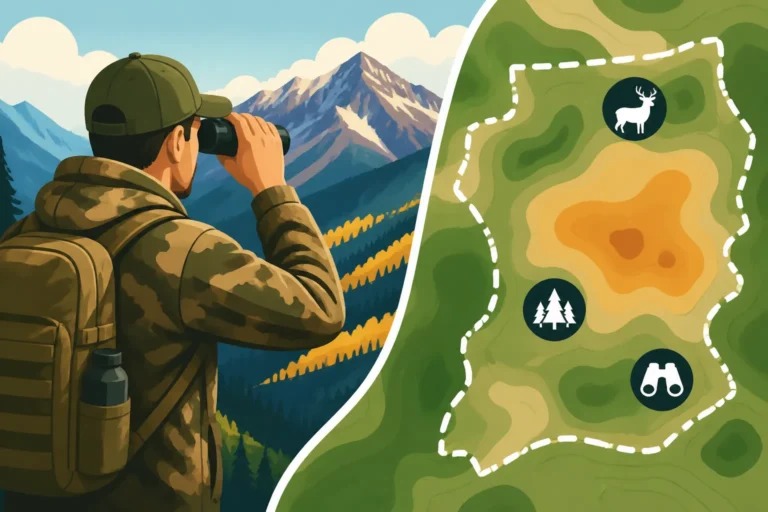
In an area as vast and rugged as the San Juan National Forest, e-scouting isn't just helpful, it's virtually mandatory. Before you ever set foot on the mountain, you should be pouring over maps, satellite imagery, and public land data. Tools like onX Hunt are invaluable here. You can identify potential bedding areas, feeding zones, water sources, and crucial travel corridors from the comfort of your home. Look for benches on steep slopes, saddles between drainages, north-facing timber for bedding, and south-facing slopes for early morning feeding or late-season warmth. You can also utilize historical data and draw odds information from platforms like GoHunt to understand hunter success rates and pressure patterns in various units within the San Juans. Our guide on How to E-Scout Before a Colorado Hunt offers a deeper dive into this crucial preparation.
Once you have identified potential hotspots, compare different map layers on onX Hunt, such as topographical maps to understand elevation changes and potential ambush points, and satellite imagery to confirm timber density and open areas. Identify all public and private land boundaries to avoid trespassing – a common mistake for unprepared hunters. Pre-season scouting trips are also highly recommended if possible. Even a quick weekend trip to hike trails and observe terrain can provide invaluable insights that no map can fully replicate. Understanding the micro-terrain, identifying fresh sign, and seeing how animals use specific features in person will drastically improve your chances.
Navigating Access and Hunter Pressure
The San Juan National Forest, like much of Colorado's public land, experiences significant hunter pressure, especially during the rifle seasons. However, the sheer size and ruggedness of the San Juans mean that opportunities to escape the crowds still exist. The key is to be willing to go where others aren't – which usually means going farther and higher. Utilize onX Hunt to identify roads that lead into less accessible areas, or even better, look for trailheads that allow foot traffic deep into wilderness boundaries or roadless areas. Often, simply hiking a few miles further than the average hunter will put you into more undisturbed country.
Think about areas that are difficult to reach but don't require going fully into a designated wilderness. These could be steep, brushy drainages, or high-elevation pockets that are just too much effort for many. By identifying these "escape routes" or sanctuaries for elk and deer, you can anticipate where animals will go when pressure mounts. Our piece on How to Hunt Elk on Public Land Pressure shares more strategies for dealing with crowded hunting grounds. Additionally, consider hunting during less popular seasons, such as the early archery season or the muzzleloader season, which generally see fewer hunters in the woods compared to the general rifle seasons.
High-Country and Timber Tactics
Hunting the San Juan National Forest means mastering mountain hunting tactics. If you're targeting elk in the early seasons or mule deer in their summer range, you'll likely be in the high country, often above 9,000 feet. This means being proficient in How to Hunt Elk at High Elevation, which involves specialized glassing techniques for vast basins, understanding thermals, and being prepared for rapid weather changes. Focus on glassing large areas from a vantage point at dawn and dusk, picking apart every patch of timber and open slope for movement.
As the seasons progress and hunting pressure increases, elk and deer will often retreat into the thickest, darkest timber they can find. This is where still-hunting becomes paramount. Moving slowly, silently, and deliberately through dense forests, paying attention to wind direction and thermals, is how you ambush an animal in its sanctuary. This often means getting into the dark timber well before daylight and staying there through the midday, when many hunters head back to camp. Our comprehensive guide on How to Hunt Elk in the Dark Timber delves deep into these specific strategies. For mule deer, particularly in the later seasons, keying in on south-facing slopes adjacent to dense cover where they can soak up the sun and feed on residual browse is a tried-and-true tactic.
Planning Your San Juan Hunting Expedition
A hunt in the San Juan National Forest isn't a spontaneous weekend trip; it's an expedition that requires careful planning, robust gear, and significant physical preparation. The mountains here will test your limits, both mentally and physically.
Gear Considerations for Mountain Hunting
The gear you bring can make or break your San Juan hunt. Temperatures can swing wildly from below freezing at night to warm during the day, and weather can change from sunny skies to snow squalls in a matter of minutes. Layering is paramount: base layers, insulation, and waterproof/windproof outer shells are non-negotiable. Sturdy, broken-in hunting boots that offer excellent ankle support and traction are essential for navigating steep, uneven terrain. Consider brands like Kenetrek, Crispi, or Schnee's, which are well-regarded for their mountain hunting performance.
Your backpack is equally important. For day hunts, a 30-50 liter pack might suffice, but if you plan on going deep or doing multi-day spike camps, a larger expedition-style pack (60+ liters) capable of hauling meat is crucial. A pack that fits well and distributes weight properly, like those from Mystery Ranch or Kuiu, will be your best friend when you’re miles from the truck with an elk quarter. We cover more options in our guide to the Best Backpack for a Colorado Elk Hunt. Quality optics – binoculars, a spotting scope, and a rangefinder – are also non-negotiable for glassing vast expanses and identifying animals from afar, especially in the open country of the San Juans. For a comprehensive list of what you might need, check out our Colorado Backcountry Hunting Gear List.
Physical Preparedness and Altitude Acclimation
This is perhaps the most overlooked, yet critical, aspect of hunting the San Juan National Forest, particularly for those coming from lower elevations. Hunting at 8,000 to 12,000 feet is an entirely different beast than hunting at sea level. The thin air will diminish your lung capacity and make every step feel like a marathon, especially when climbing steep grades or packing out an animal. It's not uncommon for hunters to experience altitude sickness, which can quickly derail a hunt and even be dangerous.
Dedicated physical training months before your hunt is essential. Focus on cardio, leg strength, and endurance. Incorporate exercises that mimic mountain hunting, such as stair climbing, hiking with a weighted pack, and trail running. Arriving a few days early to allow your body to acclimate to the elevation is also highly recommended. Stay hydrated, avoid alcohol, and take it easy on your first day or two. Remember, the fitter you are, the more enjoyable and successful your hunt will be. We delve deeper into this vital preparation in our article on How to Physically Prepare for Colorado Elk.
Essential Mapping and Data Tools
Modern technology has revolutionized how we approach mountain hunting, and nowhere is that more evident than in the tools available for navigation and planning. While a traditional topographical map and compass are still vital backups, digital mapping applications have become indispensable. onX Hunt, for example, allows you to download maps for offline use, pinpoint your exact location, mark waypoints for game sightings or camps, and, most importantly, clearly delineate public and private land boundaries. This last feature alone can prevent countless headaches and ensure you stay legal.
Beyond basic navigation, platforms like GoHunt provide incredibly detailed data analytics for Colorado's draw system, helping you understand draw odds, harvest statistics, and unit-specific information. This is particularly useful if you're considering applying for limited draw tags in the San Juan National Forest, allowing you to make informed decisions about where to invest your preference points. Integrating these tools into your planning phase and having them readily accessible in the field (with charged backup batteries!) will give you a significant advantage in this challenging landscape.
Disclaimer
Please note that hunting regulations, season dates, and unit boundaries are subject to change. Always consult the most current Colorado Parks and Wildlife (CPW) regulations and official maps before planning any hunting trip. This guide is for informational purposes only and should not replace official sources.