Hunting the Rio Grande National Forest
For many hunters, the thought of pursuing big game in Colorado's vast public lands can feel like staring at an impossibly complex puzzle. The sheer scale of areas like the Rio Grande National Forest, with its towering peaks, dense timber, and remote basins, often leaves folks wondering where to even begin their planning. This guide aims to demystify hunting in the Rio Grande National Forest, providing the in-depth insights you need to navigate its challenging yet incredibly rewarding landscape, from understanding its unique geography to mastering essential tactics.
Understanding the Rio Grande National Forest Landscape and Access
The Rio Grande National Forest, nestled in the heart of Colorado's southern Rockies, is a truly magnificent and rugged expanse that offers unparalleled hunting opportunities. But to hunt it effectively, you first need to truly grasp its character – its peaks, valleys, and how to actually get around.
Geographical Overview and Key Features
Stretching across 1.86 million acres, the Rio Grande National Forest is primarily defined by the mighty San Juan Mountains and the Sangre de Cristo Range. This isn't your flatland hunting; we're talking about elevations that frequently soar above 9,000 feet, with many peaks topping 13,000 and even 14,000 feet. The terrain is incredibly diverse, from vast expanses of dark timber—primarily Engelmann spruce and subalpine fir—to vibrant aspen groves that turn brilliant gold in the fall, and expansive high-alpine tundra above treeline.
You'll find countless drainages feeding into the Rio Grande River, which carves its way through the forest, creating crucial water sources and natural travel corridors for wildlife. Major wilderness areas like the Weminuche Wilderness, South San Juan Wilderness, and La Garita Wilderness comprise significant portions of the forest, offering truly remote, non-motorized hunting experiences. These wilderness areas are a double-edged sword: they hold undisturbed game, but require significant physical effort and careful planning to access. Towns like South Fork, Creede, Del Norte, and Lake City dot the perimeter, serving as vital resupply points and access hubs for hunters venturing into the depths of the forest. The sheer scale of these areas means you could spend a lifetime exploring them and still find new country.
Navigating Public Access and Boundaries
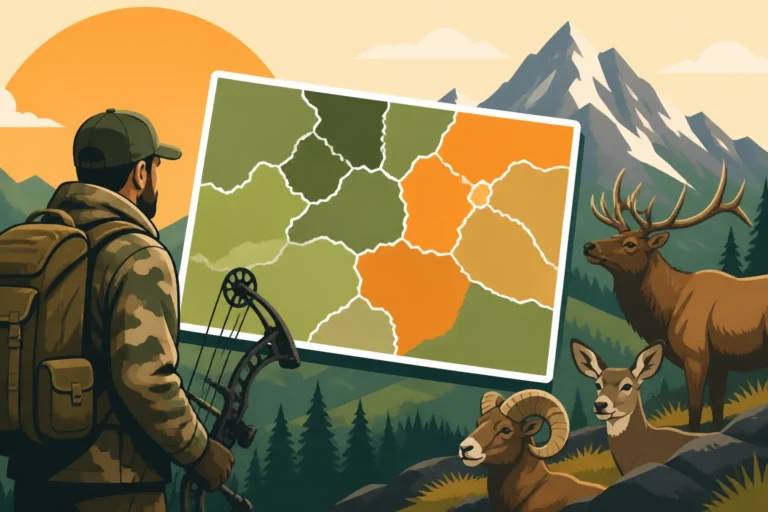
One of the biggest hurdles for hunters, especially those new to Colorado, is confidently knowing where they can and cannot legally hunt. The Rio Grande National Forest is overwhelmingly public land, managed by the U.S. Forest Service, but it's often interlaced with private property, BLM lands, and state lands. This patchwork can be incredibly confusing if you're relying solely on paper maps or general knowledge.
This is precisely where modern mapping tools become absolutely indispensable. Applications like onX Hunt are a game-changer, allowing you to clearly visualize property boundaries, roads, trails, and land ownership in real-time on your phone or GPS device. You can download maps for offline use, which is critical in remote areas of the Rio Grande where cell service is non-existent. These tools help you avoid accidental trespass, which can quickly ruin a hunt and land you in legal trouble. Beyond boundary lines, these apps also show topo maps, satellite imagery, and even historic fire data, all of which are crucial for e-scouting.
Access within the forest varies dramatically. Some areas are relatively accessible via well-maintained Forest Service roads, while others are deep wilderness, requiring days of foot or horseback travel to reach. Identifying trailheads and understanding road conditions (many close seasonally due to snow or mud) is paramount. For a truly immersive backcountry experience, focus on those roadless areas; while they demand more effort, they often yield higher success rates and offer a quieter hunt, free from the constant pressure found near road systems. Planning your route, including potential spike camp locations and game retrieval strategies, needs to be done long before you ever set foot on the mountain.
Prime Game Species and Seasons in the Rio Grande
The Rio Grande National Forest is renowned for its diverse big game populations, making it a bucket-list destination for many hunters. Knowing what you can pursue and when is key to planning your adventure.
Elk Hunting Opportunities
When people think of hunting in the Rio Grande National Forest, elk are usually the first species that come to mind, and for good reason. Colorado boasts the largest elk herd in North America, and a significant portion of that herd resides within the RGNF's boundaries. The vastness of the forest provides ample habitat for elk, from the dense spruce-fir forests they use for bedding and security, to the open aspen stands and high-alpine meadows where they feed. The rugged topography also allows elk to escape hunting pressure effectively, pushing them into harder-to-reach areas.
During the archery and muzzleloader seasons, typically in September, the mountains come alive with the sounds of the elk rut. Bulls bugle, cows call, and the entire forest feels electric. This is a prime time for hunters looking to engage elk through calling. Learning How to Call Elk in Colorado is an invaluable skill here. Later, during the various rifle seasons (October and November), elk behavior shifts as they transition to winter range, often seeking out south-facing slopes and lower elevations as snow begins to fall. Understanding these seasonal movements and finding good travel corridors, benches, and saddles is critical, especially when the elk go quiet after the rut. You can learn more about specific techniques in our comprehensive guide on Colorado Elk Hunting Methods Explained.
While the Rio Grande offers a lot of over-the-counter (OTC) opportunities for archery and some rifle seasons, many of the more desirable bull tags, especially in specific Game Management Units (GMUs) known for trophy potential, are draw-only. It's essential to research the specific GMUs you plan to hunt and understand their tag allocations and draw odds. For example, some units might offer good OTC cow tags but require multiple preference points for a bull tag.
Mule Deer and Other Big Game
While elk often steal the spotlight, the Rio Grande National Forest also offers excellent opportunities for mule deer. These iconic western deer prefer more open, broken country compared to elk, often found in aspen pockets, sagebrush draws, and on timbered ridges with good visibility. During the summer, you'll find them high in the alpine basins, but as hunting seasons progress into fall, they typically migrate to lower elevations as snow pushes them down from their summer range.
Mule deer hunting in the RGNF often involves a lot of glassing. Finding a good vantage point and patiently scanning vast slopes and drainages with high-quality optics can be incredibly effective for spotting these elusive creatures. Tags for mule deer in this region are almost exclusively draw-only, with preference points often needed to secure a desirable buck tag. Hunters serious about mule deer should consult the Colorado Parks and Wildlife (CPW) draw statistics to understand the point requirements for specific units.
Beyond elk and mule deer, the Rio Grande National Forest is also home to black bears. Fall bear hunting can be combined with elk or deer hunts, as bears are actively feeding to put on fat for winter, often found in berry patches or near recent timber cuts. Tags for bears are generally available OTC or on a limited draw, depending on the unit and season. For those dreaming of even rarer trophies, the highest elevations of the RGNF do hold bighorn sheep and mountain goats, but these tags are among the hardest to draw in North America, often requiring decades of preference points. Small game hunting, such as dusky grouse (often found in spruce-fir forests) and cottontail rabbits, also offers enjoyable pursuits and can be a great way to fill some downtime or simply enjoy the landscape.
Season Dates and Tag Considerations
Planning a hunt in the Rio Grande National Forest means a deep dive into Colorado's complex season structure and tag system. Colorado Parks and Wildlife (CPW) sets the season dates annually, and while general frameworks exist, specific dates can vary slightly year to year. Generally, archery seasons kick off in late August and run through September, overlapping with the peak elk rut. Muzzleloader season is a short window, usually in mid-September. Then, the rifle seasons are staggered, typically starting in late October and extending into November.
The most critical distinction for hunters is understanding the difference between over-the-counter (OTC) and limited draw tags. OTC tags are available for purchase without needing to go through the draw process, usually for archery elk, and certain rifle seasons in specific GMUs. However, these OTC units often see higher hunter pressure. For limited draw tags, you'll need to apply through the Colorado draw system, which requires accumulating preference points for many desirable units and species. This can take years, especially for trophy units or species like mule deer, moose, or bighorn sheep. Our guide on Colorado Hunting Seasons Explained provides a comprehensive overview of these dates and structures, and for those looking at OTC options, you'll want to dig into Colorado OTC Elk Tags Explained to see what's available in the RGNF.
Always, always consult the current year's Colorado Big Game Brochure published by CPW. This is your bible for season dates, unit boundaries, specific regulations, and application deadlines. Misinterpreting a hunt code or a season date can lead to a ruined trip or legal penalties. Tools like GoHunt can also be incredibly useful for analyzing draw odds and unit data, helping you make informed decisions on where to apply your points or where to focus your OTC efforts within the Rio Grande.
Essential Tactics and Preparation for the Rio Grande
Hunting in the Rio Grande National Forest isn't just about showing up; it's about meticulous preparation, smart tactics, and physical readiness. The mountains here demand respect and effort.
Scouting and E-Scouting Strategies
In a forest as vast and varied as the Rio Grande, going in blind is a recipe for frustration. Effective scouting, both virtual and boots-on-the-ground, is absolutely non-negotiable. E-scouting from home is where it all begins. Utilize satellite imagery and topographic maps provided by platforms like onX Hunt or GoHunt to identify potential hunting areas. Look for north-facing slopes with dark timber for bedding areas, south-facing slopes that get early sun for feeding, natural saddles, benches, and distinct travel corridors between them. Pay close attention to water sources – springs, seeps, and wallows are elk magnets, especially in drier years. Look for old burns or recent timber cuts, which often provide new browse and attract deer and elk. Our guide on How to E-Scout Before a Colorado Hunt can walk you through this process in detail.
Once you've identified a few promising areas, if possible, conduct a pre-season scouting trip. Hike the trails, glass the basins, and look for fresh sign – tracks, scat, rubs, and wallows. Even if you can't make a dedicated scouting trip, spending time studying topo maps and satellite imagery to understand elevation changes and potential bedding/feeding areas will put you lightyears ahead of someone who simply picks a trailhead on a whim. The more time you invest in understanding the landscape before your hunt, the more efficiently you'll hunt when the season arrives. Remember, the game moves, but the terrain and its features remain.
Physical Demands and Mountain Hunting
Let's be real: hunting the Rio Grande National Forest is physically demanding. You're not strolling through manicured fields. You'll be gaining and losing thousands of feet in elevation daily, often carrying heavy packs over uneven, steep, and sometimes snow-covered terrain. The high altitude (most hunting takes place above 8,000 feet) can be a significant factor, especially for those coming from sea level. Altitude sickness is a real concern and can severely impact your hunt, or worse, your health. Symptoms can range from headaches and nausea to more severe conditions.
Physical conditioning should start months before your hunt. Incorporate hiking with a weighted pack, stair climbing, and general cardiovascular training. Arriving a few days early to acclimate to the elevation is highly recommended; spending a night or two at a slightly lower elevation (around 7,000-8,000 feet) before ascending higher can make a world of difference. Proper hydration is also crucial for preventing altitude sickness. Our guides on How to Physically Prepare for Colorado Elk and Altitude Training for Colorado Hunting offer comprehensive advice to get you ready for the rigors of the mountains. Don't underestimate the physical challenge; your fitness level will directly impact your ability to hunt effectively and safely, especially when it comes time to pack out an animal.
Navigating and Hunting Difficult Terrain
Once you're physically prepared, it's time to talk tactics for the actual hunt. The Rio Grande National Forest's diverse terrain requires adaptable hunting strategies. In the dense timber, especially spruce and fir, still-hunting is often the most effective method. This involves moving incredibly slowly and deliberately, taking a few steps, then pausing for several minutes to observe and listen. The dense canopy often muffles sound, so relying on your eyes is key. For more open country, particularly high-alpine basins or large drainages, spot-and-stalk is the go-to. This requires patience, good optics, and the ability to move quietly and strategically to get within shooting range. Learn more about Spot-and-Stalk Hunting in Colorado to hone your skills.
Understanding and utilizing wind and thermals is paramount in mountain hunting. Warm air rises during the day (updrafts), and cool air sinks at night (downdrafts). Animals use these thermals to their advantage, bedding in locations where their scent is carried to any approaching danger. As a hunter, you must constantly monitor wind direction and thermals to ensure your scent isn't being carried to the animals. Our post on How to Use Thermals in Colorado Elk Country is an excellent resource for mastering this critical skill.
Finally, prepare for the inevitable: packing out game. If you are fortunate enough to harvest an animal in a remote area, the work truly begins. This often means quartering the animal in the field and making multiple trips with heavy loads over rugged terrain. Having the right gear, including a good pack frame and game bags, and understanding How to Pack Out an Elk in Colorado are crucial. Solo hunters need to be especially self-reliant and realistic about their capabilities.
Regulations and Respecting the Environment
Hunting in a national forest comes with specific responsibilities beyond simply pulling a tag. Understanding regulations and adhering to ethical practices are non-negotiable.
Key Regulations and Rules to Know
The Colorado Parks and Wildlife (CPW) big game regulations booklet is your primary source for all rules and laws governing hunting in the state, including within the Rio Grande National Forest. Before you even apply for a license or pack your gear, you need to thoroughly read and understand these regulations. This includes specific season dates for your chosen GMU, legal methods of take, bag limits, and specific rules regarding antler points for bull elk or deer. For example, some units might have antler point restrictions (APRs) where only bulls with a certain number of points on one side are legal.
Beyond CPW regulations, National Forest rules also apply. For instance, in designated wilderness areas within the Rio Grande National Forest, motorized and mechanized travel (including mountain bikes) is strictly prohibited. This means no ATVs, e-bikes, or even game carts – everything must be done on foot or horseback. Open fires might be restricted during dry periods, and specific food storage rules are often in place to prevent bear encounters, especially for backcountry campers. Always check current fire restrictions and wilderness regulations with the local Forest Service office before your trip. Having your hunter education certification is also a requirement for most hunters born after January 1, 1949.
Leave No Trace Principles
As stewards of the land, hunters have a moral obligation to practice Leave No Trace principles. This means minimizing your impact on the environment to ensure these wild places remain pristine for future generations. Pack out everything you pack in – and then some. This includes all trash, spent casings, and any non-native materials. Proper disposal of human waste away from water sources and trails is also critical.
Respecting other forest users is equally important. The Rio Grande National Forest is a multi-use area, shared by hikers, campers, anglers, and other outdoor enthusiasts. Be courteous, share trails, and avoid disturbing other users. Keep noise to a minimum, especially in established camping areas or near trailheads. When field dressing an animal, do so away from trails and water sources, and ensure you're not leaving behind excessive waste. The goal is to leave the land in better condition than you found it, preserving the wild character and abundant wildlife that makes the Rio Grande National Forest such an incredible hunting destination.
Rio Grande National Forest Hunting Overview
To give you a clearer picture, here's a brief summary of what you might expect when hunting various species in the Rio Grande National Forest:
| Game Species | Primary Habitat | Key Seasons & Tag Types | Hunting Focus |
|---|---|---|---|
| Elk | Dark timber, aspen groves, high-alpine basins | Archery (OTC/Draw), Muzzleloader (Draw), Rifle (OTC/Draw) | Calling (rut), still-hunting, glassing, tracking |
| Mule Deer | Open timber, sagebrush draws, high-alpine slopes | Muzzleloader (Draw), Rifle (Draw) | Spot-and-stalk, extensive glassing, silent movement |
| Black Bear | Berry patches, dense timber, riparian areas | Archery (OTC/Draw), Muzzleloader (Draw), Rifle (OTC/Draw) | Still-hunting, still-hunting, opportunity during other hunts |
| Dusky Grouse | Spruce-fir forests, aspen groves, conifer edges | Archery, Shotgun (Small Game License) | Walking forest roads/trails, flushing from trees |
Disclaimer
Please note that hunting regulations, season dates, and tag availability can change. Always consult the most current Colorado Parks and Wildlife (CPW) Big Game Hunting Brochure and local U.S. Forest Service advisories before planning and embarking on any hunt in the Rio Grande National Forest. This guide is for informational purposes only and does not supersede official regulations.