Grand Mesa Hunting Guide
Hunting the Grand Mesa presents an incredible challenge and an even greater reward, drawing in hunters with its expansive, breathtaking landscapes and the promise of encountering some of Colorado's most majestic big game. If you've ever dreamt of glassing a high mountain park for elk or tracking a mule deer buck through the shimmering aspen, but felt overwhelmed by where to even begin, this comprehensive guide is for you. We're going to dive deep into what makes the Grand Mesa a truly unique hunting destination and equip you with the knowledge to plan a successful and unforgettable hunt.
Why the Grand Mesa Beckons Hunters
The Grand Mesa isn't just a geographical feature; it's a feeling, a challenge, and a wild, rugged expanse that calls to the soul of every hunter. It’s the world's largest flat-topped mountain, sitting majestically between the Colorado and Gunnison Rivers, and its sheer scale and diverse habitats make it a truly special place for pursuing big game.
Unique Landscape and Ecosystem
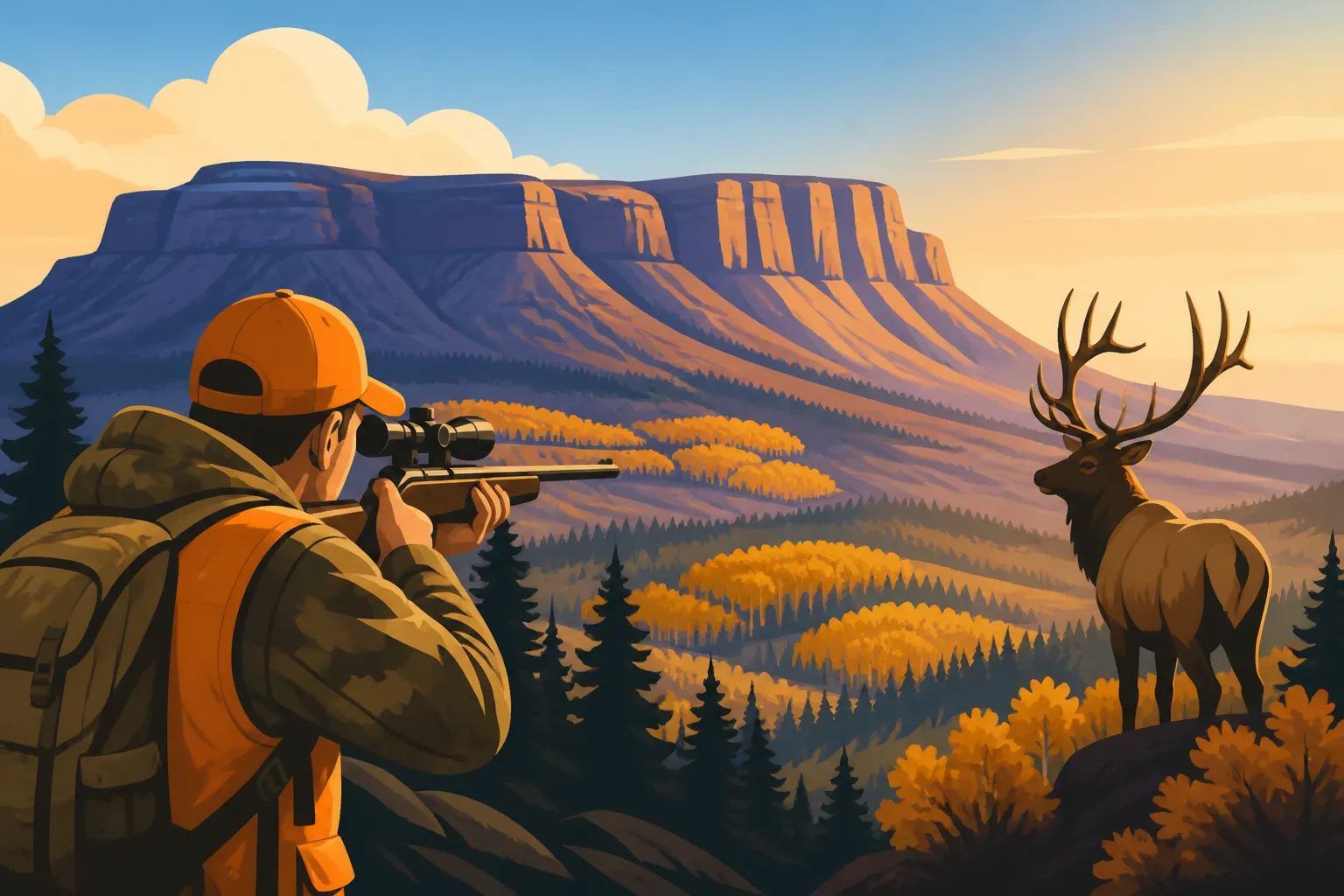
Imagine a plateau rising dramatically from the surrounding valleys, reaching elevations between 8,000 and over 11,000 feet. That's the Grand Mesa. It’s not just one uniform landscape; it's a mosaic of habitats, each playing a crucial role in supporting the thriving wildlife populations here. You'll find yourself traversing through dense, dark timber stands of spruce and fir, where the sunlight struggles to penetrate, giving way to vast, golden aspen groves that shimmer with life and color, especially during the fall hunting seasons. Then, without warning, the forest might open up into expansive, grassy parks and meadows, often dotted with serene lakes and reservoirs – critical water sources for game.
This unique combination of high-altitude forests, open parks, and abundant water creates an ideal environment for elk and mule deer. The terrain can be deceptively flat in places on top of the mesa, making navigation tricky without a solid understanding of the land, while other areas plunge into steep canyons and drainages, demanding physical prowess and careful planning. Understanding these varied ecosystems is the first step to truly mastering a Grand Mesa hunt.
Prime Big Game Opportunities
When people talk about hunting the Grand Mesa, their minds almost immediately go to elk and mule deer, and for good reason. The mesa supports robust populations of both, offering fantastic opportunities whether you're chasing the thrill of a bugling bull or a heavy-antlered mule deer buck. Colorado, in general, is known for its incredible elk herds, and the Grand Mesa is a prime example of where these majestic animals thrive.
Elk here are drawn to the mix of cover, feed, and water, often moving between the dark timber for bedding and security, and the aspen parks or open meadows for feeding, especially at dawn and dusk. Mule deer also utilize these varied habitats, often preferring the steeper, more rugged terrain on the fringes of the mesa, but coming onto the plateau to feed. Beyond elk and mule deer, the Grand Mesa is also home to black bears, which are often encountered incidentally by big game hunters or can be targeted specifically during spring or fall seasons. The overall health of these game populations, combined with excellent public land access, makes the Grand Mesa a top-tier destination for many Western hunters. Success rates, while never guaranteed, are generally strong here for those who put in the effort, especially for elk. If you’re considering a multi-species hunt, this area often presents opportunities to pursue both elk and deer.
Understanding Grand Mesa Hunting Units and Regulations
Diving into a Colorado hunt, especially on a vast area like the Grand Mesa, means getting to know the specific Game Management Units (GMUs) and the regulations that govern them. It can feel like deciphering a complex puzzle, but with a bit of guidance, it becomes much clearer.
Key GMUs on the Mesa
The Grand Mesa is primarily comprised of a few key GMUs that define its hunting landscape. You'll often hear about units like GMU 41, GMU 42, GMU 411, GMU 52, and GMU 521. These units effectively segment the mesa, each with its own characteristics and hunting opportunities. For instance, GMU 41 and 42 cover large portions of the mesa top and its slopes, offering a mix of terrain from high elevation timber to lower aspen and oak brush. GMU 411 is often cited for its more challenging, roadless areas, appealing to those seeking a true backcountry experience. On the southern and eastern edges, GMUs like 52 and 521 offer slightly different habitat mixes, often including steeper canyon country that can hold significant game.
Understanding these GMU boundaries is absolutely critical. Not only do they dictate where your specific tag is valid, but they also influence the type of terrain you'll encounter and the hunting pressure you might face. Many of these GMUs offer Over-the-Counter (OTC) opportunities for archery and some rifle seasons for elk, which is a massive draw for both resident and non-resident hunters who want to avoid the complexities of the draw system. For mule deer, however, most units on the Grand Mesa require drawing a tag, often demanding several preference points. Tools like onX Hunt are invaluable here, as they clearly display GMU boundaries right on your map, helping you stay legal and informed in the field. To get a better grasp on the overall system, read our comprehensive guide on How Colorado GMUs Work.
Here's a quick look at some general characteristics of the primary Grand Mesa GMUs:
| GMU | Primary Species | Tag Type (Elk) | General Terrain | Key Characteristics |
|---|---|---|---|---|
| 41 | Elk, Mule Deer | OTC (Archery/Rifle) | Mixed timber, aspen, open parks, moderate slopes | Popular, good access, can experience high pressure. |
| 42 | Elk, Mule Deer | OTC (Archery/Rifle) | Similar to 41, some steeper fringes. | Accessible, diverse habitat, good elk populations. |
| 411 | Elk, Mule Deer | OTC (Archery/Rifle) | Backcountry, roadless areas, dense timber | Great for solitude, physically demanding, holds big bulls. |
| 52 | Elk, Mule Deer | Draw (Rifle), OTC (Archery) | Steeper canyons, timber, sagebrush. | Excellent deer potential, draw for rifle elk, less pressure. |
| 521 | Elk, Mule Deer | Draw (Rifle), OTC (Archery) | Mixed forest, high country, steep canyons. | Often holds migrating deer, good bear habitat. |
Note: OTC availability can change, always check the current Colorado Parks and Wildlife regulations.
Navigating Licenses and Seasons
Colorado's hunting system can seem like a labyrinth, but it’s manageable once you understand the basics. For elk on the Grand Mesa, you'll be dealing with both the general draw system and over-the-counter (OTC) options. OTC elk tags are a huge draw for the Grand Mesa, especially during the archery and certain rifle seasons (typically 2nd and 3rd rifle seasons, but this changes, so always double-check CPW regulations). These tags allow hunters to simply purchase a license without going through the competitive draw, making a spur-of-the-moment hunt or a first-time Colorado adventure much more feasible. If you're looking for more details on this, our article on Colorado OTC Elk Tags Explained can be a huge help.
Mule deer, on the other hand, are almost exclusively managed through the draw system across the Grand Mesa. This means you'll need to apply for a limited-entry tag and potentially accumulate preference points over several years to draw a coveted buck tag in one of these quality units. This is where patience truly becomes a virtue.
The seasons themselves are structured, generally falling into:
- Archery Season: Typically runs from late August through late September, often coinciding with the elk rut. This is a prime time for calling and a truly exciting hunt. You can dive deeper with our Colorado Archery Elk Hunting Guide.
- Muzzleloader Season: Usually a shorter window in mid-September, offering another opportunity during the rut, but with specific weapon limitations. Our Colorado Muzzleloader Hunting Guide has more.
- Rifle Seasons: Split into several distinct periods (1st, 2nd, 3rd, 4th rifle seasons) from mid-October into November. These are often the most popular and can see the highest hunter pressure. The Grand Mesa offers a blend of OTC and draw opportunities during these times.
The key frustration for many hunters is the unknown of the draw or the rapidly changing rules for OTC units. My best advice is to consult the Colorado Parks and Wildlife (CPW) big game brochure every single year. It’s your bible. It will detail exact season dates, specific unit regulations, and draw odds. Websites like GoHunt also offer excellent resources and draw odds data to help you strategize your applications. Don't be afraid to put in the time; a well-researched plan significantly increases your odds of success.
Essential Tactics for Grand Mesa Success
Hunting the Grand Mesa isn't just about showing up with a tag; it's about understanding and adapting to its unique challenges. The terrain, the vastness, and the behavior of the animals all demand a thoughtful approach.
Adapting to the Terrain and Habitat
The Grand Mesa is a beast of a mountain, and its varied habitats mean you can't use a one-size-fits-all approach. You'll be spending time in dense aspen groves where visibility is limited to mere yards, forcing you to move slowly and quietly. These areas are fantastic for still-hunting, especially if there's a fresh dusting of snow. Elk and deer often bed in these areas for cover and shade.
Then you might transition into vast spruce-fir forests, often referred to as "dark timber." This is prime bedding habitat for elk, especially on north-facing slopes, and can feel incredibly thick and challenging to navigate. It's often where the biggest bulls hide during the day. Mastering How to Hunt Elk in the Dark Timber will be crucial here. When you find these areas, look for rubs, fresh tracks, and wallows – signs of recent elk activity.
Interspersed throughout are those beautiful, expansive parks and meadows. These are key feeding areas, particularly at first and last light. You'll want to use your optics here, setting up on high points overlooking these openings to glass for movement. The edges where timber meets these open parks are often transition zones where animals move between bedding and feeding, making them ideal ambush points. Don't forget to study the canyon edges and drainages too; these provide escape routes, water, and can hold significant game, particularly during later seasons when animals move to lower elevations.
Elevation changes are constant, even on the "flat" top of the mesa. You'll be hunting between 8,000 and 11,000 feet, which impacts both your physical performance and animal behavior. Understanding How to Hunt Elk at High Elevation is paramount for success and safety. The wind and thermals are your constant companions and can be incredibly tricky in this mountainous environment. Thermals typically rise in the morning as the sun warms the ground and fall in the evening as temperatures drop. Always try to position yourself so your scent is carried away from where you expect game to be. E-scouting tools like onX Hunt can become your best friend, allowing you to study topo maps, identify potential bedding and feeding areas, locate water sources, and plan your routes long before you ever set foot on the mountain. This preparation is a game-changer.
Scouting and Locating Game
Success on the Grand Mesa often comes down to diligent scouting, both before and during your hunt. Pre-season scouting, even if it's just digital, helps you identify potential hotspots. Use satellite imagery to pick out north-facing slopes (prime bedding), south-facing slopes (early season feeding, late-season sunning), water sources, and natural funnels or saddles that animals might use as travel corridors. Our guide on How to E-Scout Before a Colorado Hunt offers a deep dive into this modern essential.
Once you're on the ground, switch to physical scouting. Look for fresh sign: tracks, droppings, rubs on trees, and wallows. Wallows, especially during the rut, are like a bull elk's spa day and often reveal current activity. Knowing How to Hunt Elk Wallows in Colorado can be a potent tactic. During the archery and muzzleloader seasons, locating active bulls is often done by listening for bugles at dawn and dusk. Once you hear one, you can strategize your approach using calling tactics. Calling can be incredibly effective during the rut. Whether you're trying to locate a bull with a bugle or entice one closer with cow calls, understanding How to Call Elk in Colorado will significantly boost your odds. Even after the rut, soft cow calls can sometimes coax curious bulls into range.
For mule deer, focus on glassing during early and late light. Find a high vantage point overlooking canyons, open parks, or clear-cuts, and spend serious time behind your optics. Mule deer often blend in incredibly well with their surroundings, making patience and good glass essential.
Managing Logistics and Pressure
The Grand Mesa is popular, and during general rifle seasons, you will encounter other hunters. This is simply a reality of hunting public land in Colorado. However, don't let that discourage you. Instead, adapt your strategy. Often, the easiest-to-access areas, those close to roads or popular trailheads, receive the most pressure. A willingness to walk further, to pack into roadless areas, or even consider a drop camp can put you in front of less-pressured animals. Consult our Colorado Backcountry Hunting Guide for more on this approach.
When it comes to gear, remember that mountain weather is notoriously unpredictable. One day can be warm and sunny, the next can bring a blizzard. Layering your clothing is paramount. You'll need good waterproof outerwear, quality insulation, and sturdy, comfortable boots that can handle steep, uneven terrain. Consider bringing a reliable backpack, like options from Mystery Ranch or Kifaru, that can comfortably carry your daily essentials and, hopefully, pack out an elk quarter. Having a solid Best Backpack for a Colorado Elk Hunt can make or break your trip. A good pair of binoculars, a rangefinder, and a spotting scope (especially for mule deer) are indispensable. For navigation, always carry a physical map and compass in addition to your digital tools like onX Hunt. Battery banks are essential for keeping your devices charged.
Being prepared for diverse weather and terrain, combined with a strategy to get away from the crowds, will significantly enhance your experience and your chances of success on the Grand Mesa.
Planning Your Grand Mesa Hunt
A successful Grand Mesa hunting trip isn't just about tactics; it's about meticulous planning that covers everything from your physical state to the gear you pack and how you stay safe in the wilderness.
Physical Preparation and Altitude Acclimation
Hunting in Colorado's high country is not for the faint of heart, and the Grand Mesa is no exception. With elevations reaching over 11,000 feet, you'll be dealing with significantly less oxygen than at sea level. This means that physical fitness is not just a recommendation; it's a necessity. Being able to hike steep trails with a heavy pack is one thing; doing it at high altitude is another entirely. If you're coming from a lower elevation, you absolutely must prioritize physical conditioning in the months leading up to your hunt. Focus on cardiovascular endurance (running, cycling, stair-climbing) and strength training, especially for your legs and back. Our detailed guide on How to Physically Prepare for Colorado Elk can provide a comprehensive training plan.
Beyond general fitness, preparing for the altitude is critical. Many hunters experience some degree of altitude sickness, which can range from a mild headache and fatigue to more severe symptoms that can end a hunt prematurely. The best way to combat this is to arrive a few days early if possible, allowing your body to acclimate. Even spending a night or two at a slightly lower elevation near the mesa (e.g., Grand Junction, Delta) before heading up can help. Stay hydrated, avoid alcohol and excessive caffeine, and eat a healthy diet. If you feel severe symptoms, descend to a lower elevation immediately. For more in-depth strategies, check out our piece on Altitude Training for Colorado Hunting.
Gear, Navigation, and Safety
Your gear choices can truly make or break a Grand Mesa hunt. Beyond the obvious weapon and ammunition, consider the following:
- Layered Clothing: As mentioned, weather can swing wildly. A good base layer, insulating mid-layers (fleece or puff jacket), and a waterproof/windproof outer shell are non-negotiable. Quality merino wool is often preferred for its warmth-to-weight ratio and odor resistance.
- Boots: Invest in high-quality, broken-in hunting boots with good ankle support and waterproof membranes. Your feet will thank you after miles of hiking on uneven terrain. Read our guide on the Best Boots for Colorado Elk Hunting.
- Optics: A good pair of 10x binoculars is essential for glassing open areas and timber edges. A spotting scope can be incredibly useful for mule deer hunters or long-range elk identification. Don't forget a rangefinder!
- Backpack: A comfortable daypack for essentials and a larger pack capable of carrying meat if you're successful. This is where quality brands like Kifaru, Stone Glacier, or Mystery Ranch truly shine.
- Navigation: While
onX Huntis an incredible digital tool, always have a backup. A traditional map and compass, and knowing how to use them, is a lifeline if your electronics fail. Download offline maps to your phone before you lose service. - Water Filtration: A reliable water filter or purification tablets are crucial. You'll need to stay hydrated, and carrying all your water is simply not feasible.
- Emergency Gear: A first-aid kit, fire starter, headlamp with extra batteries, an emergency shelter, and a knife are all non-negotiables. Consider a satellite communication device (like a Garmin inReach or Zoleo) to stay in touch with loved ones and for emergency SOS capabilities, as cell service is spotty to non-existent on much of the mesa.
- Game Processing: If you're successful, you'll need game bags, a sharp knife, and potentially a bone saw. Knowing How to Quarter an Elk in the Field is a vital skill.
Safety in the wilderness is paramount. Always tell someone your detailed hunting plan, including your expected return time and exact area you'll be hunting. Be aware of your surroundings; wildlife encounters (not just with game animals) are always possible. Know the signs of changing weather and be prepared to take shelter. Hunting with a buddy is always safer, but if you're embarking on a solo hunt, be extra diligent with your preparations and safety protocols. The Grand Mesa is a wild, beautiful place, and respecting its power is the first step toward a successful and safe adventure.
Disclaimer
Hunting is an inherently dangerous activity. This guide provides general information and should not replace official regulations, personal judgment, or professional guidance. Always consult the current year's Colorado Parks and Wildlife (CPW) hunting regulations, secure appropriate licenses and tags, and prioritize safety above all else. Laws and regulations are subject to change, so verify all details before planning your hunt.