Colorado Mule Deer Hunting: Rifle Tactics
There’s nothing quite like the majestic sight of a big mule deer buck in the rugged Colorado high country, but turning that sighting into a successful harvest with a rifle is a whole different ballgame. Many hunters struggle with the vast, challenging terrain and the often elusive nature of these incredible animals. This comprehensive guide will break down the most effective rifle tactics for hunting mule deer in Colorado, helping you understand their behavior, master essential field techniques, and make a clean, ethical shot when the moment arrives.
Understanding Colorado Mule Deer Behavior for Rifle Hunters
Before you can effectively hunt Colorado mule deer with a rifle, you need to step into their world. These animals are creatures of habit and environment, and understanding their patterns is your first and most crucial tactical advantage. Colorado's diverse landscapes, from the sagebrush flats to the aspen groves and the timbered high peaks, all influence how mule deer live and behave.
Seasonal Movements and Rut Activity
Mule deer in Colorado are constantly adapting to the seasons, and their movements are largely dictated by food availability, weather, and breeding cycles. Early rifle seasons, typically in October, often find deer still in their higher elevation summer ranges, before heavy snows push them down. They'll be feeding heavily, trying to put on weight for the winter, and their patterns might be more predictable around food sources and bedding areas.
As the season progresses into November and early December, the rut kicks in, especially for the later rifle seasons. This is when bucks become much more active and less cautious, driven by the urge to breed. You'll find them trailing does, fighting with other bucks, and generally covering more ground. This period offers unique opportunities, but it also means deer can be found in unexpected places. Understanding Colorado Mule Deer Rut Explained is critical to positioning yourself correctly during these seasons. Keep an eye on weather forecasts too; a significant snowfall can initiate a migration to lower elevations almost overnight, drastically changing where you'll find deer.
Habitat Preferences and Cover
Mule deer are masters of using the terrain to their advantage, and their preferred habitats offer both sustenance and security. In the high country, look for them around the timberline, in north-facing timber pockets that offer shade and bedding, or in secluded basins with good forage. Aspen stands provide both cover and food, while dark timber offers escape routes and thermal cover during colder periods. Lower down, particularly in western Colorado, they'll utilize juniper and piñon-pine thickets, steep canyon breaks, and even agricultural fringes that provide dense cover close to food.
For a rifle hunter, understanding these preferences means knowing where to focus your efforts. A buck bedded on a steep, south-facing slope might be soaking up the sun but will have multiple escape routes planned. When glassing, pay close attention to the edges of timber, the tops of ridges, and the shadowed sides of canyons where deer often bed during the day. Recognizing these patterns will allow you to plan your approach more effectively, considering wind direction and natural cover to minimize detection. Learning about How to Hunt Colorado Mule Deer can provide a broader context for these habitat preferences.
Essential Rifle Tactics for Colorado Mule Deer
Once you have a grasp of mule deer behavior, it’s time to apply specific rifle tactics. Hunting Colorado’s rugged landscapes requires a blend of patience, physical endurance, and a keen eye for detail. Unlike hunting in dense forests where shots are often close and quick, mountain mule deer hunting frequently involves long-range glassing and deliberate, strategic movements.
Spot-and-Stalk vs. Still-Hunting
These are the two foundational tactics for rifle hunting mule deer in Colorado. Each has its place, and often, a successful hunter will blend aspects of both.
The Art of the Spot-and-Stalk
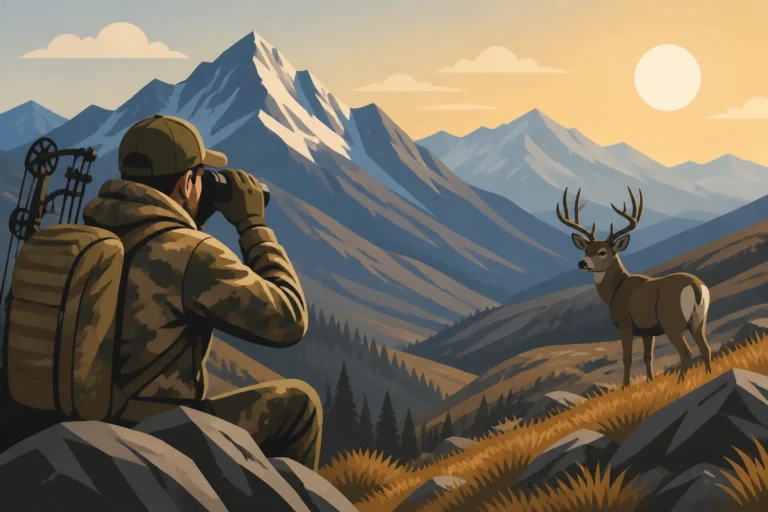
Spot-and-stalk is arguably the most effective method for rifle hunting mule deer in open, expansive Colorado terrain. It begins with finding a high vantage point – a ridge, a peak, or a prominent knoll – that allows you to survey vast areas with high-quality optics. This is where you put your binoculars and spotting scope to work, patiently picking apart every patch of timber, rockslide, and sagebrush flat. Utilizing a good set of Best Optics for Colorado Big Game is paramount here. Once a deer is spotted, the real chess match begins. You need to assess the deer's location, its bedding patterns, the terrain between you and it, and most critically, the wind direction.
Your stalk might take hours, covering significant distances and elevation changes. You'll use ravines, timber, and the natural contours of the land to remain out of sight. The goal is to get within your effective shooting range, ideally 200-400 yards, without alerting the animal. This demands extreme stealth and patience. One wrong move, one glint of sun off your rifle, or one shift in wind, and that buck will vanish. Often, the final approach will involve a slow, deliberate crawl or a meticulous walk, placing each footstep carefully. Many hunters find using a reliable mapping app like How to Use onX for Colorado Hunting to plan their stalk routes in advance can significantly increase their success rate.
Strategic Still-Hunting in Timber and Cover
While spot-and-stalk dominates the open country, still-hunting shines in denser timber and broken country where visibility is limited. This tactic involves moving incredibly slowly and deliberately through areas mule deer are known to frequent. Think of it as a methodical, silent patrol. You take a few steps, then stop for several minutes, scanning every tree, every shadowed pocket, and every clump of brush for any sign of a deer. Your eyes should be looking for horizontal lines in a vertical world, the flick of an ear, a patch of hide, or even just a darker shadow that seems out of place.
When still-hunting, you’re not just looking for deer; you're looking for parts of deer. A leg, an antler tip, the curve of a back. This method requires intense focus and often works best when deer are bedded down or moving slowly between feeding and bedding areas. It's particularly effective on north-facing slopes during midday when deer are seeking shade or in heavy cover after being pressured. The wind is still your biggest ally or enemy here; always move into the wind or with a crosswind to keep your scent from spooking game. If you can master How to Still-Hunt Colorado Timber, you'll open up a lot of country that other hunters might overlook.
Glassing Strategies and Gear
Effective glassing is the cornerstone of successful mule deer hunting in Colorado. The sheer vastness of the landscape means you can't just walk until you find them; you need to find them from afar.
Setting Up for Success
Before you even start glassing, consider your position. Get to a vantage point before first light, if possible, allowing you to catch deer at their most active—dawn and dusk. Find a comfortable position where you can settle in for long periods. A good tripod for your binoculars and spotting scope is non-negotiable. It eliminates shake and allows you to methodically grid an area without fatigue. I always recommend getting a quality setup from brands like Swarovski, Zeiss, or Vortex if your budget allows. These optics make a tangible difference in discerning a deer from a rock at long distances.
Start by glassing the most obvious areas first: open meadows, clear-cuts, and the edges of timber. Then, slowly and methodically, break the landscape into smaller grids. Don't just scan; pick apart the terrain. Look for movement, yes, but also for specific shapes, colors, or textures that don't belong. A flicker of an antler, a leg, or a horizontal line of a deer’s back can be all it takes. Once you spot something, keep glassing the area. Mule deer often travel in groups, and where there's one, there might be more. How to Glass for Colorado Mule Deer goes into even greater detail on this critical skill.
Using Technology to Enhance Glassing
In today's hunting world, technology plays a huge role in optimizing your glassing efforts. Apps like GoHunt provide invaluable data on unit draw odds, harvest success rates, and terrain analysis, helping you choose the right areas to focus your glassing. Beyond that, satellite imagery from apps like onX Hunt allows you to identify potential bedding areas, escape routes, and travel corridors even before you step foot in the field.
Combining your physical glassing with digital tools can drastically cut down on wasted time. If you identify a promising hidden basin or a steep, timbered ridge on a satellite map, you can prioritize those spots when you're physically in the field, knowing they're more likely to hold deer. Remember, the goal isn't just to see a deer, but to see a shootable deer and then formulate a plan.
Reading Terrain and Using the Wind
Colorado's mountains are a dynamic environment, and successful rifle hunting means becoming a master of reading the terrain and understanding wind currents. These factors dictate your approach and often determine success or failure.
Interpreting Mountain Features
Mule deer rely heavily on the contours of the land for cover and security. They'll often bed on benches and saddles that offer commanding views of their surroundings, allowing them to spot danger while remaining hidden. North-facing slopes, with their cooler temperatures and thicker timber, are often prime bedding areas during warmer parts of the season, while south-facing slopes attract deer in colder weather for their warmth. Deep draws and drainages serve as travel corridors, especially when deer are moving between feeding and bedding.
When you're planning your stalk, always consider these features. Can you use a ridge line to hide your approach? Is there a deep gully that will offer concealed movement to get within range? Avoid skylining yourself on ridge tops, as this immediately exposes you to anything below. Instead, stay just below the crest, using the natural break in elevation to your advantage. Understanding how deer utilize these features is key to getting close enough for a rifle shot.
Mastering Mountain Winds and Thermals
The wind in the mountains is notoriously shifty, but understanding thermals is paramount. In the mornings, as the sun warms the earth, air currents (thermals) typically rise, carrying your scent uphill. In the evenings, as the air cools, thermals fall, carrying your scent downhill. During midday, or on cloudy, windy days, the wind can be unpredictable, swirling through canyons and over ridges.
Always hunt with the wind in your favor, carrying your scent away from where you expect deer to be. When still-hunting or stalking, this means moving into the wind or with a crosswind. If you're spot-and-stalk hunting, planning your approach route to account for thermal shifts is critical. You might need to wait for a thermal to switch before making your final move, or plan your path to stay on the downwind side of the deer's likely position. Consistently checking a wind checker is a simple yet vital habit. A sudden change in wind can ruin an otherwise perfect stalk.
Executing the Shot: Mountain Marksmanship for Mule Deer
All the scouting and stalking in the world mean nothing without the ability to make a clean, ethical shot with your rifle. Mountain hunting presents unique challenges, from varying distances to steep angles, and preparing for these scenarios is non-negotiable.
Estimating Range and Angle Shooting
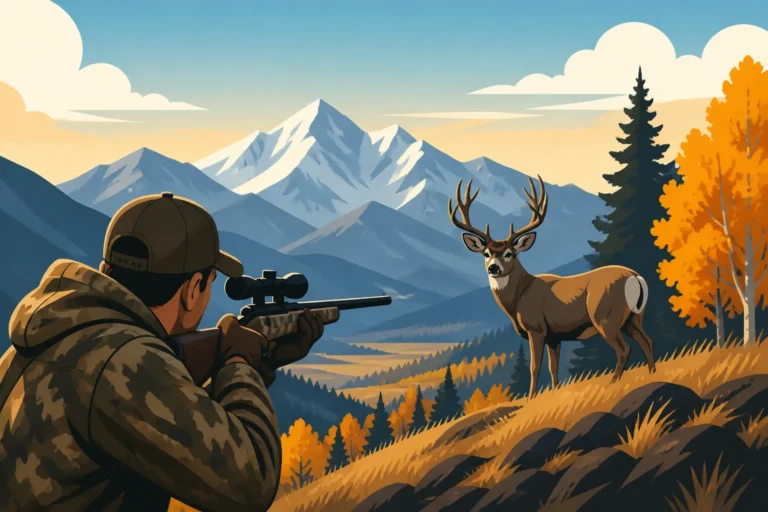
Unlike flat ground, shooting in the mountains often involves steep uphill or downhill angles, which can significantly affect bullet trajectory. A common mistake is to simply shoot for the straight-line distance. Gravity affects the bullet less on an angled shot, meaning the effective horizontal distance is what matters. This is where a good rangefinder with angle compensation becomes an essential tool. Brands like Leupold, Vortex, or Sig Sauer offer excellent models that provide compensated distances, simplifying the shot.
Practicing these types of shots before your hunt is crucial. Find a steep hill or mountain near home and practice shooting at various uphill and downhill angles. Know your rifle and caliber intimately, especially how bullet drop changes at different distances and angles. For example, if your rifle is sighted in at 200 yards, what's its drop at 300, 400, or even 500 yards? This knowledge is your best friend when a trophy buck steps out. Learning How to Shoot Uphill and Downhill at Elk will give you transferable skills for mule deer.
Stable Shooting Positions in the Field
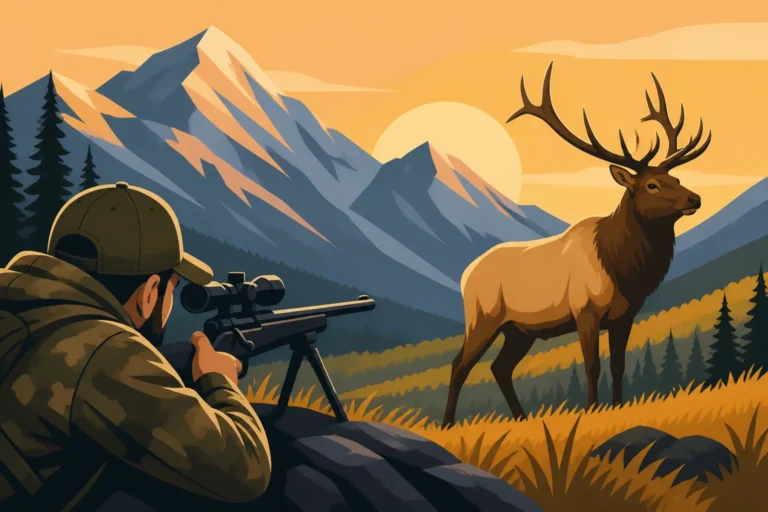
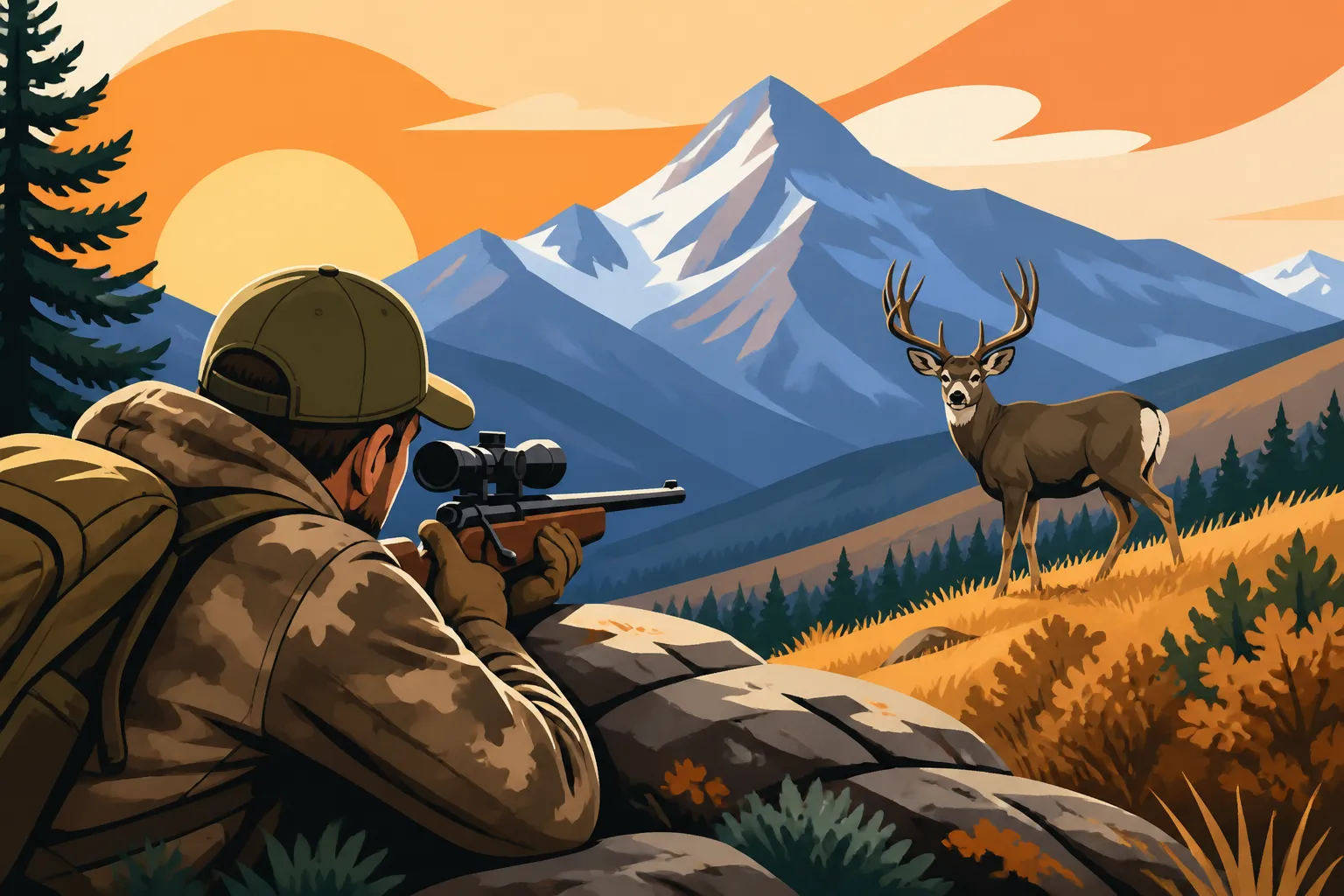
Rarely will you get a perfect bench rest in the mountains. You'll often be shooting from awkward positions, kneeling, sitting, or even prone on uneven ground. Practicing a variety of stable field positions is vital. A bipod attached to your rifle can be a game-changer, especially when shooting prone or from a slight incline. It provides a solid, consistent base, crucial for long-range accuracy.
If a bipod isn't an option, or the terrain is too steep, consider carrying a shooting stick or using your backpack as a rest. In a pinch, a tree limb, a large rock, or even a sturdy kneeling position can provide enough stability. The key is to find or create the most stable platform possible, allowing you to settle the crosshairs and make a confident shot. Rushing a shot from an unstable position is a recipe for a missed deer or, worse, a wounded animal. Always prioritize stability, even if it means waiting an extra minute or adjusting your position slightly.
Tracking and Recovery
The shot is made, and now the real work begins. Even with a perfect hit, tracking and recovery are crucial, especially in Colorado’s challenging terrain.
Post-Shot Protocol
After the shot, don’t immediately run to where the deer was standing. Take a moment to calm down, reload your rifle, and observe. Did the deer react to the shot? Did it kick, stumble, or run off with its tail up or down? Pay attention to the direction it ran and any landmarks nearby. If the deer is obviously down, great. If not, mark the spot where it was standing (the "last seen" point) and where you last saw it run. This mental mapping is vital.
Wait at least 15-30 minutes, or even longer if you suspect a gut shot (an hour or more), before beginning your track. This gives the deer time to lay down and expire. Rushing in can push a wounded deer further, making recovery much harder. When you do start tracking, move slowly and methodically. Look for blood, broken branches, disturbed earth, or even tufts of hair at the shot site.
Following the Trail
Mule deer often seek thick cover when wounded. Follow the blood trail, but also look ahead for the deer itself. If the blood trail peters out, expand your search in concentric circles around the last confirmed sign. If you're hunting in a group, spread out and grid search the area. Remember that a small amount of blood doesn't necessarily mean a non-lethal hit; sometimes a lung shot deer won't bleed profusely immediately.
It's also worth thinking about recovery before the shot. Consider the terrain where the deer is standing. If it's a sheer cliff, even a dead deer could be lost. Always have a plan for how you'll get the animal out of the mountains. This often involves quartering the animal in the field and packing it out, which is a significant undertaking. Familiarize yourself with techniques like those described in How to Pack Out an Elk in Colorado, as the principles apply to mule deer too. A successful hunt isn't over until the meat is in the cooler.
Overcoming Challenges and Maximizing Success
Hunting Colorado mule deer with a rifle is rarely straightforward. There are always challenges, from fellow hunters to unpredictable weather. Anticipating these and having strategies to overcome them will dramatically increase your odds of success.
Dealing with Hunting Pressure
Colorado has a strong hunting heritage, and many popular units, especially during rifle season, can see significant hunter pressure. This pressure makes mule deer wary and pushes them into thicker, harder-to-reach areas. To combat this, you need to think differently.
Seeking Out Sanctuary Areas
Mule deer that are pressured quickly learn to avoid roads, trails, and easily accessible areas. Your best bet is often to hike deeper into the backcountry, away from the crowds. Look for wilderness areas, roadless sections of National Forests, or rugged canyons that deter most hunters. These areas often require more physical exertion and time but frequently hold less pressured deer. GoHunt's mapping features can help you identify these remote zones.
Another strategy is to identify the "hiding spots" near pressured areas. Deer might be pushed off a popular ridge, but they'll often hold up in a steep, timbered drainage just below it, waiting for the pressure to subside. These overlooked pockets, often within earshot of other hunters, can be goldmines if you're willing to work for them. Learning How to Hunt Colorado Public Land Pressure provides additional insights into finding unpressured animals.
Hunting Midweek and Midday
While everyone is out at dawn and dusk, consider hunting effectively during the middle of the day. Many hunters retreat to camp during these hours, but deer still move, albeit often more subtly. They might be shifting between bedding areas or making a quick trip to water. This is a perfect time for slow, deliberate still-hunting in thick cover or patiently glassing areas where deer might feel safe.
Hunting midweek, if your schedule allows, can also significantly reduce pressure. Many hunters are out on weekends, creating a rush of activity. During the week, however, you might find yourself with entire drainages to yourself, allowing deer to resume more natural patterns. Even if you can only take one extra day off, consider making it a Tuesday or Wednesday.
Weather and Environmental Factors
Colorado's mountain weather is famously unpredictable. A warm, sunny morning can turn into a blizzard by afternoon. Understanding how these elements affect mule deer and how to prepare for them is essential.
Impact of Snow and Cold Fronts
A fresh snowfall can be a rifle hunter's best friend. It quiets the woods, making silent movement easier, and fresh tracks reveal recent deer activity. More importantly, heavy snow can push mule deer down from high country to lower elevations, concentrating them in specific areas. Cold fronts often make deer more active as they feed heavily to maintain body temperature.
However, snow also makes travel more difficult and can quickly turn dangerous if you're not prepared. Ensure you have the right gear, including snowshoes or micro-spikes if needed, and always check avalanche forecasts if you're in steep terrain. Your layers are critical here; refer to How to Handle Cold-Weather Gear for Colorado to ensure you're adequately prepared for rapidly changing conditions.
Hunting in Inclement Weather
Don't let a little rain or snow keep you in camp. Inclement weather often provides some of the best hunting opportunities. Deer are often more active during light precipitation, and the reduced visibility can make a stalk easier. Heavy fog can be a challenge, forcing you to hunt at closer ranges, but it can also provide excellent cover for an approach.
When hunting in adverse conditions, your gear needs to be up to the task. Waterproof outer layers, insulated boots, and a pack cover are essential. Protect your rifle from moisture, and regularly check your scope lenses for condensation or snow. Most importantly, know your limits. If a storm becomes too severe or visibility drops to unsafe levels, it’s always better to head back to camp and try again another day. Safety in the mountains always comes first.
Comparing Rifle Calibers for Colorado Mule Deer
Choosing the right rifle caliber for mule deer in Colorado is a crucial decision that impacts everything from trajectory to recoil. While many calibers are effective, understanding their nuances can help you select the best tool for your hunting style and the conditions you expect to encounter.
Here's a comparison of some popular rifle calibers for Colorado mule deer:
| Caliber | Typical Bullet Weight (grains) | Pros | Cons | Ideal Shot Range (yards) | Notes |
|---|---|---|---|---|---|
| .270 Winchester | 130-150 | Flat trajectory, mild recoil, common | Less energy than larger magnums at long range | 150-400 | Classic choice, widely available ammunition. Excellent for most situations. |
| .30-06 Springfield | 150-180 | Versatile, powerful, excellent energy | More recoil than .270, slightly arcing trajectory | 100-400 | Great all-around elk and mule deer cartridge, handles wind well. |
| 7mm Rem Magnum | 140-175 | Flat shooting, high velocity, powerful | Significant recoil, muzzle blast | 150-500+ | Excellent long-range potential, especially with heavier bullets. |
| .300 Win Magnum | 165-200 | Very powerful, flat trajectory, high energy | Heavy recoil, can be overkill at close range | 150-500+ | Favored by many for long-range elk and mule deer, requires practice. |
| 6.5 Creedmoor | 120-147 | Mild recoil, excellent accuracy, good ballistics | Less kinetic energy than magnum calibers | 100-400 | Great for hunters sensitive to recoil, excellent for precision shooting. |
| .308 Winchester | 150-180 | Short action, accurate, moderate recoil | More drop than .270 or magnums at range | 100-350 | Very popular for its accuracy and efficiency, effective for deer. |
When selecting a caliber, consider your personal comfort with recoil, your expected shot distances, and the specific unit you'll be hunting. For instance, if you anticipate open-country, long-range opportunities, a 7mm Rem Mag or .300 Win Mag might be appealing. However, if you're hunting thick timber where shots will be closer, a .308 or .270 can be perfectly effective without the added recoil. No matter your choice, consistent practice with your chosen rifle and ammunition is paramount.
Disclaimer
Hunting is an inherently dangerous activity. This guide provides information for educational purposes only and is not a substitute for professional guidance, landowner permission, or strict adherence to all local, state, and federal hunting regulations. Always prioritize safety, ethical hunting practices, and responsible firearm handling. Consult Colorado Parks and Wildlife (CPW) for the most current regulations, season dates, and licensing requirements.