Colorado GMU 40 Hunting Guide
Planning a hunt in a new or unfamiliar unit can feel like trying to solve a complex puzzle, especially when you're staring at maps and regulations, trying to figure out where the animals might be and how to even get to them. This comprehensive guide is designed to cut through that confusion, offering a detailed look at Colorado GMU 40, a unit with a reputation for both challenges and rewarding experiences, helping you understand its unique characteristics and plan a successful hunt.
Unpacking Colorado GMU 40: Terrain, Habitat, and Access
GMU 40, nestled in the central-western part of Colorado, is one of those units that demands respect and a good understanding of its diverse landscape. It's a unit that will test your physical limits and reward careful planning. You're not going to find flat, easy hunting here; this is mountain country, pure and simple.
Geographical Features and Elevation
GMU 40 is primarily situated within Mesa County and touches parts of Montrose and Delta counties. Its western boundary is defined by the Utah state line, while its northern edge generally follows the Colorado River, flowing through areas like Grand Junction. The unit stretches south, encompassing sections of the Uncompahgre National Forest and the Grand Mesa National Forest, reaching down towards the Uncompahgre Plateau.
Elevations within GMU 40 are a study in contrasts, ranging dramatically from the lower desert and canyon lands along the Colorado River, often below 5,000 feet, to towering peaks and plateaus exceeding 10,000 feet. This significant elevation change dictates everything from vegetation zones to animal migration patterns. Lower elevations feature classic pinyon-juniper forests, sagebrush flats, and red rock canyons, giving way to oak brush, aspens, and dark timber stands of spruce and fir as you climb higher. Understanding these transitions is crucial for knowing where to find different species at various times of the year. For instance, mule deer will often utilize those pinyon-juniper areas in the winter, while elk might retreat into the higher, denser timber during hunting seasons.
Public and Private Land Dynamics
Like many Colorado units, GMU 40 is a patchwork of public and private lands, and knowing the boundaries is absolutely critical. You'll find a substantial amount of public land here, including significant portions of the Uncompahgre National Forest and Grand Mesa National Forest. These national forests offer vast expanses for hunting, especially in the higher elevations. There are also tracts of Bureau of Land Management (BLM) land, particularly in the lower to mid-elevation zones, which can be fantastic for early-season hunts or specific species.
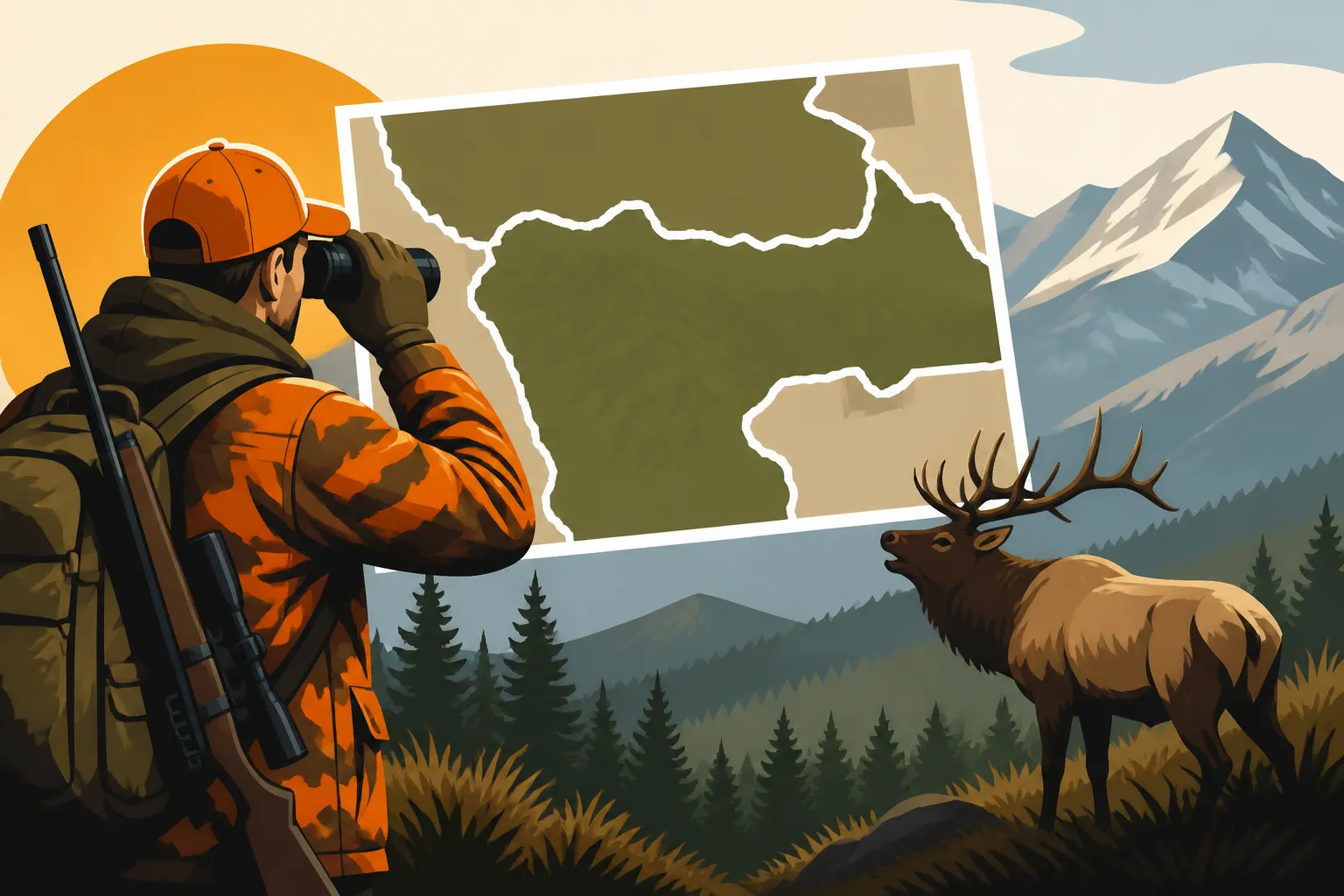
However, interspersed with these public lands are numerous private holdings, ranging from agricultural operations in the valleys to sprawling ranches higher up. Navigating this can be tricky, and neglecting to properly identify land ownership is a surefire way to run into trouble. This is where tools like onX Hunt become indispensable. Having a reliable mapping app that shows land ownership boundaries, often highlighted in distinct colors, can save you a major headache and ensure you're always on legal ground. Always double-check your position, especially when moving between different land types. Securing permission to hunt private land, if you can, can open up additional opportunities, but never assume access.
Hunting Opportunities and Species in GMU 40
GMU 40 is a diverse unit that offers opportunities for several big game species, with elk and mule deer being the primary draw. Black bears are also present, often as an incidental opportunity during deer or elk seasons, and there are limited chances for other small game.
Elk Hunting in GMU 40
Elk populations in GMU 40 are generally considered healthy, but don't expect a walk in the park. This unit isn't known for offering "easy" elk hunting. Elk tend to inhabit the higher, more rugged terrain within the national forests, particularly during the archery and early rifle seasons. They will often seek out thick timber, north-facing slopes, and areas with good water sources, which might be why you'd want to understand how to hunt elk wallows in Colorado. During the later rifle seasons, colder weather and snow can push elk down to lower elevations, sometimes onto BLM lands or even private agricultural fields, but accessing them can become a challenge due to land ownership patterns.
GMU 40 is primarily a draw unit for bull elk tags during most rifle seasons, meaning you'll need to apply through the Colorado Draw System and Preference Points. Archery elk tags are often available over-the-counter (OTC) in many units, and GMU 40 is usually one of them. For those considering an OTC option, the early archery season can be a fantastic, albeit physically demanding, experience, as explained in our detailed guide to Colorado Archery Elk Hunting Guide. Cow elk tags are also often available through the draw, sometimes with higher success rates, offering a great meat hunting opportunity.
Mule Deer Hunting in GMU 40
Mule deer are abundant in GMU 40, and the unit is actually quite popular for them. You'll find mule deer at various elevations, often overlapping with elk habitat but also utilizing those mid-elevation pinyon-juniper and sagebrush areas more consistently. Early season mule deer hunts might find bucks in higher alpine basins, while later seasons will see them migrating down to winter ranges. Understanding Colorado Mule Deer Migration is key here.
Like elk, most mule deer buck tags in GMU 40 are obtained through the draw, requiring preference points for better units. However, there are typically limited opportunities for doe tags or during specific rifle seasons that might require fewer points. The draw odds for mule deer can vary widely depending on the specific hunt code and season, so researching previous year's statistics on the Colorado Parks and Wildlife (CPW) website or using a platform like GoHunt is highly recommended. For those looking for a true challenge, a Colorado Spot-and-Stalk Hunting in Colorado approach is often the most effective method for these mountain deer.
Other Game Species
GMU 40 also holds a good population of black bears. Bear tags are typically available as an add-on during deer and elk seasons, and hunters often encounter them while pursuing other big game. Fall bear hunting can be quite productive, especially in areas with abundant oak brush and berry crops. Keep in mind Colorado Black Bear Hunting Guide details specific regulations and seasons.
Small game, such as cottontail rabbits and various grouse species, are also present and can provide additional hunting opportunities if you have the appropriate small game license.
Strategic Approaches for Hunting GMU 40
Success in GMU 40 rarely comes by accident. It demands careful planning, a willingness to hike, and smart use of technology and traditional hunting skills.
E-Scouting and Pre-Season Planning
E-scouting is your first line of defense against wasting precious hunting time on the ground. Before you even set foot in GMU 40, spend hours poring over maps. Utilize tools like onX Hunt to identify public land access points, wilderness boundaries, potential bedding areas (often on north-facing slopes or in thick timber), water sources, and travel corridors. Look for natural funnels, saddles between ridges, and benches that elk or deer might use. Pay close attention to recent satellite imagery to spot clear cuts, burns, or specific vegetation changes that could attract animals. Our comprehensive guide on How to E-Scout Before a Colorado Hunt offers an in-depth look at this essential preparation.
Consider the time of year you'll be hunting. Early archery season might see elk higher up, seeking cooler temperatures and greener feed, while a late rifle season could mean animals have moved to lower winter range, often influenced by snow. Knowing the historical weather patterns for the area can give you an edge in predicting animal movement.
On-the-Ground Tactics and Navigation
Once you're in the field, GMU 40 demands a blend of patience and perseverance. Foot power is king here. Be prepared for long hikes, steep climbs, and varied terrain. Invest in the Best Boots for Colorado Elk Hunting you can afford; your feet will thank you.
- Elk Hunting Tactics: For elk, focus on areas with dense timber, particularly spruce and fir, where they seek refuge from pressure. Early mornings and late evenings will find them moving between bedding areas and feeding grounds. During the rut, calling tactics, as described in How to Call Elk in Colorado, can be highly effective, especially in the aspen and dark timber pockets. Don't be afraid to get off the beaten path – the further you are from roads, the better your chances of finding unpressured animals. Understanding How to Use Thermals in Colorado Elk Country is also critical; elk often move with the thermals, so position yourself accordingly.
- Mule Deer Hunting Tactics: Mule deer often prefer more open country than elk, frequenting sagebrush hillsides, pinyon-juniper stands, and canyon rims. Glassing is paramount for mule deer. Find a good vantage point in the early morning or late evening and systematically glass all visible terrain. Focus on shaded areas, pockets of timber, and edges where cover meets feed. Spot-and-stalk is a classic and effective method for these animals.
- Bear Hunting Tactics: When hunting bear, focus on areas with food sources like berry patches (chokecherry, serviceberry, wild plum) and oak brush that produces acorns. Bear activity is often concentrated around these areas, especially in the fall as they fatten up for winter.
Understanding Hunter Pressure
GMU 40, being accessible from larger population centers like Grand Junction, can experience significant hunter pressure, especially during the more popular rifle seasons. This pressure can push animals into the steepest, thickest, and most remote pockets of public land. If you're hunting during a high-pressure season, prepare to go deep or hunt during weekdays when traffic is lighter. Looking into How to Hunt Elk on Public Land Pressure can give you valuable insights.
Table: GMU 40 General Hunting Characteristics
| Characteristic | Elk Hunting | Mule Deer Hunting | Black Bear Hunting |
|---|---|---|---|
| Primary Terrain | High elevation timber, steep slopes, aspen groves | Mid-elevation pinyon-juniper, sagebrush, canyon rims | Oak brush, berry patches, dense timber |
| Tag Type (Typically) | Draw (rifle bulls), OTC (archery), Draw (cows) | Draw (bucks), limited Draw (does) | Add-on to deer/elk tag (Fall) |
| Optimal Method | Spot-and-stalk, calling, still-hunting | Glassing, spot-and-stalk | Still-hunting, hunting food sources |
| Key Challenge | Steep terrain, hunter pressure, finding unpressured elk | Extensive glassing, navigating varied terrain | Locating concentrated food sources |
| Best Season | Archery, 3rd/4th Rifle (snow-dependent) | Archery, 2nd/3rd Rifle (rut) | Fall (when food sources are abundant) |
Navigating Regulations and Ethical Considerations in GMU 40
Understanding the local rules and upholding ethical hunting practices are non-negotiable for a successful and responsible hunt in GMU 40. Colorado Parks and Wildlife (CPW) regulations can be complex, and ignorance is never an excuse.
Specific Regulations and Hunt Codes
Every year, CPW publishes a comprehensive Big Game Hunting Brochure that details all seasons, legal hunting methods, bag limits, and specific regulations for each GMU. For GMU 40, pay close attention to the hunt codes for your desired species and season. These codes will specify if a tag is limited draw, over-the-counter, or if there are any specific antler point restrictions (APRs) for bull elk or buck deer. For example, some units might have a "4-point or better" rule for bulls, or specific rules for either-sex vs. antlerless tags. Always check the current year's regulations, as they can change annually.
The Colorado Hunting Atlas is another invaluable resource provided by CPW, offering detailed maps showing public and private land, wilderness areas, roads, and other features that influence hunting access. Learning how to effectively use this tool can greatly enhance your planning and help you avoid inadvertent trespass.
Access Points and Wilderness Areas
GMU 40 contains portions of designated wilderness areas, such as parts of the Uncompahgre Wilderness. Hunting in wilderness areas often comes with specific restrictions, such as no mechanized travel (e.g., ATVs, e-bikes) and stricter Leave No Trace principles. If your hunt takes you into or near a wilderness area, make sure you understand these rules thoroughly. Our guide to Colorado Wilderness Area Hunting offers more specific advice.
Most public land access points for GMU 40 are found off major highways like US-50 and CO-141, which traverse through or near the unit, or via county roads that branch into the national forests and BLM lands. Road conditions can vary dramatically, especially as you gain elevation or during wet weather. A high-clearance 4×4 vehicle is often necessary for reaching some of the more remote trailheads or forest service roads. Always be mindful of gates; if a gate is closed, it's usually for a reason, often indicating private property or a seasonal road closure.
Ethical Hunting and Conservation
Beyond the regulations, ethical considerations are paramount. This includes responsible shot placement, thorough tracking of wounded animals, and proper field care of harvested game. Given the rugged terrain of GMU 40, being physically prepared to pack out an elk or deer can be a significant challenge. Learning How to Pack Out an Elk in Colorado efficiently and safely is a skill that every hunter should master before heading into units like this.
Respect for the land and other users is also vital. Pack out all your trash, minimize your impact, and be courteous to other hunters, hikers, and recreationalists you may encounter. Conservation efforts by CPW and organizations like Rocky Mountain Elk Foundation are crucial to maintaining healthy wildlife populations in units like GMU 40, and ethical hunters are a part of that solution.
Disclaimer
Hunting in Colorado, especially in rugged units like GMU 40, carries inherent risks. This guide provides general information and recommendations but should not replace official regulations published by Colorado Parks and Wildlife (CPW). Always consult the most current CPW Big Game Hunting Brochure, unit-specific regulations, and land access rules before planning or undertaking any hunt. Conditions, regulations, and access can change. Be prepared for challenging weather and terrain, and prioritize safety.