Spot-and-Stalk Hunting in Colorado
There's nothing quite like the immense satisfaction of spotting a magnificent animal in the vast, wild landscapes of Colorado and then executing a flawless stalk to get within range. However, this method can also be incredibly frustrating, leaving many hunters feeling like they're playing a perpetual game of hide-and-seek against impossible odds. This comprehensive guide will strip away the mystery and provide you with detailed, actionable strategies to successfully spot-and-stalk big game in Colorado's diverse and challenging terrain.
What Exactly is Spot-and-Stalk Hunting?
For those new to Western hunting, or even seasoned veterans looking to refine their skills, "spot-and-stalk" might sound straightforward. But in reality, it's a dynamic, chess-like game played against an animal's incredible senses and the unforgiving Rocky Mountain environment. It's a method that demands patience, meticulous planning, and the ability to adapt on the fly.
Defining the Core Principles
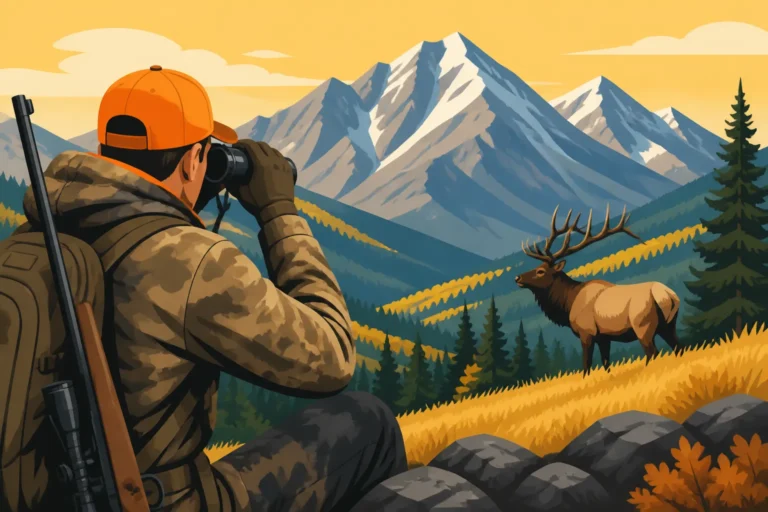
At its heart, spot-and-stalk hunting is a two-phase operation: first, locating your quarry from a distance using optics, and second, meticulously closing that distance on foot, undetected, to get within an ethical shooting range. It's not about blind luck or simply walking through the woods hoping to bump into something. Instead, it's a proactive approach that relies heavily on observation and strategic movement. You're essentially letting your binoculars and spotting scope do the initial heavy lifting, covering miles of terrain from a static position. This conserves energy, minimizes your scent dispersal, and allows you to observe animal behavior without immediate detection.
Once an animal is spotted, the real test begins. You'll assess the wind, terrain, and vegetation, and formulate a plan to approach. This isn't just a walk; it's a careful, calculated maneuver where every step, every ridge, every gust of wind plays a critical role. The goal is always to get into a position for a clean, ethical shot, whether that's with a bow or a rifle, without the animal ever knowing you were there until it's too late. It’s a truly immersive experience that deeply connects you to the landscape and the animal you’re pursuing.
Why Spot-and-Stalk Excels in Colorado's Terrain
Colorado's varied landscapes, from expansive alpine basins to dense timber and vast open plains, are practically tailor-made for spot-and-stalk hunting, especially for species like elk, mule deer, and pronghorn. Unlike many Eastern hunting scenarios that favor tree stands or ground blinds in thick woods, the broken, mountainous terrain of Colorado often provides the perfect combination of visibility and cover. You can find high vantage points that offer commanding views over huge swaths of country, allowing you to pick apart mountainsides, drainages, and meadows.
The sheer scale of Colorado's hunting units also plays a significant role. Covering ground by foot, blindly still-hunting through endless timber, can be exhausting and unproductive. Spot-and-stalk allows you to efficiently scout vast areas with your eyes before committing to a physical approach. Imagine trying to still-hunt a 10,000-acre basin; it's practically impossible. But from a strategic overlook, you can glass that entire basin in a few hours, identifying potential game and then developing a precise plan. This method is particularly effective in high-elevation, open country where animals often feed or bed in visible areas, but also surprisingly effective on the fringes of dark timber if you know how to leverage thermals and natural openings. Learning How to Glass Big Colorado Basins is a crucial skill for this approach.
Essential Gear for Colorado Spot-and-Stalk
Success in spot-and-stalk hunting isn't just about skill; it's also about having the right tools for the job. Colorado's mountains are unforgiving, and being properly equipped is paramount for both effectiveness and safety. Skimping on crucial gear can quickly turn a promising hunt into a miserable, or even dangerous, ordeal.
Optics: Your Eyes in the Mountains
Without quality optics, spot-and-stalk hunting in Colorado is simply not possible. Your binoculars, spotting scope, and rangefinder are arguably the most important pieces of gear you'll carry. They are your primary means of locating game and planning your approach.
For binoculars, a good pair of 10x42s or 12x50s is often considered the workhorse. Brands like Vortex, Maven, and Swarovski offer excellent clarity and light-gathering capabilities, which are vital during the low-light hours of dawn and dusk when animals are most active. You need glass that provides a clear, crisp image, allowing you to distinguish an elk's ear twitch from a shadowed branch at half a mile. Steadiness is also key, so consider a binocular tripod adapter and a lightweight tripod to eliminate shake and reduce eye strain during long glassing sessions. For a deeper dive, check out our guide on Best Optics for Colorado Big Game.
A spotting scope is the next level up, essential for truly picking apart distant terrain and confirming if that distant brown blob is indeed a mature bull elk or just a rock. A 15-45x65mm or 20-60x80mm scope is common, providing the magnification needed to count antler points or assess an animal's behavior from a mile or more away. Always use your spotting scope on a sturdy tripod for maximum stability. Finally, a reliable rangefinder is non-negotiable. Knowing the exact distance to your target, especially in steep, broken terrain, is critical for making an ethical shot. Look for a model that offers angle compensation for uphill and downhill shots, as this is a common necessity in Colorado.
Footwear and Clothing for Stealth and Comfort
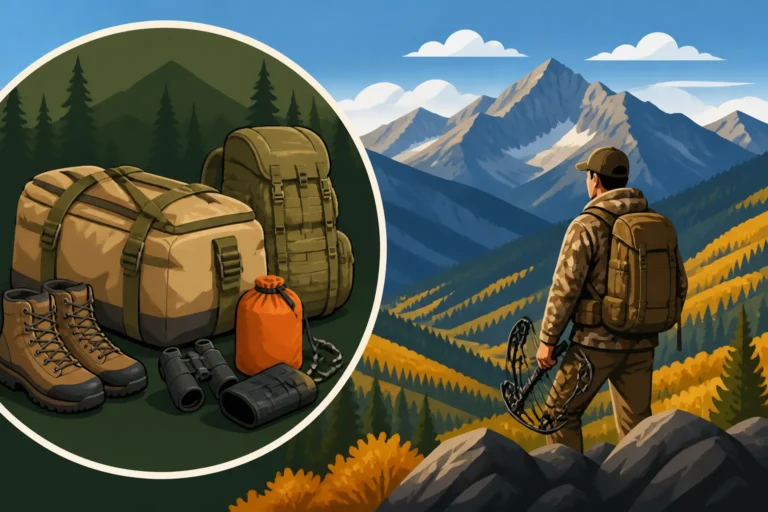
Your feet and your comfort are your lifeline in the backcountry. Investing in high-quality, broken-in hunting boots is not just a recommendation; it's a necessity. Look for boots that are waterproof, offer excellent ankle support, and have stiff soles to handle rocky, uneven terrain. Brands like Crispi, Kenetrek, or Schnee's are popular for a reason—they're built for the mountains. Make sure your boots are thoroughly broken in before your hunt to avoid blisters, which can quickly derail any hunting trip. Layering your clothing is also crucial, allowing you to adapt to Colorado's notoriously fickle weather. You'll often experience four seasons in a single day, from freezing mornings to warm afternoons and sudden afternoon thunderstorms.
Start with a moisture-wicking base layer, add an insulating mid-layer (fleece or puffy jacket), and top it off with a waterproof and windproof outer shell. Choose quiet fabrics that won't rustle as you move, as noise is the enemy of a successful stalk. Earth-toned or camouflage patterns are important for blending into the environment. Don't forget a warm hat and gloves, even in early seasons, as cold can set in quickly at higher elevations. A spare pair of wool socks can be a game-changer after a stream crossing or a long, wet hike. Having the right layers will not only keep you comfortable but also enable you to move quietly and effectively when it's time to close the distance.
Backpacks and Essential Tools
Your backpack is more than just a carrying vessel; it's your mobile base camp. For spot-and-stalk hunting, you'll need a pack that's comfortable for long days, capable of carrying all your essentials, and ideally designed to haul meat if you're successful. A 30-50 liter pack is often ideal for day hunts, offering enough space for water, food, extra layers, optics, first-aid, and emergency gear. If you plan on spike camps or multi-day excursions, a larger pack in the 60-80 liter range will be necessary. Brands like Mystery Ranch, Kifaru, and Stone Glacier are renowned for their robust construction and load-carrying capabilities. You can find more specific advice in our Best Backpack for a Colorado Elk Hunt guide.
Beyond your pack, several essential tools can make or break your hunt. A reliable headlamp with spare batteries is critical for navigating in the dark. A good knife, sharpener, and game bags are absolute necessities for field dressing and packing out meat. Navigation tools, whether a GPS device, a detailed map, and compass, or a robust hunting app like GoHunt on your smartphone, are paramount for staying found and understanding the terrain. Remember to download offline maps if relying on a phone, as cell service is often non-existent in the backcountry. Finally, always carry a small first-aid kit, fire starter, and some form of emergency shelter like a lightweight tarp or bivy sack. Being prepared for the unexpected is part of being a responsible hunter in the Colorado wilderness.
Here's a quick look at some essential gear for your spot-and-stalk adventures:
| Gear Category | Item | Key Features | Typical Use Case |
|---|---|---|---|
| Optics | Binoculars (10×42/12×50) | Clear glass, good light transmission, tripod adaptable | Initial broad-area scanning, animal identification |
| Spotting Scope (15-45x65mm+) | High magnification, detailed observation, durable | Long-range detailed scouting, antler counting, shot planning | |
| Rangefinder (angle compensating) | Accurate, fast readings, compensates for incline/decline | Precise distance measurement for ethical shots | |
| Clothing | Layering System (Base, Mid, Outer) | Moisture-wicking, insulating, waterproof/windproof, quiet fabric | Adapting to changing weather, maintaining comfort and stealth |
| Footwear | Quality Hunting Boots | Waterproof, ankle support, stiff sole, good traction | Navigating rugged terrain, long hikes, weather protection |
| Backpack | Day Pack (30-50L) / Haul Pack (60-80L) | Comfortable suspension, load-carrying, gear organization, meat shelf | Carrying essentials, successful meat pack out |
| Navigation | GPS/GoHunt App + Map/Compass | Offline maps, waypoints, topo details, battery life | Staying found, identifying terrain features, planning routes |
| Essentials | First-Aid Kit, Headlamp, Knife | Preparedness for injury, low-light navigation, field dressing | Safety, practical needs, meat care |
Mastering the Art of Spotting Game
The "spot" in spot-and-stalk is arguably the most critical and often the most challenging part of the equation. You can't stalk what you can't see, and in Colorado's vast landscapes, animals can disappear into the terrain with uncanny ease. Developing a keen eye and disciplined glassing habits will drastically increase your success rate.
Choosing the Right Vantage Point
Selecting an optimal vantage point is the foundation of successful spotting. You want a location that offers expansive, unobstructed views of potential game habitat, ideally encompassing multiple drainages, ridges, and basins. This often means climbing to a high point—a prominent ridge line, a knob, or a saddle that gives you a commanding overview. Consider accessibility; you need to be able to get to and from this spot efficiently, often in the dark.
When choosing, think about the sun's position throughout the day. You generally want the sun at your back or to the side, not shining directly into your optics, which can cause glare and hinder visibility. Also, consider the wind direction relative to your vantage point, especially if you plan to stalk from there. A good spot provides both visibility and a secure feeling, allowing you to settle in for hours without feeling exposed or needing to move. The best vantage points aren't always the highest peaks, but rather those that offer the best angle into the terrain you want to hunt. Use tools like GoHunt or other mapping software to identify these key positions during your e-scouting phase before you even leave home.
Grid Searching and Patient Glassing Techniques
Once you're settled into your vantage point, don't just randomly sweep your binoculars. Adopt a methodical grid search technique to systematically pick apart the landscape. Start with your binoculars at the closest terrain you want to cover, working from left to right, then drop down a few yards and sweep back from right to left. Continue this process, slowly moving further out until you've meticulously covered the entire area. Pay close attention to changes in texture, color, and shape that might indicate an animal.
Patience is not just a virtue here; it's a necessity. You might spend hours glassing without seeing anything, only for a bull elk to step out from behind a tree exactly where you just looked. Take breaks, rest your eyes, and then resume. When you do spot something, switch to your spotting scope for a more detailed examination. Look for subtle movements—an ear twitch, a flicking tail, the gleam of an antler tine. Animals often reveal themselves with slight movements or by presenting a recognizable silhouette against the sky. Remember that animals often blend in incredibly well, so you're not always looking for a full animal, but rather a part of an animal. This is where How to Glass Big Colorado Basins really comes into play. You’re effectively letting your high-power optics do the walking for you across vast distances.
Identifying Key Habitat and Movement Patterns
Successful spotting isn't just about scanning for brown blobs; it's about understanding where those brown blobs are likely to be. Animals in Colorado, whether elk, mule deer, or pronghorn, follow predictable patterns based on time of day, weather, and season. During early morning and late evening, look for animals in feeding areas—open meadows, aspen groves, or south-facing slopes. As the sun rises and temperatures climb, they'll typically move to bedding areas, which often consist of north-facing slopes, dense timber, or shaded creek bottoms.
Water sources and wallows are also critical areas to watch, especially during dry periods or the elk rut. Look for travel corridors—saddles, ridges, and benches that connect feeding and bedding areas. Understanding these patterns, combined with knowledge of the specific Colorado Elk Habitat and Elevation or Colorado Mule Deer Habitat Explained, will help you focus your glassing efforts on the most productive areas, rather than wasting time scanning unproductive ground. The more you learn about the habits of your target species, the more efficiently you'll be able to locate them.
The Stalk: Closing the Distance
Once you've spotted your game, the real challenge, and the true art of spot-and-stalk, begins: the stalk itself. This is where you transform from an observer into a silent predator, using every scrap of knowledge about terrain, wind, and animal behavior to get within range. This phase is fraught with opportunities for mistakes, but also immense satisfaction when executed perfectly.
Analyzing Wind and Thermals
The wind is your absolute best friend or your worst enemy in a stalk. Animals rely heavily on their sense of smell, and a single puff of your scent carried on the wind can ruin hours of effort. Before you even take your first step, meticulously analyze the wind direction and how it interacts with the terrain. Look for wind indicators like swirling dust, rustling leaves, or even just feeling it on your face.
In mountainous terrain, wind can be particularly tricky due to thermals. Warm air rises in the morning as the sun heats the ground, creating an uphill thermal draft. In the afternoon and evening, as the air cools, it creates a downhill thermal draft. These thermals act like an invisible river of air. You must plan your approach so that the wind, and particularly the thermals, are consistently carrying your scent away from the animal. This often means taking a longer, more circuitous route to stay downwind or crosswind. Understanding How to Use Thermals in Colorado Elk Country is not just helpful, it's non-negotiable for success. Constantly check the wind throughout your stalk using a wind checker; even a slight shift can force a change in your plan.
Using Terrain for Concealment
The mountains offer incredible natural cover if you know how to use it. Ridges, draws, rock outcroppings, and patches of timber all provide opportunities to hide your approach. Your goal is to move from one piece of cover to the next, staying out of sight of the animal's keen eyes. Avoid skylining yourself on ridges, as your silhouette will be easily visible against the open sky. Instead, stay just below the crest of a ridge, moving slowly and peeking over occasionally to re-evaluate the animal's position.
When traversing open areas, use dips, swales, or the highest grass to your advantage. Sometimes, a full crawl is necessary to remain undetected. Before committing to a move, visually trace your entire path to the next piece of cover, ensuring it truly offers concealment. This requires a solid understanding of the topography, which you should have gained during your initial glassing and map study. Tools like GoHunt's 3D mapping features can be incredibly helpful for visualizing the terrain and planning a concealed route before you even set foot on the ground.
Slow, Deliberate Movement and Noise Control
Once you begin the stalk, every single movement must be slow, deliberate, and quiet. This is not the time for speed records. Take one step at a time, placing your foot down softly and checking for any snapping twigs or loose rocks before shifting your weight. Keep your eyes on the animal constantly, watching for any sign that it's alerted to your presence. If an animal looks in your direction, freeze immediately, even mid-step, and remain motionless until it returns to feeding or looking away.
Avoid wearing noisy clothing or carrying gear that rattles. Backpack buckles, zippers, and loose equipment can all create sounds that carry surprisingly far in the quiet backcountry. If you're moving through dense timber or brush, move at a snail's pace, parting branches gently rather than crashing through. Practice How to Move Quietly Through Colorado Timber extensively. The goal is to move like a ghost, leaving no trace of your presence until you are in a shooting position. This patience and attention to detail are what separate a successful stalk from a blown opportunity.
Common Challenges and How to Overcome Them
Spot-and-stalk hunting is inherently challenging, and Colorado throws in its own unique set of obstacles. Expect things to go wrong, and develop a mindset of resilience and adaptability. Overcoming these hurdles is part of what makes this method so rewarding.
Dealing with Changing Conditions and Spooked Animals
Colorado weather can change on a dime. A sunny morning can quickly give way to a furious afternoon thunderstorm, bringing wind, rain, and even hail. These shifts can drastically alter animal behavior and your ability to stalk. A sudden gust of wind can betray your position, or a downpour might make the ground too muddy or noisy for a quiet approach. Always have your layered clothing system ready to adapt, and be prepared to hunker down if conditions become too extreme.
Even with the best planning, animals sometimes get spooked. Maybe a different hunter bumps them, or they simply catch a whiff of you despite your best efforts. If an animal bolts, don't give up immediately. Often, they'll run a short distance and then stop to assess the threat. If you can get a read on their direction of travel and relocate them quickly, sometimes you can initiate a second, more cautious stalk. However, if they disappear over a ridge or into thick cover and you lose visual, it's usually best to back out, mark their last known location, and try to relocate them later or the next day. Pushing a truly spooked animal too hard will only send it into another county. Persistence, but also knowing when to cut your losses, is key.
Navigating Difficult Terrain and Elevation
Colorado's mountains are majestic but brutal on the body. Steep slopes, loose scree fields, thick timber, and fast-flowing creeks are all common features you'll encounter. Physical conditioning is paramount for spot-and-stalk success. You'll be climbing thousands of feet in elevation, often with a heavy pack, and then trying to move quietly and precisely. Prioritize How to Physically Prepare for Colorado Elk well in advance of your hunt, focusing on cardiovascular endurance and leg strength.
Navigating this terrain while stalking requires careful foot placement and a keen eye for safe passage. Treacherous footing can lead to falls or, at the very least, noisy steps that give you away. Always have trekking poles, especially if you're carrying a heavy pack or traversing steep, uneven ground. They provide stability and reduce strain on your knees. At high altitudes, even simple tasks become more taxing. Understand How to Acclimate to Colorado Elevation to avoid altitude sickness, which can severely impact your judgment and physical performance. Take frequent breaks, stay hydrated, and know your limits.
Public Land Pressure and Avoiding Other Hunters
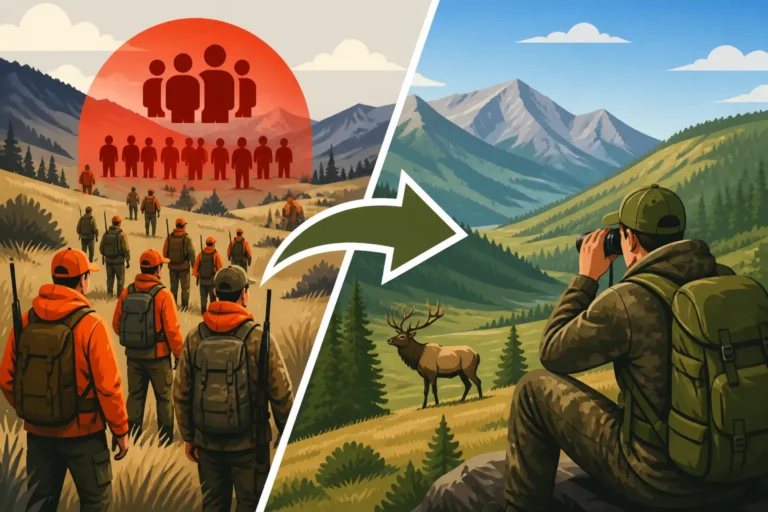
Colorado is a popular hunting destination, and public land can see significant pressure, especially during rifle seasons. Encountering other hunters can complicate a stalk, spook your game, or even put you in an unsafe situation. During your initial glassing, be sure to scan for other hunters or their camps. If you spot them, adjust your plan to avoid their area, or at least be aware of their general direction of travel.
One effective strategy to mitigate pressure is to target areas that are harder to access. This often means packing into roadless areas or wilderness areas, where you'll encounter fewer hunters. Our Colorado Backcountry Hunting Guide goes into more detail on these strategies. Alternatively, try hunting during weekdays or later in the season when pressure might naturally decrease. If you do encounter other hunters while on a stalk, communicate politely and clearly. A simple wave or quiet conversation can prevent misunderstandings and help everyone safely enjoy their hunt. Remember, respecting other hunters is just as important as respecting the game and the land.
Species-Specific Spot-and-Stalk Strategies in Colorado
While the core principles of spot-and-stalk remain consistent, tailoring your approach to the specific behaviors and habitats of each species will dramatically improve your odds. Colorado is home to a variety of big game that can be pursued using this method, each presenting its own unique set of challenges and opportunities.
Spot-and-Stalk for Colorado Elk
Elk hunting in Colorado is often considered the pinnacle of Western hunting, and spot-and-stalk can be incredibly effective, especially in early archery seasons or during the rifle seasons when bulls might be more spread out or less vocal. Elk are large animals, but they can disappear into dense timber or steep drainages with surprising speed.
For elk, focus your glassing efforts on large, open basins and parks at first light and last light, where they often feed. Once they move to bed, they'll typically seek out north-facing timbered slopes or dense pockets of cover to avoid the sun and thermal currents. When stalking elk, remember their incredible sense of smell and hearing. Their eyesight, while good, is often considered their weakest sense. This means meticulous wind analysis and extremely quiet movement are paramount. During the rut, you might use bugling or cow calls to pinpoint a bull's location before initiating a stalk, but be prepared for them to be alert and wary. Our comprehensive Colorado Elk Hunting Guide offers a wealth of information to help you understand these magnificent creatures.
Spot-and-Stalk for Colorado Mule Deer
Mule deer are perhaps the quintessential spot-and-stalk animal in Colorado. Their preference for broken, open country, sagebrush flats, and timbered draws makes them ideal candidates for this method. Unlike elk, mule deer often hold tight when pressured, relying on their camouflage and stillness rather than outright flight, which can present stalking opportunities if you have a keen eye.
When hunting mule deer, focus your glassing on south-facing slopes in the morning and evening, especially during colder periods, where they'll seek warmth. During the midday, check shady pockets, heavy brush, or the edges of timber. Their eyesight is excellent, so moving slowly and using every piece of available cover is critical. They also have large ears that provide exceptional hearing. Pay close attention to subtle movements – a flick of an ear, a swish of a tail, or the glint of an antler. The rut in late October and November can make them more visible and less cautious, but also often brings other hunters into the field. You can find more targeted information in our Colorado Mule Deer Hunting Guide.
Spot-and-Stalk for Colorado Pronghorn
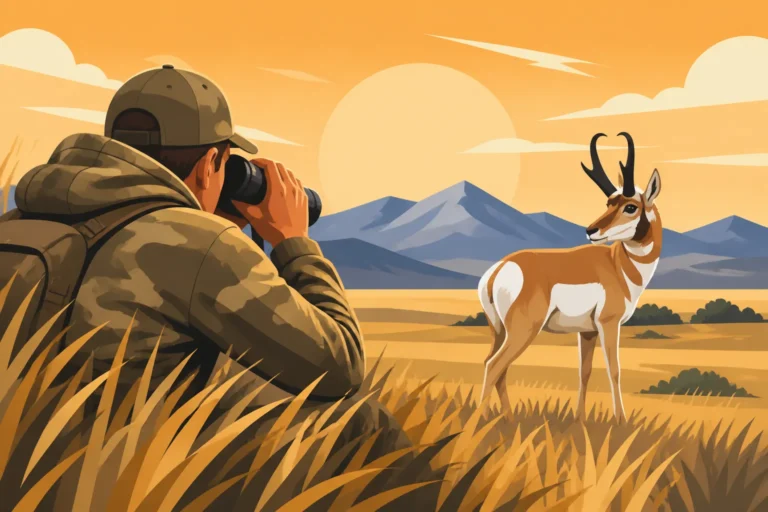
Spot-and-stalk hunting pronghorn on Colorado's eastern plains and high desert can be one of the most exhilarating and frustrating experiences you'll ever have. Pronghorn possess incredible eyesight—often likened to an 8x binocular—and live in wide-open country where cover is sparse. This makes getting within shooting range a true test of skill and patience.
For pronghorn, the "spot" is relatively easy due to the open terrain, but the "stalk" is incredibly difficult. You'll need to use every small dip, wash, and patch of sagebrush for concealment. Long, low crawls are often required, sometimes for hundreds of yards. Approach them into the wind, as their sense of smell is also keen. Pay very close attention to their body language. If they look up and stare, freeze immediately. If they start to get nervous and bunch up, you might have been busted. Often, you'll need to get creative, using the terrain to appear further away than you actually are, or even decoying to draw them in. Learn more about these fascinating animals in our Colorado Pronghorn Hunting Guide.
Ethical Considerations and Safety
Hunting is a privilege, and with that comes a profound responsibility to hunt ethically and safely. In the remote and rugged landscapes of Colorado, this isn't just about following regulations; it's about making sound judgments that protect yourself, other hunters, and the animals you pursue.
Knowing Your Limitations and Taking Ethical Shots
The thrill of a stalk can be immense, but it's crucial to know your personal and equipment limitations. What's an ethical shot for one hunter might be entirely unethical for another. This includes understanding your effective range with your rifle or bow. Don't attempt shots that are beyond your comfort zone or skill level, especially in challenging mountain conditions. Factors like wind, steep angles, and a moving animal can all dramatically reduce your effective range. Practice shooting extensively from various positions, including uphill, downhill, and after physical exertion, to understand your true capabilities.
An ethical shot aims for a quick, humane kill. Always strive for a broadside or quartering-away shot that targets the vital organs. Avoid risky shots at the rear or neck. If you don't have a clean shot opportunity, be patient. Waiting for the animal to present a better angle, even if it means waiting for minutes or hours, or even abandoning the stalk, is the mark of a responsible hunter. Don't let "buck fever" cloud your judgment. Remember, leaving an animal to suffer is a failure of ethics, not just a missed opportunity. Our guide on How to Shoot Uphill and Downhill at Elk provides specific advice on these challenging shots.
Backcountry Safety and Emergency Preparedness
Colorado's backcountry is wild and unpredictable. When you're miles from the nearest road, a minor incident can quickly escalate into a life-threatening emergency. Always tell someone your hunting plan, including your intended route, where you'll be parking, and when you expect to return. Carry reliable communication devices, such as a satellite messenger (Garmin inReach or Zoleo are popular choices), in addition to your cell phone, which often won't have service.
Pack a comprehensive first-aid kit that includes supplies for major trauma, not just band-aids. Bring enough water or a reliable water filter, extra food, and emergency shelter like a lightweight tarp or bivy sack. Be aware of the signs of hypothermia and dehydration, and how to treat them. Bear spray is also a wise addition, especially in areas with a significant bear population. Weather can change rapidly, so be prepared for sudden shifts to cold, wet, or snowy conditions, even in early seasons. Prioritize self-rescue and preparedness; you are ultimately responsible for your own safety in the wilderness.
Post-Harvest: Field Care and Pack Out
Successfully dropping an animal after a hard-earned spot-and-stalk is a moment of immense pride and relief. But the work is far from over. Proper field care is critical to preserving your meat, and getting that meat out of the backcountry is often the most physically demanding part of the entire hunt.
Efficient Field Quartering
Once you've located your downed animal, the clock starts ticking, especially in warmer weather. The goal is to get the hide off, guts out, and meat cooling as quickly as possible. Learn how to efficiently quarter an animal in the field. This typically involves removing the four quarters, backstraps, tenderloins, and neck meat. For elk, this can mean hundreds of pounds of meat. Our detailed guide on How to Quarter an Elk in the Field provides a step-by-step approach.
Use sharp knives and ensure you have plenty of good quality game bags. Game bags are essential for protecting the meat from dirt, flies, and other contaminants while allowing it to breathe and cool. Hang the bagged meat from trees if possible, away from direct sunlight and predators, to maximize airflow. Cooling the meat quickly prevents spoilage, and in the high country, nighttime temperatures often assist with this. Be mindful of scent and dispose of offal away from trails and camps to avoid attracting bears or mountain lions.
Strategies for a Successful Pack Out
Packing out an animal, especially a large one like an elk, from remote Colorado backcountry is a monumental task. It's often where the real fitness test of a hunt comes into play. If hunting solo, plan for multiple trips. Even with a partner, it's typically a multi-load affair. Divide the meat and hide into manageable loads, aiming for 50-70 pounds per pack, depending on your fitness level and the terrain.
Invest in a quality pack frame or a hunting backpack designed for heavy loads. These packs are built to transfer weight efficiently to your hips, saving your shoulders and back. Prioritize steady, slow movement over speed. Take frequent breaks, hydrate, and fuel your body. If you’re hunting with a group, coordinate your efforts, share the load, and support each other. Consider caching meat in cool, shaded spots if you need to make multiple trips over several days. Sometimes, the most challenging part of the entire hunting experience isn't the shot, but the arduous journey of bringing that hard-earned meat back to your vehicle. Our guide on How to Pack Out an Elk in Colorado offers more tactical advice.
Disclaimer
Please remember that hunting regulations, seasons, and licensing requirements can change. Always consult the official Colorado Parks and Wildlife (CPW) website or their current hunting brochure for the most up-to-date and accurate information before planning any hunt. This guide is for informational purposes only and does not replace official state regulations or proper hunter education.