Colorado Mule Deer Feeding Patterns
One of the biggest frustrations for any mule deer hunter in Colorado is trying to predict where these elusive animals will be. It feels like they vanish into thin air sometimes, right? But the truth is, mule deer are creatures of habit, and understanding their feeding patterns is the absolute key to unlocking their whereabouts, especially as the seasons change and different food sources become available. This comprehensive guide will dive deep into what Colorado mule deer eat, when they eat it, and how you can use this knowledge to significantly improve your chances of success in the field.
Understanding the Mule Deer Diet: A Seasonal Shift in Colorado
Mule deer are primarily browsers, meaning their diet consists mainly of woody shrubs, forbs (herbaceous flowering plants), and, to a lesser extent, grasses. However, their menu isn't static; it's a dynamic, ever-changing buffet dictated by the availability of nutritious forage throughout the year. What they crave in spring is vastly different from what sustains them through a harsh Colorado winter. Grasping these seasonal shifts is fundamental to patterning deer behavior.
Spring: Lush Greens and New Growth
As the snow recedes and the Colorado mountains burst to life, mule deer are on a mission to replenish their depleted winter reserves. This is a crucial period for does preparing to fawn and bucks beginning their antler growth cycle. They seek out the most digestible and protein-rich new growth.
They'll gravitate towards south-facing slopes, which warm up faster, offering the first green-up of succulent forbs and tender new shoots of aspen, serviceberry, and bitterbrush. Think of it like a salad bar opening up after months of lean rations. These early spring foods are vital for kicking off antler development in bucks, providing the necessary nutrients for those impressive racks. You'll often find them grazing diligently in these areas from dawn until mid-morning and then again in the late afternoon, trying to maximize their caloric intake.
Summer: Forbs and Nutrient-Rich Browse
Colorado summers see an explosion of plant growth, and mule deer take full advantage. During these warmer months, their diet becomes incredibly diverse, focusing heavily on forbs, which are often rich in protein and moisture, and a wide variety of woody browse.
They'll move higher in elevation as the snowline continues to recede, seeking cooler temperatures and an abundance of green, leafy plants in the high-country basins. Species like clover, vetch, geranium, and various wildflowers become staples. They also continue to browse on shrubs such as mountain mahogany, willow, and chokecherry. Bucks are putting on serious mass, both body weight and antler growth, which requires a constant supply of high-quality forage. Does are nursing fawns and need ample nutrition themselves. This is a time of relative abundance, and deer will often spread out across the landscape, making them a bit harder to pinpoint compared to the leaner seasons. Understanding Colorado Mule Deer Habitat Explained is crucial here, as different habitats offer different summer smorgasbords.
Fall: Packing on the Pounds for Winter
As autumn descends upon Colorado, the urgency in a mule deer's feeding patterns becomes palpable. Their primary goal shifts to building up fat reserves to endure the impending winter, and bucks are also entering the rut, requiring immense energy.
Their diet transitions to forage that is high in carbohydrates and fats. This can include late-season forbs that are still palatable, but more importantly, mast crops like acorns (if available in certain areas), serviceberry, chokecherry, and juniper berries. They also continue to browse on woody shrubs, often targeting the more calorie-dense parts. Hunters need to pay close attention to the specific food sources available in their unit, as deer will literally follow the best feed. If you're wondering when exactly to target these patterns, a deeper dive into the Best Time to Hunt Mule Deer in Colorado can be incredibly insightful, particularly focusing on how feeding behavior correlates with the rut.
Winter: Survival and Scarcity
Winter is the leanest time for Colorado mule deer. Snowfall covers much of their preferred forage, and temperatures plummet. Their feeding strategy shifts from growth and abundance to sheer survival.
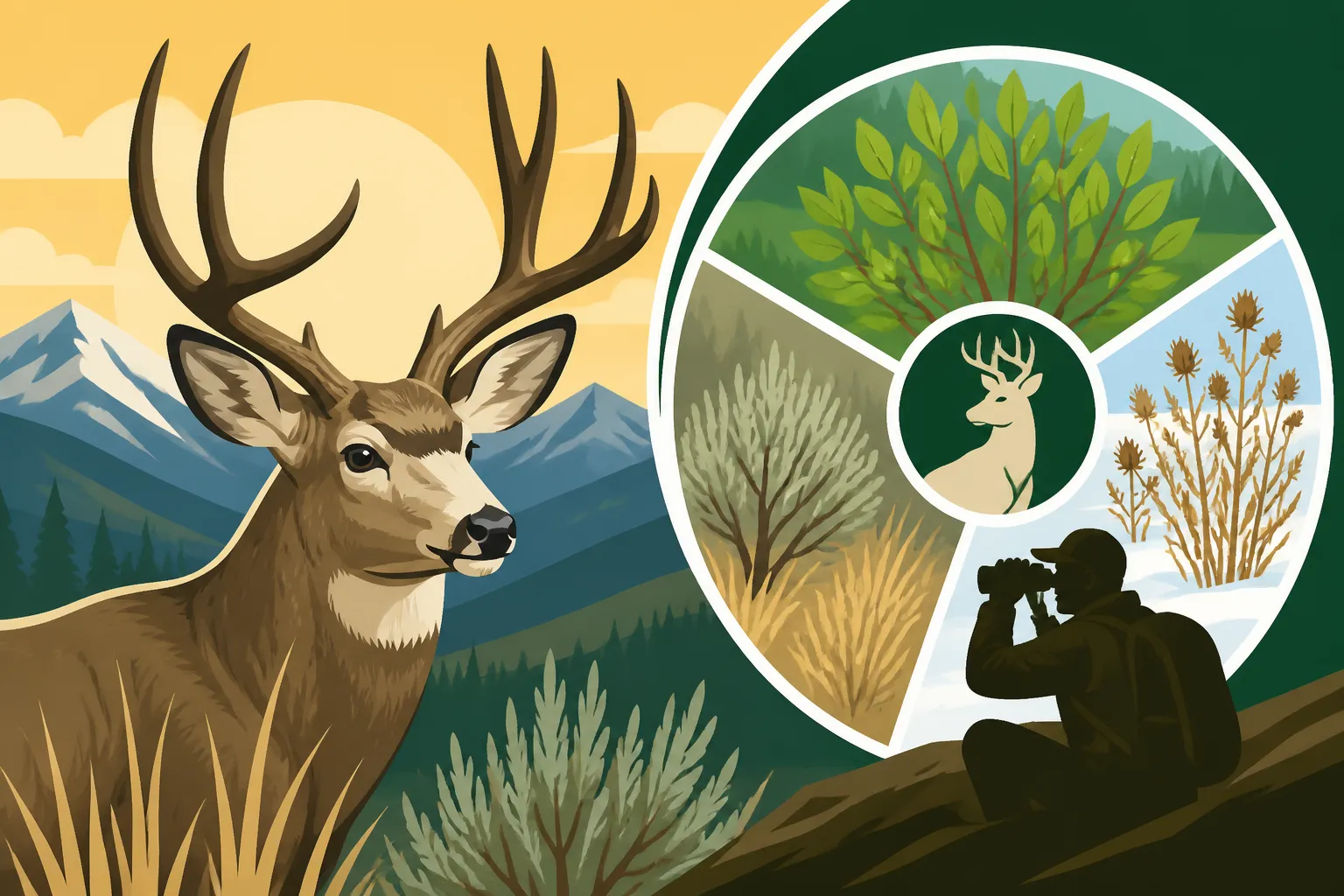
During these challenging months, mule deer rely heavily on woody browse that remains accessible above the snowline or in areas with shallower snow accumulation. Key winter browse includes bitterbrush, sagebrush, serviceberry, and juniper. They also incorporate dried grasses and any remaining forbs they can uncover. Digestive efficiency also plays a critical role, as their rumen microbes adapt to process coarser, less nutritious forage. Deer will often concentrate in lower-elevation winter ranges, south-facing slopes, and areas with dense pinyon-juniper cover that offers both thermal protection and a consistent food source. These winter feeding patterns are closely tied to Colorado Mule Deer Migration, as they move to escape deep snow and find accessible forage.
Habitat and Forage: Where Mule Deer Find Their Meals
Colorado's diverse topography provides a mosaic of habitats, each offering unique feeding opportunities for mule deer. From the high alpine to the desert lowlands, understanding these specific environments helps you anticipate where deer will be munching, regardless of the season. Scouting these areas, whether in person or by using tools like GoHunt, is invaluable.
High-Country Alpine Basins
When the snow melts and summer arrives, many mule deer, especially bachelor groups of bucks, push up into the high-country alpine basins. These areas, typically above 10,000 feet, are vibrant with lush, green forbs and tender browse throughout the summer.
Deer are drawn to the cooler temperatures, fewer insects, and the sheer abundance of high-quality forage. You’ll find them grazing on a variety of wildflowers, sedges, and new growth on willows and other low-lying shrubs around timberline. Look for them feeding in avalanche chutes, cirques, and along the edges of timber pockets, especially in the early mornings and late evenings. During the heat of the day, they'll often bed down in dense timber adjacent to these feeding areas, or in rocky areas offering shade and security. Learning How to Glass for Colorado Mule Deer effectively in these vast open spaces is a game-changer for spotting feeding animals.
Mid-Elevation Sagebrush and Aspens
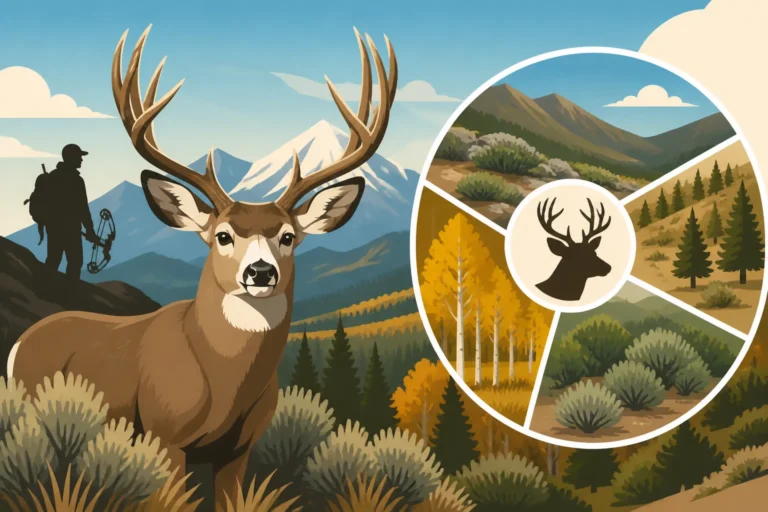
The mid-elevations, often ranging from 7,000 to 9,500 feet, are the quintessential mule deer country in Colorado. This habitat typically features a mix of expansive sagebrush flats, aspen groves, oak brush thickets, and scattered conifer stands.
This environment is a year-round pantry for mule deer. Sagebrush, particularly mountain big sagebrush, is a critical component of their diet, especially in winter when other foods are scarce. Aspen stands provide tender new shoots and succulent forbs beneath their canopy in spring and summer. Oak brush offers browse and, in some years, acorns which are a high-energy fall food source. During the spring and summer, deer will utilize these areas for both feeding and fawning, finding rich forbs and ample cover. As fall approaches, they'll often be found in oak brush and aspen-rich areas, transitioning to browse and any available mast crops.
Lower Elevation Pinyon-Juniper and Agricultural Edges
While not always considered prime mule deer habitat, lower elevations, including pinyon-juniper woodlands and areas bordering agricultural fields, provide critical forage, especially during harsh winters or in units with less expansive high country.
Pinyon and juniper provide year-round browse, though they are less preferred when more palatable options are available. The dense canopy also offers excellent thermal cover. In areas adjacent to agricultural lands, deer will often venture out at night to feed on alfalfa, corn, or other crops, which provide a high-energy boost. This behavior can be tricky for hunters, as deer are often nocturnal in these settings. However, scouting the transition zones between timber and agriculture, looking for tracks and rub lines, can reveal patterns. Learning about the different types of Colorado Big Game Species Guide and their preferred habitats will further refine your understanding of where to locate deer across these varied landscapes.
Reading the Landscape: Key Feeding Sign for Hunters
Mule deer are masters of camouflage and quiet movement, but they leave behind a trail of breadcrumbs for the observant hunter. Learning to interpret these signs is paramount to understanding their feeding patterns and ultimately finding success. This isn't just about stumbling upon a deer; it's about piecing together their daily routine.
Fresh Droppings and Tracks
The most obvious and telling signs of recent mule deer activity are fresh droppings and tracks. These provide immediate clues about where deer have been feeding, bedding, and traveling.
Fresh droppings, often appearing in small piles, will be dark, moist, and soft. As they age, they become drier, lighter in color, and harder. Pay attention to the quantity and size of the pellets – larger, more numerous droppings usually indicate more deer or a larger-bodied animal. Tracks, especially in soft soil, mud, or snow, can tell you if deer have recently passed through. Look for fresh, crisp edges on tracks; older tracks will be rounded and less defined. A lone, large track might indicate a mature buck, while smaller, clustered tracks suggest does and fawns. When you find an area with abundant fresh sign, you've likely found a current feeding zone. This is where tools like GoHunt's mapping features really shine, allowing you to mark these findings and build a comprehensive picture of deer activity in a unit.
Browse Lines and Rubs
Mule deer, being browsers, leave distinct evidence on vegetation as they feed. Identifying browse lines and rubs can indicate preferred feeding areas and the presence of bucks.
A "browse line" occurs when deer consistently feed on woody shrubs, creating a noticeable line where the lower branches are stripped of leaves and tender shoots. This is particularly evident in winter when deer are concentrated in specific areas. Look for broken twigs and chewed-off ends of branches on plants like serviceberry, bitterbrush, or even small aspens. Rubs, on the other hand, are created by bucks rubbing their antlers on trees and shrubs, not to feed, but to mark territory and remove velvet. While not directly feeding sign, rubs are often found in areas bucks frequent, which are naturally near their feeding and bedding areas. A fresh rub, indicated by exposed, lighter wood, signals recent buck activity and can lead you to their preferred feeding grounds. Consider how these signs change throughout the season by studying content like Colorado Mule Deer Rut Explained.
Water Sources and Mineral Licks
Like all living creatures, mule deer need water, and they also seek out essential minerals for their health and antler development. These locations can become significant attractants and therefore key feeding indicators.
Water sources can range from large rivers and perennial streams to small seeps, springs, and even dew on vegetation. During dry periods, or in arid regions, water sources become critical bottlenecks where deer must eventually visit. Look for tracks leading to and from these water points. Mineral licks, whether natural or supplemental, provide deer with crucial minerals like sodium, calcium, and phosphorus. While less common to find natural licks, they can be magnets for deer. Observing deer visiting these areas can reveal consistent travel routes that connect bedding, feeding, and water. Incorporating these observations into your e-scouting, as detailed in How to E-Scout Before a Colorado Hunt, will significantly enhance your pre-hunt preparation.
Applying Feeding Patterns to Your Colorado Mule Deer Hunt
Understanding mule deer feeding patterns isn't just academic; it's a practical skill that directly translates into more successful hunts. By anticipating where deer will be eating at different times of the year, you can strategically plan your approach, from early season to late season.
Early Season Tactics
In the early archery seasons in Colorado, often extending into the muzzleloader season, mule deer are still primarily focused on summer feeding patterns: consuming high-quality forbs and browse to maximize growth and fat reserves. Bucks are often in bachelor groups, focused on eating.
Your strategy should revolve around locating these lush summer feeding grounds, typically in higher elevations with good moisture. Focus on north-facing slopes, shaded pockets, and areas with abundant forbs. Glassing at dawn and dusk will be your best friend. Look for deer moving from their bedding areas (often in dense timber or north-facing slopes for coolness) to open feeding areas like alpine meadows or aspen clearings. Early morning hunts around these food sources can be incredibly productive. Remember, they're still sensitive to heat, so midday activity will be minimal as they retreat to cool, shaded bedding.
Mid-Season Rut Strategy
As rifle seasons open in late October and November, the mule deer rut kicks into high gear. While bucks still need to feed, their primary driver shifts from forage to breeding. However, does continue to feed, and bucks will follow the does.
During the rut, bucks will move constantly, checking scrapes, rubbing trees, and scent-checking does. Instead of looking for bucks on primary feeding grounds, your focus shifts to finding groups of does, because a buck won't be far behind. Does will still be utilizing feeding areas to maintain their energy. Therefore, identifying those doe-heavy feeding zones – often in mid-elevation sagebrush, oak brush, or pinyon-juniper country – becomes paramount. Bucks will cruise the fringes, scent-checking, and occasionally pausing to browse opportunistic bites. Ambushing a buck as it approaches a feeding group of does or moves between them can be a highly effective tactic. Learning more about the Colorado Mule Deer Rut Explained will further solidify these strategies.
Late Season Migration Patterns
Late season hunts in Colorado, typically November into December, coincide with colder temperatures and significant snowfall, triggering mule deer migration from high summer ranges to lower winter ranges. Their feeding patterns during this time are entirely driven by survival and accessibility.
Deer will be found in areas offering accessible browse above the snowline or in areas with shallower snow accumulation. South-facing slopes, often dominated by bitterbrush, sagebrush, or pinyon-juniper, become critical. They will concentrate in these wintering grounds, making them easier to locate, but also more vulnerable to hunter pressure. Hunting during this time involves locating these migration corridors and winter range feeding areas. Deer will still feed primarily at dawn and dusk, but don't be surprised to see them browsing throughout the day, trying to cram in enough calories to survive. Glassing these open, south-facing slopes, particularly after a fresh snowfall, can reveal large numbers of deer focused on their winter meals.
| Season | Primary Forage | Typical Elevation/Habitat | Key Hunter Takeaway |
|---|---|---|---|
| Spring | Lush forbs, tender shoots (aspen, serviceberry) | South-facing slopes, lower to mid-elevation | Target early green-up areas; bucks growing antlers, does fawning. |
| Summer | Diverse forbs, woody browse (clover, vetch, mountain mahogany) | High-country alpine basins, mid-elevation aspen/sagebrush | Seek cooler temps, abundant high-quality forage; deer spread out. |
| Fall | Calorie-dense browse, mast crops (acorns, chokecherry, juniper berries) | Mid-elevation oak brush, aspen, pinyon-juniper | Build fat reserves for winter; bucks focused on rut, does still feeding. |
| Winter | Woody browse (bitterbrush, sagebrush, juniper), dried grasses | Lower-elevation winter ranges, south-facing slopes | Survival mode; deer concentrated in accessible forage areas; migration. |
Applying these principles and continuously adapting to weather and environmental changes will give you a significant edge. Using tools like GoHunt can help you overlay historical data and current conditions to pinpoint exactly where deer might be feeding. Every trip to the field adds to your understanding, making you a more effective and ethical hunter.
Disclaimer
Please remember that hunting regulations, seasons, and unit boundaries in Colorado can change. Always consult the official Colorado Parks and Wildlife (CPW) regulations before planning any hunt. This guide is for informational purposes only and does not supersede state laws or regulations.