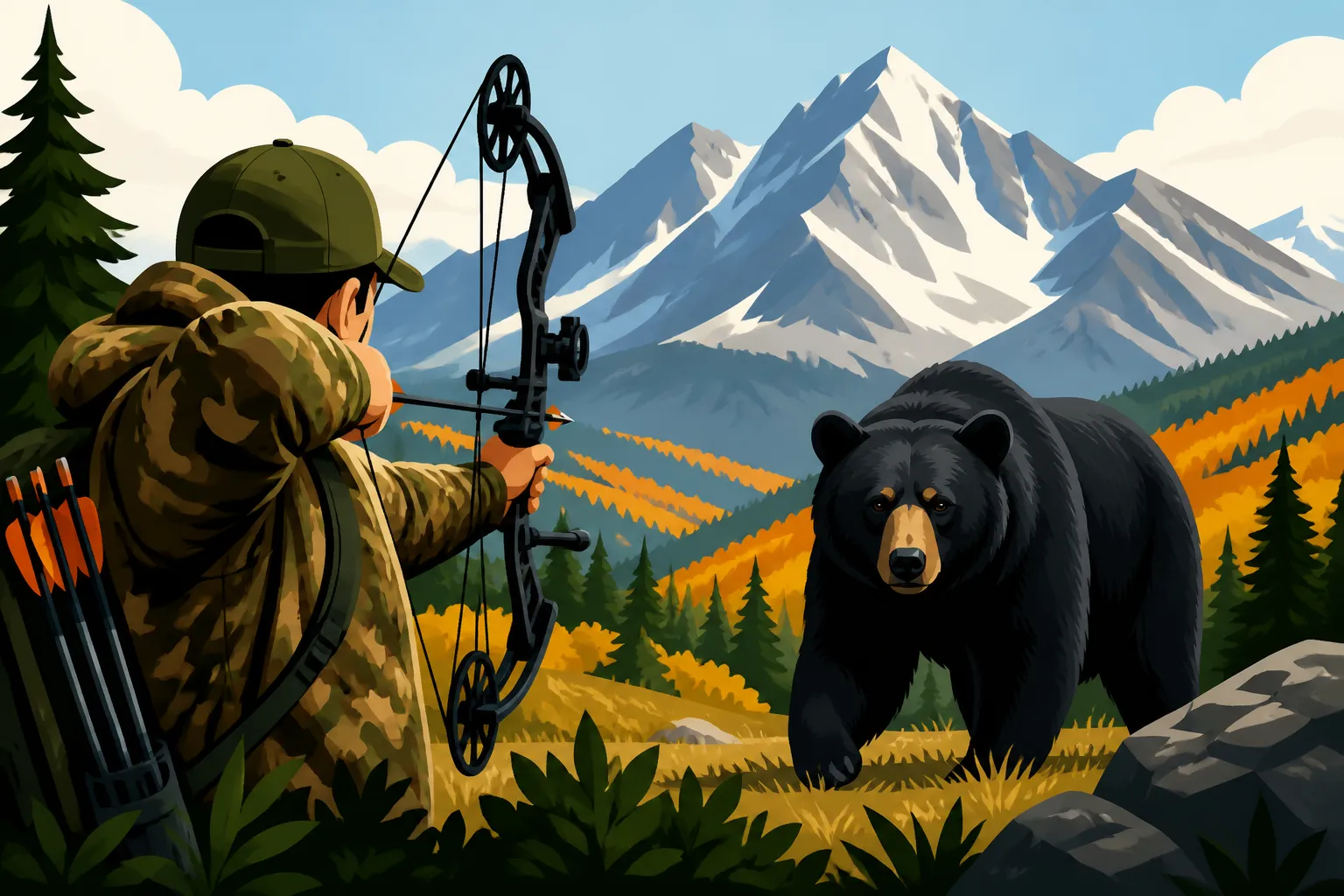
Colorado Black Bear Hunting for Beginners
Thinking about your first black bear hunt in Colorado can feel a bit daunting, especially with all the regulations, diverse terrain, and the sheer challenge of finding these elusive creatures. Many new hunters worry about choosing the right season, understanding bear behavior, or simply knowing where to start. This comprehensive guide is designed specifically for beginner black bear hunters, walking you through the ins and outs of a successful and rewarding hunt in the Centennial State.
Getting Started: Why Colorado for Black Bear and What to Expect
Venturing into black bear hunting in Colorado is an incredibly exciting prospect, but it’s natural to feel a mix of anticipation and trepidation. Unlike deer or elk, bears have a mystique that adds to the challenge, and understanding where to even begin can be the biggest hurdle. Colorado, with its robust black bear population and diverse habitats, offers fantastic opportunities for both resident and non-resident hunters, making it an ideal proving ground for a beginner.
The Allure of Colorado Black Bear Hunting
Colorado boasts one of the largest black bear populations in the Lower 48, with estimates often ranging from 17,000 to 20,000 animals. This healthy population means more opportunities for hunters, especially those just starting out. The state's varied landscape, from the dense timber of the western slope to the high-country basins, provides a rich tapestry of habitats where bears thrive. Plus, black bear hunting often coincides with other big game seasons, allowing for multi-species hunts, which can be a real bonus for those looking to maximize their time in the field.
What many beginners appreciate about Colorado is the absence of baiting and hounds for black bear hunting. This means hunters must rely on traditional fair-chase methods like spot-and-stalk or still-hunting, which truly hones fundamental hunting skills. It’s a challenging but deeply rewarding experience that forces you to become intimately familiar with bear behavior and their natural environment. The thrill of spotting a bear foraging on a distant hillside or tracking one through fresh snow is an experience that stays with you long after the season ends.
Dispelling Myths and Setting Realistic Expectations
It’s easy to get caught up in Hollywood depictions of bears, but wild Colorado black bears are generally quite shy and prefer to avoid human contact. While you should always carry bear spray and know how to use it, aggressive encounters are rare, particularly when hunting in wilderness areas away from human-habituated bears. Most bears you encounter will be focused on finding food, whether it's acorns, berries, or carrion, and will usually bolt the moment they detect you.
That said, hunting black bears requires patience, persistence, and often, a good deal of physical effort. It's not uncommon to spend days, or even a full season, without spotting a legal bear. Colorado has specific regulations, like hunting "no-cub" or "no-sow with cubs," meaning you need to be able to identify your target responsibly. Success rates can vary widely depending on the season, hunting method, and unit, but for a beginner, the primary goal should be to learn, enjoy the outdoors, and gain valuable experience, with harvesting a bear being a bonus. This foundational learning is key, and understanding Colorado Black Bear Hunting for Beginners starts with realistic expectations.
Understanding Colorado Black Bear: Biology, Behavior, and Habitat
To successfully hunt black bears, you really need to get inside their heads – or at least understand their basic biology and how they interact with their environment. These intelligent and adaptable animals follow distinct patterns, driven largely by food availability and their natural biological clock. Knowing these patterns will dramatically increase your odds of finding them.
Key Bear Behaviors to Recognize
Black bears are crepuscular, meaning they are most active during dawn and dusk, though they can be seen throughout the day, especially if food is abundant or hunting pressure is low. In the early morning, they often move from bedding areas to feeding grounds, and in the late afternoon, they reverse this pattern. During the heat of the day, they typically bed down in thick cover, often on north-facing slopes or in dense timber, seeking shade and security.
Their behavior is heavily influenced by the seasonal availability of food. In spring, after denning, bears are hungry and often seek out fresh green growth, grasses, and winter-killed carcasses at lower elevations or on south-facing slopes where snow has melted. As summer progresses, they shift to berries, roots, and insects. Come fall, their focus becomes almost entirely on hyperphagia – consuming as many calories as possible to put on fat for hibernation. This "fattening up" period, fueled by acorns, serviceberries, chokecherries, and other hard mast, is often the best time to find them actively foraging. You can learn more about their yearly cycles in our Colorado Black Bear Behavior guide.
Preferred Habitats and Food Sources
Colorado’s black bears are incredibly adaptable, inhabiting a wide range of elevations and habitat types, from ponderosa pine forests and oak brush thickets to high-elevation aspen groves and even riparian corridors. However, certain areas are more productive than others. Bears often prefer areas with a mix of dense cover for security and bedding, and open areas or clearings with abundant food sources.
Think about north-facing slopes with dense spruce or fir for bedding and south-facing slopes with open meadows or oak brush for foraging. Water sources are also critical, especially in drier periods. Look for areas with heavy berry crops like serviceberry, chokecherry, or elderberry, or oak stands producing acorns. Aspen groves, particularly those with a lot of downed timber, can also be hot spots for finding grubs and insects. Understanding Colorado Black Bear Habitat by Elevation can help you narrow down your scouting efforts.
Identifying Bear Sign and Tracking
Learning to read the signs bears leave behind is crucial. Fresh tracks are a clear indicator – the hind paw print often resembles a human foot with five toes. Look for scat (droppings), which will vary in appearance depending on what the bear has been eating; berry-filled scat is common in late summer and fall. Claw marks on trees, especially aspens or pines, can indicate a bear has been climbing for nuts or to mark its territory.
Additionally, turned-over rocks or torn-apart logs suggest a bear digging for insects and grubs. Look for bent-over branches on berry bushes where bears have fed. If you find these signs, pay attention to their freshness. Newer sign means a bear is likely in the area. Always follow up on promising sign by slowing down, using your binoculars to scan the area, and moving quietly.
Planning Your Hunt: Seasons, Tags, and Essential Gear
Once you have a grasp of bear behavior, the next big step is to understand the logistics of hunting them in Colorado. This includes navigating the draw system for tags, knowing when the seasons are, and ensuring you have the right equipment to be safe and successful.
Navigating Colorado Black Bear Seasons and Tags
Colorado offers several black bear hunting seasons, often coinciding with other big game seasons, allowing for "add-on" bear tags. The primary bear seasons typically include archery, muzzleloader, and four separate rifle seasons.
Colorado Parks and Wildlife (CPW) implements a draw system for most bear tags, meaning you'll need to apply for a tag in the spring (usually by early April) through the primary draw. While some units might offer leftover or over-the-counter (OTC) opportunities, especially for archery bear, these are increasingly rare and often require quick action. Using a platform like GoHunt can be invaluable for researching draw odds, unit performance, and finding available tags, making the complex process much more manageable for a beginner. Always consult the current year's CPW Big Game Brochure for specific season dates, hunt codes, and regulations. It’s vital to understand Colorado Black Bear Season Dates and Tags to plan your hunt correctly.
Here’s a simplified overview of typical Colorado bear seasons:
| Season Type | Approximate Dates (Consult CPW for exact) | Hunting Method | Draw vs. OTC (General) | Notes |
|---|---|---|---|---|
| Archery Bear | Early Sept – Late Sept | Archery | Draw or Limited OTC | Often overlaps with archery elk/deer. |
| Muzzleloader | Mid-Sept | Muzzleloader | Draw | Often overlaps with muzzleloader elk/deer. |
| 1st Rifle Bear | Mid-Oct | Rifle | Draw | Concurrent with 1st rifle elk/deer. |
| 2nd Rifle Bear | Late Oct | Rifle | Draw or Add-on | Concurrent with 2nd rifle elk/deer. |
| 3rd Rifle Bear | Early Nov | Rifle | Draw or Add-on | Concurrent with 3rd rifle elk/deer. |
| 4th Rifle Bear | Mid Nov | Rifle | Draw or Add-on | Concurrent with 4th rifle elk/deer, often late. |
| Fall Bear | Early Sept – Mid-Nov (standalone) | Archery/Rifle | Draw | Units can vary, check brochure carefully. |
Remember, while bear tags can be "add-on" to deer or elk tags in certain rifle seasons, these are still limited by quotas and often require applying for them in the draw.
Gear Essentials for a Beginner Bear Hunter
You don't need the absolute latest, most expensive gear, but a few essentials will make your hunt safer and more enjoyable. Your rifle or bow should be adequate for big game. For rifles, common calibers like .270, .30-06, .308, or 7mm Rem Mag are excellent choices. Ensure your weapon is sighted in and you are proficient with it. Optics are non-negotiable: good binoculars (10×42 or 10×50) and a spotting scope (15-45x or 20-60x) are critical for glassing vast Colorado landscapes for bears.
Beyond your weapon and optics, a sturdy hunting backpack is essential for carrying your daily supplies and, hopefully, packing out meat. Layered clothing suitable for Colorado's unpredictable mountain weather, a reliable GPS or mapping app (like onX Hunt), a knife for field dressing, and bear spray for safety are also must-haves. Don't forget water, high-energy snacks, a first-aid kit, and headlamp. If you're planning a backcountry excursion, our Colorado Backcountry Hunting Gear List can provide even more detailed packing advice.
E-Scouting and On-the-Ground Reconnaissance
Modern tools have revolutionized pre-hunt preparation. E-scouting using satellite imagery and topographic maps is an excellent way to identify potential bear habitats from home. Look for south-facing slopes, dense timber adjacent to clearings, water sources, and areas with known food plots like oak brush or berry patches. Programs like GoHunt provide valuable tools for analyzing unit data, identifying areas with good public land access, and scouting potential travel corridors or bedding areas.
Complement your e-scouting with on-the-ground reconnaissance, if possible. A pre-season trip to hike potential areas, look for bear sign, and get familiar with the terrain can be incredibly beneficial. Even if you can't go physically, studying topo maps to identify natural funnels, saddles, and benches can give you a significant advantage. This meticulous planning is often the difference between a frustrating trip and a successful hunt.
Effective Hunting Tactics for Beginner Bear Hunters
Now that you're geared up and have a handle on bear behavior, it's time to talk tactics. Black bear hunting, especially in Colorado, largely revolves around patience, keen observation, and strategic movement.
Still-Hunting and Spot-and-Stalk Techniques
These are the bread and butter of Colorado black bear hunting. Still-hunting involves moving very slowly through promising habitat, pausing frequently to glass, listen, and scan for movement or bear sign. Think of it as stalking, but covering ground over a longer period. Focus on areas with good cover but also opportunities to see ahead, such as along ridges, through aspen groves, or around the edges of thickets. Pay attention to the wind, keeping it in your face or crosswind, as a bear's sense of smell is legendary. Moving quietly through Colorado timber is an art form that takes practice.
Spot-and-stalk is highly effective in open, mountainous terrain. This method involves finding a high vantage point (a "glassing knob") and systematically scanning distant hillsides, clear-cuts, and open timber for feeding bears, particularly during the active morning and evening hours. Once a bear is spotted, the real challenge begins: planning and executing a stalk that keeps you undetected by the bear’s keen senses of smell, sight, and hearing. This can involve long, arduous hikes, often requiring you to circle wide, use terrain features for cover, and move painfully slow when closing the distance. Mastering Spot-and-Stalk Hunting in Colorado can be applied to bears as well as elk and deer.
Hunting Near Water Sources and Food Plots
As bears are constantly seeking calories, especially in the fall, focusing on current food sources is paramount. This requires some pre-season scouting to identify areas with abundant acorns, serviceberries, chokecherries, or other mast crops. If you find a patch of oak brush dropping acorns, or a hillside covered in ripe berries, you've found a potential goldmine. Sit and glass these areas patiently, or still-hunt through them carefully.
Water sources, especially in dry years or during warmer early seasons, can also be productive. Bears need to drink, and they'll often visit springs, seeps, or small ponds. Sitting and watching these areas from a concealed position, especially during midday, can sometimes yield an opportunity. However, remember that Colorado has specific restrictions on hunting near water sources, so always check the regulations carefully to ensure you are compliant.
Safety First: Understanding Bear Encounters
While black bears are generally not aggressive, understanding how to react during an encounter is vital. The golden rule is to avoid surprising a bear. Make noise when moving through dense cover. If you do encounter a bear, remain calm. Speak in a firm, confident voice, make yourself look as large as possible, and slowly back away. Never run from a bear, as this can trigger a chase instinct.
Carrying bear spray and knowing how to quickly deploy it is your best defense. Keep it accessible and practice drawing it. If a bear approaches you, especially if it seems curious or bold, be prepared to use your spray. In the extremely rare event of a physical attack, fight back aggressively. Familiarize yourself with bear safety protocols from the CPW before heading into the field. This preparation is a crucial part of any Colorado Black Bear Hunting Guide.
After the Shot: Field Care and Regulatory Compliance
Congratulations, you've harvested a bear! Now the real work begins. Ethical hunting extends beyond the shot to proper field care and adherence to all regulations. This ensures you honor the animal and the meat, and stay on the right side of the law.
Field Dressing and Meat Care in the Backcountry
Black bear fat can spoil quickly, especially in warmer temperatures, so rapid cooling is critical. The first step after a successful harvest is to field dress the bear immediately. Remove all entrails to allow the carcass to cool internally. If you are far from a vehicle, you'll need to quarter the bear and pack it out. This involves skinning the bear (keeping the hide for potential taxidermy or as proof of sex, depending on regulations) and butchering it into manageable pieces. The sooner you get the meat cooled, the better its quality will be.
Once quartered, get the meat off the ground and into game bags. Hang the game bags in the shade, allowing air to circulate around them. If temperatures are warm, consider packing out ice to help cool the meat during the trip, or plan to get it to a processor or cooler as quickly as possible. Removing the fat from the meat before freezing or processing is often recommended, as bear fat can have a strong flavor some people dislike. It's similar to learning How to Quarter an Elk in the Field, just with a bit more attention to fat.
Legal Requirements and Reporting Your Harvest
Colorado has strict reporting requirements for black bear harvests. Typically, you must physically present the skull and hide (with proof of sex naturally attached) to a CPW office or an authorized wildlife official for sealing within five days of harvest. This process allows CPW to collect critical data on bear populations and ensure compliance with regulations, such as sex identification and ensuring no cubs were harvested. Always check the current CPW Big Game Brochure for the exact reporting procedures and deadlines. Failure to properly report and seal your bear can result in fines and legal penalties.
Beyond the harvest itself, remember that obtaining a hunting license and required habitat stamps is a prerequisite for hunting any big game in Colorado. A Colorado Hunter Education Requirement applies to many hunters, so ensure you're compliant. Even if you don't draw a tag in the primary process, you might be able to find How to Buy a Colorado Leftover Tag, but these still require diligence to report correctly. Respecting these regulations is part of being a responsible hunter and helps maintain healthy bear populations for future generations.
Disclaimer
Please note that hunting regulations, season dates, and tag requirements are subject to change. Always consult the most current Colorado Parks and Wildlife (CPW) Big Game Hunting Brochure and official CPW website before planning and executing any hunt. This guide is for informational purposes only and should not be considered a substitute for official state regulations.