Colorado Elk Hunting for Beginners
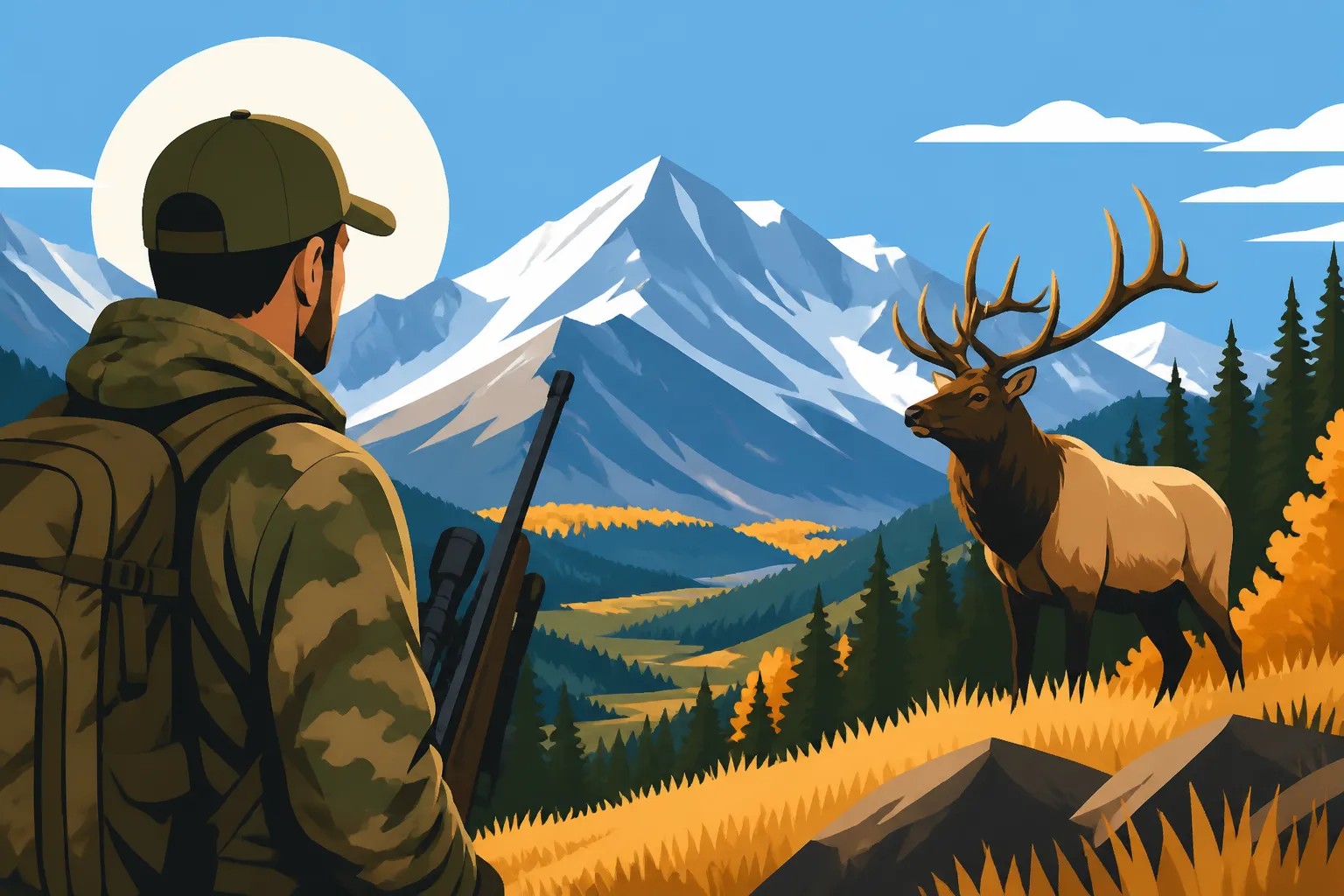
If you've ever dreamt of heading into the stunning Colorado Rockies with a tag in your pocket, chasing after a majestic bull elk, you're not alone. But let's be honest, for a beginner, the thought of planning an elk hunt in Colorado can feel like trying to solve a Rubik's Cube blindfolded. Between understanding the draw system, picking a unit, navigating seasons, and just knowing where to even start, it’s enough to make anyone throw up their hands. This guide is here to untangle that knot, offering a clear, empathetic path for new hunters to confidently embark on their first Colorado elk adventure.
Getting Started: The First Steps for a Colorado Elk Hunter
Taking the plunge into Colorado elk hunting can seem like a monumental task, but every seasoned hunter started somewhere. The key is breaking it down into manageable steps, focusing on understanding the system before you ever step foot in the mountains. This initial phase is all about education and making informed decisions that will set the foundation for a successful, and more importantly, enjoyable hunt.
Understanding the Colorado Draw System
The Colorado Parks and Wildlife (CPW) draw system is often the first major hurdle for new hunters, and I get it – it’s complex. Unlike some states where tags are purely over-the-counter (OTC), many of Colorado's best elk hunting opportunities, especially for bulls, are allocated through a lottery system based on preference points. When you apply for a tag, you select a specific hunt code, which designates the unit (GMU), species, sex, and weapon type. If you don't draw your first choice, you accrue a preference point, which essentially gives you a better chance in subsequent years.
This system means that for those coveted, high-success, or trophy-potential units, it can take several years, or even a decade or more, to accumulate enough points to draw a tag. For a beginner, this can be disheartening, but it’s crucial to understand this reality upfront. This is where tools like GoHunt become invaluable. Their Insiders platform is fantastic for analyzing draw odds, unit statistics, and application strategies, helping you navigate the preference point labyrinth. They can show you units that might require fewer points, or even zero points, to help you get into the field sooner rather than later. Don't be afraid to study these resources; they're designed to demystify the process. For a deeper dive, check out our guide on Colorado Draw System and Preference Points.
OTC vs. Draw Tags: What's the Difference?
When you’re just starting, one of the biggest decisions is whether to pursue an Over-The-Counter (OTC) tag or try your luck in the draw for a limited license. Both have their pros and cons, and understanding them is vital for a beginner.
- OTC Tags: These are licenses that you can purchase directly, without having to enter the draw. Colorado has historically offered OTC elk tags for archery season (for either-sex elk) and for the second and third rifle seasons (for antlered, or bull, elk) in specific GMUs. The huge advantage here is guaranteed access – you don't need to worry about preference points or draw odds. You just buy your tag and go. However, the downside is that OTC units generally see much higher hunter pressure. More hunters in the field can make elk more skittish and harder to locate, especially for someone new to hunting these animals in mountainous terrain. For a lot of folks, these are the tags that get you in the game quickly and allow you to gain experience. Learn more about Colorado OTC Elk Tags Explained.
- Draw Tags (Limited Licenses): These are tags obtained through the lottery system. The units and seasons that require a draw often have lower hunter numbers, potentially higher success rates, or better trophy potential. While it can take years to draw a primo unit, there are also many quality draw units that don't require an astronomical number of points. Applying for a draw tag is a strategic game, where you balance your accumulated preference points with the unit's draw odds and your hunting goals. For a beginner, a draw tag might not be your first hunt, but it's definitely something to aim for as you gain experience and points.
Here’s a quick overview to help clarify:
| Feature | OTC Tag (Over-The-Counter) | Draw Tag (Limited License) |
|---|---|---|
| Availability | Purchased directly, no draw required | Allocated via lottery system, requires application |
| Preference Pts. | Not required, no points earned by buying | Required for many coveted units, points earned if unsuccessful |
| Hunter Pressure | Typically higher, especially in accessible areas | Generally lower, offering a more secluded experience |
| Success Rates | Can be lower due to pressure, but still achievable | Often higher due to lower pressure and better management |
| Cost | Standard license fees | Standard license fees |
| Beginner Friend. | Excellent for first-time experience, guaranteed access | Good for future hunts, requires strategic planning |
| Units | Specific, often larger GMUs with varied terrain | Wide range of GMUs, including high-demand trophy units |
License Requirements and Hunter Education
Before you even think about tags, you need to be eligible to hunt in Colorado. This means understanding the basic licensing requirements. Every hunter, resident or non-resident, must possess a valid Colorado hunting license. For big game, this usually means an annual small game/fishing license as a prerequisite to apply for or buy a big game tag.
If you were born on or after January 1, 1949, you must show proof of having completed an approved hunter education course before you can purchase a hunting license in Colorado. This isn't just a hoop to jump through; it's a critical safety measure and an excellent opportunity to learn about responsible hunting practices, ethics, wildlife identification, and basic survival skills. You can take a course online or in person. If you've completed a hunter education course in another state, that certification is usually recognized by Colorado. Don't leave this to the last minute; complete your hunter education well in advance of the application deadlines. It’s the foundational step that opens the door to everything else. Check out our comprehensive guide on How to Apply for a Colorado Hunting License.
Where to Go: Choosing Your First Colorado Elk Unit
Okay, so you’ve got your hunter education in the bag, and you understand the difference between OTC and draw tags. Now comes perhaps the most overwhelming part for a beginner: picking where to hunt. Colorado is huge, and its elk population is spread across vast tracts of diverse terrain. Making the right unit choice for your first hunt is paramount to having a positive experience.
Public Land vs. Private Land Realities
For most beginner elk hunters, especially those looking to go the DIY route, public land is the primary option. Colorado boasts millions of acres of public land managed by the Bureau of Land Management (BLM) and the U.S. Forest Service (USFS). This includes vast National Forests like the White River and Gunnison, as well as several Wilderness Areas. The beauty of public land is its accessibility to all, but this also means you'll share it with other hunters, hikers, and recreational users. Learning how to navigate public land, understand boundaries, and find areas less impacted by pressure is a critical skill for any aspiring elk hunter.
Private land, on the other hand, offers exclusive access, often resulting in less pressured animals and higher success rates. However, access to private land usually comes at a significant cost, either through a trespass fee, a lease, or by booking a guided hunt through an outfitter who has secured private land access. For a beginner on a budget, this is often out of reach, but it’s good to be aware of all options. If you're considering a guided hunt, this might be your entry point to private land.
Beginner-Friendly GMUs and Their Challenges
When people talk about "beginner-friendly" GMUs in Colorado, they generally mean units with large elk populations, significant public land access, and terrain that, while challenging, isn't overtly extreme. These units often correspond with the OTC opportunities, meaning they’re easier to get into but come with a caveat.
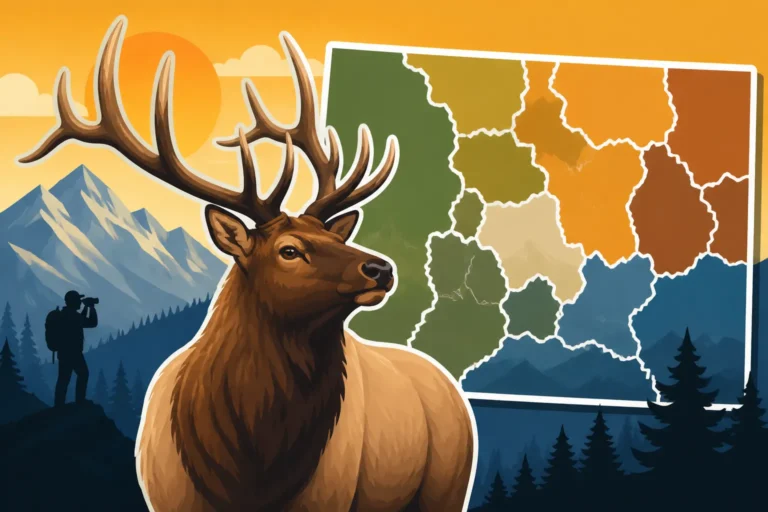
Take, for example, the units within or bordering the Flat Tops Wilderness Area (parts of GMUs like 12, 23, 24, 231, etc.). This region is often cited for its vast elk herds and extensive public land. While it's a fantastic place to hunt elk, "beginner-friendly" doesn't mean "easy." You'll still face steep elevation, rough terrain, and other hunters. The "friendly" part comes from the sheer volume of elk and the extensive public access, giving you more opportunities to encounter animals even if you're still learning the ropes. Don’t expect to roll out of bed and stumble into a giant bull, but you’ll have plenty of country to explore and learn in. Our guide on the Best Colorado Elk Hunting Areas for Beginners offers more specific recommendations. For a broader overview, consider our article on Colorado Hunting Units GMUs Explained.
The challenge with these units is often pressure. You'll likely see other camps, other trucks at trailheads, and hear calls from other hunters. This means elk can become call-shy and move into thicker, nastier cover. For a beginner, this is a real lesson in persistence, patience, and learning to hunt smarter, not just harder.
Leveraging E-Scouting Tools
In today's hunting world, effective e-scouting is no longer a luxury; it's a necessity, especially for beginners who can't spend weeks on the ground. Tools like OnX Hunt, BaseMap, and yes, GoHunt, are game-changers. These platforms allow you to study maps from your couch, identifying potential elk habitat, travel corridors, water sources, bedding areas, and crucial public/private land boundaries.
For a new hunter, e-scouting helps you visualize the terrain, identify access points, and pinpoint areas that might hold elk based on topography. You can look for north-facing slopes with dark timber for bedding, south-facing slopes for early season feeding, saddles, benches, and areas near water. This allows you to go into your first hunt with a solid plan, rather than just wandering aimlessly. GoHunt, with its detailed unit data and filtering capabilities, can help you narrow down units based on public land percentage, road density, and historical success rates, greatly reducing the guesswork for a beginner. It truly provides an advantage in figuring out How to E-Scout Before a Colorado Hunt. By combining these digital tools with physical scouting trips if possible, you'll feel much more confident when you finally arrive in elk country.
When to Hunt: Navigating Colorado Elk Seasons
Colorado offers a variety of elk seasons, each with its unique characteristics, challenges, and rewards. As a beginner, understanding these differences is crucial for picking a season that aligns with your experience level, desired hunting style, and overall expectations.
Archery Season: The Call of the Rut
Colorado’s archery elk season, typically running from late August through September, often overlaps with the peak of the elk rut. This is a magical time to be in the mountains. Bulls are vocal, bugling, and often less wary as they focus on cows, making them more susceptible to calling tactics. For many, the chance to hear a bull bugle and call one in close is the ultimate elk hunting experience.
However, archery season can be incredibly challenging for a beginner. It demands stealth, physical stamina, and proficiency with a bow. Getting within bow range (typically 20-50 yards) of a mature bull in dense timber or open parks is an art form. The weather can also be unpredictable, swinging from hot, dry days to cold, wet, or even snowy conditions. For a truly deep dive into this, consider our guide on Colorado Archery Season Dates. While exciting, if you're new to both elk hunting and archery, it's a steep learning curve. But if you're up for the challenge, the rewards are immense.
Muzzleloader and Early Rifle Seasons
Muzzleloader season in Colorado typically falls in mid-September, nestled between archery and the first rifle season. It's a short, challenging season that also takes place during the rut, offering the chance for close encounters with rutting bulls. The limitations of muzzleloaders (single shot, slower loading, limited range) add an extra layer of difficulty, but also a unique, traditional hunting experience.
The early rifle seasons (1st, 2nd, and 3rd) typically run from mid-October through early November. The first rifle season is often limited draw, while the second and third seasons have historically offered OTC bull tags in many units. These seasons are popular because rifle hunting generally provides more range and a higher margin for error compared to archery. However, as the rifle seasons progress, elk behavior changes. They move from high-elevation summer ranges to lower elevations, often seeking out thicker timber or private lands to escape hunting pressure. Weather is also a major factor, with increasing chances of snow, which can either help (by pushing elk down) or hinder (by making travel difficult). Understanding Colorado Rifle Elk Hunting Guide can help you weigh your options.
Late Rifle Seasons and Migration Hunts
The fourth rifle season, usually in mid-November, and any late-season cow elk hunts, present a completely different set of challenges and opportunities. By this time, the rut is long over, and elk are focused entirely on food and survival. Snow is often a significant factor, pushing elk down to lower elevations, making them more concentrated but also potentially more wary due to sustained pressure.
Late-season hunting is often about finding winter range, south-facing slopes where snow melts off, or migration corridors. This can be fantastic for beginners if you hit a migration just right, as large herds can be visible. However, cold weather, deep snow, and shorter daylight hours demand different gear and a higher level of preparation. It's less about calling and more about glassing vast areas and still-hunting through timber. While tough, these hunts can be rewarding, often providing opportunities for cow tags, which are excellent for meat hunters and can be easier to draw.
Essential Gear and Fitness for a First-Timer
You've got your head wrapped around the regulations and seasons, and you've picked a potential area. Now it's time to talk about the practicalities of being in the mountains. Colorado elk hunting is not a stroll in the park; it demands physical and mental preparedness, and the right gear can make or break your experience.
Basic Gear You'll Absolutely Need
Don't fall into the trap of thinking you need the absolute latest, most expensive gear on the market. While high-quality gear is fantastic, the most important thing for a beginner is functional gear that you know how to use. Here's a foundational list:
- Boots: This is perhaps the most critical item. Invest in high-quality, broken-in, waterproof hiking boots with excellent ankle support. Your feet are your primary mode of transportation in the mountains, and blisters or wet feet will quickly end your hunt. Brands like Kenetrek or Crispi are popular for a reason, but any reputable hiking boot designed for rugged terrain will do.
- Layering System: Colorado mountain weather can change dramatically within hours. You need a system of moisture-wicking base layers, insulating mid-layers (fleece or puffy), and a waterproof/windproof outer shell. Avoid cotton at all costs; it holds moisture and will make you cold.
- Backpack: A comfortable backpack (30-60 liter day pack for day hunts, larger for backcountry) is essential to carry water, food, extra layers, first-aid, navigation tools, and your field dressing kit. Look for one that fits well and has good load-carrying capabilities.
- Optics: Good binoculars (10×42 or 12×50) are crucial for spotting elk at long distances, especially in big country. A spotting scope might be overkill for your first hunt, but binoculars are a must.
- Navigation: A reliable GPS device (Garmin InReach, a dedicated GPS unit) and/or a smartphone with a mapping app like OnX Hunt is non-negotiable. Paper maps and a compass are also smart backups.
- First-Aid Kit: Always carry a well-stocked first-aid kit for emergencies.
- Water Filtration/Carry: Hydration is key at altitude. Carry plenty of water or a reliable water filter/purifier.
- Headlamp: With extra batteries – you'll be hiking in the dark.
- Hunting Weapon: Your chosen rifle, bow, or muzzleloader, sighted in and practiced with extensively.
- Game Processing Supplies: Gloves, sharp knife, game bags.
You don't need to break the bank, but prioritizing these items will ensure you're prepared for the realities of the mountains. Our guide on Best Colorado Elk Hunting Gear offers more specific recommendations.
Physical Preparation: It's a Mountain Marathon
This is where many beginners underestimate Colorado elk hunting. The mountains are relentless. You'll be gaining and losing thousands of feet of elevation, often hiking miles each day, carrying a pack, and doing it all at altitudes that can range from 8,000 to over 11,000 feet. If you live at sea level, this is a significant challenge. Altitude sickness is real and can ruin a hunt.
Start your physical training months in advance. Focus on cardiovascular fitness (running, cycling, stair climber) and strength training, especially for your legs and core. Simulate hunting conditions by hiking with a loaded pack on steep inclines. Don't forget flexibility and balance training, as uneven terrain can lead to falls. If possible, arrive in Colorado a few days before your hunt to acclimatize to the elevation. Drink plenty of water and avoid alcohol and excessive caffeine upon arrival. Trust me, the fitter you are, the more enjoyable and successful your hunt will be. No amount of expensive gear can compensate for a lack of physical conditioning in this environment. Get a jump start with our advice on How to Physically Prepare for Colorado Elk.
Disclaimer
Please remember that hunting regulations, season dates, and unit boundaries can change. Always consult the official Colorado Parks and Wildlife (CPW) website and regulations brochure for the most current and accurate information before planning and executing your hunt. This guide is for informational purposes only and does not supersede official CPW regulations.