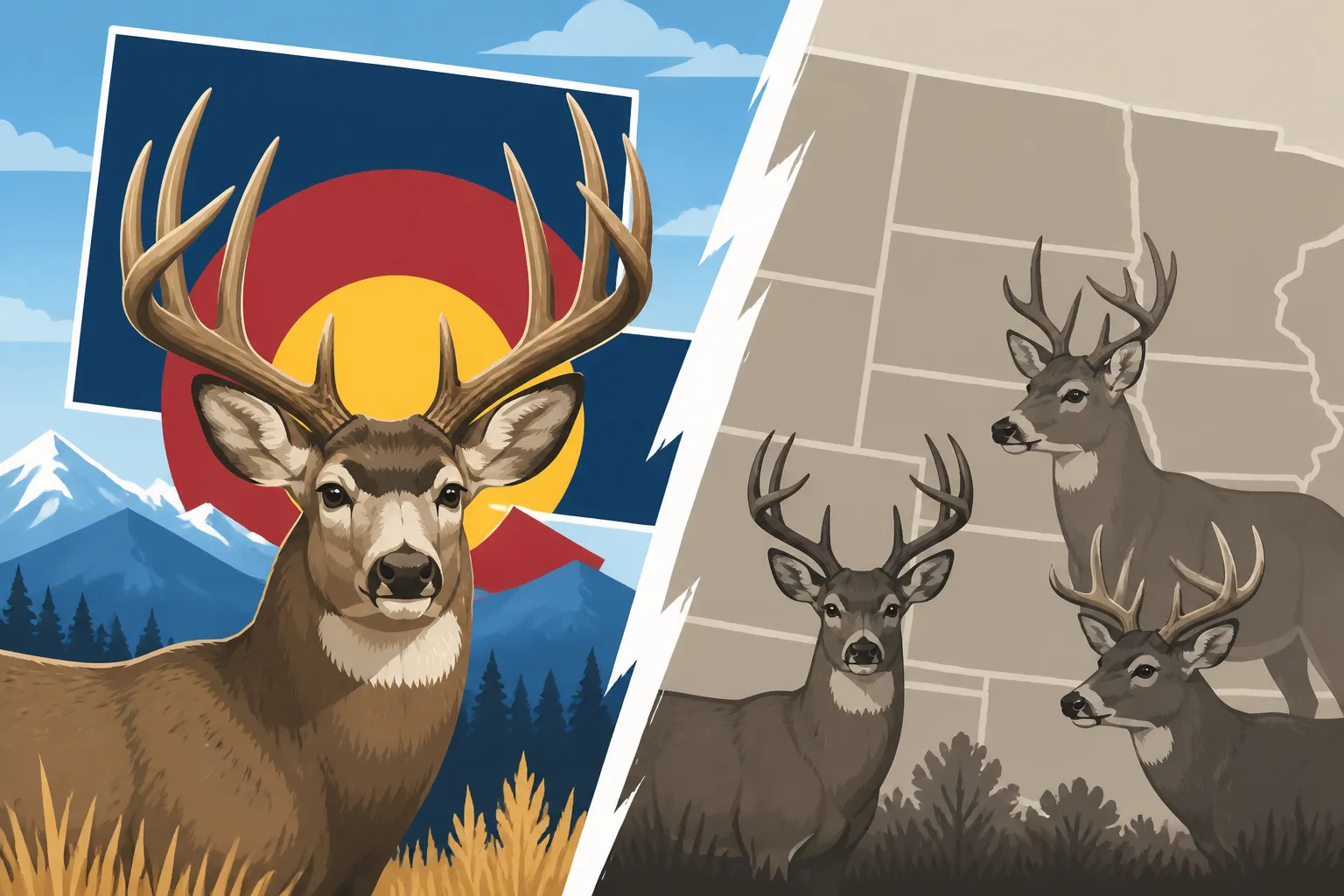
Colorado Mule Deer vs Other States
Deciding where to chase mule deer each season is a decision that can keep a Western hunter up at night. There are so many factors to weigh: draw odds, tag costs, public land access, and of course, the ever-present dream of a truly massive buck. If you've been wrestling with whether Colorado is the right fit compared to other storied Western states, you've come to the right place. This guide will meticulously break down Colorado's mule deer hunting landscape, offering a realistic comparison to its neighbors so you can make an informed choice for your next adventure.
Colorado's Unique Mule Deer Landscape
Colorado is undeniably a crown jewel for big game hunting, and its mule deer herds are a significant part of that allure. But like any state, it comes with its own set of characteristics that distinguish it from the rest. Understanding these nuances is crucial before you commit your time, money, and preference points.
Habitat and Terrain Diversity in Colorado
One of the first things you'll notice about Colorado when it comes to mule deer is the incredible diversity of habitat. We're not just talking about towering peaks and deep canyons; Colorado offers a full spectrum of mule deer environments. You've got the iconic high-country basins, often above timberline, where bucks spend their summers growing impressive antlers in relative solitude. These are the places that test your physical limits, requiring serious effort to access, but often reward with breathtaking scenery and mature deer.
Then, you transition into the vast national forests like the White River National Forest or the San Juan National Forest, where dense timber, aspen groves, and sagebrush parks create a mosaic that mule deer thrive in. This mid-elevation terrain is often where you'll find deer during the early rifle seasons, moving between feed and cover. It’s also where hunting pressure can be most intense. Don't forget the foothills, which offer a blend of scrub oak, pinyon-juniper, and open slopes. These areas can be fantastic, especially during migration, but often come with more limited public access or proximity to human development.
Finally, a lesser-known but equally important habitat exists on Colorado's Eastern Plains. Here, mule deer often share territory with whitetails, adapting to a more agricultural and riparian environment. While not as picturesque as the mountains, these areas can produce some surprisingly large bucks, often on private land or limited public access points. This sheer variety means that a "Colorado Mule Deer Hunting Guide" can encompass vastly different experiences depending on where you choose to hunt.
Population Dynamics and Herd Health
Colorado boasts one of the largest mule deer populations in North America, with numbers typically fluctuating between 400,000 to 450,000 animals. This might sound fantastic, and in many ways it is, offering a high density of deer across many units. However, it's not without its complexities. Over the past few decades, like many Western states, Colorado has seen its mule deer populations fluctuate due to a variety of factors including severe winters, habitat loss, and disease.
Chronic Wasting Disease (CWD) is another significant factor in Colorado, with a higher prevalence in certain game management units (GMUs) compared to some other states. Colorado Parks and Wildlife (CPW) actively monitors CWD and implements management strategies, including specialized testing and carcass disposal requirements. While not a reason to avoid hunting here, it's something to be aware of and factor into your post-harvest meat handling.
Compared to states like Arizona, which manage for quality over quantity in many of its premier units, Colorado's management philosophy often balances opportunity with trophy potential. This means that while you might find more deer overall, consistently locating truly giant bucks often requires significant effort, careful unit selection, and sometimes, a lot of accumulated preference points. For a deeper dive into herd trends, check out our guide on Colorado Mule Deer Population Trends.
The Draw and Tag System: Colorado vs. Other Western States
Understanding the tag acquisition process is often the biggest headache for non-resident hunters looking at Western states. Colorado’s system is unique, and it’s critical to grasp how it stacks up against its neighbors.
Preference Points and Draw Difficulty
Colorado operates on a preference point system for most limited-entry deer tags. For non-residents, drawing a quality mule deer tag, especially for a mature buck in a desirable unit, can require many years of accumulating points. You essentially get a point for each year you apply unsuccessfully, and these points increase your chances in subsequent draws. For example, a premier unit known for producing trophy bucks might require 15-20+ preference points for a non-resident. This is a long-term investment, and it’s a big commitment.
Compare this to, say, Wyoming, which uses a random draw with a modified preference point system (they call them "points" but it's not a pure preference system like Colorado's) where a percentage of tags are set aside for non-residents and it can sometimes be possible to draw a great tag with fewer points or even as a first-time applicant, albeit with low odds. States like Nevada use a true bonus point system where all your points are thrown into the hat each year, and while more points increase your odds, there's always a chance for a lucky first-timer. Utah also has a bonus point system, but it's increasingly difficult for non-residents to draw premium tags without significant points.
The frustrating part about Colorado is what's known as "point creep," where the number of points required to draw a given unit slowly increases each year as more people apply. This means that if you're chasing a specific unit, the goalpost might keep moving. Tools like those offered by GoHunt become invaluable here, allowing you to analyze draw odds and point requirements over time, helping you strategize your application. Understanding "How Many Points for a Colorado Mule Deer Tag" is vital for long-term planning.
Over-the-Counter OTC Opportunities
One area where Colorado used to shine for mule deer, particularly for non-residents, was in its over-the-counter (OTC) options. In the past, it was possible to purchase an OTC mule deer tag, especially for archery season, without going through the draw. However, Colorado Parks and Wildlife has been actively phasing out most OTC mule deer opportunities, especially for buck tags, as part of their herd management strategies and to reduce hunter crowding.
Today, if you're looking for OTC mule deer, you'll mostly find them as antlerless (doe) tags or very limited, specific rifle seasons, often tied to private land or very challenging units. This is a significant difference from states like Idaho, which still offers quite a few OTC general season mule deer tags, albeit often in less accessible or lower-density areas. While the competition can be intense and the deer smaller, Idaho offers a genuine "show up and hunt" experience that Colorado largely no longer provides for buck mule deer. Other states like Montana offer general tags that are guaranteed with the purchase of a hunting license package, but these come at a higher price for non-residents.
This shift means that for most non-resident mule deer hunters, Colorado is now a draw-only state for bucks, putting it more in line with the heavily drawn units of Arizona, Utah, and Nevada, which rarely offer OTC opportunities for quality bucks. For current information on season dates and tag options, refer to the Colorado Mule Deer Season Dates and Tags resource.
Hunting Pressure and Public Land Access
The vastness of the American West often conjures images of endless public land and solitude. While Colorado certainly has plenty of public ground, the reality of hunter pressure, especially for popular species like mule deer, can be a rude awakening.
Public Land Availability
Colorado boasts an impressive amount of public land, with millions of acres managed by the Bureau of Land Management (BLM) and the U.S. Forest Service (USFS). This includes vast wilderness areas, national forests, and BLM tracts, all accessible to hunters. In many mountain GMUs, public land makes up the vast majority of the landscape, providing ample room to roam. You can literally walk for days without hitting a private property boundary in places like the Flat Tops Wilderness.
However, the sheer amount of public land doesn't always translate to solitude. Access points can become bottlenecks, and areas close to roads or popular trailheads can see significant hunter density, especially during the early rifle seasons. Compared to, say, Nevada, which also has a massive amount of public land (over 80% of the state), but often has much lower human population density and therefore less overall hunting pressure on its mule deer. Arizona also has significant public land, but many of its trophy mule deer units are vast and remote, demanding serious effort to access, naturally spreading out hunters.
Colorado's advantage is its accessibility from major population centers like Denver, making it a popular choice for both residents and non-residents. Tools like the Colorado Hunting Atlas or third-party mapping software like onX Hunt are essential for identifying public/private boundaries and scouting remote areas. To truly escape the crowds, you often need to commit to a wilderness hunt, backpacking miles in, or focusing on less accessible BLM parcels. For more information, read our Colorado Public Land Hunting Guide.
Hunter Density and Experience
Walking into a popular Colorado mule deer unit on opening morning of a rifle season can feel like a small army has descended upon the mountains. Hunter orange dots the hillsides, trucks line the roadsides, and the occasional distant shot is a constant reminder that you're not alone. This is a frustration many hunters face in Colorado. While CPW aims to manage hunter density through the draw system, and the sheer amount of public land helps, the reality is that many easily accessible areas see a lot of pressure.
This pressure changes mule deer behavior. They become more nocturnal, seeking refuge in thick timber, steep canyons, or roadless areas. Finding success often means outworking other hunters, going deeper, climbing higher, or hunting smarter by focusing on overlooked pockets. It's a completely different experience than, for example, hunting parts of Montana or Idaho where general season tags might be available, but the overall hunter numbers per square mile are lower in many regions, allowing deer to behave more naturally during daylight hours.
If you're looking for a true wilderness experience with minimal human encounter, Colorado offers it, but you'll have to earn it. This might mean tackling a Colorado Backcountry Hunting Guide or focusing on units known for their challenging terrain and limited access. The satisfaction of punching a tag after outsmarting pressured deer is immense, but it's important to set realistic expectations about the number of other hunters you might encounter.
Trophy Potential and Season Structure
Ultimately, for many mule deer hunters, the goal is a mature, heavy-antlered buck. Colorado's reputation for producing big deer is well-earned, but it’s important to understand the specifics of its trophy potential and how its season structure impacts hunting strategies.
Antler Quality and Genetics
Colorado has the genetics and habitat to grow truly exceptional mule deer. The vast, nutrient-rich summer range in the high country, combined with varied winter ranges, allows bucks to reach their full potential. Bucks exceeding 180 inches are taken annually, and occasionally, a 200-inch monster makes headlines. States like Utah and Nevada are perhaps more renowned for consistently producing giant, wide-racked bucks, particularly in their limited-entry units that often require decades of points to draw. These states are often managed more intensively for trophy quality.
While Colorado doesn't quite have the consistent "trophy factory" reputation of a few select units in Arizona or Utah, its sheer volume of deer and quality habitat means that the potential is always there. The challenge, as discussed, is drawing one of those coveted tags that grant access to units managed specifically for older age class bucks. In many of the easier-to-draw or OTC units (if you can find them), you'll likely encounter more younger bucks, with mature bucks being a hard-earned reward. To maximize your chances at a trophy, e-scouting with tools like GoHunt is essential for identifying units with better age structures and antler growth potential.
Archery, Muzzleloader, and Rifle Seasons
Colorado offers distinct seasons for different weapon types, each with its own advantages and challenges.
- Archery Season: Typically runs from late August through September. This is a fantastic time to hunt mule deer, as bucks are often in their summer patterns, frequently in velvet, and somewhat predictable. It also overlaps with the early stages of the Colorado Elk Rut Explained in some areas, offering a unique multi-species experience. The challenge is getting within bow range in open country, but the lack of rifle pressure is a huge plus. Many non-resident archery tags are limited draw, though some limited OTC deer tags may exist for certain units.
- Muzzleloader Season: Usually a short window in mid-September. This season is often highly sought after and requires drawing a limited tag. It falls during a beautiful time of year in the high country, just before the full elk rut kicks in. Hunters enjoy primitive weapon advantages but must contend with the single-shot limitation and black powder challenges.
- Rifle Seasons: Colorado has four staggered rifle seasons, generally starting in late October and extending into November. The later seasons, particularly the 3rd and 4th, often coincide with the Colorado Mule Deer Rut Explained and migration patterns, which can lead to incredible hunting as bucks become more active and less wary. These seasons, however, see the most hunter pressure.
Compared to states like New Mexico, which often has earlier rifle seasons that can be warm and dry, or Arizona, where most rifle hunts are also draw-only and tightly managed, Colorado's staggered rifle seasons offer varied opportunities. The opportunity to hunt during the peak of the rut in late November is a huge draw for many hunters, though these late-season tags are often the hardest to draw for quality units. Whether you prefer Colorado Mule Deer Hunting: Archery Tactics or Colorado Mule Deer Hunting: Rifle Tactics, there's a season for you, provided you can draw the tag.
Final Thoughts on Your Colorado Mule Deer Quest
So, is Colorado the right state for your mule deer hunt? It truly depends on what you're looking for. If you're a patient hunter willing to commit preference points over several years for a chance at a quality buck in a beautiful, diverse landscape, Colorado has incredible potential. If you prioritize consistent OTC opportunities or a less crowded experience, other states like Idaho or parts of Montana might be a better fit for a "show up and hunt" mentality.
Colorado offers the full Western hunting experience, from rugged high-country backpacking for giant bucks to stalking deer in the dense timber of national forests. It's a challenging, rewarding state that demands preparation, physical fitness, and strategic tag application. Regardless of your choice, the pursuit of mule deer across the West is an unforgettable adventure, and Colorado undoubtedly holds a significant place in that tradition.
Disclaimer
Please note that hunting regulations, season dates, and draw systems are subject to change annually. Always consult the official Colorado Parks and Wildlife (CPW) regulations and proclamations for the most current and accurate information before planning any hunt. This guide is for informational purposes only.