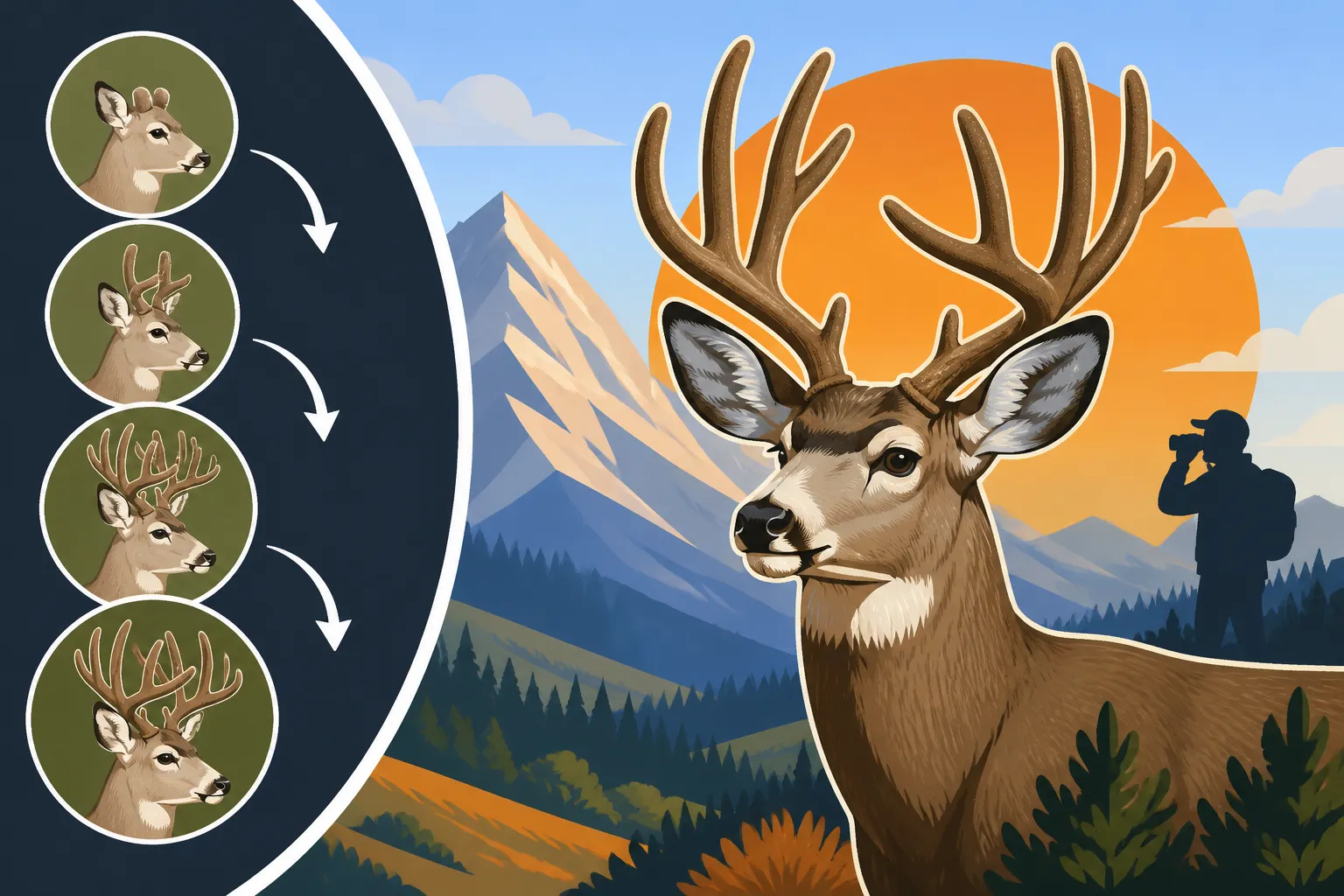
Colorado Mule Deer Antler Growth
Figuring out the true potential of a mule deer buck, especially when you're glassing from a mile away in the vast Colorado high country, can feel like trying to solve a complex puzzle. It’s tough to gauge their age and antler size accurately, and it's a common frustration for hunters, whether you’re a seasoned veteran or just starting your journey. This comprehensive guide is dedicated to peeling back the layers of mule deer antler growth, helping you understand the fascinating biological processes at play so you can better assess bucks in the field and make informed hunting decisions.
The Annual Cycle of Mule Deer Antler Growth
Mule deer antlers aren't just bone; they're a dynamic, living system that goes through an incredible transformation every single year. Understanding this cycle is foundational to appreciating these magnificent animals and becoming a more effective hunter. It’s not just about what you see on their head in September; it’s about the journey that led them there.
Shedding and Early Growth: The Foundation
The antler growth cycle begins with the annual shedding of old antlers. For most Colorado mule deer bucks, this typically occurs in late winter, usually from late January through March, though some younger or less healthy bucks might shed a bit earlier or later. It's a natural process triggered by a drop in testosterone levels after the breeding season, or rut. Once the old antlers fall off, small pedicles on the buck's skull immediately begin to grow new bone.
This initial growth phase, often from March into early summer, sees the new antlers emerge covered in a soft, fuzzy skin known as velvet. This velvet is a highly vascularized tissue, meaning it's packed with blood vessels that supply essential nutrients and minerals – calcium, phosphorus, and other trace elements – directly to the rapidly growing bone underneath. Think of it like a biological construction site, with a constant flow of resources to build the next year's rack. During this early stage, the antlers are incredibly fragile and susceptible to damage, which can lead to permanent deformities once they harden.
Summer Development: Rapid Expansion in Velvet
As spring turns into summer, typically from June through August, the antler growth truly accelerates. This is when you'll see the most dramatic increase in mass and length. The buck's body is working overtime, channeling a significant portion of its nutritional intake directly into antler production. During this time, the velvet-covered antlers can feel quite warm to the touch due to the intense blood flow.
Many factors influence the extent of this summer growth. Genetics certainly play a huge role, determining the inherent blueprint for the buck’s antler shape, tine length, and overall mass. But even a buck with excellent genetics can't reach its full potential without adequate nutrition. Lush summer forage, abundant water sources, and access to key minerals are critical. A severe drought in July, for instance, can noticeably stunt antler development, leaving a buck with a smaller rack than he might otherwise carry. Daylight hours also act as a crucial trigger; as the days shorten after the summer solstice, the buck's hormone levels begin to shift, signaling the upcoming end of the velvet growth phase. When you're scouting in the summer, observing deer in velvet can give you a rough idea of what to expect, but remember they're not yet finished.
Hardening and Polishing: The Final Product
By late August into September, the rapid growth phase slows down significantly, and the antlers begin to mineralize and harden. This process is again driven by changing hormone levels, primarily a surge in testosterone. Once the antlers are fully hardened, the blood supply to the velvet diminishes, and the velvet begins to dry up and peel away. This is often an itchy process for the buck, and they will rub their antlers vigorously against trees, shrubs, and even the ground to remove the remaining velvet.
This "polishing" process not only cleans the antlers but also stains them, giving them their characteristic dark or light brown coloration, depending on the type of vegetation they rub against and the natural pigments in the bone. For hunters, this is a clear sign that the rut is approaching and the buck is now ready for the season. Understanding this timing is crucial for planning your hunts, especially for those pursuing bucks during the Colorado Archery Season Dates. A buck you saw in early August might have looked impressive in velvet, but by late September, his hardened rack reveals its true form.
Key Factors Influencing Antler Size and Structure
While the annual cycle is consistent, the outcome – the size and shape of a buck’s rack – varies wildly. It’s a complex interplay of several factors, with some having a much greater impact than others. Being able to discern these influences in the field is a skill that will serve you well, especially when trying to assess a potential trophy.
Age: The Dominant Predictor of Trophy Potential
Without a doubt, age is the single most important factor determining a mule deer buck's antler size and overall trophy potential. A buck simply needs time to grow. Most mule deer don't reach their peak antler size until they are at least 4.5 to 6.5 years old, and sometimes even older, especially in areas with excellent genetics and nutrition.
- Yearlings (1.5 years old): These bucks are typically "spikes" (single unbranched points) or small forked-horns. Their bodies are still growing, and most of their energy goes into physical development, not massive antlers.
- Younger Bucks (2.5-3.5 years old): You'll start to see more impressive racks here, often 3x3s or 4x4s (counting points on one side). They might have decent width but often lack the mass and tine length of older bucks. Their bodies are still sleek and muscular, not yet having that "pot belly" or saggy brisket of a mature buck.
- Mature Bucks (4.5-6.5+ years old): This is when mule deer truly express their genetic potential. They'll have developed significant mass, long tines, and often wider spreads. Their bodies will look more robust, with thick necks, deep chests, and a noticeable sag in the belly, especially after feeding. A buck at 5.5 years old, for example, will typically have significantly more mass at the bases and longer, more developed tines than a 3.5-year-old, even if both are 4x4s. Learning How to Field Judge a Colorado Mule Deer Buck by observing these body characteristics, in addition to the antlers, is a critical skill.
Genetics: The Blueprint for Rack Potential
Just like humans inherit traits from their parents, mule deer inherit genetic predispositions for antler characteristics. Some bucks are simply programmed to grow wider racks, longer tines, or more impressive mass. This genetic blueprint determines the potential for antler growth.
In areas with strong genetics, you'll see a higher percentage of bucks with impressive, symmetrical racks. However, unlike controlled environments, wild populations have a broad genetic pool. It's rare to see a purely "genetic" buck without good age and nutrition to back it up. While hunters can't directly influence genetics in public land herds, understanding its role helps explain why some areas consistently produce bigger deer. When you’re using tools like GoHunt to scout for areas with a history of big bucks, you're indirectly looking for areas where the combination of age, nutrition, and good genetics is often present.
Nutrition and Habitat Quality: Fueling the Rack
Even with excellent age and genetics, a buck cannot grow large antlers without a high-quality diet and access to essential nutrients. Imagine trying to build a skyscraper without enough steel or concrete; it just won't happen. Mule deer require a diverse diet rich in proteins, carbohydrates, vitamins, and minerals, especially calcium and phosphorus.
Colorado offers diverse habitats, from high alpine basins to sagebrush flats, and the quality of forage can vary dramatically. Areas with consistent rainfall and lush vegetation, particularly during the spring and summer growth periods, will generally produce bigger-antlered deer. For example, a severe winter can force deer to burn through their fat reserves, and a lean spring can delay the onset of robust antler growth. Conversely, a mild winter followed by a wet spring and summer can lead to exceptional antler development. Places like the Colorado Mule Deer Habitat Explained often provide specific conditions that are prime for growing big bucks, such as abundant browse, forbs, and water. Drought conditions, conversely, stress the deer's body, forcing it to prioritize survival over antler development. This is why a buck might grow a magnificent rack one year and a slightly smaller one the next, depending purely on environmental conditions.
Practical Field Judging Tips Based on Antler Growth
Okay, so we know how antlers grow and what influences them. Now, let's talk about putting that knowledge to use when you're actually out in the field, staring at a buck through your binoculars or spotting scope.
Learning to Age Deer in the Field (Beyond Antlers)
While impressive antlers are often the goal, the antlers themselves aren't always the most reliable indicator of a buck's age, especially with younger deer or those from areas with poor genetics/nutrition. A 2.5-year-old buck in prime habitat might sport a rack that looks like a 3.5-year-old from a less productive area. This is where focusing on body characteristics becomes paramount.
When you're trying to age a mule deer, look at the whole animal. A yearling (1.5 years old) will look like a deer on stilts, with a long, slender neck and a disproportionately small body. A 2.5-year-old will start filling out but still have a relatively slender neck. As they mature to 3.5 years, their body deepens, and their neck starts to look thicker. By 4.5 years and older, a buck's neck will often appear very thick, almost blending into its shoulders. Their chest will be deep, and their brisket might sag. Many mature bucks develop a "pot belly" after the summer feeding, making their body appear more substantial. The facial features can also give clues; older bucks often have a more Roman nose and a more grizzled face. Always try to compare the buck to other deer in the area if possible. This holistic approach helps confirm if the antlers you're seeing truly represent a mature animal or just a genetically blessed youngster.
Interpreting Antler Characteristics by Season
The appearance of antlers changes throughout the hunting season, and knowing what to look for can help you make a more accurate judgment.
- Early Archery Season (August-September): During the early part of archery season, many bucks will still be in velvet. Their racks will look larger, softer, and often have a "bulbous" appearance at the tips of the tines. It's easy to overestimate the size of a velvet buck. Once the velvet is shed, that apparent bulk diminishes, and the true hard-horned dimensions are revealed. This transition period, especially in early September, can be tricky. A buck that looked like a monster in velvet might turn out to be merely a good buck once stripped down.
- Late Archery/Muzzleloader/Early Rifle (September-October): This is when bucks have hardened their antlers and are polishing them. Their racks will be crisp and hard, often stained various shades of brown or even yellowish from rubbing. You'll see the true mass, width, and tine length. This is generally the best time to assess antler characteristics as they are fully developed.
- Late Rifle Season (November-December): As the rut progresses and then wanes, bucks will often have broken tines or even broken off entire points from fighting. This can significantly change their appearance. A buck you might have passed on earlier in the season due to a smaller-than-desired rack might now be missing a whole point, but it's important to remember what he was before the fights. Some hunters specifically target late-season bucks, knowing they might have damaged racks, but they are still mature animals.
A typical Colorado mule deer rack is known for its deep forks and often a wide spread. When assessing in the field, pay attention to:
- Mass: How thick are the bases? Does the mass carry well out onto the tines?
- Width: Is the rack wider than the ears (which are typically 20-22 inches tip-to-tip on an alert buck)?
- Tine Length: How long are the points off the main beam? Do they have good definition?
- Symmetry: While not always a score-booster, a symmetrical rack is often desired.
Utilizing Technology and E-Scouting
In today's hunting world, technology is a powerful ally. Before you even set foot in the wilderness, you can leverage tools to narrow down potential hunting areas that are likely to hold bigger bucks. Platforms like GoHunt allow you to research specific Colorado Hunting Units (GMUs) Explained, review historical draw odds, and analyze harvest data, which can indirectly point you to areas known for producing larger-antlered mule deer.
Beyond draw data, e-scouting with satellite imagery from GoHunt or other mapping applications can help you identify prime habitat. Look for areas with diverse forage, north-facing slopes that hold moisture longer, bedding areas with good cover, and access to water. These are the ingredients for healthy deer and, consequently, healthy antler growth. You can also identify potential travel corridors or benches where bucks might feed and rub. If you're running trail cameras, set them up in these identified areas. Monitoring bucks over the summer and fall will provide invaluable, real-time data on their antler development, allowing you to track specific individuals and assess their growth patterns season after season. This not only helps with judging but also adds another layer of engagement to your hunt preparation.
Common Misconceptions and Nuances of Antler Development
It's easy to fall into traps of common hunting folklore when it comes to antlers. Let's clear up a couple of widespread misconceptions and dive into some of the lesser-known nuances that can affect antler development.
The "Basket Rack" Myth and Antler Regression
One of the most persistent myths is the idea that a buck grows its biggest rack and then, in its final years, produces a smaller, "basket rack" before it dies. While it's true that bucks can experience antler regression, it's often not as dramatic or universal as the myth suggests.
Antler regression, where a buck's rack significantly declines in size, mass, or complexity, typically only occurs at very advanced ages, often 8.5 years or older for mule deer. Even then, it's not a guarantee. Some bucks maintain impressive racks well into old age, while others might show a gradual decline in mass or tine length. The "basket rack" idea is often attributed to bucks that are simply past their prime and in declining health, or it might be a younger buck that hasn't reached full maturity being mistaken for an old, regressing deer. For most hunters, targeting a buck in its 4.5 to 7.5-year-old range means you're likely seeing it at or near its peak antler production, without having to worry much about regression. The goal for many is to harvest a deer when it has achieved its maximum genetic and nutritional potential, rather than waiting for it to decline.
Environmental Stressors and Atypical Antlers
Nature isn't always perfect, and antlers can sometimes tell a story of hardship. Various environmental stressors, injuries, or diseases can lead to atypical antler growth. This means the antlers deviate significantly from the typical symmetrical, forked pattern.
- Injury: The most common cause of atypical antlers is injury, particularly to the pedicle (the base where the antler grows from) or to a limb. For example, if a buck breaks a leg, its body might shunt resources to healing the leg rather than growing a perfect antler on the opposite side. This phenomenon, known as "contralateral effect," can result in a deformed or stunted antler on the side opposite the body injury. A direct injury to the pedicle itself can also cause the antler on that side to grow in a gnarled, club-like fashion, or even prevent it from growing at all.
- Disease: Certain diseases can also impact antler growth. Chronic Wasting Disease (CWD), for instance, can lead to abnormal antler development, often making them thin, brittle, or deformed. While thankfully not widespread in all herds, it's a factor to be aware of.
- Nutritional Stress: While poor nutrition usually leads to smaller typical racks, severe or prolonged nutritional deficiencies can sometimes result in more erratic, atypical growth, although this is less common than injury-related deformities.
- Hormonal Imbalances: Rarely, a hormonal imbalance can lead to a buck retaining its velvet year-round (a "velvet buck") or growing unusual, non-typical racks.
These atypical antlers are often unique and fascinating, and while they might not score high on a typical Boone & Crockett scale, they tell a compelling story about the buck's life in the wild.
Here's a quick table to summarize the general antler growth phases for mule deer:
| Age Class (Years Old) | Antler Appearance (Typical) | Body Characteristics (Typical) | Growth Phase Summary |
|---|---|---|---|
| 0.5 (Fawn) | Buttons, no antlers | Small, slender | No antler growth yet. |
| 1.5 (Yearling) | Spikes or small forked-horns | Long legs, slender body, thin neck | First substantial growth, most energy to body. |
| 2.5 | 3×3 or small 4×4, increasing mass | Filling out, neck still relatively slender | Good growth, still prioritizing body development. |
| 3.5 | Wider 3x3s or 4x4s, good tine length | Deepening body, neck thickening | Approaching maturity, significant antler development. |
| 4.5 – 6.5 | Peak potential, heavy mass, wide, long tines | Robust, thick neck, deep chest, often "pot belly" | Maximum antler expression, prime breeding age. |
| 7.5+ | Maintained or slight regression | Heavier body, more grizzled face | Can still have impressive racks, some may regress. |
Remember, this table provides generalizations. Individual deer and regional variations mean there will always be exceptions to these guidelines. Knowing when the Colorado Mule Deer Rut Explained occurs can also give you insight into when bucks are most active and likely to be showing off their hardened racks. Whether you're planning for Colorado Archery Mule Deer Hunting or a late-season rifle hunt, this understanding is invaluable.
Disclaimer
The information provided in this guide is for general educational purposes only and is not a substitute for official Colorado Parks and Wildlife regulations and guidelines. Always consult the most current CPW regulations and hunt brochures before planning any hunting activity in Colorado. Hunting laws and seasons can change, and it is the hunter's responsibility to stay informed and compliant.