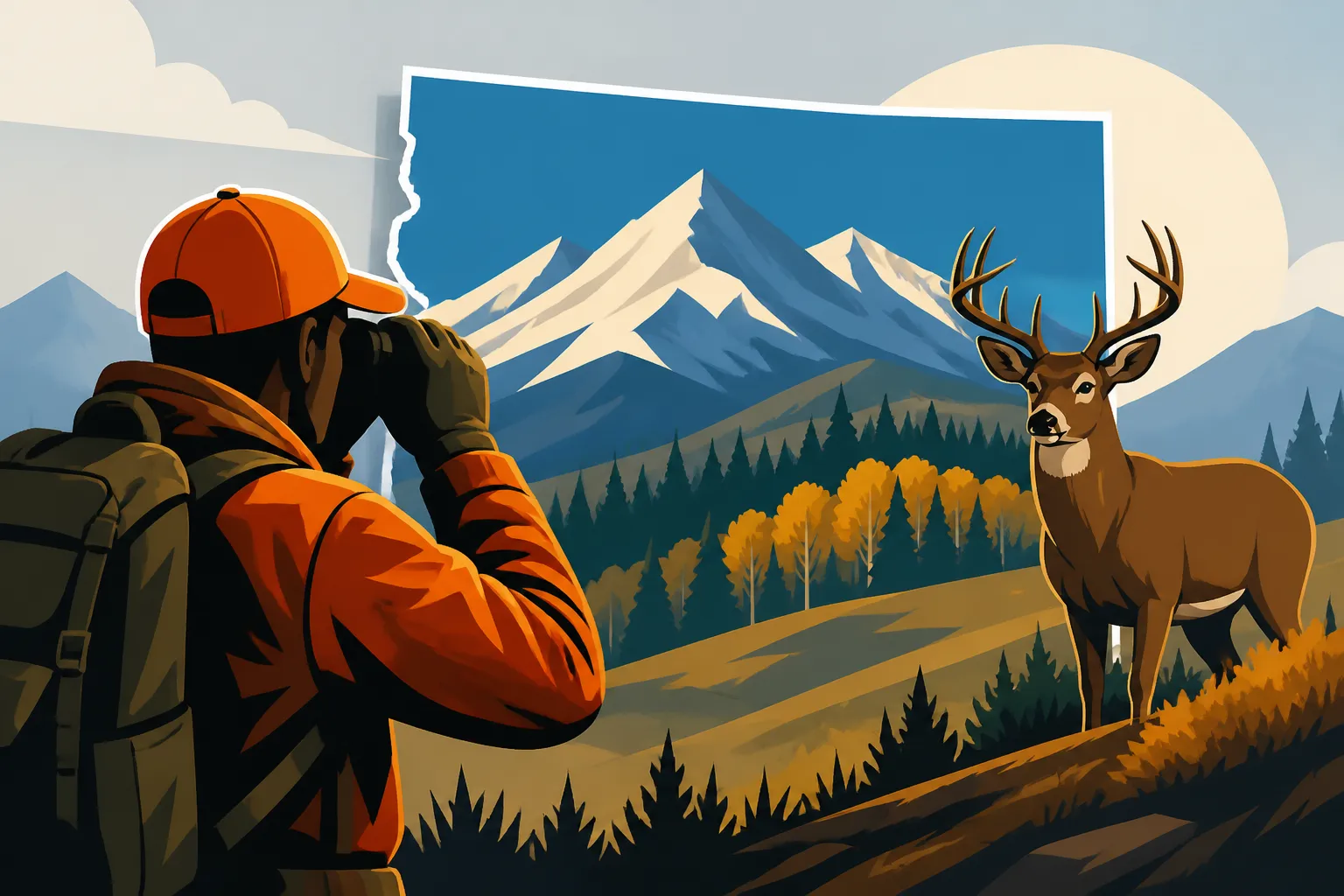
How to Hunt Whitetail Deer in Colorado
For many hunters, the image of Colorado hunting conjures up vast mountain ranges, towering peaks, and majestic elk or mule deer. But if you're picturing your classic whitetail hunt in a dense eastern woodlot, you might feel a bit lost when contemplating Colorado. The reality is, whitetail hunting in Colorado is a unique beast, often overlooked and requiring a specific approach. This guide is dedicated to helping you understand where to find these elusive plains and river bottom deer and how to successfully pursue them in the Centennial State.
Understanding Colorado Whitetail Deer and Their Habitat
Colorado's whitetail deer population is a far cry from the numbers you might find in the Midwest or Southeast. They’re not the dominant deer species here; that honor belongs to the mule deer. However, whitetails have carved out a significant niche, thriving in specific environments that offer the cover, food, and water they need. You won't find them browsing the high-alpine tundra like some mule deer. Instead, think riparian zones – those lush, green corridors that follow river systems, offering dense brush, cottonwood trees, and agricultural fields nearby.
Where Whitetails Roam in Colorado
When we talk about whitetails in Colorado, we're largely focusing on the eastern plains. These are flat to gently rolling grasslands, often crisscrossed by vital river systems that act as lifelines for wildlife. The major river drainages like the South Platte River, Arkansas River, and Republican River are prime habitat. Imagine thickets of Russian olive, willow, and cottonwood stands creating a verdant tunnel through otherwise open country. This is where whitetails thrive, finding refuge from predators and hunters, especially where these corridors border irrigated farmlands. These areas provide an abundance of food sources, from alfalfa and corn to various native browse.
On the Western Slope, pockets of whitetails exist as well, particularly along the lower elevations of major rivers like the Colorado River and its tributaries. However, these populations are generally smaller and more localized than their Eastern Plains counterparts. Hunters often make the mistake of assuming all deer in Colorado are mule deer, but a quick glance at the ears or tail can tell you otherwise – whitetails have shorter ears and their characteristic "flag" tail. Understanding these distinct habitat preferences is your first critical step to success. If you're looking for a general overview of all the big game Colorado has to offer, check out our guide on Colorado Big Game Species Guide.
Behavior and Patterns of Colorado Whitetails
Colorado whitetails, like whitetails everywhere, are creatures of habit, but their patterns are heavily influenced by their unique environment. In these often-sparse plains habitats, cover is king. They'll bed down in the thickest riparian areas during the day, emerging at dawn and dusk to feed in adjacent agricultural fields or native browse. Their travel corridors will almost exclusively follow these river bottoms or small tributary drainages that offer any modicum of concealment.
The rut for whitetails in Colorado typically occurs in mid-November, similar to other states, but understanding how it plays out in this specific habitat is key. During the rut, bucks will be actively cruising these riparian zones, scent-checking for does. You might see more daytime activity than usual, especially on cooler, overcast days. Post-rut, they'll retreat back to their thick cover, focusing on recovery and food. Winter can be tough on these deer, driving them to areas with reliable food sources and thermal cover, often near agricultural operations. Recognizing these seasonal patterns and the dependence on water sources is crucial for planning your hunt.
Locating Whitetail Deer Hotspots in Colorado
Successfully hunting whitetail deer in Colorado hinges on pinpointing their precise locations, which means extensive scouting – both remotely and boots on the ground. Unlike the vastness of elk country, whitetail habitat is often more concentrated, but finding those specific concentrations within larger areas is the challenge. The sheer amount of public land for mule deer and elk doesn't always translate to abundant whitetail opportunities, making careful research indispensable.
Utilizing Maps and E-Scouting Tools
Before you ever set foot in Colorado, your best friends will be detailed topographical maps and online scouting tools. Platforms like GoHunt offer invaluable mapping layers that highlight public and private land boundaries, topography, and even historical harvest data in some cases. Focus on the major river systems on the Eastern Plains – the Arkansas, South Platte, and Republican rivers are excellent starting points. Look for large sections of public land or Walk-In Access (WIA) properties that parallel these river corridors. These are often State Wildlife Areas (SWAs) or sections of State Trust Lands.
Pay close attention to where these riparian zones intersect with agricultural fields. Deer will often utilize the dense cover of the river bottom to travel and bed, slipping out into fields to feed under the cover of darkness. Identifying bottlenecks, pinch points where the cover narrows, or areas with multiple converging drainages can reveal natural travel routes. For more detailed insights into planning your hunt from home, refer to our guide on How to E-Scout Before a Colorado Hunt. This crucial pre-hunt work helps you narrow down potential hunting grounds, saving you precious time and effort once you’re on location.
Ground Scouting and Permission
Once you've identified potential areas through e-scouting, nothing beats putting boots on the ground. Drive or walk the roads adjacent to these river bottoms, looking for tracks, rub lines, and scrapes. Pay particular attention to entry and exit points from the thick cover to feeding areas. Glassing during early morning or late evening from a distance can reveal deer movements without disturbing them. Since a significant portion of prime whitetail habitat, especially bordering rich agricultural fields, is private land, obtaining permission is often a necessity.
Don't be afraid to knock on doors or send polite letters to landowners well in advance of the season. Many landowners on the Eastern Plains are dealing with deer depredation issues, and presenting yourself as a responsible hunter who can help manage their deer population might open doors to excellent hunting opportunities. Always be respectful, offer to share meat, and follow all their rules to the letter. Even if you secure private land access, understanding the nuances of hunting public land pressure can also be beneficial in the more limited public whitetail areas. For more details on navigating public land, check out our Colorado Public Land Hunting Guide.
Effective Whitetail Hunting Methods
Whitetail hunting, regardless of location, often revolves around understanding deer movement and exploiting their predictable patterns. In Colorado's whitetail country, where thick cover can be limited to narrow corridors, precision and stealth are paramount. The methods you choose will largely depend on the specific terrain and cover available in your chosen hunting area.
Stand Hunting and Ground Blinds
Given the often-linear nature of Colorado's whitetail habitat (river bottoms, fence lines, and field edges), stand hunting is incredibly effective. Tree stands or ladder stands placed overlooking known travel corridors, pinch points, or feeding areas can provide a distinct advantage. Focus on areas where deer are transitioning between bedding cover and food sources. This often means setting up on the edge of the thick riparian brush line, overlooking an alfalfa or cornfield.
Ground blinds are another excellent option, especially where suitable trees for stands are scarce or where the cover provides a natural setup. Pop-up blinds tucked into thick brush, against a hay bale, or at the edge of a drainage can offer concealment and protection from the elements. The key with both stands and blinds is careful placement to maximize shooting lanes while minimizing your profile. Always consider the wind direction, as whitetails have an incredible sense of smell. For a deeper dive into how crucial wind management is, you might find our article on How to Use the Wind Hunting Colorado Elk surprisingly applicable to whitetails as well.
Still-Hunting and Spot-and-Stalk
While less common for whitetails in some eastern states, still-hunting can be productive in Colorado's denser river bottoms. This involves moving slowly and deliberately through cover, pausing frequently to observe and listen. The goal is to move so quietly that you essentially become a part of the environment, catching deer unaware as they go about their day. Focus on areas with good visibility breaks, like bends in the river or changes in vegetation density. Move into the wind or crosswind, always paying attention to thermals, which can shift dramatically throughout the day in river valleys.
Spot-and-stalk can also be employed, particularly in more open areas where whitetails might be seen feeding at longer distances, such as in large agricultural fields. This method requires excellent optics and a disciplined approach to closing the distance without being detected. It's often a game of patience, waiting for the deer to move behind a rise or into a depression before making your move. For tips on quiet movement through timber, which is directly applicable to still-hunting these river systems, check out How to Move Quietly Through Colorado Timber.
Essential Gear and Preparation for Colorado Whitetail
Hunting whitetail deer in Colorado, though distinct from mountain elk hunts, still demands proper gear and physical readiness. The weather can be unpredictable, the terrain challenging (even on the plains), and you'll want to be prepared for success once you pull the trigger. Don't underestimate the demands of hunting even smaller game in Colorado.
Clothing and Optics
Layering is key for any Colorado hunt, and whitetail hunting is no exception. Temperatures on the Eastern Plains can swing wildly from frigid mornings to warm afternoons, especially during the archery and early rifle seasons. Start with a good base layer that wicks moisture, add insulating layers like fleece or down, and top it off with a waterproof and windproof outer shell. Camouflage patterns that blend with sparse plains vegetation or riparian timber are best. Brands like Sitka Gear or KUIU offer excellent technical hunting apparel that performs in varied conditions. Don't forget a warm hat, gloves, and sturdy, comfortable boots that can handle both wet river bottoms and dry, dusty fields.
Optics are also critical. A good pair of 10×42 or 12×50 binoculars will be indispensable for spotting deer at a distance, especially when glassing field edges or vast plains. A rangefinder is essential for accurate shot placement. If you plan on spot-and-stalk hunting, a spotting scope mounted on a tripod can significantly aid in identifying and evaluating deer from afar without spooking them. While the distances might not be as extreme as for mountain hunting, clarity and light-gathering capabilities are always beneficial.
Weapons and Pack-Out Considerations
For archery season, a compound bow or crossbow with a minimum draw weight suitable for deer is standard. Ensure your broadheads are sharp and your setup is tuned for accuracy. For rifle seasons, a flat-shooting cartridge like a .270, .30-06, 6.5 Creedmoor, or .308 Winchester is perfectly adequate for whitetail deer. Given the open nature of some of the terrain, shots can sometimes be longer than in dense timber, so practice shooting from various positions and at different ranges. Always confirm regulations for minimum caliber requirements if you're unsure.
When it comes to the pack-out, while whitetails are smaller than elk, you'll still need a solid plan. A good hunting backpack is essential for carrying your gear and, ultimately, your harvest. Consider a pack with a strong internal or external frame capable of hauling heavy loads. While you might not be packing out an entire elk, quartering a whitetail and packing it out in pieces can still be a challenging endeavor, especially if you're deep in a river bottom. Even if you're not planning a multi-day trek into the wilderness, having a robust pack suitable for general hunting needs, similar to those recommended in our Colorado Backcountry Hunting Gear List, is a smart choice.
Colorado Whitetail Regulations and Tags
Navigating the regulations and tag system for whitetail deer in Colorado can feel like a labyrinth, especially for out-of-state hunters used to more straightforward systems. It's crucial to understand that whitetail hunting here often requires drawing a tag, and options can be more limited than for mule deer or elk.
License Requirements and Application Process
First and foremost, every hunter in Colorado, resident or non-resident, must possess a valid hunting license. Additionally, non-residents will need to purchase a qualifying license. To hunt whitetails, you'll almost certainly need to go through the primary draw, applying for specific hunt codes within designated Game Management Units (GMUs) where whitetail populations are present. Most whitetail tags, particularly for antlered bucks, are on a limited draw basis, meaning you'll need preference points to draw in desirable units. However, there can be over-the-counter (OTC) opportunities for antlerless whitetail tags or private-land-only tags, but these are less common for bucks.
The application period for the primary draw typically runs from March through early April. You'll need to research specific hunt codes on the Colorado Parks and Wildlife (CPW) website or use tools like GoHunt to analyze draw odds and point requirements for whitetail deer. Understanding the Colorado Draw System and Preference Points is fundamental. It's not uncommon for desirable whitetail units to require several preference points, similar to some trophy mule deer or elk units. Be meticulous with your application, double-checking all dates and hunt codes. You can also find detailed information about the overall process in our guide on How to Apply for a Colorado Hunting License.
Unit Selection and Drawing Odds
Choosing the right GMU for whitetails is arguably the most critical decision. The best units will generally be those encompassing the major river systems on the Eastern Plains. Units along the South Platte, Arkansas, and Republican Rivers are popular choices. However, popularity often means higher point requirements. Use the CPW's annual Big Game Statistics and GoHunt's draw odds data to research which units offer the best balance of whitetail population, public access, and draw success rates for your point level.
Don't overlook units that might have fewer points required but still offer solid opportunities, especially if you're willing to put in the legwork for ground scouting and potentially securing private land access. Some units might offer "either-sex" whitetail tags or specific "whitetail only" tags, which are crucial to identify. Always verify the regulations for the specific GMU and hunt code you are applying for, as rules can vary greatly. The Colorado Hunting Atlas Explained is an indispensable tool for visualizing GMU boundaries and public land access.
| Tag Type | Common Season | Typical Availability | Point Requirement (Buck) | Notes |
|---|---|---|---|---|
| Antlered Whitetail | Archery, Rifle | Limited Draw | 1-5+ Points (Varies) | High demand in prime units. |
| Antlerless Whitetail | Archery, Rifle | Limited Draw / Leftover (sometimes) | 0-1 Point | More accessible, good for meat hunters. |
| Either-Sex Whitetail | Archery, Rifle | Limited Draw | 1-3+ Points | Less common, offers flexibility. |
| Private Land Only (PLO) | Archery, Rifle | Limited Draw | 0-1 Point (sometimes) | Requires landowner permission in advance. |
Note: Point requirements are generalizations and can change annually. Always consult current CPW Big Game Statistics and draw odds resources like GoHunt.
Disclaimer
Hunting is an inherently dangerous activity that carries significant risks, including but not limited to injury, illness, and death. The information provided in this guide is for informational purposes only and is not a substitute for professional instruction, proper training, or adherence to all local, state, and federal hunting regulations. Always prioritize safety, respect wildlife, and obtain all necessary licenses and permits. It is your responsibility to know and follow all applicable laws and regulations before engaging in any hunting activities.