Colorado Pronghorn Hunting Guide
The wide-open plains and rolling sagebrush hills of Colorado offer a truly unique hunting challenge: the pronghorn. Often called "speed goats," these incredible animals are a test of patience, keen eyesight, and strategic thinking, and it can feel daunting trying to understand their habits and the complex draw system to even get a tag. This comprehensive guide is designed to demystify Colorado pronghorn hunting, walking you through everything from understanding the animal itself to the tactics and gear you’ll need for a successful hunt.
Understanding Colorado Pronghorn: The Prairies' Speedsters
Before you even think about packing your gear or applying for a tag, it’s crucial to understand the animal you’re pursuing. Pronghorn are unlike any other big game species you’ll find in Colorado, or anywhere else for that matter. They are truly magnificent creatures perfectly adapted to their open, often harsh, prairie environment.
Pronghorn Biology and Behavior
Pronghorn are not true antelope, despite their common nickname. They are the sole surviving member of their family, Antilocapridae, a lineage distinct from true antelopes found in Africa and Asia. What sets them apart? Their horns, for one. Unlike deer or elk that shed antlers annually, pronghorn shed the outer sheath of their horns each year, retaining a bony core. This unique characteristic is just one facet of their incredible biology. Their eyes are enormous relative to their head size, giving them binocular vision and an incredible field of view, almost 300 degrees, making them incredibly difficult to sneak up on.
Understanding their daily routine is key. Pronghorn are primarily grazers, feeding on grasses, forbs, and sagebrush, and they are constantly on the move, covering vast distances each day as they feed. They tend to be most active during the cooler parts of the day – early mornings and late evenings – though they can be seen moving throughout the day, especially in less pressured areas. They are highly social animals, often found in herds ranging from a few individuals to dozens, which adds another layer of complexity to a spot-and-stalk hunt; if one animal spots you, the entire herd knows you're there.
Key Characteristics and Identification
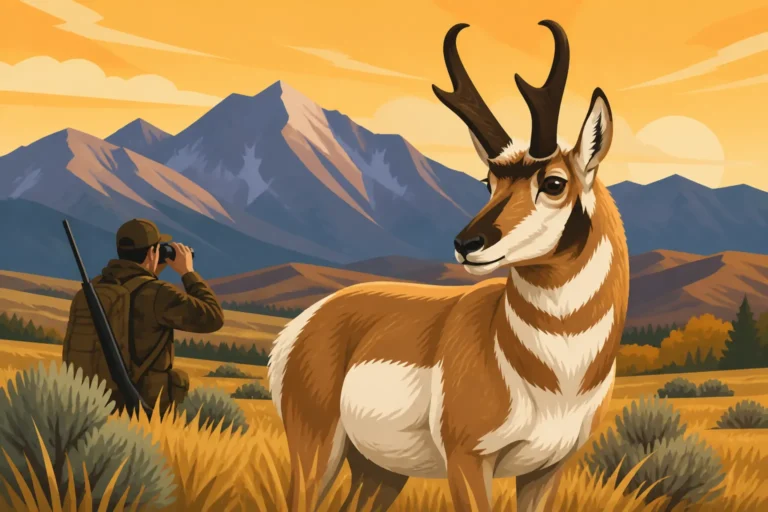
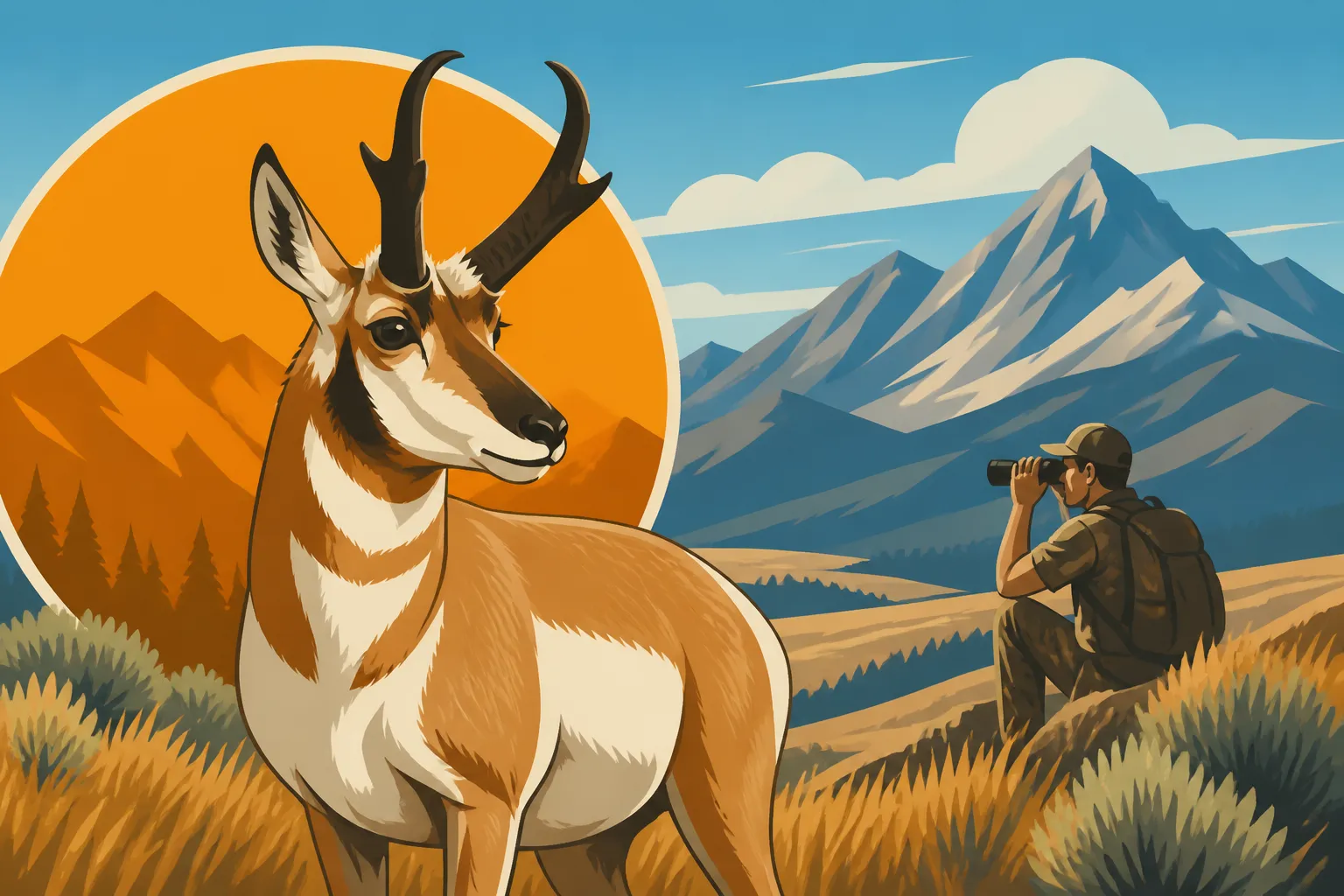
Identifying a buck from a doe can sometimes be tricky, especially at longer distances or with younger animals, but it’s critical for legal hunting and ethical shot placement. Bucks typically have longer, thicker horns that are often pronged, giving them their name. The black prong, or anterior cusp, is usually quite pronounced. Their horns can reach lengths of 12-18 inches, with some exceptional animals growing even larger. Bucks also usually have a distinct black patch on their lower jaw or mandible, which is generally absent on does.
Does, on the other hand, usually have much smaller horn nubs, if any at all. These nubs are rarely pronged and often don't extend past the ear. If they do have small horns, they are thin and typically only a few inches long. At a distance, the lack of the black jaw patch and the smaller, less defined horns are your primary indicators. Proper identification is not just about avoiding a citation; it's about respecting the animal and ensuring you take the appropriate sex allowed by your tag. Glassing them thoroughly before making a move is paramount.
Habitat and Preferred Terrain in Colorado
Colorado’s pronghorn populations are primarily found on the eastern plains, the wide-open expanse stretching from the foothills of the Rockies to the Kansas border, and in various sagebrush-steppe habitats on the Western Slope. These areas are characterized by vast, treeless landscapes, often punctuated by rolling hills, dry creek beds, and scattered agricultural fields. Key areas include the Pawnee National Grassland near Fort Collins, the Comanche National Grassland in southeastern Colorado, and the expansive sagebrush country around areas like Walden and Craig on the Western Slope.
They thrive in environments where they can utilize their incredible eyesight to spot predators from a distance. The open terrain allows them to run at speeds up to 60 miles per hour, making them the fastest land animal in North America over short distances. This habitat preference means that hunting pronghorn requires a completely different approach than, say, chasing elk in the high timber. You'll spend less time busting brush and more time behind binoculars and spotting scopes, picking apart vast landscapes for the tell-tale white patches and dark horns of a bedded or feeding herd. Understanding these preferred habitats will significantly influence your pre-hunt scouting and in-field tactics.
Colorado Pronghorn Seasons and Tags: Navigating the Draw
Hunting pronghorn in Colorado almost always means engaging with the state's draw system. Unlike some other species or regions, over-the-counter (OTC) pronghorn tags are incredibly rare, if they exist at all, and almost exclusively limited to private land tags. This makes understanding the Colorado Parks and Wildlife (CPW) draw process paramount for any aspiring pronghorn hunter.
Draw System and Preference Points for Pronghorn
Colorado utilizes a preference point system for most limited-entry big game species, and pronghorn are no exception. For every year you apply for a limited-entry pronghorn tag and are unsuccessful, you accrue one preference point. These points essentially give you a better chance in subsequent draws for more desirable or harder-to-draw units. The more points you have, the better your odds of drawing a specific tag. However, it's not a guarantee, and "point creep" – where the number of points required to draw a particular unit slowly increases over time – is a real factor.
It's crucial to understand how Colorado Preference Points Explained work. You can apply for a point-only option if you don't plan to hunt that year but want to build your points for the future. For non-residents, drawing a quality pronghorn tag can take anywhere from a few to several points, depending on the unit and the desired weapon season. Residents often have an easier time drawing, but even they might need a few points for prime units. Using resources like the CPW's annual draw results or third-party platforms like GoHunt can help you analyze past draw odds and strategize which units to apply for based on your current point total and hunting goals.
Season Dates: Archery, Muzzleloader, Rifle
Colorado offers pronghorn seasons for all three primary weapon types: archery, muzzleloader, and rifle. Each season has its own unique characteristics, challenges, and appeal.
- Archery Season: Typically runs from late August through late September. This is often an early season, meaning warmer temperatures and possibly more vegetation. Archery hunters often find success employing decoys or hunting water sources. The challenge is getting within bow range of an animal with incredible eyesight in open country, demanding extreme stealth and often lengthy stalks. Many bowhunters relish this close-quarters challenge. For specific information, you can explore resources like Colorado Archery Season Dates.
- Muzzleloader Season: This season is usually short, often just a few days in late September or early October. Muzzleloader hunting offers a unique blend of challenge and opportunity. The limited range and single-shot nature of muzzleloaders mean hunters still need to get relatively close, but not as close as archery. It’s a great option for hunters looking for a bit more challenge than rifle hunting but who might not be proficient with a bow.
- Rifle Season: These seasons are generally the most popular and are typically held in October. There can be multiple rifle seasons, sometimes staggered, similar to elk and deer seasons. Rifle hunting provides the advantage of longer-range shots, which can be a significant benefit in the wide-open pronghorn country. However, longer shots demand extensive practice and ethical shot placement is still paramount. Pressure can be higher during rifle seasons, especially in units with easier access. Hunters should consult the current year's regulations for exact dates, as they can shift slightly. You can find more specific details on Colorado Rifle Season Dates.
OTC vs. Draw Tags: What's Available?
As mentioned, true over-the-counter (OTC) pronghorn tags in Colorado are extremely rare for public land. The vast majority of pronghorn tags are distributed through the limited-entry draw system. This means you must apply during the application period, typically in March or April, and hope your preference points and luck align to draw a tag. This contrasts sharply with the abundance of Colorado OTC Elk Tags Explained in certain seasons and units for elk.
However, there are sometimes very limited "landowner voucher" tags or private land tags that might be available directly from outfitters or landowners. These tags typically come with a significantly higher price tag and often grant access to specific private properties. For most public land hunters, the draw is the only viable path. It's essential to thoroughly research the specific unit you're interested in, checking its draw history and current regulations. Don't simply assume you can buy a tag over the counter; for pronghorn, advance planning through the draw is almost always required. Some hunters new to the process might find value in learning about Colorado Pronghorn Draw Odds Explained to help them formulate a strategy.
Finding Your Antelope: Best Colorado Hunting Areas
Colorado offers diverse landscapes, but when it comes to pronghorn, you'll be focusing on the more open, prairie-like environments. Choosing the right hunting unit, or GMU (Game Management Unit), is foundational to a successful hunt.
Top GMUs for Pronghorn Hunting
While specific "top" GMUs can change year to year based on herd health, weather patterns, and draw odds, certain regions of Colorado consistently hold strong pronghorn populations. On the Eastern Plains, units in the northeastern part of the state, such as GMU 92, 93, 94, and some further south like 109, 110, and 111, are often highly sought after. These units are characterized by vast expanses of shortgrass prairie, interspersed with agricultural fields. They can offer excellent buck-to-doe ratios and trophy potential, but often require more preference points to draw.
On the Western Slope, areas like the North Park basin (GMUs 6, 16, 17, 18) around Walden, often referred to as the "Moose Capital of Colorado," also support healthy pronghorn numbers. While primarily known for moose and elk, these sagebrush flats are prime pronghorn country. Units in this region might sometimes require fewer points for non-residents or offer different hunting experiences due to the more mountainous backdrop. When scouting these regions, paying attention to areas with good water sources and a mix of sage and prairie grasses will increase your chances of finding productive ground. It’s always wise to delve into specific unit data and draw odds using resources like the CPW's website or advanced hunting research tools such as GoHunt's Insider platform, which provides detailed unit analyses and draw odds.
Public Land Access and E-Scouting
One of the biggest advantages of Colorado is the sheer amount of public land, but accessing it for pronghorn can be a unique challenge compared to mountain hunting. Unlike dense forests where boundaries are often less critical due to continuous cover, pronghorn country is open, making private land boundaries very visible and important to respect. Much of the public land on the eastern plains comes in the form of Bureau of Land Management (BLM) tracts or State Trust Lands, which can be checkerboarded with private property. This can lead to "landlocked" public parcels that are difficult to reach without crossing private land, which requires explicit permission.
This is where detailed e-scouting and mapping applications become invaluable. Tools like onX Hunt, Gaia GPS, or Basemap are essential for identifying public land, property boundaries, and access roads. Learning How to E-Scout Before a Colorado Hunt can save you countless hours and frustrations. Before your boots even hit the ground, spend hours poring over satellite imagery, identifying potential water sources, natural terrain breaks, and areas that appear to be overlooked by other hunters due to difficult access. The "Colorado Hunting Atlas Explained" provides another excellent resource for understanding land ownership and access points. Don't forget to check for State Wildlife Areas (SWAs) or Walk-In Access (WIA) properties managed by CPW, as these often offer excellent hunting opportunities and clear access rules.
Private Land Opportunities and Considerations
While public land offers incredible adventure, private land holds a significant portion of Colorado's pronghorn population, especially on the Eastern Plains where large ranches dominate the landscape. Hunting private land can offer a less pressured experience and potentially higher success rates, but it comes with its own set of considerations.
Securing access to private land can involve paying a trespass fee to a landowner, booking a guided hunt through an outfitter who has leases, or, if you're lucky, gaining free permission through networking and courteous requests. Many landowners are wary of granting access due to past negative experiences, so always approach them respectfully, ideally well in advance of the season, and offer to provide references. Be clear about your intentions and strictly adhere to any rules they set. Some outfitters specialize in Colorado ranch hunts that include guaranteed landowner tags, bypassing the public draw entirely. While often more expensive, these hunts can offer a high-quality experience with excellent odds of success. Always verify an outfitter's licensing and reputation before committing.
Essential Gear for Colorado Pronghorn Hunting
Hunting pronghorn demands specific gear tailored to the open country, intense sun, and the animals' extraordinary senses. Having the right tools won't guarantee a tag, but it will certainly improve your odds and your comfort.
Optics: Glassing for Goats
In pronghorn country, your eyes are your most critical tool, and high-quality optics are an extension of them. You will spend hours, if not days, behind your binoculars and spotting scope.
- Binoculars: A good pair of 10×42 or 12×50 binoculars are essential. They should be lightweight enough for comfortable prolonged use but offer excellent light transmission and clarity. Brands like Vortex, Maven, and Leupold offer fantastic options across various price points. You'll use these for initial scanning, identifying potential herds, and getting a closer look before pulling out the spotting scope. A tripod adapter for your binoculars can significantly reduce eye fatigue and make detailed glassing much more effective. When you're constantly picking apart vast landscapes, even slight hand tremors can hinder your ability to identify a distant animal.
- Spotting Scope: A quality spotting scope (e.g., 65mm or 80mm objective with 20-60x magnification) is non-negotiable for pronghorn hunting. It allows you to definitively identify bucks from does at extreme distances, count horn rings, and assess trophy potential without risking spooking the animals. It's also critical for planning your stalk, allowing you to identify terrain features, potential ambush points, and escape routes for the animals. Brands like Swarovski, Zeiss, Kowa, and Vortex offer scopes with exceptional clarity and resolution, which is vital when judging horns against the shimmering heat of the plains. Don't skimp on a sturdy tripod for your spotting scope; a wobbly setup is useless.
Learning How to Glass Big Colorado Basins (even though pronghorn aren't typically in "basins," the principles of grid-searching and patience apply) is a skill that translates directly to pronghorn hunting. Spend time practicing scanning techniques, looking for the flick of an ear, the shine of a horn, or the distinct white patches that stand out against the landscape.
Weapon Choices: Bow, Rifle, Muzzleloader
Your choice of weapon will dictate your hunting style and the challenges you face. Each has its pros and cons in the open country.
- Archery Setups: For bowhunters, accuracy and quietness are paramount. A fast, flat-shooting bow setup (compound or recurve, depending on personal preference) with arrows tipped with razor-sharp broadheads is crucial. Effective range is key, as stalks can be incredibly challenging. Many bowhunters practice shooting out to 60-80 yards, but ethical shots on pronghorn are typically much closer. Consider practicing from kneeling and prone positions, as you'll often be low to the ground. Decoys are often employed to draw in wary bucks, requiring a stable shooting platform or quick drawing ability. You can find more specific advice in articles like How to Hunt Colorado Pronghorn with a Bow or Best Archery Setups for Colorado Elk (the principles of reliability and accuracy carry over).
- Rifle Calibers: For rifle hunters, flat-shooting cartridges that perform well at extended ranges are highly favored. Popular choices include the .243 Winchester, .25-06 Remington, 6.5 Creedmoor, .270 Winchester, and .308 Winchester. The key is accuracy and familiarity with your rifle, knowing its ballistic performance at various ranges. Practice shooting from bipods, backpacks, and prone positions, as stable shooting rests are critical in open country. A good scope with repeatable adjustments and an accurate rangefinder are also essential. For more general rifle advice, consider reading Best Rifle Calibers for Colorado Elk, as many of these calibers are also effective for pronghorn.
- Muzzleloader Setup: Muzzleloader hunters need an accurate rifle capable of delivering a good punch. .50 caliber is standard, often paired with saboted projectiles for increased accuracy and flatter trajectory. A reliable scope is crucial, even with muzzleloaders, as shots can still be 100-200 yards. Practice loading and firing quickly and quietly, as pronghorn don't often stand still for long. Ensure your setup is legal for Colorado's muzzleloader regulations, which often include specific requirements for sights and ignition systems. For a detailed guide, look into Best Muzzleloader Setup for Colorado.
Regardless of your weapon, ethical shot placement is non-negotiable. Spend significant time at the range, practicing in hunting-realistic scenarios and distances.
Clothing, Footwear, and Other Essentials
The prairie environment can be unforgiving, with extreme temperature swings and persistent sun exposure.
- Clothing: Layers are your friend. Early season hunts can see temperatures from below freezing in the morning to 80+ degrees by midday. Wicking base layers, a lightweight mid-layer, and a quiet, wind-resistant outer layer in appropriate camouflage are vital. Consider a broad-brimmed hat and sunglasses to combat the intense sun and glare. Quiet fabrics are essential for stalking, as any rustle can alert a wary pronghorn.
- Footwear: Comfortable, broken-in hiking boots with good ankle support are recommended. While the terrain might seem flat, you'll cover many miles, and uneven ground or cacti can be hazards. Waterproof boots are a plus, especially if hunting after rain or early in the morning through dew-laden grass.
- Other Essentials:
- Rangefinder: Absolutely critical for accurate shot placement in open country, where judging distance can be deceiving.
- Backpack: A comfortable day pack to carry water, snacks, extra layers, first-aid kit, game bags, and knives.
- Water: Carry more than you think you'll need. Dehydration is a serious concern on the exposed plains.
- First-Aid Kit: Basic essentials for cuts, scrapes, blisters, and sun protection.
- Knife and Game Bags: For field dressing your animal. Game bags are crucial to protect the meat from flies and dirt.
- Sunscreen and Lip Balm: The sun is relentless on the plains.
- Wind Checker: Always check the wind direction before and during a stalk; pronghorn have an excellent sense of smell.
- Decoys: For bow and sometimes muzzleloader hunters, a realistic pronghorn decoy (often a "shooter" buck or doe) can be a game-changer.
Effective Pronghorn Hunting Methods and Strategies
Pronghorn hunting is primarily a game of long-range glassing, strategic stalking, and sometimes, creative deception. Their exceptional eyesight and speed mean direct approaches often end in failure.
Spot-and-Stalk Techniques
This is the quintessential pronghorn hunting method, and mastering it is crucial. The process begins with extensive glassing from an elevated position (even a small knoll can provide an advantage). Use your binoculars and spotting scope to systematically scan the landscape, looking for entire herds, lone bucks, or even just a flash of white or black against the backdrop. Once you've located an animal or herd you want to pursue, the real work begins.
The core of How to Spot-and-Stalk Colorado Pronghorn involves three main phases:
- Observation and Planning: Before you even take a step, observe the animals' behavior, their feeding patterns, and direction of travel. Crucially, assess the wind direction using a wind checker. Pronghorn have an incredible sense of smell. Now, study the terrain between you and the pronghorn. Look for dry creek beds, changes in elevation, clumps of sagebrush, or even single large rocks that can provide cover. Plan your route, aiming to stay out of sight, downwind, and ideally with the sun at your back, making it harder for them to see you.
- The Stalk: This is often slow, deliberate, and sometimes painful. You might find yourself crawling on hands and knees or even belly-crawling for hundreds of yards. Use every bit of terrain and vegetation to break up your outline. Move when the animals are looking away, feeding, or if they are temporarily out of sight behind a roll in the terrain. Pause frequently, check the wind, and reassess your approach. Be prepared for multiple failed stalks; it's part of the game.
- The Final Approach and Shot: As you get within shooting range, move even slower. If you are a rifle hunter, find a stable shooting rest – a bipod, a backpack, or even going prone directly on the ground. For bowhunters, consider if you need to set up a decoy or prepare for a quick draw. The moment you are within ethical shooting range and have a clear, undisturbed shot, take it. Don't rush, but don't hesitate.
Decoying and Ambush Strategies
While spot-and-stalk is dominant, decoying is a highly effective tactic, particularly for archery and muzzleloader hunters, and sometimes even rifle hunters looking to bring an animal closer. Pronghorn are notoriously curious and territorial, especially during the rut (which can coincide with early archery seasons).
- Decoying: A realistic pronghorn decoy, usually a buck or a doe, can be used to attract a dominant buck. You or a hunting partner can hold the decoy up from a hidden position, mimicking an intruder or a lone doe. A curious buck, especially during the rut, may come to investigate or challenge what it perceives as competition. This tactic works best with a two-person team: one person acts as the decoyer, drawing the animal's attention, while the other positions themselves for a shot from a concealed location, often 50-100 yards downwind of the decoy. The decoy should be positioned to mimic a pronghorn facing the approaching animal, looking nonchalant. You can learn more about this in How to Hunt Colorado Pronghorn Decoying.
- Ambush Strategies: Ambushing pronghorn is less about waiting in a tree stand and more about intercepting them along predictable travel routes or near critical resources. Pronghorn often use the same trails to move between feeding, bedding, and watering areas. By identifying these corridors through scouting (both e-scouting and boots-on-the-ground), you can position yourself ahead of their movement. This requires understanding their daily patterns and finding a natural blind, such as a rock outcrop, a large sagebrush, or a deep wash, that offers concealment and a clear shot lane. This method is particularly effective if you can predict their movement from a bedding area to a waterhole or vice-versa.
Hunting Water Sources and Feeding Areas
In arid Colorado, especially during hotter early seasons, water sources become magnets for pronghorn. They need to drink regularly, often daily. Identifying reliable waterholes, windmills, or even small, ephemeral puddles can provide excellent ambush opportunities.
- Water Holes: These can be public or private. On public land, look for stock tanks or natural depressions that collect water. For How to Hunt Elk Water Holes, similar principles apply to pronghorn. Pronghorn will often approach water cautiously, circling to ensure no predators are present. Setting up a ground blind downwind of a water source, well before daylight, and waiting patiently can be a highly effective method. This is particularly successful during warm, dry periods when water is scarce.
- Feeding Areas: Pronghorn are grazers and will frequent areas with good forage. These are typically open prairies with a mix of grasses and forbs, often near sagebrush for cover. While less of a "chokepoint" than a waterhole, identifying preferred feeding grounds allows you to pinpoint where herds will likely be found during active feeding times. If you can observe their routine over a day or two, you might be able to predict their travel routes between feeding areas and more sheltered bedding sites, allowing for an ambush or a more targeted spot-and-stalk. Scouting for fresh tracks and droppings can confirm active feeding use.
Pre-Hunt Preparation: Physicality and Logistics
Hunting pronghorn might not involve scaling 14,000-foot peaks, but it's far from an easy stroll. The vast distances and often challenging terrain demand physical and mental preparation.
Physical Conditioning for Plains Hunting
While it won't be the lung-busting climbs of elk hunting, pronghorn hunting requires a different kind of endurance. You'll cover many miles on foot, often across uneven ground, through thick sagebrush, and sometimes crawling for extended periods. The constant sun exposure and potential for high temperatures can be draining.
Focus on cardiovascular fitness: long walks, jogging, or cycling to build stamina for covering significant distances. Incorporate strength training, especially for your core and legs, which will aid in stable shooting positions (like prone or kneeling) and minimize fatigue during long stalks. Practice crawling and moving stealthily in low positions. Don't neglect flexibility and mobility, as being able to comfortably hold awkward positions for extended periods is beneficial. Staying hydrated throughout your training and practicing proper nutrition will also pay dividends in the field. Remember, just because it's "flat" doesn't mean it's easy.
Scouting and Planning Your Hunt
Effective scouting is the cornerstone of a successful pronghorn hunt. It's about minimizing surprises and maximizing your time in the field.
- E-Scouting: Before you even leave home, delve deep into maps and satellite imagery. Identify public land boundaries, potential water sources, key terrain features (ridges, draws, breaks), and access points. Look for areas that provide natural cover for stalks and good vantage points for glassing. Tools like onX Hunt are essential for this. Pay attention to fence lines and roads, as these often act as travel corridors or barriers. This initial phase helps narrow down vast areas into manageable hunting zones.
- Boots-on-the-Ground Scouting: If possible, visit your chosen GMU before the season opens. Drive the roads, hike into areas, and glass from different vantage points. Look for fresh sign: tracks, droppings, and feeding areas. Identify current water sources. Observe pronghorn behavior if you see them; how do they react to vehicles, what routes do they take? This real-world intelligence is invaluable and can confirm or contradict your e-scouting assumptions. Just be mindful of disturbing animals or other hunters too close to the season.
- Contingency Planning: Always have a Plan B and C. Weather can change rapidly, and pronghorn can move significantly due to pressure or feed availability. Identify multiple potential hunting areas within your chosen GMU, and even consider backup GMUs if your primary choice isn't producing. Understand the nuances of the GMU boundaries and avoid accidentally crossing into private land without permission.
Understanding Regulations and Game Care
Ignorance of the law is no excuse. Fully comprehending Colorado's hunting regulations is vital for an ethical and legal hunt.
- Current Regulations: Obtain the most recent Colorado Big Game Brochure from CPW. Read it thoroughly, paying close attention to legal weapon types, bag limits, antler point restrictions (if any for pronghorn, though rare), and tagging requirements for your specific GMU and season. Understand legal shooting hours and any specific unit-based restrictions.
- Game Care: Once you've harvested an animal, proper field care is immediate. The hot plains sun can spoil meat quickly. Immediately field dress the pronghorn to cool the carcass. Skinning the animal and quartering it into game bags is often necessary, especially if you have a long pack out or warm weather. Hang the meat in the shade if possible, allowing air to circulate. Always carry enough game bags. For detailed instructions, refer to guides like How to Quarter an Elk in the Field – the principles apply, just on a smaller scale. If you're concerned about warm weather, explore How to Keep Elk Meat Cool in Warm Weather.
Common Challenges and How to Overcome Them
Pronghorn hunting, while incredibly rewarding, presents a unique set of challenges that can test even seasoned hunters. Understanding these obstacles is the first step to overcoming them.
Dealing with Pronghorn's Keen Senses
The legendary eyesight of the pronghorn is often cited as its greatest defense, and for good reason. Their eyes are equivalent to 8x binoculars, giving them an unparalleled ability to spot movement and detect danger at extreme distances. This means that if you can see them clearly with your naked eye, they've likely already seen you. But it's not just their eyes. Their sense of smell is also highly developed, allowing them to detect human scent from a long way off. Their hearing, while perhaps not as emphasized as their vision, is still excellent and can pick up unnatural sounds.
- Overcoming Vision: The primary tactic is to stay out of sight. Utilize every bit of terrain: dry washes, small rises, clumps of sagebrush, or even just undulating ground. Move slowly and deliberately, especially when cresting a rise. Only move when their heads are down feeding or when they are out of direct sight. Break up your outline by not skylining yourself. Wear camouflage that blends with the browns and grays of the prairie.
- Overcoming Smell: Always hunt into the wind. This is non-negotiable. Constantly check the wind direction with a wind checker. Thermals can also play a role, especially in areas with slight elevation changes; warm air rises in the morning and cool air falls in the evening, carrying scent with it. Position yourself downwind, even if it means a longer stalk or a more circuitous route. Avoid strong scents like cologne, scented soaps, or fuel.
- Overcoming Hearing: Move quietly. Be mindful of rustling clothing, crunching footsteps on dry grass, or accidentally kicking rocks. Take slow, deliberate steps. If you're doing a belly crawl, minimize noise from your gear rubbing against the ground.
Navigating Open Terrain and Heat
The very nature of pronghorn habitat—vast, open plains—is both its appeal and its greatest challenge. These areas offer little cover, making stalks difficult, and during early seasons, the heat can be brutal.
- Lack of Cover: This is where creative use of terrain comes into play. Even a foot-high depression or a scattered group of sagebrush can provide enough cover if used strategically. Learn to "read" the landscape and identify subtle features you can exploit. Patience is key; sometimes you have to wait for the pronghorn to move into a more favorable position or for cloud cover to provide a brief respite from the glaring sun. For rifle hunters, longer shooting distances become a necessity, emphasizing the need for practicing long-range shooting and knowing your rifle's ballistics.
- Intense Heat: Early archery and muzzleloader seasons can often coincide with very warm temperatures on the plains. This poses several problems:
- Hunter Fatigue: Dehydration and heat exhaustion are real risks. Carry plenty of water, wear light, breathable layers, and take breaks in the shade when possible.
- Meat Care: Heat will spoil meat rapidly. As soon as you make a kill, get to it, field dress, skin, and quarter it immediately. Get the meat into breathable game bags and out of direct sun. Use coolers with ice or even dry ice for transport if temperatures are high. Consider hunting primarily during the cooler morning and evening hours, which also coincide with pronghorn activity.
Handling Hunting Pressure
Colorado's public lands are popular, and even for pronghorn, you might encounter other hunters, especially in easily accessible areas or popular GMUs. Pressure can make already wary pronghorn even more skittish and unpredictable.
- Adaptation: When pronghorn are pressured, they tend to move more frequently, often holding up in more secluded areas or utilizing private land. They might become nocturnal or move more during the middle of the day when hunters are often resting. Be prepared to adapt your strategy. This might mean longer, harder stalks into more remote areas, or waiting patiently on known travel routes far from roads.
- Finding Solitude: E-scouting can help identify roadless areas or parcels of public land that are harder to access and therefore receive less pressure. While pronghorn don't typically live in deep wilderness, units with vast public tracts further from paved roads often hold less pressured animals. Being willing to hike further or take a more challenging route can pay off significantly.
- Courtesy: Always be courteous and respectful of other hunters. If you see someone already stalking an animal, give them space and don't interfere. Communication can often prevent conflicts. Acknowledging other hunters and maintaining distance benefits everyone. Remember, you're all out there for a similar experience.
Post-Hunt Considerations: Field Care and Beyond
The shot is made, the animal is down, and the adrenaline is pumping. But the work isn't over. Proper field care is critical to ensuring your hard-earned harvest results in delicious, high-quality meat.
Field Quartering and Cooling Meat
Given the potential for high temperatures in pronghorn country, especially during early seasons, prompt and thorough field care is paramount. Pronghorn meat is lean and mild-flavored, but it can spoil quickly if not handled correctly.
- Immediate Field Dressing: As soon as you reach your downed animal, begin field dressing. This involves removing all internal organs to allow the carcass to cool rapidly. Make sure to cut deep enough to separate the windpipe and esophagus, pulling them free. Remove the heart and liver carefully if you plan to keep them.
- Skinning and Quartering: For optimal cooling, skinning the animal in the field is highly recommended, especially if temperatures are above freezing. This removes the insulative layer of hide. Once skinned, quarter the animal. This typically means removing the four legs (shoulders and hams), the backstraps, and the tenderloins. Cut these sections into manageable pieces for transport. Game bags are absolutely essential here. Place each quarter and piece of meat into a separate, breathable game bag. This protects the meat from flies, dirt, and debris while allowing air to circulate for cooling.
- Cooling the Meat: Once bagged, get the meat out of direct sunlight immediately. Hang it in the shade if possible, allowing air to flow around it. In warmer conditions, you might need to transport it quickly to coolers filled with ice. Never place warm meat directly onto ice in sealed plastic bags, as this can create a warm, moist environment that encourages bacterial growth. Instead, layer ice (or frozen water bottles) on the bottom of a cooler, then place the bagged meat on top, ensuring air can circulate. You may need to drain melted ice water and replace it regularly. This diligent process is vital for preserving the quality of the meat.
Transporting Your Harvest
Getting your pronghorn from the field to your vehicle, and then to a processor or home, requires careful planning.
- From Field to Vehicle: Depending on how far you are from a road, you might need to backpack the quarters out. Pronghorn are smaller than elk or deer, making this generally manageable for one person. A sturdy hunting backpack with a good frame is invaluable. If you're hunting with a group, distributing the load makes it even easier. Consider a sled if you're hunting in snow or have long, flat distances to cover, though this is less common for pronghorn.
- Vehicle Transport: Once at your vehicle, ensure the meat continues to stay cool. If using coolers with ice, check them frequently. If the weather is cool (below 40°F), you might be able to transport the quarters in the bed of a truck, covered with a tarp to protect from dust and road grime, but ensuring airflow. Avoid stacking meat too tightly.
- Processing: Decide whether you'll process the meat yourself or take it to a professional butcher. If using a butcher, call ahead to ensure they can accommodate your harvest and understand their drop-off procedures. Many hunters enjoy the process of butchering their own animals, allowing them full control over cuts and packaging. If you plan to process it yourself, make sure you have a clean, cool space and the necessary tools.
Taxidermy and Trophy Care
If you've harvested a buck with impressive horns, you might want to preserve them as a trophy. Proper field care is critical for a good taxidermy mount.
- Caping: For a shoulder mount, you'll need to "cape" the animal, which involves skinning it in a specific way to leave enough hide for the taxidermist. This usually means making cuts behind the front legs, up the back, around the neck, and then carefully skinning around the head, leaving the cape attached to the skull. If you're unfamiliar with this, consult a taxidermist beforehand or watch detailed videos. Many hunters opt for a European mount (just the skull and horns), which is simpler to prepare in the field.
- Skull and Horn Preservation: For a European mount, simply remove all flesh from the skull and boil it gently to clean the bone. Be careful not to damage the horns. For any mount, keep the skull and horns cool and dry. Do not let them sit in direct sun or in a warm vehicle for extended periods. If you're getting a shoulder mount, get the cape to a taxidermist or into a freezer as quickly as possible. Freezing the cape (rolled up flesh-side out) is a good temporary solution if you can't get it to a taxidermist immediately.
- Documentation: Before you do anything with the carcass, ensure your tag is properly filled out and affixed according to CPW regulations. Take photos of your harvest in the field for memories and as part of your hunting journey. These moments are what make the effort truly worthwhile.
Disclaimer
This guide is intended for informational purposes only and does not supersede official Colorado Parks and Wildlife (CPW) regulations. Hunting laws and season dates can change annually. It is the responsibility of every hunter to review and understand the most current CPW regulations, brochures, and proclamations before engaging in any hunting activity. Always hunt safely, ethically, and legally.