Colorado Mule Deer Hunting: Muzzleloader Tactics
Hunting mule deer in Colorado with a muzzleloader presents a truly unique challenge, a blend of traditional hunting ethos with the demanding landscapes of the Rockies. Many hunters feel the pressure of the single-shot limitation and the complexities of specific regulations, often wondering if they can truly be effective. This guide aims to strip away that uncertainty, offering practical, in-depth muzzleloader tactics to help you successfully pursue Colorado mule deer.
Understanding Colorado's Muzzleloader Season and Regulations
Venturing into Colorado's high country with a muzzleloader isn't just about the hunt itself; it’s about navigating a very specific set of rules that govern this distinct season. Unlike the broader archery or rifle seasons, muzzleloader hunting has its own unique nuances that you absolutely must understand before you even load a primer.
Key Season Dates and Tag Considerations
Colorado’s muzzleloader season typically falls between the archery and first rifle seasons, often overlapping with the early stages of the mule deer rut or the pre-rut period, which can be an incredible time to be in the mountains. However, these dates are often shorter than other seasons, usually lasting about a week or so. You'll need to secure a draw tag for mule deer in most desirable units, and those can take several preference points, especially for quality bucks. Always check the current year's "Colorado Mule Deer Season Dates and Tags" published by Colorado Parks and Wildlife (CPW) – these dates can shift slightly, and knowing them inside and out is your first step. Remember, muzzleloader tags are often limited, making the draw competitive. Planning well in advance and building preference points is often necessary to get into prime units.
Muzzleloader Specific Equipment Rules
This is where many hunters, especially those new to Colorado or muzzleloading, can get tripped up. Colorado has strict regulations on what constitutes a legal muzzleloader for big game. Forget your modern inline with a telescopic sight; that's generally not allowed during the muzzleloader season.
Here’s a breakdown of the critical rules:
- Sights: Open or "iron" sights are typically mandatory. No scopes, red dots, or fiber optic sights with magnification. Some units might allow 1x magnification or non-magnifying scopes, but you need to verify this specifically for your hunt code and GMU. When in doubt, stick to iron sights. This dramatically changes your effective range and target acquisition, demanding closer shots and more precise aiming.
- Propellant: Only traditional black powder or approved synthetic substitutes (like Pyrodex or Triple Seven) are allowed. Smokeless powder is a no-go. The dense smoke from black powder can obscure your view after a shot, making follow-up difficult, and even spotting the hit challenging.
- Bullets: Projectiles must be at least .40 caliber, and must be a "full bore" diameter, meaning no sabots. This is a big one. Many modern muzzleloaders are designed for saboted bullets, which allow for smaller diameter, high ballistic coefficient projectiles. For Colorado muzzleloader season, you’re looking at full-bore lead projectiles or copper bullets like those offered by Hornady Bore Driver FTX or PowerBelt. This often means heavier, slower, and less aerodynamic bullets than what you might be used to, further limiting effective range.
- Ignition: Cap and ball, flintlock, or percussion cap ignition systems are typically required. 209 primers are common and generally accepted, but again, always double-check unit-specific regulations.
Understanding these constraints means you’re already adapting your hunting style. It forces you to get closer, pick your shots more carefully, and truly become a hunter in the most traditional sense.
Gear Essentials for Muzzleloader Mule Deer Hunting
Hunting Colorado mule deer with a muzzleloader isn't just about having the right gun; it's about having a complete system that supports the unique demands of this method. From your choice of firearm to your packing strategy, every piece of gear plays a crucial role in your success, especially when you factor in the often rugged and unpredictable Rocky Mountain environment.
Choosing the Right Muzzleloader and Ammunition
The "right" muzzleloader for Colorado's regulations will likely be an inline percussion rifle, chambered in .50 caliber or greater, capable of shooting full-bore projectiles. Brands like CVA, Traditions, and Thompson/Center all offer models that fit the bill.
Here's what to consider:
- Caliber: .50 caliber is the most common and versatile choice, offering a good balance of power and bullet availability. You could go .54, but .50 offers ample stopping power for mule deer.
- Barrel Length: A longer barrel (26-28 inches) can help with velocity and accuracy, but it adds weight and can be cumbersome in thick timber. A shorter barrel (24 inches) is handier but might slightly reduce muzzle velocity. Find a balance that suits your hunting style and the terrain you expect to encounter.
- Ignition System: Most hunters opt for 209 primer systems due to their reliability in all weather conditions. Ensure your rifle is set up to handle them securely and reliably.
- Ammunition: As mentioned, sabots are out. You'll be using full-bore projectiles. Common choices include:
- Conical Lead Bullets: Traditional, often cheaper, and can be very accurate if matched correctly to your rifle's twist rate. They expand well at lower velocities.
- Full-Bore Copper Projectiles: Options like Hornady Bore Driver FTX or various PowerBelt bullets offer excellent weight retention, deep penetration, and ethical expansion. They are often more expensive but can significantly improve downrange performance.
Crucially, practice extensively with your chosen load. Know its trajectory cold out to your maximum ethical range, which for most open-sighted muzzleloaders will be 75-125 yards, maybe 150 yards for experienced shooters in ideal conditions. Learn to load quickly and efficiently in the field – reloading time is your biggest limitation after a missed shot or a follow-up.
Essential Supporting Gear for the Field
Beyond the rifle itself, a dedicated muzzleloader hunter needs a few key items to manage their weapon and hunt effectively:
- Loading Kit: This is non-negotiable. You'll need a capper, a bullet starter, a speed loader with pre-measured powder charges, extra primers, and cleaning patches. Keep this kit organized, waterproof, and easily accessible. Many hunters carry multiple pre-loaded "speed loaders" for quick reloads, though each still requires considerable time compared to a cartridge rifle.
- Optics: While you can't use a magnified scope on your rifle, quality binoculars (10×42 or 12×50) are absolutely critical for spotting mule deer at long distances in the vast Colorado landscape. A spotting scope can also be invaluable for identifying legal bucks and planning your stalk. Tools like those provided by GoHunt can help you pick the best optics before you even hit the field. Rangefinders are also essential to confidently know your shooting distance, especially with the limited effective range of a muzzleloader.
- Clothing and Footwear: Colorado's high country demands a layered clothing system that can adapt to rapid weather changes. Think moisture-wicking base layers, insulating mid-layers, and a waterproof/windproof outer shell. Sturdy, broken-in hunting boots with good ankle support are paramount for navigating steep, rocky, and potentially snowy terrain. Always pack extra socks.
- Backpack: A comfortable, capable backpack is crucial for carrying your gear, water, food, and if you’re successful, meat. Choose one that can handle heavy loads if you plan to pack out an animal. Consider an internal frame pack for better load distribution.
- Navigation: Even with modern GPS devices and phone apps like onX Hunt, always carry a physical map and compass as a backup. Knowing how to use them can literally save your life in unfamiliar territory. Understanding the topography and identifying potential bedding, feeding, and travel corridors is critical. Leveraging platforms like GoHunt for e-scouting before your hunt can give you a significant advantage in pre-determining these areas.
The Importance of a Cleaning Kit and Maintenance
Muzzleloaders, especially those using black powder or its substitutes, get dirty fast. A dirty barrel loses accuracy and can become difficult to load. You'll need a compact cleaning kit for the field, including a cleaning rod, cleaning patches, bore solvent, and a bore brush.
- Field Cleaning: After a shot, or at the end of each day, perform a basic field clean to remove powder residue. This prevents corrosion and ensures smooth, consistent loading the next day. Many hunters carry pre-moistened patches or a small bottle of "moose milk" (a mixture of solvents and oils) for this purpose.
- Preventive Maintenance: Before your hunt, thoroughly clean your rifle and season the bore if recommended by the manufacturer. Pay attention to the breach plug and nipple/primer pocket; these areas accumulate the most fouling and are critical for reliable ignition. A fouled breach plug can lead to misfires or hangfires, which can be heartbreaking when a mule deer buck is standing broadside.
Taking care of your muzzleloader in the field is just as important as mastering its shooting characteristics. It ensures reliability and consistency, which are priceless when a tag is on the line.
Effective Muzzleloader Mule Deer Tactics
Hunting mule deer with a muzzleloader in Colorado means embracing a more intimate, deliberate approach. Your limited range and single-shot capacity demand superior woodsmanship and strategic thinking. It's about getting closer, making that one shot count, and maximizing every opportunity.
Locating and Patterning Mule Deer
Before you can even think about drawing back or raising your rifle, you need to find the deer. Mule deer in Colorado are masters of their mountainous domain, often blending seamlessly with the timber and rock.
- E-Scouting and Pre-Season Reconnaissance: This step is crucial. Before you ever leave home, spend countless hours on mapping software like onX Hunt or using resources found on GoHunt to identify potential habitat. Look for north-facing slopes with dark timber for bedding, south-facing slopes for early season feeding, saddles and ridges for travel corridors, and water sources. Scout out potential glassing points that offer expansive views of basins and drainages. If possible, a pre-season trip to physically scout these areas can be invaluable, helping you understand terrain, access, and actual deer presence.
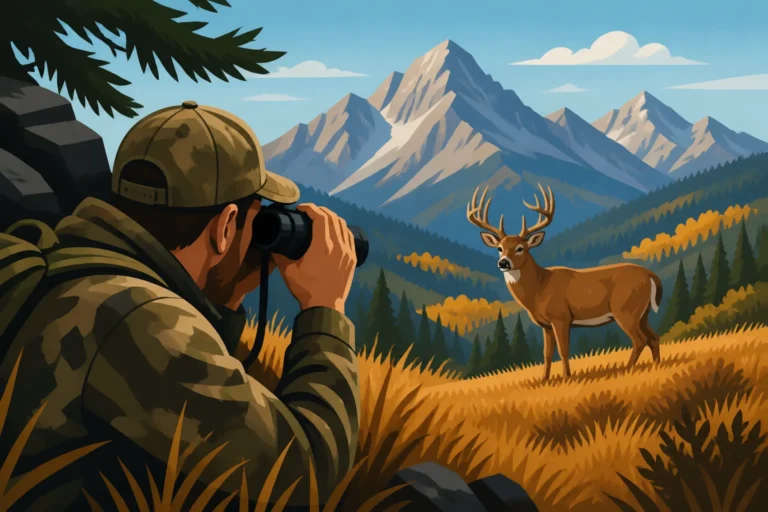
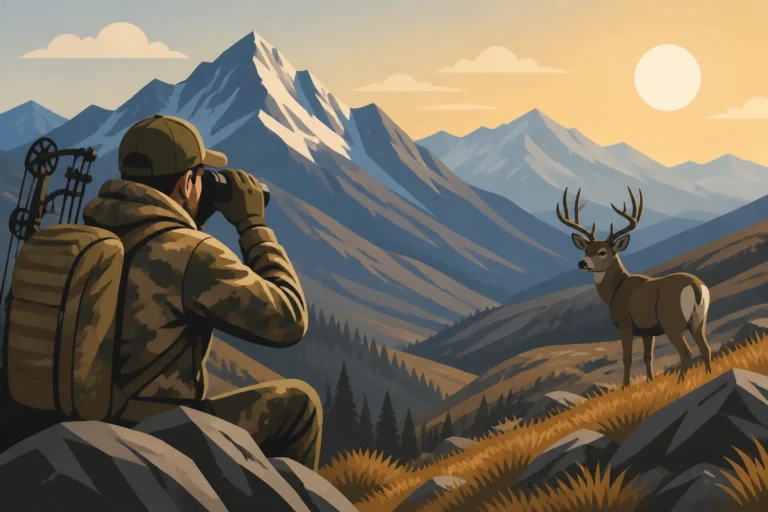
- Glassing Strategy: The vastness of Colorado demands patience and good glass. Find a high vantage point before first light and systematically grid the landscape with your binoculars and spotting scope. Focus on areas where deer might feed in the morning and evening, like aspen stands, sagebrush flats, or open parks adjacent to timber. Pay close attention to subtle movements, the flick of an ear, or a patch of hide that looks "out of place." Mule deer often bed down just inside the timber edge or on shaded benches, making them incredibly difficult to spot.
- Reading the Terrain and Sign: Mule deer are creatures of habit. Look for fresh tracks, droppings, rubs on small trees, and well-used game trails. These tell you where deer are moving and what they’re doing. In early muzzleloader season, deer might still be higher up, utilizing cooler north-facing slopes or high alpine basins. As the season progresses, and especially if cold weather or snow moves in, they might shift to lower elevations or sunnier south-facing slopes to conserve energy. Understanding their habitat and how they react to weather is a key part of "Colorado Mule Deer Habitat Explained."
Stalking and Approaching Within Range
Once you’ve spotted a legal mule deer buck, the true challenge of muzzleloader hunting begins: closing the distance for an ethical shot. This is where your limited range comes into play, demanding a flawless stalk.
- Wind and Thermals: Always, always, always pay attention to the wind. Mule deer have an incredible sense of smell. Plan your approach to keep the wind in your favor. In the mountains, thermals often drop in the morning and evening, flowing downhill, and rise during the warmer parts of the day, flowing uphill. Use these natural air currents to your advantage, or at least avoid working directly against them.
- Topography and Cover: Utilize every fold in the terrain, every patch of timber, every boulder field to conceal your movement. Move slowly, deliberately, and quietly. Avoid skylining yourself on ridges. If the deer is bedded, observe its behavior. Does it seem calm, or is it alert? What’s its escape route? Where are its eyes looking? Plan your approach to stay out of its line of sight.
- Patience and Stealth: This is not a race. A good stalk can take hours, covering just a few hundred yards. Be prepared to pause, observe, and wait. Mule deer have exceptional eyesight. Any quick or unnatural movement will be immediately picked up. If the deer looks your way, freeze completely and wait for it to resume feeding or look away before continuing. Getting within 100-125 yards is often the goal, but if you can get even closer, say 50-75 yards, your chances of a clean, ethical shot increase dramatically, especially with open sights.
Mastering the Shot and Follow-up
The moment of truth with a muzzleloader is distinct. You have one shot, and it needs to count.
- Shot Placement: Practice shooting your muzzleloader until you can consistently place shots within a 6-inch circle at your maximum ethical range. For mule deer, aim for the vitals: a broadside shot behind the shoulder, or a slightly quartering-away shot targeting the opposite shoulder. Avoid head-on or extreme quartering shots, which reduce the likelihood of hitting vital organs. If possible, wait for the deer to present a calm, standing shot.
- Steady Rest: With open sights and the potential for long stalks that leave you breathless, a steady rest is paramount. Use shooting sticks, a bipod, your backpack, or a natural feature like a rock or tree limb. Even a slight wobble can mean a miss or, worse, a wounded animal.
- The Follow-Up: After the shot, reload immediately. Even if the deer drops in its tracks, a quick reload is good practice. The muzzleloader's smoke can temporarily blind you, so try to pick a landmark near the deer before you shoot to help you relocate it. If the deer runs, mark its last known location and direction of travel. Wait a few minutes (longer if you suspect a gut shot) before cautiously approaching the area, looking for blood, hair, or broken branches. Knowing "How to Quarter an Elk in the Field" (and applying similar principles to deer) can be helpful once you find your animal.
This methodical approach, from finding the deer to taking the shot, is what defines successful muzzleloader hunting for Colorado mule deer. It's a testament to your patience, skill, and respect for the animal.
Overcoming Muzzleloader-Specific Challenges
Muzzleloader hunting in Colorado is undeniably rewarding, but it comes with its own set of hurdles that often frustrate newcomers and seasoned hunters alike. Understanding and preparing for these challenges is crucial for a successful and enjoyable hunt.
The Single-Shot Limitation and Reloading Under Pressure
This is arguably the biggest differentiator from rifle hunting. You have one shot. If you miss, or if a follow-up is needed, reloading is a meticulous, multi-step process that takes precious time and can be incredibly difficult under the adrenaline of a live hunt, especially with cold fingers or limited visibility.
- Practice Reloading Blindfolded: Seriously. Practice reloading your muzzleloader at home, in the dark, and with your eyes closed until it's second nature. Understand the tactile feel of each component and step. This builds muscle memory for when you're fumbling in low light or with a deer on the run.
- Organized Speed Loaders: As mentioned earlier, speed loaders are your friend. Have multiple ready-to-go, containing powder, bullet, and primer (if your system allows). Store them securely but accessibly in your pack or a dedicated pouch. Some hunters even carry a small, pre-assembled "emergency load" in a sealed container attached to their stock for immediate access.
- Mental Preparation: Accept the single-shot reality. This isn't about rapid-fire; it's about making that first shot count. Take a deep breath, focus on your fundamentals, and only squeeze the trigger when you're absolutely certain of your shot. If you miss, don't panic. Quickly assess the situation, reload methodically, and be ready if the deer presents another opportunity, which mule deer often will if they don't immediately scent you.
Limited Range and Ballistics
Muzzleloaders, especially with open sights and full-bore projectiles, have a significantly shorter effective range than modern centerfire rifles. The trajectory is often more like a rainbow, with considerable bullet drop past 100 yards.
- Know Your Limits: Be brutally honest about your ethical range. For many, that's 75-100 yards. Pushing beyond that with open sights on a moving target is irresponsible. Practice at various distances, including uphill and downhill shots, to understand your bullet's true capabilities. For more on this, check out "Colorado Long-Range Shooting Considerations".
- Rangefinders Are Mandatory: Guessing distance in the mountains is a recipe for disaster. Use a reliable laser rangefinder every time before taking a shot. Knowing the exact yardage allows you to use your pre-determined holdovers or sight adjustments.
- Stalking Prowess: This limitation forces you to become a better hunter. You must master the art of the stalk, using terrain and wind to get within that ethical range. This often means passing on shots that a rifle hunter might take, choosing patience over ambition. Remember, hunting mule deer is often about outsmarting them, not out-shooting them at extreme distances.
Dealing with Weather and Terrain
Colorado's mountains are notorious for unpredictable weather, and the rugged terrain can be brutal on both hunter and equipment. Muzzleloaders introduce their own sensitivities to these conditions.
- Weatherproofing Your Muzzleloader: Moisture is the enemy of black powder and primers. Use a nipple cap or a piece of electrical tape over the muzzle to prevent moisture from entering the barrel. Keep your primers and powder charges in waterproof containers. Even a light rain or heavy dew can compromise your load if not properly protected.
- Barrel Fouling in Adverse Conditions: Wet and cold conditions can sometimes exacerbate barrel fouling. Carry extra cleaning patches and be prepared to do a quick swab more frequently if your accuracy or loading ease diminishes.
- Physical Demands: Hunting in Colorado is physically demanding, even more so when you're carrying a heavier muzzleloader and navigating steep, rocky, high-altitude terrain. Physical conditioning is non-negotiable. Plan for elevation, pack light but smart, and be prepared for anything from warm sun to blizzard conditions in the same day. Understanding "How to Physically Prepare for Colorado Elk" (and applying those principles to mule deer) is key.
Overcoming these challenges requires preparation, practice, and a deep appreciation for the unique nature of muzzleloader hunting. It’s not just about taking a deer; it’s about earning it through traditional methods, proving your grit against both the animal and the elements. This deliberate approach to "Colorado Mule Deer Hunting Guide" often leads to the most satisfying successes.
Maximizing Your Chances in Colorado Muzzleloader Season
Hunting mule deer in Colorado with a muzzleloader is a journey that blends patience, skill, and a deep respect for traditional hunting. It's an opportunity to slow down, connect more intimately with the landscape, and truly earn your harvest. While the regulations and limitations can feel daunting at first, they ultimately refine your hunting prowess and make the eventual success all the more meaningful. By focusing on meticulous preparation, mastering your gear, and honing your fieldcraft, you'll be well-equipped to experience the unparalleled thrill of a Colorado muzzleloader mule deer hunt.
| Muzzleloader Aspect | Key Consideration for Colorado | Impact on Hunting Strategy |
|---|---|---|
| Sights | Open/Iron sights (typically) | Demands closer shots, precise aiming, rangefinding |
| Ammunition | Full-bore projectiles (no sabots) | Heavier, slower bullets; limited effective range |
| Propellant | Black powder/substitutes | Smoke obscures view, requires field cleaning |
| Reload Speed | Slow, multi-step process | Single-shot focus, practice essential |
| Effective Range | 75-125 yards (typical) | Prioritize stalking, close-range engagements |
| Weather Sensitivity | Moisture affects powder/primers | Waterproofing gear, diligent maintenance |
| Physical Demands | High-altitude, rugged terrain | Excellent physical conditioning required |
Remember, the rewards of a muzzleloader hunt are often proportional to the effort invested. Take the time to understand the specific rules for your chosen unit, practice diligently with your rifle and load, and commit to the focused, stealthy tactics this method demands. With the right mindset and preparation, your Colorado muzzleloader mule deer hunt can be an unforgettable adventure. For more in-depth preparation, consider reading "How to E-Scout Before a Colorado Hunt" to find those prime areas, or "How to Call in a Silent Bull" (even though it's elk, some principles of stealth and calling can apply to deer during the rut). You'll also find valuable information in "Colorado Archery Elk Hunting Guide" regarding wilderness ethics and preparation which often mirrors muzzleloader hunts.
Disclaimer
Please note that hunting regulations, season dates, and specific unit rules in Colorado are subject to change by Colorado Parks and Wildlife (CPW). It is the hunter's sole responsibility to consult the most current CPW regulations and proclamations before planning and undertaking any hunting activity. This guide provides general information and should not be considered a substitute for official CPW documentation.