How to Glass Big Colorado Basins
Staring out at a massive Colorado basin can be overwhelming, feeling like you're searching for a needle in a haystack, or worse, just admiring the scenery while the elk are hiding in plain sight. It’s a common frustration for hunters, both new and seasoned, who struggle to cover such vast ground effectively. This guide is dedicated to helping you master the art of glassing these immense landscapes, turning those daunting panoramas into actionable intelligence for your next hunt.
The Undeniable Power of Your Optics in Big Basins
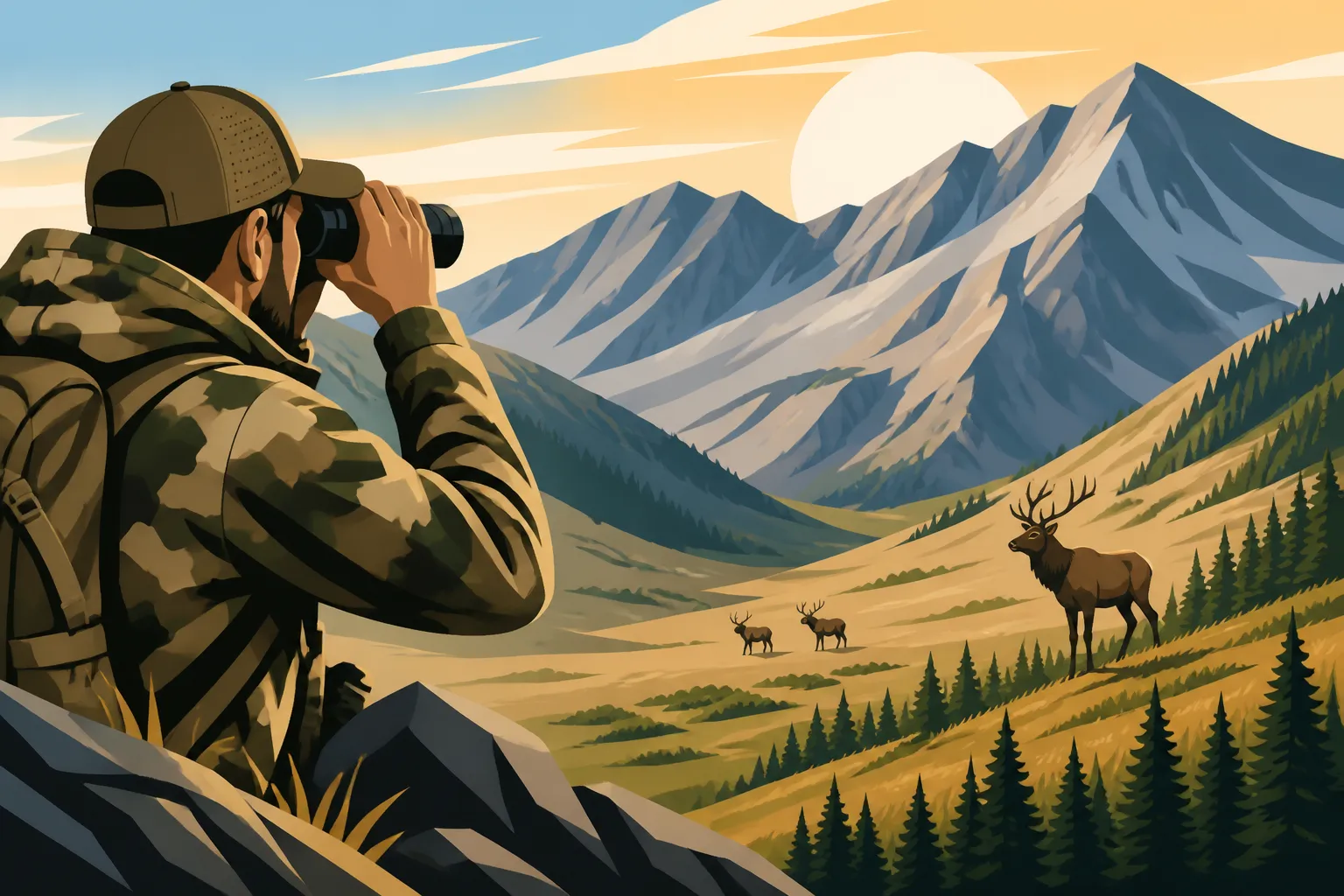
When you're faced with a colossal expanse of timber, meadows, and draws that stretch for miles, your boots alone won't cut it. Your optics become your most potent hunting tool, extending your vision far beyond what the naked eye can discern. It's not just about having binoculars or a spotting scope; it's about knowing how to use them to systematically break down a basin and find the game that's actively trying not to be found. Overlooking this skill means you're leaving countless opportunities on the table, wasting precious hunting time with inefficient walking rather than precise targeting.
Why Your Eyes Alone Won't Cut It
Imagine standing at a high vantage point, looking down into a basin that spans several square miles. With your unaided vision, you might spot a deer or an elk if it's broadside in a wide-open meadow. But what about that elk tucked into the shadow line of a distant aspen grove? Or the bull bedded under a spruce tree on a north-facing slope? Your eyes simply don't have the magnification, resolution, or the stamina to pick apart the details needed to spot subtle movements, a flick of an ear, or an antler tip camouflaged against the timber. You're effectively blind to 90% of the basin without proper optics.
Maximizing Efficiency: Hunt Smarter, Not Harder
The sheer size of Colorado's basins demands a strategic approach. Every step in the mountains is an expenditure of energy, and you want those steps to count. By becoming proficient at glassing, you transform hours of aimless hiking into moments of focused observation. Instead of blindly trekking through miles of empty country, you can identify promising areas, confirm game presence (or absence), and then plan a precise stalk. This isn't just about finding more animals; it's about conserving your energy for the critical moments, like packing out an elk after a successful hunt. Think of it as your long-range reconnaissance, giving you the intelligence you need before committing to a costly approach.
Essential Optics and Gear for Basin Glassing
You can't effectively glass big Colorado basins without the right tools. Just like a carpenter needs a hammer, a hunter needs reliable optics that can withstand the rigors of the backcountry and perform when it matters most. Investing in quality glass is often one of the best decisions a hunter can make, directly impacting their success rate and overall hunting experience.
Binoculars: Your Primary Scouting Tool
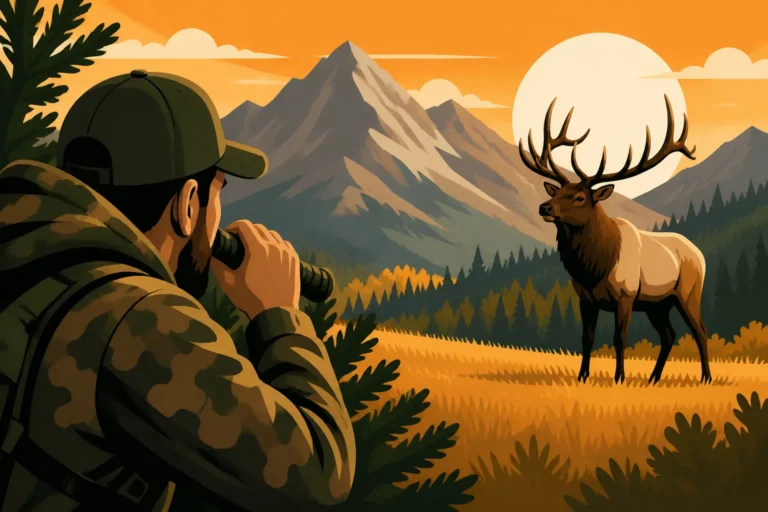
Your binoculars are your first line of defense, your constant companion. For mountain hunting, especially in big basins, you'll want something in the 10x to 12x magnification range. A 10×42 or 12×50 offers a great balance of magnification and light-gathering capability without being overly heavy. You'll be using these for quick scans, identifying general areas of interest, and often for the initial spotting before switching to a spotting scope for finer detail. Brands like Vortex, Leupold, and Maven offer excellent options at various price points, providing clear, bright images even in challenging light conditions. Always keep them on a bino harness to protect them and keep them readily accessible.
Spotting Scope: The Detail Magnifier
This is where you truly break down a distant hillside. While your binoculars give you the big picture, a spotting scope (typically 60-85mm objective lens with 20-60x or 25-75x magnification) allows you to zoom in on specific trees, rock formations, and shadowed areas, resolving details that are impossible with just binoculars. This is how you'll confirm if that dark spot is a bedded elk, if those "branches" are indeed antlers, or if that movement is a deer or an actual elk. A quality spotting scope is crucial for properly field judging a Colorado bull elk and avoiding a long, arduous stalk on an animal you don't intend to harvest.
Tripod: The Unsung Hero of Glassing
Hands down, the most overlooked piece of glassing gear is a sturdy, lightweight tripod. You simply cannot hold binoculars steady enough for extended periods at high magnification, let alone a spotting scope, especially after a long hike up a mountain. A good tripod eliminates shake, allowing you to settle in and pick apart every detail of a distant slope without fatigue or blur. You'll want one that's lightweight enough to pack, yet stable enough to support your optics in windy conditions. Carbon fiber models from brands like Outdoorsman or Vortex are popular choices among serious Western hunters. Don't skimp here; a cheap, flimsy tripod will negate the benefits of expensive optics.
GoHunt and Mapping Applications
Beyond physical optics, digital tools have become indispensable for basin hunting. Using platforms like GoHunt and onX Hunt for How to E-Scout Before a Colorado Hunt can give you a significant advantage. Before you even set foot in the field, you can identify potential glassing knobs, pinpoint likely bedding areas (north-facing slopes, dark timber), and trace travel corridors. This pre-scouting reduces guesswork and directs your efforts, allowing you to choose the best vantage points that overlook critical habitat. Many hunters utilize the layering features to visualize terrain, vegetation, and public land boundaries, making their in-field glassing more productive.
Master the Art of Grid-Glassing Techniques
Just having the gear isn't enough; you need a systematic approach. The "grid-glassing" technique is paramount for breaking down vast basins efficiently. It's a method that ensures no promising piece of terrain goes unexamined, preventing you from missing that subtle sign of an animal that could be your next target. This isn't a quick scan; it's a patient, methodical process.
The Systematic Grid Search
Imagine the distant hillside or basin as a grid. Start at one corner, say the top left, and slowly scan horizontally, overlapping each field of view slightly. When you reach the end of that horizontal strip, drop your optics down by about half a field of view and scan back across in the opposite direction. Repeat this process, working your way down the entire section of the basin you're covering. This painstaking method forces you to look at every tree, every rock, every shadow. It's tedious, yes, but it’s incredibly effective. The goal is to leave no stone unturned, mentally marking off areas as you've thoroughly searched them.
Table 1: Comparing Glassing Techniques for Big Basins
| Technique | Primary Use Case | Optics Used | Pros | Cons |
|---|---|---|---|---|
| Grid Glassing | Systematic, detailed search of large areas | Binoculars, Spotting Scope | Highly thorough, minimizes missed animals | Time-consuming, requires patience |
| Spot Checking | Quick scans of high-probability areas | Binoculars | Fast, good for initial assessment | High chance of missing hidden animals |
| Edge Scanning | Focusing on timberlines, meadows | Binoculars | Good for catching animals moving at transition zones | Ignores deeper cover where animals might be bedded |
| Thermal Glassing | Looking for specific micro-climates | Binoculars, Spotting Scope | Effective for predicting animal locations based on temps | Requires knowledge of elk behavior and terrain effects |
Patience and Persistence: The Glassing Mantra
This is perhaps the hardest part for many hunters. Glassing big basins requires immense patience. You might sit for an hour, two hours, or even half a day without seeing a single animal. But that's okay! Elk often move in bursts, or they might be bedded down, only becoming visible when they stand to stretch, feed, or relieve themselves. Don't rush. Take breaks, let your eyes rest, and then resume your systematic scan. I've personally sat for hours overlooking the Flat Tops Wilderness, convinced there was nothing there, only for a bull to stand up out of the timber I'd "already looked at" multiple times. That's why persistence, and a meticulous approach, is so crucial. If you're struggling to locate game, remember that How to Find Elk When They Go Quiet often requires this level of dedication to your optics.
What to Look For Beyond the Whole Animal
You’re not always going to see a whole elk standing broadside. Most of the time, you'll be looking for fragments. A horizontal line in a vertical world (the back or belly of an animal). An antler tip sticking out from behind a tree. A patch of hide that looks "out of place." The flick of an ear, the swish of a tail, or the glint of sunlight off an antler. Sometimes it's the lack of movement when everything else is swaying in the wind that gives an animal away. Train your eyes to identify these subtle anomalies. Look for contrast, patterns, and movement that betray the presence of game. When I'm glassing a new basin, I often utilize my Colorado Backcountry Hunting Guide for tips on general elk behavior and movement patterns to inform my search.
Reading the Terrain: Where to Focus Your Optics
Not all ground in a big basin is created equal. Understanding elk behavior and preferred habitat will guide your glassing efforts, allowing you to prioritize certain areas and increase your chances of spotting game. This isn't about aimlessly scanning; it's about smart, educated glassing.
Identifying Key Habitat Features
Elk gravitate towards specific types of terrain, especially in high-pressure hunting environments like many Colorado GMUs. Think about their needs: food, water, cover, and security.
- North-facing slopes: These often hold residual snow longer, providing cooler bedding areas and lush forage well into the season. They also offer thermal cover from the sun. Knowing How to Hunt North-Facing Slopes for Elk can really pay off.
- Dark timber: Dense stands of spruce and fir provide critical security cover, especially during rifle seasons. Elk will often bed deep in these areas, making them incredibly difficult to spot, but still worth glassing the edges and small clearings within.
- Transition zones: The edges where timber meets meadows, or where dense cover breaks into open sagebrush, are prime feeding and travel corridors. Elk will often stage in the timber before moving into open areas to feed at dawn and dusk.
- Wallows and water sources: Especially in drier years, elk will be tied to water. Scan around any visible water sources or known wallows. Even if you don't see an elk, fresh sign indicates activity.
- Saddles and benches: These are natural travel routes for elk moving between drainages or feeding areas and bedding grounds. Pay close attention to these features, as they offer easy passage through rugged terrain.
Understanding Elk Movement Patterns
Elk are creatures of habit, and their movement is heavily influenced by time of day, weather, and hunting pressure.
- Morning and Evening: These are prime feeding times. Focus your glassing efforts on meadows, aspen groves, and open areas where elk might be out grazing. As the sun rises, they'll move towards cover.
- Mid-day: During the middle of the day, elk are usually bedded down in thick timber, on cool, shady north-facing slopes, or in hidden pockets within the basin. This is when your meticulous grid-glassing of dense cover is most critical, looking for those subtle clues.
- Weather effects: A cold front can push elk to feed more aggressively, while warm temperatures might keep them bedded longer. Snow often pushes them to lower elevations or south-facing slopes. Understanding How Weather Moves Colorado Elk is vital for predicting their location.
- Hunting Pressure: High-pressure areas will force elk into thicker, nastier cover, and often make them more nocturnal. If you're hunting public land pressure, they'll quickly learn to avoid open areas during daylight hours. This is where patience and detailed glassing of escape routes and sanctuaries pays off. Tools like GoHunt can help identify areas with historically lower pressure based on draw odds and tag allocations.
By combining your knowledge of elk habitat with an understanding of their daily and seasonal movements, you can significantly narrow down your glassing efforts, turning an overwhelming basin into a series of manageable, high-probability zones. Focusing your efforts on specific features, as detailed in articles like Colorado Elk Habitat and Elevation can greatly enhance your success.
Advanced Glassing Strategies and Tips
Once you've mastered the basics of systematic glassing and identifying key terrain, there are even more ways to refine your technique and give yourself an edge in big Colorado basins. These strategies often come with experience but can be consciously practiced to accelerate your learning curve.
Utilizing Thermals and Wind
The mountains have their own weather patterns, especially with thermals. In the morning, air typically rises up the drainages. In the evening, it cools and flows down. Understanding How to Use Thermals in Colorado Elk Country is critical for both your approach and your glassing. If you're setting up a glassing spot, make sure the wind and thermals are not carrying your scent into the area you're trying to glass. Elk are masters of their environment, and they'll almost always bed in a spot where they can see downwind and have the rising thermal carry any scent from below, effectively covering their back. Use this knowledge to predict where they might be, and then glass those areas thoroughly.
Glassing into the Sun and Shadows
Direct sunlight can be a hunter's worst enemy, creating glare and washing out details. However, you can use the sun to your advantage.
- Glassing into shadows: Early morning or late evening, as the sun casts long shadows, pay close attention to the sun/shadow line. Animals will often move along this line, enjoying the last rays of sun or seeking the first shade. The contrast can sometimes highlight an animal that would otherwise blend in.
- Adjusting position: If you're glassing into direct sun, move to a position where the sun is at your back or to your side. This will reduce glare and make it easier to pick out details. Sometimes, just a slight shift in your vantage point can drastically improve your view. A good pair of polarized sunglasses can also help cut through glare.
Dealing with False Positives and Fatigue
It's going to happen. You'll stare at a rock for 20 minutes, convinced it's an elk, or that tree stump will trick you repeatedly. This is a common experience in the mountains. Don't get discouraged.
- Re-evaluate: When you think you see something, keep your optics on it. If it doesn't move after a few minutes, look for other identifying features. Does it have ears? Is the shape consistent with an animal? Can you see a leg or part of its head? Sometimes a change in light or a different angle will confirm if it's real or a "rock elk."
- Rest your eyes: Extended glassing can lead to eye strain and fatigue, making you prone to missing details or seeing things that aren't there. Blink frequently, look away from your optics occasionally, and give your eyes short breaks. Stay hydrated, as dehydration can also contribute to eye fatigue.
- Trust your gut, but verify: If something just feels "off" about a spot you've already glassed, go back and re-glass it. That subtle feeling can often be your subconscious picking up on something your conscious mind missed. Always err on the side of caution and thoroughness. This disciplined approach is a cornerstone of Colorado Elk Hunting Methods Explained.
Remember, successful glassing is a skill that improves with practice and experience. The more time you spend behind your optics, patiently and systematically breaking down big Colorado basins, the better you'll become at finding those elusive elk and deer.
Disclaimer
The information provided in this guide is for general informational purposes only and does not constitute professional hunting or safety advice. Hunting involves inherent risks, and adherence to all Colorado Parks and Wildlife regulations, safety protocols, and ethical hunting practices is paramount. Always consult official state resources for the most current rules and regulations.