Best Method to Hunt Colorado Whitetail Deer
When most folks picture hunting in Colorado, their minds immediately jump to towering peaks, bugling elk, or giant mule deer bucks in the high country. But a common mistake many hunters make is overlooking the incredible whitetail deer opportunities found right here in the Centennial State, particularly in areas far removed from the classic mountain landscapes. This comprehensive guide is here to shed light on the best and most effective methods for hunting Colorado whitetail, ensuring you're equipped for a successful and unique Western hunting adventure.
Understanding Colorado's Whitetail Landscape
Colorado isn't just about the Rockies; it's a diverse state with sprawling plains, extensive river systems, and agricultural lands that provide prime habitat for whitetail deer. For many, the idea of hunting whitetail out West can feel a bit counterintuitive, but these deer thrive in specific niches across the state, offering a distinct challenge from their mountain-dwelling cousins. Ignoring these areas means missing out on some genuinely rewarding hunting.
Dispelling Misconceptions about Whitetail in Colorado
It's easy to assume that if you're hunting in Colorado, you're going after mule deer or elk. This perception often leads hunters to bypass entire regions where whitetail populations are healthy and accessible. Unlike their cousins who prefer wide-open, broken country and higher elevations, Colorado's whitetail are creatures of cover, often sticking to dense river bottom timber, riparian corridors, and brushy draws adjacent to agricultural fields. They aren't typically found roaming the alpine basins alongside elk.
This means that the hunting strategy for whitetail in Colorado needs to be fundamentally different from what you'd employ for other big game species. You won't be glassing vast mountainsides for hours; instead, you'll be focusing on smaller, more defined pockets of habitat. Understanding this distinction is the first crucial step to successful whitetail hunting here. It’s a completely different ballgame than a typical hunt found in our Colorado Elk Hunting Guide.
Key Whitetail Zones and Habitat Preferences
Colorado's whitetail deer are primarily concentrated in the eastern plains and along major river systems that cut through the state. Think of areas like the South Platte River corridor, the Arkansas River basin, and many of the smaller creek drainages that feed into them. These areas offer the perfect trifecta for whitetail: dense cover for security, reliable water sources, and abundant food from nearby agricultural fields (corn, wheat, alfalfa) or natural browse.
Specific habitat preferences include thick stands of cottonwood, willow thickets, Russian olive groves, and dense brush that provides concealment. These deer are masters of staying hidden in relatively small pockets of cover, often within earshot of human activity. Identifying these specific types of cover, especially where they meet food and water, will be paramount to your scouting and hunting efforts. For more on general species, check out our Colorado Big Game Species Guide.
Primary Hunting Methods for Colorado Whitetail
When it comes to pursuing Colorado whitetail, several methods prove effective, each tailored to the unique terrain and deer behavior. Unlike the expansive spot-and-stalk often employed for mule deer, whitetail hunting here often reverts to more traditional, ambush-style tactics, though some variations are certainly possible.
Stand Hunting: The Tried and True Approach
Stand hunting, whether from a tree stand or a ground blind, is arguably the most effective and popular method for Colorado whitetail. These deer are patterned creatures, and their reliance on specific travel corridors between bedding areas, food sources, and water makes them vulnerable to ambush.
Tree Stand Setup and Strategy
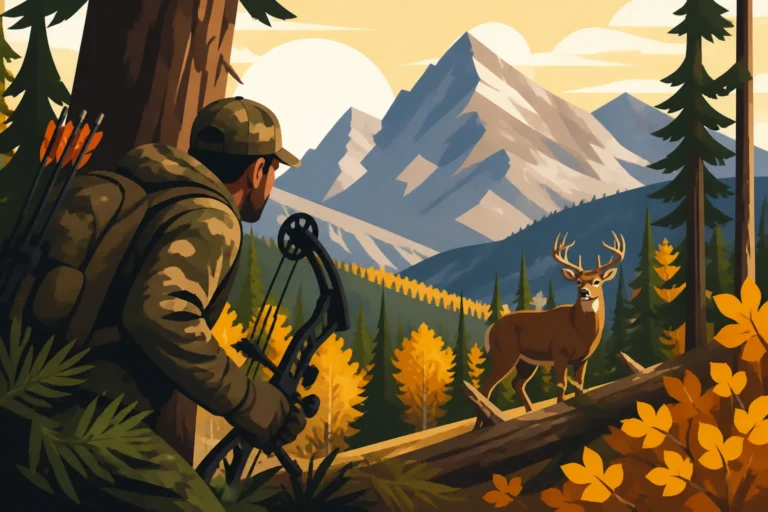
For tree stands, focus your efforts along river bottoms, creek drainages, and the edges of agricultural fields where dense cover meets open areas. Look for natural funnels – narrow strips of timber between fields, pinch points where dense cover is constricted, or oxbows in a river system that force deer travel into predictable paths. Locating active scrapes, rubs, and well-used trails during pre-season scouting is crucial for optimal stand placement. You'll want to position your stand to take advantage of prevailing winds, often setting up on the downwind side of a trail or rub line to prevent your scent from spooking approaching deer. Patience is key; whitetail often move most actively during low light hours, so be prepared for long sits.
Ground Blind Tactics
Ground blinds offer an excellent alternative, especially in areas with limited suitable trees or if you prefer a more concealed, comfortable setup. They are particularly effective in brushy draws, fence lines, or at the edge of thick cover overlooking a field. The key to a successful ground blind is to set it up well in advance of your hunt, allowing deer to get accustomed to its presence. Brush it in thoroughly with natural vegetation to break up its outline. Again, wind direction is paramount, as is ensuring you have clear shooting lanes from your blind. This method is particularly useful when hunting in areas where you might find more open terrain mixed with small pockets of dense cover.
Spot and Stalk in Plains and River Bottoms
While less common than stand hunting for whitetail, a spot-and-stalk approach can be surprisingly effective in the right Colorado whitetail habitat, especially in the more open agricultural lands of the Eastern Plains or along less dense river stretches. This isn't the same as How to Spot-and-Stalk Colorado Mule Deer in the mountains, but it requires a similar level of patience and fieldcraft.
Leveraging Topography and Cover
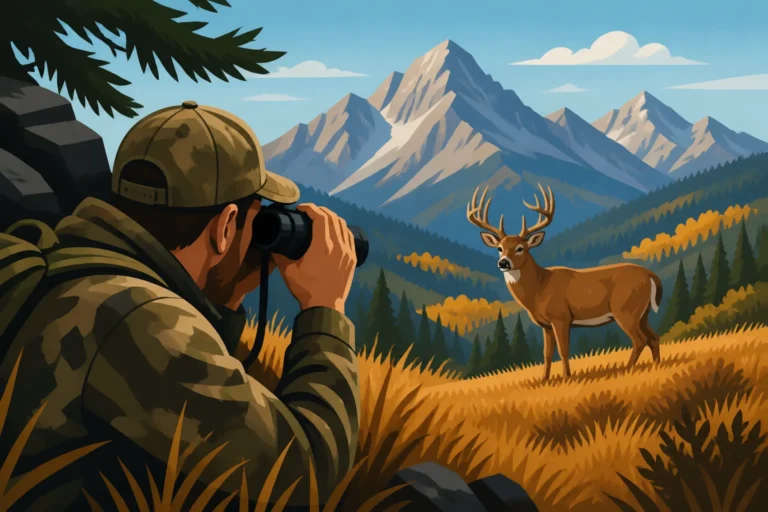
When spot-and-stalk hunting for whitetail in Colorado, you'll be looking for deer bedded in tall CRP grass, small draws, dry creek beds, or brushy fence lines. Your optics are your best friend here. Spend significant time glassing from elevated positions, even if it's just a slight rise in the prairie. Once you locate a deer, the challenge begins. You'll need to use every ripple in the landscape, every clump of sagebrush, or every row of corn to your advantage to close the distance. This method requires extreme stealth, careful attention to wind direction, and a slow, methodical approach.
Glassing Techniques for Whitetail
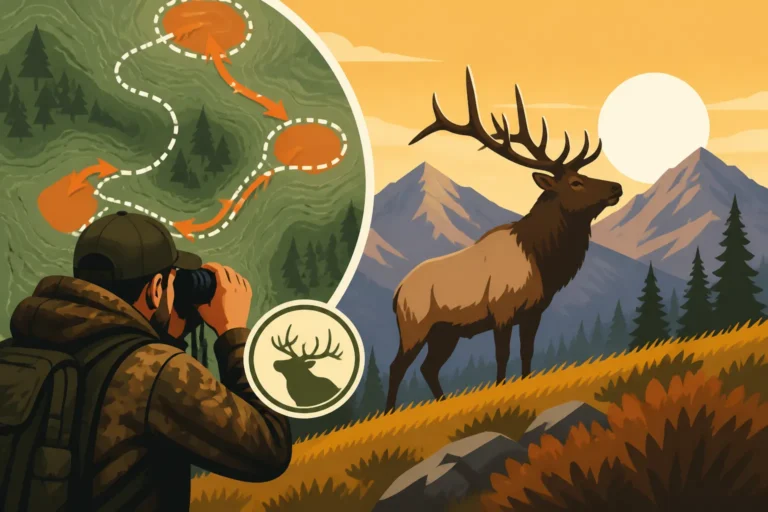
Unlike the vast expanses you'd glass for elk, whitetail glassing often involves systematically breaking down smaller areas of thick cover or field edges. Use your binoculars (10×42 or 12×50 are excellent choices) to pick apart every shadow, every cluster of brush. Look for horizontal lines, patches of contrasting color, or the flick of an ear. Often, you'll spot only a small portion of the deer, requiring careful observation to confirm it’s a whitetail and assess its size. Using a detailed mapping tool like GoHunt can help you identify potential bedding areas, small parcels of public land, and access points before you even step foot in the field, optimizing your glassing strategy. For more on optics, check out Best Optics for Colorado Big Game.
Driving and Pushing: Group Tactics
In certain scenarios, particularly on smaller tracts of public land or in dense, impenetrable cover along river systems, organized deer drives or pushes can be an effective way to hunt Colorado whitetail. This method is best suited for groups of hunters and requires careful planning and safety protocols.
When and Where to Use Drives
Deer drives are most effective in small woodlots, thickets of Russian olive, dense willow stands, or areas where deer are known to bed down in heavy cover. The idea is to have "pushers" walk through the cover, ideally with the wind at their back, slowly and methodically pushing deer towards "standers" positioned on the downwind side, in areas where deer are likely to exit the cover. This can work well on some of the smaller State Wildlife Areas or Walk-In Access properties that have pockets of prime whitetail cover.
Safety and Planning Considerations
Safety is paramount for any deer drive. All participants must know where every other hunter is located. Communication is critical, and everyone should be wearing plenty of blaze orange. Clearly define boundaries, shooting lanes, and exit points beforehand. This isn't a chaotic rush; it's a controlled movement designed to encourage deer to move predictably. Hunters pushing should move slowly, pausing often, as deer will often try to sneak back through the line or hold tight until the last moment. It’s a group effort that can pay dividends when other methods prove too difficult in dense habitat.
Advanced Tactics and Considerations for Colorado Whitetail
Beyond the primary hunting methods, understanding advanced tactics and unique considerations for Colorado's whitetail population can significantly improve your chances of success. These involve delving deeper into deer behavior, leveraging technology, and ensuring you have the right gear.
Rut Behavior and Timing
The whitetail rut in Colorado generally mirrors that of other Midwestern and Eastern states, typically peaking in early to mid-November. This period offers some of the best hunting opportunities as bucks become more vulnerable, actively searching for does and less cautious about their movements.
Pre-Rut, Peak Rut, and Post-Rut Strategies
During the pre-rut (late October), bucks start to lay down more rubs and scrapes, marking their territory. This is a great time to focus on funnel areas and transition zones, using stand hunting methods near fresh sign. As the peak rut arrives in November, bucks are on the move constantly. This is when calling strategies like grunts, bleats, and rattling can be incredibly effective. Consider extended sits in prime bedding-to-feeding corridors, as bucks will be cruising these areas throughout the day. Post-rut, bucks return to recovering from the physical demands of breeding, often seeking out abundant food sources. Late-season hunting might focus more on food plots, agricultural fields, and south-facing slopes offering thermal cover and remaining forage. For more on timing, consider reviewing Colorado Hunting Seasons Explained.
Calling Strategies for Colorado Whitetail
Whitetail calling in Colorado isn't as prevalent as elk calling, but it can certainly work. Grunt calls imitate a buck's communication and can entice a curious deer to investigate. Doe bleats can attract bucks looking for a receptive female. Rattling antlers, simulating two bucks fighting, can trigger an aggressive response from dominant bucks in the area, especially during the peak rut. Remember to start subtle and escalate if there's no response. Always be ready for a deer to appear quickly and quietly after a call.
E-Scouting and On-the-Ground Reconnaissance
Modern hunting success, especially for whitetail in often overlooked areas, heavily relies on thorough pre-season preparation. This involves a combination of digital tools and physical boots-on-the-ground scouting.
Leveraging Digital Mapping Tools
Before you even leave your couch, digital mapping tools are indispensable. Platforms like GoHunt allow you to scrutinize satellite imagery, topo maps, and public/private land boundaries. Use these to identify potential bedding areas (dense cover), travel corridors (natural pinch points, creek bottoms), and food sources (agricultural fields, natural browse). You can mark waypoints for potential stand sites, glassing نقاط, and access routes. This pre-scouting effort saves immense time and energy in the field. Tools like the Colorado Hunting Atlas Explained are also crucial for understanding GMU boundaries and public access.
In-Season Scouting and Sign Reading
Once you've done your digital homework, it's time for on-the-ground reconnaissance. Look for fresh deer sign: tracks, droppings, rubs (where bucks scrape velvet or mark territory on trees), and scrapes (bare patches of ground pawed by bucks, often with an overhanging branch they've licked and rubbed). Pay attention to prevailing wind patterns and thermals in your chosen area. During the season, use stealthy approaches to potential bedding areas to avoid spooking deer, always staying downwind and observing from a distance. Understanding how to interpret these signs will tell you where deer are moving, what they're eating, and where they feel safe. This hands-on knowledge combined with your GoHunt e-scouting can make all the difference.
Gear Essentials for Whitetail Hunting in Colorado
While the principles of hunting remain the same, the specific environment of Colorado whitetail hunting demands some tailored gear choices.
Clothing and Footwear
Unlike high-country elk hunting which demands rugged mountain boots, whitetail hunting in river bottoms and plains often requires more emphasis on quiet, scent-controlled clothing. Layering is still important due to temperature swings, but prioritize fabrics that don't make noise when you move in a stand or blind. Waterproof boots are a must for navigating potentially wet river bottom terrain, especially if you're crossing small creeks or dealing with morning dew.
Optics and Ranging Equipment
Quality binoculars are non-negotiable for spot-and-stalk and for picking apart dense cover from a stand. While a spotting scope isn't usually necessary for whitetail unless you're glassing very large, open plains, a good rangefinder is critical for accurate shot placement. Know your firearm's ballistic data and practice shooting at various distances.
Weapon Selection for Whitetail
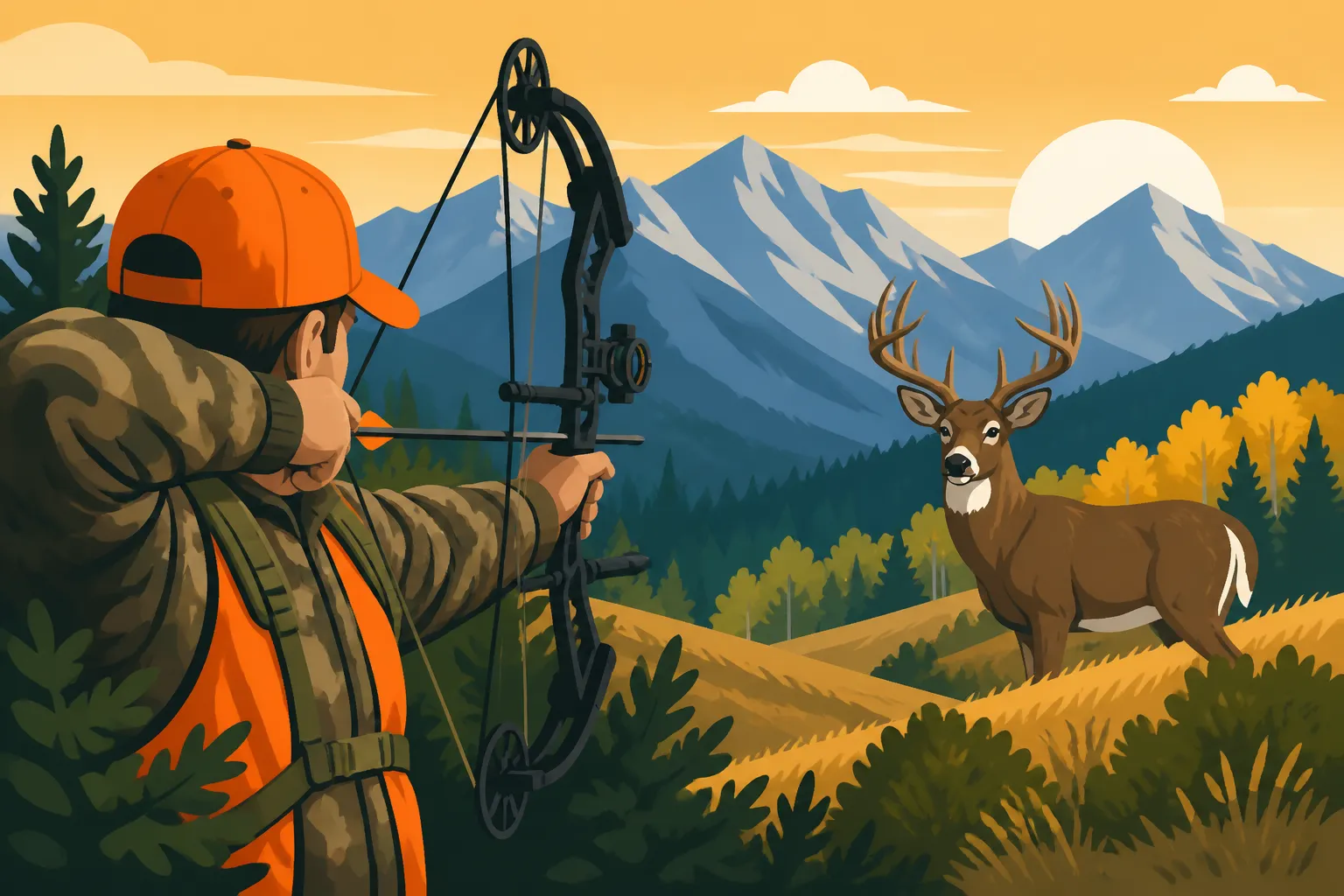
For rifle hunters, common whitetail calibers like .270, .30-06, .308, and 6.5 Creedmoor are all excellent choices. Ensure your rifle is sighted in accurately for the distances you expect to shoot. Archery hunters should ensure their setup is tuned for quiet, accurate shots, as whitetail often present fleeting opportunities. Mechanical broadheads are popular for their larger cutting diameter and often quicker kills. Muzzleloader hunters should ensure their setup is reliable and practiced, especially given the typically closer ranges encountered in whitetail cover. If you're considering a bow, check out our Colorado Archery Elk Hunting Guide for some crossover tips on gear and practice.
Comparing Colorado Whitetail Hunting Methods
Choosing the best method often depends on the specific terrain, your personal preference, and whether you're hunting solo or with a group. Here's a quick comparison:
| Method | Best For | Pros | Cons | Key Considerations |
|---|---|---|---|---|
| Stand Hunting | River bottoms, field edges, thick cover | High success rate; allows for long observation; less physical exertion | Can be boring; scent control critical; limited mobility | Pre-scouting for active sign, wind direction, comfortable setup |
| Spot and Stalk | Open plains, smaller draws, CRP fields | Active and engaging; covers more ground; adaptable to deer movement | Requires extreme stealth and patience; physically demanding; wind critical | Excellent optics, mapping tools (GoHunt), ability to read terrain and deer behavior |
| Driving/Pushing | Dense, small woodlots; limited public access | Effective for flushing deer from thick cover; good for groups | Requires multiple hunters; safety is paramount; can be unpredictable | Thorough planning, clear communication, strict adherence to safety rules |
When planning your hunt, consider the season and specific GMU regulations. Some areas may have Over-The-Counter (OTC) whitetail tags, while others require drawing a tag through the Colorado Draw System and Preference Points. Always check the latest Colorado Parks and Wildlife (CPW) regulations for the most up-to-date information. If you're considering hunting other species with a rifle, remember that Colorado Mule Deer Hunting: Rifle Tactics will often employ very different strategies than you'd use for whitetail.
Disclaimer
Hunting is an inherently dangerous activity. Always prioritize safety, wear appropriate blaze orange when required, understand and follow all Colorado Parks and Wildlife regulations, and obtain proper landowner permissions. This guide is for informational purposes only and does not substitute for official hunting education or regulations.