How to Rifle Hunt Colorado Mule Deer
The vast, rugged landscapes of Colorado present an incredible opportunity for rifle hunting mule deer, but let's be honest, it can also feel incredibly daunting. You might be dreaming of that big buck, yet the reality of immense public lands, unpredictable weather, and the sheer elusiveness of these animals can leave even seasoned hunters wondering where to begin. This guide is here to break down the complexities, offering a realistic, in-depth look at the strategies, preparation, and mindset required to significantly improve your chances of success when rifle hunting Colorado mule deer.
Understanding Colorado Mule Deer Behavior and Habitat
Before you even think about shouldering a rifle, you've got to get inside the head of a Colorado mule deer. These aren't your whitetails that stick to the timber; mule deer are creatures of wide-open spaces, elevation, and incredible adaptability. Their habits dictate your strategies, and understanding them is the first critical step.
Seasonal Movements and Rut Behavior
Mule deer in Colorado are constantly on the move, driven by feed availability, weather patterns, and the irresistible urge to breed. Their seasonal migrations can be dramatic, often covering significant vertical and horizontal distances. Early season hunters might find deer higher up in the alpine basins, munching on lush summer forage. As fall progresses and rifle seasons open, especially from mid-October through November, deer start to descend. They're following the receding snowlines and seeking out critical winter range at lower elevations.
Then there's the rut – the holy grail for many rifle hunters. For Colorado mule deer, the peak rut typically falls in November, coinciding with the later rifle seasons (like 3rd and 4th rifle). During this period, bucks become far less cautious, focused almost entirely on finding does. They'll be moving more in daylight, sparring with rivals, and generally making themselves more visible. However, this also means hunter pressure can be at its highest, as everyone else knows this is prime time too. Understanding the subtle cues of the rut, from buck sign like rubs and scrapes to observing groups of does, can give you a significant edge. If you're hunting during the rut, focus on areas where does congregate, as bucks will inevitably be nearby.
Preferred Terrain and Cover
Colorado mule deer are masters of using the terrain to their advantage. They thrive in broken country – think steep, rocky slopes, aspens stands, dark timber pockets, sagebrush flats, and deep canyon systems. They love the transition zones, where open feeding areas meet thicker cover for bedding and security. When scouting, look for north-facing slopes with dense timber, as these often provide cooler bedding areas during warmer parts of the day and critical thermal cover in colder weather. South-facing slopes, conversely, warm up faster and melt snow, making them prime feeding grounds after a cold night or snowstorm.
It's not just about elevation; it's about the character of the land. Mule deer prefer areas with good visibility but plenty of escape routes. They're phenomenal at disappearing, even in sparse cover, by simply using a small rise, a cluster of junipers, or a shadowed ravine. Spend time studying topographical maps and aerial imagery, noting these features. A ridge that looks innocuous on a map might have a crucial bench on its lee side that provides perfect bedding. Learning to read these micro-features will help you predict where deer will be, especially during high-pressure times when they seek out refuge. A deeper dive into specific habitats can be found in our guide on Colorado Mule Deer Habitat Explained.
Pre-Season Preparation: More Than Just Zeroing Your Rifle
Successful rifle hunting for Colorado mule deer isn't just about showing up with a sighted-in gun. It's a year-round commitment that truly begins long before opening day. Overlooking these crucial pre-season steps is a common mistake that leads to frustration and empty tags.
E-Scouting and Map Study
In a state like Colorado, with millions of acres of public land, you absolutely cannot afford to skip your e-scouting homework. This is where you narrow down the vastness into manageable, high-potential areas. Tools like GoHunt's mapping platform, OnX Hunt, and Google Earth are invaluable. Start by identifying potential GMUs (Game Management Units) based on draw odds, success rates, and the kind of terrain you want to hunt. Once you've got a unit, dive deep.
Look for:
- Access points: Roads, trails, trailheads. How far can you get in by vehicle? How far are you willing to hike?
- Water sources: Springs, creeks, ponds. Mule deer need water, and these spots can concentrate them.
- North-facing slopes and dark timber: Prime bedding and security cover.
- South-facing slopes: Key feeding areas, especially in colder weather.
- Transition zones: Where different habitat types meet, like forest edges, riparian areas, or where steep country gives way to more gradual slopes.
- Drainages and saddles: Natural travel corridors for deer.
- Isolated pockets of public land: Often overlooked by other hunters.
Use the various map layers – topo, aerial, wilderness boundaries, private land ownership – to build a mental picture of the unit. Drop pins on potential glassing knobs, bedding areas, and escape routes. The goal isn't to find a deer, but to find deer country. GoHunt's filtering tools can even help you analyze units for specific criteria, giving you an even smarter starting point. This meticulous e-scouting can drastically reduce the time you spend wandering aimlessly once you're on the ground. For more on this, check out How to E-Scout Before a Colorado Hunt.
Physical Conditioning for Mountain Terrain
Colorado mule deer hunting is physically demanding, plain and simple. You'll be walking up and down steep grades, often at elevations well over 8,000 feet, sometimes carrying a heavy pack. If you live at sea level and show up without preparing, you're not just going to be uncomfortable; you're going to be ineffective and potentially put yourself at risk.
Your fitness plan should mimic the demands of the hunt. Incorporate strength training for your legs and core, and plenty of cardio. Hiking with a weighted pack on steep inclines is perhaps the best specific training you can do. Start light and gradually increase the weight and distance. Don't forget your lungs! Activities like running, cycling, or stair climbing will build cardiovascular endurance, which is crucial for operating effectively in thin air.
Altitude sickness is a real concern. If possible, arrive a few days early to acclimate. Hydrate constantly. A strong physical foundation not only allows you to cover more ground and hunt harder, but it also ensures you're capable of safely packing out an animal should you be successful. Our guide on How to Physically Prepare for Colorado Elk offers excellent cross-applicable advice.
Essential Gear for Colorado Rifle Mule Deer Hunting
Your gear choices can make or break a hunt, especially in the challenging and often unpredictable Colorado mountains. Every item should serve a purpose, be reliable, and be appropriate for the conditions you'll face.
Optics: The Hunter's Best Friend
This cannot be stressed enough: good optics are non-negotiable for mule deer hunting. Unlike elk that often lurk in the timber, mule deer are frequently found in open, expansive country, making glassing your primary scouting method. You'll spend hours, sometimes days, behind your glass.
- Binoculars: A quality pair of 10x42s or 12x50s are your workhorses. Look for clarity, light transmission (for those critical dawn and dusk hours), and a wide field of view. Brands like Vortex, Leupold, and Zeiss offer excellent options across various price points.
- Spotting Scope: For serious long-range scouting, a 60-80mm spotting scope (with a magnification range of 15-45x or 20-60x) is invaluable. This allows you to pick apart distant hillsides, identify specific bucks, and judge antler size without expending unnecessary energy hiking. It's also crucial for field judging, a skill detailed in How to Field Judge a Colorado Mule Deer Buck.
- Tripod: A sturdy, lightweight tripod is essential for using both your binoculars (with an adapter) and your spotting scope. Handheld glassing is fine for quick glances, but for detailed, prolonged searching, you need a stable platform.
- Rangefinder: A reliable rangefinder capable of reading distances up to 1,000 yards (or more) is critical for ethical shot placement in mountain terrain, especially when factoring in uphill/downhill angles.
Invest in the best optics you can afford. They will directly contribute to your success. Our guide on How to Use Optics for Colorado Mule Deer provides more in-depth advice.
Rifles, Ammunition, and Shooting Practice
Your rifle is obviously central to the "rifle hunting" equation. For Colorado mule deer, a flat-shooting, accurate caliber is preferred, capable of cleanly taking an animal out to 300-400 yards, which is a common shooting distance in the West. Popular choices include .270 Win, .30-06 Springfield, .308 Win, 7mm Rem Mag, and .300 Win Mag. Ensure your rifle is scoped appropriately with clear, reliable glass.
Ammunition: Choose high-quality hunting ammunition with good bullet construction designed for reliable expansion and penetration on big game. Practice with the exact load you plan to hunt with.
Practice, Practice, Practice: Zero your rifle at 100 or 200 yards, but then practice at longer distances (300, 400, even 500 yards if you anticipate those shots and are proficient). More importantly, practice shooting from hunting positions: kneeling, sitting, prone, using your pack as a rest. The flat range doesn't mimic the real world. Get comfortable with your rifle, understand its ballistics, and know your effective ethical range. A shot that's easy in a bench rest can be incredibly challenging after a mile hike uphill at 10,000 feet, especially when adrenaline is surging.
Clothing, Footwear, and Backpacks
Layering is the name of the game in Colorado. Mountain weather can change rapidly from warm sunshine to driving snow in a matter of hours.
- Base Layers: Moisture-wicking synthetics or merino wool are ideal to keep you dry and regulate body temperature.
- Mid Layers: Fleece or puffy insulation for warmth.
- Outer Layers: A windproof, waterproof shell is non-negotiable. Look for something durable and quiet.
- Footwear: High-quality, broken-in hunting boots with excellent ankle support are paramount. You'll be covering miles over uneven, rocky terrain. Waterproofing is a must. Check out Best Boots for Colorado Elk Hunting for suggestions that also apply to deer.
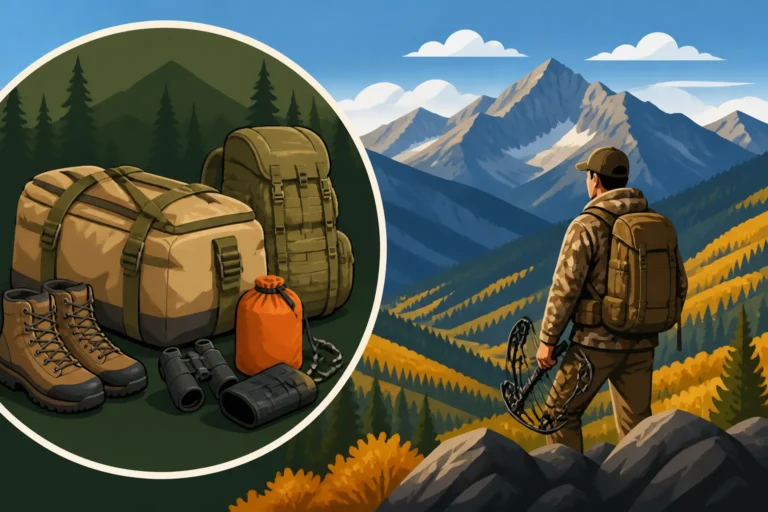
- Backpack: A comfortable, durable pack (3500-5000 cubic inches for day hunting, larger for multiday backcountry hunts) capable of carrying all your gear, food, water, and potentially an animal quarter. Look for good load-bearing capabilities and a robust frame.
Don't forget essentials like a headlamp, first-aid kit, fire starter, knife, game bags, water purification, and emergency shelter.
Effective Rifle Hunting Tactics in Colorado
Now that you're geared up and mentally prepared, let's talk about the boots-on-the-ground strategies for finding and harvesting a Colorado mule deer with a rifle.
Spot-and-Stalk Methodology
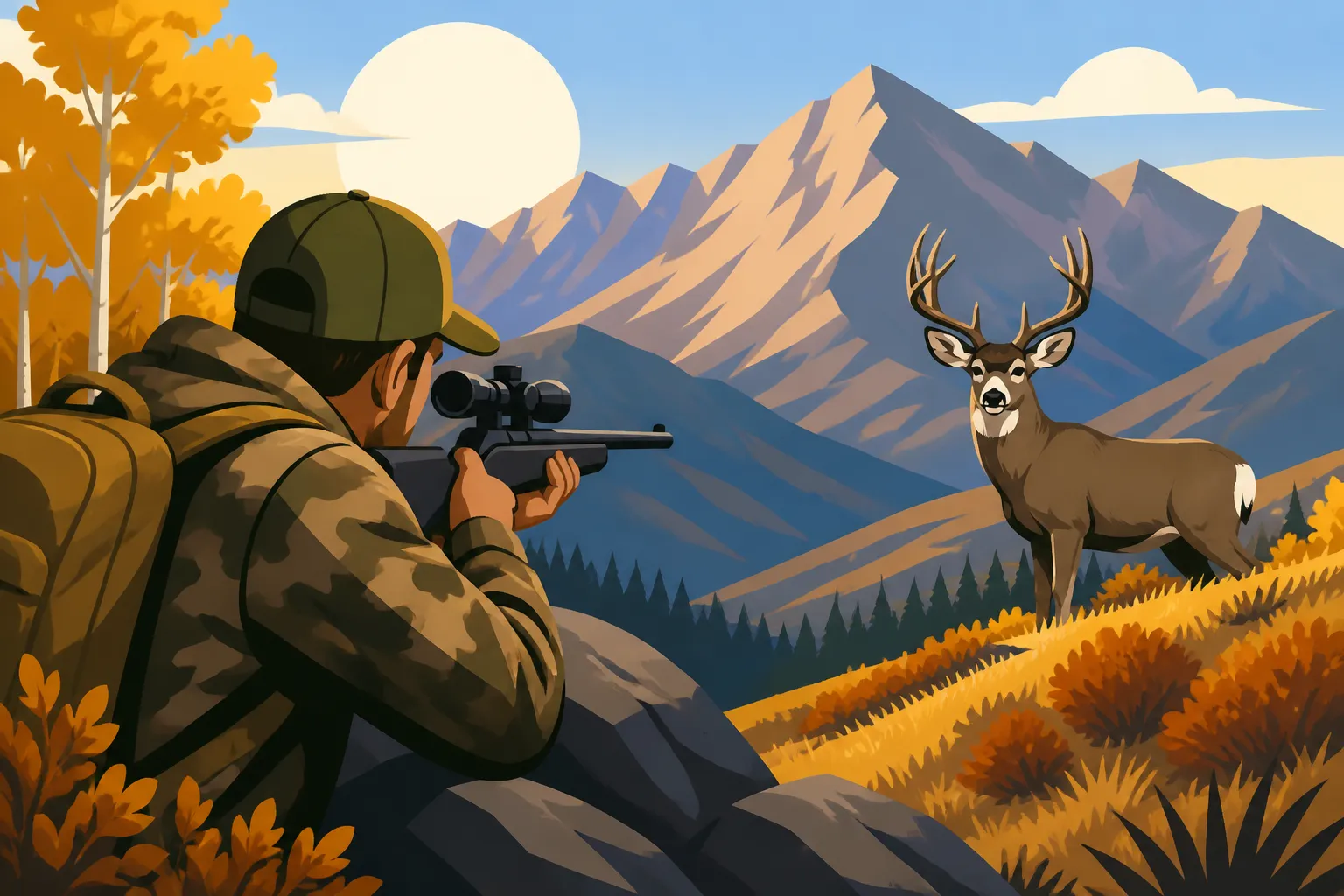
This is, hands down, the most effective and quintessential Western hunting method. It involves exactly what it sounds like: finding animals from a distance (spotting) and then executing a calculated approach (stalking) to get within shooting range.
- Find a Vantage Point: Identify a high point that allows you to glass large swaths of deer country. Get there before first light.
- Glass Methodically: Don't just scan. Break the landscape into grids and systematically pick apart every detail. Use your binoculars on a tripod for extended periods, then pull out the spotting scope to scrutinize anything that looks out of place – a horizontal line in a vertical world, a patch of different color, an ear twitch. Be patient; deer often reveal themselves only after long periods of stillness. This is where How to Glass for Colorado Mule Deer provides deep insights.
- Locate the Deer: Once you spot a deer (or deer sign that indicates a buck might be close), assess it. Is it a buck? Is it a shooter? Where is it going? What's its behavior?
- Plan the Stalk: This is the chess match. Study the terrain between you and the deer. Identify cover, wind direction, thermals, and potential obstacles. Plan your route to stay out of sight, minimize noise, and keep the wind in your favor. Pay close attention to the wind using a wind checker. One wrong gust can ruin hours of effort.
- Execute the Stalk: Move slowly and deliberately. Use every piece of cover available. Stop frequently to relocate the deer and confirm your approach. Be prepared for the deer to move; adapt your plan as needed.
- Take the Shot: Once you're within your ethical shooting range, find a stable shooting position, control your breathing, and make a clean, humane shot.
Spot-and-stalk hunting requires immense patience, keen observation skills, and the physical ability to navigate tough terrain quietly.
Still-Hunting Timber and Drainages
While spot-and-stalk works wonders in open country, Colorado also has vast areas of dense timber and deep drainages where mule deer can disappear. This is where still-hunting becomes effective. Still-hunting involves moving very slowly and quietly through the woods, stopping frequently (often for 5-15 minutes at a time) to observe, listen, and let the forest reset around you.
- Move with the Wind: Always hunt into the wind, or with a crosswind. Deer rely heavily on their sense of smell.
- Stealth is Key: Wear quiet clothing. Pay attention to every footfall, placing your feet softly. Avoid breaking twigs or crunching leaves.
- Utilize Cover: Stick to shadows, use trees and bushes to break up your outline.
- Scan and Listen: Look for horizontal lines, deer colors, ear flickers, or any subtle movement. Listen for rustling leaves, the snap of a twig, or even the sound of munching. Use your binoculars frequently to pick apart dense cover.
- Focus on Transition Areas: Hunt the edges of dark timber, where it meets aspens or open parks. Focus on benches, saddles, and creek bottoms within the timber that serve as travel corridors or bedding areas. Our guide on How to Still-Hunt Colorado Timber offers more detailed advice.
Still-hunting is physically less demanding than aggressive spot-and-stalk over vast distances, but it demands even greater patience and acute senses.
Ambush Points and Patience
Sometimes, the best strategy is to let the deer come to you. This is particularly effective during the rut, or in areas with predictable deer movement patterns (e.g., deer moving from bedding to feeding areas, or traversing a saddle).
- Identify Funnels: Look for natural funnels or pinch points in the terrain that mule deer are likely to use. This could be a narrow saddle between two peaks, a small bench that offers the easiest path along a steep hillside, or a choke point in a drainage.
- Bedding to Feeding: Observe where deer are bedding and where they are feeding. Set up an ambush point along their travel corridor between these two areas. This works best during the low light hours of dawn and dusk.
- Water Sources: In arid areas, water holes can be prime ambush locations, especially in the early season.
- Wind and Sun: Always set up with the wind in your favor. If possible, set up with the sun at your back in the morning or evening, making it harder for deer to see you and illuminating them.
- Patience: This tactic demands stillness and patience. Get comfortable, stay warm, and be prepared to sit for extended periods without moving.
Combine this with your knowledge from e-scouting and on-the-ground observation. If GoHunt's mapping shows a consistent travel route, that's a prime spot for an ambush.
Navigating Public Land Pressure and Challenges
One of the biggest realities of hunting in Colorado, especially during popular rifle seasons, is hunter pressure. You won't be alone. This can be incredibly frustrating, but smart hunters learn to adapt.
Finding Unpressured Areas
The vast majority of hunters will stick close to roads and easily accessible areas. To find unpressured deer, you often need to be willing to go where others won't.
- Go Deeper: Hike further than the average hunter. Many areas might seem busy within the first mile or two of a trailhead, but pressure often drops off significantly beyond that. Wilderness areas and roadless areas are excellent places to find solitude and undisturbed deer. Consider a multi-day backcountry hunt to truly get away from it all. For instance, the Flat Tops Wilderness or sections of the Weminuche Wilderness offer extensive roadless hunting opportunities, though they demand significant physical preparation and gear, as outlined in our Colorado Backcountry Hunting Guide.
- Focus on Overlooked Terrain: Instead of the obvious clearings, look at the thick, nasty timber on steep slopes, the deep canyons, or the small, isolated pockets of public land that might be surrounded by private property. These are often excellent sanctuaries for deer.
- Hunt Mid-Week: If your schedule allows, hunting on Tuesday, Wednesday, or Thursday can dramatically reduce the number of other hunters you encounter compared to weekends.
Remember, unpressured areas often mean unpressured deer – which are often more relaxed and predictable in their movements.
Adapting to Hunter Density
Even if you try to get away from the crowds, you'll still likely encounter other hunters. The key is to adapt your tactics.
- Use the Pressure to Your Advantage: Other hunters can inadvertently push deer towards you. If you know where other hunters are likely to be (e.g., coming up a main trail or road), position yourself quietly on an escape route or a parallel ridge that deer might use to evade pressure.
- Hunt Mid-Day: Many hunters are most active at dawn and dusk. Deer, when pressured, often become more active during the middle of the day, moving between bedding areas in thick cover. This can be a prime time for still-hunting or methodical glassing.
- Be Flexible: Your initial plan might be perfect, but if you're constantly seeing other hunters or evidence of heavy pressure, don't be afraid to change units or shift to a completely different part of your target area. Have backup plans.
- Respect Other Hunters: Always maintain a respectful distance from other hunters. Communicate if necessary, but don't interfere with their hunt. Public land is for everyone, and a little courtesy goes a long way. Understanding How to Hunt Elk on Public Land Pressure is highly relevant for mule deer, too.
Field Care and Packing Out Your Mule Deer
Harvesting a mule deer is just the beginning of the work. Proper field care is paramount to preserving your hard-earned meat, and packing it out of the backcountry is often the most physically grueling part of the entire hunt.
Quartering and Cooling Meat
Once your deer is on the ground, the clock starts ticking, especially if temperatures are mild. The goal is to cool the meat as quickly and thoroughly as possible to prevent spoilage.
- Safety First: Ensure the animal is expired and safe to approach.
- Gutless Method: For backcountry hunters, the "gutless method" is often preferred. This involves skinning and quartering the animal without opening the body cavity, which can be cleaner and faster, especially if you're solo. This method minimizes contact with entrails, reducing contamination. You can get four quarters, the backstraps, tenderloins, neck meat, and scraps without gutting.
- Cleanliness: Use clean knives and work as cleanly as possible. Keep dirt and debris off the meat.
- Game Bags: Immediately place all meat into breathable game bags. These protect the meat from flies, dirt, and debris while allowing it to cool. Synthetic game bags are often lighter and more durable than traditional cheesecloth.
- Cooling: Hang the meat if possible, allowing air to circulate around it. In warmer weather, spread the quarters out in the shade, off the ground, to maximize airflow. If it's cold enough, the natural cold will do most of the work. If temperatures are above freezing for extended periods, you need to prioritize getting that meat to a cooler. Knowing How to Keep Elk Meat Cool in Warm Weather is vital and applies equally to mule deer.
Packing Out in Steep Terrain
This is where all your physical training pays off. A mature mule deer buck can weigh upwards of 250-300 pounds live, translating to a substantial amount of meat, bone, and hide to carry.
- Load Distribution: Distribute the load in your pack evenly and securely. Put the heaviest items (quarters) closest to your back, high in the pack, to maintain your center of gravity.
- Multiple Trips: Unless you're extraordinarily strong or have a partner, expect to make multiple trips. It's far better to make two or three comfortable, safe trips than one agonizing, dangerous one that could lead to injury.
- Pace Yourself: The mountains aren't a race. Take short, frequent breaks. Hydrate. Snack on energy-rich foods.
- Footing: Watch every step. Loose rock, steep grades, and fatigue are a recipe for falls. Use trekking poles for stability.
- Teamwork: If hunting with a partner, share the load. Having two or more people makes packing out significantly easier and safer. Our guide on How to Pack Out an Elk in Colorado will give you a detailed blueprint for what to expect and how to prepare. It's a heavy haul, but the reward of fresh, organic venison is worth every painful step.
| Tactic | Best Conditions | Gear Focus | Key Skill | Challenges |
|---|---|---|---|---|
| Spot-and-Stalk | Open, broken country; good visibility | High-quality optics, tripod, rangefinder | Patience, glassing, stalking | Wind shifts, unpredictable deer movement, long stalks |
| Still-Hunting | Dense timber, thick drainages, moderate cover | Quiet clothing, light pack, binoculars | Stealth, observation, tracking | Low visibility, difficult movement, slow pace |
| Ambush | Predictable travel corridors, food/water sources, rut | Comfortable sit, minimal movement, wind checker | Patience, map reading, wind reading | Waiting, weather exposure, deer not showing up |
Ultimately, rifle hunting Colorado mule deer is a deeply rewarding experience that challenges you physically, mentally, and strategically. By understanding the animal, preparing diligently, selecting the right gear, and applying proven tactics, you dramatically increase your odds of success in these magnificent mountains.
Disclaimer
Please ensure you are aware of and comply with all current Colorado Parks and Wildlife (CPW) regulations, licensing requirements, and season dates. Hunting laws can change, so always check the latest official CPW brochures and website before planning your hunt. This guide is for informational purposes only and does not substitute for official state hunting regulations.