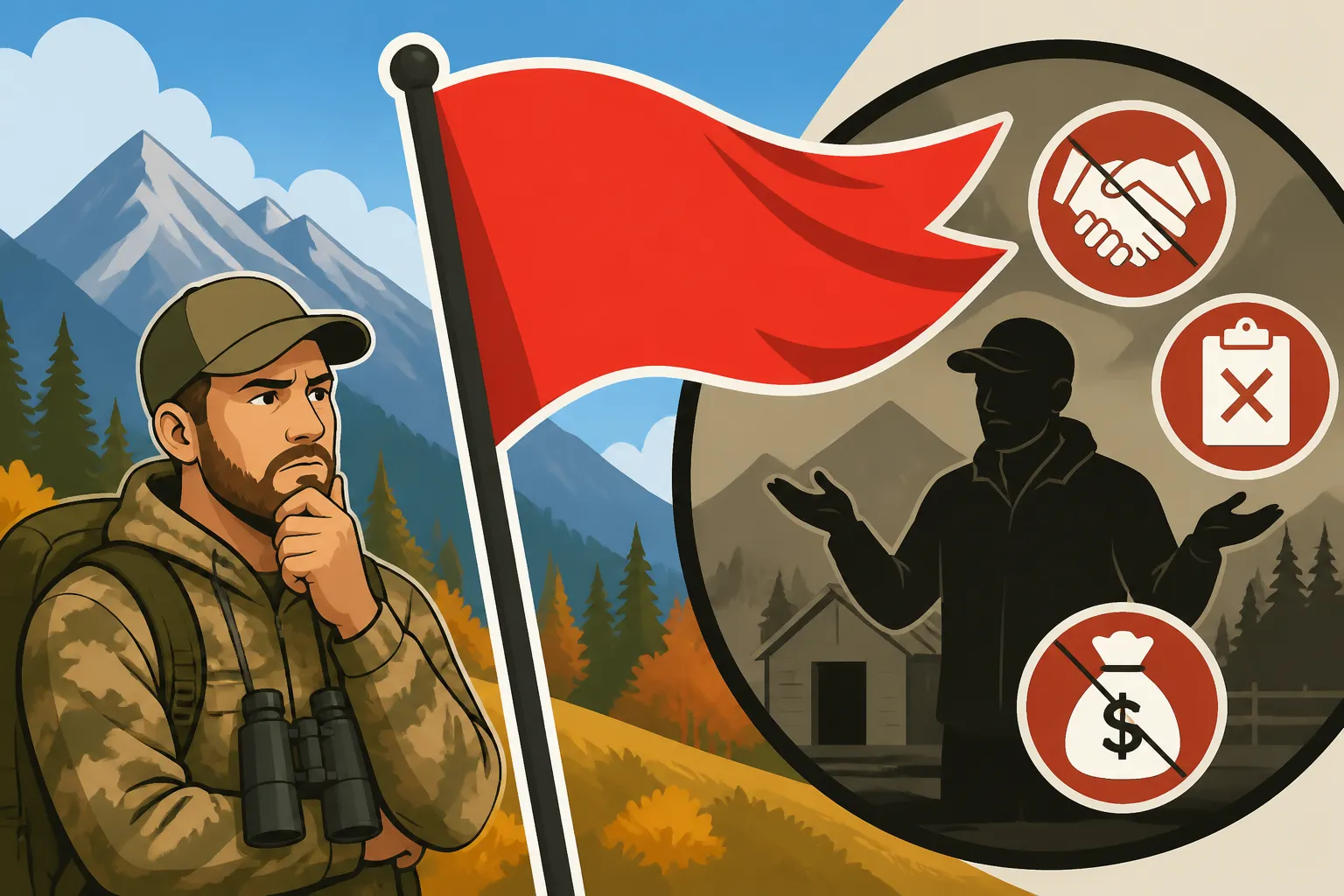
Red Flags When Booking a Colorado Outfitter
Deciding to book a Colorado hunting outfitter can feel like a huge step, full of excitement for the hunt of a lifetime, but also a fair bit of anxiety. You're entrusting a significant amount of money, your precious vacation time, and often your hopes for a successful harvest to someone else. It's frustrating to navigate the sea of options, wondering which guides are legitimate, truly passionate, and effective, and which might leave you stranded, disappointed, or worse. This guide is here to help you spot the warning signs, the "red flags," before you commit to an outfitter in Colorado.
The Lure of the Guided Hunt and Why Caution is Key
There's no denying the appeal of a guided hunt. For many, it's the ultimate way to experience the vast, challenging terrain of Colorado, especially if you're a non-resident or new to big game hunting here. The idea of having an experienced professional handle the logistics, scout the areas, provide the gear, and lead you to game is incredibly attractive. But just like any significant investment, it comes with risks.
The Dream vs. Reality: High Expectations
When you envision a guided Colorado elk hunt, you probably picture crisp mountain air, a majestic bull bugling from a timbered ridge, and a seasoned guide expertly leading you through pristine wilderness. You imagine waking up to coffee brewing over a campfire, hearty meals, and evenings spent sharing stories under a blanket of stars. These are often the experiences outfitters promise, and sometimes deliver.
However, the reality can be quite different if you choose poorly. I've heard too many stories from hunters who arrived to find a disorganized camp, a guide who seemed more interested in their phone than in finding elk, or promises that simply couldn't be met. The dream is powerful, and it's easy to get caught up in the romance of it all, making you vulnerable to less-than-reputable operations. This isn't to say all outfitters are bad – far from it! But a critical eye is essential. Understanding What to Expect on a Guided Colorado Elk Hunt can help set realistic expectations.
The Importance of Due Diligence
Think of choosing an outfitter like hiring someone for a crucial job. You wouldn't just pick the first resume that comes across your desk. You'd check references, interview them thoroughly, and look for any inconsistencies. The same rigorous approach is needed when booking a guided hunt. You're not just paying for a service; you're investing in an experience, and potentially, a memory that will last a lifetime.
Colorado has an abundance of incredible hunting opportunities, from the high country of the San Juan Mountains to the dense forests of the Flat Tops Wilderness. Many excellent, ethical outfitters operate across these regions, dedicated to providing a safe, enjoyable, and successful hunt. Your job is to sift through the noise and find them. This requires active investigation, not just passively accepting what's presented on a shiny brochure or website. Taking the time for due diligence will protect your investment and ensure your Colorado adventure lives up to its full potential.
Obvious Red Flags to Watch For
Some warning signs are pretty glaring once you know what to look for. These are the ones that should immediately make you pause and reconsider.
Lack of Transparency in Pricing or Services
This is perhaps one of the biggest red flags. A reputable outfitter should be completely upfront about costs and what's included in their packages. If you find yourself constantly asking for clarification or getting vague answers about fees, it's a problem.
Imagine you're discussing a 7-day archery elk hunt package. The outfitter quotes you a price but then starts listing things that are "extra." Tent setup? Extra. Meals beyond basic camp fare? Extra. Field dressing and packing out your animal? "We can discuss that." Suddenly, your budget is out the window, and you're not even sure what you're actually paying for. Good outfitters provide clear, itemized lists or comprehensive packages. They’ll detail whether it's a Fully Guided vs Semi-Guided Colorado Hunts scenario, what type of lodging, food, transportation within the hunt area, and animal recovery services are part of the deal. If they’re reluctant to provide a written breakdown, or if the price seems unusually low compared to competitors, dig deeper. Ask about hidden fees, tipping expectations, or what happens if the hunt ends early.
Vague or Unverifiable References
Any good outfitter should be able and willing to provide you with a list of recent references – hunters who have used their services in the past year or two. If they hesitate, offer only a few names, or give you references that are decades old, be wary.
Even worse is if they give you references that don't check out. You call the numbers, and they're disconnected, or the people claim they never hunted with that outfitter. Always, always call references. Ask them direct questions: "Was the camp as described?" "Did the guide communicate well?" "What was their success rate on your hunt?" "Would you hunt with them again?" "Were there any unexpected costs?" Pay attention to how enthusiastic the references are. A truly satisfied client will likely rave about their experience. If they sound hesitant or have a laundry list of complaints, that's your warning. Also, check online reviews on platforms like BookYourHunt, but remember to read between the lines and look for consistent themes, good or bad.
Unrealistic Promises and Guarantees
Nobody can guarantee a kill. Wildlife is wild, and hunting is inherently unpredictable. If an outfitter promises you a "guaranteed trophy bull" or an "easy elk hunt," they're either misleading you or completely ignorant of what real hunting entails in Colorado.
Statements like, "We guarantee you'll shoot an animal," or "Our clients always tag out," should send shivers down your spine. While a good outfitter will work tirelessly to put you in a position for success, they understand that weather, animal behavior, and plain old luck play huge roles. They might talk about high success rates for opportunity, or their historical kill rates, which are backed by data and honest assessments, but never a guarantee. Hunting is about the experience, the challenge, and the connection to nature. An outfitter who over-promises a kill often under-delivers on the overall quality of the hunt. They might cut corners, put you in areas with less pressure but fewer animals, or simply lead you on a wild goose chase. A reputable guide will focus on ethical hunting practices and a quality experience, not just a notched tag.
Subtle Signs of Trouble
Sometimes, the red flags aren't so obvious. They're more like faint whispers or gut feelings that something isn't quite right. These subtle cues often speak volumes if you pay close attention.
Poor Communication and Slow Responses
You've reached out to an outfitter, perhaps through their website or by phone. It takes days, or even weeks, to get a reply. When you finally do, the response is short, uninformative, or doesn't fully answer your questions. This is a subtle but significant red flag.
A good outfitter runs a business, and communication is key to any successful client relationship. While they might be in the field during hunting season, they should have systems in place for timely and thorough responses. A pattern of delayed or vague communication before you've even booked suggests what the experience will be like once you've paid your deposit. Will they be responsive to your needs in camp? Will they keep you informed about changing conditions or plans? Probably not. It can also indicate disorganization, a lack of staff, or simply a disinterest in your business unless it's an easy win for them.
Disorganized Website or Online Presence
In today's digital age, an outfitter's online presence tells you a lot about their professionalism. If their website is outdated, broken, full of grammatical errors, or difficult to navigate, it's a quiet warning.
Similarly, if their social media presence (if they have one) is sparse, unprofessional, or hasn't been updated in years, it can reflect on their attention to detail and overall business management. While a fancy website isn't everything, a professional, well-maintained online presence suggests an outfitter who cares about their business image and is committed to providing clear information to potential clients. Look for clear details on Colorado Guided Elk Hunt Cost, season dates, available packages, and testimonials. If it looks like it was thrown together quickly and never updated, it might indicate the same level of care given to their hunts.
Reluctance to Discuss Specifics (GMU, Success Rates)
When you ask specific questions about the hunting areas they operate in (e.g., "Which GMUs do you typically hunt?"), their methods (e.g., "Do you focus on calling, spot-and-stalk, or ambushing?"), or their actual success rates, a reputable outfitter will have clear answers. If they become evasive or vague, that's a problem.
For example, if you ask about their success rates for bull elk, and they only talk about "opportunity rates" or "herd numbers in the area" without giving you actual harvest statistics for their clients, they might be hiding something. It's okay for success rates to fluctuate year to year due to weather or other factors, and a good outfitter will explain these nuances. However, an outright refusal to discuss specifics about hunt strategy, their specific hunting units (like whether they operate in GMU 24 or GMU 76), or how they find elk when they go quiet, suggests they might not be as knowledgeable or successful as they claim. This is especially important for Colorado Backcountry Hunting Guide hunts where detailed planning is paramount.
Overly Aggressive Sales Tactics
Feeling pressured to book immediately with a "limited-time offer" or a "last spot available" might seem like a good deal, but it's often a tactic to rush you into a decision before you've had time to properly vet the outfitter.
While popular outfitters do book up, legitimate opportunities will still be available without undue pressure. An outfitter who truly believes in their service will give you the space and time to ask questions, check references, and make an informed decision. If you feel like you're being rushed or guilt-tripped into a deposit, take a step back. A hunt is a significant investment; don't let sales pressure push you into a choice you might regret. Remember, ethical outfitters prioritize matching you with the right hunt, not just filling a spot.
Protecting Yourself: Smart Strategies Before You Commit
Now that you know what to look for, let's talk about proactive steps you can take to protect yourself and ensure you're booking with a reputable operation.
Asking the Right Questions
This is your most powerful tool. Don't be afraid to ask detailed, specific questions. Here's a table of essential questions to consider:
| Category | Key Questions to Ask | What to Look For in Answers |
|---|---|---|
| Experience | How long have you been operating in Colorado? What GMUs do you hunt? | Demonstrates longevity, specific area knowledge, and permits. Look for answers referencing specific areas like the White River National Forest or Gunnison Basin. |
| Logistics | What's included (food, lodging, transportation, field care)? What's not? | Clear, itemized list. Transparency about extra costs. Do they address How to Pack Out an Elk in Colorado and meat care? |
| Safety | What are your safety protocols? Do guides have first-aid training? | Clear plan for emergencies, medical training, satellite communication devices (e.g., InReach, Garmin inReach). |
| Guides | How many hunters per guide? What's your guide's experience? | Max 1:2 or 1:1 ratio for quality. Experienced, licensed guides. |
| Success Rates | What are your historical harvest and opportunity rates for this hunt? | Honest, realistic figures. Explanation of factors influencing rates. Avoids guarantees. |
| Contract | Can I see a sample contract? What's your cancellation policy? | Clear, written contract. Fair cancellation and refund policies. |
| References | Can you provide a list of recent client references? | Multiple, verifiable references from the last 1-2 years. |
| Ethics | What are your ethical hunting practices? Do you follow all CPW regulations? | Commitment to fair chase, respect for game and land. Knowledge of Colorado Parks and Wildlife (CPW) regulations. |
| Physical Prep | What level of physical fitness is required for this hunt? | Realistic assessment, often connecting to discussions around How to Physically Prepare for Colorado Elk and the terrain. |
Your job is to thoroughly investigate and understand these details. The more questions you ask, the better equipped you'll be to spot inconsistencies or red flags.
Leveraging Online Resources
The internet is a powerful tool for research. Websites and forums dedicated to hunting can offer invaluable insights. Tools like GoHunt provide detailed information on GMU statistics, draw odds, and land ownership, which can help you verify claims made by an outfitter. They also have an extensive network of insights and data that can help you cross-reference unit quality or population trends.
Platforms like BookYourHunt or other outfitter directories often feature reviews and ratings from past clients. While you should always take individual reviews with a grain of salt (some might be overly positive, others overly negative), consistent patterns can be highly indicative. Look for trends in complaints or praises. Are multiple people mentioning the same issue, like poor food or an unengaged guide? Or are many clients highlighting excellent communication and great camp experiences? These aggregators of information can serve as a vital screening tool to quickly identify reputable guides from those with a checkered past.
The Contract is Your Shield
Once you're confident in an outfitter, ensure you get everything in writing before you send a single penny. A clear, comprehensive contract is your legal protection. Read every single line, no matter how small.
The contract should explicitly detail the dates of your hunt, the species you're hunting, the agreed-upon price, what's included (and excluded), payment schedule, cancellation policy, refund policy, and any disclaimers. If there are any verbal agreements, make sure they are included in the written contract. If an outfitter is unwilling to provide a detailed contract, or pressure you to sign quickly without reading, walk away. This document is the cornerstone of your agreement, and any reputable business will have a solid, legally sound contract in place. Don't be afraid to ask for clarification on any clause you don't understand, or even have a legal professional review it if you're making a very substantial investment.
When planning your Colorado elk adventure, remember that knowledge is power. By being vigilant and thorough, you can avoid the red flags and connect with an outfitter who will truly help you achieve the incredible hunting experience you envision. Whether you're considering Colorado DIY Elk Hunting Guide or a fully guided experience, an informed decision is always the best one.
Disclaimer
Please remember that hunting regulations, seasons, and licensing requirements in Colorado can change. Always consult the official Colorado Parks and Wildlife (CPW) website for the most current and accurate information before planning any hunt. This guide is for informational purposes only and should not replace official sources or professional advice.